 Cykeo RFID IoT Solution Products R&D Manufacturer
Para qué sirve RFID antenna coil: La espiral que te abre puertas (literalmente)
293Descubre para qué sirve RFID antenna coil en etiquetas y lectores. Te explicamos cómo transfiere energía y datos en sistemas de acceso y pagos sin contacto.
MoreAll RFID Product
To verify how to test if rfid blocker works, first confirm stable tag reading at a fixed distance, then insert the blocker between reader and tag. If reads stop or RSSI drops below sensitivity thresholds, the blocker effectively disrupts RF communication under real operating conditions.
In controlled deployments, testing RFID shielding isn’t theoretical—it’s repeatability under identical RF conditions. I’ve run this test in warehouse gates and customs inspection lanes where long-range readers behave very differently from lab units.
Using a high-power UHF reader (30–33 dBm), tags were consistently read at 6–10 meters. Introducing a blocking layer didn’t “reduce” reads—it collapsed them. That sharp drop is the signal you’re looking for.
Fix reader power output (e.g., 30 dBm)
Set tag distance (e.g., 3–5 meters for mid-range test)
Confirm continuous reads (>95% success rate)
Record RSSI and read frequency
Without a stable baseline, any result is meaningless. Inconsistent RF equals false conclusions.
Place blocker directly between antenna and tag
Keep angle and distance unchanged
Avoid movement during testing
Zero reads → strong shielding
Intermittent reads → partial blocking
No change → ineffective material
With long-range readers, even small leaks in shielding become visible. That’s why high-performance readers expose weak blockers quickly.
| Test Condition | RSSI (Example) | Result |
|---|---|---|
| No blocker | -50 dBm | Stable reading |
| Partial blocker | -65 dBm | Unstable reads |
| Effective blocker | < -75 dBm or none | Reading fails |
According to EPCglobal Gen2 specifications, most readers struggle to decode signals below roughly -70 to -80 dBm. That threshold defines real blocking—not marketing claims.
In practice, devices like the CYKEO-R4L reveal the truth quickly. With a maximum read distance up to 15 meters and read rates exceeding 400 tags per second, it exposes even slight RF leakage.
Output power: up to 33 dBm
Read distance: up to 15 meters
Write distance: up to 8 meters
Protocol support: EPC C1G2 / ISO18000-6B/C
During one asset gate test, we placed a tag at 5 meters. Without shielding, reads were instant. After adding a conductive barrier, reads dropped to zero—even with full power. That’s real blocking performance.
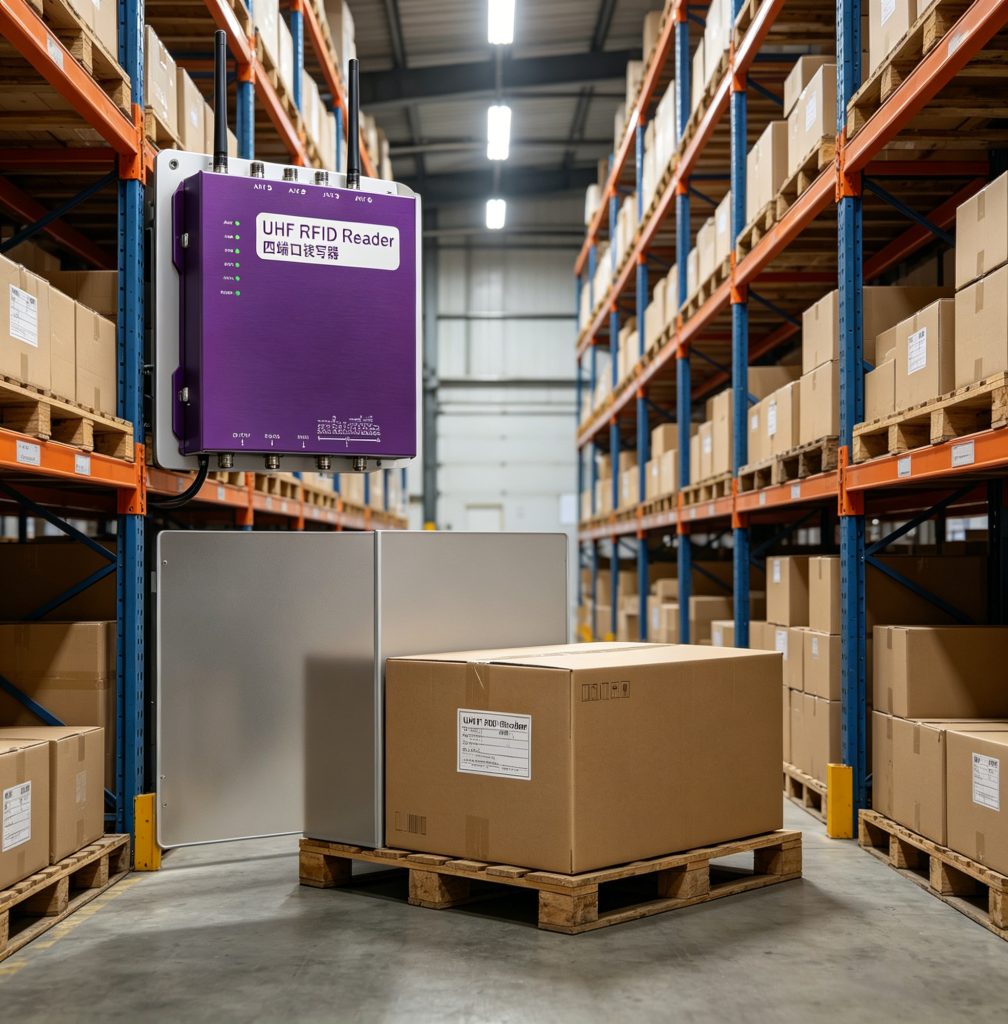
Here’s a pattern I’ve seen repeatedly:
Testing too close (under 10 cm)
Using low-power readers
Ignoring antenna alignment
At very short distances, RF coupling is strong. Even poor shielding may appear effective. But increase distance—and reality shows up fast.
According to GS1 and RAIN RFID Alliance:
UHF RFID systems can exceed 99% read accuracy in optimized environments
Effective shielding materials attenuate RF signals by 20–60 dB
Reader sensitivity typically ranges from -70 dBm to -85 dBm
Sources:
https://www.gs1.org/standards/rfid https://rainrfid.org/resources/
These figures define your test benchmark. If signal strength remains above sensitivity thresholds, blocking hasn’t truly occurred.
Use a high-performance reader (≥30 dBm output)
Maintain fixed geometry (distance + angle)
Avoid reflective interference (metal surfaces)
Repeat tests at least 20–50 cycles
Consistency matters more than single results. Real RF testing is statistical, not visual.
Yes. Weak materials may attenuate near-field coupling but fail under long-range UHF conditions.
Consistent read failure under normal operating conditions—not occasional interruptions.
Absolutely. Higher power reveals shielding weaknesses more clearly, especially in real deployments.
Understanding how to test if rfid blocker works isn’t about a single pass/fail moment—it’s about controlled RF conditions, repeatable results, and measurable signal loss. In real systems, only blockers that consistently break the RF link under stable conditions can be considered effective.

Descubre para qué sirve RFID antenna coil en etiquetas y lectores. Te explicamos cómo transfiere energía y datos en sistemas de acceso y pagos sin contacto.
More
Learn how to choose and procure long-range RFID readers for industrial asset tracking. Covers reading distance, throughput, durability, and model recommendations for warehouses, logistics, and production lines.
More
Learn what is rfid label, how RFID labels work, and how businesses use smart labeling technology for asset tracking, inventory control, and automation with Cykeo.
More
Searching “how to bypass RFID reader” often points to security concerns. We detail the risks of cloning & jamming, and how CYKEO’s encrypted systems provide real protection.
More