 Cykeo RFID IoT Solution Products R&D Manufacturer
What Is an RFID Label: Understanding Smart Identification Labels
79What is an RFID label? Discover how RFID labels work, their structure, applications, and benefits for retail, logistics, and industrial tracking.
MoreAll RFID Product
Walk into a modern factory, and one thing becomes obvious pretty quickly:
machines are getting smarter—but visibility is still a challenge.
You can automate production lines, integrate MES systems, and digitize workflows.
But if you can’t reliably track what’s happening on the floor in real time,
you’re still making decisions with incomplete data.
That’s exactly where Impinj RFID reader–based solutions are being used more and more in Industry 4.0 environments.
Most factories already have systems in place:
But in practice, these systems often depend on manual input.
Typical issues include:
In other words:
The system exists—but the data flow is broken
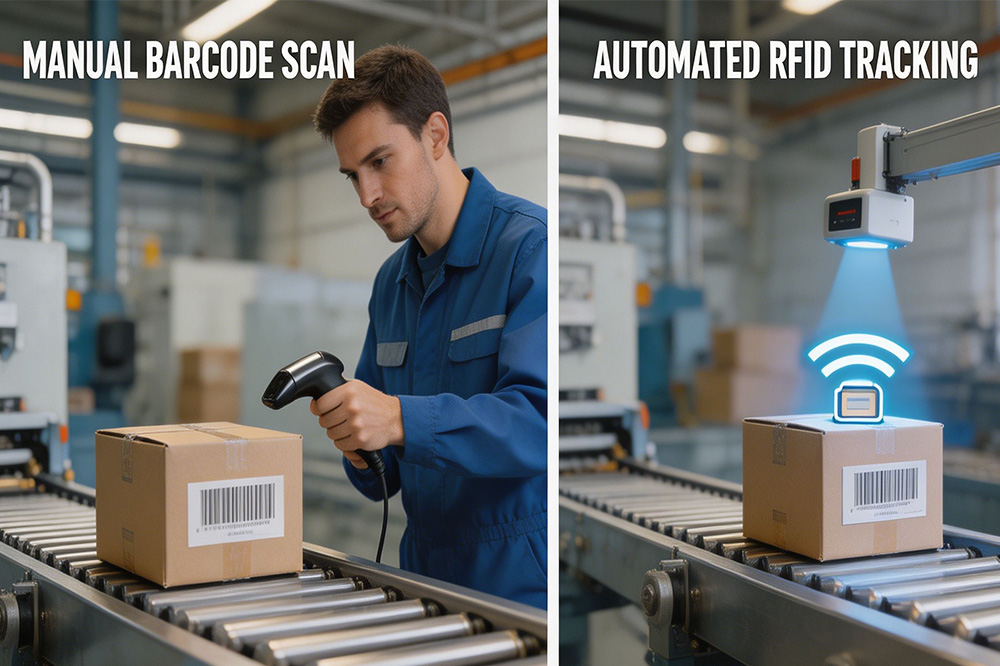
RFID solves a very specific problem:
automated, non-intrusive data capture
Unlike barcodes, RFID doesn’t require:
Which makes it ideal for production lines where speed and continuity matter.
In real projects, RFID is rarely used everywhere at once.
It’s usually deployed at key control points.
As items move through the line:
Data is captured automatically
This allows:
Each production step can be verified:
If not:
The system can trigger alerts or stop the process
RFID enables full traceability:
This becomes critical in industries like:
Factories often struggle with:
RFID helps monitor movement automatically, especially in large facilities.
In manufacturing environments, handheld devices are limited.
You can’t rely on operators to scan items in a high-speed process.
That’s why fixed RFID readers are the backbone of these systems.
They are typically installed at:
If you’re building a similar solution, this type of hardware is commonly used:
UHF RFID fixed reader
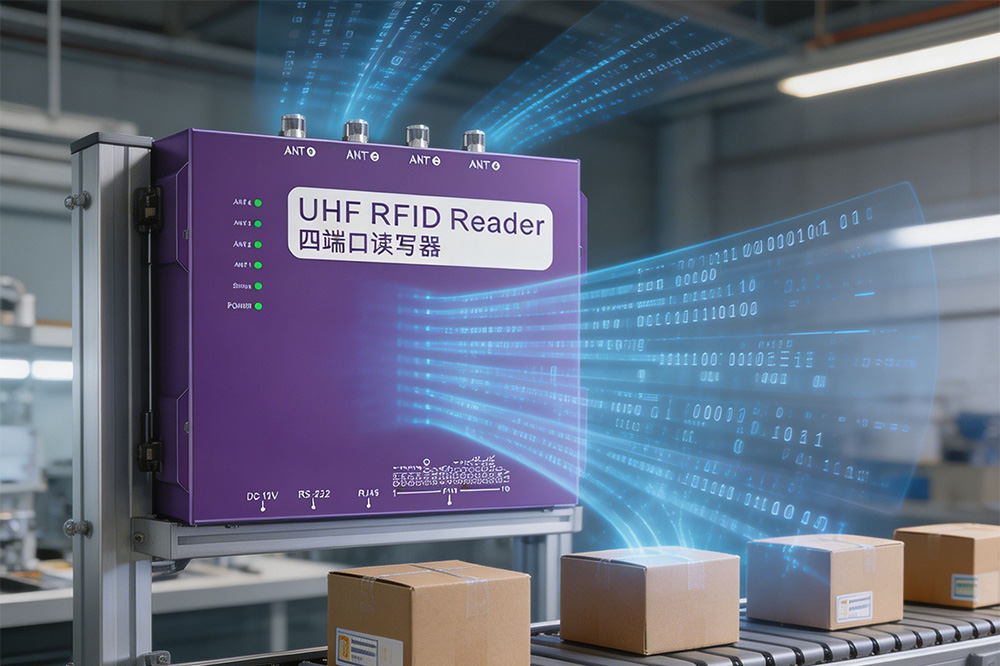
In production environments, readers need to handle:
Stability matters more than anything here.
Factories are not easy environments for RFID.
Here are a few common challenges:
Machines, racks, and tools can affect signal performance.
Solution:
Items moving too quickly can lead to missed reads.
Solution:
Multiple readers in close proximity can interfere with each other.
Solution:
Instead of trying to digitize the entire factory at once:
Start with one production line or process segment
Focus on:
Once the system proves stable, scale gradually.
This is where the real value shows up.
Factories typically gain:
And most importantly:
data you can actually trust
In smart manufacturing, technology isn’t the problem anymore.
Execution is.
Impinj RFID reader–based systems provide a reliable foundation for data capture.
But the real impact comes from how you design the solution around it.
For solution providers, this means:
Because in the end,
a smart factory isn’t just automated—it’s visible.
Guide Recommendations
Fixed RFID Reader: Why It’s Becoming Must-Have
Fixed RFID Readers: What I Didn’t Expect and What I Learned
RFID Handheld Reader vs. Fixed Reader: Which Is Better for Retail?
Different Types of RFID Readers: A Simple Introduction
Best Budget USB RFID Readers Under $100 for Small Business Inventory Systems
RFID Module vs. RFID Reader: What’s the Difference?
Fixed RFID Reader Buying Guide: 5 Core Parameters You Must Know
What is an RFID Reader Used For?
How RFID Reader Works: The Simple Explanation
How to Choose the Best Long-Range RFID Reader for Warehouse Management
RFID Readers for Boom Barriers ,Where Efficiency Meets Access Control
Why Your Warehouse Needs Smarter RFID Readers in 2025
Understanding RFID Readers,Essential Devices for Efficient Tracking

What is an RFID label? Discover how RFID labels work, their structure, applications, and benefits for retail, logistics, and industrial tracking.
More
Keep your RFID data safe! Learn proven methods to secure wireless RFID modules from eavesdropping, cloning, and unauthorized access.
More
Wondering if you can use your smartphone as a scanner? We explain when a cell phone can read an RFID tag and the major limitations for business use.
More
Discover how to use RFID module with Arduino LED projects with our step-by-step beginner's guide. Learn wiring, coding, and project ideas for interactive RFID-based LED control.
More