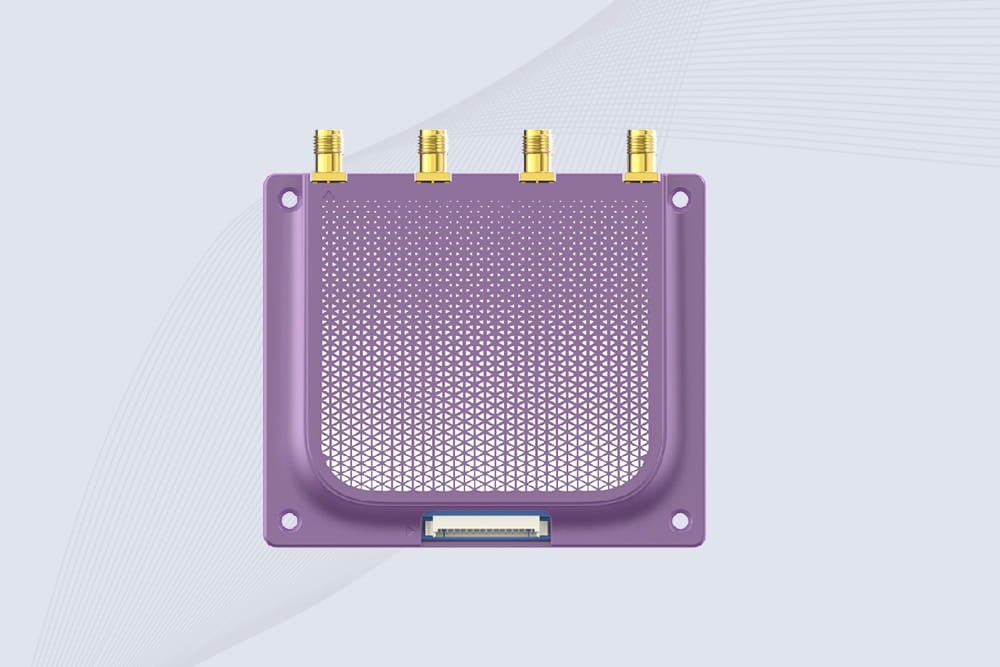
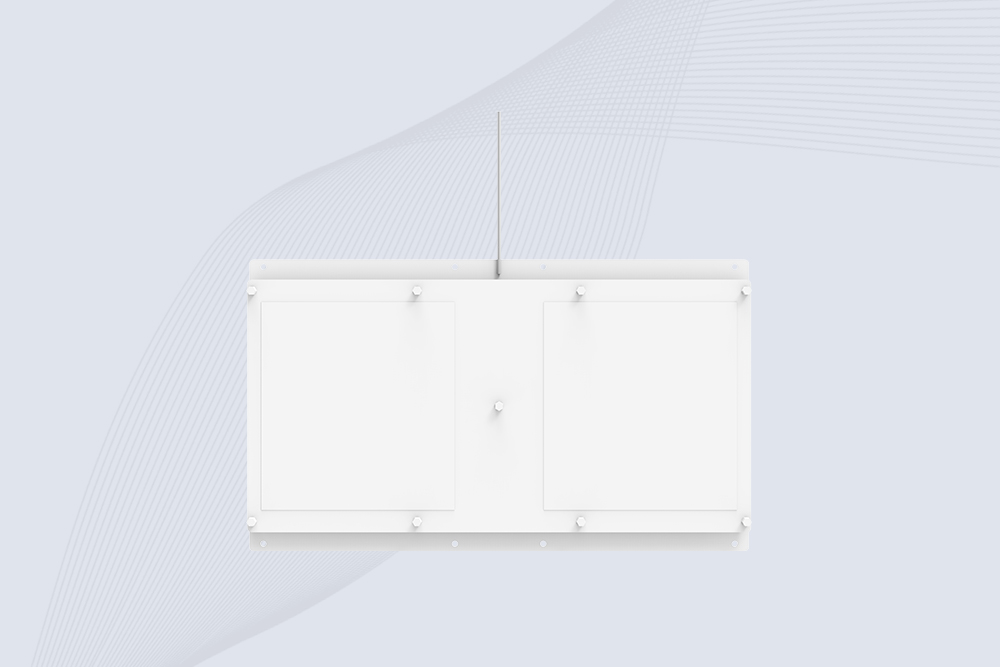
Retailers across apparel, sporting goods, department stores, and other merchandise sectors use RFID technology to improve inventory visibility, identify products, and streamline store operations. Companies such as Decathlon have adopted item-level RFID, while newer applications include unattended checkout and embedded RFID sensing frames for batch identification.
Retailers do not all use RFID in the same way. Some attach tags to individual products and use handheld readers for stocktaking. Others install fixed readers at receiving areas or checkout points. In unmanned stores and unattended warehouses, an embedded RFID sensing frame can identify multiple tagged items together, allowing the system to retrieve product information and support a configured payment or item-issue process.
The right solution depends on what the retailer needs to accomplish: find stock, verify a shipment, identify a group of products, or complete a transaction with minimal manual scanning.
What Retailers Use RFID Technology?
RFID is used by retailers that need better visibility into individual products and stock movements. Apparel and sporting-goods retailers are established examples because item-level identification can help staff check availability, conduct stock counts, and connect products with inventory records.
Retailers and their RFID applications
Decathlon: GS1 US describes how Decathlon uses unique EPC/RFID codes to improve product availability, inventory visibility, replenishment, and item identification across its operations. Read the GS1 US case study.
Apparel retailers: RFID tags can help identify individual garments, support cycle counting, and improve visibility between stockrooms and sales floors.
Sporting-goods retailers: Item-level RFID can help staff locate products and check stock availability across store and distribution operations.
Unattended retail operators: RFID-enabled checkout equipment can identify several tagged products in a single session, provided the tags, reader, and installation are compatible.
Retail distribution centres: Fixed RFID readers can capture tagged goods at receiving, conveyor, and dispatch checkpoints without requiring every item to be individually presented to a barcode scanner.
One useful measure comes from a field study published in Production and Operations Management. Researchers examined RFID-enabled inventory visibility in 13 stores over 23 weeks and reported an approximately 26% reduction in inventory record inaccuracy in the first study. A second study covered 62 stores and found that the effect varied by product category. The findings demonstrate potential benefits, not a guaranteed improvement for every retailer.
How Retailers Use RFID for Unattended Checkout
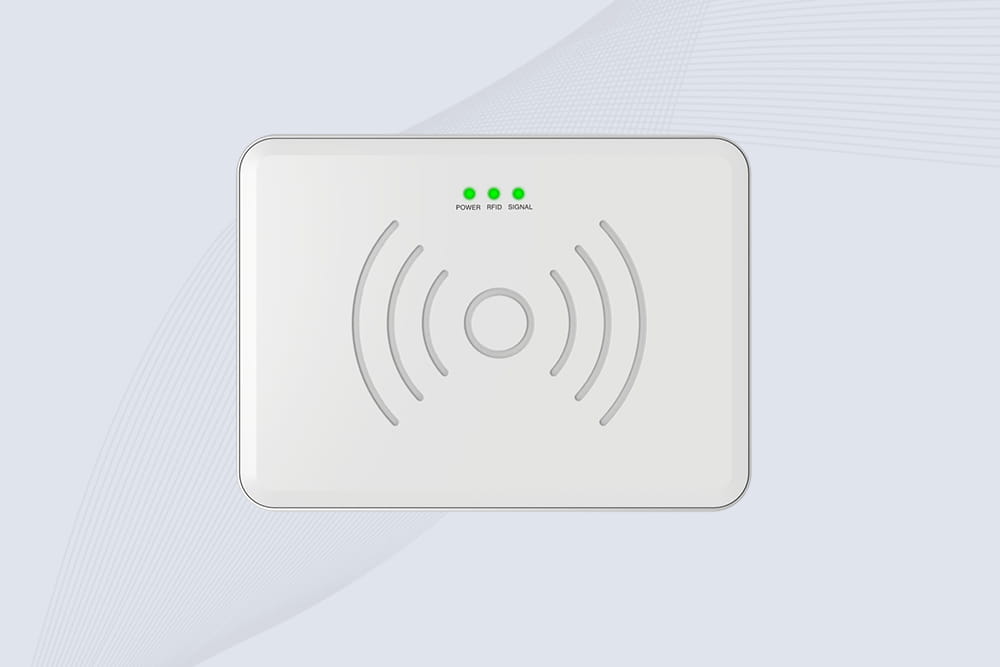
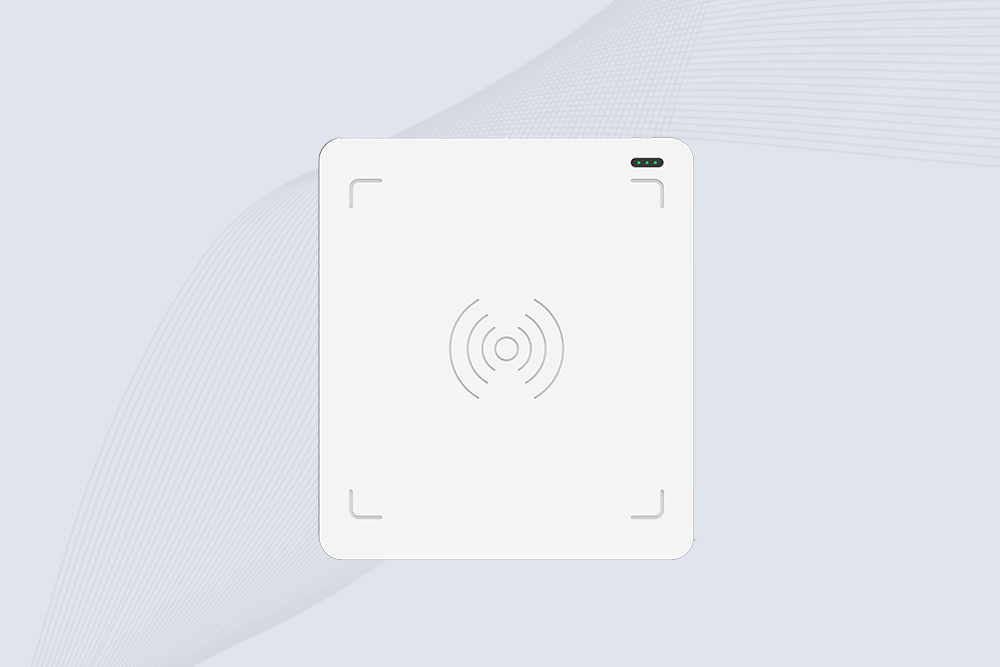
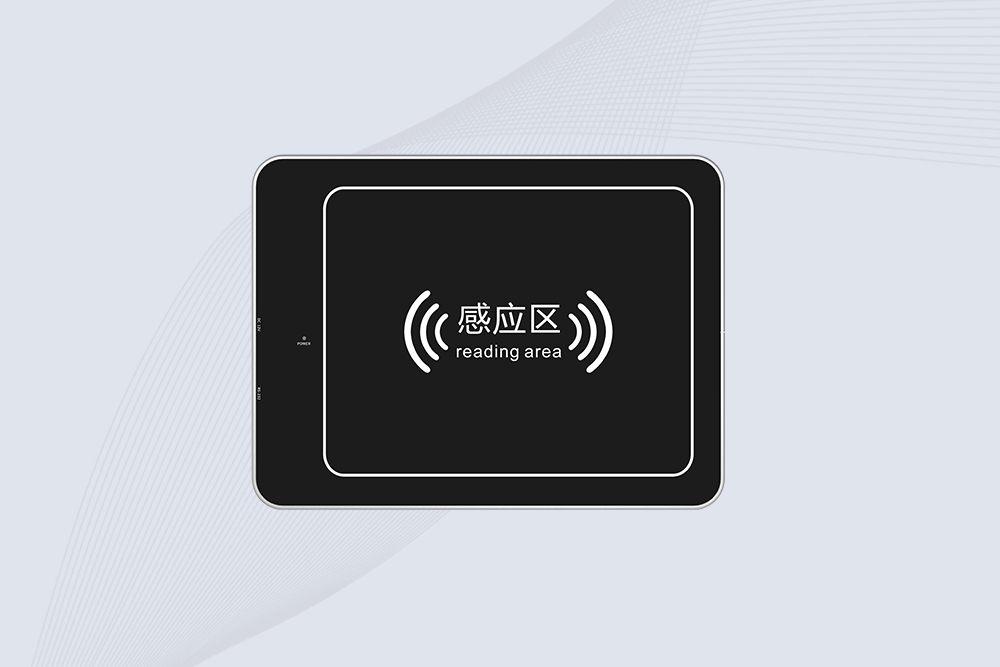
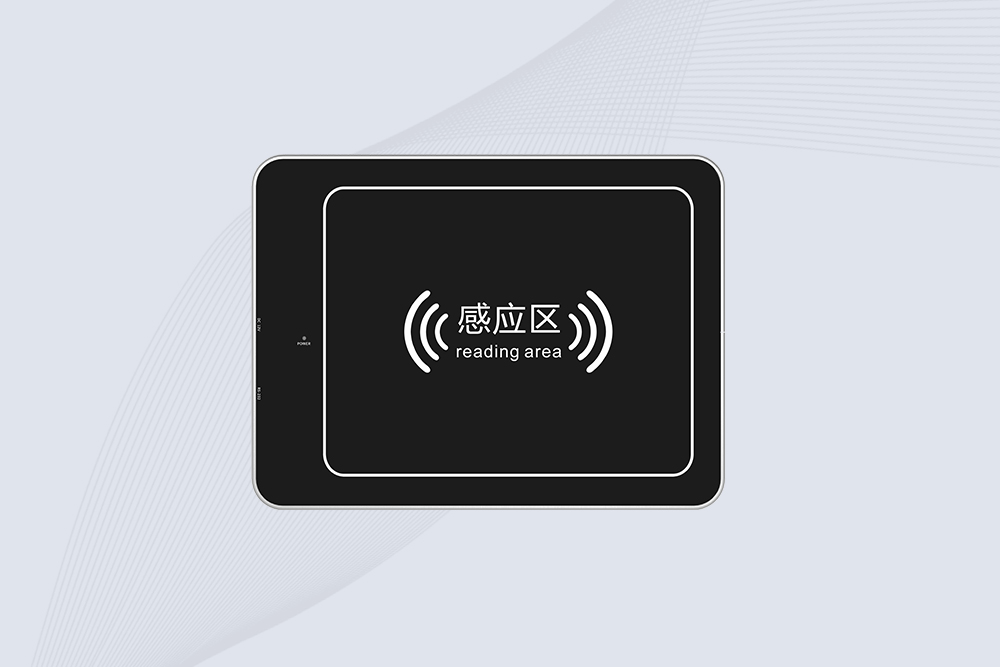
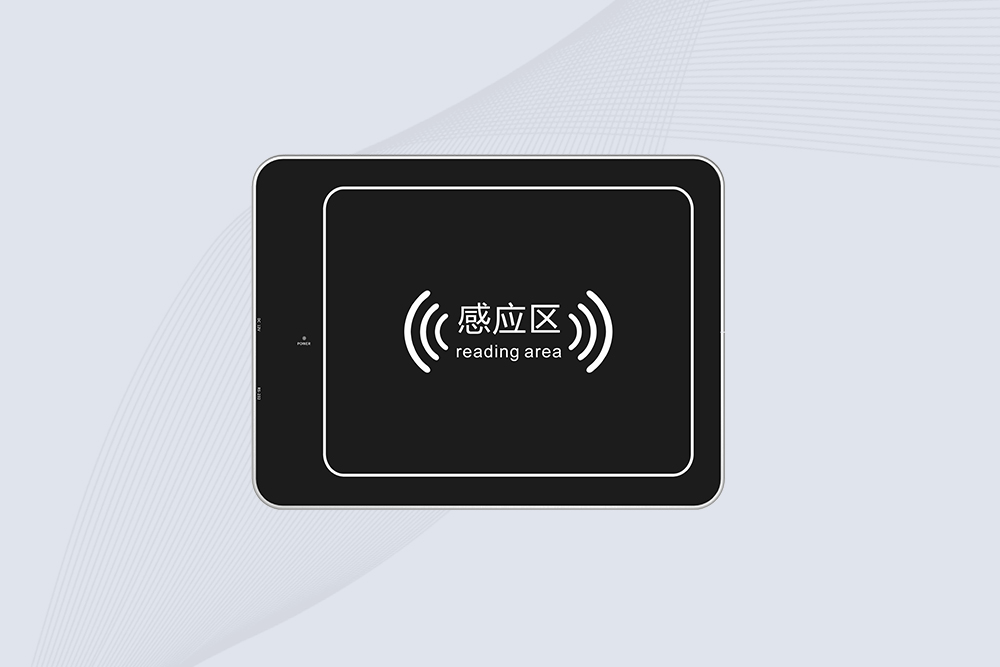
In an unmanned supermarket or self-service retail setting, an embedded RFID sensing frame can provide a convenient way to identify multiple tagged products together. Rather than scanning each product individually, a customer places the items in the designated reading area. The system reads compatible RFID tags and passes the captured identifiers to the connected application.
A typical workflow is:
The customer places the products inside the embedded RFID sensing frame.
The reader and its antennas identify compatible tags within the configured reading zone.
The software matches the captured identifiers with product records and calculates the transaction according to the store’s rules.
A connected display presents product or payment information.
The payment system completes checkout, while supported equipment may also update a tag’s configured electronic article surveillance (EAS) status.
The sensing frame is designed for batch identification. Based on the supplied product specifications, the system can identify more than 30 items in a single reading operation, subject to the tags, item arrangement, and installation conditions. This capability can reduce repetitive scanning at a checkout or item-issue station.
The important distinction is that reading tags and completing payment are separate functions. The RFID system supplies item-identification data; the connected checkout application and payment equipment must handle pricing, transaction validation, and payment processing.
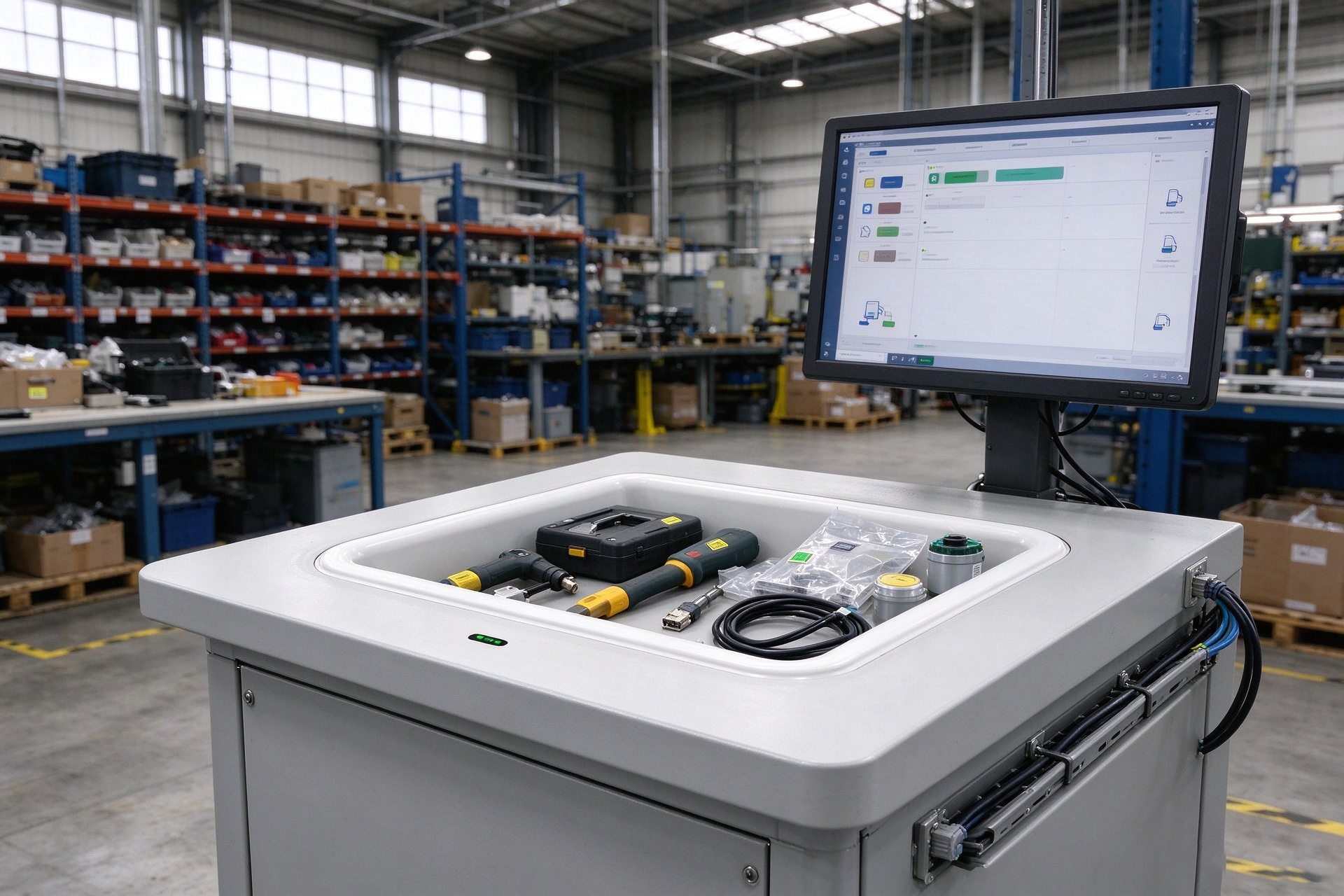
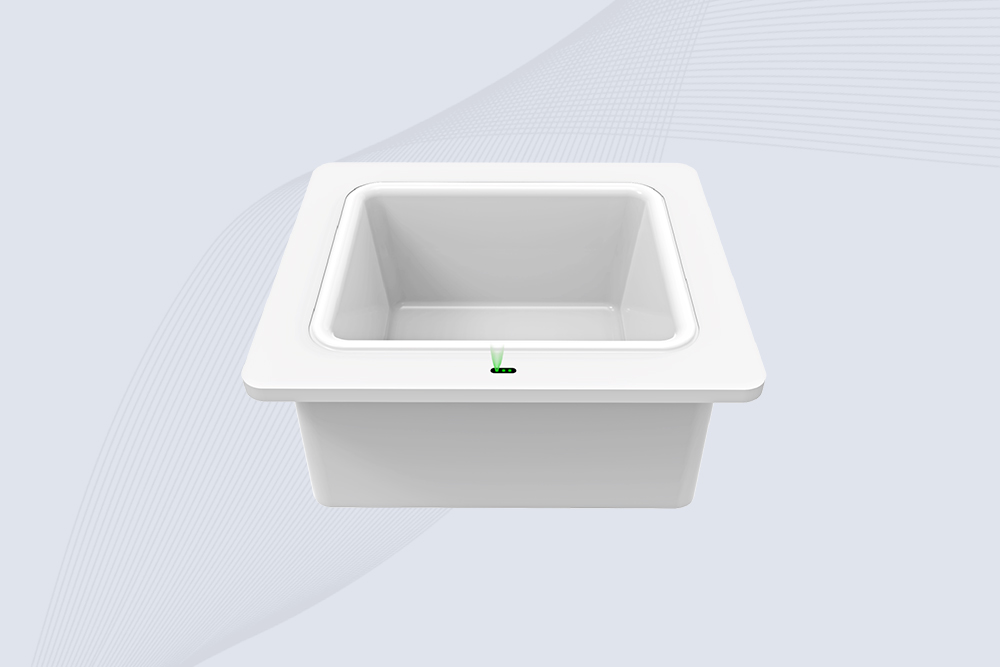
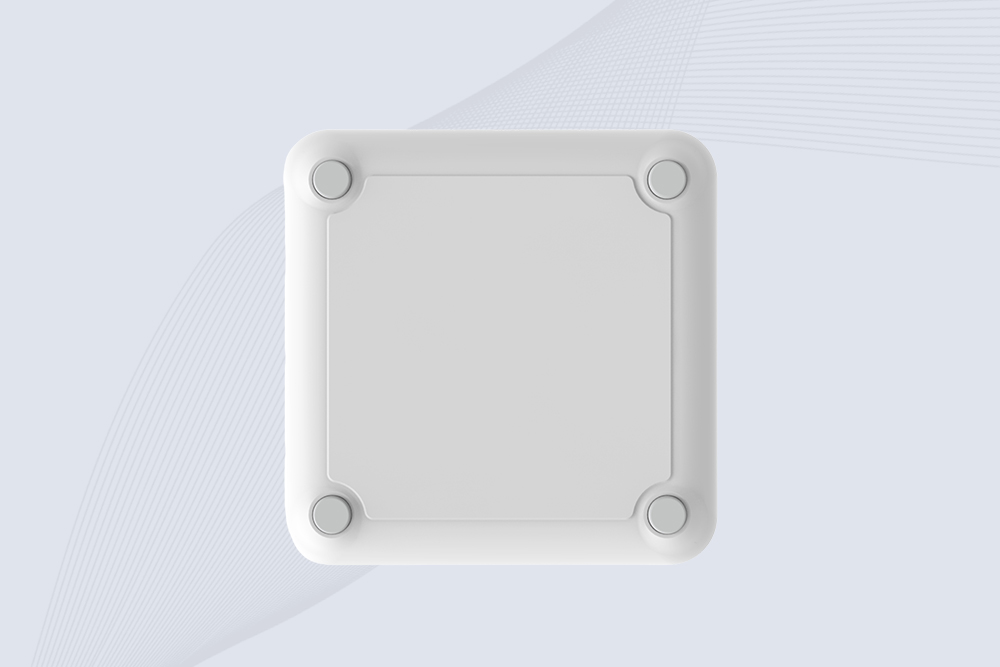
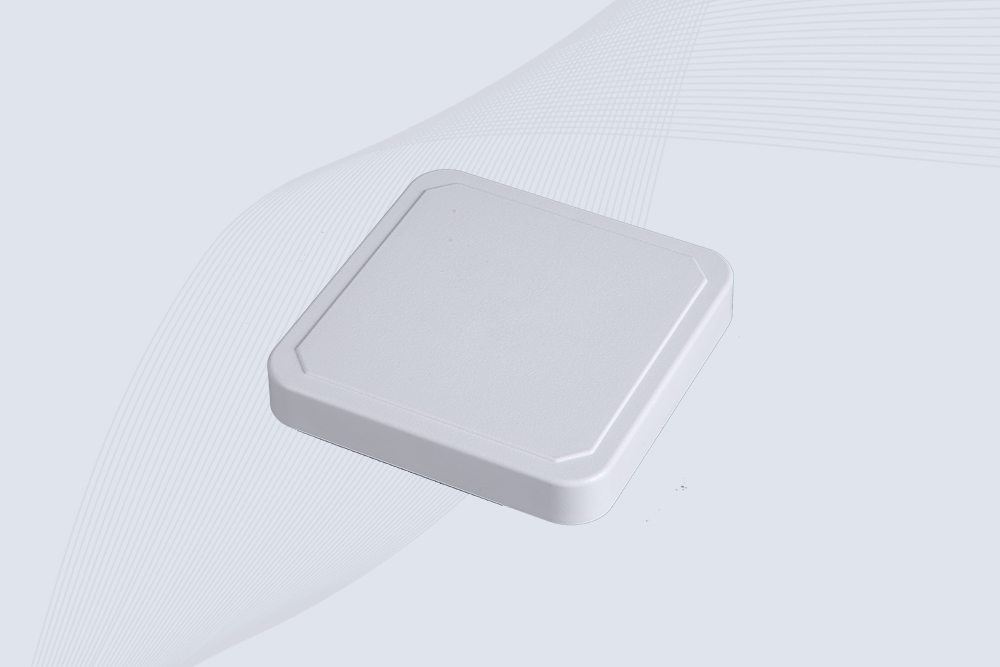
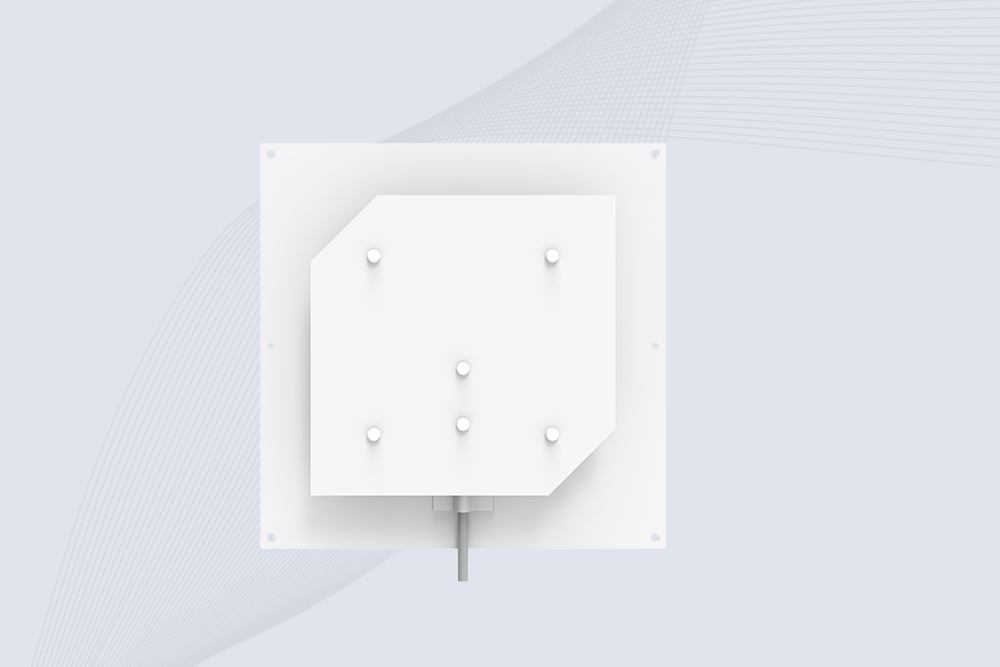
An embedded RFID sensing frame can identify multiple tagged products together to support a faster self-service checkout workflow.
Key Features of an Embedded RFID Sensing Frame
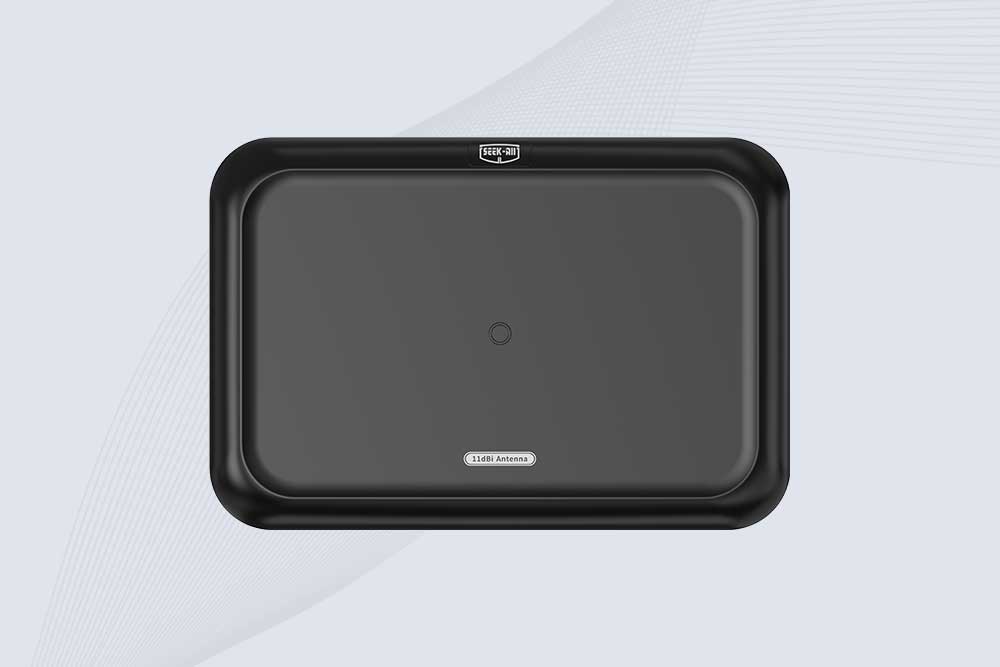
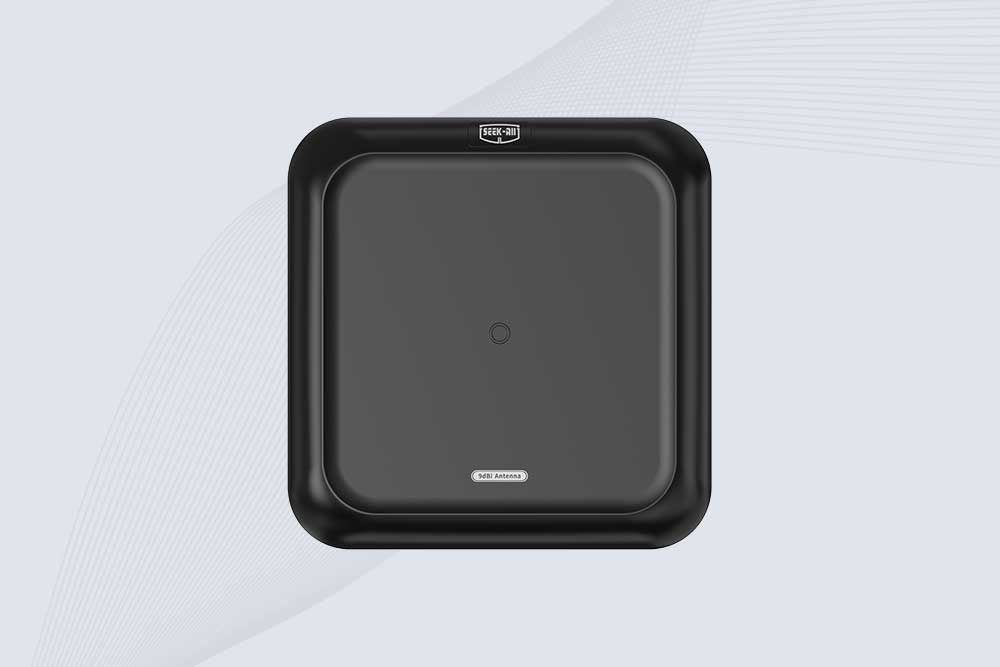
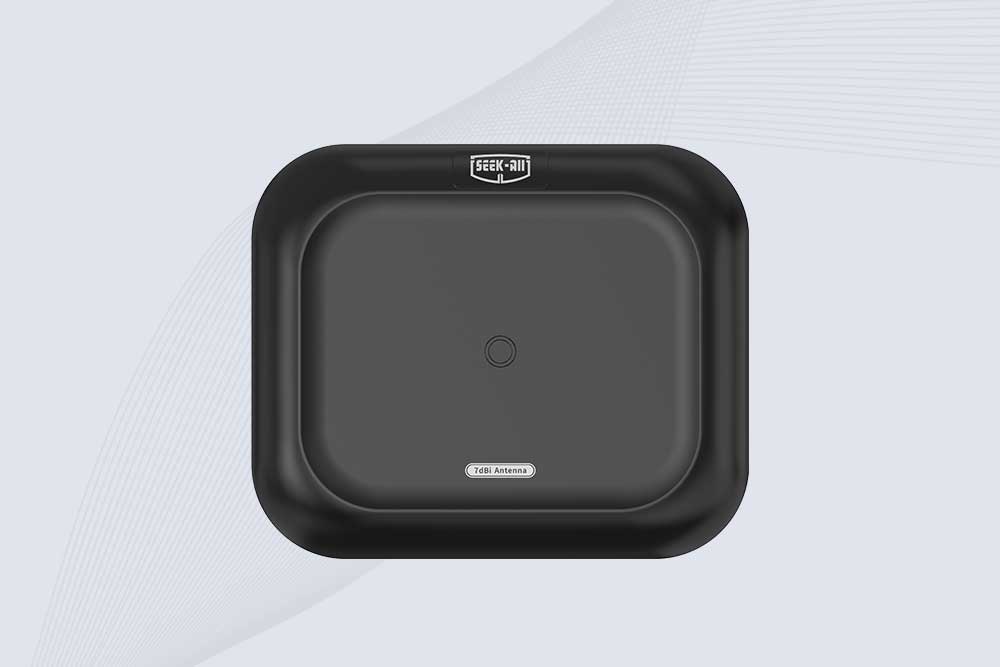
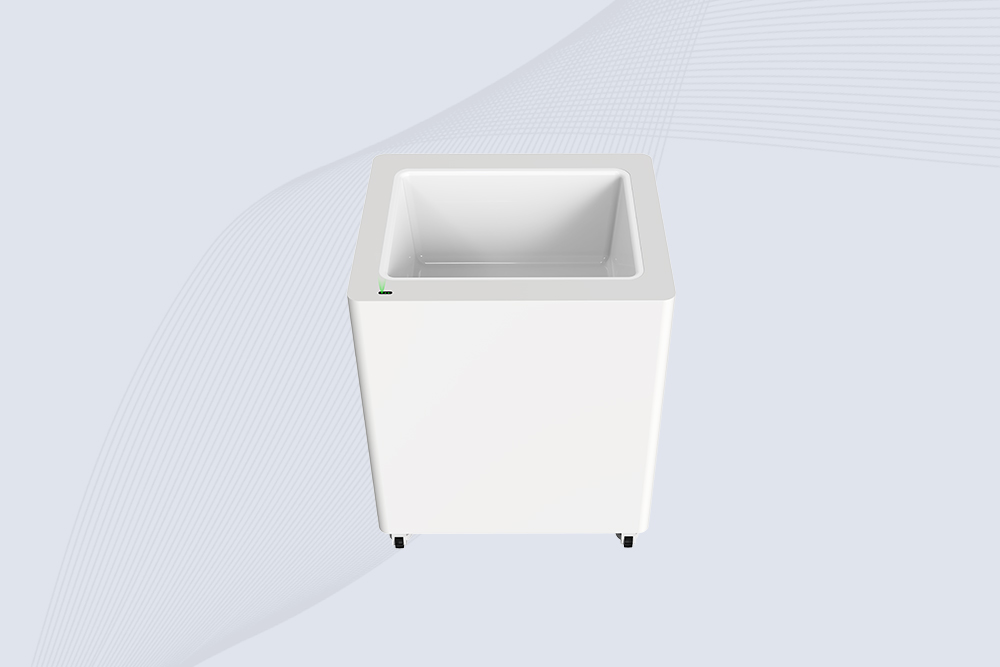
For retailers considering this equipment, the sensing frame is more than a reader placed inside a counter. Its antenna layout, enclosure design, reading-zone control, and connection to the checkout software all influence how well it fits the intended workflow.
According to the supplied product specifications, the embedded RFID sensing frame offers these features:
Feature
Description
Retail benefit
Batch identification
Designed to read more than 30 items in one operation
Supports group checkout and item issuing
Specially designed sensing frame
Optimised antenna arrangement
Helps improve identification efficiency
Read-zone control
Designed to keep peripheral stray reads within approximately 20 cm
Helps reduce unintended reads from nearby tagged items
External display
Supports connection to an external screen
Allows product and payment information to be displayed
Network connectivity
Ethernet connection for data transfer
Supports integration with a host application
Embedded installation
Can be fitted into a counter or other suitable structure
Allows a cleaner, space-efficient installation
The stated 20 cm peripheral-read control is a product specification, not a universal guarantee under every installation condition. Retailers should test the actual products, tag types, countertop materials, and surrounding merchandise before deployment.
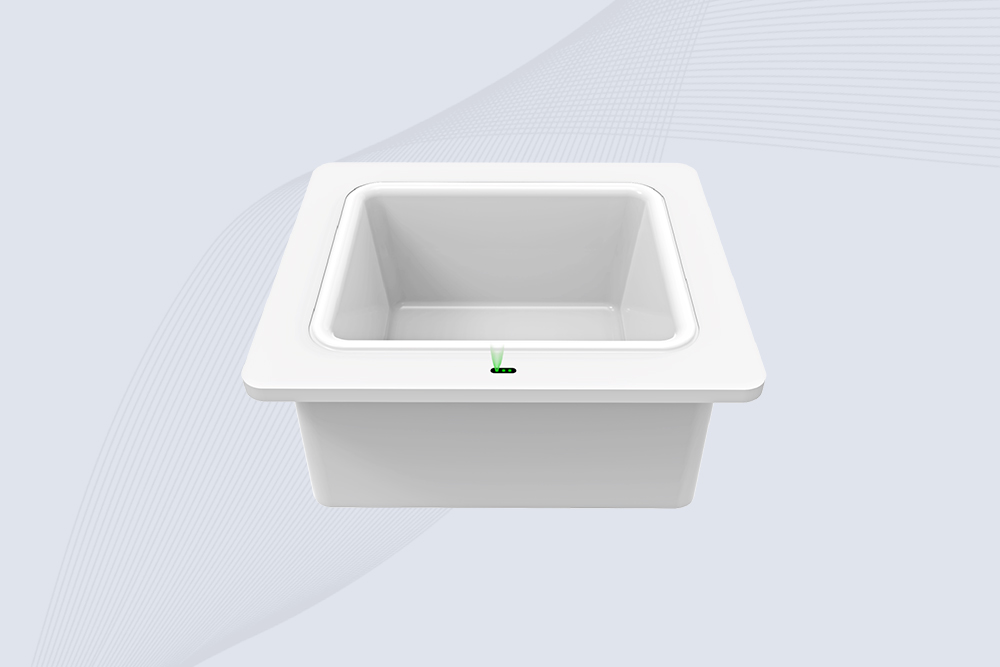
Batch RFID identification can help record tools or supplies issued from an unattended warehouse station.
How Retailers Can Implement an Embedded RFID Sensing Frame
Retailers considering an embedded RFID sensing frame should evaluate the complete checkout or item-issue workflow, not just the reader’s ability to detect multiple tags. The frame must work with the products, RFID tags, software, display, and transaction process used at the site.
1. Check RFID Tag Compatibility
Before installation, confirm that the sensing frame supports the RFID tags attached to the retailer’s products. Tag type, antenna design, product packaging, and item placement can all affect read performance. Products containing metal or liquid may require additional testing because these materials can influence radio-frequency performance.
For mixed merchandise, test representative products rather than relying on a single sample item. A checkout station handling packaged accessories, clothing, and metal products may behave differently from one processing a consistent group of items.
2. Validate Batch Reading and Read-Zone Control
According to the supplied product specifications, the embedded RFID sensing frame can identify more than 30 items in a single operation, with peripheral stray reads controlled within approximately 20 cm. These are product specifications, not universal performance guarantees; results should be confirmed under actual operating conditions.
During commissioning, test:
Whether all tags are detected when several products are placed together.
Whether tags outside the intended sensing area are detected.
Whether repeated scans produce consistent item records.
Whether product placement, packaging, and tag orientation affect results.
Whether adjacent tagged items can be read unintentionally.
This matters in unattended checkout. A missed tag can lead to an incomplete transaction, while a stray read may add an item that the customer did not place in the intended area.
3. Connect the Frame to the Retail System
The supplied frame supports an external display for interaction and Ethernet for data transmission. The integration design should define how scanned tag identifiers are matched to product records and how the resulting information is passed to checkout software.
The frame’s ability to read tags does not, by itself, establish that a complete payment function is built in. Product lookup, price calculation, payment authorization, receipt generation, and transaction records depend on the connected software and payment equipment.
If the workflow also requires changing an RFID tag’s anti-theft bit, confirm that the tag, reader, software, and security process support the required operation.
4. Test the Full Customer Journey
A practical pilot should cover the complete process from placing goods in the sensing frame to completing payment or recording an item issue. Include normal transactions, mixed-product batches, incorrectly positioned items, and situations where the system needs to identify a missing or unexpected product.
Record read accuracy, transaction exceptions, processing time, and staff intervention. These measurements help retailers determine whether the installation is suitable for the intended location and workload.
What Retailers Use RFID Technology: Frequently Asked Questions
1. What retailers use RFID technology?
Retailers in apparel, sporting goods, department stores, and other merchandise categories use RFID for item identification, inventory visibility, stocktaking, and supply-chain operations. Decathlon is a documented example of a retailer using item-level RFID. Specific applications vary by retailer, product range, and system design.
2. How does RFID help retail inventory management?
RFID readers identify tagged items without requiring each tag to be individually scanned with a barcode reader. Depending on the deployment, retailers can use handheld or fixed readers to support stock counts, receiving, replenishment, and inventory checks. The benefit depends on tag coverage, read performance, data quality, and how consistently the system is used.
3. Can RFID identify multiple products at checkout?
Yes. RFID systems can identify multiple compatible tags within a reading area, allowing products to be processed as a batch instead of scanning each barcode separately. Actual performance depends on the reader, antennas, tag design, product materials, placement, and software. A retailer should test the intended product mix before deployment.
4. What is an embedded RFID sensing frame?
An embedded RFID sensing frame is a reading unit designed to be integrated into a workstation, such as an unattended retail checkout or warehouse issue point. It reads RFID-tagged items placed within its sensing area and sends the resulting data to a connected system. Depending on the configuration, an external display can provide transaction information or user guidance.
5. How many items can the Cykeo sensing frame read at once?
According to the product information supplied for this article, the frame can identify more than 30 items in a single operation. This should be treated as a stated specification rather than a guarantee for every product mix. Retailers should validate the result using their actual tags, packaging, item arrangement, and operating environment.
6. Can the sensing frame connect to a display or checkout system?
The supplied specifications state that the frame can connect to an external display and transfer data through Ethernet. Integration with product databases, point-of-sale software, and payment equipment depends on the implementation and the interfaces supported by the connected systems. Confirm those requirements before choosing the final configuration.
7. Does RFID prevent all unwanted or missed reads?
No RFID installation should be assumed to eliminate all missed or unintended reads. The supplied frame specifications state that peripheral stray reads are controlled within approximately 20 cm, but real performance depends on the environment and installation. Test the intended read zone and surrounding area during commissioning, then adjust the setup if needed.
Conclusion
The answer to what retailers use rfid technology includes sporting-goods retailers such as Decathlon, apparel businesses, and retailers managing high volumes of tagged merchandise. RFID can support inventory visibility, stock checks, and faster item identification, while batch-reading systems can also support unattended checkout.
For retailers evaluating an embedded RFID sensing frame, the key questions are practical: Can it read the store’s actual products reliably? Does it keep reads within the intended area? Can it communicate with the checkout software and display? A controlled pilot helps answer these questions before wider deployment.
Cykeo’s embedded RFID sensing frame is designed for batch item identification in unattended retail and warehouse environments. Its stated capabilities include identifying more than 30 items in one operation, connecting to an external display, and transferring data through Ethernet. Final performance depends on the installation, tag configuration, and connected application.
Explore the SSD-A07 UHF RFID antenna with 7 dBi gain, circular polarization, adjustable 840–960 MHz frequency, and 60°/75° beamwidth for stable RFID read/write performance.
SSD-A06 UHF RFID antenna with circular polarization, adjustable 840–960 MHz frequency, ≥4.5 dBi gain, and a compact directional design for RFID systems.
SSD-D3AL is a USB-HID UHF RFID reader with 0–30 cm reading, 0–15 cm writing, over 600 tags/s recognition, USB plug-and-play operation and OEM Logo customization.
SSD-D1AL is a compact USB UHF RFID reader with Impinj E710/X3M1 chipset, USB-HID, 600+ tags/s recognition, 4/8/16 antenna support and plug-and-play USB power.
SSD-R16L Multi-Channel RFID Infrastructure for Automated Inventory Management ✔️ 16-Port High-Density RFID Reading Equipped with 16 SMA antenna ports, SSD-R16L supports multi-antenna deployment for warehouses, retail stores, logistics, production lines, and large-area RFID identification. ✔️ High-Speed & Long-Range Performance With up to 33…
SSD-R8L 8-port UHF RFID reader with 33dBm output, up to 20m reading range and 600+ tags/s recognition. Ideal for warehouse, logistics, retail and asset tracking.
CYKEO CYKEO-D1LA USB RFID Reader is a compact desktop solution with near-field control for precise tag reading and encoding. Powered by USB, supporting ISO 18000-6C, and built for stable batch writing, this usb rfid tag reader fits retail, libraries, offices, and controlled RFID encoding tasks.
CYKEO CYKEO-D1L RFID scanner USB is a compact desktop UHF RFID scanner designed for short-range tag writing and verification. This usb rfid scanner supports batch encoding, stable 0–26 dBm output, and works across Windows, Linux, and Android systems.
CYKEO CYKEO-D1C USB RFID Card Reader is a near-field UHF desktop writer designed for secure, short-range tag encoding. With USB-C connectivity and stable 26 dBm output, this rfid reader usb c is ideal for badge issuance, label encoding, and controlled desktop RFID workflows.
CYKEO CYKEO-D2L RFID Reader USB is a compact desktop encoder built on the Impinj R500 chip. With near-field control and stable USB power, this usb rfid card reader delivers precise tag writing for offices, retail counters, and small-scale logistics encoding tasks.
CYKEO CYKEO-D3L USB RFID Tag Reader delivers stable UHF tag reading and writing for daily desktop and light industrial tasks. Designed for controlled short-range operation, this USB RFID Tag Reader works reliably with rfid tag and reader systems in libraries, tool tracking, and inventory registration.
The CYKEO CYKEO-D4L UHF RFID Tag Reader is a stable Desktop RFID Reader designed for accurate tag registration, borrowing, and return workflows. Built with the Impinj R2000 chip, this UHF RFID Tag Reader delivers controlled short-range reads for libraries, asset tracking, and inventory management environments.
The CYKEO CYKEO-D5L Desktop RFID Card Reader is a stable UHF RFID Card Reader designed for controlled short-range reading and writing. Built for libraries, tool rooms, and asset desks, this UHF RFID Card Reader supports dense tag handling, secure data processing, and easy USB integration.
The CYKEO CYKEO-D6L RFID Reader Writer is a heavy-duty Desktop RFID Reader designed for short-range, high-accuracy tag programming. Built for libraries, labs, and asset desks, this RFID Reader Writer supports batch processing, stable 33dBm output, and seamless integration with existing management systems.
Cykeo CYKEO-D8A embedded RFID badge reader offers 30+ tags/sec scanning, 20cm anti-crosstalk precision, and DC 12V power for unmanned stores, warehouses, and smart inventory systems.
Cykeo’s CYKEO-D8C UHF RFID gate reader achieves 200-tag/batch scanning with adjustable power control, ideal for retail inventory and smart warehouse management.
CYKEO Embedded RFID Modules are designed for compact industrial and IoT devices that require stable UHF performance. These UHF RFID Modules support global protocols, flexible power control, and reliable multi-tag reading for smart cabinets, production lines, and asset tracking systems.
CYKEO Embedded RFID Module is built for compact IoT and industrial devices that need stable UHF performance. This UHF module supports global protocols, low power operation, and reliable multi-tag reading for smart lockers, production lines, and always-on RFID systems.
CYKEO CYKEO-M1 drone rfid module is a compact UHF RFID reader module designed for drones and UAV platforms. It supports long-range aerial scanning, fast multi-tag reading, and stable performance in wind, vibration, and outdoor environments.
CYKEO CYKEO-M4 RC522 RFID Module is an industrial-grade UHF RFID reader with 4 ports, supporting ISO, EPC, and GB protocols. High-speed, accurate reading for IoT, automation, and warehouse applications.
CYKEO CYKEO-M8 Module RFID is an 8-port UHF R2000 RFID Module designed for high-density, multi-tag environments. Stable 33dBm output, ISO & GB protocol support, ideal for warehouses, factories, and automated systems.
CYKEO CYKEO-M16 RFID Module is a 16-port UHF RFID reader module based on the R2000 chipset. Designed for dense tag environments, it supports ISO and GB standards and delivers stable multi-antenna control for industrial automation.
The CYKEO CYKEO-M16L RFID Reader Module is a 16-channel UHF RFID core designed for dense tag environments. With adjustable 33dBm output, multi-protocol support, and stable multi-antenna control, this RFID Tag Reader Module fits industrial automation, warehouse systems, and large-scale IoT deployments.
CYKEO CYKEO-M8L module RFID is a compact industrial UHF module built for dense tag and multi-antenna environments. With 8 RF ports, adjustable 33 dBm output, and ISO & GB protocol support, it is widely used in factories, warehouses, and automated tracking systems.
CYKEOCYKEO-M4L UHF RFID Module is a compact 4-channel RFID tag reader module designed for dense tag environments. Supporting ISO and GB protocols, it delivers stable reads up to 10 meters for industrial and IoT systems.
Cykeo CYKEO-A11 UHF RFID reader antenna delivers 11dBi gain, 840-960MHz frequency range, and IP65 ruggedness for retail, logistics, and industrial RFID systems. Features low VSWR and easy installation.
CYKEO Antenna RFID Reader delivers stable long-range UHF performance with a 10.5dBi directional design, built for warehouses, conveyor portals, and industrial RFID systems. This rfid reader antenna provides 20m+ read distance and rugged IP67 protection.
Cykeo CYKEO-A5B industrial Linear RFID Antenna delivers 5dBi gain, ≤1.5:1 VSWR, and IP65 rugged design for warehouse, production line, and logistics UHF systems.
Cykeo’s CYKEO-B12 Long Range RFID Antenna delivers 15m+ read range with 12dBi gain, IP65 rugged design, and global 840-960MHz UHF support. Ideal for warehouse/logistics asset tracking.
Cykeo CYKEO-B10 Long Distance RFID Antenna offers 10dBi gain, 840-960MHz frequency range, IP65 rating, and 20m+ coverage for logistics/warehousing/ETC systems. Low VSWR ensures stable signal transmission.
Cykeo CYKEO-A6 UHF RFID panel antenna features 6dBi gain, 840-960MHz broadband, IP65 metal-ready housing for logistics/smart retail. 18mm ultra-thin design with tool-free mounting.
Cykeo CK-A3 industrial antenna RFID UHF offers 5m+ tag detection, ≤1.3:1 VSWR, IP65 rugged design, and global UHF spectrum compatibility (840-960MHz) for warehouses, factories, and retail.
Cykeo CYKEO-B5 directional RFID antenna provides 5dBi gain with 60° narrow beamwidth for precise inventory tracking. IP65-rated, global UHF frequency support, and low VSWR.
Create your own high-performance DIY RFID antenna! 5dBi gain, 840-960MHz tunable, step-by-step guides. Compatible with Arduino, Raspberry Pi, and commercial UHF readers.
Cykeo CYKEO-A7 Flexible RFID Antenna features 840-960MHz wideband tuning, 7dBi gain, and IP68 rating for medical/retail/industrial curved surface deployments. 98% read accuracy with peel-and-stick installation.
Cykeo CYKEO-B5A industrial Passive RFID Antenna delivers 5dBi gain, 70° beamwidth, and -40°C~55°C operation for warehouses/smart cabinets. Compatible with Zebra/Impinj readers.
Cykeo’s CYKEO-A9B High Gain RFID Antenna delivers 15m+ read range with 9dBi amplification. Features IP54 rugged design, 840-960MHz bandwidth, and 80° beamwidth for warehouse/manufacturing RFID systems.
Cykeo’s enterprise-grade 8dbi Impinj RFID Antenna 10m+ read range with 840-960MHz tuning. Features IP65 housing, 1.4 VSWR, 35° beamwidth for retail/warehouse RFID systems.
Cykeo CYKEO-A9 industrial UHF RFID antenna delivers 9dBi gain, 840-960MHz frequency range, and IP65 protection for warehouse/logistics/retail RFID systems. Features N-type connector and ≤1.3:1 VSWR.
CYKEO UHF RFID Antenna built for long-distance and industrial applications. This antenna rfid uhf delivers strong gain, outdoor durability, and reliable tag performance in warehouses, yards, and vehicle ID systems.
CYKEO Antenna RFID delivers reliable long-range UHF performance in warehouses, retail shelves, and cold-chain environments. This compact uhf rfid antenna provides stable reads with circular polarization and ultra-wide 840–960 MHz support, ideal for industrial tracking, smart shelves, and asset monitoring.
Cykeo’s CYKEO-C8 UHF RFID antennas delivers 8dBi gain, 840-960MHz full-band coverage, and IP65 ruggedness for manufacturing/warehouse RFID systems. Industrial RFID Antennas Features
Cykeo’s 8dBi UHF RFID antenna and reader kit delivers 10m+ range, 840-960MHz broadband, and IP65 ruggedness for factories, warehouses, and logistics. ISO 18000-6C & EPC Gen2 certified.
Discover how UHF RFID long range readers work, key features, and how to choose the right 20m RFID reader for warehouse, logistics, and industrial applications.
Discover which antenna types boost long-range RFID reader performance for industrial, logistics, and outdoor use. Learn how Cykeo’s solutions enhance read accuracy and range.
Discover the differences between passive and active RFID readers. Learn which system suits your business needs with Cykeo’s expert guide. Optimize asset tracking today!
Find out if budget RFID scanners can handle retail apparel inventory tracking. Compare accuracy, UHF performance, and top affordable models for clothing stores.
 Cykeo RFID IoT Solution Products R&D Manufacturer