 Cykeo RFID IoT Solution Products R&D Manufacturer
What Does an RFID Antenna Do? (It’s More Than You Think)
471Discover what does an RFID antenna do. Learn how it enables wireless communication, powers passive tags, and is used in access control, logistics, and asset tracking.
MoreAll RFID Product
RFID technology has revolutionized industries by streamlining asset tracking, inventory management, and supply chain operations. But choosing between passive and active RFID readers can be challenging. Each system has unique strengths, and the right choice depends on your business requirements. Let’s break down the differences to help you decide.
What is RFID Technology?
Radio Frequency Identification (RFID) uses electromagnetic fields to automatically identify and track tags attached to objects. These tags store data, which RFID readers capture wirelessly. While the core concept is simple, the implementation varies widely—especially when comparing passive RFID readers and active RFID readers.
How They Work:
Passive RFID tags have no internal power source. Instead, they draw energy from the reader’s radio waves. When the reader emits a signal, the tag activates and transmits its stored data.
Key Features:
Best For:
Limitations:
Active RFID Readers: Power and Precision
How They Work:
Active RFID tags have their own power source (usually a battery), enabling them to broadcast signals independently. This allows for longer-range communication and real-time tracking.
Key Features:
Best For:
mitations:
How to Choose Between Passive and Active RFID Systems
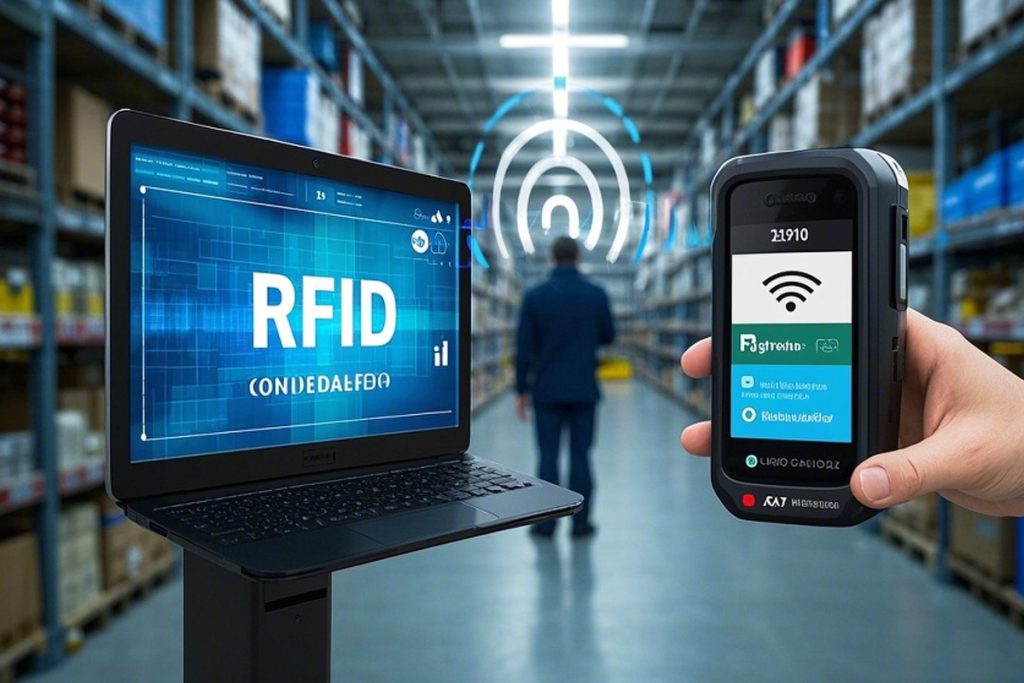
Passive systems are more affordable upfront, while active RFID requires higher investment but offers advanced capabilities.
Harsh environments (e.g., warehouses with metal interference) may require ruggedized passive tags. Active systems thrive in open spaces needing real-time data.
Passive RFID scales easily for high-volume tagging. Active systems are ideal for specialized, high-value applications.
Why Choose Cykeo RFID Solutions?
At Cykeo, we specialize in tailored RFID systems that align with your business goals. Whether you need passive RFID readers for cost-effective inventory control or active RFID technology for real-time asset monitoring, our solutions deliver:
Need Help Deciding?
Still unsure whether passive or active RFID readers are right for you? Contact our experts at contact@cykeo.com for a free consultation. Let’s optimize your operations with the right RFID technology!

Discover what does an RFID antenna do. Learn how it enables wireless communication, powers passive tags, and is used in access control, logistics, and asset tracking.
More
How to use RFID reader writer: Connect the device to software, place compatible RFID tags in the controlled area, write required data, and verify the program...
More
EPC RFID combines Electronic Product Codes with RFID technology to uniquely identify individual physical items and improve supply-chain visibility.
More
An RFID device communicates with RFID tags to identify objects, read or write tag data, and connect physical assets with digital systems.
More