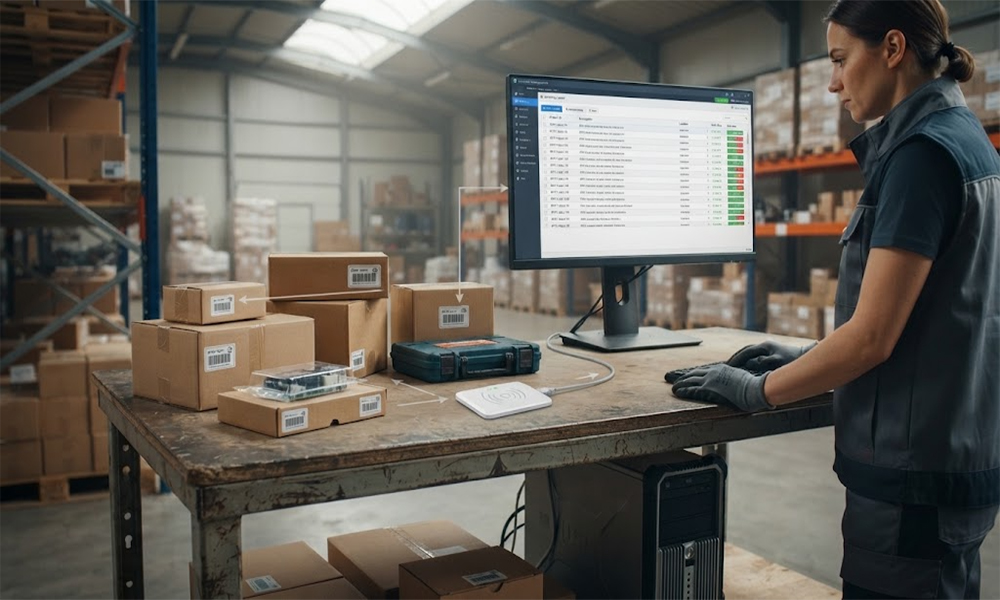
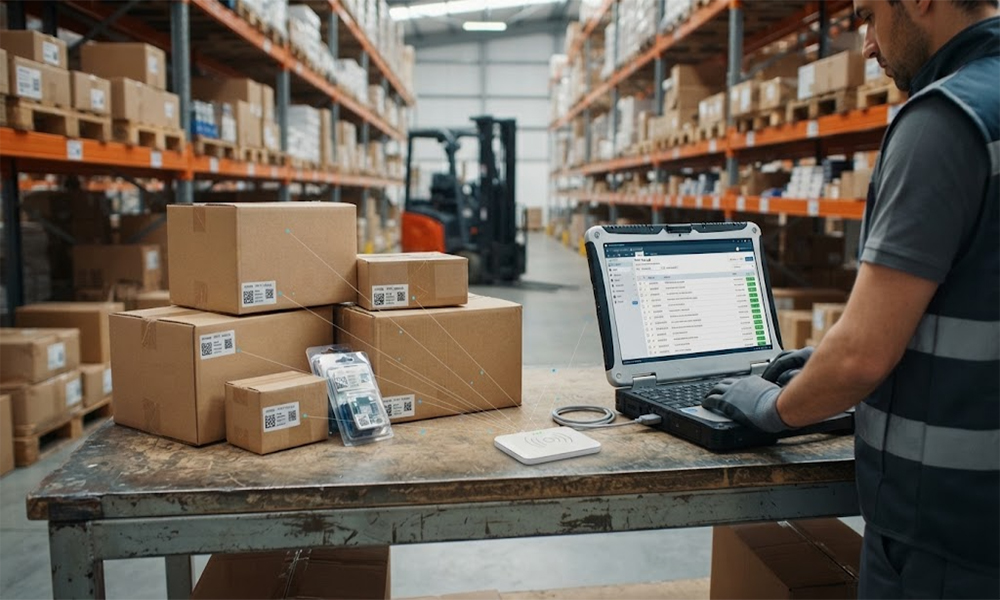
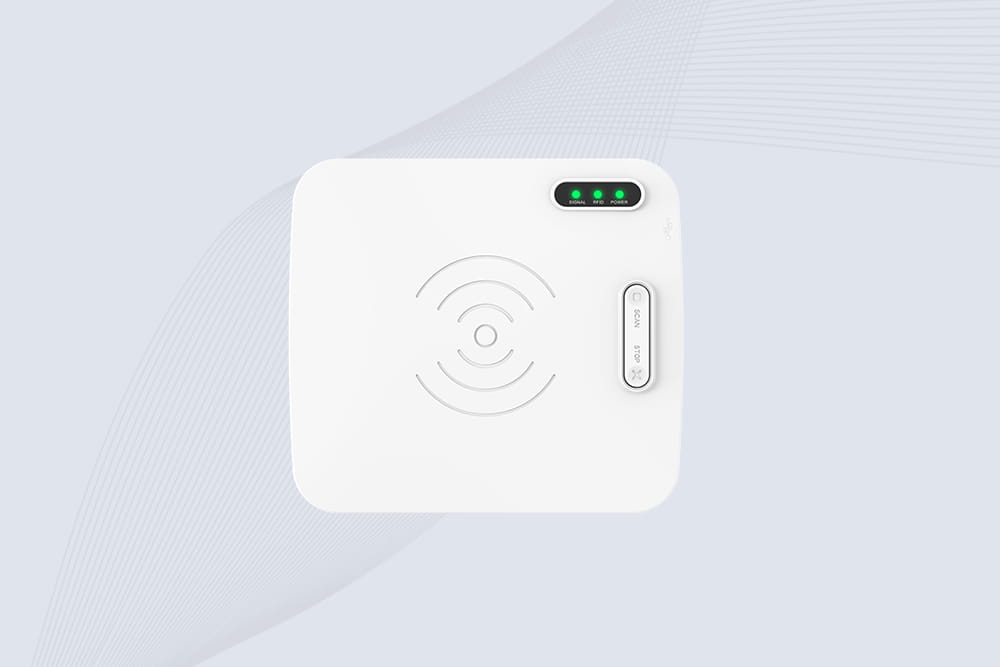
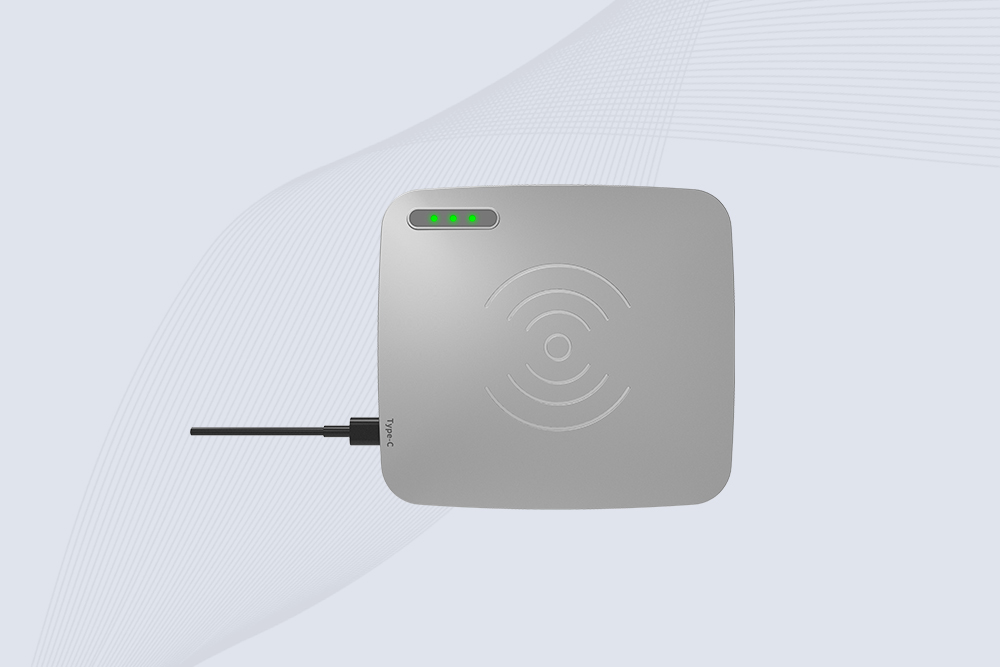
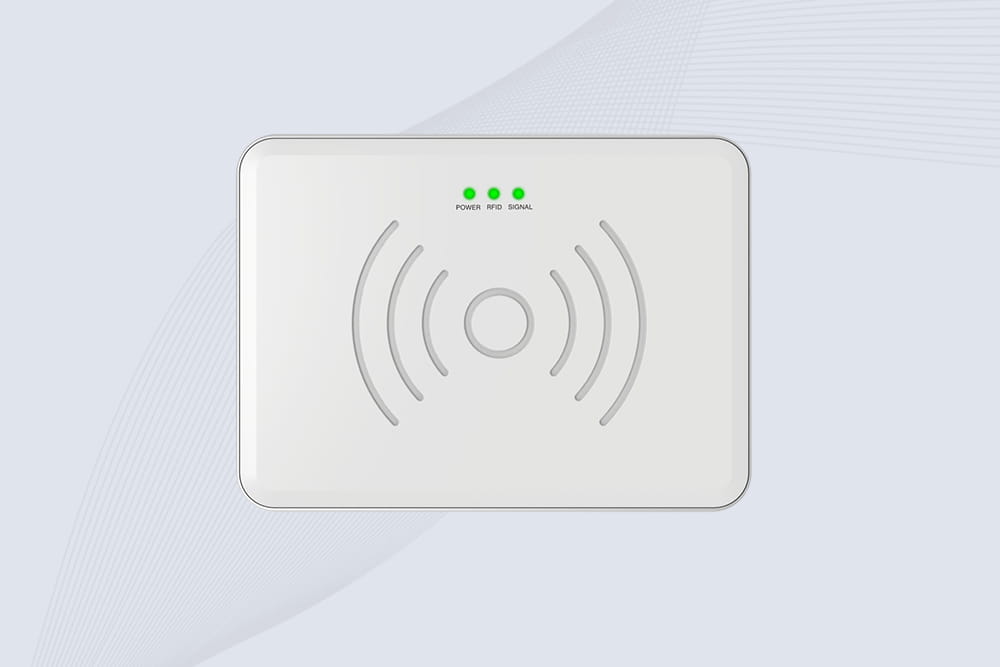
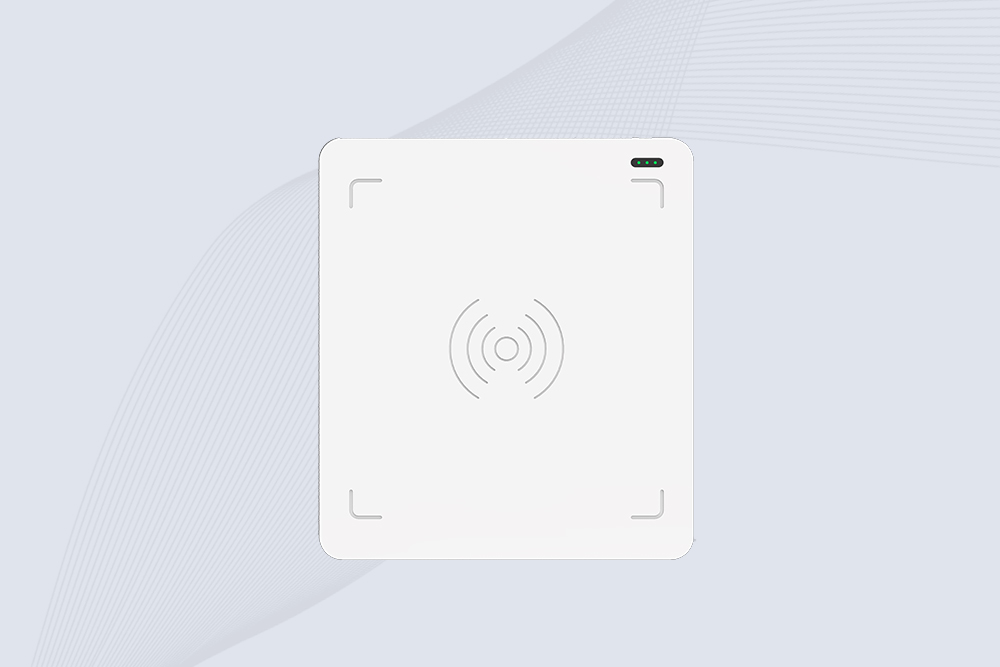
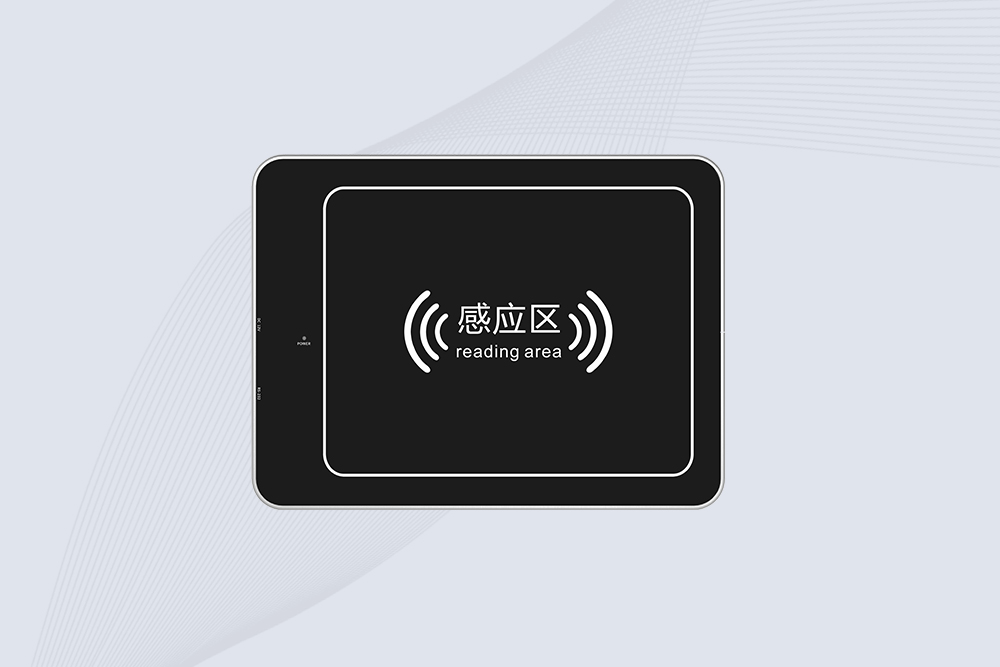
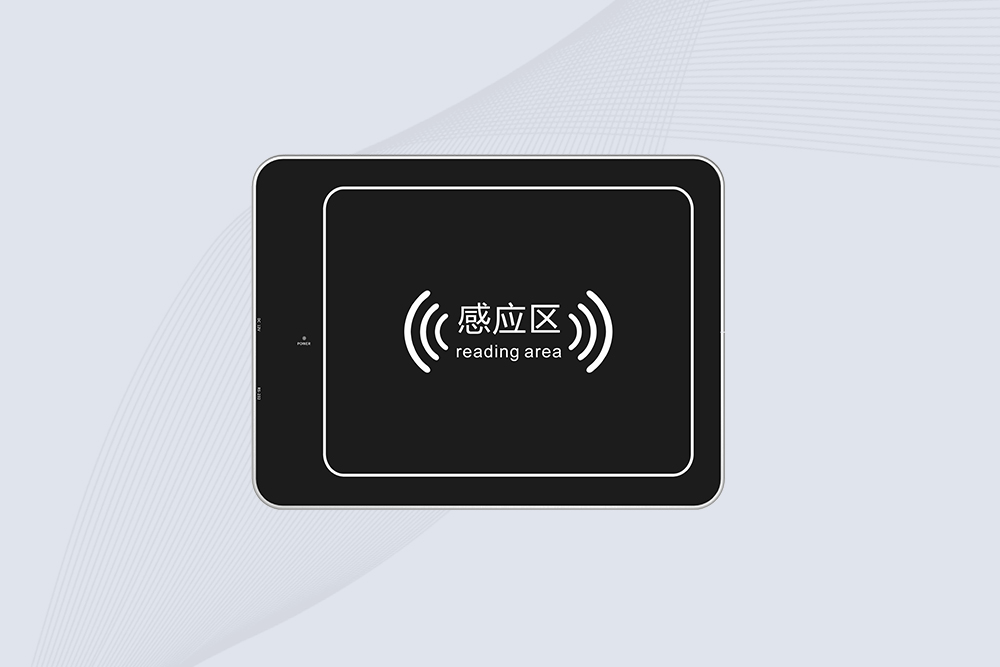
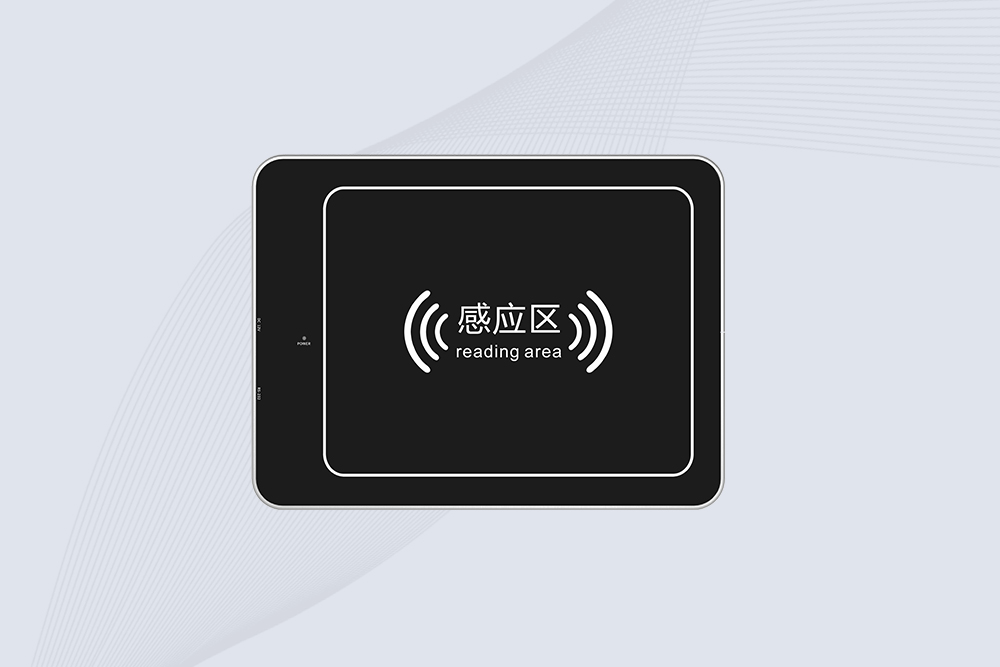
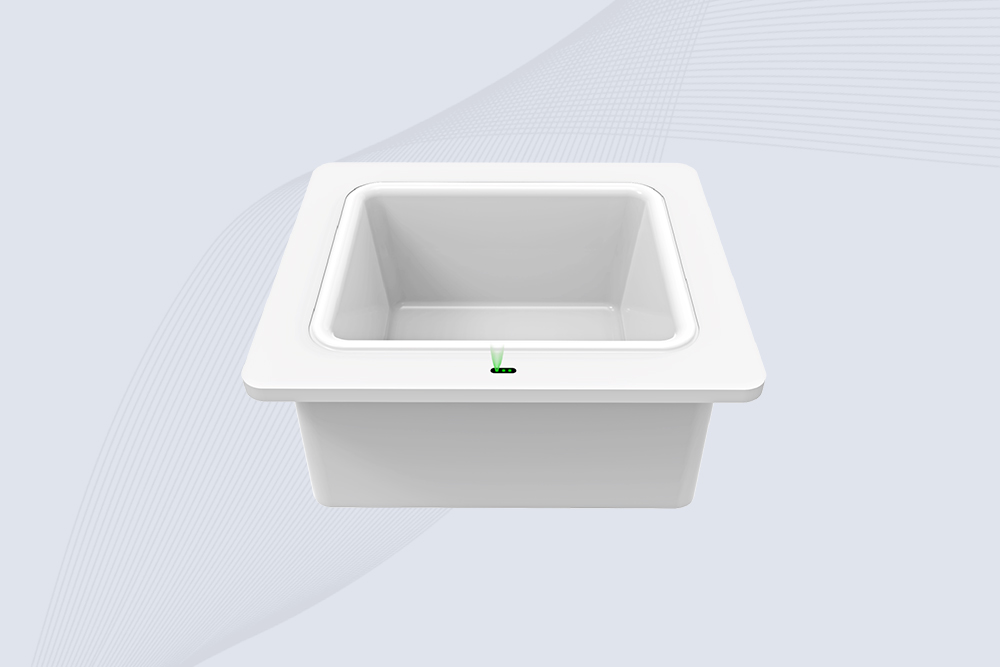
RFID inventory scanner can reduce the amount of manual product identification involved in warehouse stock checking. A USB RFID inventory reader connects RFID tag data to inventory software, helping warehouse teams identify products, compare stock records, and investigate missing or unexpected items more efficiently.
A warehouse can have thousands of products on shelves, pallets, or in temporary receiving areas. Keeping the stock count accurate sounds simple until someone has to actually count everything.
One product is in the wrong location. Another was received but never entered into the system. A third was moved between shelves without the inventory record being updated.
This is where an RFID inventory scanner can make a practical difference.
Instead of relying entirely on employees to find and record each item manually, RFID allows tagged products to be identified electronically. A USB RFID inventory reader can connect the RFID system to a computer or warehouse application, turning physical tags into digital inventory records.
The interesting part is not just that RFID can read tags.
It is what happens to the inventory process after you stop depending on every item being manually scanned one by one.
If you are still comparing different types of RFID readers before choosing an inventory solution, our USB RFID Scanner Guide explains the main reader types, applications, and selection factors.
Before RFID: Someone Has to Count Everything
Let’s take a normal stock-counting day.
Two warehouse employees receive a list of products that need to be checked.
They walk to the first shelf.
Find the SKU.
Count the boxes.
Write down the quantity.
Move to the next shelf.
Then the next one.
It works.
For a small warehouse, perhaps this is perfectly reasonable.
But as inventory grows, small mistakes start adding up.
A box may be hidden behind another box. A product may be counted twice. Someone may forget to update the spreadsheet after moving stock.
And then there is the time involved.
If the warehouse has 5,000 individually managed products, manually checking every item can become a serious operational task.
RFID does not remove every inventory problem, but it changes the way the identification step is handled.
After RFID: The System Identifies Tagged Products
With RFID, products receive RFID tags containing identification information.
During inventory checking, the RFID reader communicates with those tags and captures their IDs.
The software can then compare the detected tags against the inventory database.
A simplified process looks like this:
RFID-tagged product
↓
RFID inventory scanner
↓
USB connection
↓
Inventory software
↓
Stock record
The employee still has a job.
They may need to move through the warehouse, check exceptions, investigate missing items, or confirm unusual results.
But they are not necessarily entering every product manually.
That is a meaningful difference.
What Does USB RFID Inventory Reader Actually Do?
It is easy to think of the reader as the inventory system itself.
It isn’t.
The RFID reader’s job is mainly to communicate with compatible RFID tags and provide the captured data to the host computer.
For example, the reader may detect:
E200341201234567
The warehouse software can associate that RFID ID with:
This distinction becomes important when buying equipment.
A very good RFID reader cannot fix poorly designed inventory software.
Likewise, excellent warehouse software cannot make an unsuitable reader perform well.
The two sides need to work together.
RFID Inventory Is More Than “Scanning Faster”
Speed gets most of the attention in RFID marketing.
But inventory accuracy is often the more interesting benefit.
Consider a warehouse where 100 products are expected in a storage area.
The system has a list of 100 RFID-tagged items.
The scanner detects 97.
Those three missing IDs become exceptions that the warehouse team can investigate.
Maybe they are on another shelf.
Maybe they have already been shipped.
Maybe the tags are damaged.
Or perhaps the products were never received correctly.
The RFID system does not automatically tell you why an item is missing.
It gives you a better starting point for finding out.
That is a more realistic way to think about RFID inventory management.
Where USB RFID Scanners Fit in a Warehouse
A USB RFID scanner is particularly useful when RFID reading takes place at a fixed workstation.
For example:
Receiving Desk
New RFID-tagged products arrive.
The operator places the products in the reading area.
The USB RFID reader identifies the tags.
The software compares them with the expected shipment.
Inventory Workstation
A warehouse employee brings a group of tagged products to a workstation.
The reader captures the tag IDs.
The software updates or checks the inventory records.
Product Registration
A manufacturer needs to associate RFID tags with products before shipment.
The operator connects the USB RFID reader to a computer and registers the tag IDs in the system.
For large warehouse environments, fixed UHF readers, gate readers, or handheld RFID readers may be more appropriate.
So “RFID inventory scanner” does not automatically mean one particular type of hardware.
The workflow determines the reader.
What About Multiple Tags?
This is where UHF RFID can become especially useful.
A compatible UHF RFID reader can identify multiple tags within its reading area rather than requiring the operator to point directly at each individual barcode.
Imagine 20 tagged cartons sitting on a receiving table.
The operator does not necessarily need to pick up every carton and scan a barcode.
The RFID reader can attempt to identify the tags within its coverage area.
The actual result depends on tag placement, reader power, antenna design, product material, and the RF environment.
That last part is important.
Twenty boxes on a clean table are one situation.
Twenty boxes stacked tightly against metal shelving are another.
RFID is very good technology, but the physical environment still matters.
RFID Can Help With Inventory Accuracy — But It Is Not Automatic
There is a temptation to describe RFID as an “automatic inventory system.”
I would be a little careful with that wording.
RFID can automate identification and data capture.
It does not automatically solve:
Incorrect product records
Wrong RFID tag assignments
Damaged tags
Poor reader placement
Incorrect inventory locations
Software integration problems
Products outside the reading zone
If a tag was assigned to the wrong product during registration, the RFID reader will faithfully read the wrong association.
The technology is doing exactly what it was told to do.
This is why RFID implementation needs a reasonable process behind it.
A Simple Inventory Workflow
For a warehouse equipment provider, the workflow could look like this:
1. Tag the Products
Each product receives a compatible RFID tag.
2. Register the Tag
The tag ID is associated with the product record.
3. Connect the Reader
A USB RFID inventory reader connects to the warehouse computer.
4. Read the Products
The reader captures RFID IDs within its operating area.
5. Compare the Data
Software compares the detected IDs with expected inventory.
6. Investigate Exceptions
Missing, duplicate, or unexpected products are checked manually.
This last step is easy to overlook.
RFID does not necessarily eliminate warehouse employees.
It can help them spend less time counting and more time dealing with the items that actually need attention.
Choosing RFID Inventory Scanner
If you are a warehouse equipment supplier or system integrator sourcing RFID readers, I would not start with the question:
“Which reader has the longest range?”
Start with the workflow.
Ask:
How many items need to be identified?
What RFID tags are already being used?
Are the products metal, plastic, cardboard, or mixed?
Does the customer need desktop or handheld operation?
How many tags should be read at once?
What reading distance is actually required?
Which warehouse software will receive the data?
Does the customer need USB, SDK, or API integration?
These answers usually narrow the hardware options much faster.
For a simple workstation, a compact USB reader may be enough.
For a warehouse entrance, a completely different RFID setup may be required.
Warehouse inventory is only one application for USB RFID readers. Our broader guide to USB RFID scannersexplains where different reader types fit and what buyers should check before purchasing.
Why USB Can Be Practical Choice
USB is still useful in many inventory environments because it is familiar and easy to connect to a computer.
A warehouse workstation may already have a Windows PC running inventory software.
Adding a USB RFID reader can be relatively straightforward if the reader’s communication method and software interface match the existing system.
For distributors, this can also make USB RFID readers easier to package into complete workstation solutions.
For example:
USB RFID Reader + RFID Tags + Software + Workstation
becomes a more complete solution than selling the reader alone.
That is often where system integrators can create more value.
Before Buying in Bulk
For a wholesale order, I would strongly recommend testing the reader with the customer’s actual RFID tags.
Don’t just test the reader with the sample tag supplied by the manufacturer.
Use the real product.
If the products contain metal, test them on metal.
If the customer stores liquids, test those products.
If the warehouse has dense shelving, reproduce that environment as closely as possible.
A ten-minute test on the actual product can reveal problems that a specification sheet will never show.
Cykeo provides USB RFID reader solutions for inventory management, asset tracking, warehouse applications, and RFID system integration.
For distributors and warehouse equipment providers, sample testing can also help determine which reader, antenna, tag, and software combination makes sense before moving to volume purchasing.
Tool management is another practical application for USB RFID technology. If your project involves tool cabinets, equipment checkout, or tracking who uses a particular tool, see our detailed guide to RFID tool tracking and USB RFID readers.
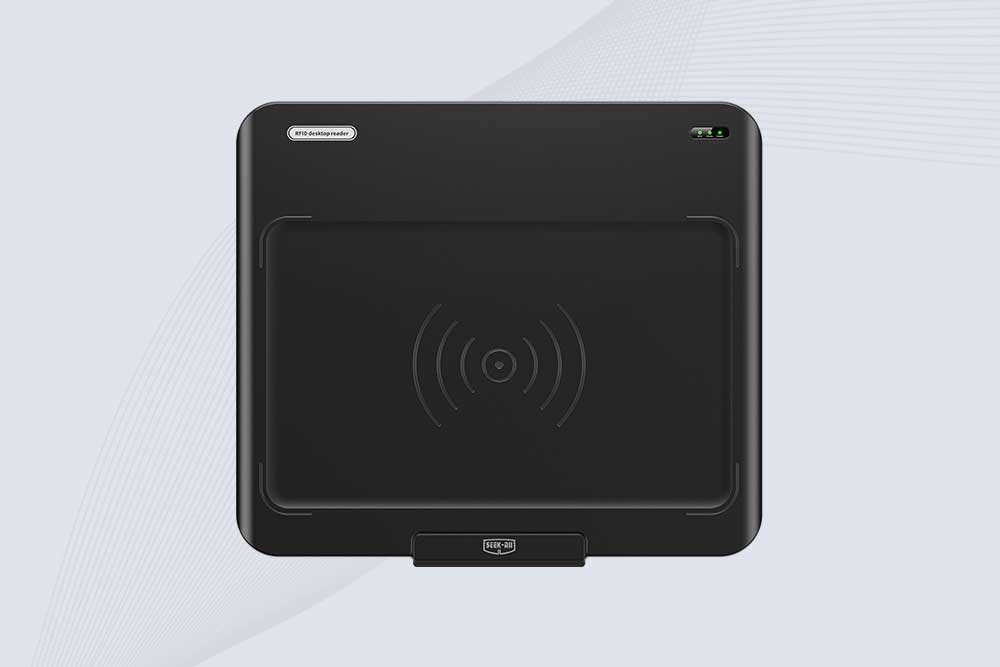
SSD-D3AL is a USB-HID UHF RFID reader with 0–30 cm reading, 0–15 cm writing, over 600 tags/s recognition, USB plug-and-play operation and OEM Logo customization.
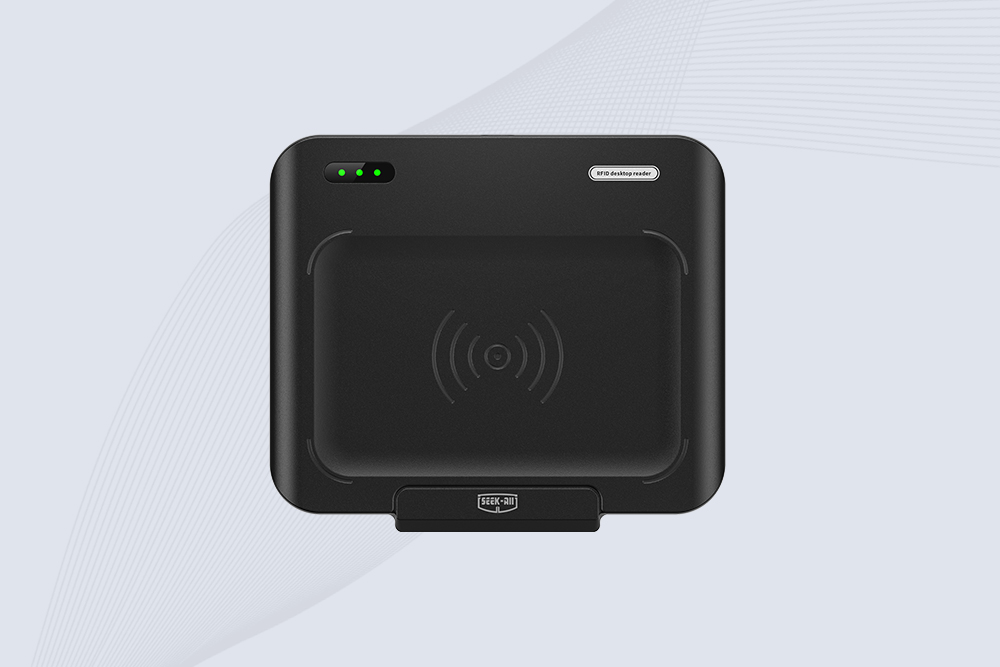
SSD-D1AL is a compact USB UHF RFID reader with Impinj E710/X3M1 chipset, USB-HID, 600+ tags/s recognition, 4/8/16 antenna support and plug-and-play USB power.
CYKEO CYKEO-D1LA USB RFID Reader is a compact desktop solution with near-field control for precise tag reading and encoding. Powered by USB, supporting ISO 18000-6C, and built for stable batch writing, this usb rfid tag reader fits retail, libraries, offices, and controlled RFID encoding tasks.
CYKEO CYKEO-D1L RFID scanner USB is a compact desktop UHF RFID scanner designed for short-range tag writing and verification. This usb rfid scanner supports batch encoding, stable 0–26 dBm output, and works across Windows, Linux, and Android systems.
CYKEO CYKEO-D1C USB RFID Card Reader is a near-field UHF desktop writer designed for secure, short-range tag encoding. With USB-C connectivity and stable 26 dBm output, this rfid reader usb c is ideal for badge issuance, label encoding, and controlled desktop RFID workflows.
CYKEO CYKEO-D2L RFID Reader USB is a compact desktop encoder built on the Impinj R500 chip. With near-field control and stable USB power, this usb rfid card reader delivers precise tag writing for offices, retail counters, and small-scale logistics encoding tasks.
CYKEO CYKEO-D3L USB RFID Tag Reader delivers stable UHF tag reading and writing for daily desktop and light industrial tasks. Designed for controlled short-range operation, this USB RFID Tag Reader works reliably with rfid tag and reader systems in libraries, tool tracking, and inventory registration.
The CYKEO CYKEO-D4L UHF RFID Tag Reader is a stable Desktop RFID Reader designed for accurate tag registration, borrowing, and return workflows. Built with the Impinj R2000 chip, this UHF RFID Tag Reader delivers controlled short-range reads for libraries, asset tracking, and inventory management environments.
The CYKEO CYKEO-D5L Desktop RFID Card Reader is a stable UHF RFID Card Reader designed for controlled short-range reading and writing. Built for libraries, tool rooms, and asset desks, this UHF RFID Card Reader supports dense tag handling, secure data processing, and easy USB integration.
The CYKEO CYKEO-D6L RFID Reader Writer is a heavy-duty Desktop RFID Reader designed for short-range, high-accuracy tag programming. Built for libraries, labs, and asset desks, this RFID Reader Writer supports batch processing, stable 33dBm output, and seamless integration with existing management systems.
Cykeo CYKEO-D8A embedded RFID badge reader offers 30+ tags/sec scanning, 20cm anti-crosstalk precision, and DC 12V power for unmanned stores, warehouses, and smart inventory systems.
Cykeo’s CYKEO-D8C UHF RFID gate reader achieves 200-tag/batch scanning with adjustable power control, ideal for retail inventory and smart warehouse management.
RFID Industry Writer | IoT & Asset Tracking Analyst
James writes about RFID technology, asset tracking, and the practical challenges of digital transformation across warehousing, retail, manufacturing, and logistics.
His work focuses on how RFID is applied in real-world operations—improving inventory visibility, automating workflows, and helping businesses manage assets with greater accuracy and efficiency.
He regularly covers topics including UHF RFID, smart cabinets, RFID portals, tool tracking, warehouse automation, and industrial IoT trends..
Discover how rfid jewellery tags improve jewelry inventory accuracy, security, and real-time tracking. Cykeo RFID solutions enable fast stock counts, loss prevention, and intelligent retail management.
Discover waterproof handheld RFID scanners built for rugged outdoor environments. Learn how Cykeo’s durable devices enhance accuracy in harsh weather and dust.
Learn how aluminum foil interacts with RFID signals, why smartphones can only read certain RFID tags, and what factors truly determine RFID reading range. A practical, real-world guide for RFID solution providers to optimize performance and privac...
Looking to buy RFID laundry tags in bulk? Learn how to choose durable industrial tags, reduce linen loss, and improve laundry efficiency with real-world insights.
 Cykeo RFID IoT Solution Products R&D Manufacturer