What’s RFID technology? RFID technology stands for Radio Frequency Identification, a method of identifying tagged objects through radio waves. An RFID system uses tags, readers, and software to capture identification data without requiring direct visual contact, supporting applications such as inventory management, asset tracking, retail operations, and industrial automation.
RFID is not a single product. It is a way to connect physical objects with digital information. A tag attached to a carton, tool, library book, or reusable container carries identification data that a compatible reader can detect. The software then determines what that identification means within a business process.
That distinction matters in real installations. A reader can detect a tag, but it cannot independently know whether a carton has arrived against a purchase order, whether a tool has been returned to the correct cabinet, or whether a library book has been checked out properly. Those actions depend on application logic, data quality, and the wider system.
For businesses evaluating RFID, the useful question is not simply whether a reader can detect a tag. It is whether the complete setup can identify the right item, at the right location, and deliver dependable information to the people or systems that need it.
What Does RFID Technology Mean?
RFID is short for Radio Frequency Identification. It describes technologies that use radio-frequency communication to identify objects or, in some applications, people through authorized credentials.
A typical RFID system contains three main elements:
RFID tag: Attached to an item or incorporated into a card, label, or other object. It stores an identifier and, depending on the tag, may contain additional data.
RFID reader: Communicates with compatible tags and receives their responses.
Software or host system: Processes the captured identifiers and connects them to inventory records, access permissions, transactions, or other business information.
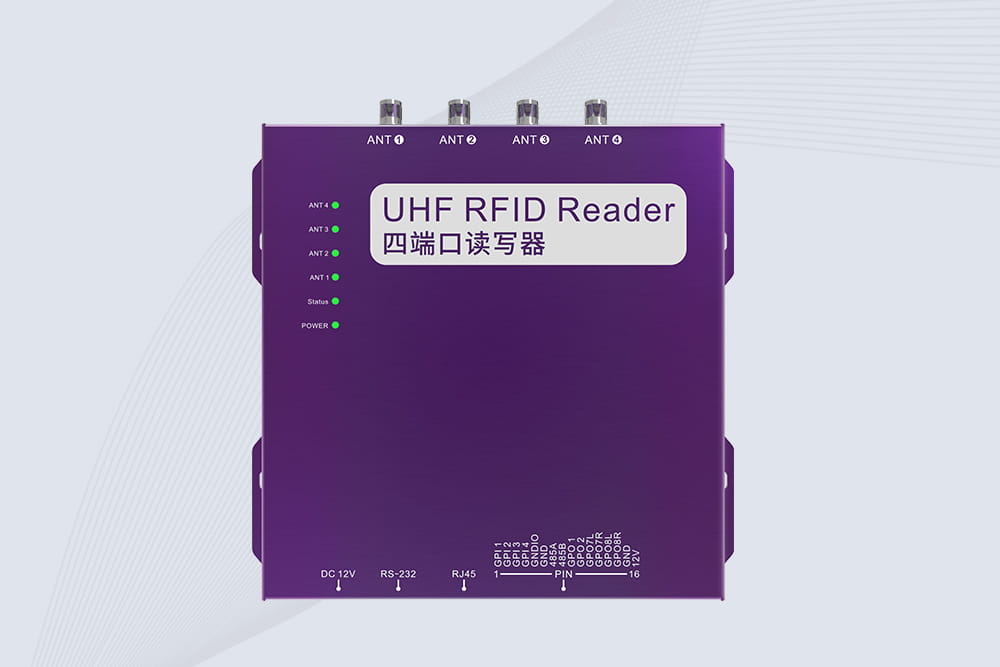
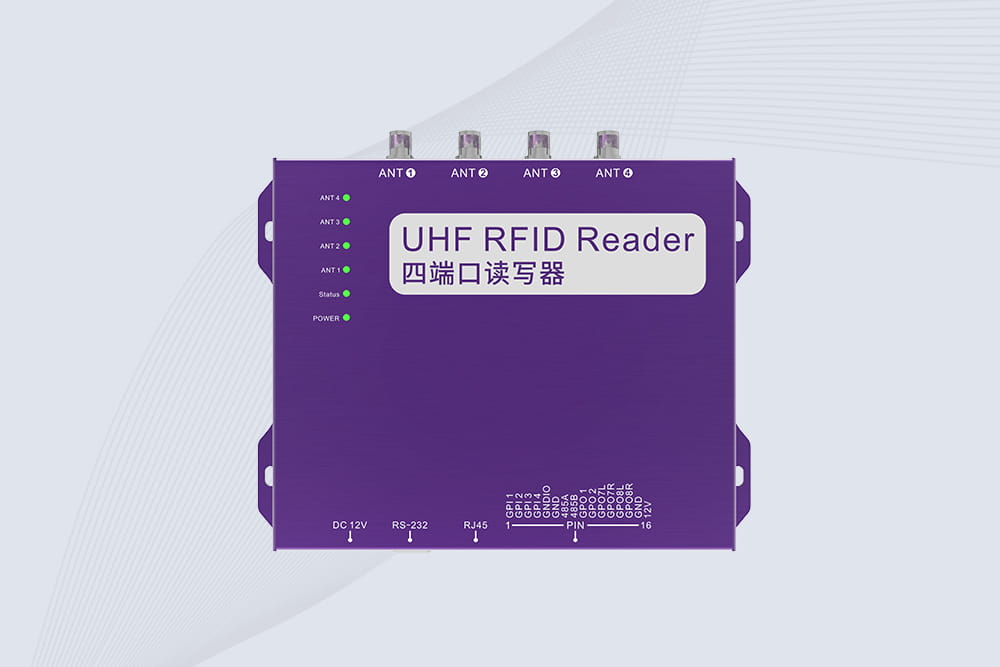
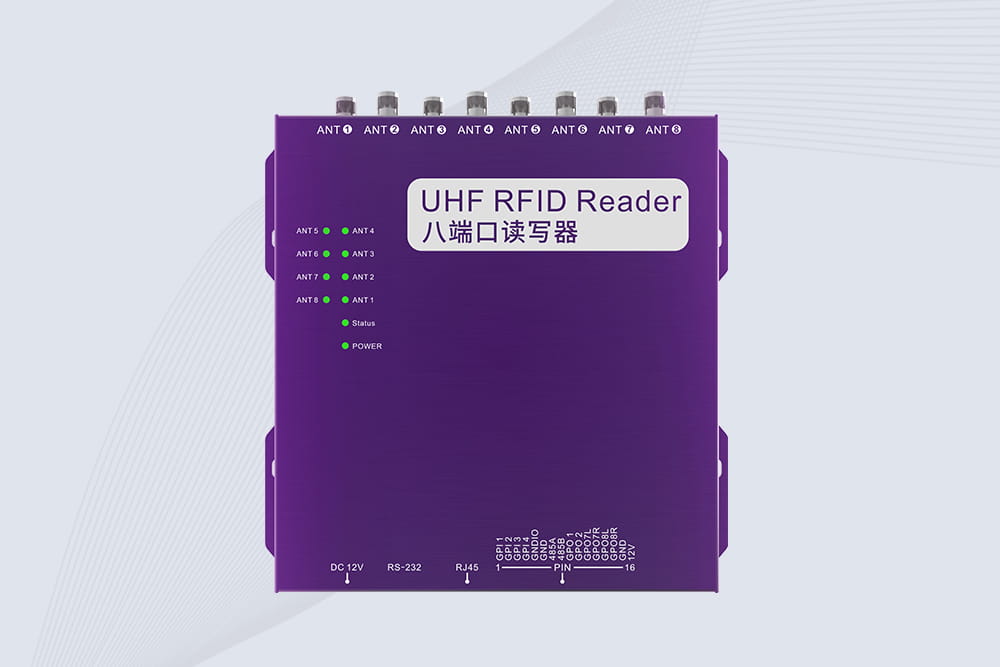
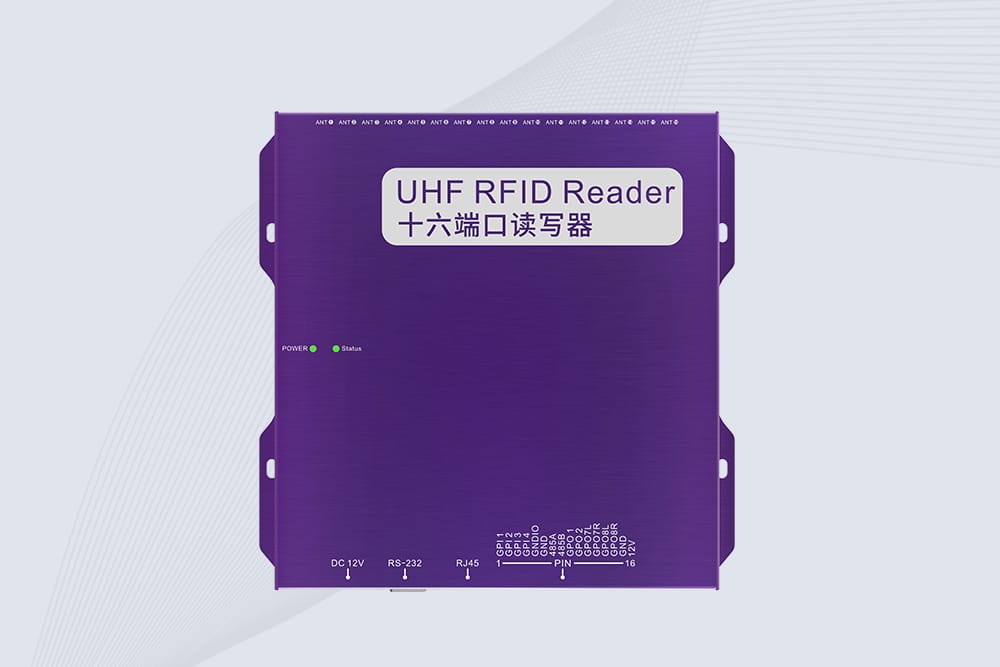
Some installations also require antennas, network connections, middleware, and application-specific equipment. Integrated readers combine the reader electronics and antenna in one housing, while other systems use separate reader units and antennas to cover different zones.
RFID identifies objects; software gives the data meaning
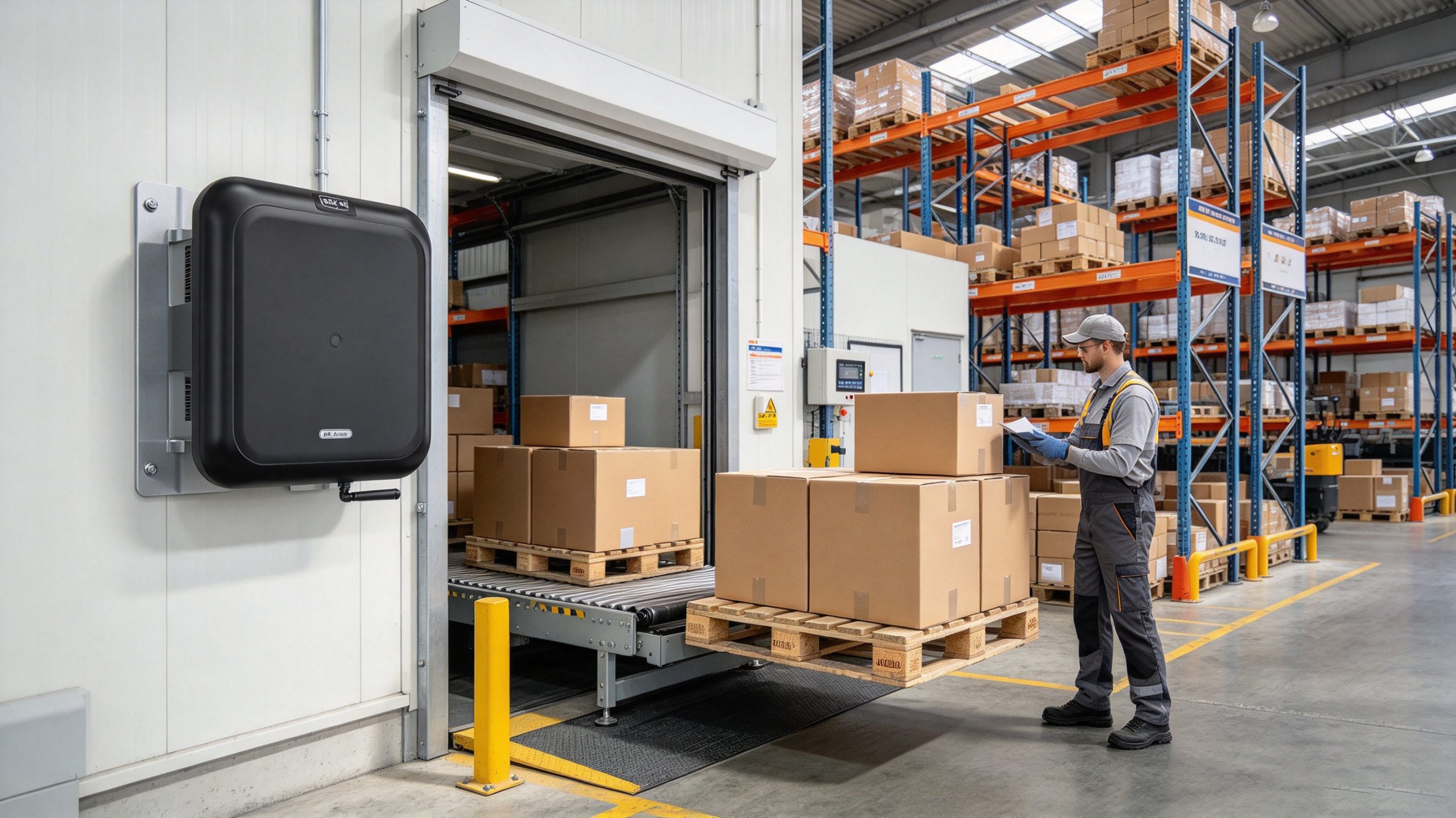
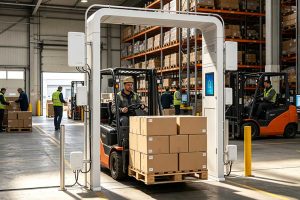
Imagine a warehouse employee moving a pallet of cartons through a receiving area. Each carton carries an RFID tag. A reader installed near the passage captures tag identifiers as the pallet moves through its configured read zone.
The warehouse application can compare those identifiers with an expected shipment list. If a tag is associated with a known product record, the system can use that relationship to support a receiving transaction.
However, a successful radio read does not automatically prove that the goods have been accepted, inspected, or placed in the correct storage location. Those are business events that require rules and, where necessary, additional confirmation.
This is one of the most important distinctions when planning an RFID project: tag detection and business-process completion are related, but they are not the same thing.
How Does RFID Technology Work?
RFID works through communication between a reader and a compatible tag. The precise process depends on the frequency band and tag design, but passive RFID systems commonly use the reader’s radio-frequency field to power the tag’s response.
1. The tag carries an identifier
A passive RFID tag typically contains a chip and antenna. Its identifier is associated with an item record in the business system. The tag usually does not need its own battery.
2. The reader communicates with the tag
The reader transmits a radio-frequency signal. In a passive UHF system, the tag harvests energy from that signal and responds using backscatter communication.
3. The system processes the read
The reader passes the captured data to a host, middleware layer, or application. Software filters or interprets the reads and associates identifiers with the relevant items and events.
Passive, active, and battery-assisted RFID
Not every RFID tag communicates in the same way.
RFID tag type
Power source
Typical characteristics
Passive RFID
Energy from the reader’s field
No onboard battery required; common for labels, cards, and item-level tracking
Active RFID
An onboard battery
Can transmit signals using its own power; used in systems designed for tracking over larger areas
Battery-assisted passive RFID
Onboard battery supports tag operation
Combines a battery with reader-dependent communication behavior, depending on the design
Passive tags are widely used where businesses need to identify many relatively low-cost items. Active systems are different tools for different requirements; they should not be treated as interchangeable with ordinary passive UHF labels.
What happens when multiple tags are present?
A reader may encounter many tags at the same time. Anti-collision protocols help coordinate communication so that multiple tags can be identified within a read zone. The actual read rate depends on the protocol, reader configuration, tag population, radio conditions, and the amount of data being exchanged.
For warehouse teams, this matters when cartons move quickly past a portal or when several tagged tools are placed together. A headline read-rate specification is useful, but it does not guarantee that every tag will be captured in every installation. Testing with the actual items and movement pattern is more meaningful than relying on a laboratory figure alone.
Main Types of RFID Technology
RFID systems are often grouped by their operating frequency. Frequency affects how radio waves behave, the kinds of tags available, and the applications a system can support.
RFID category
Common frequency
Typical applications
Low Frequency (LF)
125 or 134.2 kHz
Animal identification and selected access-control systems
High Frequency (HF)
13.56 MHz
Contactless cards, library systems, and NFC-related applications
Ultra-High Frequency (UHF)
Commonly within 860–960 MHz globally, depending on regional rules
Logistics, retail inventory, warehouse operations, and industrial asset tracking
The frequencies and operating conditions are not identical worldwide. GS1 describes LF, HF, and UHF as major RFID frequency categories, each with different performance characteristics and suitable applications.
Why UHF RFID is widely used for industrial tracking
UHF RFID is particularly useful when an organization needs to identify multiple tagged items without individually pointing a scanner at every label. It is commonly used for carton identification, inventory counts, reusable transport items, and asset tracking.
GS1 explains that passive UHF RFID tags can often be read over several metres. Under special conditions, the read distance can be greater; actual performance depends on the reader, antenna, tag orientation, radio environment, and installation.
For an industrial project, that range should be treated as a design variable—not a guaranteed result. A narrow, controlled read zone may be more useful than maximum distance if the system needs to distinguish items entering one doorway from goods stored nearby.
Where Is RFID Technology Used?
RFID is useful wherever an organization needs to associate a physical item with a digital record. The application may be simple, such as identifying a library book, or more complex, such as recording goods movement across multiple supply-chain locations.
1. Warehousing and supply chain management
Warehouses can use RFID tags on products, cartons, pallets, or reusable containers. Readers placed at receiving points, dispatch areas, or selected storage locations can capture identifiers as tagged items move through the operation.
Typical uses include:
Recording incoming and outgoing goods.
Supporting stock counts and inventory reconciliation.
Identifying items moving between process areas.
Matching physical goods with expected shipment records.
Improving visibility of reusable containers and returnable transport items.
GS1 US describes RAIN RFID as a way to capture product identity without requiring the direct line of sight associated with conventional barcode scanning. Standards-based identifiers can also help businesses exchange item information across supply-chain systems.
2. Retail and apparel
Retailers can attach RFID labels to individual products and use readers to support inventory counts, stockroom checks, replenishment, and selected checkout or loss-prevention workflows.
The practical benefit is not simply that a tag can be read from a distance. Item-level identification can help staff reconcile what the system says is in stock with what is physically present. The quality of the result still depends on tag coverage, correct item records, reader placement, and the procedures used to handle exceptions.
3. Libraries and document management
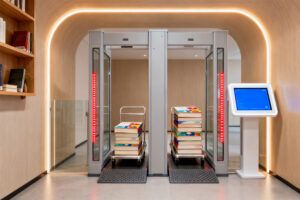
Libraries can use RFID tags to identify books and other circulating materials. Compatible readers and software can support registration, borrowing, returns, inventory checks, and security-related workflows.
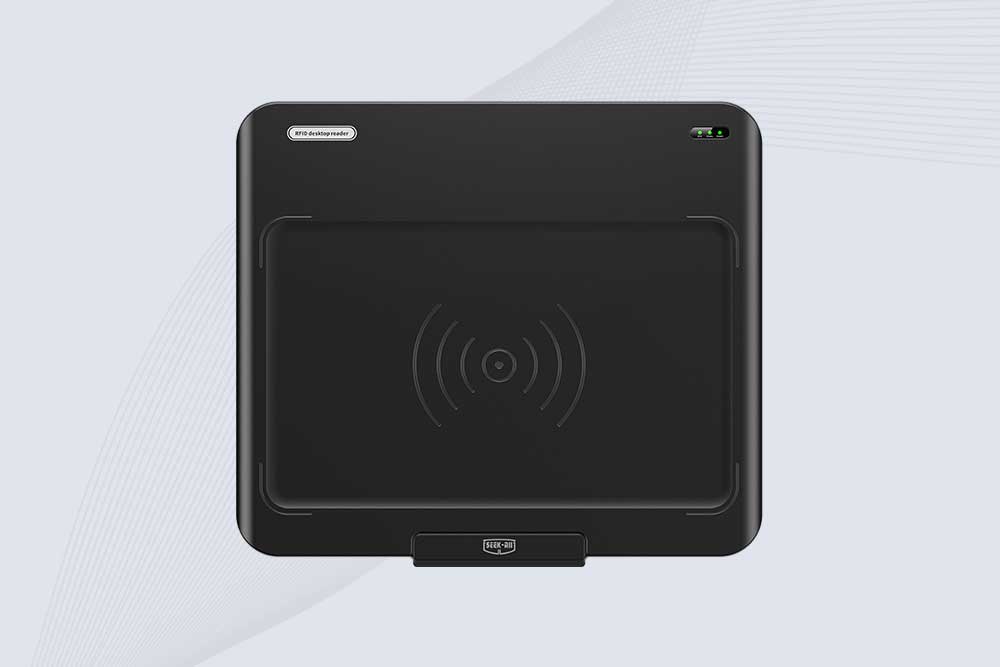
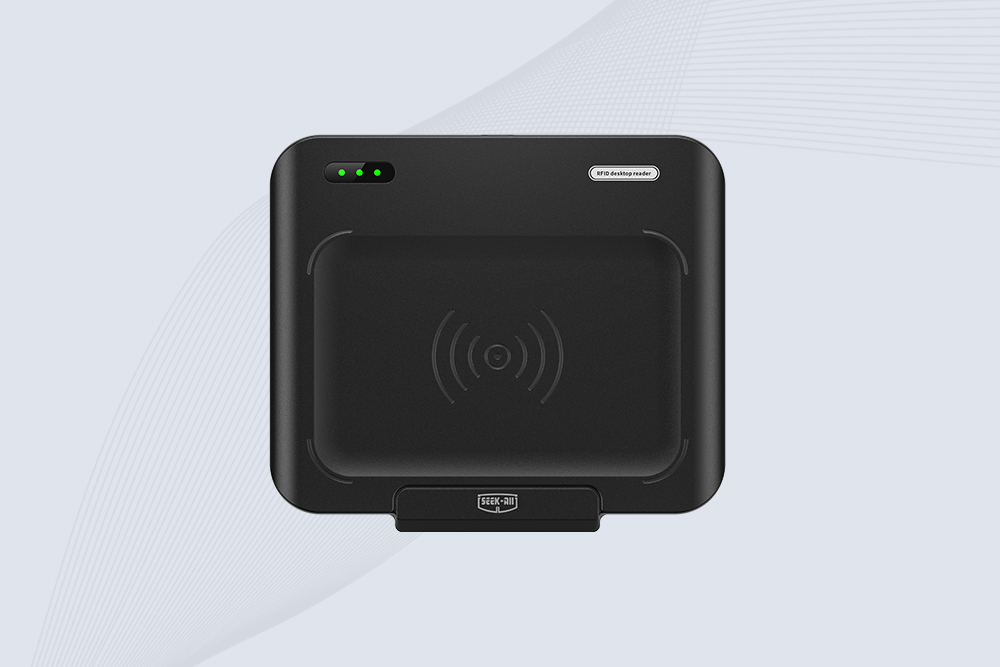
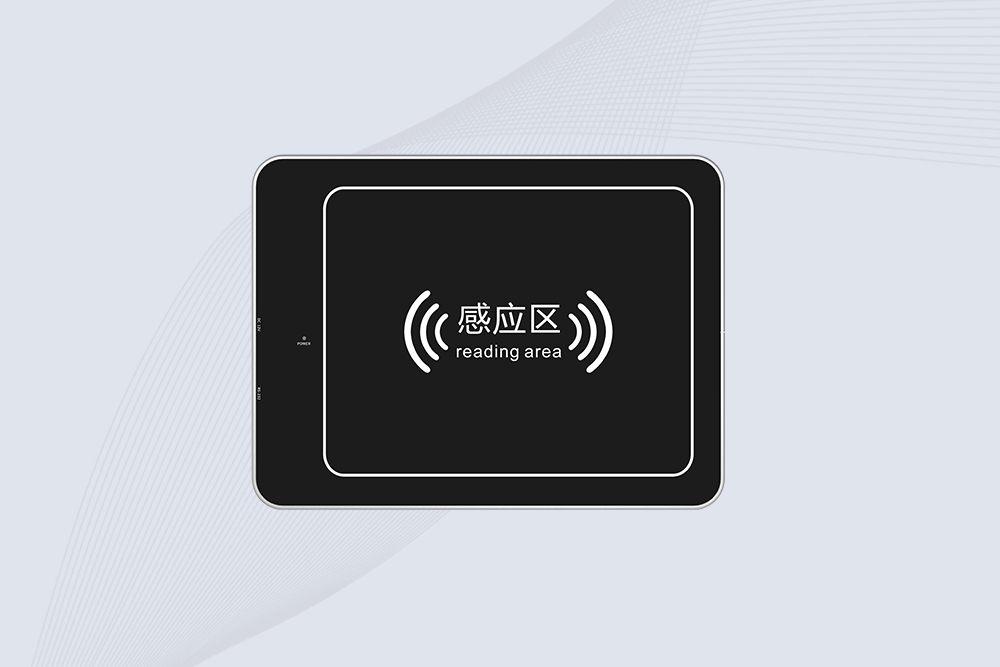
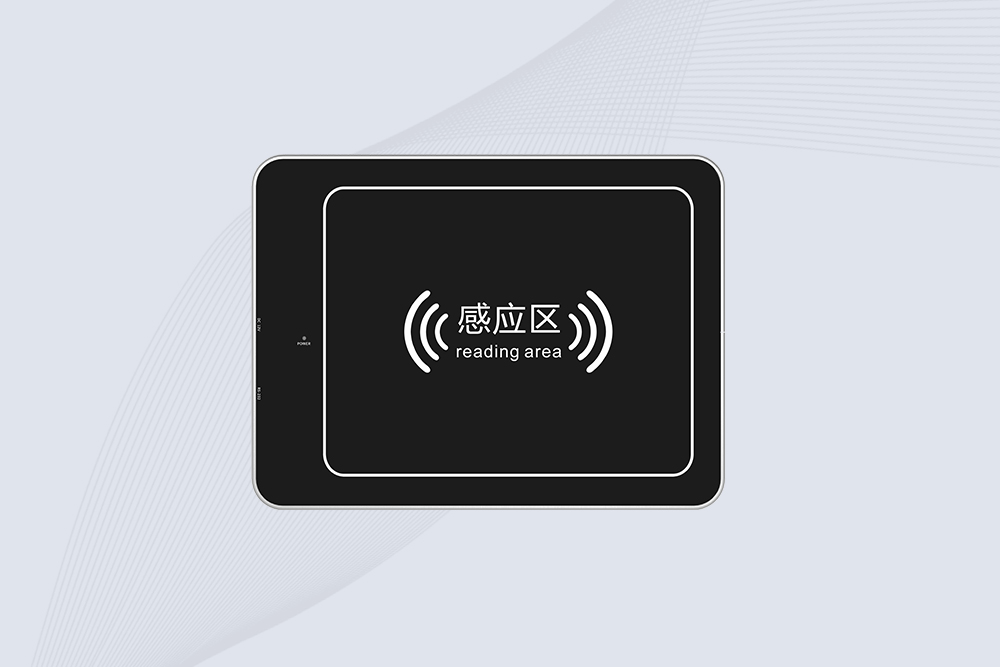
A desktop RFID reader may be suitable for registering or updating tags at a staff workstation. A self-service borrowing or return station serves a different role: it combines RFID identification with a user interface and the library management system. These components need to exchange the correct item and transaction data for the workflow to function reliably.
4. Industrial assets, tools, and equipment
Factories, maintenance teams, and service organizations can use RFID to identify tools, components, containers, and other reusable assets. The system can support check-in/check-out records, inventory checks, and confirmation that an item has passed a designated point.
For example, a maintenance team might tag tools stored in a controlled cabinet. A reader captures tag identifiers, while the application associates those identifiers with tool records and authorized users. The reader provides identification data; permissions, accountability, and alerts depend on the connected software and system configuration.
RFID readers can capture tag identifiers as goods move through a configured receiving or dispatch zone.
How Fast Is RFID Adoption Growing?
RFID is an established technology, but its use continues to change as more products and processes become candidates for automated identification. Market statistics provide useful context, although they should be interpreted carefully.
The RAIN Alliance reported that 42.7 billion RAIN RFID tag chips were shipped globally in 2025. Its report noted that this was lower than the 52.8 billion reported for 2024, citing factors including semiconductor inventory cycles, tariff uncertainty, and reduced demand in some markets. These figures refer to tag-chip shipments reported by participating manufacturers; they are not a count of deployed RFID systems or proof that every application is growing at the same rate.
For businesses, the more useful question is where RFID solves a measurable operational problem. If manual scanning causes delays at a receiving dock, inventory checks require too much labor, or reusable equipment is difficult to account for, RFID may be worth evaluating. If the process already works reliably and does not benefit from automated identification, adding RFID may create unnecessary cost and complexity.
What the market figures mean for system selection
A high volume of tag shipments does not mean that every tag is suitable for every environment. A label intended for a cardboard carton may perform differently when placed on metal equipment. Likewise, a reader selected for a narrow workstation may not be the right choice for a large warehouse passage.
A practical assessment should consider:
The number and type of items to identify.
Whether tags are stationary or moving.
The required read zone and movement speed.
Nearby metal, liquid, and other potential sources of interference.
Reader interfaces and compatibility with the host application.
How the software will interpret repeated reads and exceptions.
These decisions determine whether the technology is useful in daily operations—not the market growth figure alone.
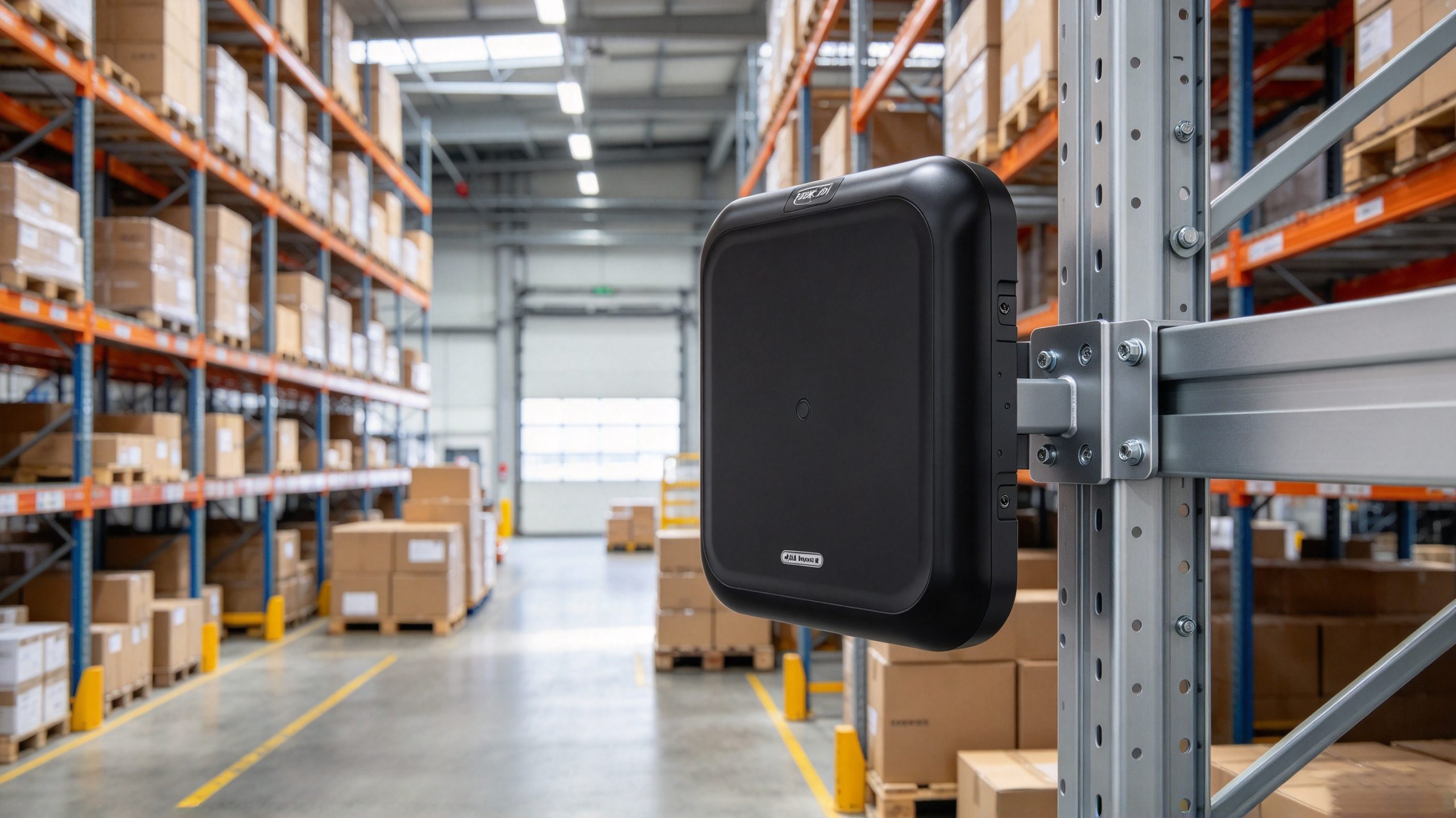
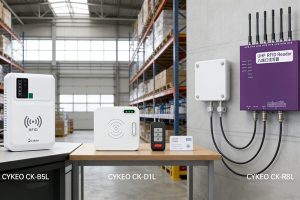
Reader design, antenna placement, and software integration all influence the performance of an industrial RFID installation.
RFID Technology vs. Barcodes: Which Should a Business Choose?
RFID and barcodes both identify products, but they collect data differently. RFID uses radio communication; barcodes use optical scanning. Neither is automatically the best option for every operation.
Comparison
RFID technology
Barcode technology
Line of sight
Does not require direct visual alignment with the tag
Barcode generally needs to be visible to the scanner
Multiple items
Can identify multiple tags within a read zone
Usually requires scanning each barcode individually
Human involvement
Fixed readers can capture tags automatically
Often requires an operator or scanning station
Label cost
RFID tags generally cost more than simple printed labels
Printed barcodes are often inexpensive
Environmental factors
Radio performance can be affected by metal, liquids, orientation, and interference
Optical scanning can be affected by damage, dirt, obstruction, and poor visibility
Best fit
Automated identification, bulk reads, and defined movement points
Low-cost identification and workflows where individual scanning is practical
GS1 notes that RFID and barcodes can complement each other. Businesses can retain barcode workflows while using RFID where automated, non-line-of-sight identification offers a practical advantage.
For example, a warehouse might use RFID at the receiving dock to capture tagged cartons automatically, while retaining barcode labels for manual exception handling. This hybrid approach can be more practical than replacing every existing identification process at once.
How to Implement RFID Technology Successfully
A reliable RFID deployment starts with the operational problem, not the equipment catalogue.
Step 1: Identify the business objective
Be specific about what the system needs to accomplish. “Improve inventory” is too broad to guide installation. “Record tagged cartons passing through the receiving door and compare them with expected deliveries” is much more useful.
Step 2: Select compatible tags and readers
Choose tags based on the object, mounting surface, environment, and required read behavior. Match the reader to the tag frequency and protocol, and confirm that its interfaces can connect to the intended host system.
Step 3: Test the actual read zone
GS1 emphasizes that passive UHF read range varies with the reader, antenna, tag orientation, interference, and surrounding conditions. The shape of the usable reading area can matter more than the maximum distance.
Test with real cartons, equipment, and movement patterns. Check whether tags are missed, whether nearby items are read unintentionally, and whether the same tag generates repeated events.
Step 4: Connect reads to business rules
The software must decide what each read means. A tag detected at a receiving dock might indicate arrival, but only if the system can associate that read with the correct location, time, item record, and transaction rules.
Step 5: Measure results after deployment
Track operational indicators such as missed reads, duplicate events, manual corrections, inventory-count time, and exceptions requiring staff attention. These measures provide a more meaningful assessment than reader range alone.
Frequently Asked Questions About What’s RFID Technology
1. What’s RFID technology used for?
RFID technology is used to identify and track tagged objects through radio waves. Common applications include warehouse inventory, supply-chain tracking, retail stock management, library systems, access credentials, and industrial asset management. The exact use depends on the tag type, reader, software, and operating environment.
2. How does RFID technology work without line of sight?
A compatible RFID reader communicates with a tag using radio-frequency signals. In passive systems, the reader’s signal powers the tag, which responds with stored identification data. Unlike barcode scanning, this process does not require the tag to be visually aligned with a scanner. Physical materials and radio conditions can still affect performance.
3. What is the difference between RFID and UHF RFID?
RFID is the general technology category. UHF RFID is a specific frequency-based category commonly used for logistics, retail, and industrial tracking. Other RFID systems operate at low or high frequencies and serve different purposes, including selected access-control and contactless-card applications.
4. Can RFID read several items at the same time?
Yes. A compatible RFID reader can identify multiple tags within its reading zone. Anti-collision protocols help coordinate communication with tags, but the actual results depend on tag population, reader configuration, tag placement, radio conditions, and system design. Testing is necessary to verify performance for a particular workflow.
5. Does RFID technology replace barcodes?
Not necessarily. RFID can automate identification in applications where repeated manual scanning is inefficient, while barcodes remain suitable for many low-cost, individual-scanning tasks. Some organizations use both technologies so that automated RFID capture and manual barcode processes support the same inventory system.
6. Is RFID technology suitable for metal objects?
It can be, provided the tags and installation are selected for that environment. Metal can interfere with conventional UHF tag performance, so purpose-designed on-metal tags and careful positioning may be required. Test the actual tag on the intended object rather than assuming that a label that works on cardboard will work equally well on metal.
7. What should businesses consider before choosing an RFID reader?
Consider the RFID frequency and protocol, supported tags, required read zone, antenna characteristics, communication interfaces, environmental conditions, software integration, and technical support. For industrial use, testing with actual items and movement patterns is essential before finalizing the design.
Conclusion
What’s RFID technology? It is a radio-based identification method that connects physical objects with digital records. When implemented around a clearly defined business process, it can support automated inventory capture, asset identification, and movement tracking without requiring every tag to be scanned visually.
The strongest deployments combine compatible tags, carefully positioned readers, dependable software integration, and realistic on-site testing. For Cykeo customers, the goal should be to choose an RFID solution that fits the operating environment and delivers reliable, actionable data—not simply the longest advertised read distance.
SSD-D3AL is a USB-HID UHF RFID reader with 0–30 cm reading, 0–15 cm writing, over 600 tags/s recognition, USB plug-and-play operation and OEM Logo customization.
SSD-D1AL is a compact USB UHF RFID reader with Impinj E710/X3M1 chipset, USB-HID, 600+ tags/s recognition, 4/8/16 antenna support and plug-and-play USB power.
SSD-R16L Multi-Channel RFID Infrastructure for Automated Inventory Management ✔️ 16-Port High-Density RFID Reading Equipped with 16 SMA antenna ports, SSD-R16L supports multi-antenna deployment for warehouses, retail stores, logistics, production lines, and large-area RFID identification. ✔️ High-Speed & Long-Range Performance With up to 33…
SSD-R8L 8-port UHF RFID reader with 33dBm output, up to 20m reading range and 600+ tags/s recognition. Ideal for warehouse, logistics, retail and asset tracking.
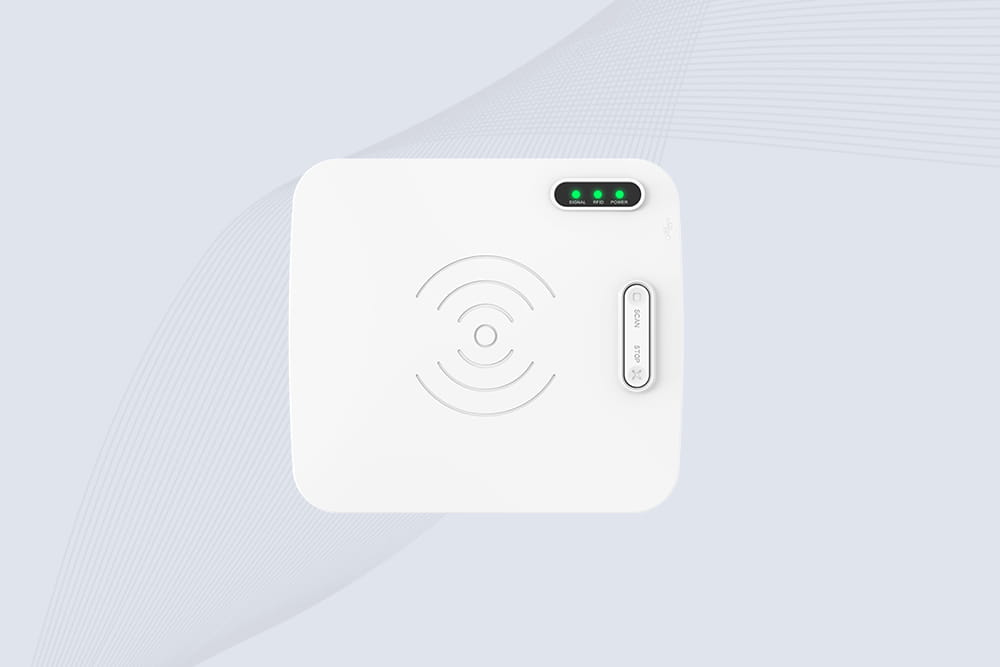
CYKEO CYKEO-D1LA USB RFID Reader is a compact desktop solution with near-field control for precise tag reading and encoding. Powered by USB, supporting ISO 18000-6C, and built for stable batch writing, this usb rfid tag reader fits retail, libraries, offices, and controlled RFID encoding tasks.
CYKEO CYKEO-D1L RFID scanner USB is a compact desktop UHF RFID scanner designed for short-range tag writing and verification. This usb rfid scanner supports batch encoding, stable 0–26 dBm output, and works across Windows, Linux, and Android systems.
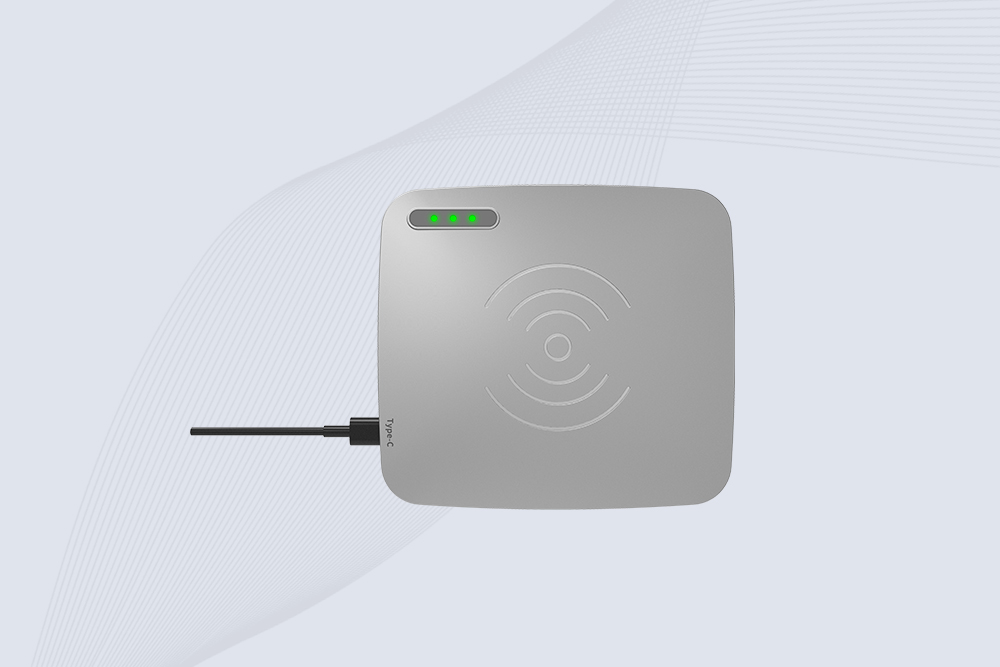
CYKEO CYKEO-D1C USB RFID Card Reader is a near-field UHF desktop writer designed for secure, short-range tag encoding. With USB-C connectivity and stable 26 dBm output, this rfid reader usb c is ideal for badge issuance, label encoding, and controlled desktop RFID workflows.
CYKEO CYKEO-D2L RFID Reader USB is a compact desktop encoder built on the Impinj R500 chip. With near-field control and stable USB power, this usb rfid card reader delivers precise tag writing for offices, retail counters, and small-scale logistics encoding tasks.
CYKEO CYKEO-D3L USB RFID Tag Reader delivers stable UHF tag reading and writing for daily desktop and light industrial tasks. Designed for controlled short-range operation, this USB RFID Tag Reader works reliably with rfid tag and reader systems in libraries, tool tracking, and inventory registration.
The CYKEO CYKEO-D4L UHF RFID Tag Reader is a stable Desktop RFID Reader designed for accurate tag registration, borrowing, and return workflows. Built with the Impinj R2000 chip, this UHF RFID Tag Reader delivers controlled short-range reads for libraries, asset tracking, and inventory management environments.
The CYKEO CYKEO-D5L Desktop RFID Card Reader is a stable UHF RFID Card Reader designed for controlled short-range reading and writing. Built for libraries, tool rooms, and asset desks, this UHF RFID Card Reader supports dense tag handling, secure data processing, and easy USB integration.
The CYKEO CYKEO-D6L RFID Reader Writer is a heavy-duty Desktop RFID Reader designed for short-range, high-accuracy tag programming. Built for libraries, labs, and asset desks, this RFID Reader Writer supports batch processing, stable 33dBm output, and seamless integration with existing management systems.
Cykeo CYKEO-D8A embedded RFID badge reader offers 30+ tags/sec scanning, 20cm anti-crosstalk precision, and DC 12V power for unmanned stores, warehouses, and smart inventory systems.
Cykeo’s CYKEO-D8C UHF RFID gate reader achieves 200-tag/batch scanning with adjustable power control, ideal for retail inventory and smart warehouse management.
CYKEO Embedded RFID Modules are designed for compact industrial and IoT devices that require stable UHF performance. These UHF RFID Modules support global protocols, flexible power control, and reliable multi-tag reading for smart cabinets, production lines, and asset tracking systems.
CYKEO Embedded RFID Module is built for compact IoT and industrial devices that need stable UHF performance. This UHF module supports global protocols, low power operation, and reliable multi-tag reading for smart lockers, production lines, and always-on RFID systems.
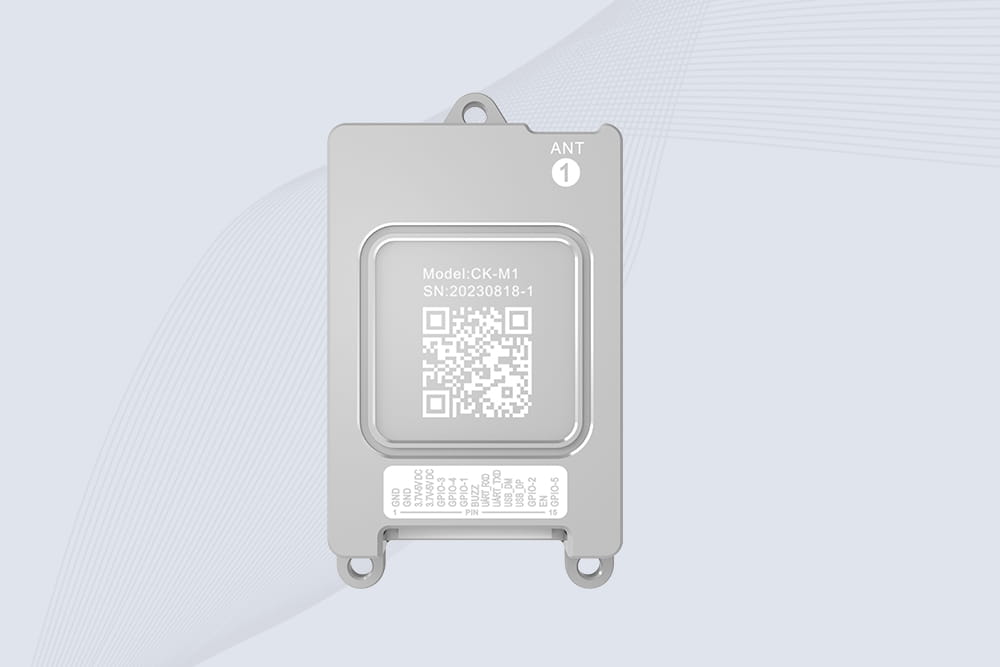
CYKEO CYKEO-M1 drone rfid module is a compact UHF RFID reader module designed for drones and UAV platforms. It supports long-range aerial scanning, fast multi-tag reading, and stable performance in wind, vibration, and outdoor environments.
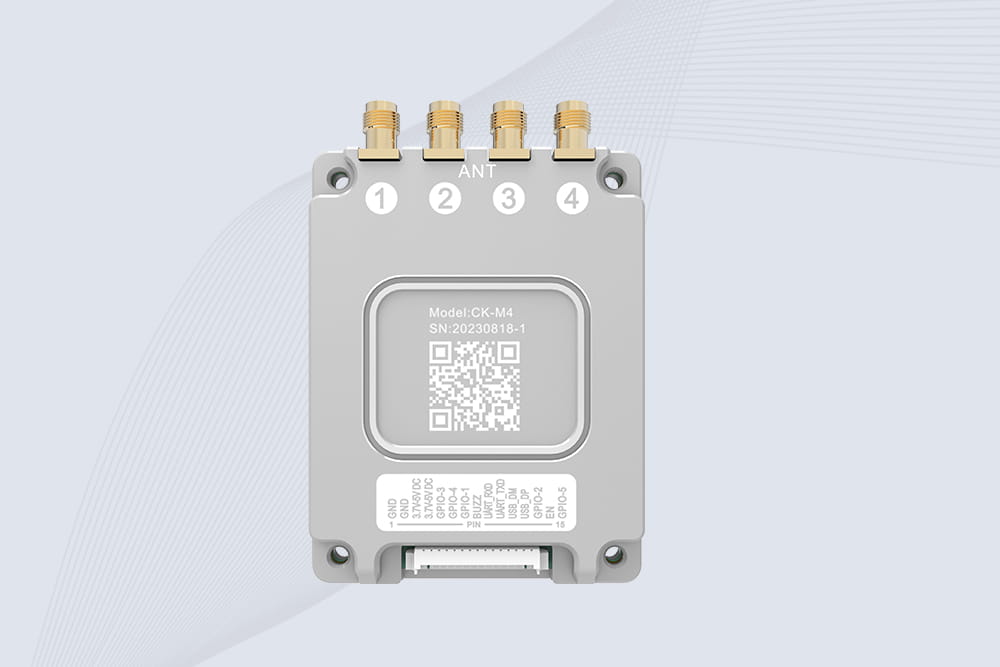
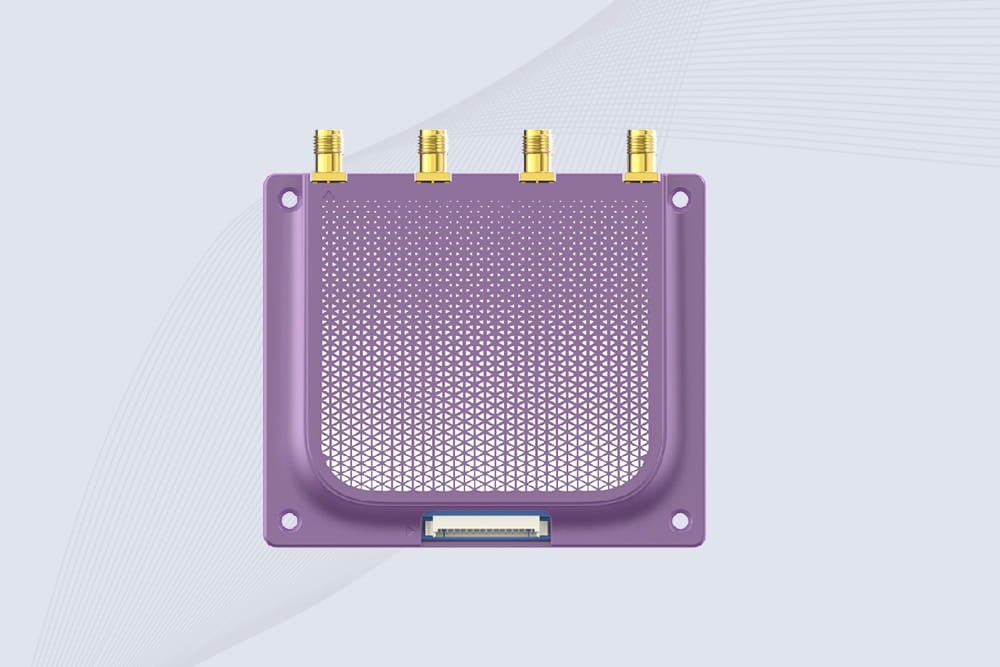
CYKEO CYKEO-M4 RC522 RFID Module is an industrial-grade UHF RFID reader with 4 ports, supporting ISO, EPC, and GB protocols. High-speed, accurate reading for IoT, automation, and warehouse applications.
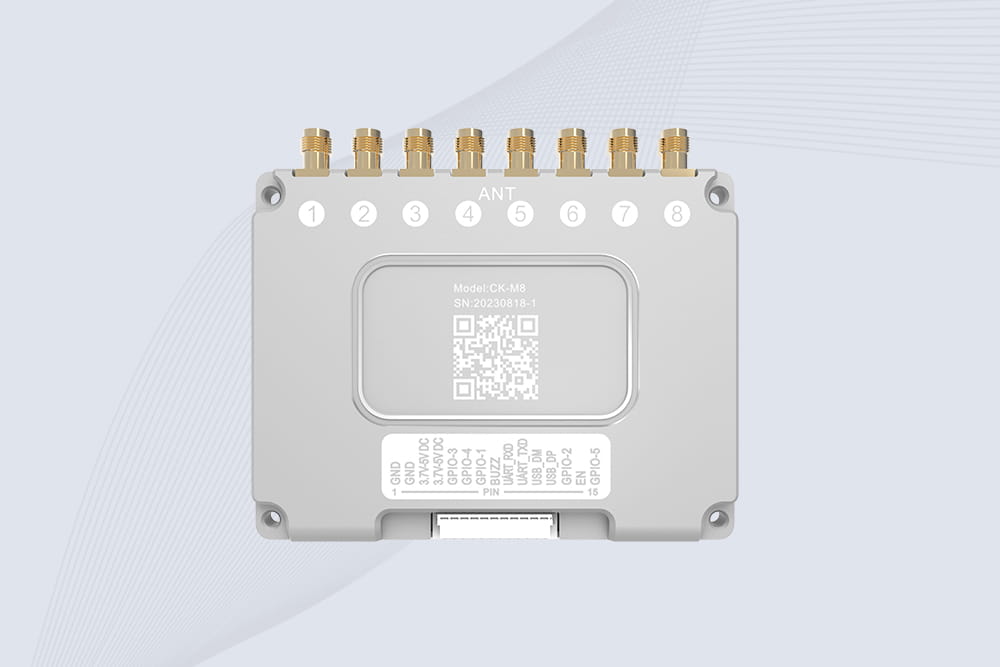
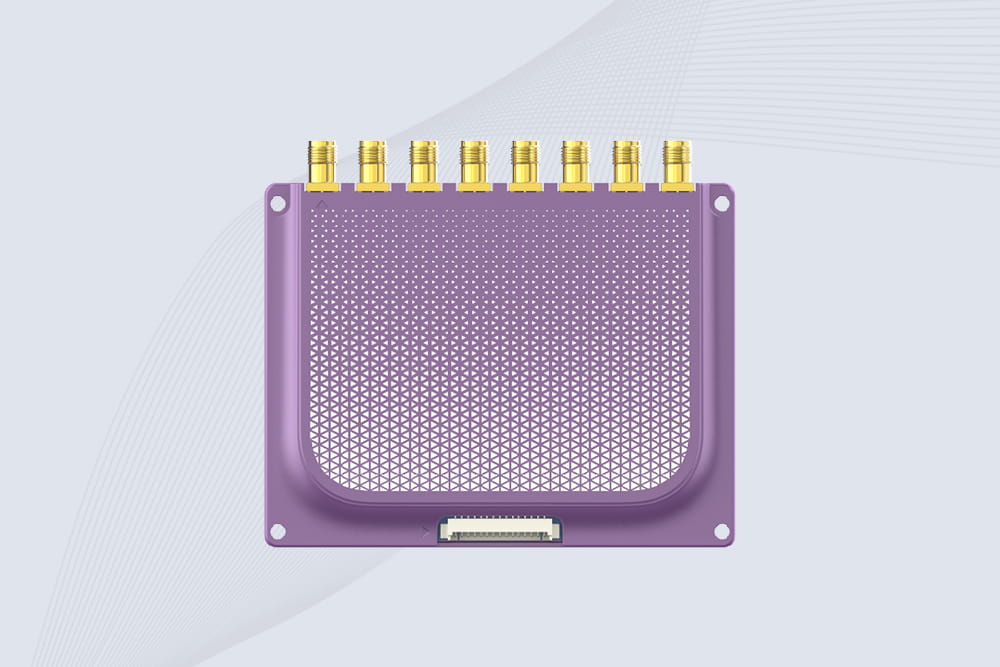
CYKEO CYKEO-M8 Module RFID is an 8-port UHF R2000 RFID Module designed for high-density, multi-tag environments. Stable 33dBm output, ISO & GB protocol support, ideal for warehouses, factories, and automated systems.
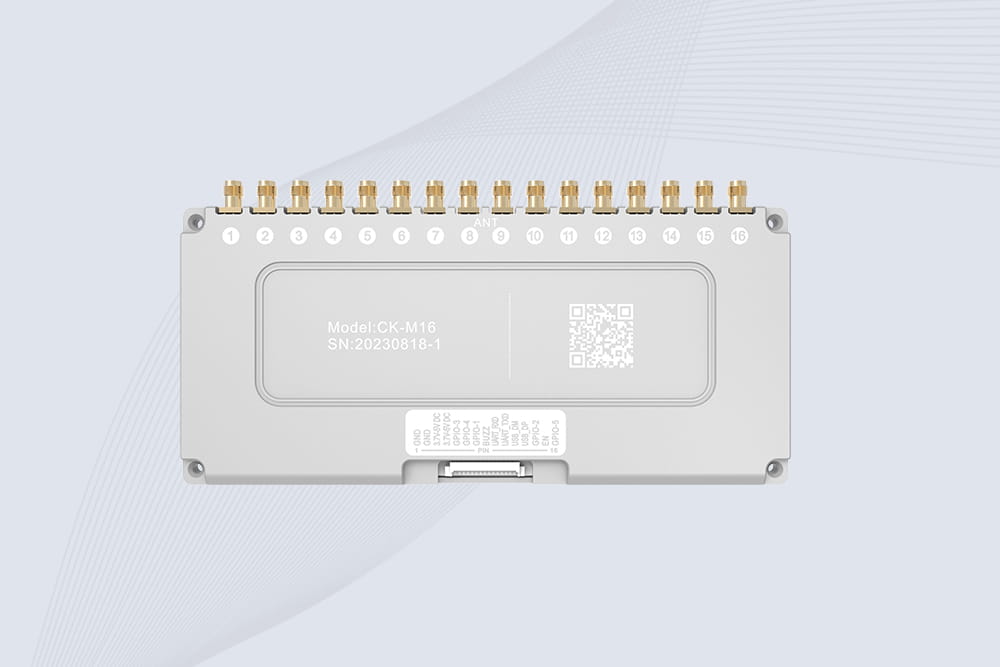
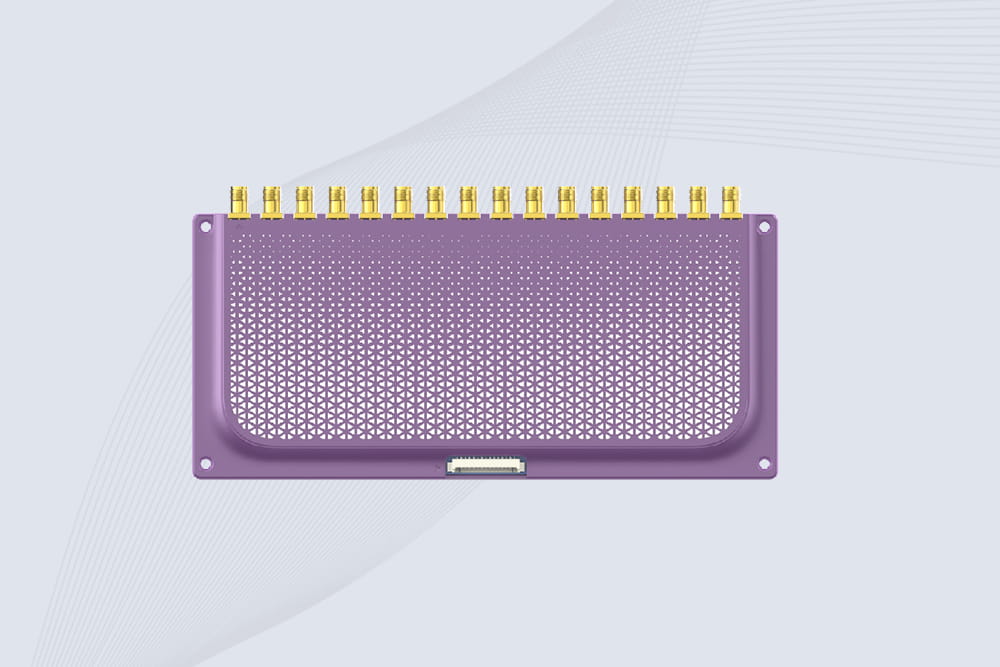
CYKEO CYKEO-M16 RFID Module is a 16-port UHF RFID reader module based on the R2000 chipset. Designed for dense tag environments, it supports ISO and GB standards and delivers stable multi-antenna control for industrial automation.
The CYKEO CYKEO-M16L RFID Reader Module is a 16-channel UHF RFID core designed for dense tag environments. With adjustable 33dBm output, multi-protocol support, and stable multi-antenna control, this RFID Tag Reader Module fits industrial automation, warehouse systems, and large-scale IoT deployments.
CYKEO CYKEO-M8L module RFID is a compact industrial UHF module built for dense tag and multi-antenna environments. With 8 RF ports, adjustable 33 dBm output, and ISO & GB protocol support, it is widely used in factories, warehouses, and automated tracking systems.
CYKEOCYKEO-M4L UHF RFID Module is a compact 4-channel RFID tag reader module designed for dense tag environments. Supporting ISO and GB protocols, it delivers stable reads up to 10 meters for industrial and IoT systems.
Cykeo CYKEO-C1 industrial Forklift RFID Reader features 20m read range, 600 tags/sec scanning, Impinj R2000 chipset, and IP67 rugged design. Ideal for warehouse logistics and manufacturing. Supports ISO 18000-6C/6B protocols.
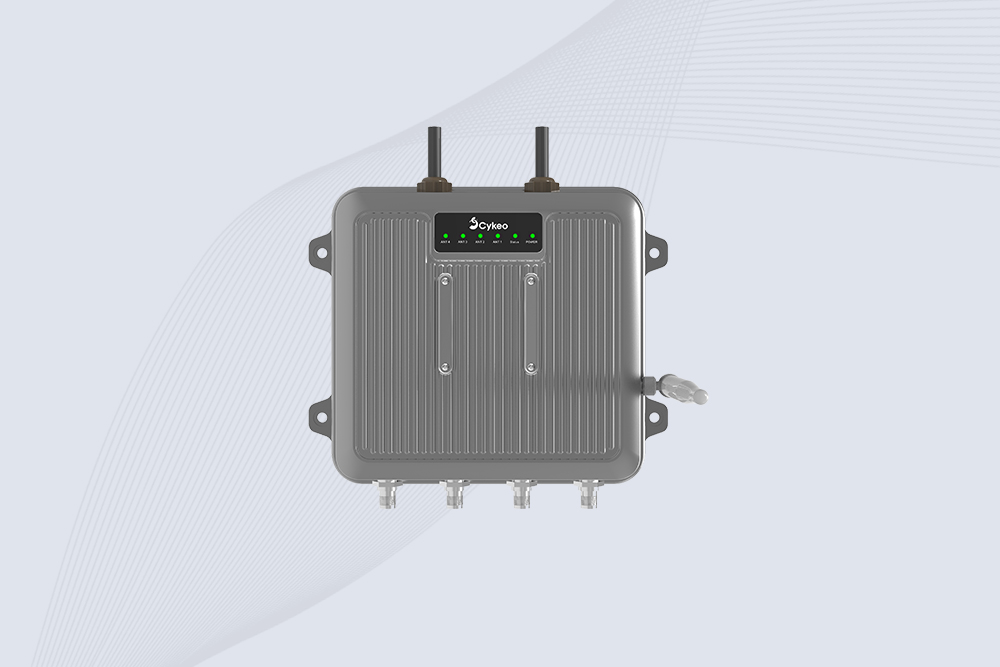
Cykeo CYKEO-R4 industrial UHF RFID Fixed Reader features 4 TNC ports, 400+ tags/sec speed, IP67 housing, and global frequency compliance for vehicle inspection, smart warehouse, and asset management systems.
CYKEO CYKEO-R8L Fixed RFID Reader with 8-port UHF design, Impinj-based RF core and up to 20m read range. An industrial Fixed RFID Reader for vehicle inspection, warehouse portals, smart manufacturing lines and secure access checkpoints.
RFID Fixed Reader from CYKEO – the CYKEO-R16L 16-port UHF fixed reader for warehouses, smart cabinets, and production lines. Long-range, multi-tag reading, stable performance for 24/7 industrial use.
RFID reader module selection, how to choose RFID module, UHF RFID module guide, OEM RFID module, embedded RFID reader, RFID integration guide, RFID module supplier, RFID SDK support, industrial RFID system design, RFID module buying guide
Discover how does uhf rfid work, including tag communication, backscatter, reader antennas, anti-collision, read range, and real-world industrial RFID applications.
Wondering what RFID reader means? We explain the definition, how it works, the different types available, and how to select the right one for your application. Clear guidance from CYKEO engineers.
Discover how RFID security gates protect assets, streamline access, and improve efficiency in libraries, retail stores, gated communities, and industrial parks. Learn about technology trends and real-world applications.
 Cykeo RFID IoT Solution Products R&D Manufacturer