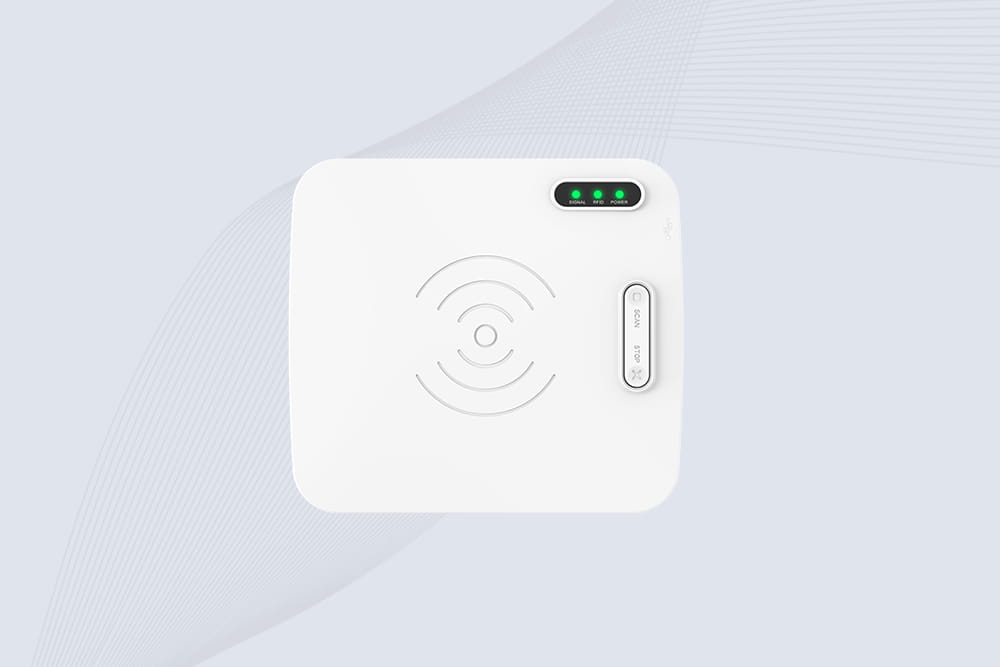
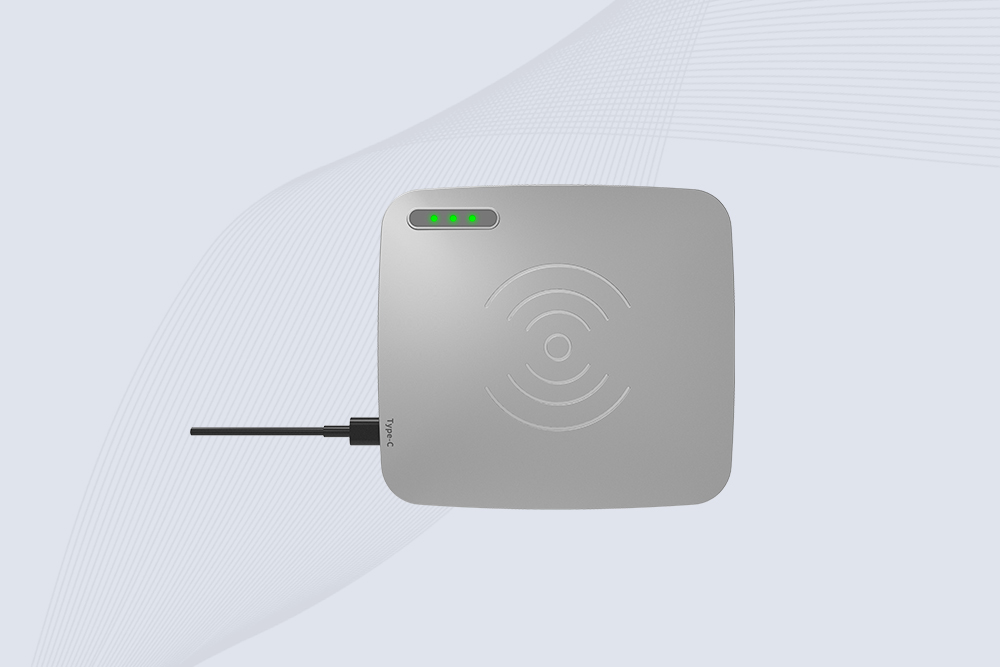
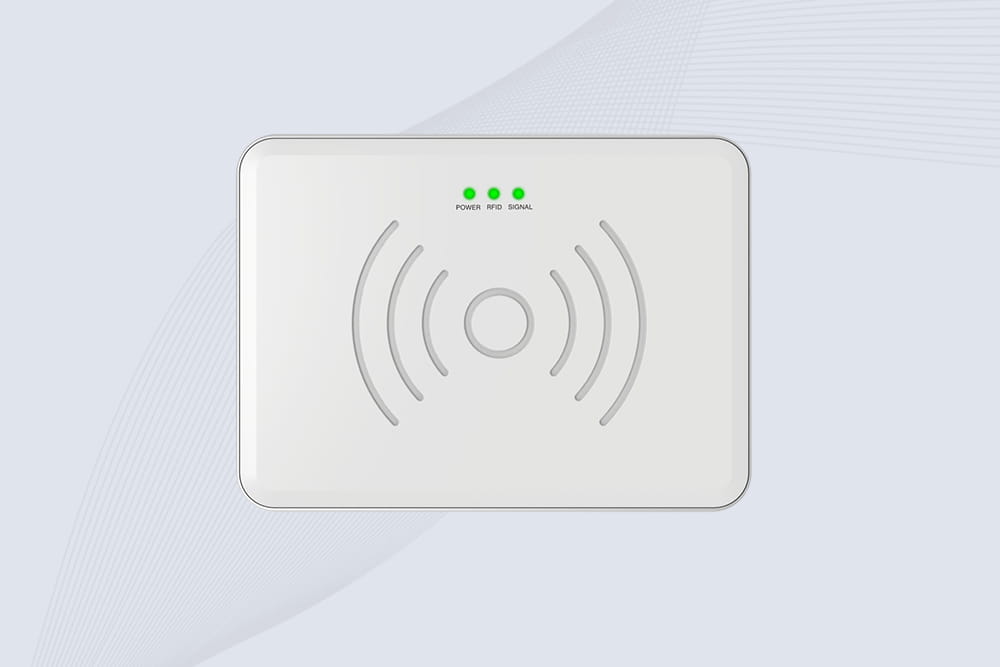
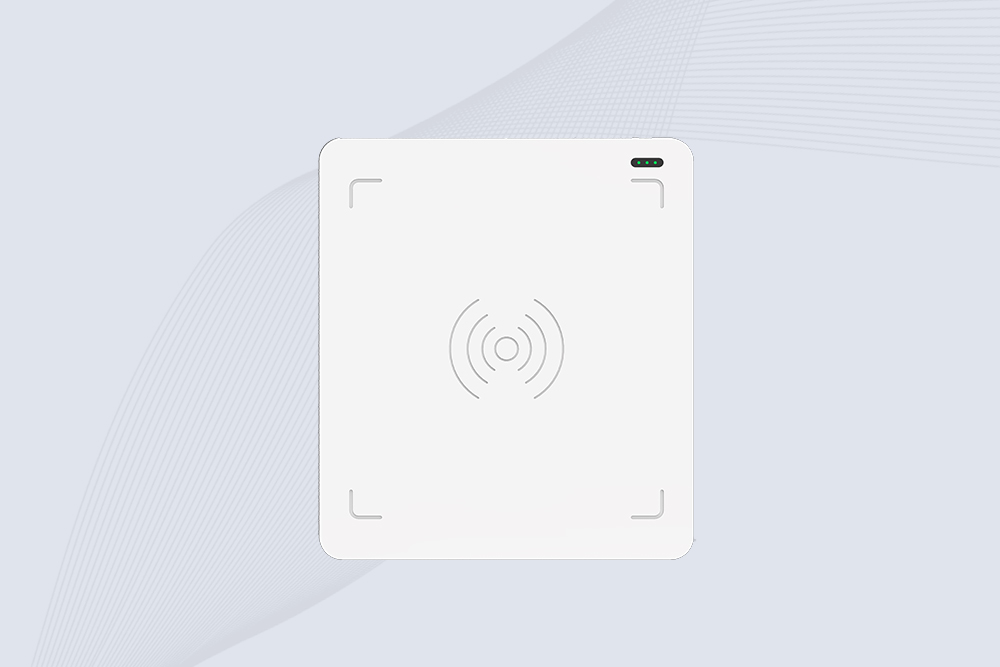
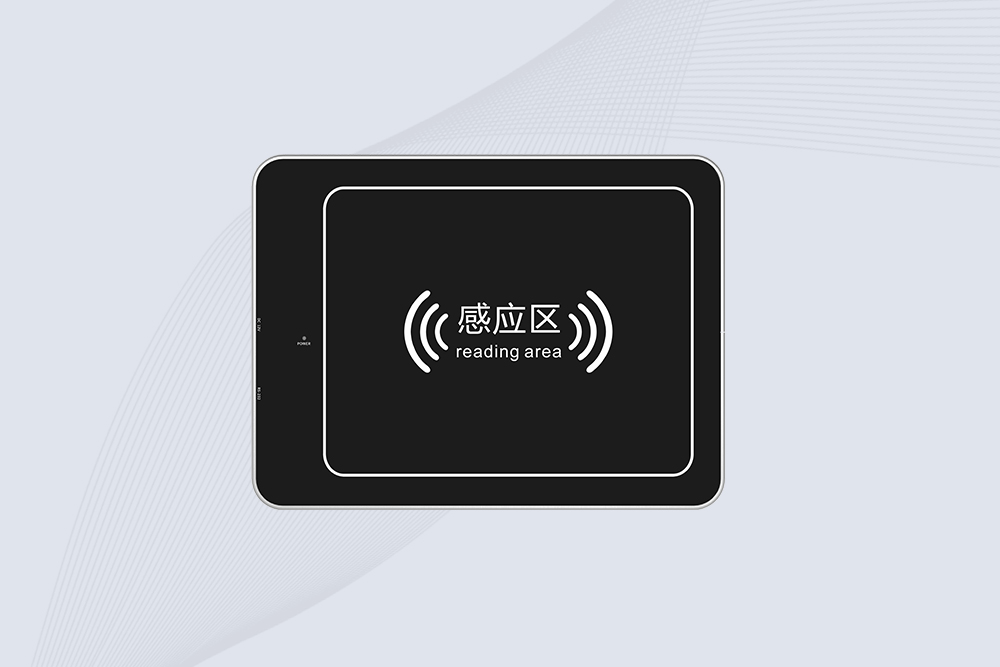
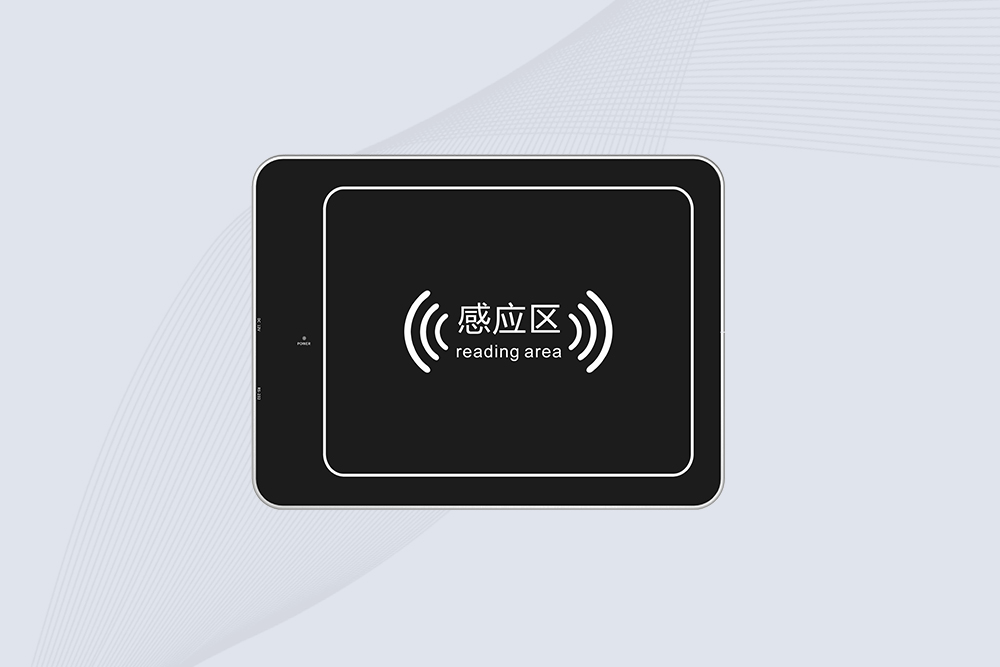
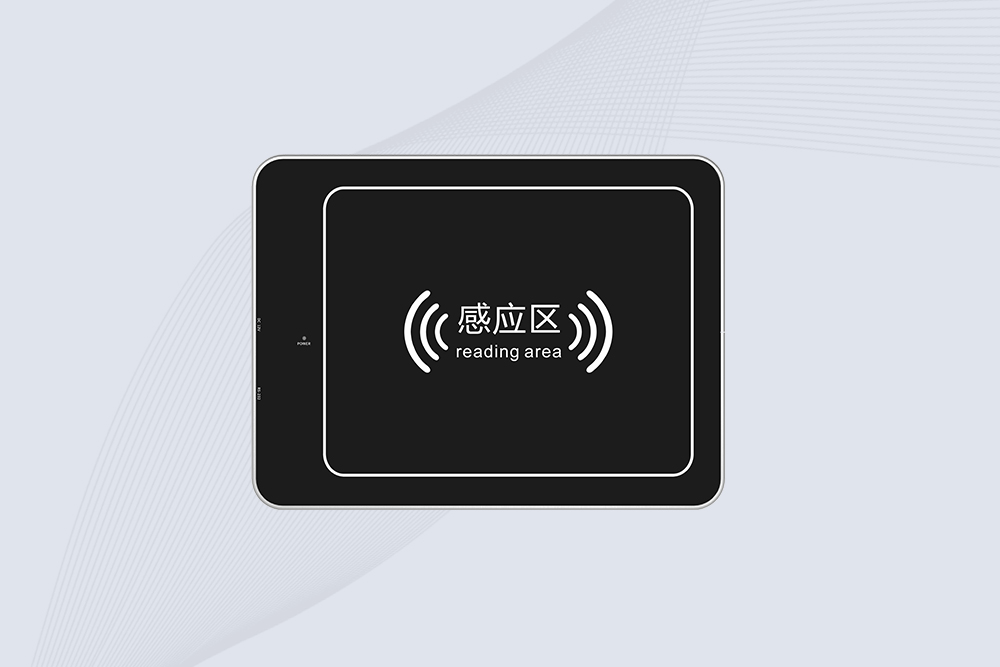
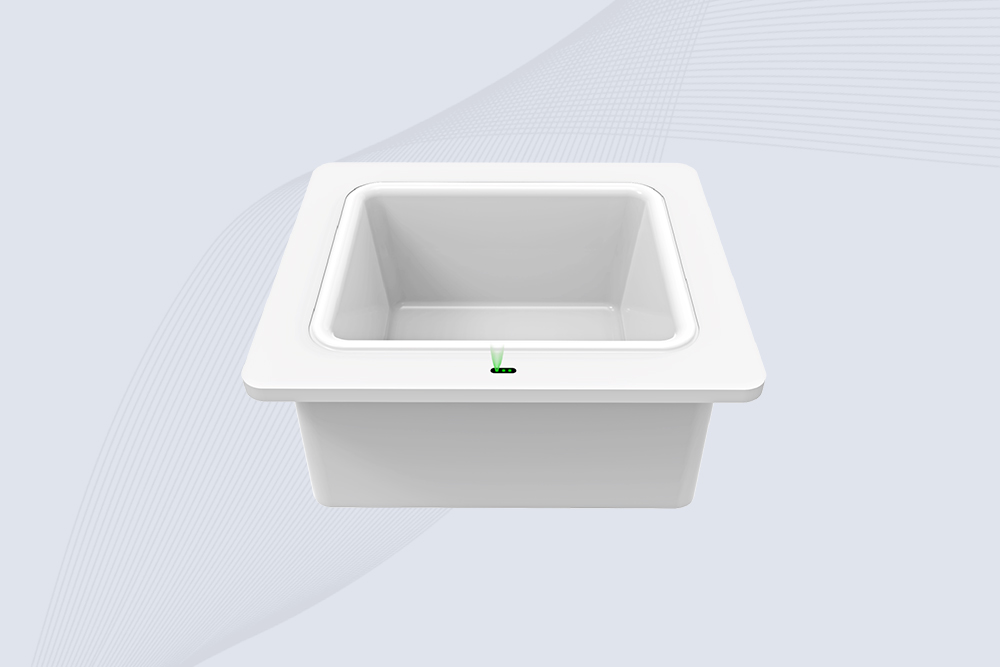
A USB RFID scanner is an RFID reading device that connects to a computer, laptop, or embedded system through a USB interface to identify RFID tags and transfer data. Unlike barcode scanners, USB RFID scanners can read multiple tags without direct line-of-sight, making them suitable for inventory management, asset tracking, retail applications, RFID testing, and system development.
What Is USB RFID Scanner?
When companies start exploring RFID technology, many people search for a USB RFID scanner because they need a simple way to connect RFID hardware with existing computers or software systems.
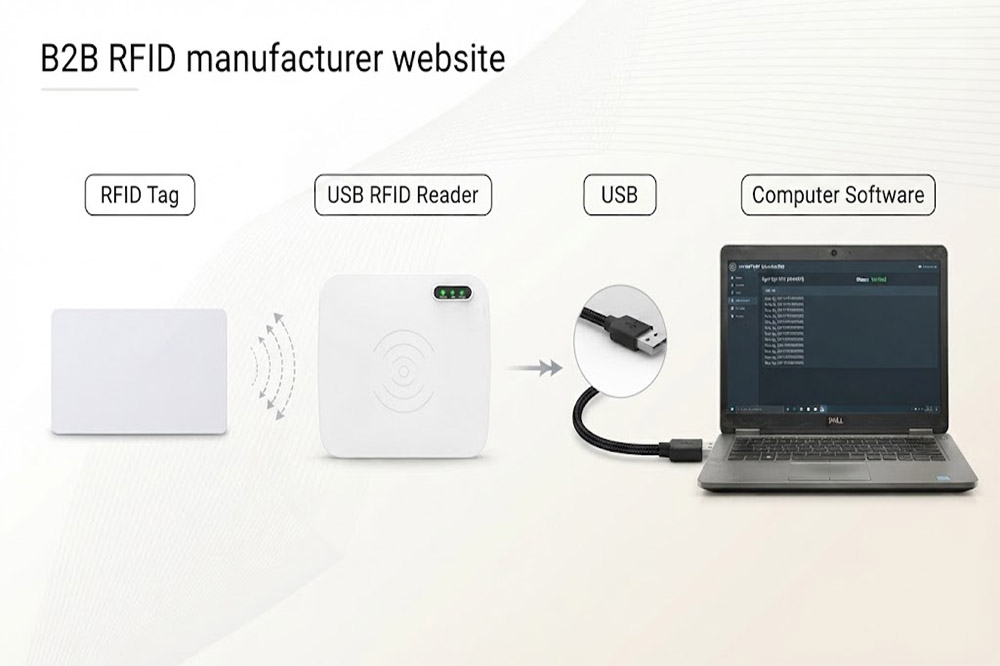
In practice, a USB RFID scanner is usually a compact RFID reader with a USB communication interface. It receives power through USB and sends captured RFID tag information directly to a computer.
The typical working process is simple:
RFID Tag → USB RFID Reader → Computer → Software System
Compared with large fixed RFID systems, USB RFID scanners are easier to install and are often used for:
RFID tag registration
Desktop inventory management
Product identification
RFID label encoding
Software development testing
Small-scale asset tracking
For companies that are testing RFID solutions before large deployment, a USB RFID reader is often the first hardware choice.
The terms USB RFID reader and USB RFID scanner are often used interchangeably, but there is a small difference in how customers and manufacturers use them. If you are comparing the terminology before choosing a device, our guide to USB RFID Reader vs RFID Scanner explains the difference in more detail.
How Does USB RFID Scanner Work?
The working principle of a USB RFID scanner is based on wireless communication between the reader and RFID tag.
When the USB RFID reader is connected to a computer:
The reader receives power through USB.
The antenna generates an RF signal.
Nearby RFID tags respond with stored information.
The reader converts the signal into digital data.
The information is transferred to software through USB communication.
For example, in a warehouse environment, each product can have an RFID tag attached. Instead of manually scanning each barcode, operators can place multiple tagged items near the RFID reader and collect information automatically.
This is one reason RFID technology is becoming more popular in inventory and asset management applications.
Curious about what happens after you place an RFID tag near the reader? Our detailed guide explains how a USB RFID scanner works, from the RF signal and reader antenna to USB communication and software.
USB RFID Scanner vs Barcode Scanner: What Is the Difference?
Many customers compare RFID scanners with traditional barcode scanners before purchasing.
The main difference is how information is collected.
Feature
USB RFID Scanner
Barcode Scanner
Technology
Radio frequency identification
Optical scanning
Direct visibility
Not required
Required
Multiple tag reading
Supported
Usually one item at a time
Data storage
Stored inside RFID tags
Limited to barcode information
Reading environment
Warehouse, retail, industrial
Retail and simple tracking
Tag rewriting
Available on reader/writer models
Not available
For applications involving hundreds or thousands of products, RFID provides more automation possibilities compared with traditional barcode solutions.
Different Types of USB RFID Scanner Solutions
USB RFID scanners are available in different configurations depending on the application.
USB RFID Card Reader
A USB RFID card reader is commonly used for identifying RFID cards and badges.
Typical applications include:
Employee identification
Access control systems
Membership management
Smart card applications
These readers usually focus on short-distance identification and stable communication.
Not every USB RFID scanner is designed for inventory work. If your application is mainly based on RFID cards, such as employee identification, membership, or desktop access control, a USB RFID card reader may be a better fit. See our guide to USB RFID Card Readers for more details on card frequency, compatibility, and software integration.
USB RFID Tag Reader
A USB RFID tag reader is designed for reading RFID tags attached to products, equipment, or assets.
Common applications:
Inventory management
Tool tracking
Laboratory equipment tracking
Product registration
For businesses managing physical assets, USB RFID tag readers provide a convenient desktop solution.
RFID Reader Writer USB
Some RFID projects require not only reading tags but also writing information into RFID chips.
An RFID reader writer USB device can support:
RFID tag programming
Product data encoding
Testing and development
Customized RFID applications
This type of reader is often used by RFID solution providers and system integrators.
UHF USB RFID Reader
UHF USB RFID readers operate at the ultra-high frequency range and are commonly selected for applications requiring longer reading distances.
Typical uses:
Warehouse inventory
Logistics tracking
Asset management
Batch tag reading
Compared with HF RFID readers, UHF solutions are usually better suited for identifying multiple items at a longer distance.
Main Applications of USB RFID Scanner
Inventory Management
Inventory accuracy is one of the most common reasons companies adopt USB RFID scanners.
A typical workflow:
Attach RFID tags to products.
Register tag information through USB RFID reader.
Connect with inventory software.
Track product movement.
This helps reduce manual recording errors and improves inventory visibility.
Inventory is one of the most practical uses for a USB RFID scanner. If you are looking at RFID specifically for stock counting and warehouse operations, our guide to using a USB RFID inventory readerexplains how RFID can reduce manual identification and connect tagged products with inventory software.
USB RFID scanners are not limited to warehouse inventory. They are also used in retail, libraries, healthcare, and laboratories. If you are looking for more practical examples, see our guide to USB RFID scanner applications across different industries.
Asset Tracking
Companies use RFID scanners to manage valuable equipment such as:
Tools
Electronics
Medical equipment
Industrial components
A USB RFID scanner allows operators to quickly register and verify assets through a computer system.
Retail and Product Authentication
Retail companies use RFID technology for:
Product identification
Stock checking
Anti-counterfeit systems
Customer experience improvement
USB RFID readers are often used during product registration and backend management.
RFID Development and Testing
For RFID developers and system integrators, USB RFID scanners provide a convenient testing platform.
They can be used for:
Reader testing
Tag compatibility testing
Software integration
Prototype development
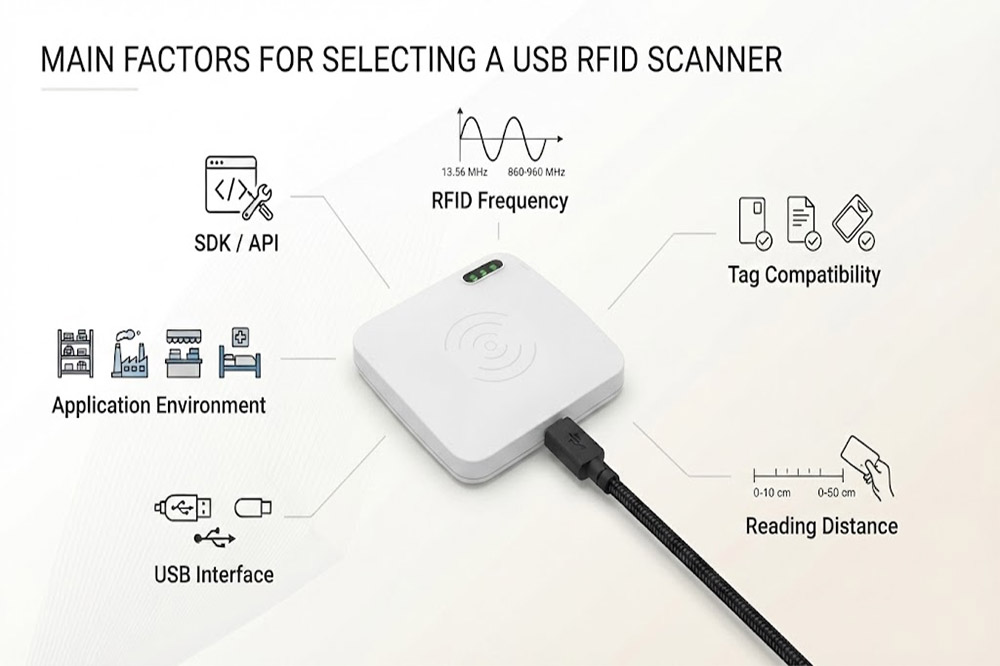
How to Choose the Right USB RFID Scanner?
Choosing an RFID scanner is not only about reading distance or price. The right model depends on your application requirements.
1. Select the Right RFID Frequency
LF RFID (125KHz)
Suitable for:
ID cards
Basic identification systems
HF RFID (13.56MHz)
Suitable for:
NFC applications
Smart cards
Library systems
UHF RFID (860-960MHz)
Suitable for:
Inventory
Logistics
Warehouse automation
2. Consider Reading Distance
The actual reading distance depends on:
RFID frequency
Antenna design
Tag size
Installation environment
Material interference
A reader advertised with a certain range may perform differently in real applications.
Testing with your actual RFID tags is always recommended.
For business projects, hardware compatibility is only part of the solution.
Before purchasing, check:
USB communication mode
SDK availability
API support
Operating system compatibility
Software integration options
This is especially important for RFID system integrators developing customized solutions.
Why Choose Cykeo USB RFID Readers?
For companies looking for reliable USB RFID scanner solutions, Cykeo provides RFID hardware designed for different identification requirements.
Cykeo USB RFID readers are suitable for:
RFID system integration
Inventory applications
Asset tracking projects
RFID testing
Customized RFID solutions
Key considerations for business customers include:
Stable RFID performance
Multiple frequency options
Software integration support
OEM customization capability
Whether you need a desktop RFID reader for testing or a customized RFID solution for commercial deployment, selecting the right reader model is critical for project success.
Frequently Asked Questions About USB RFID Scanner
Can a USB RFID scanner work with a computer?
Yes. Most USB RFID scanners can connect directly with computers through USB interfaces.
Depending on the model, communication can be through HID, virtual COM, or SDK/API integration.
Can USB RFID scanners read multiple tags?
Some RFID scanners, especially UHF models, can read multiple RFID tags simultaneously depending on the reader design and environment.
Can a USB RFID scanner write RFID tags?
Yes, RFID reader writer USB models can read and encode compatible RFID tags.
What is the difference between USB RFID reader and fixed RFID reader?
USB RFID readers are mainly designed for desktop and development applications, while fixed RFID readers are usually installed in warehouses, gates, or automated systems.
Conclusion
A USB RFID scanner provides a simple and practical way for companies to start using RFID technology.
From inventory management and asset tracking to RFID testing and product identification, USB RFID readers help businesses connect physical items with digital systems.
For companies searching for a reliable USB RFID scanner supplier, choosing a manufacturer with hardware experience, software support, and customization capability can make RFID projects easier to deploy.
Cykeo provides USB RFID readers and customized RFID solutions for businesses, system integrators, and industrial applications.
SSD-D3AL is a USB-HID UHF RFID reader with 0–30 cm reading, 0–15 cm writing, over 600 tags/s recognition, USB plug-and-play operation and OEM Logo customization.
SSD-D1AL is a compact USB UHF RFID reader with Impinj E710/X3M1 chipset, USB-HID, 600+ tags/s recognition, 4/8/16 antenna support and plug-and-play USB power.
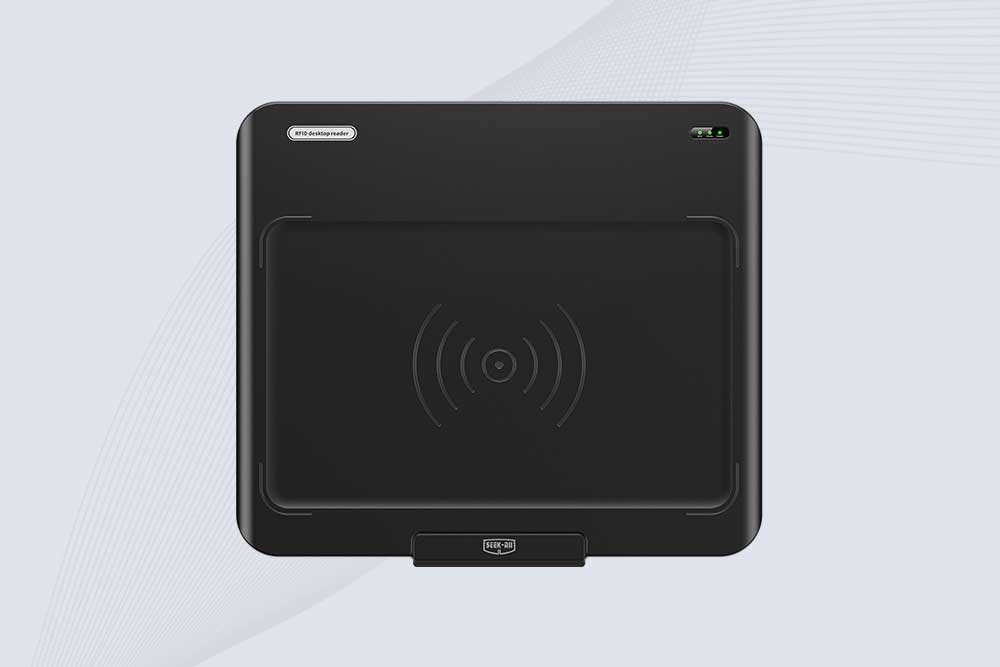
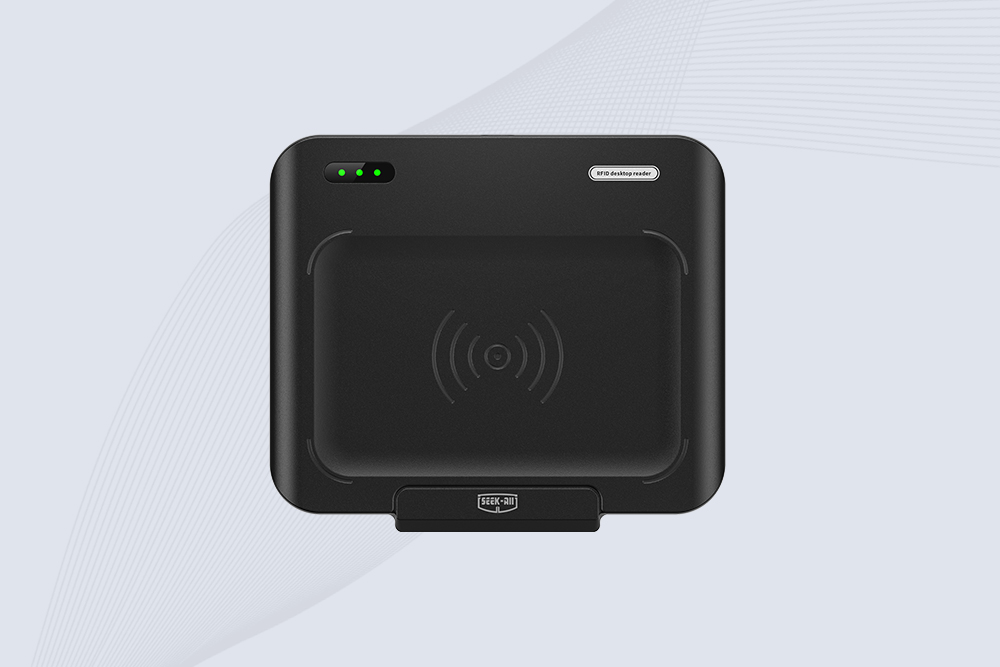
CYKEO CYKEO-D1LA USB RFID Reader is a compact desktop solution with near-field control for precise tag reading and encoding. Powered by USB, supporting ISO 18000-6C, and built for stable batch writing, this usb rfid tag reader fits retail, libraries, offices, and controlled RFID encoding tasks.
CYKEO CYKEO-D1L RFID scanner USB is a compact desktop UHF RFID scanner designed for short-range tag writing and verification. This usb rfid scanner supports batch encoding, stable 0–26 dBm output, and works across Windows, Linux, and Android systems.
CYKEO CYKEO-D1C USB RFID Card Reader is a near-field UHF desktop writer designed for secure, short-range tag encoding. With USB-C connectivity and stable 26 dBm output, this rfid reader usb c is ideal for badge issuance, label encoding, and controlled desktop RFID workflows.
CYKEO CYKEO-D2L RFID Reader USB is a compact desktop encoder built on the Impinj R500 chip. With near-field control and stable USB power, this usb rfid card reader delivers precise tag writing for offices, retail counters, and small-scale logistics encoding tasks.
CYKEO CYKEO-D3L USB RFID Tag Reader delivers stable UHF tag reading and writing for daily desktop and light industrial tasks. Designed for controlled short-range operation, this USB RFID Tag Reader works reliably with rfid tag and reader systems in libraries, tool tracking, and inventory registration.
The CYKEO CYKEO-D4L UHF RFID Tag Reader is a stable Desktop RFID Reader designed for accurate tag registration, borrowing, and return workflows. Built with the Impinj R2000 chip, this UHF RFID Tag Reader delivers controlled short-range reads for libraries, asset tracking, and inventory management environments.
The CYKEO CYKEO-D5L Desktop RFID Card Reader is a stable UHF RFID Card Reader designed for controlled short-range reading and writing. Built for libraries, tool rooms, and asset desks, this UHF RFID Card Reader supports dense tag handling, secure data processing, and easy USB integration.
The CYKEO CYKEO-D6L RFID Reader Writer is a heavy-duty Desktop RFID Reader designed for short-range, high-accuracy tag programming. Built for libraries, labs, and asset desks, this RFID Reader Writer supports batch processing, stable 33dBm output, and seamless integration with existing management systems.
Cykeo CYKEO-D8A embedded RFID badge reader offers 30+ tags/sec scanning, 20cm anti-crosstalk precision, and DC 12V power for unmanned stores, warehouses, and smart inventory systems.
Cykeo’s CYKEO-D8C UHF RFID gate reader achieves 200-tag/batch scanning with adjustable power control, ideal for retail inventory and smart warehouse management.
RFID Industry Writer | IoT & Asset Tracking Analyst
James writes about RFID technology, asset tracking, and the practical challenges of digital transformation across warehousing, retail, manufacturing, and logistics.
His work focuses on how RFID is applied in real-world operations—improving inventory visibility, automating workflows, and helping businesses manage assets with greater accuracy and efficiency.
He regularly covers topics including UHF RFID, smart cabinets, RFID portals, tool tracking, warehouse automation, and industrial IoT trends..
RFID Tool Tracking uses RFID tags, readers, antennas, and software to automatically identify tools and record their movement. It helps companies improve tool...
Discover the maximum read range of industrial long-range RFID readers, factors affecting performance, and best practices for optimizing UHF RFID systems.
 Cykeo RFID IoT Solution Products R&D Manufacturer