 Cykeo RFID IoT Solution Products R&D Manufacturer

Top 10 Benefits of UHF RFID Readers in Modern Supply Chains (2024 Guide)
1353Discover the top 10 advantages of UHF RFID readers for supply chains in 2024. Boost efficiency, accuracy, and ROI with Cykeo’s cutting-edge RFID solutions.
MoreAll RFID Product
USB RFID reader can do more than identify a tagged product at a workstation. In the right setup, it can connect RFID tags with inventory software, asset records, production systems, and other business applications. This makes it a practical option for companies that need to capture RFID data at a desktop or fixed work area.
However, not every RFID project requires a USB reader. The device must match the tag frequency, reading distance, operating environment, and software requirements. Understanding where USB RFID readers are useful helps businesses choose equipment based on real workflows rather than product specifications alone.
This guide explores seven common USB RFID reader applications and explains what buyers should consider before selecting a device.
A USB RFID reader communicates with compatible RFID tags and transfers the collected data to a connected computer or host system. Depending on the model, the reader may identify tags, retrieve stored information, or write data to supported tags.
A typical workflow has four parts:
For example, a technician may scan an RFID-tagged tool before maintenance. The software retrieves its asset record and updates the service history. The RFID reader captures the identifier, while the application handles the business logic.
The exact workflow depends on the reader and software. Some models support keyboard emulation or serial communication, while others may require a driver, SDK, API, or custom integration.
Frequency is another important consideration. HF, NFC, and UHF readers are designed for different tag technologies and operating conditions. A reader should be selected only after confirming compatibility with the tags already in use or planned for the project.
For a more detailed introduction, read what a USB RFID reader is and how it works.
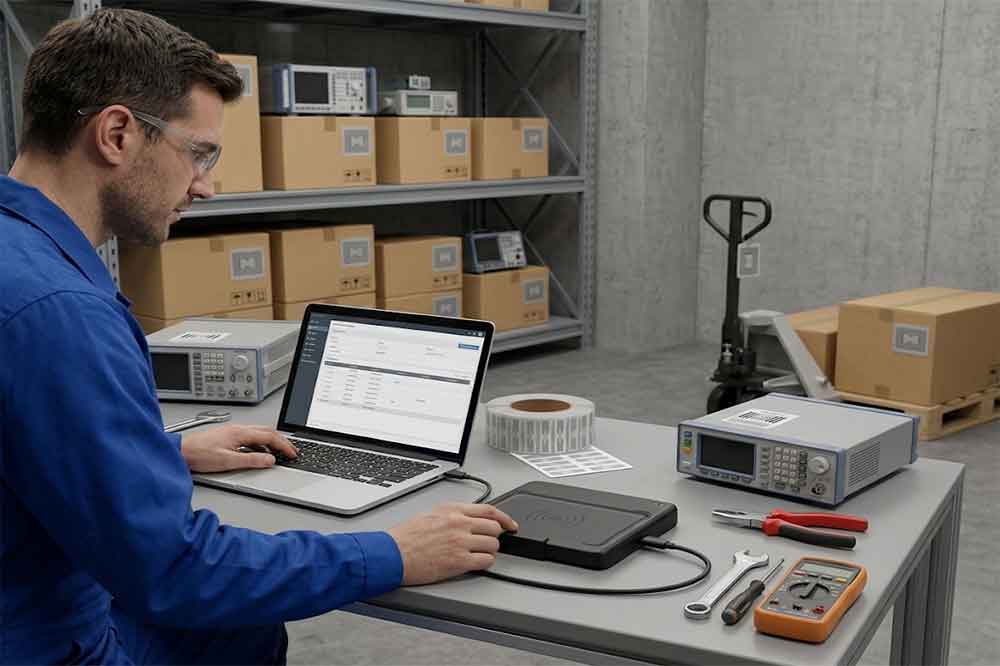
Businesses often manage laptops, tools, instruments, reusable containers, and other equipment across departments. When each asset has a compatible RFID tag, a USB RFID reader can help staff retrieve its identity and access the corresponding record.
At an IT service desk, for example, a technician may read the tag on a laptop before issuing it to an employee. The asset management application can then associate the item with a person, location, or service request.
A similar process can be used for maintenance workshops. Staff can identify tagged tools, confirm the correct equipment record, and update inspection or repair information.
A USB reader is particularly useful when identification takes place at a fixed workstation. It may not be the best choice for scanning equipment across a large warehouse or over long distances, where a handheld or fixed UHF system could be more suitable.
What to check: Tag compatibility, reading distance, software integration, and how the asset identifier links to existing records.
Inventory teams need reliable ways to identify products, components, and reusable items. A USB RFID reader can support desktop inventory tasks when the items use compatible RFID tags.
For example, staff may place tagged items near a reader during receiving, registration, or stock verification. The application can use the returned tag identifiers to retrieve product records or update inventory information.
Some RFID readers support multi-tag reading, which can reduce the need to identify items one at a time. However, this capability depends on the reader, frequency, antenna, tag placement, and radio environment. A compact desktop reader should not be assumed to read every tag in a carton or across a shelf.
For larger stocktaking areas, a different reader type or antenna arrangement may be more appropriate. The important question is whether the reading area matches the actual workflow.
What to check: Number of tags per operation, tag orientation, reading area, data handling, and duplicate-read management in the application.
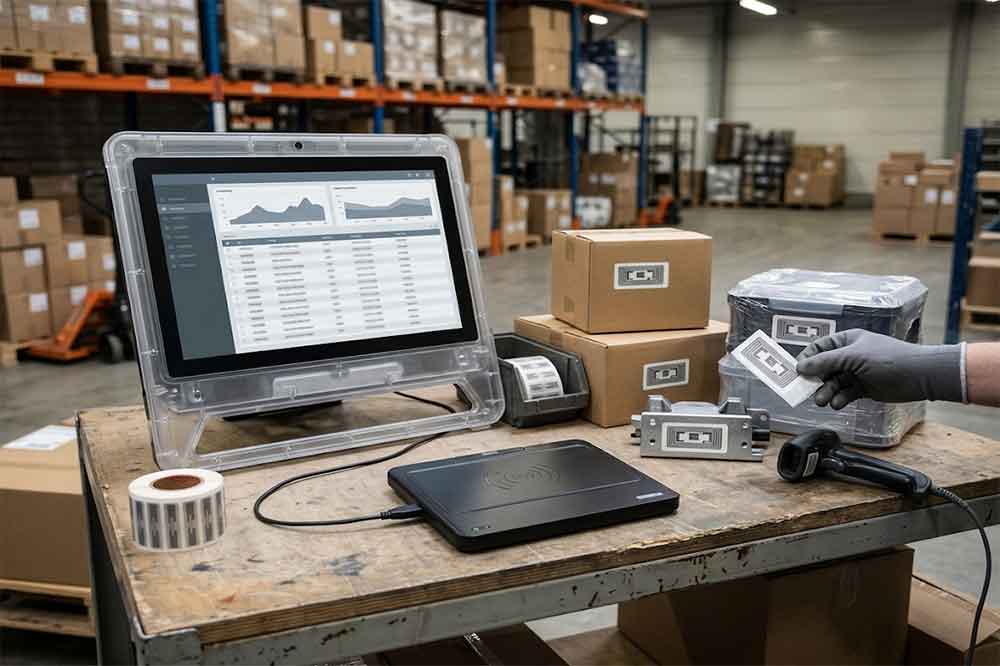
Manufacturers may use RFID tags on workpieces, fixtures, production containers, or reusable tools. A USB RFID reader can support identification at a production workstation, inspection desk, or assembly station.
Consider a production process in which a reusable carrier holds a component through several stages. An RFID tag identifies the carrier, and the workstation application retrieves its associated production information. Operators can then record inspection results, confirm a work order, or update the item’s status.
In this scenario, the reader does not independently manage the production process. It provides identification data that the connected software uses to select the correct record and apply the required rules.
The reader must also suit the production environment. Metal surfaces, nearby equipment, tag placement, and electromagnetic conditions can affect RFID performance. Testing in the intended installation area is important before deployment.
What to check: Tag type, workstation layout, environmental conditions, communication interface, and integration with the manufacturing application.
Laboratories handle samples, test equipment, containers, and records that must remain correctly associated. RFID can provide an additional identification method when compatible tags are attached to containers or equipment.
At a laboratory workstation, a USB RFID reader can retrieve a sample identifier and help an application display the relevant record. Staff may use the information to confirm a sample, record a test step, or update its processing status.
This approach can be useful when a lab needs consistent identification across repeated handling steps. However, the identification method must be validated for the specific containers, materials, and procedures in use.
RFID should not automatically be treated as a replacement for barcode labels, printed sample identifiers, or required laboratory controls. In some workflows, RFID and barcode identification may complement each other.
What to check: Tag compatibility with containers, reading reliability, software validation, data access permissions, and the laboratory’s traceability requirements.
Retailers may use RFID to identify tagged products during receiving, product registration, stock verification, or back-office operations. A USB RFID reader can connect a desktop workstation with the retailer’s product information system.
For example, a staff member may read a tagged item and retrieve its product record, variant, or inventory status. The application can then support the next step in the workflow, such as registration or record updating.
The value of RFID depends on the retailer’s existing processes. If all products use visible barcodes and employees only need to capture one code at a time, a barcode scanner may be sufficient. If the operation needs RFID identification or specific inventory workflows, an RFID reader may provide additional capabilities.
For a comparison of the two technologies, see USB RFID reader vs RFID scanner.
What to check: Existing label technology, product tagging, software compatibility, and whether RFID delivers a measurable operational benefit.
Some organizations use RFID credentials to identify employees, contractors, or authorized users at designated workstations. A compatible USB RFID reader can capture credential data for an application that manages staff records or supports an administrative workflow.
For example, a visitor management desk may read an RFID credential and retrieve a corresponding record. A workstation application can then apply its own rules for registration or verification.
It is important to distinguish credential identification from access control. Reading a card does not by itself guarantee that a user is authorized to enter a restricted area. Authorization depends on the credential technology, security design, application logic, and any connected access control hardware.
Buyers should also consider credential security. Some RFID cards expose only an identifier, while other systems support more sophisticated authentication methods. A basic reader may not support every security feature required by a project.
What to check: Credential frequency and protocol, security requirements, reader compatibility, application integration, and the difference between identification and authorization.
Some USB RFID readers support writing data to compatible RFID tags. This function can be useful during product registration, manufacturing preparation, equipment labeling, or the initial setup of tagged assets.
A production operator may write a required identifier to a supported tag and then read it back to verify that the operation completed correctly. The application can associate the identifier with a product record or production batch.
Not every RFID reader supports tag writing, and write capabilities depend on the reader, tag type, protocol, and memory structure. Some projects only need to read a pre-programmed identifier, while others require controlled writing to specific memory areas.
Tag encoding also needs a defined process. Duplicate identifiers, incorrect memory writes, and incomplete verification can create data problems later in the workflow.
What to check: Read/write support, tag memory requirements, data format, verification process, and application permissions.
A USB RFID reader is often a good fit when identification takes place at a computer-based workstation and the device needs to send tag data directly to a host system.
It may suit desktop asset registration, sample identification, tag encoding, production stations, and selected inventory workflows. Its compact form and USB connection can simplify installation where a nearby computer is already available.
A USB reader may be less suitable when staff need to identify items while moving around a large facility, when the reading area must cover a wide zone, or when the environment requires a specialized industrial installation. Handheld readers, fixed readers, or different antenna configurations may be more appropriate in those cases.
To compare the key selection factors, read our guide on how to choose the right USB RFID reader for your application.
Before selecting a reader, document the actual application requirements.
Confirm the RFID technology. Identify the tag frequency, protocol, and tag type. Do not assume that an HF reader can read UHF tags or that all NFC and RFID products are interchangeable.
Define the reading workflow. Decide whether staff will read one tag at a time, encode tags, or identify multiple tags in one operation. Confirm the practical reading distance and area.
Check software integration. Determine how the device communicates with the host computer. Confirm the required operating system, data output format, driver, SDK, or API.
Test real products and tags. Use the actual tag models, item materials, packaging, and workstation layout. For multi-tag workflows, test realistic tag quantities and positions.
Review supplier support and purchasing needs. Ask about documentation, sample availability, customization, production lead time, and support for integration. For bulk projects, provide a clear specification rather than requesting a quotation based only on the product name.
Our USB RFID reader buying guide for businesses covers supplier evaluation, sample testing, and purchasing considerations.
You can also explore the Cykeo USB RFID Reader product category to review available device options.
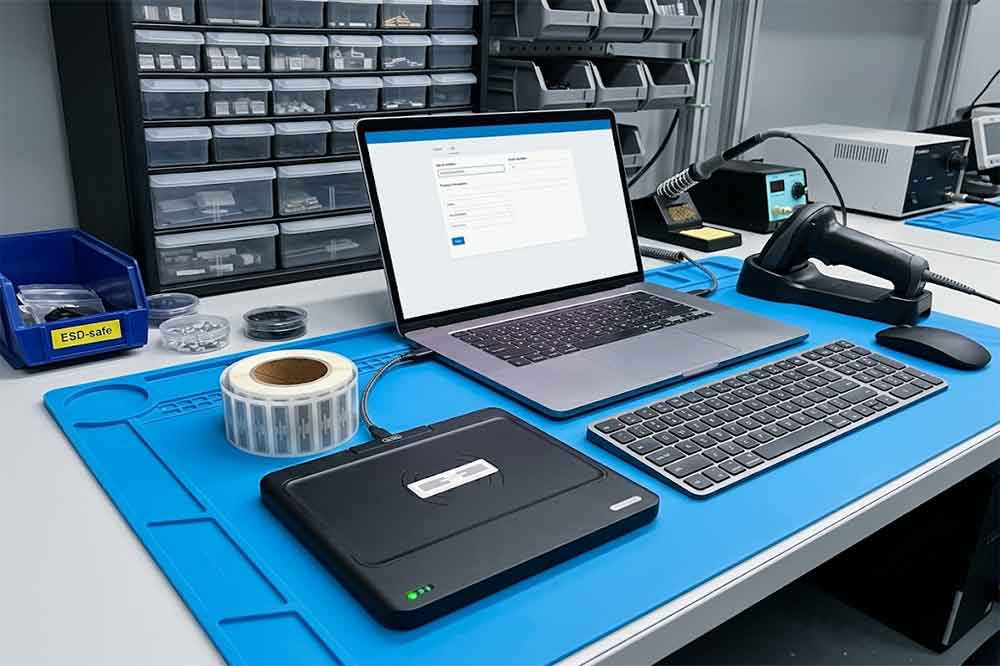
Common applications include asset tracking, desktop inventory tasks, manufacturing workstations, laboratory sample identification, retail operations, staff credential identification, and RFID tag encoding. The suitable application depends on the reader’s capabilities and the connected software.
Yes. It can support product registration, stock verification, and other workstation-based inventory tasks when the items use compatible RFID tags. Multi-tag reading is available only on supported models and should be tested under real operating conditions.
Some models support tag writing, while others are read-only or have limited write capabilities. Confirm the supported tag type, protocol, memory operation, and software interface before purchasing.
It can be suitable for selected industrial workstations, production stations, and equipment registration tasks. The reader, tag, and installation must be tested under the intended environmental and operating conditions.
Start with tag frequency and protocol, reading distance, required read/write functions, USB communication mode, software compatibility, and application environment. Test representative samples before placing a bulk order.
USB RFID readers can support many business workflows, from asset management and laboratory identification to production tracking and tag encoding. Their main role is to capture data from compatible RFID tags and deliver it to software that performs the required business task.
The best reader depends on the application, not simply on the product category. Confirm tag compatibility, reading requirements, interface support, and software integration before deployment. When the device is tested against real working conditions, businesses can make a more informed purchasing decision and reduce avoidable integration problems.
Explore the Cykeo USB RFID Reader product range to find options for your application.

Discover SSD-D4AL, a USB-HID UHF RFID reader with 4/8/16 antenna options, Impinj E710/X3M1 chipset, plug-and-play USB power, and OEM customization.
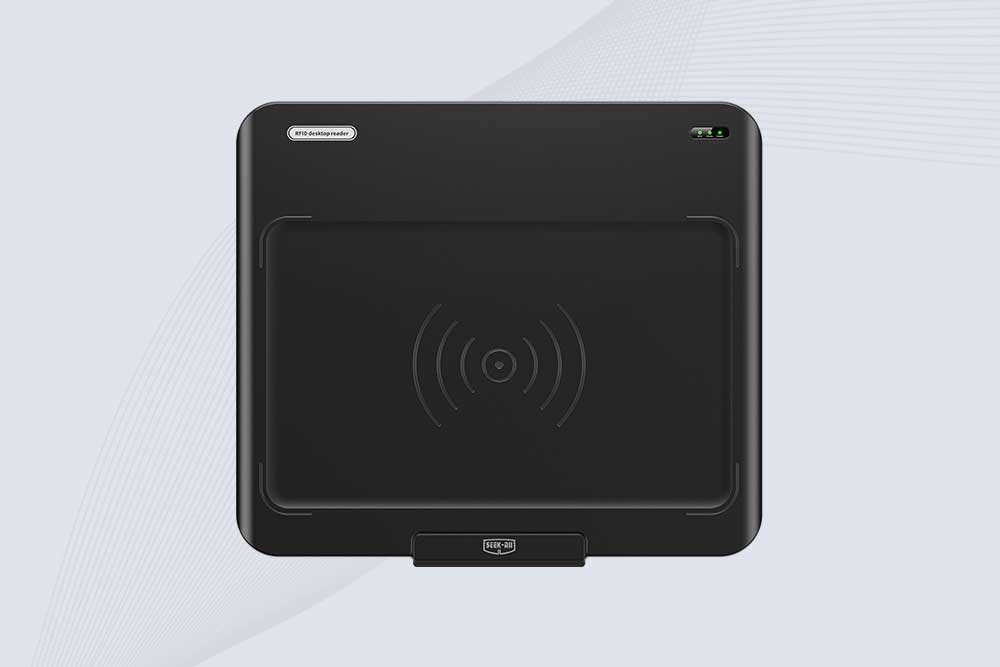
SSD-D3AL is a USB-HID UHF RFID reader with 0–30 cm reading, 0–15 cm writing, over 600 tags/s recognition, USB plug-and-play operation and OEM Logo customization.
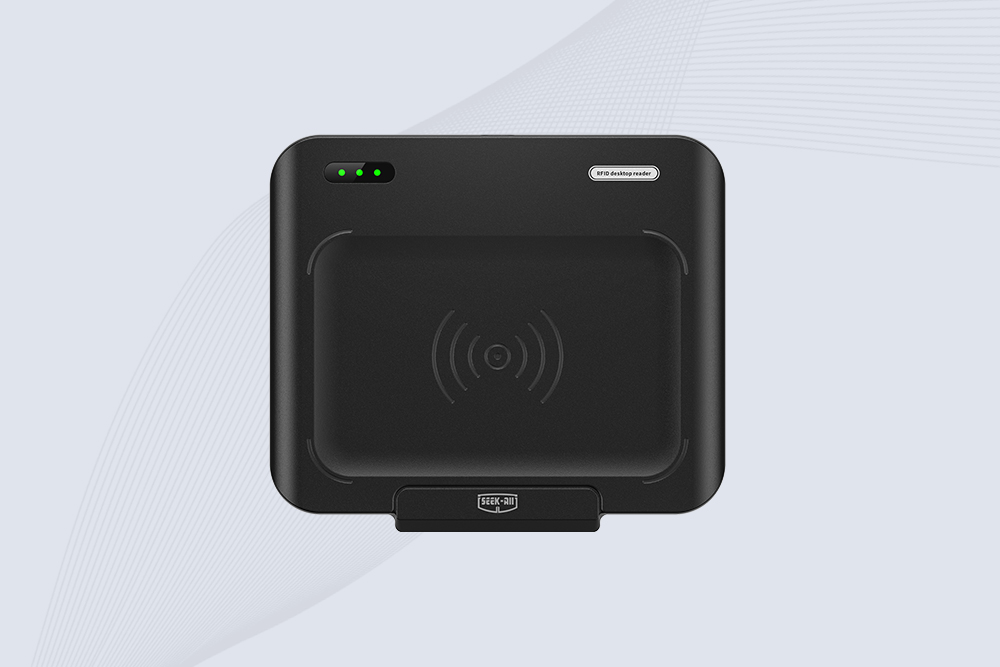
SSD-D1AL is a compact USB UHF RFID reader with Impinj E710/X3M1 chipset, USB-HID, 600+ tags/s recognition, 4/8/16 antenna support and plug-and-play USB power.

CYKEO CYKEO-D1LA USB RFID Reader is a compact desktop solution with near-field control for precise tag reading and encoding. Powered by USB, supporting ISO 18000-6C, and built for stable batch writing, this usb rfid tag reader fits retail, libraries, offices, and controlled RFID encoding tasks.
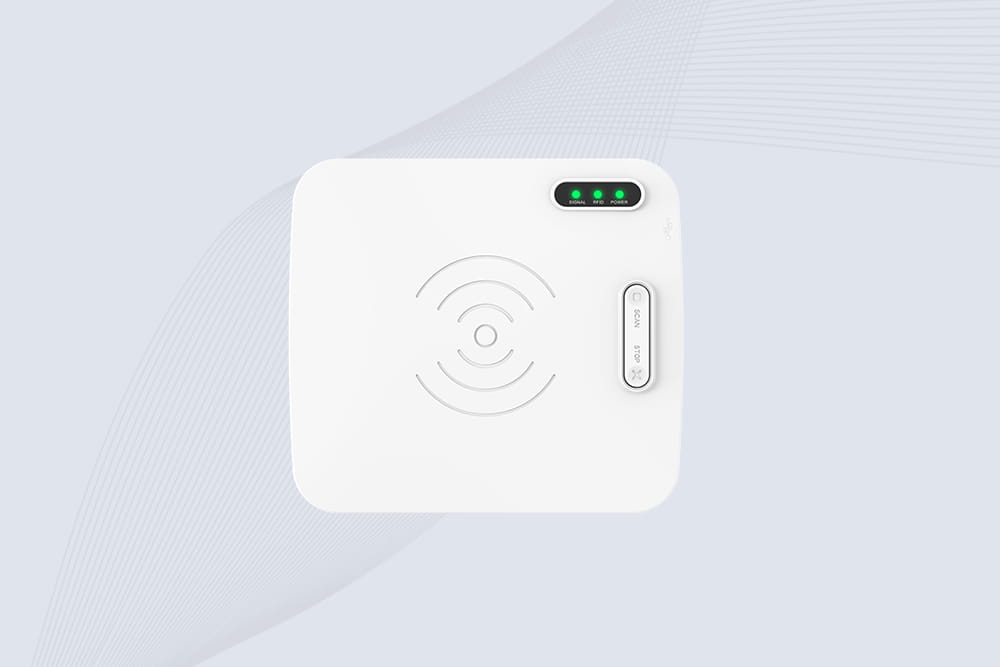
CYKEO CYKEO-D1L RFID scanner USB is a compact desktop UHF RFID scanner designed for short-range tag writing and verification. This usb rfid scanner supports batch encoding, stable 0–26 dBm output, and works across Windows, Linux, and Android systems.
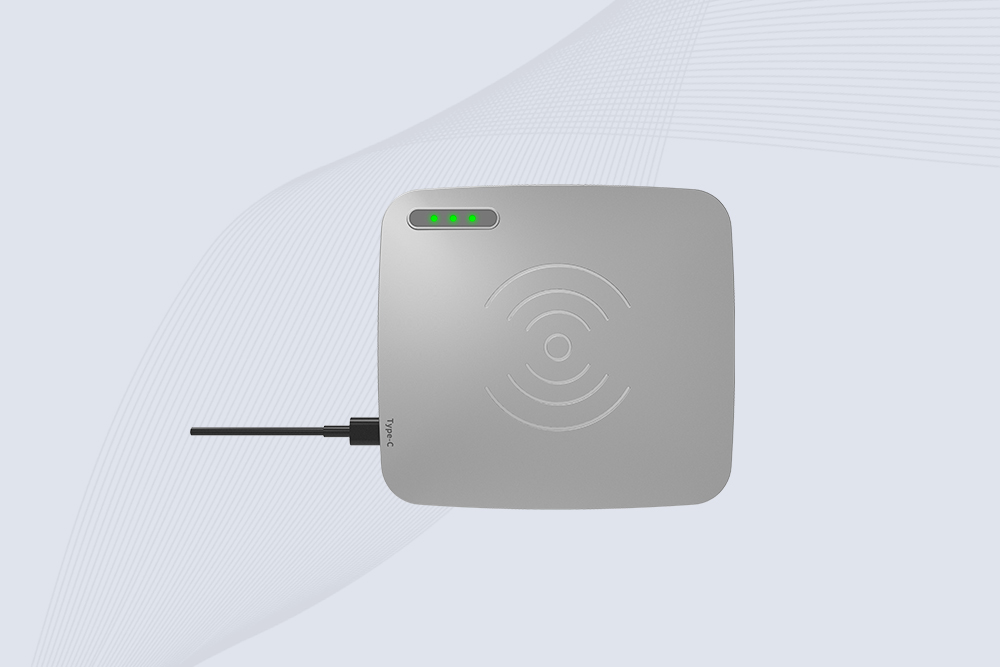
CYKEO CYKEO-D1C USB RFID Card Reader is a near-field UHF desktop writer designed for secure, short-range tag encoding. With USB-C connectivity and stable 26 dBm output, this rfid reader usb c is ideal for badge issuance, label encoding, and controlled desktop RFID workflows.
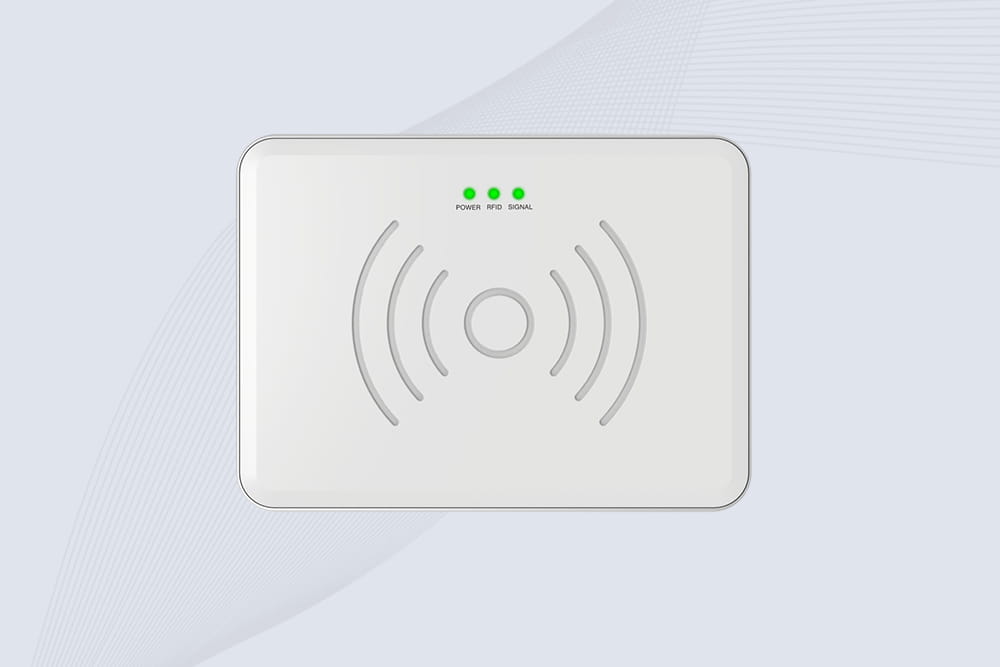
CYKEO CYKEO-D2L RFID Reader USB is a compact desktop encoder built on the Impinj R500 chip. With near-field control and stable USB power, this usb rfid card reader delivers precise tag writing for offices, retail counters, and small-scale logistics encoding tasks.
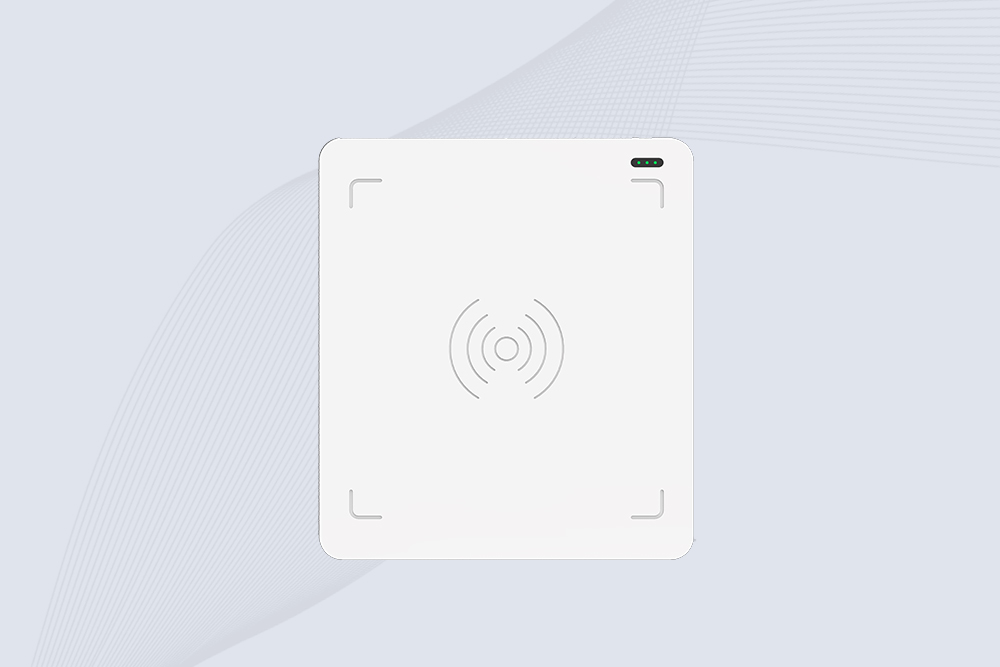
CYKEO CYKEO-D3L USB RFID Tag Reader delivers stable UHF tag reading and writing for daily desktop and light industrial tasks. Designed for controlled short-range operation, this USB RFID Tag Reader works reliably with rfid tag and reader systems in libraries, tool tracking, and inventory registration.
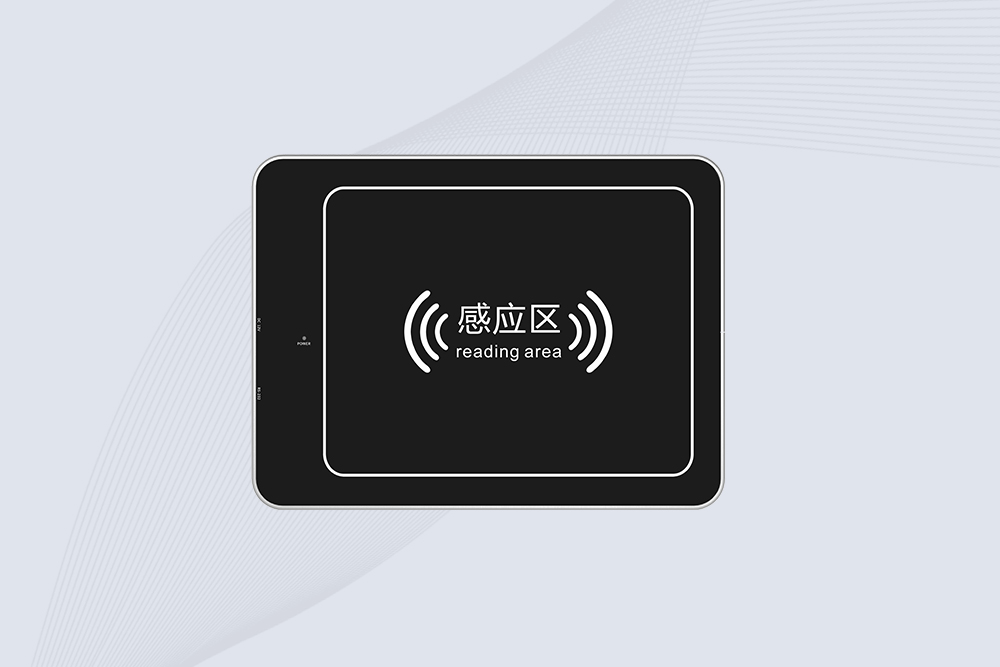
The CYKEO CYKEO-D4L UHF RFID Tag Reader is a stable Desktop RFID Reader designed for accurate tag registration, borrowing, and return workflows. Built with the Impinj R2000 chip, this UHF RFID Tag Reader delivers controlled short-range reads for libraries, asset tracking, and inventory management environments.
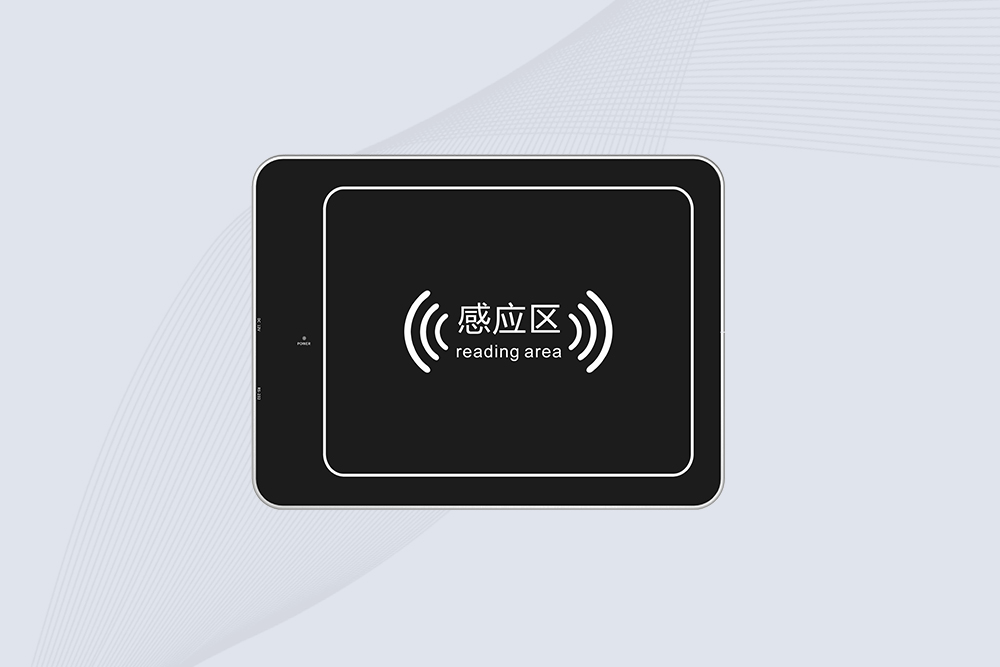
The CYKEO CYKEO-D5L Desktop RFID Card Reader is a stable UHF RFID Card Reader designed for controlled short-range reading and writing. Built for libraries, tool rooms, and asset desks, this UHF RFID Card Reader supports dense tag handling, secure data processing, and easy USB integration.
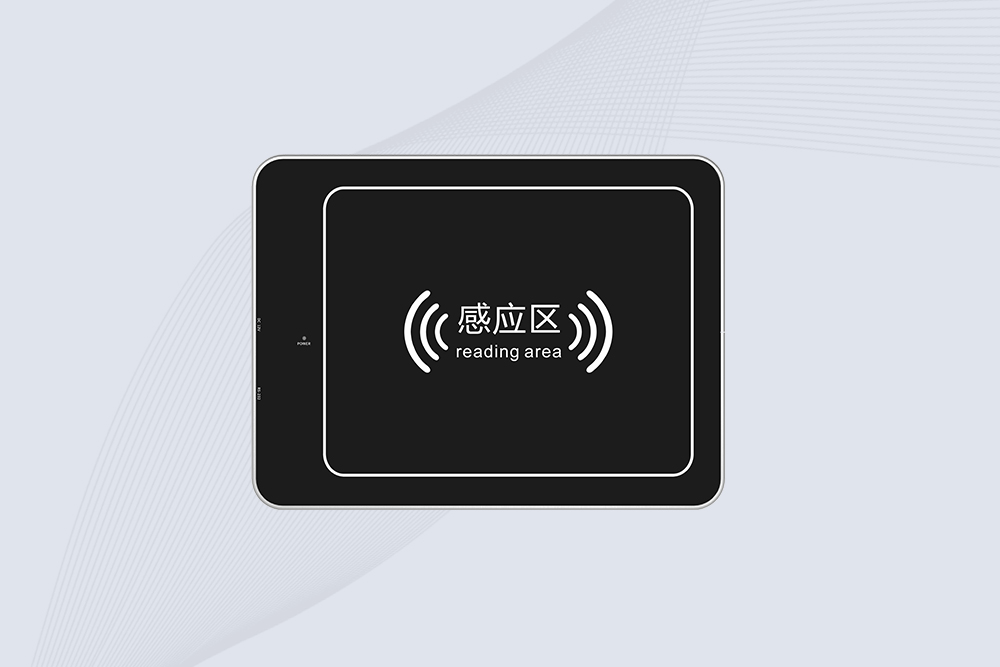
The CYKEO CYKEO-D6L RFID Reader Writer is a heavy-duty Desktop RFID Reader designed for short-range, high-accuracy tag programming. Built for libraries, labs, and asset desks, this RFID Reader Writer supports batch processing, stable 33dBm output, and seamless integration with existing management systems.
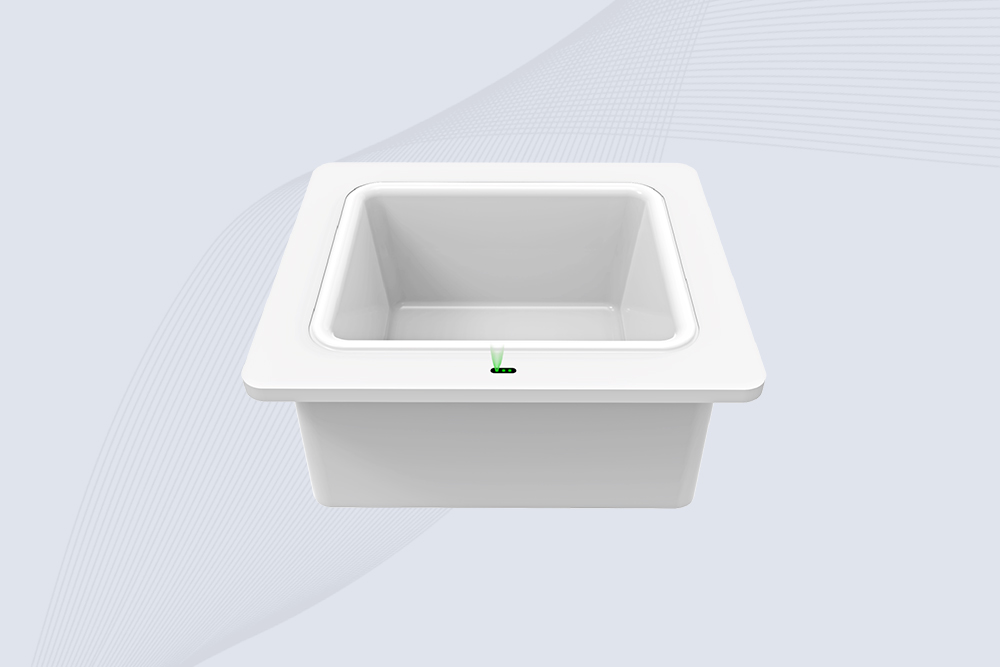
Cykeo CYKEO-D8B UHF RFID tunnel and RFID Desktop Reader features 30+ items batch reading,
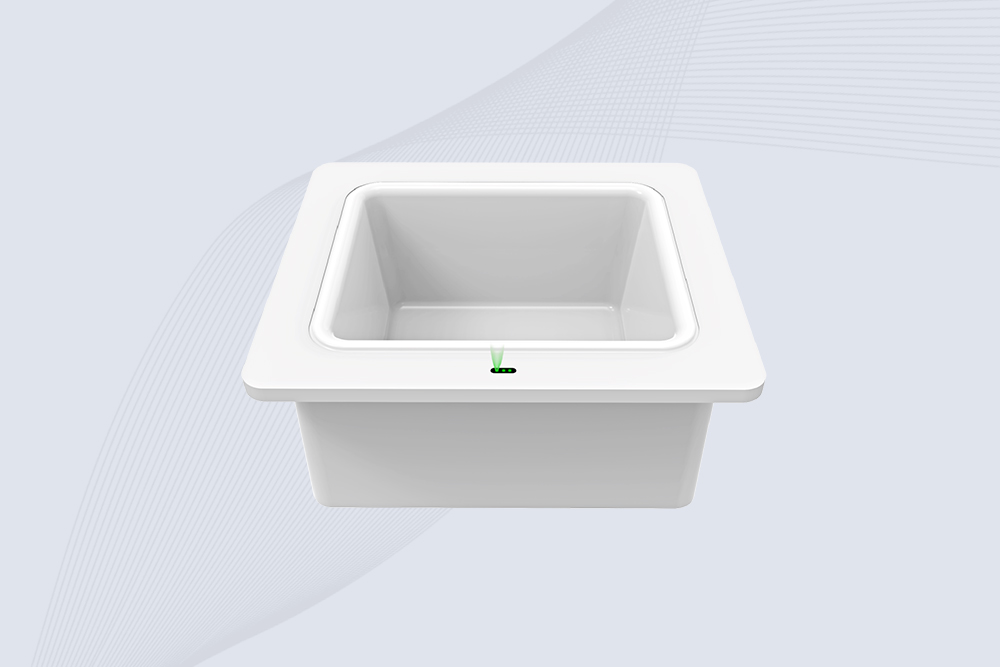
Cykeo CYKEO-D8A embedded RFID badge reader offers 30+ tags/sec scanning, 20cm anti-crosstalk precision, and DC 12V power for unmanned stores, warehouses, and smart inventory systems.
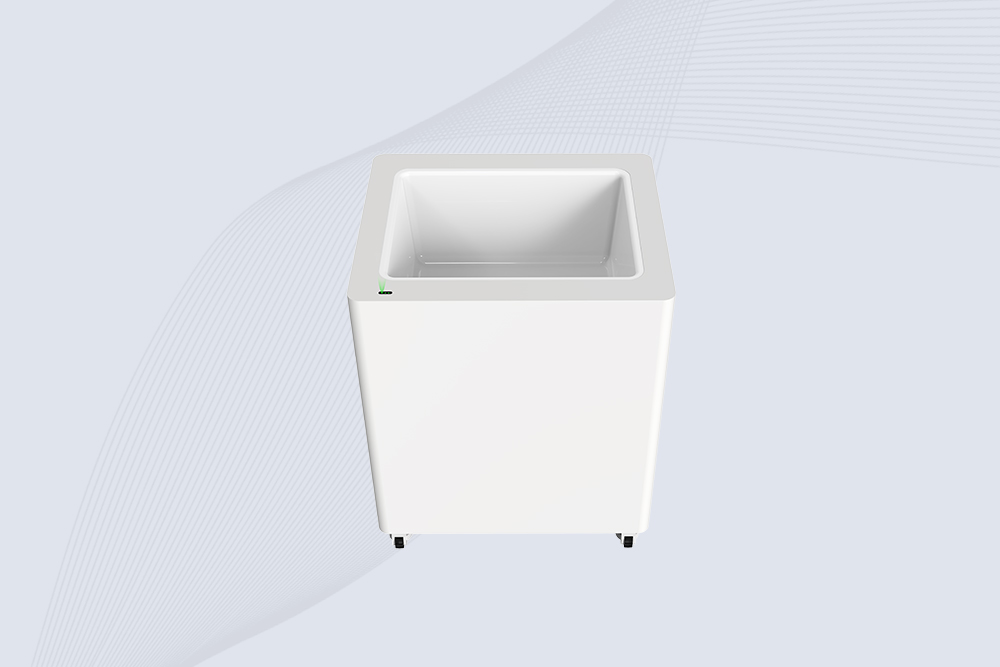
Cykeo’s CYKEO-D8C UHF RFID gate reader achieves 200-tag/batch scanning with adjustable power control, ideal for retail inventory and smart warehouse management.
RFID Industry Writer | IoT & Asset Tracking Analyst
James writes about RFID technology, asset tracking, and the practical challenges of digital transformation across warehousing, retail, manufacturing, and logistics.
His work focuses on how RFID is applied in real-world operations—improving inventory visibility, automating workflows, and helping businesses manage assets with greater accuracy and efficiency.
He regularly covers topics including UHF RFID, smart cabinets, RFID portals, tool tracking, warehouse automation, and industrial IoT trends..
Discover the top 10 advantages of UHF RFID readers for supply chains in 2024. Boost efficiency, accuracy, and ROI with Cykeo’s cutting-edge RFID solutions.
More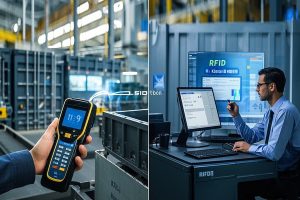
Discover how custom RFID reader solutions address unique industry challenges. Enhance efficiency with Cykeo’s tailored RFID systems for logistics, manufacturing, healthcare, and more.
More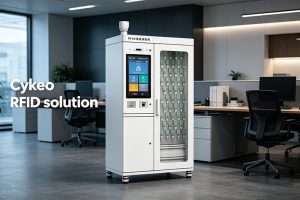
RFID key ring technology enables secure key tracking, automated audits, and intelligent key management. Discover how Cykeo RFID solutions improve security and operational efficiency.
More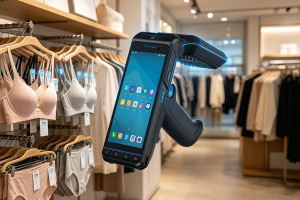
Discover radio frequency identification in retail for real-time inventory, loss prevention, and smarter store operations with RFID-driven visibility.
More