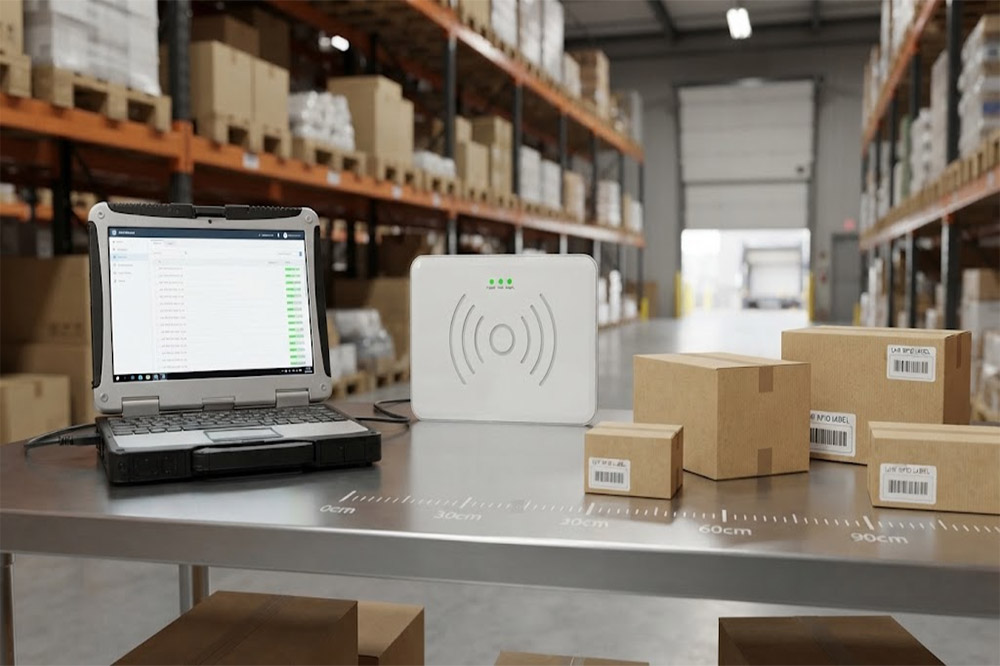
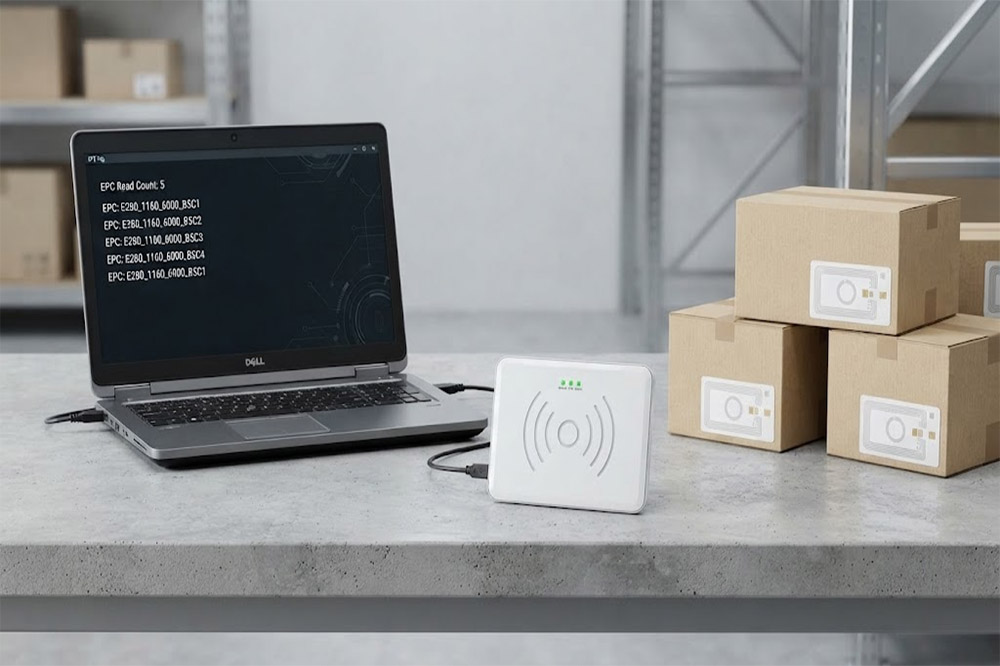
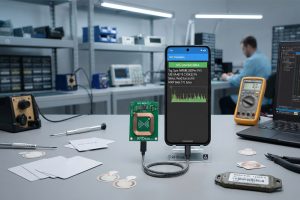
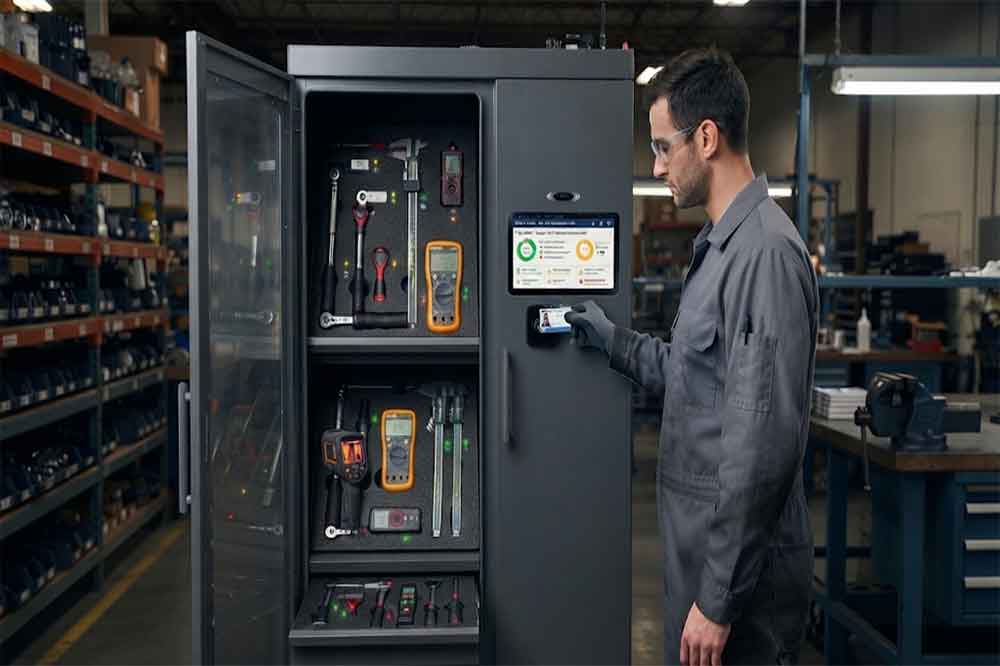
UHF USB RFID reader is commonly used when a business needs to identify RFID-tagged products from a greater distance than a typical desktop card reader. With compatible UHF tags, it can support longer-range reading and multiple-tag identification, making it useful for warehouse inventory, logistics, product receiving, and asset tracking.
The basic idea is simple: put RFID tags on the products, place the reader at the workstation, and let the system capture tag IDs without scanning every barcode one by one.
But the actual reading distance can vary quite a lot. The tag, antenna, product material, reader power, and warehouse environment all have a say in it.
Why UHF RFID Is Different
UHF RFID normally operates in the 860–960 MHz range, depending on the regional frequency requirements.
That is one reason UHF RFID is widely considered for inventory applications where reading distance matters.
A small USB UHF RFID reader can potentially identify tags that are not sitting directly against the reader.
Imagine a warehouse employee receiving a pallet of boxed products.
With a barcode scanner, the operator may need to find and scan individual barcodes.
With UHF RFID, several tagged items may be identified within the reader’s operating area.
That does not mean the operator can simply wave the reader at an entire warehouse and capture everything. Real warehouses are much messier than that.
Metal racks, liquids, stacked products, tag orientation, and other RFID readers can all change the result.
UHF is only one type of USB RFID solution. If you are still comparing different reader types, applications, and tag compatibility, our USB RFID Scanner Guide provides a broader overview before you choose a specific UHF reader.
EPC Gen2: The Standard You Will See Often
When looking at UHF RFID readers, you will probably encounter EPC Gen2, often associated with the EPCglobal Class 1 Gen 2 specification and its later development under ISO/IEC 18000-63.
For warehouse and logistics applications, this compatibility matters because it provides a common communication framework between UHF RFID readers and compatible tags.
For a buyer, the important point is not necessarily memorizing the entire protocol specification.
It is making sure that:
Reader + RFID tag + software
can work together.
If a customer already has EPC Gen2 UHF tags in use, the new reader should be tested with those actual tags before a larger order is placed.
That is especially important for distributors who may be supplying readers to several different customers.
860–960 MHz: Why the Frequency Range Matters
UHF RFID is often described as operating from 860 to 960 MHz, but the exact operating band depends on the market.
Different countries and regions have their own regulatory requirements for UHF RFID.
This matters when selling readers internationally.
A reader intended for one market should not automatically be assumed to be suitable for every country.
For a logistics company operating across several regions, frequency compliance should be discussed before purchasing.
For an OEM project, the supplier should also confirm the supported regional frequency configuration.
It is a small detail that can become a fairly big problem if discovered after a shipment arrives.
How Far Can UHF USB RFID Reader Read?
This is probably the question buyers ask first.
The honest answer is:
It depends.
A reader may be advertised with a maximum reading distance, but that number usually assumes favorable conditions.
Actual distance can be affected by:
RFID tag sensitivity
Tag antenna design
Reader output power
Reader antenna
Tag orientation
Product material
Metal surfaces
Liquid contents
Reader placement
Local RF environment
For example, UHF tag attached to a cardboard box may perform quite well.
Put that same tag directly onto a metal tool and the result could be very different.
This is why I would be careful about choosing a reader based only on a headline such as “10 m range” or “20 m range.”
For inventory projects, stable reading is usually more valuable than maximum reading distance.
Multiple Tag Reading Is Where UHF Gets Interesting
One of the strongest reasons businesses consider UHF RFID is the ability to identify multiple tags within the reader’s operating area.
Suppose a warehouse worker has 30 tagged cartons on a receiving table.
Instead of manually scanning each barcode, the UHF reader can attempt to identify the RFID tags within range.
The reader and software use an anti-collision process so that multiple tags can communicate with the reader without all responses interfering with each other.
The actual number of tags that can be read successfully depends on the reader, tags, tag placement, RF environment, and software settings.
So again, I would avoid treating a “maximum tag count” specification as a guarantee.
A small test with the customer’s real products tells you much more.
UHF USB RFID Reader for Warehouse Receiving
Receiving is one of the easier applications to understand.
A truck arrives.
Boxes come into the warehouse.
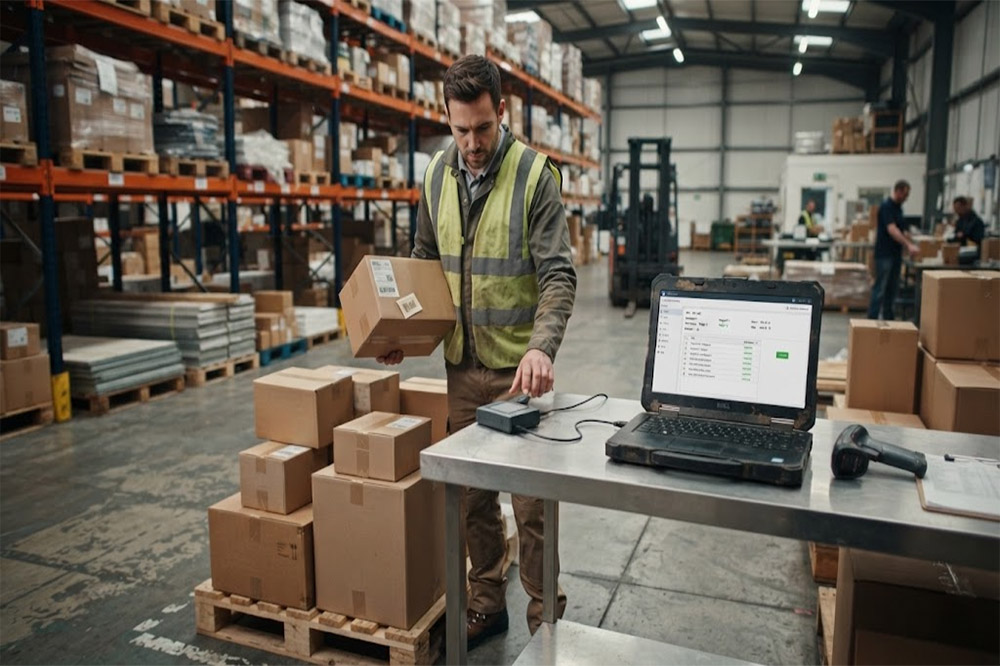
The operator places tagged products in the receiving area.
A USB UHF RFID reader connected to the computer captures the tag IDs.
The warehouse software compares those IDs with the expected shipment.
If the workflow is designed properly, the operator can quickly see which products have arrived.
This can reduce manual data entry, particularly when many individually tagged items arrive together.
The reader itself does not know what has been delivered.
It simply captures RFID information.
The warehouse software connects those tag IDs to purchase orders, SKU numbers, quantities, and inventory records.
UHF RFID for Inventory Checking
Inventory counting is another natural application.
With traditional barcode processes, employees often walk around with a scanner and locate products one by one.
UHF RFID can make the process less dependent on direct visual scanning.
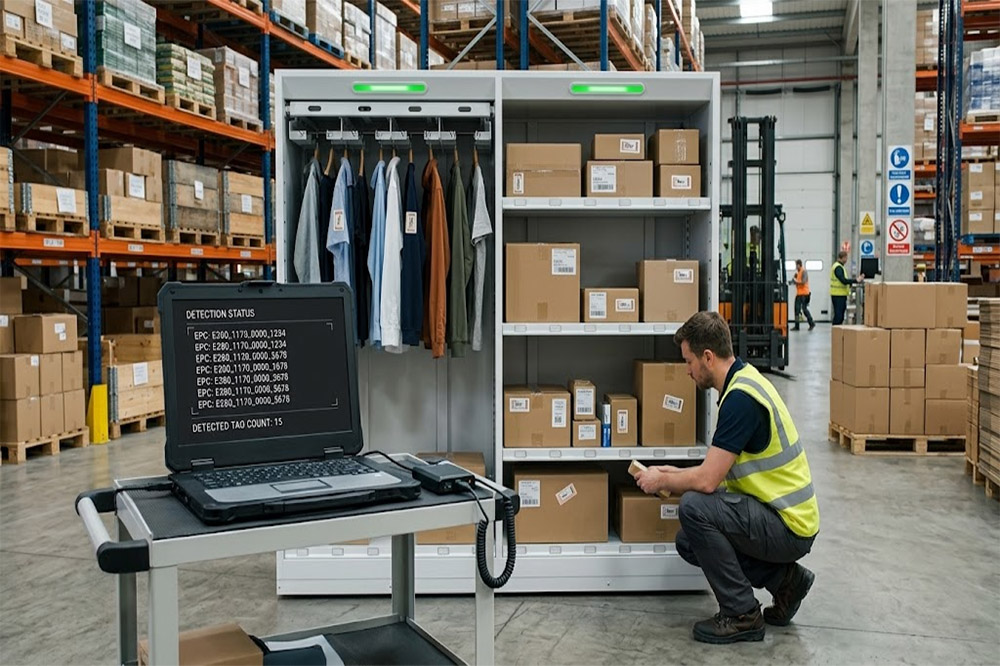
For example, a worker may move a portable or connected UHF reader around a storage area and identify tagged items within its reading zone.
With a USB reader, the application is usually more workstation-focused, although the exact hardware configuration can vary.
For larger warehouses, fixed or handheld UHF RFID readers may make more sense.
This is an important point for buyers:
USB does not automatically mean short range.
A UHF USB RFID reader can support longer-range RFID communication, but the final setup depends on its antenna and application design.
USB Connection and Warehouse Software
For a warehouse project, hardware is only half the job.
The reader needs to communicate with the inventory system.
Depending on the model, a UHF USB RFID reader may support communication methods such as HID, virtual COM, SDK, or API-based integration.
A simple desktop application may only need tag IDs.
A warehouse management system may need more information and control.
Before buying, ask about:
USB communication mode
SDK
API
Operating-system compatibility
EPC data output
Tag memory access
Multiple-tag reading
Read/write capability
If the customer already has WMS software, it is better to involve the software developer before purchasing hundreds of readers.
It is much easier to solve an integration problem with one sample than with 500 finished units.
What Should a Distributor Check?
If you are purchasing UHF USB RFID readers for resale, I would start with the application rather than the product catalog.
Ask your customer:
What tags are you using?
What is the target reading distance?
How many tags need to be read at once?
What software will connect to the reader?
Where will the reader be installed?
Those answers usually narrow the hardware selection quickly.
For OEM customers, additional requirements may include housing design, logo printing, USB cable selection, firmware behavior, packaging, and software development support.
Cykeo provides USB RFID reader solutions for inventory, warehouse, asset tracking, and system integration applications.
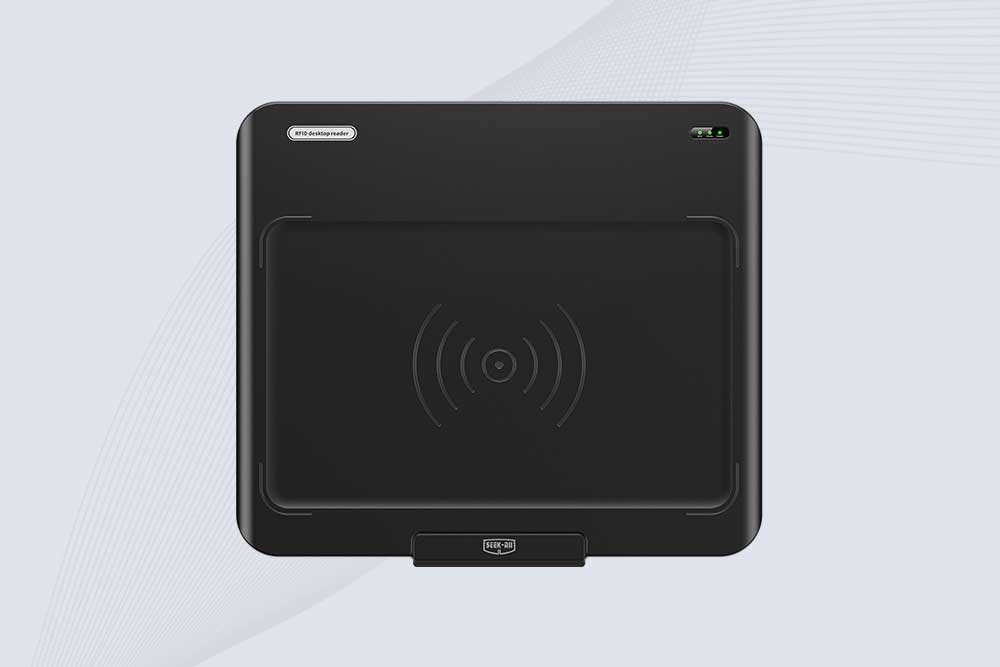
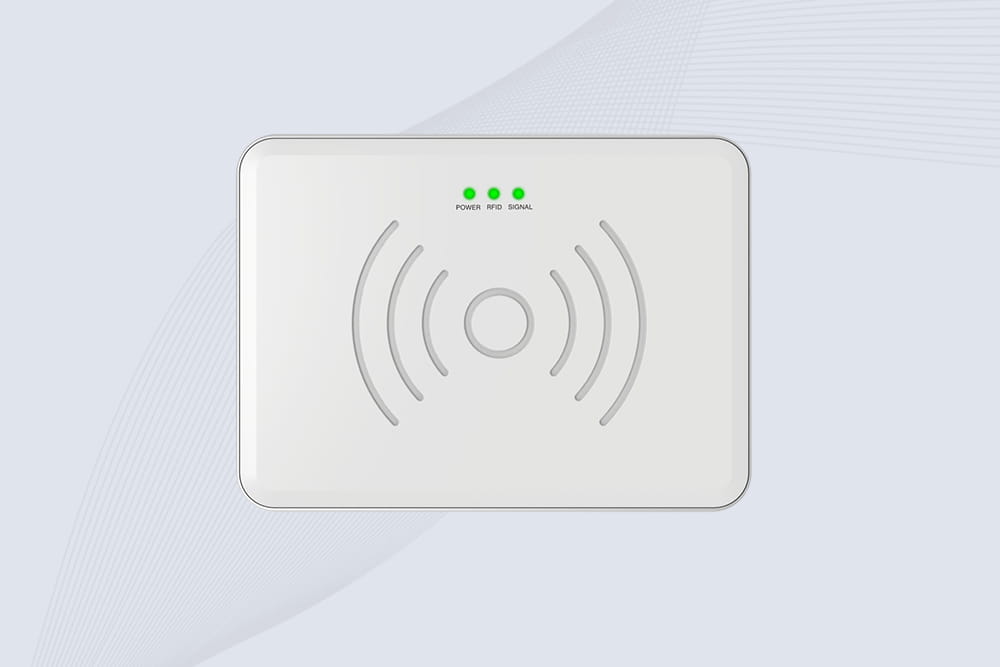
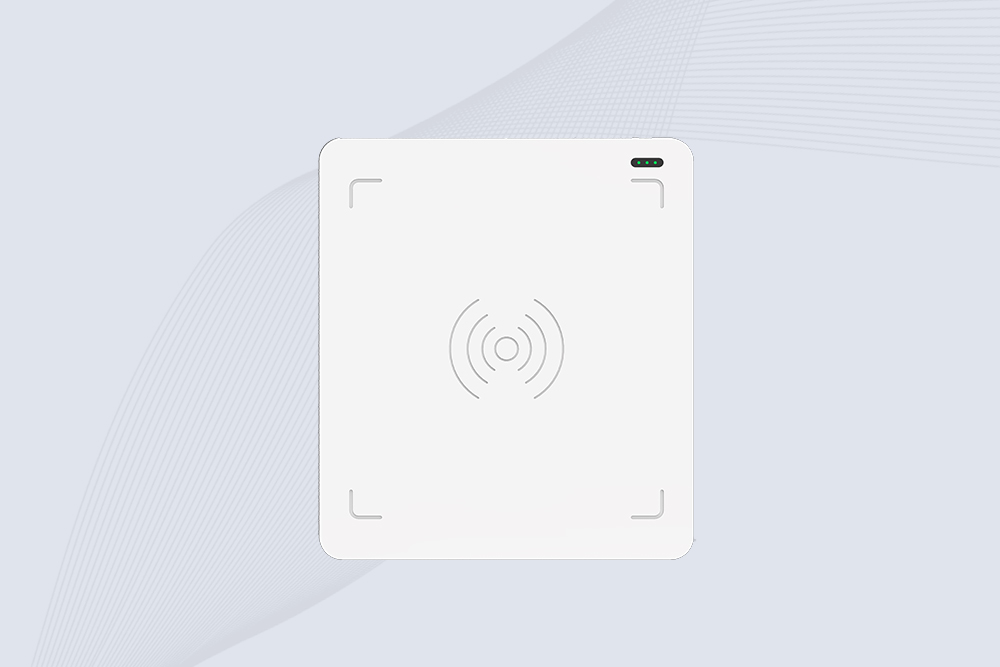
SSD-D3AL is a USB-HID UHF RFID reader with 0–30 cm reading, 0–15 cm writing, over 600 tags/s recognition, USB plug-and-play operation and OEM Logo customization.
SSD-D1AL is a compact USB UHF RFID reader with Impinj E710/X3M1 chipset, USB-HID, 600+ tags/s recognition, 4/8/16 antenna support and plug-and-play USB power.
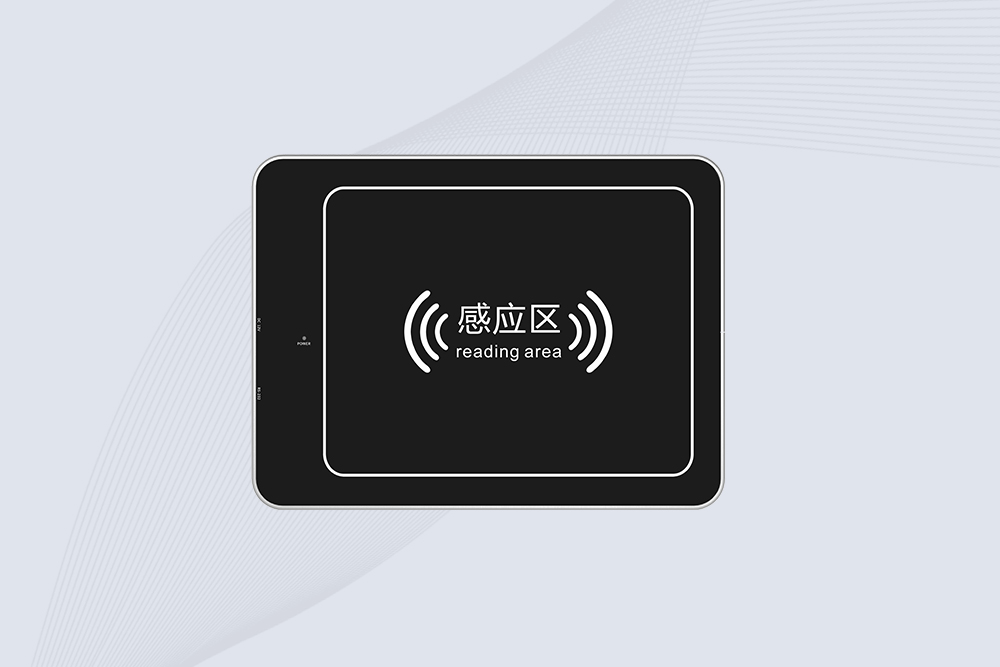
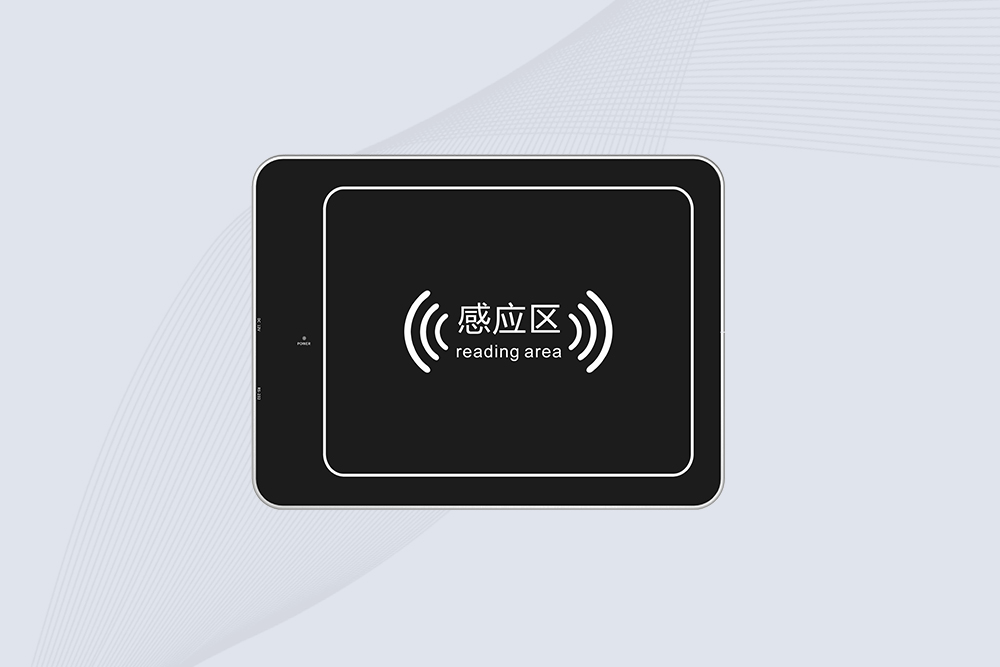
CYKEO CYKEO-D1LA USB RFID Reader is a compact desktop solution with near-field control for precise tag reading and encoding. Powered by USB, supporting ISO 18000-6C, and built for stable batch writing, this usb rfid tag reader fits retail, libraries, offices, and controlled RFID encoding tasks.
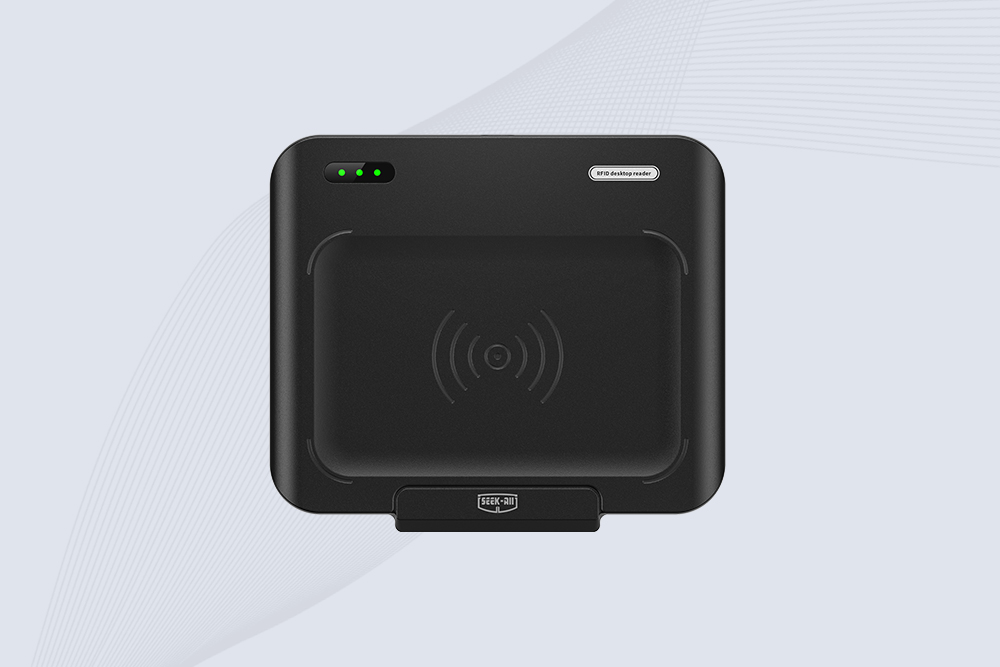
CYKEO CYKEO-D1L RFID scanner USB is a compact desktop UHF RFID scanner designed for short-range tag writing and verification. This usb rfid scanner supports batch encoding, stable 0–26 dBm output, and works across Windows, Linux, and Android systems.
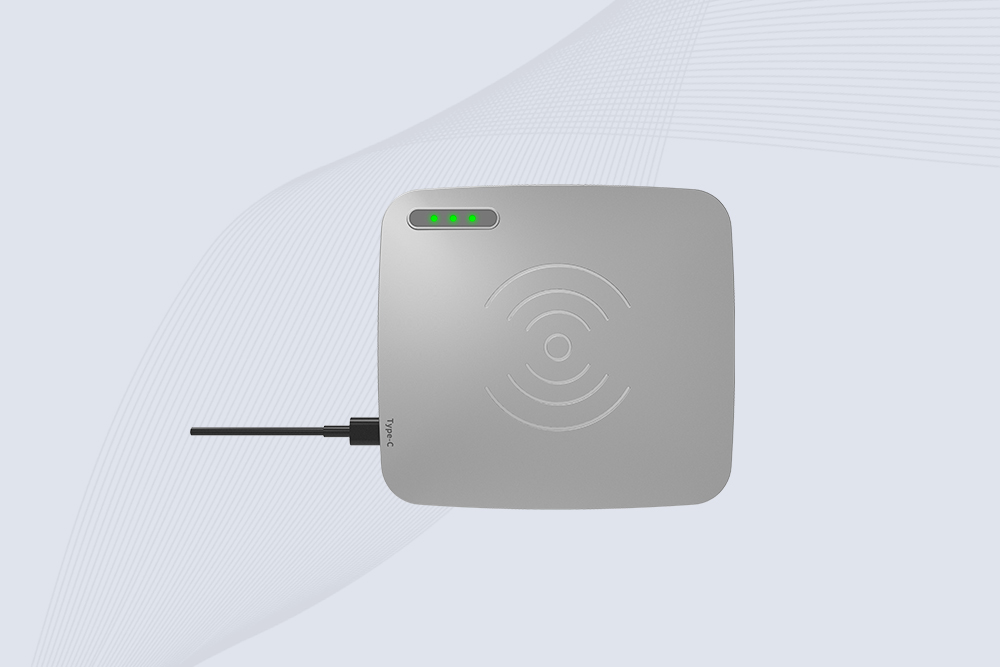
CYKEO CYKEO-D1C USB RFID Card Reader is a near-field UHF desktop writer designed for secure, short-range tag encoding. With USB-C connectivity and stable 26 dBm output, this rfid reader usb c is ideal for badge issuance, label encoding, and controlled desktop RFID workflows.
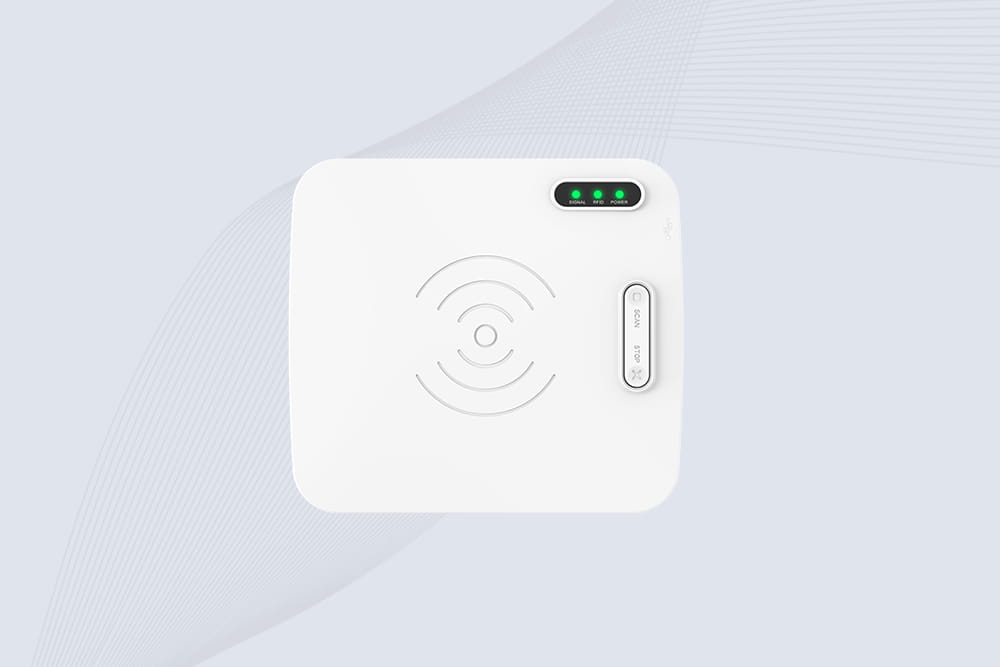
CYKEO CYKEO-D2L RFID Reader USB is a compact desktop encoder built on the Impinj R500 chip. With near-field control and stable USB power, this usb rfid card reader delivers precise tag writing for offices, retail counters, and small-scale logistics encoding tasks.
CYKEO CYKEO-D3L USB RFID Tag Reader delivers stable UHF tag reading and writing for daily desktop and light industrial tasks. Designed for controlled short-range operation, this USB RFID Tag Reader works reliably with rfid tag and reader systems in libraries, tool tracking, and inventory registration.
The CYKEO CYKEO-D4L UHF RFID Tag Reader is a stable Desktop RFID Reader designed for accurate tag registration, borrowing, and return workflows. Built with the Impinj R2000 chip, this UHF RFID Tag Reader delivers controlled short-range reads for libraries, asset tracking, and inventory management environments.
The CYKEO CYKEO-D5L Desktop RFID Card Reader is a stable UHF RFID Card Reader designed for controlled short-range reading and writing. Built for libraries, tool rooms, and asset desks, this UHF RFID Card Reader supports dense tag handling, secure data processing, and easy USB integration.
The CYKEO CYKEO-D6L RFID Reader Writer is a heavy-duty Desktop RFID Reader designed for short-range, high-accuracy tag programming. Built for libraries, labs, and asset desks, this RFID Reader Writer supports batch processing, stable 33dBm output, and seamless integration with existing management systems.
Cykeo CYKEO-D8A embedded RFID badge reader offers 30+ tags/sec scanning, 20cm anti-crosstalk precision, and DC 12V power for unmanned stores, warehouses, and smart inventory systems.
Cykeo’s CYKEO-D8C UHF RFID gate reader achieves 200-tag/batch scanning with adjustable power control, ideal for retail inventory and smart warehouse management.
RFID Industry Writer | IoT & Asset Tracking Analyst
James writes about RFID technology, asset tracking, and the practical challenges of digital transformation across warehousing, retail, manufacturing, and logistics.
His work focuses on how RFID is applied in real-world operations—improving inventory visibility, automating workflows, and helping businesses manage assets with greater accuracy and efficiency.
He regularly covers topics including UHF RFID, smart cabinets, RFID portals, tool tracking, warehouse automation, and industrial IoT trends..
Not every parking project needs the same RFID reader. This guide explains how to choose the right RFID parking reader based on application, read range, antenna, interface, and environmental conditions for reliable vehicle access control.
Learn how to test NFC on Android phones, check NFC compatibility, verify NFC tags and readers, and understand testing methods for NFC hardware projects and bulk RFID/NFC solutions.
RFID tool cabinet can connect tool issuing and return processes with user identity, tool status, inventory, and transaction records. This helps tool rooms re...
 Cykeo RFID IoT Solution Products R&D Manufacturer