When customers contact an NFC or RFID supplier, one of the first questions is often simple:
“Can I test this NFC reader with my Android phone?”
It sounds like an easy question, but in real projects, things are not always that straightforward.
A phone may support NFC but fail to read a specific tag. An NFC tag may work perfectly with one smartphone but not another. A reader module may detect cards but fail when integrated into an industrial device.
From our experience working with NFC and RFID applications, many testing problems are not caused by defective hardware. They are usually caused by compatibility, frequency differences, antenna design, or incorrect testing methods.
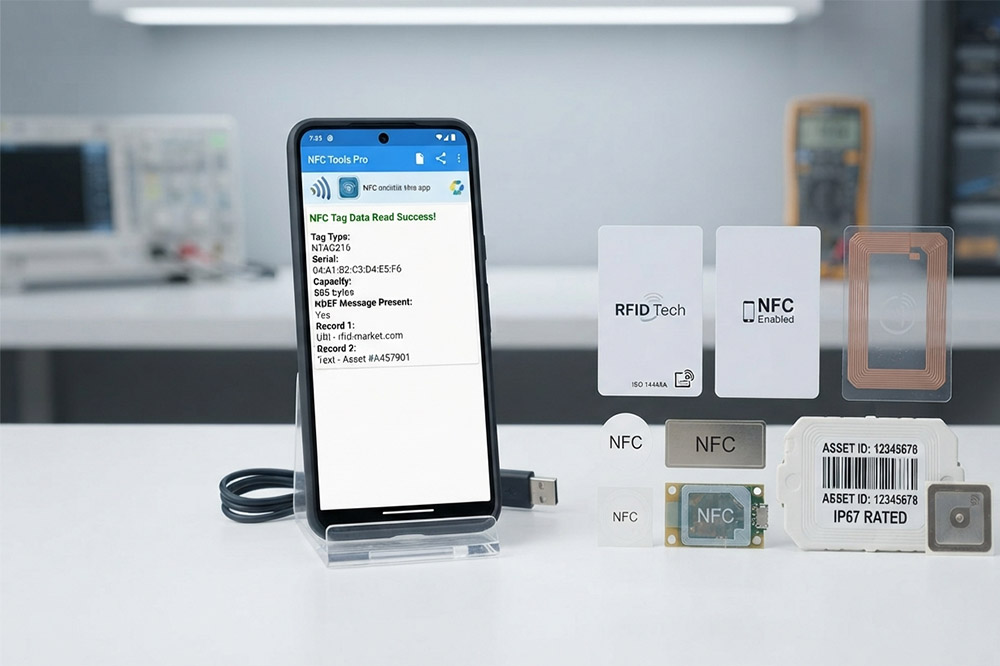
Before purchasing hundreds or thousands of NFC readers, testing with an Android phone is a good first step.
Related Reading: Need to Check NFC Reader Compatibility First?
If you are testing NFC hardware for a project, it is also important to understand the relationship between smartphones, NFC tags, and external NFC readers.
We previously discussed how to test NFC/RFID reader compatibility with smartphones, including what factors affect communication between phones and RFID/NFC devices.
This article focuses more on Android phone testing methods, especially for buyers, integrators, and companies evaluating NFC hardware before bulk orders.
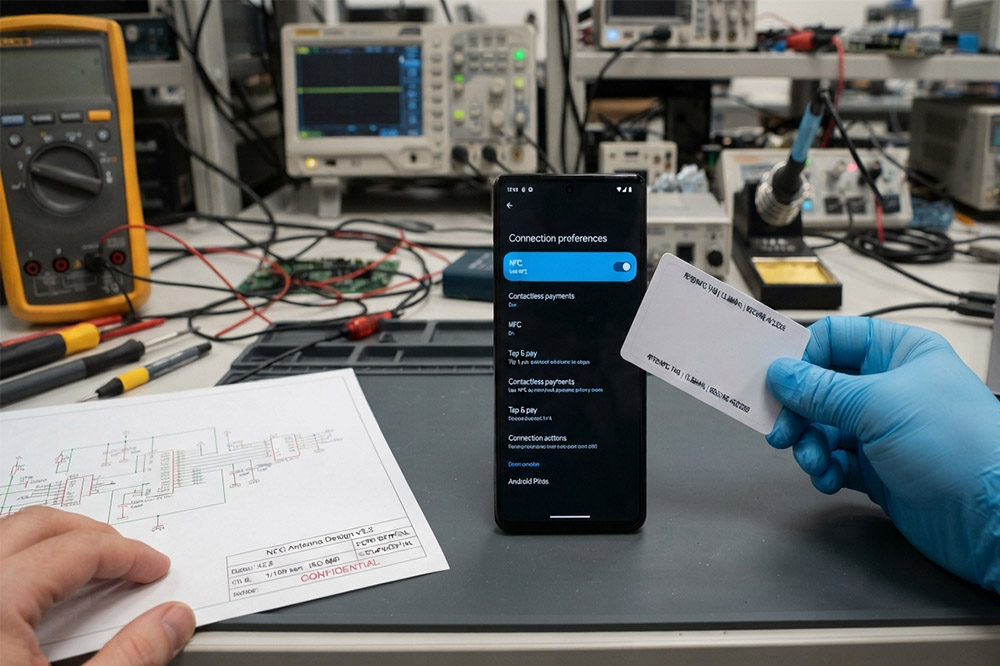
First Step: Check If Your Android Phone Has NFC
The easiest mistake is assuming every modern Android phone supports NFC.
Many flagship phones include NFC, but some budget models remove the function to reduce cost.
To check:
Open Settings
Search for “NFC”
Enter NFC settings
Turn NFC on
The menu location is different depending on the Android brand.
For example:
Samsung: Settings → Connections → NFC and contactless payments
CYKEO Passive RFID Tags are made for wet and high-humidity environments where standard labels do not last. This rfid passive tag is often used around liquids, chemicals and temperature changes, providing stable reading distance and long data life for industrial tracking.
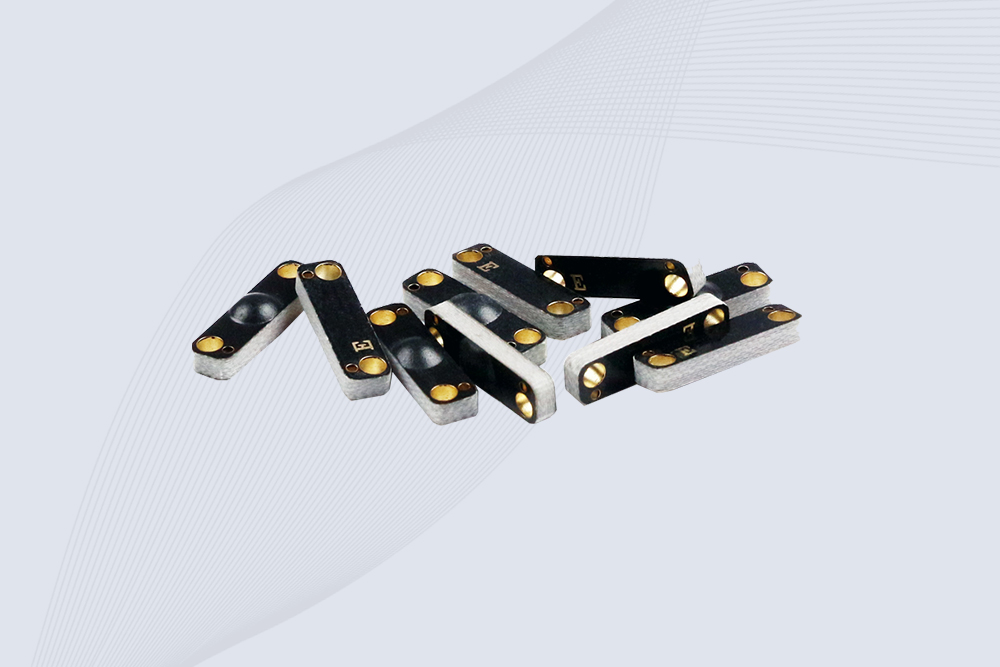
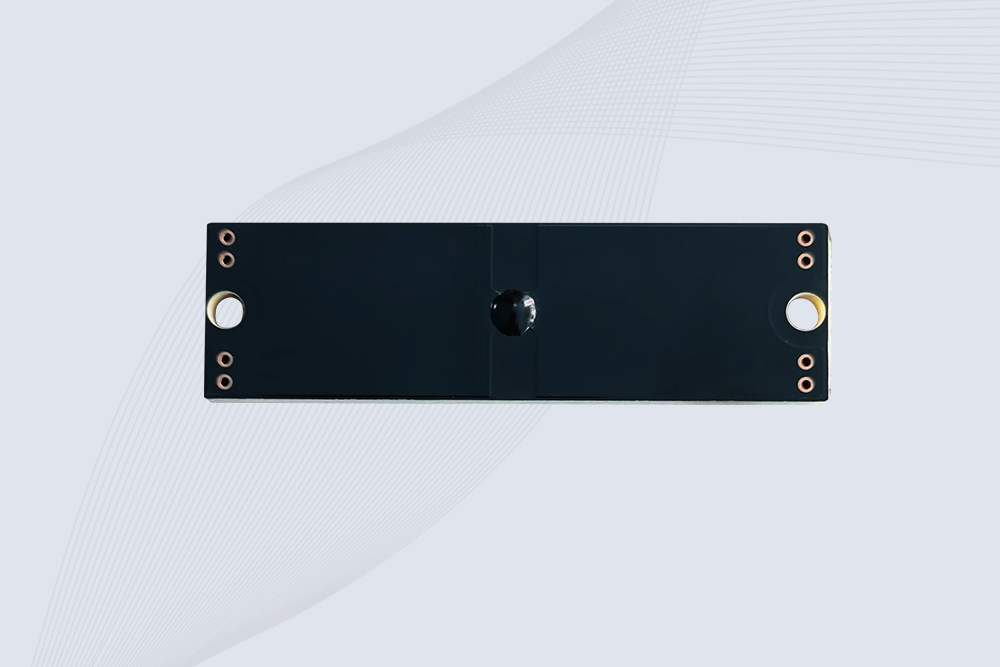
CYKEO CYKEO-PCB1504 Metal RFID Tags is a compact anti-metal UHF RFID solution built for direct mounting on metal surfaces. With stable 8-meter read range, Ucode-8 chip, and long data retention, this rfid metal tag fits tools, containers, automotive parts, and industrial asset tracking.
CYKEO CYKEO-PCB7020 On-Metal RFID Tags are designed for reliable tracking on steel and metal surfaces. Built with an FR4 epoxy body and industrial-grade chips, these On-Metal RFID Tags deliver stable performance, long data life, and chemical resistance, making them a dependable RFID anti-metal tag for harsh environments.
The CYKEO CYKEO-60-25 Anti-Metal RFID Tag is built for metal surfaces where standard tags fail. Designed for long-range performance, harsh environments, and stable data retention, this Anti-Metal RFID Tag is ideal for industrial assets, containers, and equipment tracking using on metal RFID tags.
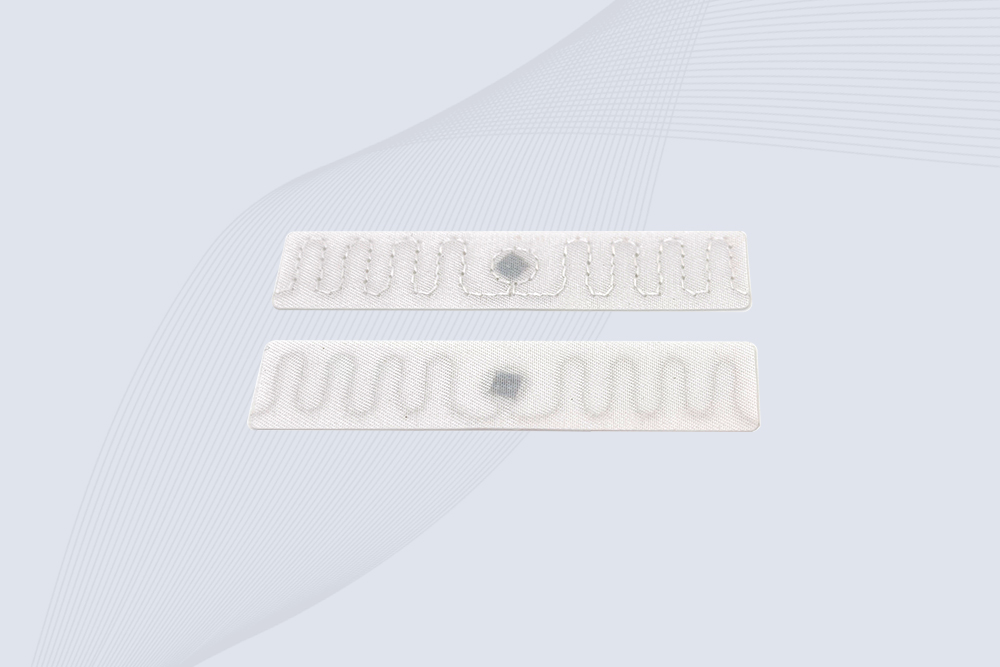
The CYKEO RFID Laundry Tag is designed for long-term textile identification in harsh laundry environments. Built to withstand high heat, chemicals, and repeated washing, this RFID Laundry Tag delivers stable performance for hotels, hospitals, and industrial laundry operations using laundry rfid tags at scale.
The CYKEO CYKEO-125-7 RFID Book Tag is designed for reliable book and document tracking in libraries and archives. This RFID Book Tag delivers long read range, dense placement support, and stable performance on shelves, making it a practical rfid tag on books for library automation, file management, and archival systems.
CYKEO RFID tags in hospitals are designed for sterile environments where accuracy matters. These autoclavable RFID tags support long-term tracking of surgical tools, implants, and medications, helping hospitals improve visibility, compliance, and patient safety.
CYKEO RFID Cable Tie Tag is built for reliable identification on metal surfaces. This UHF RFID Cable Tie Tag is widely used in rfid tags for inventory systems, industrial asset management and Hospital RFID Tags, offering stable read performance, long service life and global EPC Gen2 compatibility.
CYKEO RFID Asset Tag is designed for stable identification of metal assets in industrial environments. This UHF RFID Asset Tag is commonly used for rfid tag asset tracking on equipment, tools and containers, providing reliable reads, long service life and ISO/IEC 18000-6C support.
CYKEO UHF RFID Card is designed for fast identification and long-term use in industrial and commercial systems. Supporting ISO 18000-6C, this UHF RFID Card works at 860–960 MHz and is suitable for custom RFID cards used in asset tracking, access control and inventory management.
CYKEO HF RFID Cards are designed for secure and stable access control systems. These 13.56 MHz RFID key cards support ISO 14443-A, reliable rewriting and long service life, making HF RFID Cards suitable for offices, campuses, events and membership management.
CYKEO UHF RFID Tag is designed for reliable tracking of metal jewelry and high-value items. This Jewelry RFID Tag supports long-range reading up to 8 meters, anti-counterfeit protection and stable performance on metal, making it suitable for retail, inventory control and asset management.
RFID Industry Writer | IoT & Asset Tracking Analyst
James writes about RFID technology, asset tracking, and the practical challenges of digital transformation across warehousing, retail, manufacturing, and logistics.
His work focuses on how RFID is applied in real-world operations—improving inventory visibility, automating workflows, and helping businesses manage assets with greater accuracy and efficiency.
He regularly covers topics including UHF RFID, smart cabinets, RFID portals, tool tracking, warehouse automation, and industrial IoT trends..
Wondering "how do you read a RFID sticker"? Discover simple methods using smartphones, handheld readers, and fixed scanners. Step-by-step instructions for reading any RFID label with CYKEO.
how to connect a card reader quickly and correctly. Learn USB, Type-C, and network setup with proven steps, real testing tips, and stable RFID integration methods.
A practical buying guide for long range RFID readers. Learn how system integrators select UHF RFID readers for warehouse, parking, logistics, and industrial automation projects based on real field experience.
 Cykeo RFID IoT Solution Products R&D Manufacturer