 Cykeo RFID IoT Solution Products R&D Manufacturer
USB RFID Reader for Tool Management: Track Equipment Usage Easily
162RFID tool tracking connects physical tools with digital usage records, making it easier to know who has a tool, when it was checked out, and whether it was r...
MoreAll RFID Product
An RFID controller is the central processing unit of an RFID system. It manages communication between RFID readers, rfid antennas, rfid tags, sensors, and software platforms, enabling accurate identification, real-time monitoring, automated decisions, and secure data exchange across industrial, retail, and access-control applications.
For organizations deploying RFID at scale, the RFID controller is often the difference between a system that merely reads tags and one that delivers actionable operational intelligence.
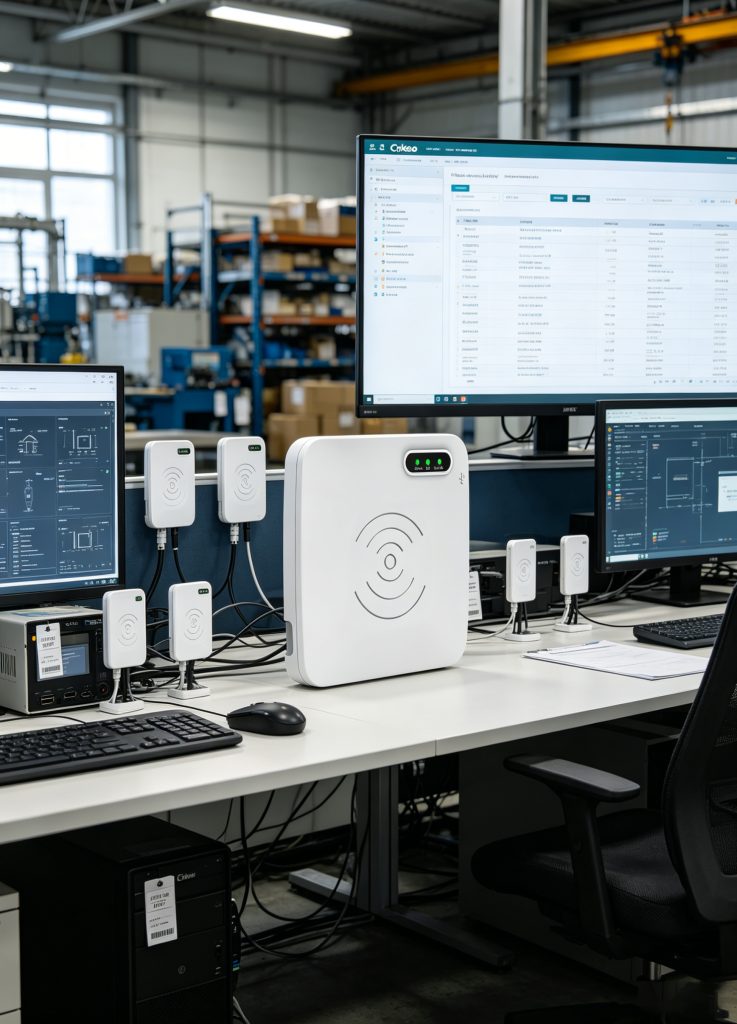
During a warehouse deployment I supervised for a manufacturing customer, the RFID readers themselves performed well. The real challenge emerged after installation: coordinating four readers, twelve antennas, gate sensors, and ERP integration simultaneously.
The RFID controller became the system’s command center.
Instead of processing isolated reads, it filtered duplicate tag events, managed antenna switching, controlled alarms, and synchronized data with enterprise software in real time.
Without a robust RFID controller, data quality quickly deteriorates.
| Function | Purpose |
|---|---|
| Reader Management | Controls multiple RFID readers simultaneously |
| Tag Filtering | Removes duplicate reads |
| Event Processing | Triggers alarms, doors, lights, or software actions |
| Data Communication | Transfers data to ERP, WMS, MES, or cloud platforms |
| Access Control | Validates authorized tags |
| Asset Tracking | Records movement and location history |
The growing adoption of RFID technology is directly increasing demand for intelligent RFID controllers.
According to the RFID Journal and RAIN Alliance, billions of RAIN RFID tags are now deployed annually across retail, logistics, healthcare, and manufacturing environments.
Industry reports from the RAIN Alliance indicate that more than 44 billion RAIN RFID chips were shipped globally in 2023.
This scale creates massive streams of RFID data that require intelligent processing, filtering, and integration—precisely the role performed by RFID controllers.
In smart factories, RFID controllers coordinate readers installed along production lines.
Typical tasks include:
I recently observed an automotive supplier using RFID-controlled checkpoints to verify component movement between assembly stations.
Instead of relying on manual barcode scans, each movement was recorded automatically.
The result was fewer process interruptions and improved production visibility.
An RFID controller enables:
According to research published by the U.S. National Institute of Standards and Technology (NIST), asset visibility improvements significantly reduce time spent locating equipment and support operational efficiency improvements.
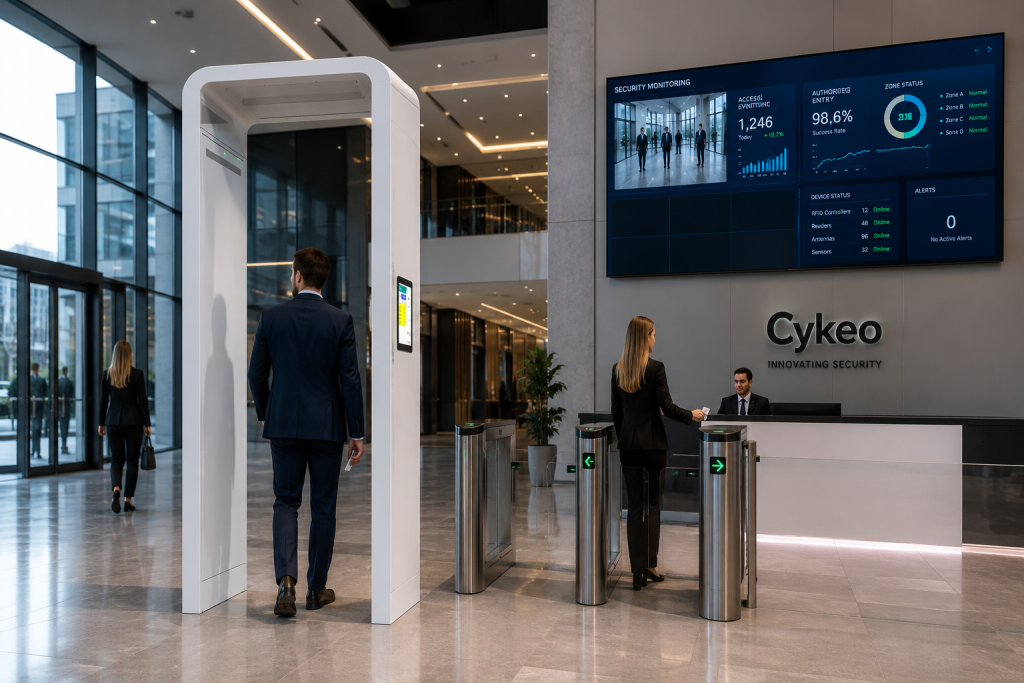
Access control is one of the most common RFID controller applications.
Rather than simply reading a credential, the controller determines:
In enterprise deployments, reliability often matters more than raw speed.
One office project I reviewed generated thousands of credential events each morning. Nearly 70% occurred within a short arrival window.
The RFID controller’s filtering and decision-making capabilities prevented duplicate records and unnecessary system load.
| Component | Function |
| RFID Reader | Reads credentials |
| RFID Controller | Validates and processes events |
| Access Software | Stores permissions |
| Door Lock | Executes authorization |
| Alarm System | Handles violations |
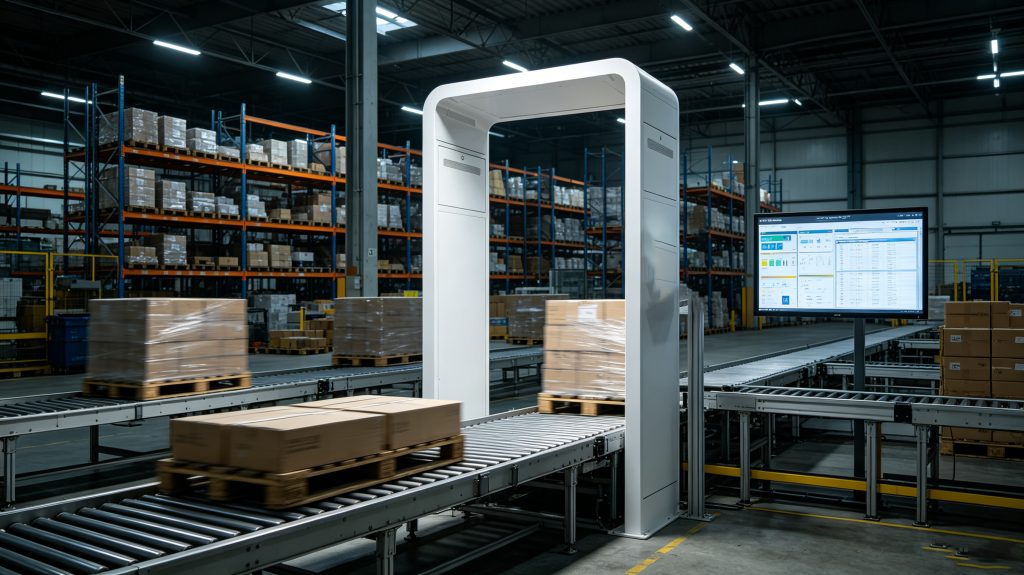
Warehouse environments generate enormous RFID traffic.
A single dock door can process hundreds of tagged items every hour.
Without intelligent filtering, duplicate reads quickly overwhelm backend systems.
A high-performance RFID controller performs:
This enables automated workflows rather than simple tag collection.
When selecting an RFID controller, prioritize:
An RFID controller manages RFID readers, processes tag data, filters duplicate reads, triggers actions, and communicates with software systems.
Yes. Industrial RFID controllers commonly support multiple readers and antennas simultaneously.
For enterprise-grade access systems, yes. The controller validates credentials, manages permissions, and executes security rules.
Manufacturing, logistics, healthcare, libraries, archives, retail, transportation, government facilities, and enterprise security environments.
Cykeo RFID controller solutions provide centralized device management, real-time event processing, stable communications, and scalable integration with business software platforms.
This article was reviewed by the Cykeo RFID Engineering Team, which has participated in RFID deployments involving manufacturing automation, warehouse visibility, asset management, access control, and industrial IoT integration projects. The insights presented are based on practical deployment observations and industry standards rather than theoretical specifications alone.
The right RFID controller does more than connect hardware. It transforms RFID data into operational decisions, making the entire RFID ecosystem more reliable, scalable, and valuable. For modern automation projects, an RFID controller remains one of the most critical components in the infrastructure.
RFID tool tracking connects physical tools with digital usage records, making it easier to know who has a tool, when it was checked out, and whether it was r...
More
Can you read RFID with NFC? We explain the technical relationship between these technologies and when NFC is sufficient versus when you need dedicated RFID systems.
More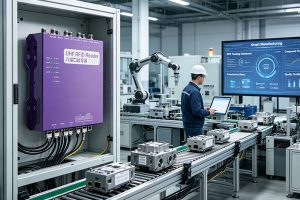
Explore rfid receiver solutions from Cykeo for stable RFID signal detection, asset tracking, inventory automation, and industrial identification with accurate real-time data capture.
More
Explore essential security features in handheld RFID scanners, including encryption, user authentication, and anti-tampering. Learn how Cykeo’s devices safeguard sensitive data.
More