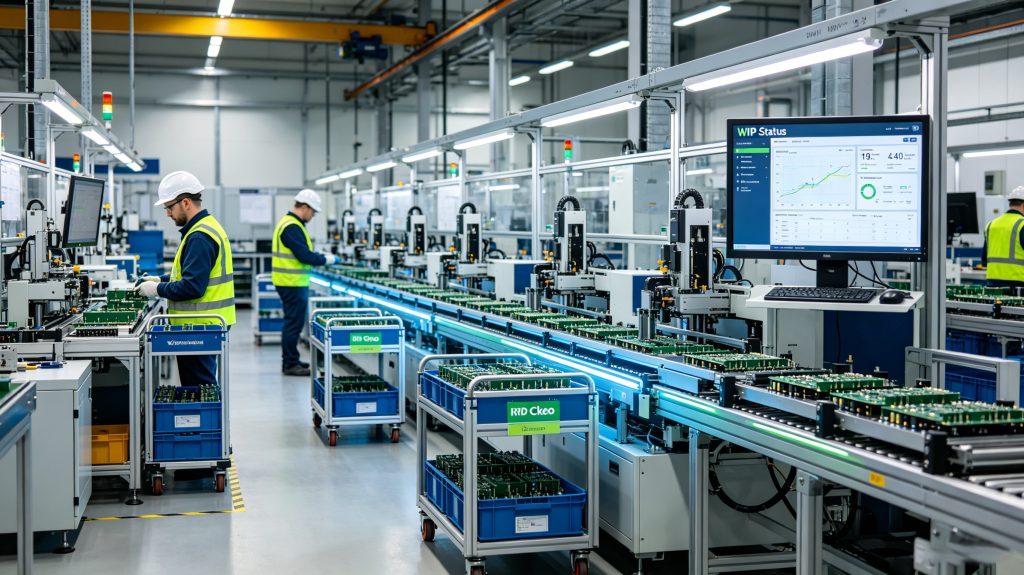
RFID manufacturing solutions enable real-time tracking of materials, work-in-progress inventory, tools, and finished products throughout production facilities. By automating data collection and eliminating manual scanning, RFID improves inventory accuracy, production visibility, and operational efficiency.
About the Author
I have worked on RFID deployments across automotive plants, industrial equipment factories, electronics assembly lines, and warehouse automation projects for more than 12 years. My role has included RFID site surveys, reader deployments, middleware integration, and production workflow optimization.
One lesson appears repeatedly inside manufacturing environments: managers rarely struggle with production itself. They struggle with visibility.
A machine may be operating perfectly, yet nobody knows where a critical component is located.
That is exactly where RFID manufacturing solutions create measurable value.
What Are RFID Manufacturing Solutions?
RFID manufacturing solutions combine RFID tags, industrial readers, antennas, controllers, and software platforms to automatically identify and track materials, assets, products, and production activities throughout a factory.
Unlike barcode systems that require manual scanning, RFID captures information automatically as tagged items move through production processes.
Manufacturers gain visibility into:
Raw material movement
Work-in-progress (WIP) tracking
Production status
Tool management
Asset utilization
Finished goods inventory
Warehouse transfers
According to the U.S. National Institute of Standards and Technology (NIST), manufacturers can lose significant productivity due to poor visibility and inefficient data collection across production processes. RFID helps address these operational gaps by automating identification and traceability.
RFID Production Tracking
What I Saw on an Electronics Assembly Line
Several years ago, I worked with a factory producing industrial control modules.
Every production stage relied on handwritten records and barcode scans.
The process looked organized from a distance.
It wasn’t.
Operators occasionally skipped scans during peak production periods.
Supervisors often spent hours locating unfinished assemblies.
One missing batch could trigger an investigation involving multiple departments.
After RFID implementation, tagged carriers automatically reported movement through each workstation.
Production managers could immediately see:
Current workstation
Production status
Processing time
Quality checkpoints
Completion records
The most noticeable change wasn’t speed.
It was certainty.
People stopped asking where products were.
The system already knew.
RFID automatically records product movement between production stations.
Manufacturing Asset Tracking
Factories often spend substantial time searching for tools, fixtures, testing equipment, and returnable containers.
The issue is rarely theft.
The issue is location visibility.
RFID asset tracking enables manufacturers to monitor:
Asset Type
RFID Benefit
Tools
Real-time location visibility
Calibration Equipment
Usage tracking
Returnable Containers
Circulation monitoring
Forklifts
Utilization analysis
Test Devices
Maintenance records
Production Fixtures
Availability monitoring
According to research published by Deloitte, digital manufacturing technologies continue improving productivity, operational efficiency, and decision-making across modern factories.
Smart Factory RFID System
Real-Time Visibility Changes Daily Operations
A manufacturing supervisor once described his previous process this way:
“We had reports from yesterday. RFID gave us visibility right now.”
That distinction matters.
Modern RFID manufacturing solutions support:
Real-time production dashboards
Automated material movement records
Instant inventory updates
Process traceability
Digital manufacturing analytics
ERP and MES integration
The result is faster decisions with fewer assumptions.
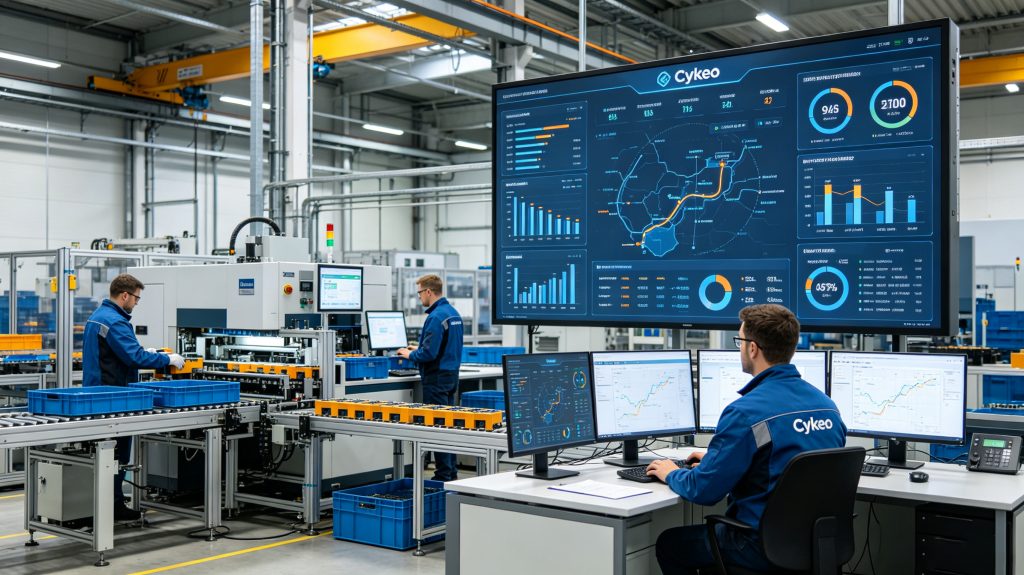
Manufacturing managers gain instant visibility into production operations.
Manual inventory methods often introduce delays because counting requires labor, scheduling, and production interruptions.
RFID enables:
Faster Inventory Audits
Large inventories can be verified significantly faster than traditional counting methods.
Improved Traceability
Every tagged item receives a digital movement history.
Reduced Human Error
Automated identification minimizes missed scans.
Better Material Availability
Production teams know exactly what inventory is available before scheduling work orders.
Why Manufacturers Choose RFID Manufacturing Solutions
Key benefits include:
Real-time production visibility
Higher inventory accuracy
Automated asset tracking
Reduced labor requirements
Improved product traceability
Faster inventory audits
Better compliance documentation
Enhanced operational efficiency
For many facilities, RFID becomes the digital foundation of Industry 4.0 initiatives.
FAQ
How do RFID manufacturing solutions work?
RFID readers automatically detect tagged materials, products, and assets throughout production processes and transmit data to management software in real time.
Can RFID track work-in-progress inventory?
Yes. RFID is widely used for WIP tracking, allowing manufacturers to monitor production status and movement between workstations.
Is RFID suitable for harsh industrial environments?
Yes. Industrial RFID tags are available for metal surfaces, high temperatures, vibration, chemicals, and outdoor conditions.
Can RFID integrate with ERP and MES systems?
Yes. Most enterprise RFID platforms support integration with ERP, MES, WMS, and manufacturing analytics systems.
What industries commonly use RFID manufacturing solutions?
Automotive, electronics, aerospace, machinery manufacturing, medical device production, industrial equipment, and consumer goods manufacturing all widely deploy RFID technology.
Final Thoughts
The strongest argument for RFID manufacturing solutions is not faster scanning.
It is operational awareness.
When production managers know where materials, tools, and products are located at any moment, bottlenecks become visible before they become expensive.
Factories pursuing digital transformation, Industry 4.0 initiatives, and lean manufacturing strategies increasingly view RFID manufacturing solutions as core infrastructure rather than optional technology.
That trend is accelerating, and for good reason. RFID manufacturing solutions deliver measurable visibility where manufacturers need it most: directly on the factory floor.
Cykeo UHF embedded RFID modules are designed for developers who need stable performance, clean APIs, and real SDK support. Easy to integrate, predictable in real systems, and ready for custom development.
Discover how UHF RFID handheld terminals improve inventory efficiency in the apparel industry, optimizing tag scanning, stocking, inventory counting, and store replenishment while reducing labor costs and increasing accuracy.
Discover how to deploy RFID readers effectively for retail loss prevention. Learn about strategic placement, integration with EAS, and real-time inventory tracking.
 Cykeo RFID IoT Solution Products R&D Manufacturer