 Cykeo RFID IoT Solution Products R&D Manufacturer
Long Range RFID Scanner for Data Centers: How to Track IT Equipment and Assets
77A long range RFID scanner helps data centers identify and track servers, network devices, racks, tools, and spare parts across receiving, staging, installati...
MoreAll RFID Product
An RFID stock management system automatically identifies, tracks, and updates inventory in real time, eliminating manual stock counting while improving inventory accuracy, warehouse efficiency, and supply chain visibility.
After deploying RFID systems across manufacturing plants, logistics hubs, and distribution centers, one pattern became impossible to ignore. Inventory problems rarely begin with missing products—they begin with delayed information. A warehouse may physically hold the right stock, yet outdated records create unnecessary purchasing, shipping delays, and production interruptions. RFID changes that workflow by allowing inventory to update itself as products move, reducing dependence on manual data collection.
Inventory has become one of the most valuable sources of operational data.
Yet many warehouses still rely on barcode scanning or manual stock counting, creating delays between physical inventory movement and digital records.
An rfid stock management system removes that delay.
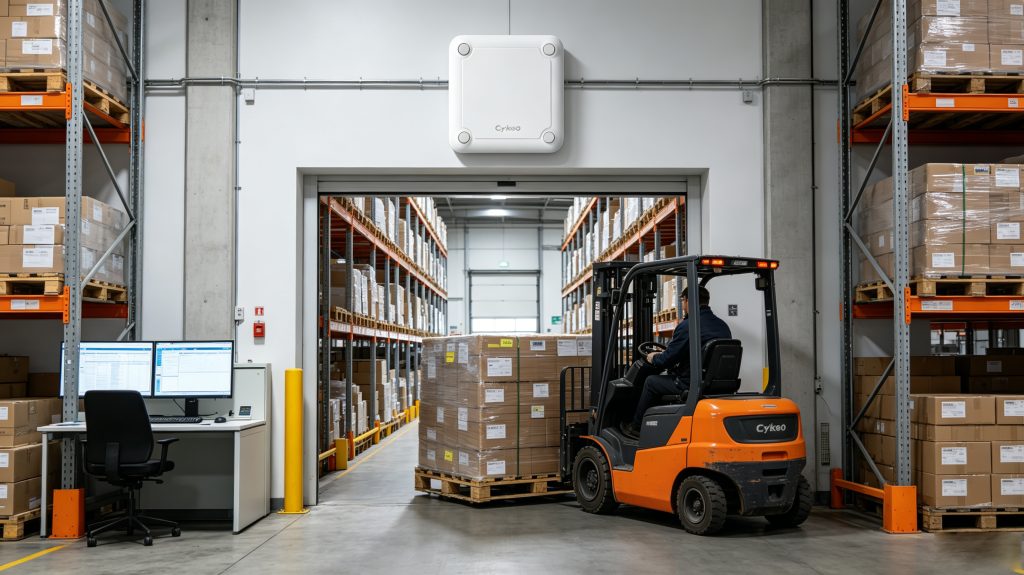
As tagged cartons, pallets, or reusable containers move through receiving doors, storage aisles, production lines, and shipping docks, fixed RFID readers automatically capture every movement without requiring line-of-sight scanning.
According to the RAIN Alliance, more than 50 billion RAIN RFID tags were shipped worldwide in 2023, reflecting accelerating adoption across manufacturing, logistics, retail, healthcare, and industrial asset management.
The technology is built on internationally recognized EPC Gen2 / ISO/IEC 18000-63 standards promoted by GS1, enabling interoperability throughout global supply chains.
RFID-tagged goods automatically pass fixed readers at receiving docks.
Inventory records update instantly without manual barcode scanning.
As products move between warehouse zones, RFID readers continuously record location changes.
Warehouse managers always know current stock positions.
Before outbound shipments leave the warehouse, RFID portals automatically verify:
This additional verification reduces shipping errors while improving customer satisfaction.
| Warehouse Challenge | RFID Solution |
|---|---|
| Manual inventory counts | Automatic stock updates |
| Inventory discrepancies | Continuous RFID verification |
| Shipping mistakes | Real-time shipment validation |
| Slow stock visibility | Instant inventory tracking |
| Labor-intensive audits | Automated inventory reports |
| Product traceability | Complete movement history |
From practical deployment experience, warehouses often experience the greatest operational improvement during inventory counting.
Instead of stopping warehouse activities for lengthy cycle counts, RFID enables inventory verification while normal operations continue.
Track raw materials, work-in-progress inventory, and finished products throughout production.
Improve inventory accuracy while reducing replenishment delays.
Monitor medical supplies and high-value equipment with continuous inventory visibility.
Provide customers with real-time inventory information across multiple warehouse locations.
Having worked with RFID implementations in industrial warehouses, I’ve found that the largest return on investment rarely comes from faster inventory counts alone.
The real value emerges after several months of operation.
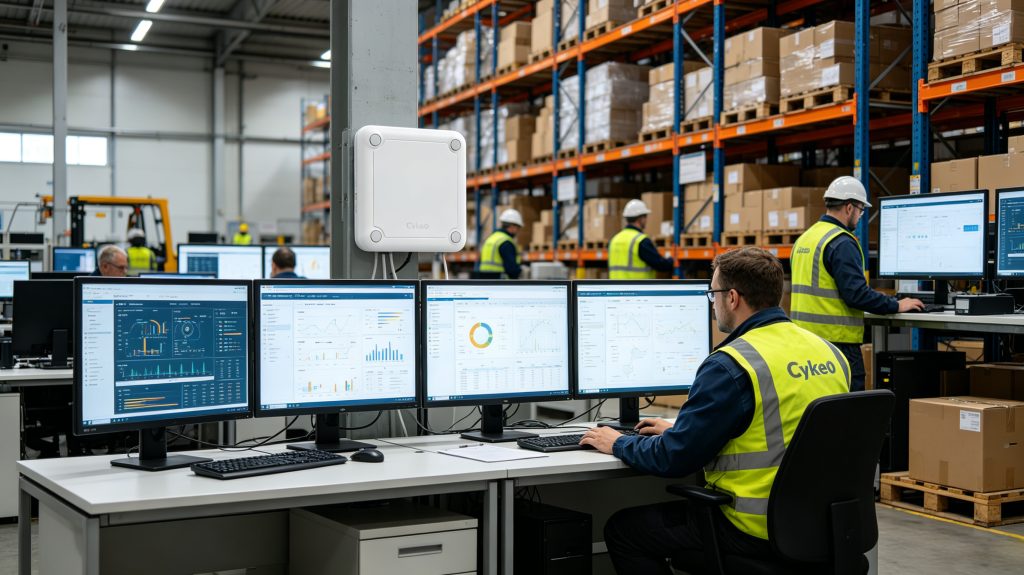
Historical RFID data begins revealing inventory turnover patterns, storage bottlenecks, picking inefficiencies, and replenishment timing that were previously hidden inside spreadsheets.
Managers stop reacting to inventory problems and begin preventing them.
According to the National Institute of Standards and Technology (NIST), automatic identification technologies support higher-quality operational data for digital manufacturing initiatives. Meanwhile, RFID Journal continues documenting successful RFID inventory deployments that improve stock visibility while reducing manual processing across warehouses worldwide.
In many warehouse processes, yes. RFID can automatically identify multiple tagged items simultaneously without requiring direct line-of-sight scanning.
Yes. Continuous automatic identification reduces manual data entry and helps maintain inventory records that more closely match physical stock.
Yes. Most industrial RFID platforms support integration with ERP, WMS, MES, and cloud inventory management platforms through APIs or middleware.
Manufacturing, retail, automotive, pharmaceuticals, logistics, healthcare, aerospace, and e-commerce fulfillment centers all benefit from RFID-enabled inventory visibility.
An rfid stock management system is no longer simply an inventory automation tool. Combined with Cykeo industrial RFID readers, antennas, and software, it becomes a real-time operational platform that continuously synchronizes physical inventory with digital records, helping organizations improve stock accuracy, reduce labor costs, strengthen supply chain visibility, and build a more intelligent warehouse for long-term growth.

A long range RFID scanner helps data centers identify and track servers, network devices, racks, tools, and spare parts across receiving, staging, installati...
More
Someone asked me can rfid be read through metal after their warehouse rollout failed. Here's what I learned testing CYKEO gear on steel racks and oil drums.
More
Learn RFID basics in this hands-on guide. Understand readers, antennas, tags, modules, and smart cabinet systems with practical tips and real-world examples.
More
If you’ve ever tried replacing an RFID card or matching it with a new reader, you’ve probably run into the same problem most people do: you don’t actually know what frequency the card uses. At first glance, RFID cards all look almost identical. Bu...
More