RFID logistics tracking automatically identifies, verifies, and tracks goods throughout warehouses and supply chains without manual scanning. Modern RFID systems can process hundreds of tagged items within seconds, significantly improving inventory accuracy, shipment verification, and logistics visibility.
About the Author
I have spent more than a decade working with RFID deployments across distribution centers, apparel warehouses, manufacturing logistics hubs, and retail fulfillment operations. During that time, I have participated in projects involving RFID tunnel systems, conveyor-based verification stations, pallet tracking portals, and enterprise warehouse management integrations.
One thing becomes obvious after standing beside countless loading docks: most logistics delays are not caused by transportation. They happen because companies cannot instantly verify what is moving through the warehouse.
That is precisely the problem RFID logistics tracking solves.
What Is RFID Logistics Tracking?
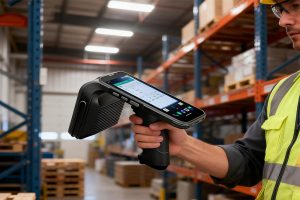
RFID logistics tracking uses RFID tags, rfid readers, software platforms, and automated verification equipment to identify products as they move through receiving, storage, picking, packing, shipping, and return processes.
Unlike barcode systems, RFID does not require direct line-of-sight scanning.
A single RFID read event can identify hundreds of tagged products simultaneously.
The result is faster operations and significantly better inventory visibility.
According to the official website of the RAIN Alliance, billions of RAIN RFID tags are deployed annually across retail, logistics, healthcare, and industrial sectors, making RFID one of the fastest-growing automatic identification technologies worldwide.
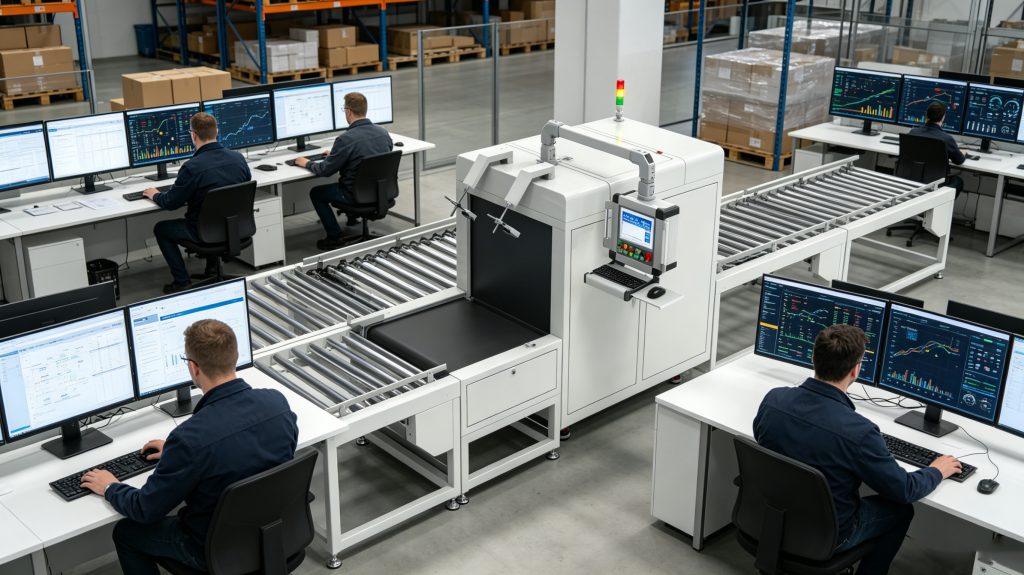
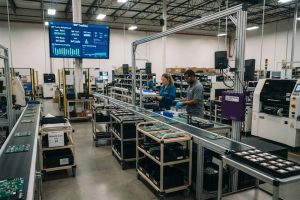
Warehouse RFID Tracking System
What Happens During Real Operations?
A few years ago, I visited a distribution center handling seasonal apparel.
Every outbound carton required manual barcode verification.
Workers opened cartons, scanned individual items, checked packing lists, and resealed boxes.
The process worked.
But it was painfully slow.
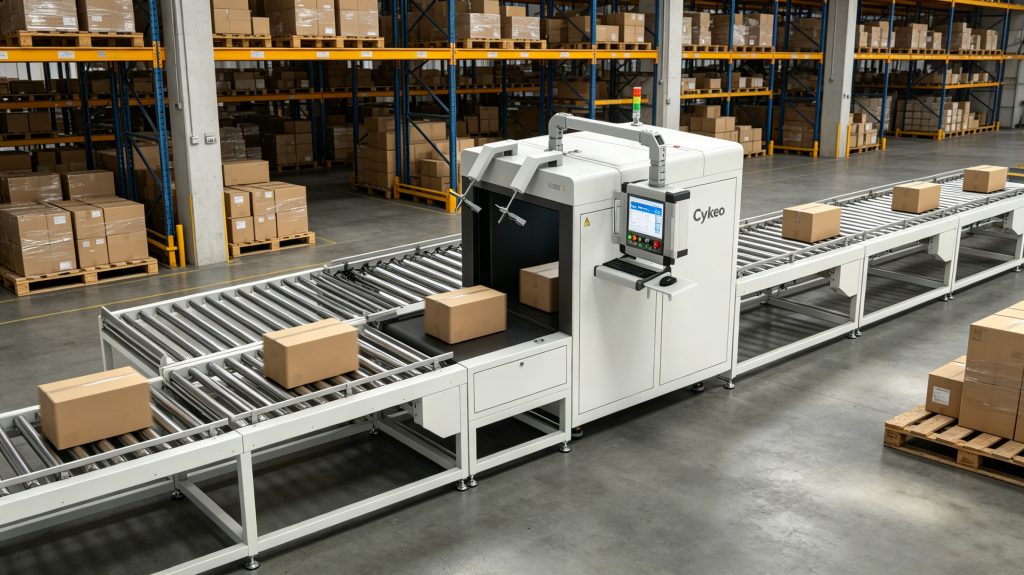
After deploying RFID logistics tracking through an automated tunnel verification station, cartons moved directly through the tunnel without opening.
Within seconds, the system verified every tagged item inside.
The difference was visible immediately.
The warehouse manager’s comment stayed with me:
“We no longer count products. We verify exceptions.”
That shift changes everything.
Automated RFID tunnel systems verify hundreds of items in seconds.
Logistics Inventory Tracking Performance
The biggest advantage of RFID logistics tracking is speed.
Staff focus on discrepancies rather than routine checks.
Scalable Operations
Facilities can process growing order volumes without proportional labor increases.
Industry Applications
RFID logistics tracking is widely used in:
Apparel distribution centers
Luxury goods warehouses
Footwear logistics operations
Consumer electronics fulfillment centers
Pharmaceutical distribution
Alcohol and beverage logistics
Industrial manufacturing supply chains
Automotive component warehouses
FAQ
How accurate is RFID logistics tracking?
Properly designed RFID systems commonly achieve read rates above 99%, depending on tag placement, packaging materials, and operational environment.
Can RFID identify products inside sealed cartons?
Yes. RFID readers can identify tagged products inside cartons without opening the package, provided tags are properly positioned.
Is RFID better than barcode scanning?
For high-volume logistics operations, RFID provides significantly faster bulk identification while reducing manual labor requirements.
Can RFID integrate with WMS and ERP systems?
Yes. Most enterprise RFID solutions can integrate with warehouse management systems, ERP platforms, and logistics software.
Final Thoughts
The real value of RFID logistics tracking is not simply faster inventory counts.
It is operational confidence.
When every carton, pallet, or shipment can be verified automatically, warehouses stop spending time searching for information and start making decisions based on real-time data.
From apparel distribution centers to industrial supply chains, RFID logistics tracking has become one of the most effective technologies available for improving inventory accuracy, shipment visibility, and warehouse productivity.
For organizations pursuing digital logistics transformation, RFID logistics tracking is no longer a future investment. It is rapidly becoming a competitive necessity.
A detailed look at the CK-M8 UHF RFID 8-port module, its features, real-world performance, specs, and how it compares to Impinj R2000-based modules. Suitable for warehouses, logistics, manufacturing, and retail tracking systems.
long range RFID scanner is most useful when it is placed where a specific production event needs to be captured. Manufacturers should test the actual asset a...
A practical guide to selecting industrial handheld RFID readers for system integration. Focus on SDK/API support, protocol compatibility, and secondary development flexibility for RFID solution providers and developers.
 Cykeo RFID IoT Solution Products R&D Manufacturer