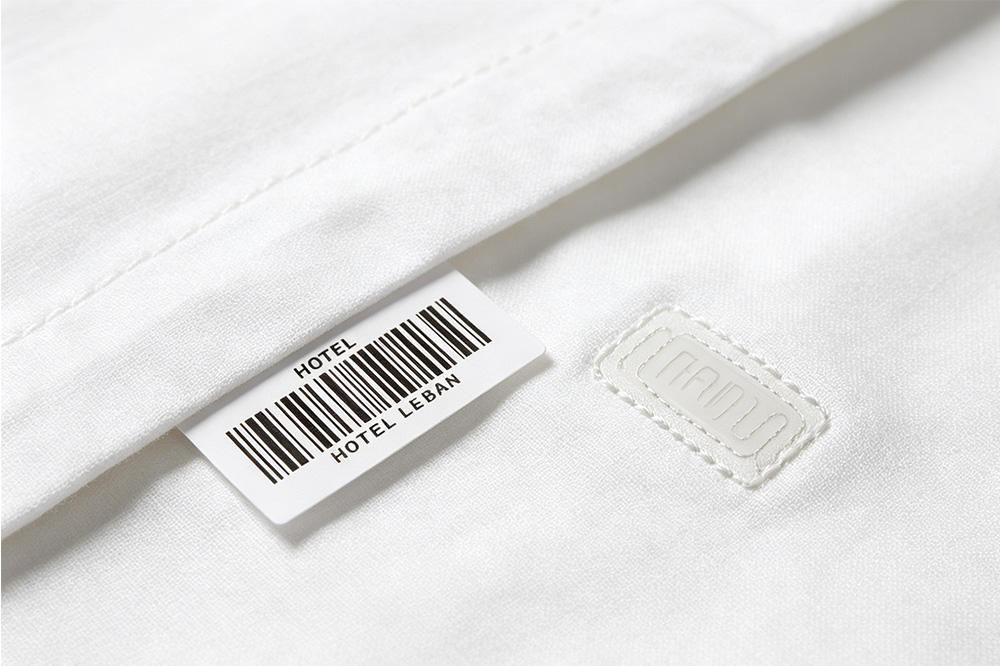
For years, barcode labels were the standard option for textile tracking. Hotels used them for linen inventory, hospitals used them for uniforms, and laundry facilities depended on barcode scanning to keep operations organized.
But as laundry volumes increased, many operators started running into the same problem: barcode systems simply required too much manual work.
That’s where RFID started gaining attention.
Today, more commercial laundry companies are replacing barcode systems with RFID laundry tracking, especially in operations where thousands of textile items move through washing and sorting processes every day.
The two technologies both serve the same purpose — identifying textile items — but the way they work in real laundry environments is very different.
The Biggest Difference Is Scanning Speed
Barcode systems require direct visibility.
A worker has to position the scanner correctly, find the label, and scan each item individually. If the label is folded, damaged, faded, or hidden inside stacked fabric, scanning slows down immediately.
That may not sound like a huge issue until a facility processes several thousand pieces per shift.
RFID works differently.
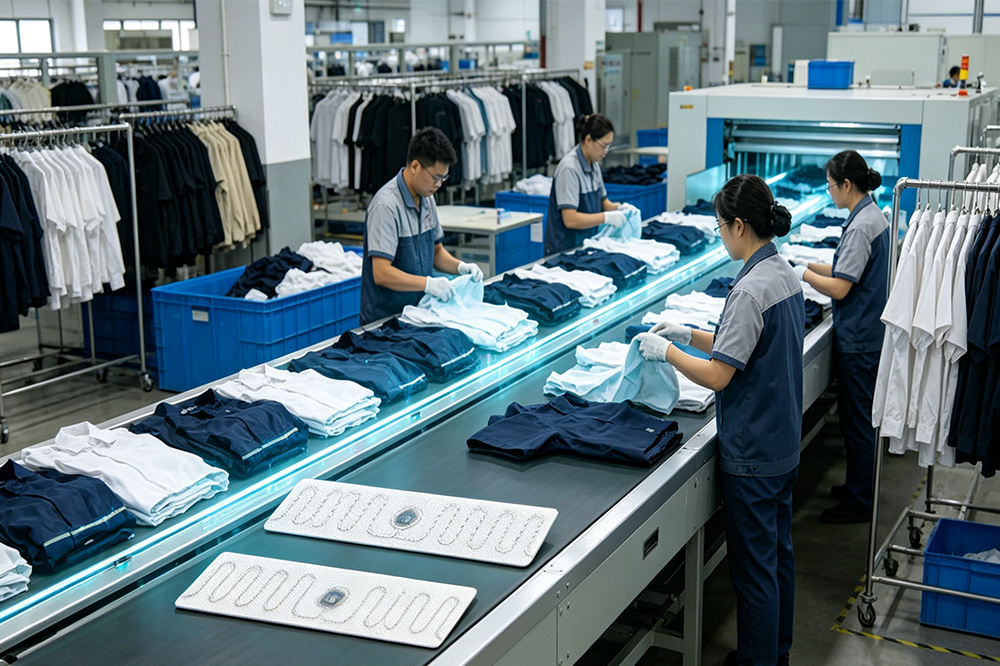
Instead of scanning one by one, RFID readers can detect multiple tagged items automatically, even when textiles are stacked together inside carts or bags.
In large commercial laundries, that speed difference becomes obvious very quickly.
Some facilities move from manually scanning individual uniforms to reading hundreds of pieces within seconds using RFID tunnel systems.
Laundry Environments Are Hard on Labels
Commercial washing conditions are rough.
Between hot water, detergents, pressing equipment, and industrial dryers, textile tracking labels go through constant stress.
Traditional barcode labels often fade or peel over time. Once the printed surface becomes damaged, scanning reliability drops.
RFID laundry tags are designed specifically for repeated industrial washing cycles.
A properly designed industrial RFID laundry tag can survive high temperatures, chemical exposure, pressure extraction, and long-term textile flexing without affecting reading performance.
That durability is one reason RFID adoption keeps growing in industrial laundry environments.
Barcode Systems Still Have Advantages
RFID doesn’t automatically replace barcodes in every situation.
For smaller businesses with limited inventory volume, barcode systems can still work well because the setup cost is lower.
A small laundry shop processing a few hundred items daily may not need full RFID automation.
Barcode systems are also easier to understand for companies already familiar with traditional inventory software.
In low-volume environments, the slower scanning speed may not create major operational problems.
This is why some businesses continue using both technologies together.
For example:
Barcode for basic inventory labeling
RFID for bulk textile tracking and automation
The decision usually depends on operational scale.
RFID Becomes More Valuable as Volume Increases
Once textile volumes grow, manual scanning becomes harder to manage.
Hotels, healthcare laundries, and uniform rental companies often handle thousands of textile items moving between different locations every day.
At that point, RFID starts offering clear operational advantages.
Instead of relying heavily on staff counting and scanning, RFID systems automate much of the tracking process.
Operators can monitor:
Linen movement
Wash cycle counts
Delivery verification
Missing inventory
Textile lifespan
Customer ownership
This reduces both labor pressure and inventory uncertainty.
For facilities handling multiple customer accounts, RFID also helps prevent sorting mistakes that happen frequently during busy production periods.
Hospitals and Uniform Rental Companies Prefer RFID
Healthcare textile management requires higher accuracy than many other industries.
Hospitals need reliable tracking for gowns, uniforms, surgical textiles, and patient garments. Missing inventory creates both operational and hygiene concerns.
Uniform rental companies face similar challenges.
Without proper tracking, garments often end up assigned to the wrong customer or disappear entirely during transportation and washing.
RFID helps reduce these problems because every item carries its own digital identity throughout the entire process.
Even after hundreds of wash cycles, the system can still identify the garment automatically.
That level of visibility is difficult to achieve with traditional barcode labels alone.
Cost Is No Longer the Main Barrier
A few years ago, RFID systems were considered expensive compared to barcode solutions.
That gap has narrowed quite a bit.
RFID hardware and tags have become more affordable, while labor costs continue increasing in most regions. Because of that, many operators now focus more on long-term efficiency than initial equipment cost.
In larger facilities, the labor savings alone often justify the investment over time.
Especially in operations where textile loss creates ongoing replacement costs, better tracking accuracy can make a noticeable financial difference.
Which One Is Better?
There’s no universal answer because every operation is different.
For small textile businesses with limited inventory movement, barcode systems may still be enough.
But once operations become larger, faster, and more complex, RFID usually provides much better visibility and automation.
That’s why more commercial laundry operators are gradually moving toward RFID-based textile management systems instead of relying entirely on manual barcode workflows.
The shift is less about following trends and more about solving everyday operational problems more efficiently.
Learn how to install a long range RFID reader correctly. Discover practical tips for mounting height, reader position, cable routing, grounding, waterproof protection and outdoor deployment.
A practical view of RFID tools tracking systems used in real factories and workshops. Learn how RFID tool cabinets and industrial tracking solutions help reduce tool loss, improve visibility, and support asset management. OEM and wholesale inquiry...
A long range RFID scanner helps power plants track maintenance tools, equipment, spare parts, and reusable assets at warehouses, workshops, substations, and ...
See how long range RFID scanners help container yards reduce truck waiting time, track containers automatically, and integrate with TOS and yard management systems. A practical guide for ports, terminals, and RFID solution providers.
 Cykeo RFID IoT Solution Products R&D Manufacturer