 Cykeo RFID IoT Solution Products R&D Manufacturer
What are the differences between NFC and RFID?
639Understand the differences between NFC and RFID, their unique applications, and how Cykeo’s hybrid solutions bridge both technologies for seamless operations.
MoreAll RFID Product
Hospitals deal with thousands of moving assets every day.
Wheelchairs, infusion pumps, monitors, surgical tools, mobile equipment—
everything moves constantly between departments, rooms, and storage areas.
The problem is:
most hospitals still don’t have real-time visibility into where these assets actually are.
And when equipment can’t be found quickly, the impact goes beyond efficiency.
It affects:
This is one reason why more healthcare facilities are adopting Impinj RFID reader–based asset tracking systems.
In many hospitals, staff spend a surprising amount of time simply searching for equipment.
Common situations include:
Over time, these issues become expensive.
Not because equipment disappears entirely,
but because visibility is limited.
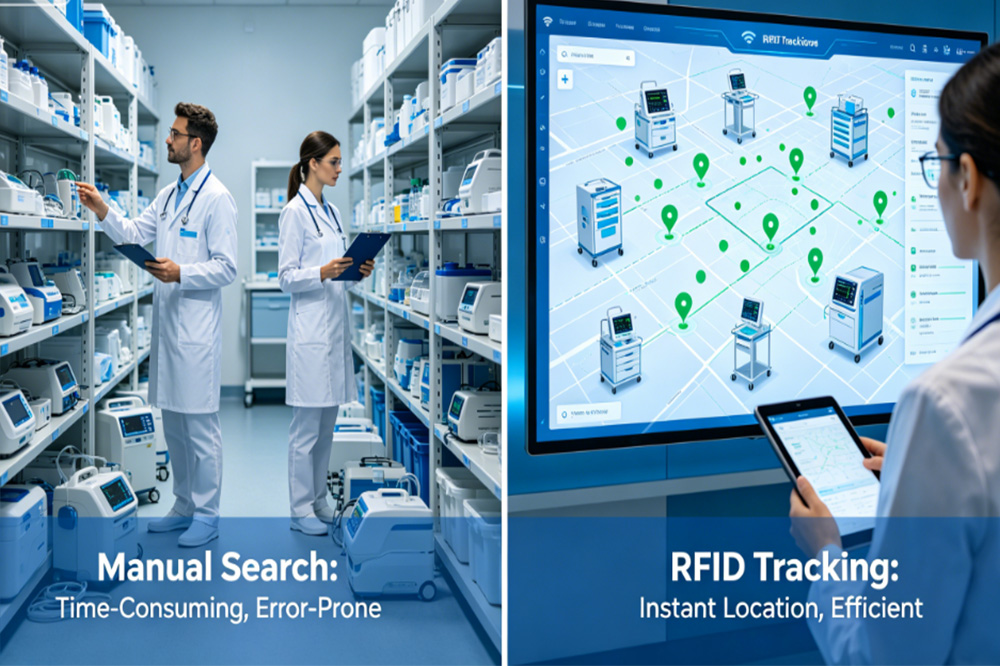
Traditional barcode systems help—but they still rely heavily on manual scanning.
RFID changes that by allowing:
automatic identification without direct contact
This is especially useful in healthcare because:
RFID allows hospitals to monitor asset movement in near real time without adding extra workload.
Healthcare RFID projects usually focus on operational visibility first.
RFID tags are attached to:
Readers placed at key points track movement automatically.
This helps staff locate equipment faster and reduces unnecessary purchases.
Hospitals manage large quantities of:
RFID helps improve stock accuracy and reduces manual counting.
Hospitals also use RFID for:
Especially in large healthcare systems, this can significantly reduce losses.
RFID can monitor movement into sensitive areas such as:
In healthcare environments, automation is important because staff time is limited.
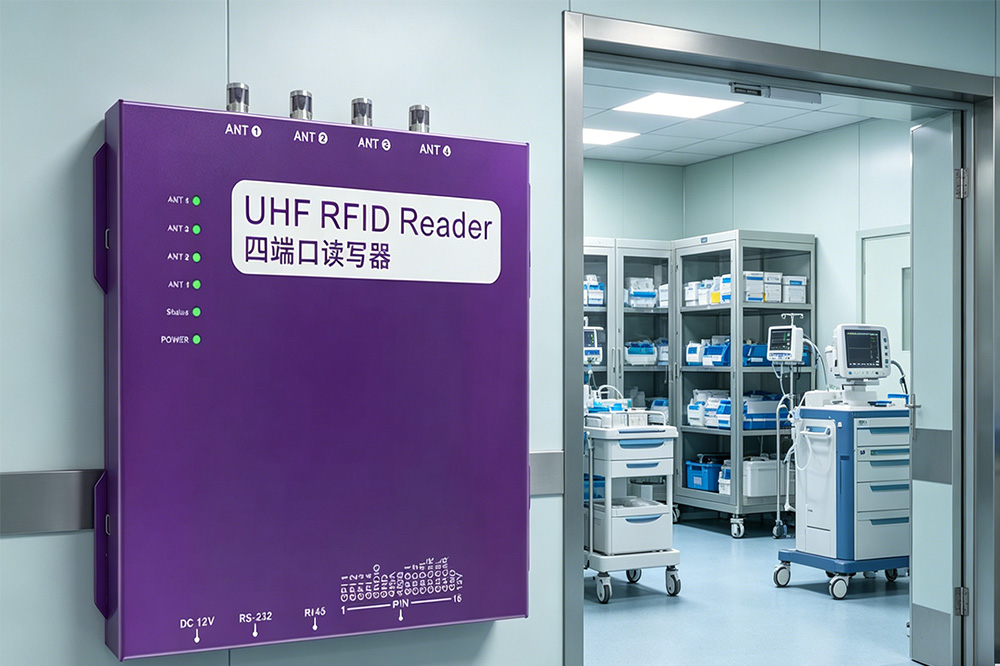
That’s why many hospitals use fixed RFID readers at:
If you’re designing this type of solution, this category of hardware is commonly used:UHF RFID fixed reader
In medical environments, readers typically need:
The focus is less about long-range reading and more about consistency and accuracy.
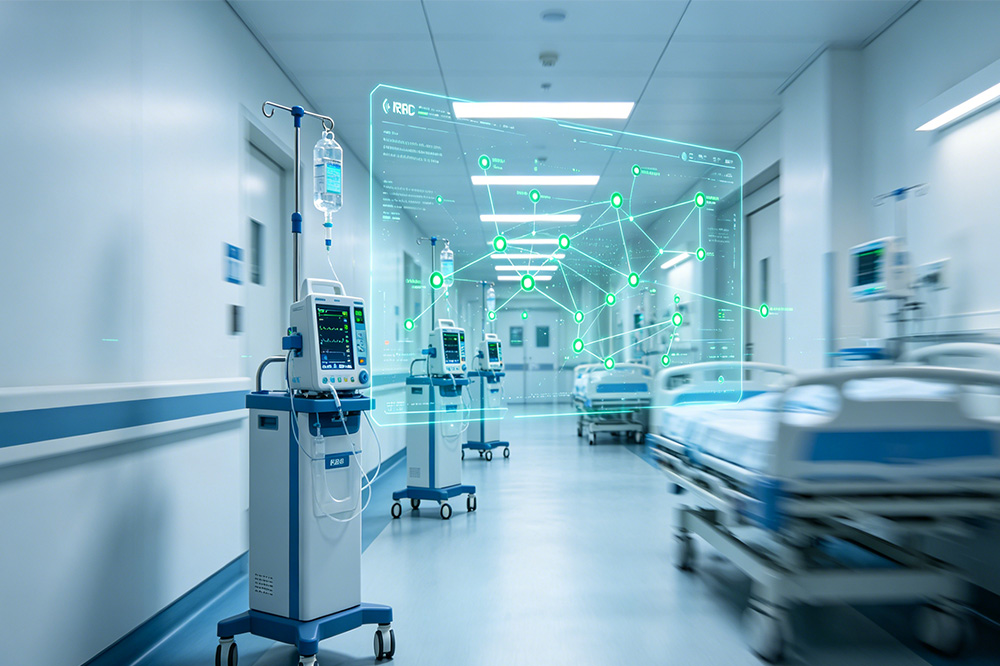
Healthcare environments require more precision than many industrial projects.
Hospitals often have crowded rooms filled with devices and metal equipment.
This can affect signal performance if deployment is not planned properly.
Hardware placement must avoid interfering with:
Different departments may require different reading zones and tracking logic.
Healthcare environments have low tolerance for tracking errors.
System reliability becomes critical.
Many hospitals make the mistake of trying to track everything immediately.
A more practical approach is:
Start with high-value or frequently misplaced assets
For example:
This allows the hospital to measure ROI quickly before expanding the system.
After implementation, the improvements are usually noticeable:
And in many cases:
better response time during critical situations
A few years ago, RFID in hospitals was considered advanced technology.
Today, expectations are different.
Healthcare organizations increasingly want:
And RFID has become one of the most practical ways to achieve that.
Hospitals don’t just manage equipment—they manage availability.
And without visibility, even expensive medical assets become difficult to use efficiently.
Impinj RFID reader–based systems help healthcare facilities move from manual tracking to automated visibility.
For solution providers, success depends on more than hardware:
Because in healthcare,
finding the right equipment at the right time can make a real difference.
Guide Recommendations
Fixed RFID Reader: Why It’s Becoming Must-Have
Fixed RFID Readers: What I Didn’t Expect and What I Learned
RFID Handheld Reader vs. Fixed Reader: Which Is Better for Retail?
Different Types of RFID Readers: A Simple Introduction
Best Budget USB RFID Readers Under $100 for Small Business Inventory Systems
RFID Module vs. RFID Reader: What’s the Difference?
Fixed RFID Reader Buying Guide: 5 Core Parameters You Must Know
What is an RFID Reader Used For?
How RFID Reader Works: The Simple Explanation
How to Choose the Best Long-Range RFID Reader for Warehouse Management
RFID Readers for Boom Barriers ,Where Efficiency Meets Access Control
Why Your Warehouse Needs Smarter RFID Readers in 2025
Understanding RFID Readers,Essential Devices for Efficient Tracking
Understand the differences between NFC and RFID, their unique applications, and how Cykeo’s hybrid solutions bridge both technologies for seamless operations.
More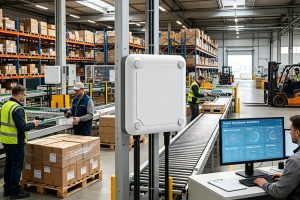
Discover rfid reading technology from Cykeo for fast and accurate tag identification. Improve inventory, asset tracking, and automation with reliable RFID data capture solutions.
More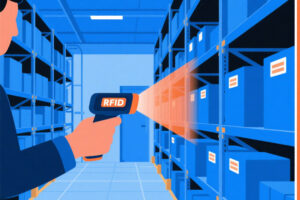
RFID vs GPS: Discover key differences in range, cost & accuracy. Learn when to use each for assets, vehicles, or inventory. Make informed decisions.
More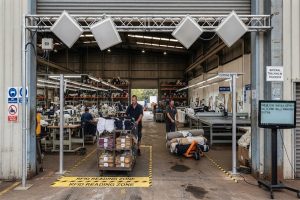
A long range RFID scanner helps textile and garment factories track fabric rolls, cutting bundles, production kits, work-in-progress garments, reusable conta...
More