Anyone who has worked with hotel linens or industrial laundry operations knows one thing very clearly: once the daily volume gets large enough, tracking textiles becomes messy fast.
A few missing towels here and there may not seem serious at first. But when a laundry facility handles thousands of sheets, uniforms, or medical textiles every day, small errors quietly turn into major costs over time.
This is exactly why RFID laundry tracking has become much more common in recent years, especially in hospitality, healthcare, and uniform rental industries.
Instead of relying on manual counting or barcode scanning, operators can now identify and track hundreds of textile items automatically within seconds.
The Real Problem With Traditional Linen Management
Most commercial laundries already know the pain points.
Items get mixed between customer batches. Staff count linens manually during busy shifts. Hotel towels disappear during transport. Uniforms return to the wrong department. Some textiles are washed far beyond their expected lifespan because nobody knows how many cycles they’ve completed.
Manual systems work when the scale is small. Once operations grow, they start creating bottlenecks.
Barcodes improved things for a while, but they still need direct scanning. In a real laundry environment, labels wrinkle, fade, or end up folded inside stacks of fabric. Workers also lose time scanning one piece at a time.
RFID removes most of that friction.
Instead of scanning individually, entire carts of linens can pass through RFID reading zones and be identified automatically.
That changes the workflow completely.
How RFID Laundry Tags Actually Work
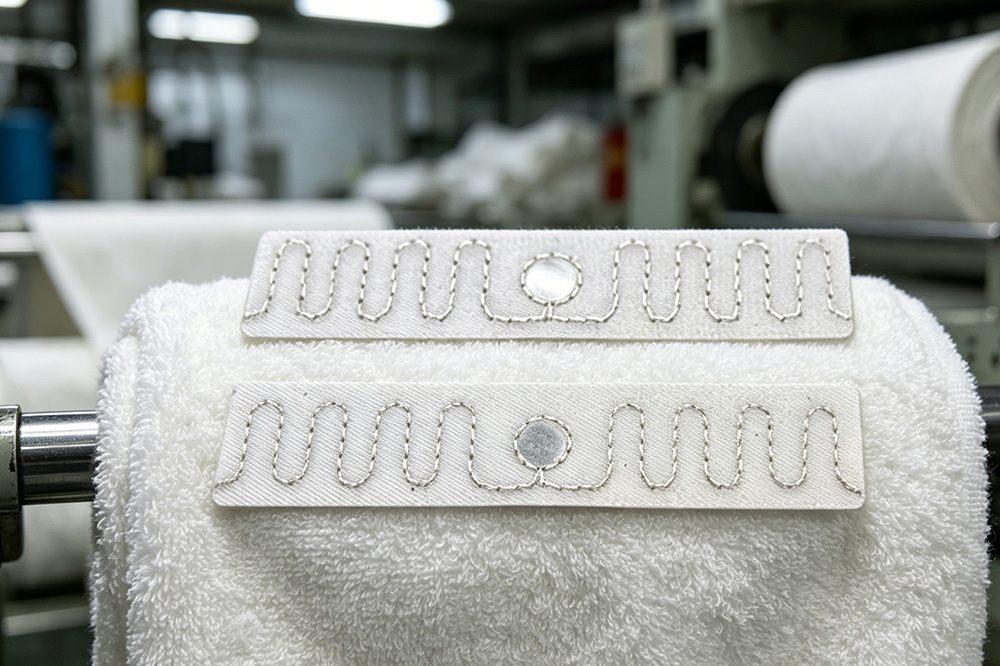
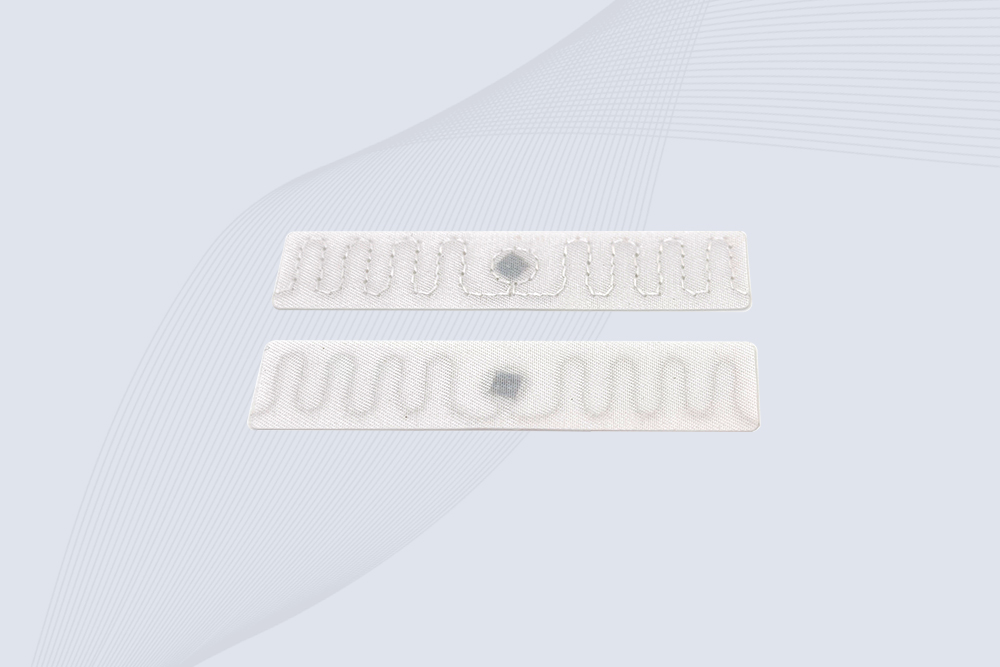
An RFID laundry tag is usually sewn directly into a textile item like a towel, bed sheet, staff uniform, or medical garment.
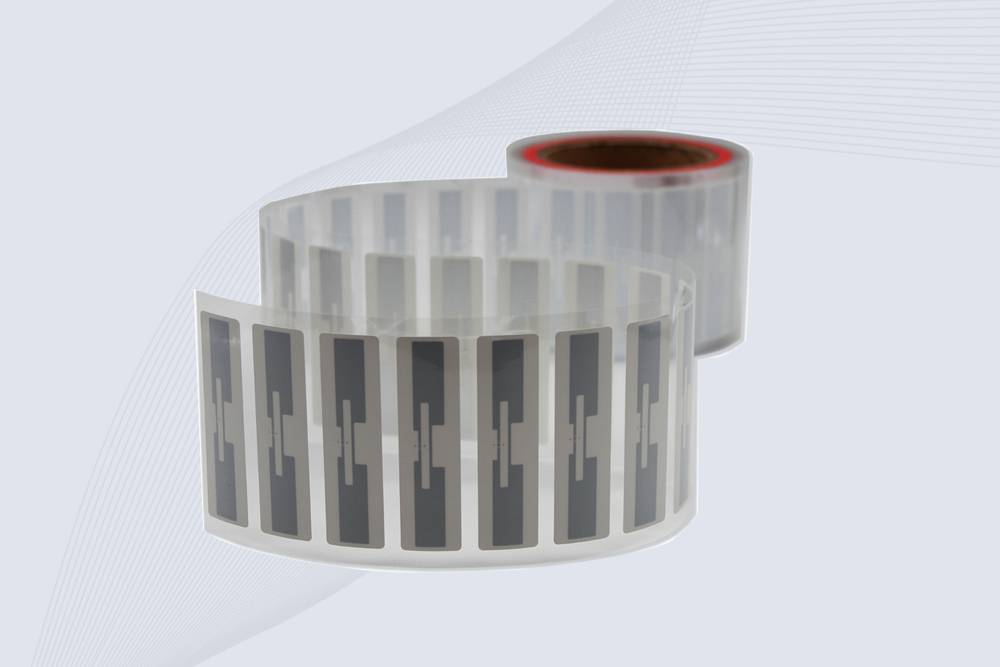
Each tag contains a small chip with a unique ID number. Once connected to a laundry management system, every textile item can be tracked throughout its lifecycle.
As items move through sorting stations, washing areas, storage rooms, or delivery checkpoints, RFID readers collect data automatically.
Operators can quickly see:
Which customer the textile belongs to
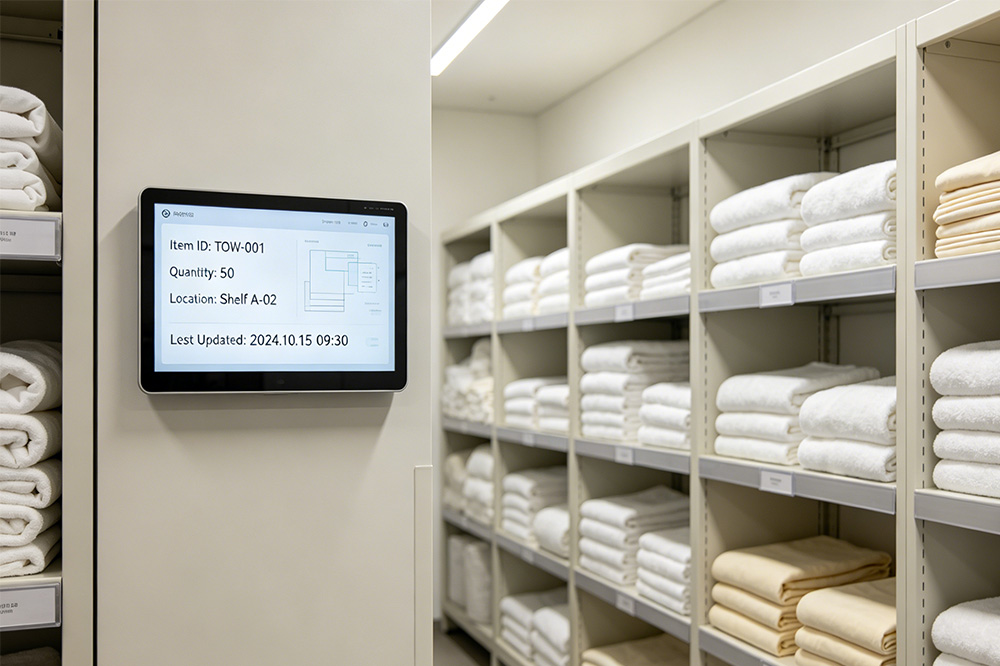
Current inventory quantity
Wash cycle history
Delivery status
Missing items
Replacement timing
For industrial laundry environments, durability matters a lot more than people expect.
A standard RFID label designed for retail clothing usually won’t survive commercial washing conditions for long. High heat, chemicals, pressure extraction, and continuous bending destroy low-grade tags quickly.
That’s why many solution providers prefer using specialized industrial RFID laundry tag models designed specifically for repeated industrial washing and drying processes.
Hotels Are One of the Biggest Users of RFID Laundry Tracking
Hotel laundry loss is a much bigger issue than most guests realize.
Large hotels constantly rotate huge amounts of linens between guest rooms, laundry vendors, warehouses, and housekeeping departments. Once inventory starts moving between multiple locations, tracking errors become almost unavoidable without automation.
Some hotels discover they are replacing towels and sheets much earlier than expected simply because inventory visibility is poor.
RFID helps management teams understand exactly where losses happen.
For example:
Did the laundry vendor return the full shipment?
Which department loses the most items?
How many times has a towel already been washed?
Which linens should be retired soon?
Instead of estimating inventory levels, managers can finally work with real numbers.
That alone helps reduce unnecessary purchasing costs.
Faster Sorting and Less Manual Work
One of the biggest operational advantages of RFID is sorting speed.
In many traditional laundry facilities, staff still separate textiles manually. That takes time, especially when processing uniforms from multiple customers.
RFID systems can automate much of this process.
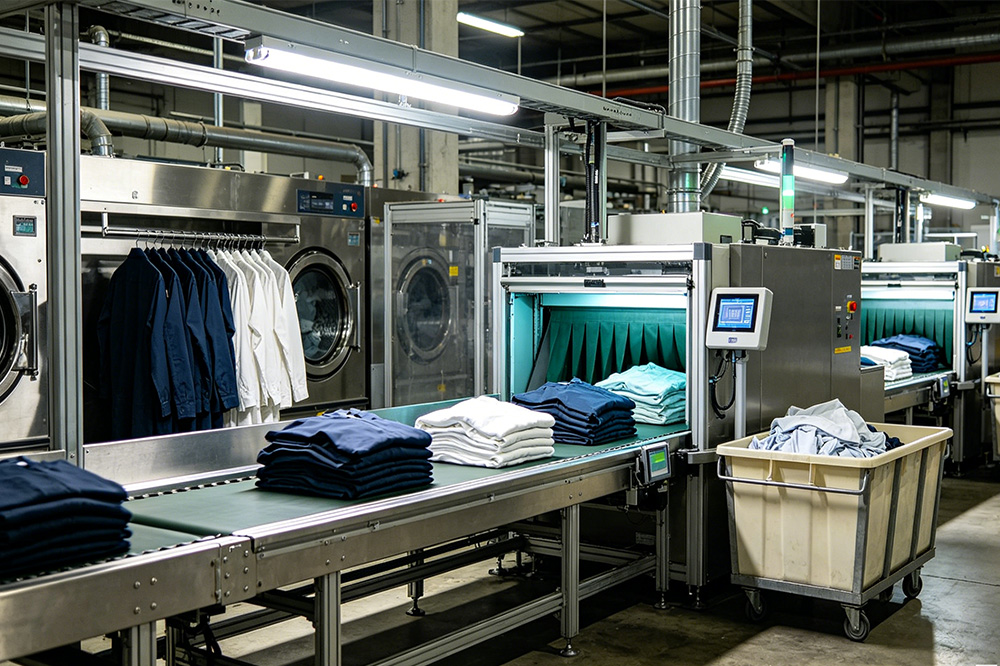
As tagged items move through conveyor systems or RFID tunnels, the software identifies ownership instantly and sends items to the correct sorting area.
Facilities handling healthcare garments or rental uniforms benefit the most because item accuracy matters much more in those industries.
In practice, operators usually notice improvements in:
Sorting efficiency
Inventory accuracy
Packing speed
Delivery verification
Labor costs
The larger the facility becomes, the more noticeable the difference is.
Durability Is Usually the Deciding Factor
A lot of RFID projects look good during testing but fail later because the tags themselves cannot survive real washing conditions.
Industrial laundries are rough environments for electronics.
Tags may go through:
Hot water washing
Chemical detergents
Ironing pressure
Continuous drying cycles
Fabric stretching and bending
If the RFID tag fails early, the tracking system becomes unreliable very quickly.
This is why experienced laundry operators usually focus less on the cheapest tag price and more on long-term stability.
In many cases, a durable tag that survives hundreds of wash cycles ends up reducing costs far more than low-cost alternatives that fail early.
RFID Is Becoming Normal in Textile Management
A few years ago, RFID laundry systems were mostly used by very large operations.
Now the technology is showing up almost everywhere — hotel laundry contractors, healthcare textile services, workwear rental companies, and even mid-sized industrial laundries.
Part of the reason is simple: labor costs continue rising while customers expect better accuracy and faster service.
RFID helps solve both problems at the same time.
For companies building textile tracking solutions today, RFID laundry tags are no longer viewed as a “future upgrade.” In many projects, they’ve already become a standard part of modern laundry management systems.
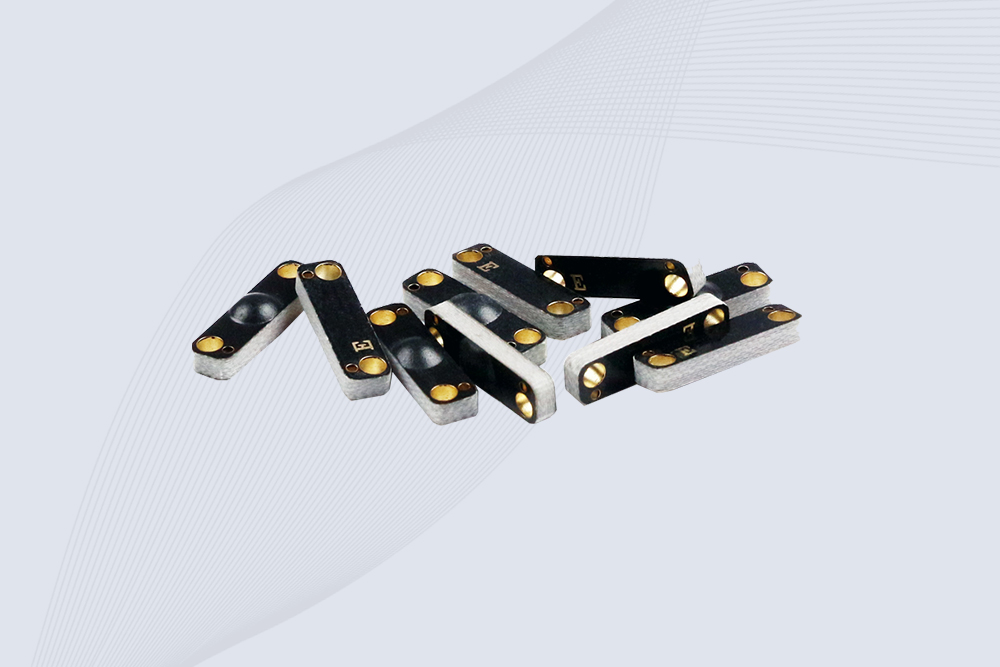
CYKEO Passive RFID Tags are made for wet and high-humidity environments where standard labels do not last. This rfid passive tag is often used around liquids, chemicals and temperature changes, providing stable reading distance and long data life for industrial tracking.
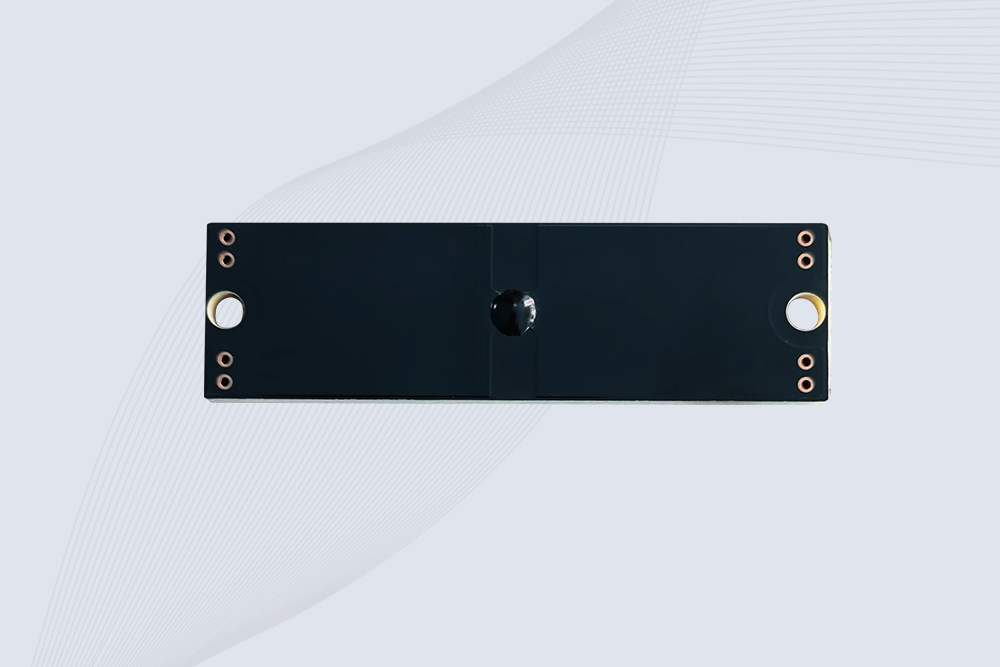
CYKEO CYKEO-PCB1504 Metal RFID Tags is a compact anti-metal UHF RFID solution built for direct mounting on metal surfaces. With stable 8-meter read range, Ucode-8 chip, and long data retention, this rfid metal tag fits tools, containers, automotive parts, and industrial asset tracking.
CYKEO CYKEO-PCB7020 On-Metal RFID Tags are designed for reliable tracking on steel and metal surfaces. Built with an FR4 epoxy body and industrial-grade chips, these On-Metal RFID Tags deliver stable performance, long data life, and chemical resistance, making them a dependable RFID anti-metal tag for harsh environments.
The CYKEO CYKEO-60-25 Anti-Metal RFID Tag is built for metal surfaces where standard tags fail. Designed for long-range performance, harsh environments, and stable data retention, this Anti-Metal RFID Tag is ideal for industrial assets, containers, and equipment tracking using on metal RFID tags.
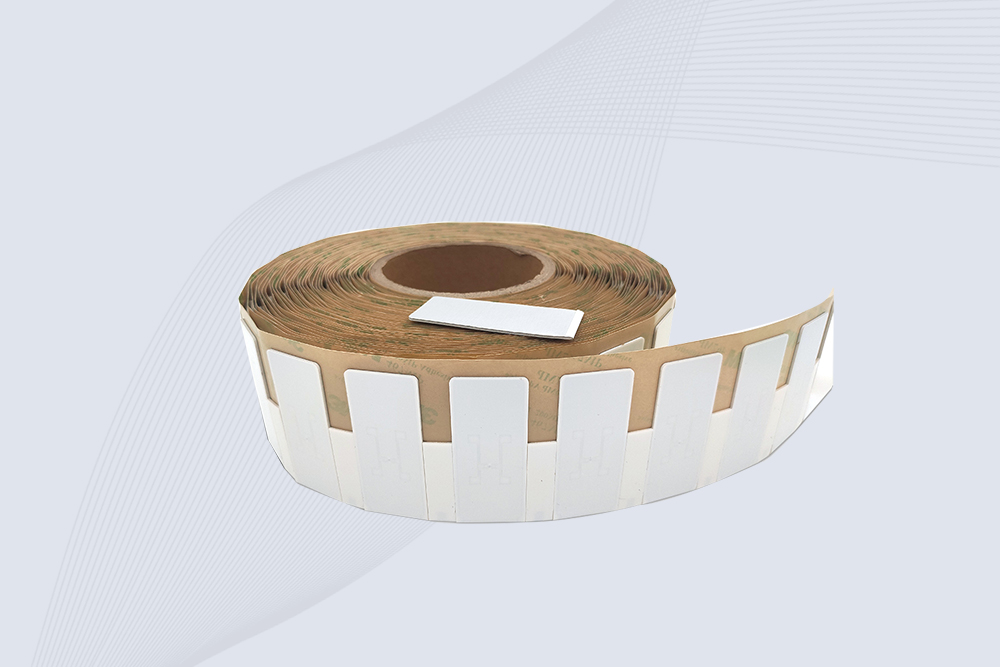
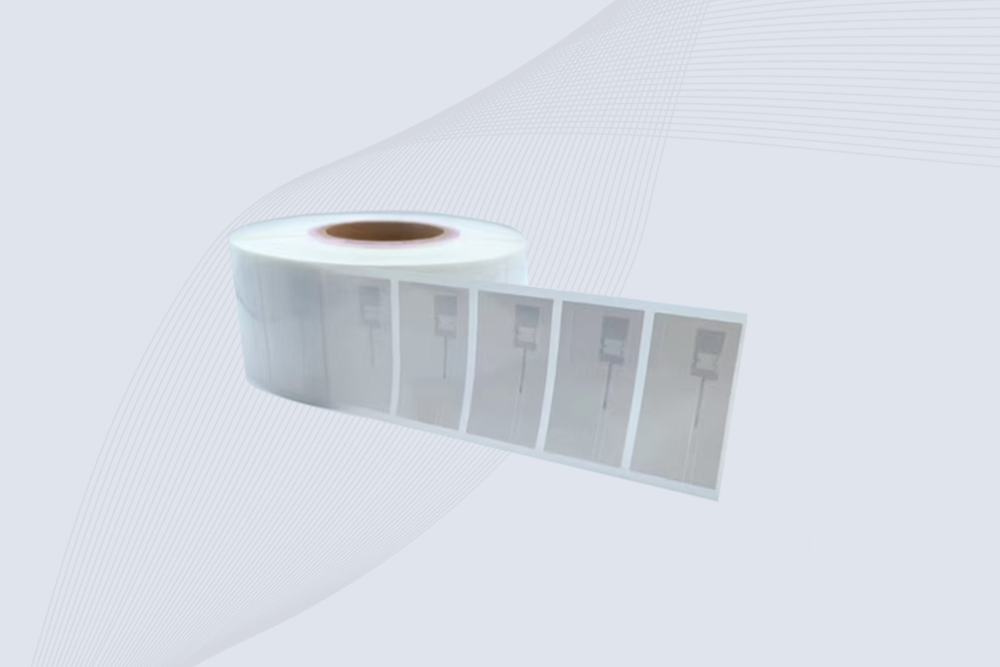
The CYKEO RFID Laundry Tag is designed for long-term textile identification in harsh laundry environments. Built to withstand high heat, chemicals, and repeated washing, this RFID Laundry Tag delivers stable performance for hotels, hospitals, and industrial laundry operations using laundry rfid tags at scale.
The CYKEO CYKEO-125-7 RFID Book Tag is designed for reliable book and document tracking in libraries and archives. This RFID Book Tag delivers long read range, dense placement support, and stable performance on shelves, making it a practical rfid tag on books for library automation, file management, and archival systems.
CYKEO RFID tags in hospitals are designed for sterile environments where accuracy matters. These autoclavable RFID tags support long-term tracking of surgical tools, implants, and medications, helping hospitals improve visibility, compliance, and patient safety.
CYKEO RFID Cable Tie Tag is built for reliable identification on metal surfaces. This UHF RFID Cable Tie Tag is widely used in rfid tags for inventory systems, industrial asset management and Hospital RFID Tags, offering stable read performance, long service life and global EPC Gen2 compatibility.
CYKEO RFID Asset Tag is designed for stable identification of metal assets in industrial environments. This UHF RFID Asset Tag is commonly used for rfid tag asset tracking on equipment, tools and containers, providing reliable reads, long service life and ISO/IEC 18000-6C support.
CYKEO UHF RFID Card is designed for fast identification and long-term use in industrial and commercial systems. Supporting ISO 18000-6C, this UHF RFID Card works at 860–960 MHz and is suitable for custom RFID cards used in asset tracking, access control and inventory management.
CYKEO HF RFID Cards are designed for secure and stable access control systems. These 13.56 MHz RFID key cards support ISO 14443-A, reliable rewriting and long service life, making HF RFID Cards suitable for offices, campuses, events and membership management.
CYKEO UHF RFID Tag is designed for reliable tracking of metal jewelry and high-value items. This Jewelry RFID Tag supports long-range reading up to 8 meters, anti-counterfeit protection and stable performance on metal, making it suitable for retail, inventory control and asset management.
in-depth look at RFID bank card readers, from commercial applications to the controversy around RFID-blocking wallets. Drawing from real-world cases and industry experience, this article unpacks the tension between payment convenience and security...
Learn how to maintain fixed RFID readers in high-dust environments. Discover Cykeo’s dustproofing strategies, cleaning routines, and firmware updates for reliable performance.
Learn how to select the best handheld RFID reader for warehouse inventory management. Compare UHF range, durability, software integration, and budget-friendly options.
Forget the confusion. Here's a practical guide on how to read an RFID card—covering hardware choices, simple steps, and fixes for when it doesn't work.
 Cykeo RFID IoT Solution Products R&D Manufacturer