 Cykeo RFID IoT Solution Products R&D Manufacturer
How to Use RFID for Contactless Access Control in Offices?
1266Learn how to implement RFID for contactless access control in offices. Enhance security and hygiene with Cykeo’s compliant, easy-to-integrate systems.
MoreAll RFID Product
RFID material fabric refers to textile-based RFID tags designed to withstand washing, heat, and repeated handling while enabling accurate tracking of garments, linens, and soft assets.
That’s the definition. But in real deployments—laundry plants, hospitals, hotel linen rooms—the question isn’t what RFID fabric is. It’s whether it survives.
I’ve seen tags fail after ten wash cycles. I’ve also seen properly selected ones last over a year in industrial laundry systems. The difference comes down to material engineering and how data is handled at the reader level.
RFID fabric tags are not just “soft labels.” They’re engineered composites.
Typical structure includes:
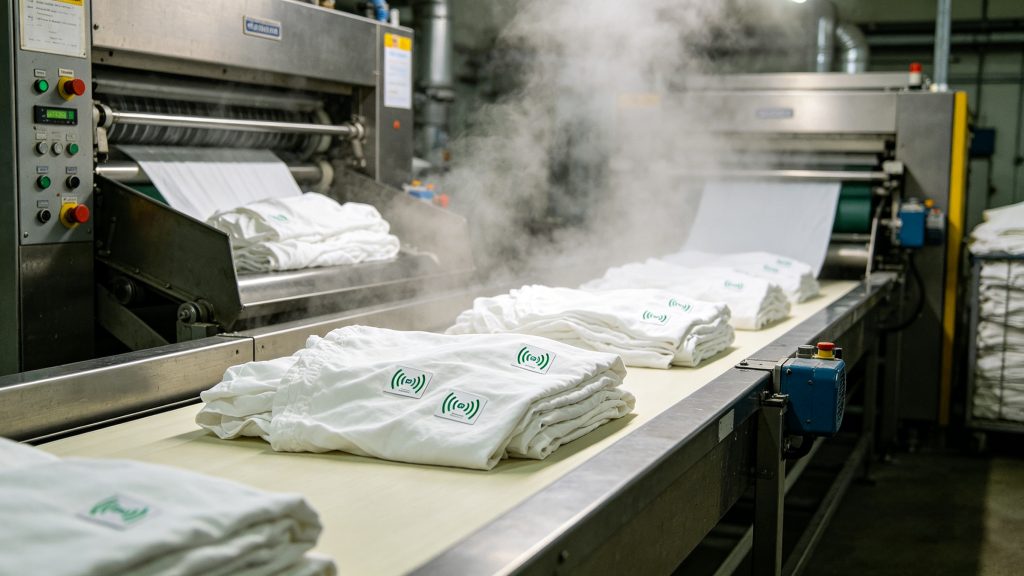
This is where theory meets numbers.
According to VILRI (Flemish Institute for Logistics,):
A study referenced by Auburn University RFID Lab shows:
In one laundry project I worked on (~12,000 linens), switching to RFID fabric tags reduced loss rates by over 18% within 3 months.
Not because items stopped disappearing—but because they finally became visible.
Fabric is not an ideal RF environment.
It absorbs moisture. It bends. It stacks unpredictably.
That’s where reader design matters.
Devices like CYKEO-D6 are built for this kind of complexity:
Without proper filtering and signal control, read accuracy drops fast.
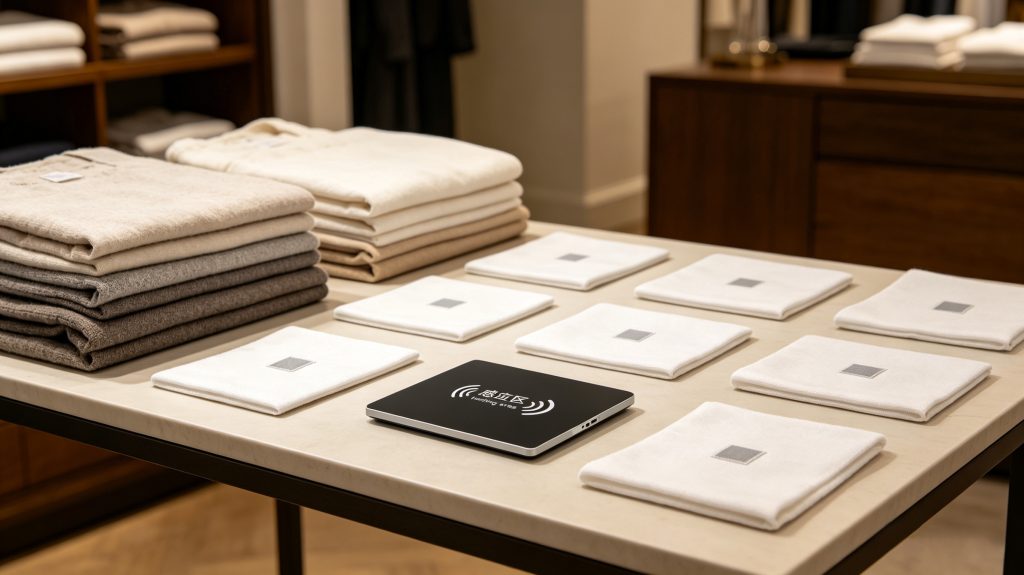
Not all RFID fabric tags are equal in durability.
| Tag Type | Wash Cycles | Use Case |
|---|---|---|
| Standard textile tag | 100–150 | Hospitality |
| Industrial-grade PPS tag | 200–300+ | Healthcare / heavy laundry |
From field observation:
One overlooked detail: tags placed near fold lines fail faster.
While laundry is the obvious use case, RFID fabric tags are expanding into:
The CYKEO-D6 supports these scenarios by enabling:
Yes, high-quality tags are designed for repeated washing, heat drying, and chemical exposure.
Most systems use UHF (860–960 MHz) for longer read range and batch reading.
Poor material quality, improper placement, or excessive heat exposure can reduce lifespan.
RFID material fabric doesn’t fail loudly. It fails quietly—one unread tag at a time.
And that’s what makes it tricky.
When the material, tag design, and reader system align, textile tracking becomes almost invisible—no scanning, no counting, just flow.
But when they don’t, the system looks fine on paper and breaks in practice.
That gap is where most projects succeed—or stall.

Learn how to implement RFID for contactless access control in offices. Enhance security and hygiene with Cykeo’s compliant, easy-to-integrate systems.
More
Learn how a long range RFID scanner for vehicle identification improves parking management, factory access, logistics, ports, and fleet operations. Discover how to choose the right RFID solution for wholesale and OEM projects.
More
Can RFID tags be tracked? Learn how RFID tracking works, read ranges, real-world applications, and expert insights from Cykeo RFID engineers.
More
Does iPhone support RFID? Learn why native scanning fails and how Bluetooth readers like Cykeo's solve real inventory problems. Field-tested results.
More