If you’ve ever looked into RFID, it can feel a bit abstract at first—lots of terms, lots of components. But when you break it down, a working RFID tracking system is actually pretty straightforward.
In most cases, you’re just sending out a signal, picking up responses from tags, and turning that into usable data.
This article walks through how people actually build RFID tracking systems in real projects, especially for warehouses, assets, and industrial use.
What Is RFID Tracking System?
An RFID tracking system lets you identify and track items using radio signals. No scanning, no aiming, no line-of-sight.
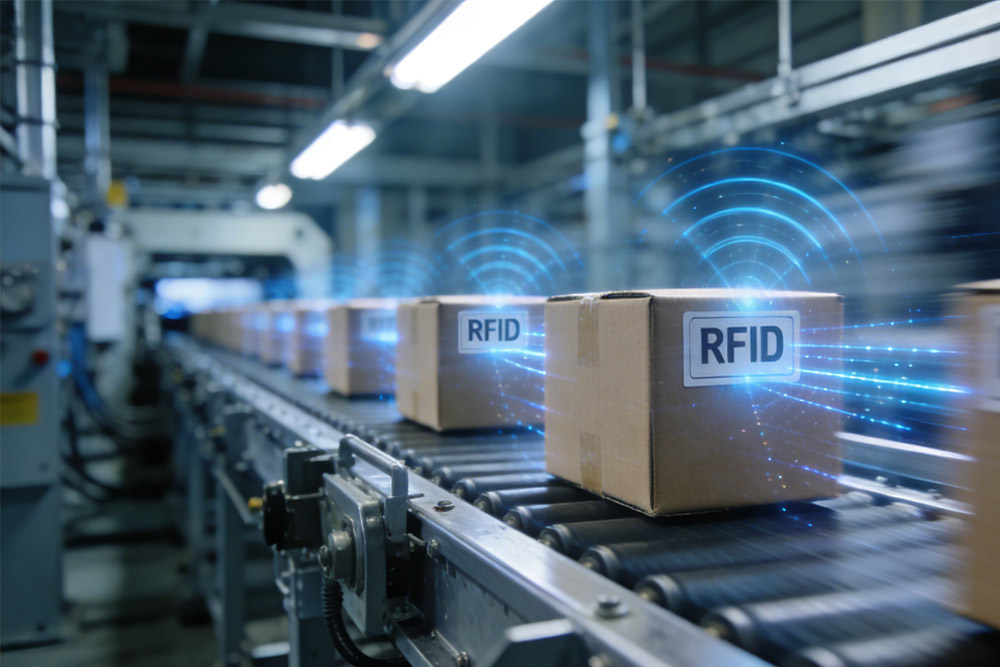
Compared with barcodes, the biggest difference is efficiency. You can read multiple items at once, even if they’re moving or stacked.
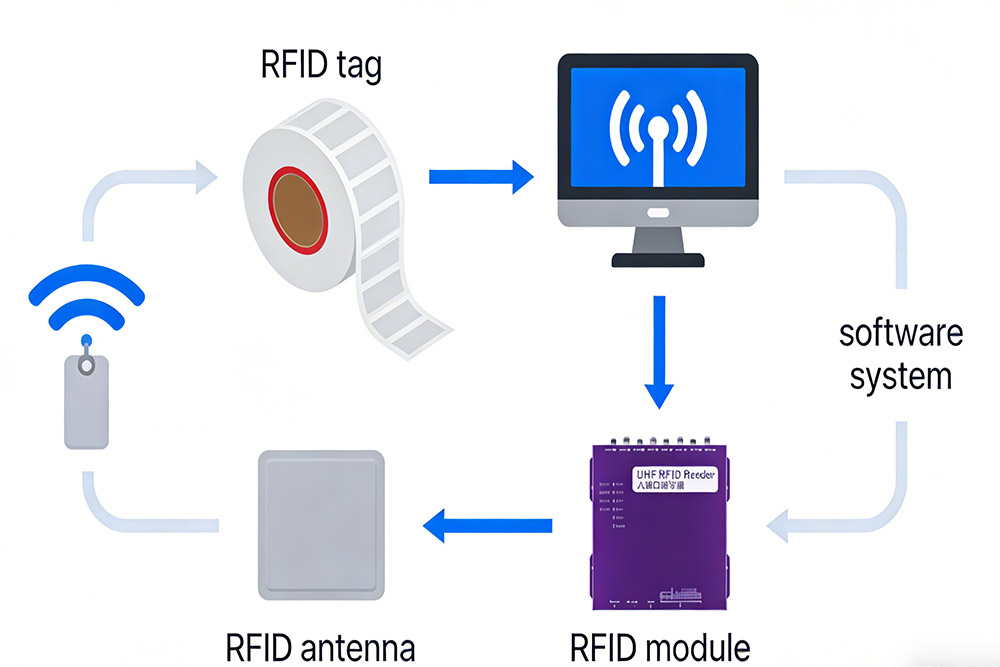
A basic system usually includes:
RFID tags (attached to items)
RFID module or reader
RFID antennas
Software to handle the data
That’s really it. Everything else builds on top of this.
How It Works (Without Overcomplicating It)
Here’s what happens in a normal setup:
The RFID module sends out a signal
The antenna spreads that signal into the space
Tags pick it up and respond
The system receives the data and records it
All of this happens very quickly, even when there are a lot of tags around.
Step 1: Start with the Actual Use Case
Before choosing hardware, figure out what you’re dealing with:
How far do you need to read?
Are there metal surfaces or liquids nearby?
How many items are you tracking?
A warehouse gate setup is very different from a tool cabinet or a production line.
Step 2: Choose the Right Frequency
You’ll come across LF, HF, and UHF. For tracking systems, UHF is what most people use.
It gives you longer read distance and works well for bulk reading, which is exactly what you need in logistics or inventory.
Step 3: Use an RFID Module Instead of a Full Reader
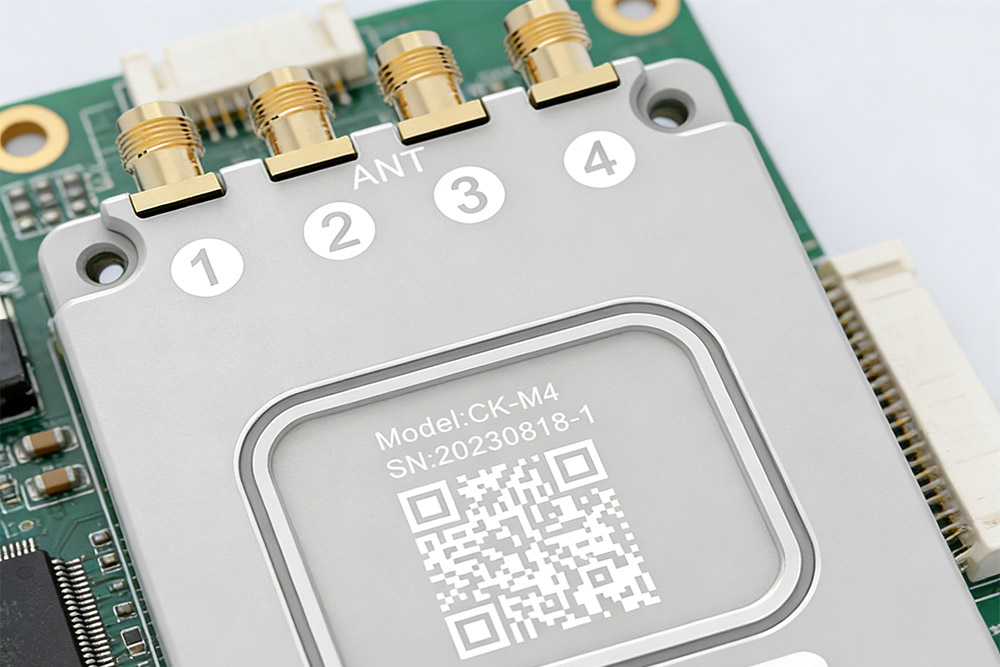
In many projects, especially OEM or integration work, people don’t use full readers—they use embedded modules.
The module is basically the core—it handles signal processing and communication.
You’ll find it inside things like smart cabinets, RFID tunnels, and fixed readers.
Step 4: Don’t Underestimate the Antenna
A lot of performance issues come down to the antenna, not the module.
The antenna affects:
Read distance
Coverage area
Stability
Some general choices:
Circular polarized → more forgiving, good for mixed orientations
Linear polarized → stronger in one direction
Near-field → short range, more controlled
In real setups, especially at entry/exit points, multiple antennas are often used together.
Step 5: Connect Everything Properly
The setup itself is simple:
Module connects to antenna with RF cable
Power goes into the module
Data connects to your system (USB, UART, Ethernet, etc.)
A few things that matter in practice:
Keep cables short and decent quality
Pay attention to antenna placement
Test before fixing everything in place
Step 6: Choose Tags Based on Environment
Not all tags behave the same.
Standard labels → good for boxes and retail
Anti-metal tags → needed for tools or equipment
Industrial tags → for heat, chemicals, rough use
If you’re working around metal, this choice becomes critical.
Step 7: Make the Data Usable
Reading tags is one thing. Making sense of the data is another.
You’ll need something to:
Filter duplicate reads
Match IDs to actual items
Send data to your system (ERP, WMS, etc.)
Without this part, you just have raw reads with no real tracking value.
How Modules and Antennas Work Together
It helps to think of it simply:
The module does the thinking
The antenna handles the communication
If either one is off, the system won’t perform well.
Matching them properly is what makes the whole setup stable.
Example: Simple Warehouse Setup
A common setup looks like this:
One embedded UHF RFID module
2 to 4 antennas at a gate
Passive tags on cartons
Software tracking movement
As items pass through, everything gets recorded automatically.
No scanning, no stopping.
Common Problems People Run Into
Choosing the wrong frequency
Poor antenna placement
Not testing in real conditions
Ignoring interference (especially metal)
No filtering for repeated reads
Most issues aren’t about the hardware itself—they’re about setup.
Final Thoughts
An RFID tracking system isn’t complicated once you see how the pieces fit together.
You’ve got:
A module handling the signals
Antennas handling coverage
Tags carrying IDs
Software making sense of it all
For most real-world projects, especially in logistics or industrial use, a setup based on UHF RFID modules and properly selected antennas is the most practical way to go.
Learn how RFID tool tracking works — from tag selection and reader setup to real-world workflows and troubleshooting. A complete guide for factories, workshops, and field service teams to regain control of tool management.
Learn how UHF RFID antenna design improves pallet and carton scanning in warehouse environments. Practical insights on dock door layouts, antenna placement, and reliable RFID gate systems.
Learn how industrial RFID laundry tags survive high-temperature washing, chemical detergents, and industrial drying cycles. Discover what makes washable RFID tags reliable for commercial textile tracking.
Metal RFID tags deliver reliable UHF asset tracking on metal surfaces for industrial equipment, warehouse inventory, and manufacturing environments with high read accuracy.
 Cykeo RFID IoT Solution Products R&D Manufacturer