Labor has become one of the biggest operating costs in the commercial laundry industry.
Whether it’s hotel linens, hospital textiles, rental uniforms, or industrial workwear, large laundry facilities still depend heavily on manual work every day. Staff sort garments, count inventory, verify deliveries, separate customer batches, and check missing items manually.
As order volume increases, those repetitive tasks start slowing down the entire operation.
That’s one reason more commercial laundries are investing in RFID textile tracking systems.
The goal is not simply replacing workers with technology. In most cases, operators are trying to reduce repetitive manual processes so staff can focus on more important operational tasks.
Manual Linen Tracking Takes More Time Than Most People Realize
In many laundry facilities, textile tracking still depends on manual counting.
Workers count towels during packaging, scan barcodes one piece at a time, and separate garments manually before delivery.
That process becomes difficult once the facility handles thousands of items daily.
During busy production periods, even experienced staff make mistakes:
Incorrect item counts
Sorting errors
Missed deliveries
Mixed customer orders
Lost garments
These small issues create additional labor because employees must spend more time fixing inventory problems later.
RFID helps reduce much of that repetitive work.
RFID Automates Large Parts of the Tracking Process
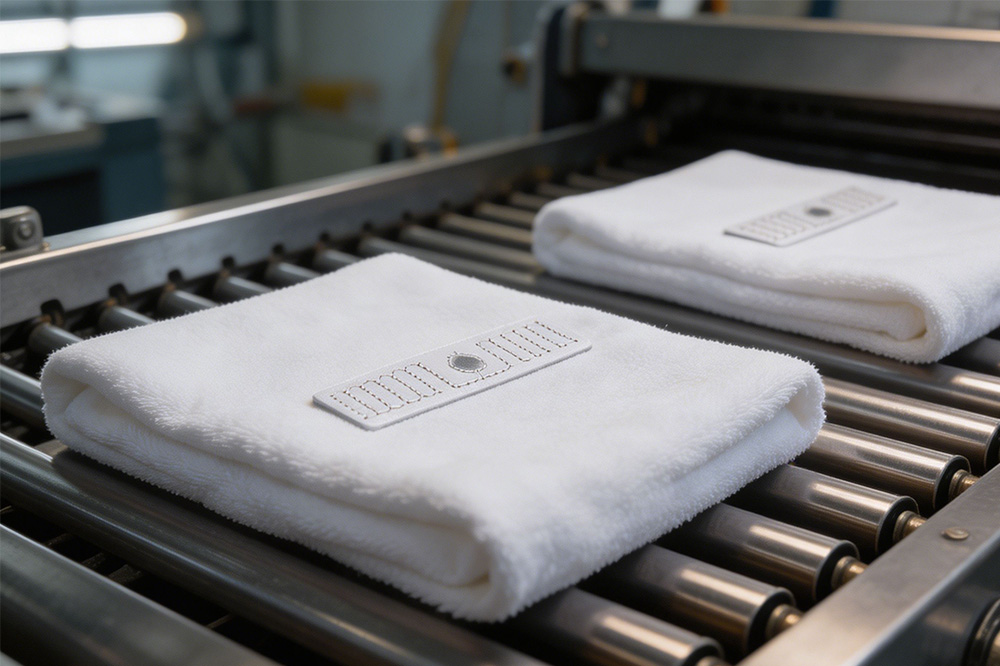
RFID laundry tags allow textiles to be identified automatically without direct scanning.
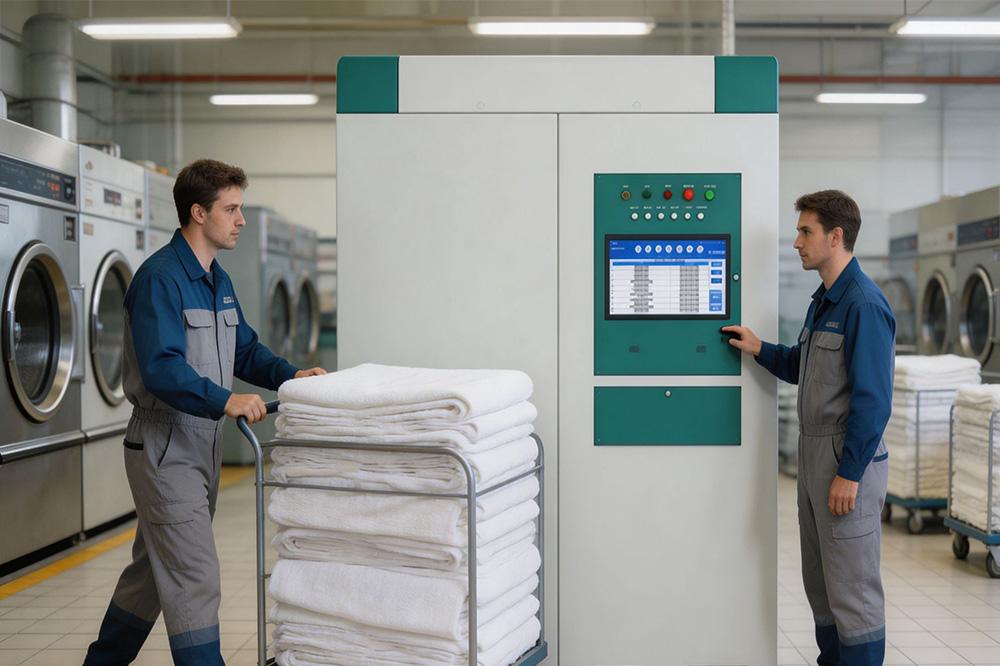
Instead of scanning garments individually, entire carts of linens or uniforms can pass through RFID reading areas and be processed within seconds.
Each tagged item carries its own digital identity throughout the laundry cycle.
A durable industrial RFID laundry tag is designed to survive repeated industrial washing, drying, ironing, and chemical exposure while maintaining stable reading performance.
Once integrated into the laundry workflow, RFID systems can automate tasks that previously required manual labor.
That includes:
Inventory counting
Sorting verification
Delivery confirmation
Textile tracking
Customer identification
The larger the operation becomes, the more noticeable the efficiency improvement usually is.
Sorting Becomes Faster and More Accurate
Sorting is one of the most labor-intensive parts of commercial laundry operations.
Facilities processing garments for multiple customers often spend hours separating textiles manually.
During peak periods, mistakes become more common because workers are under time pressure.
RFID helps speed up this process significantly.
As textiles move through conveyor systems or RFID tunnel readers, the system automatically identifies each item and directs it toward the correct sorting channel.
This reduces the need for staff to check labels manually.
Many operators notice improvements in:
Sorting speed
Packing efficiency
Order accuracy
Workflow consistency
For facilities handling hospital textiles or rental uniforms, accurate sorting is especially important because customer mix-ups create additional operational problems later.
Faster Inventory Counting Reduces Repetitive Work
Inventory counting is another area where RFID creates immediate labor savings.
Traditional counting methods usually involve workers manually checking linen quantities during receiving, storage, or delivery preparation.
That process is slow and repetitive.
RFID systems allow operators to identify large quantities of textiles automatically without opening bags or scanning items individually.
Some facilities process entire carts of linens in seconds instead of spending long periods on manual counts.
This not only saves labor hours but also improves inventory accuracy.
When operators have better visibility, they spend less time investigating shortages and correcting counting mistakes.
Labor Shortages Are Accelerating RFID Adoption
Commercial laundry businesses in many regions are dealing with labor shortages.
Finding and retaining experienced workers has become harder, especially for repetitive sorting and counting roles.
RFID helps facilities maintain operational efficiency without continuously increasing staffing requirements.
Instead of adding more workers to handle growing textile volume, operators can automate part of the process using RFID infrastructure.
This is one reason RFID adoption is growing quickly in:
Hotel laundry operations
Healthcare textile management
Uniform rental services
Industrial workwear processing
For many businesses, automation is becoming necessary simply to keep operations scalable.
RFID Also Helps Reduce Human Error
Labor costs are not only about wages.
Manual errors create hidden operational costs that many facilities underestimate.
When textiles are counted incorrectly or sorted into the wrong batch, staff spend additional time correcting mistakes later.
RFID systems help reduce these issues because inventory data is captured automatically instead of relying entirely on manual input.
That leads to:
More stable workflows
Fewer inventory discrepancies
Better delivery accuracy
Reduced customer complaints
Over time, these improvements help facilities operate more efficiently with less operational disruption.
Automation Is Becoming Part of Modern Laundry Operations
A few years ago, RFID laundry systems were mainly used by very large industrial operations.
Now mid-sized commercial laundries are adopting the technology much more frequently.
The reason is practical: labor-intensive workflows become harder to manage as textile volume increases.
RFID helps reduce repetitive manual work while improving inventory visibility at the same time.
For many commercial laundry operators today, RFID laundry tags are no longer viewed as advanced technology projects. They are gradually becoming part of standard operational infrastructure.
Tool and equipment tracking improves asset visibility, reduces loss, and enables real-time RFID control in maintenance, construction, and industrial operations.
A practical buying guide for industrial RFID readers used in automation and logistics projects. Covers cost, reliability, long-range options, and procurement risks for large-scale deployments.
Explore rfid and sensor technology from Cykeo for automated asset tracking, warehouse monitoring, inventory visibility, and intelligent RFID alarm management.
 Cykeo RFID IoT Solution Products R&D Manufacturer