A fixed rfid reader automatically scans RFID tags in a defined area, enabling continuous, real-time tracking of assets without manual intervention.
That’s the direct answer. In actual deployments, though, the value isn’t just automation—it’s the disappearance of blind spots. No pauses, no missed scans, no reliance on human timing.
You install it once. Then it just… keeps watching.
Author & Field Experience
Author: Cykeo RFID Infrastructure Engineering Team
10+ years deploying fixed rfid reader systems in logistics hubs and industrial facilities
Experience with dock doors, conveyor systems, and smart warehouses
Integration with ERP, WMS, and IoT monitoring platforms
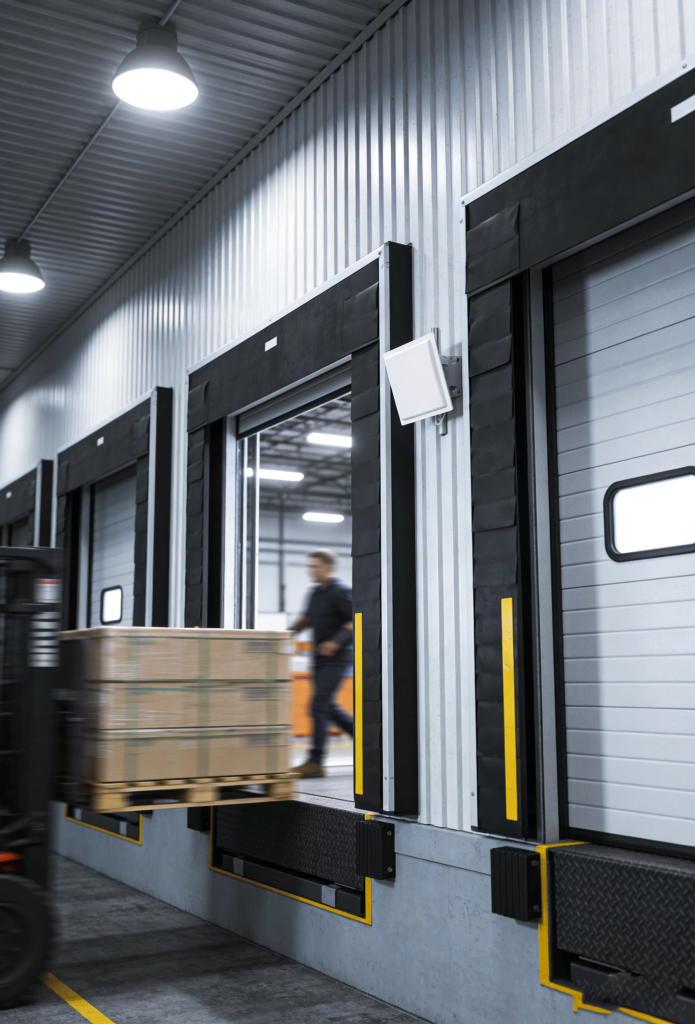
In a recent dock-door deployment (8 loading bays, mid-size distribution center):
Shipment verification accuracy increased to over 97%
Manual scanning steps reduced by ~60%
Throughput improved during peak hours without adding staff
The interesting part? Operators stopped thinking about scanning entirely. It just happened.
What is a fixed rfid reader?
A fixed rfid reader is a stationary RFID device installed at strategic points (such as entrances, exits, or conveyor lines) to automatically detect tagged items passing through.
It typically includes:
RFID reader unit
External antennas
Network connectivity for data transmission
According to RAIN RFID Alliance, RFID systems can read hundreds of tags per second, making fixed readers ideal for high-throughput environments.
How fixed rfid reader works in real operations
From manual checkpoints to invisible tracking
Traditional workflows rely on people scanning items.
Fixed rfid reader systems:
Continuously emit radio signals
Detect tags automatically within range
Send data to backend systems instantly
In one conveyor-based setup, cartons were tracked without slowing down the belt. No scanning stations. No interruptions.
That’s where the efficiency gain shows up—not in speed alone, but in flow.
Automated tracking at warehouse entry point
Key benefits of fixed rfid reader
1. Continuous real-time tracking
No manual scanning required
Always-on monitoring
Immediate data updates
2. High accuracy and reliability
RFID-based systems can achieve inventory accuracy above 95%, especially when automated with fixed infrastructure.
3. Increased operational efficiency
Reduce labor dependency
Eliminate bottlenecks
Improve throughput
Typical applications of fixed rfid reader
Scenario
Use Case
Warehouse dock doors
Shipment verification
Conveyor systems
Automated item tracking
Retail exits
Loss prevention
Manufacturing lines
Work-in-progress tracking
Tool rooms
Entry/exit monitoring
Practical deployment insights
Fixed rfid reader systems are powerful—but sensitive to setup.
From field experience:
Antenna placement is critical for coverage
Overlapping read zones can create duplicate reads
Power tuning affects both range and accuracy
In one project, reducing reader power slightly improved accuracy by eliminating stray reads from adjacent zones.
It’s rarely about adding more hardware—usually about refining what’s already there.
How to choose a fixed rfid reader
Key considerations
Frequency: UHF for long-range applications
Read zone design: Based on layout
Integration: Compatibility with software systems
Environmental durability: Indoor vs outdoor
Antenna configuration: Directional vs omnidirectional
FAQ about fixed rfid reader
Q1: What is the difference between fixed and handheld RFID readers?
Fixed readers operate automatically in a defined area, while handheld rfid readers require manual operation.
Q2: Can fixed RFID readers track items in real time?
Yes. They provide continuous, real-time data as items move through read zones.
Q3: Where are fixed RFID readers installed?
Typically at entry/exit points, conveyor systems, or critical tracking locations.
Final insight from real deployments
A fixed rfid reader doesn’t just automate scanning—it removes the act of scanning altogether.
Once deployed, tracking becomes ambient. Data flows without interruption, and operations stop depending on human timing.
That’s when visibility stops being a task—and becomes part of the environment.
Discover Cykeo’s handheld RFID reader costs for budget and premium models. Compare features, prices, and use cases for retail, logistics, and industrial automation.
Discover how RFID tags enhance automotive security, streamline maintenance, and improve user experiences. Explore Cykeo’s RFID solutions for modern vehicles.
Understand why antenna performance matters in RFID systems. A practical look at the CK-A5 5dBi RFID Ultra, covering coverage stability, deployment efficiency, and long-term system cost for integrators and buyers.
 Cykeo RFID IoT Solution Products R&D Manufacturer