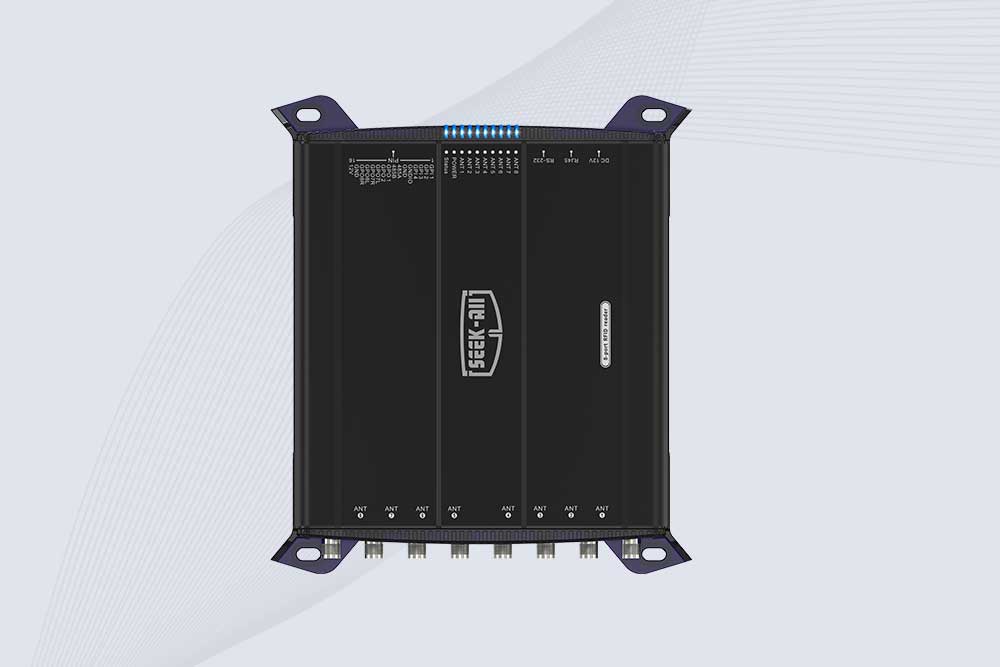
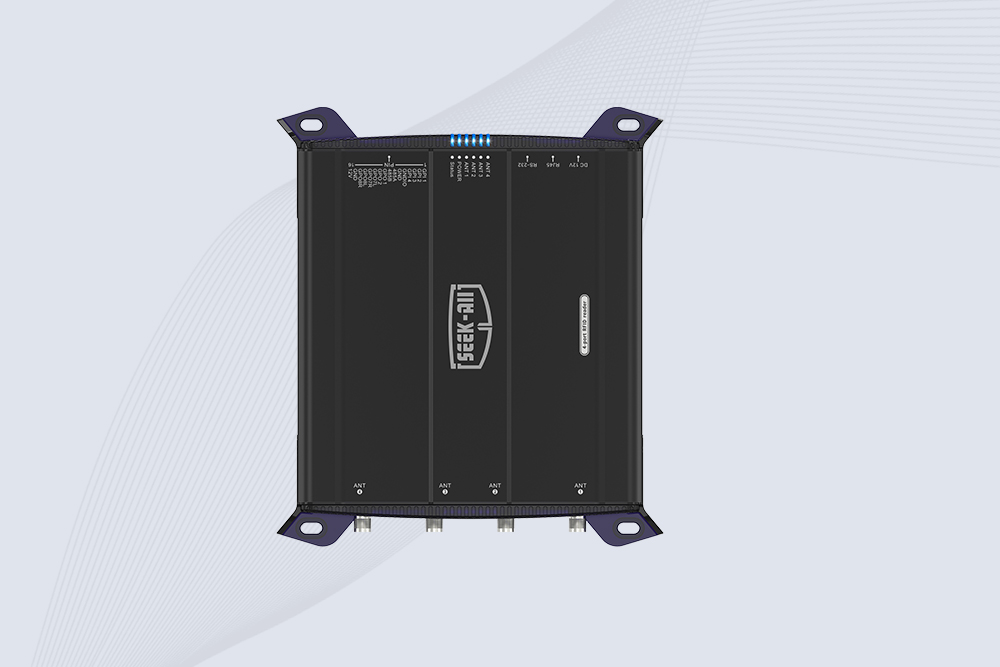
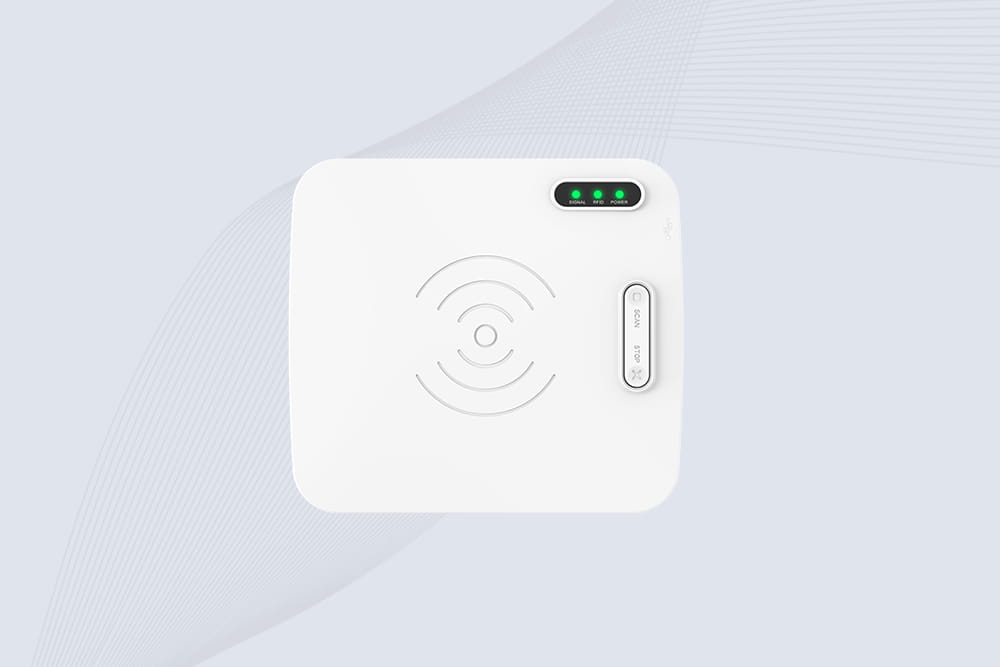
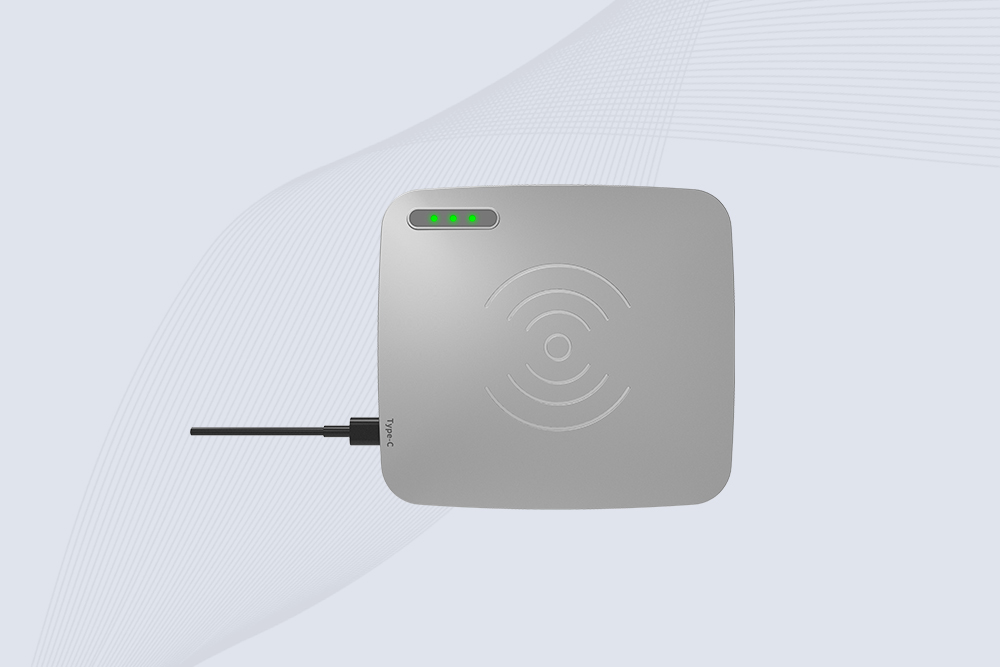
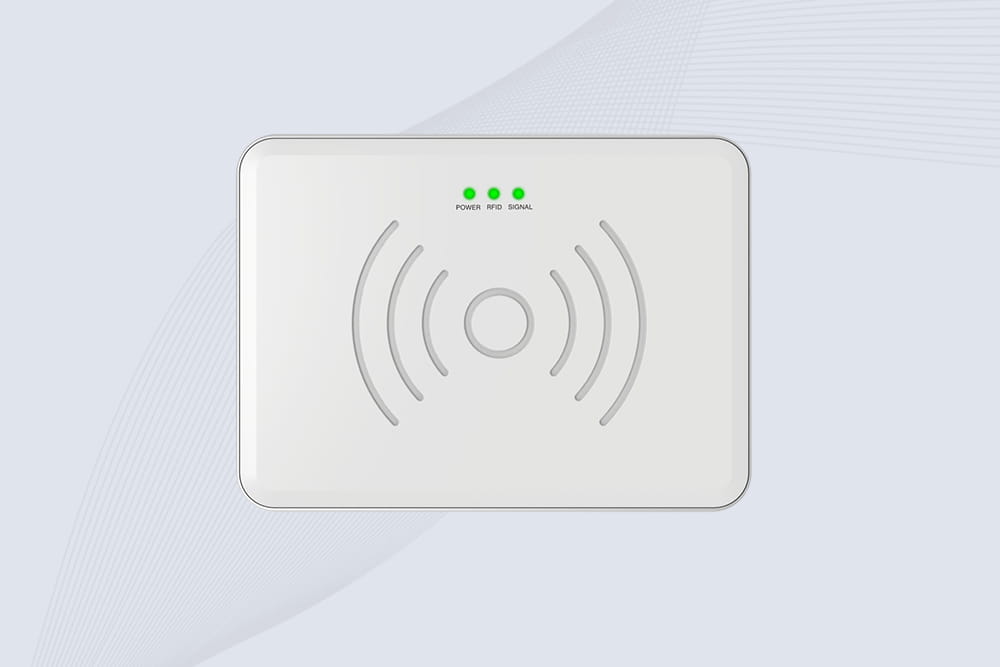
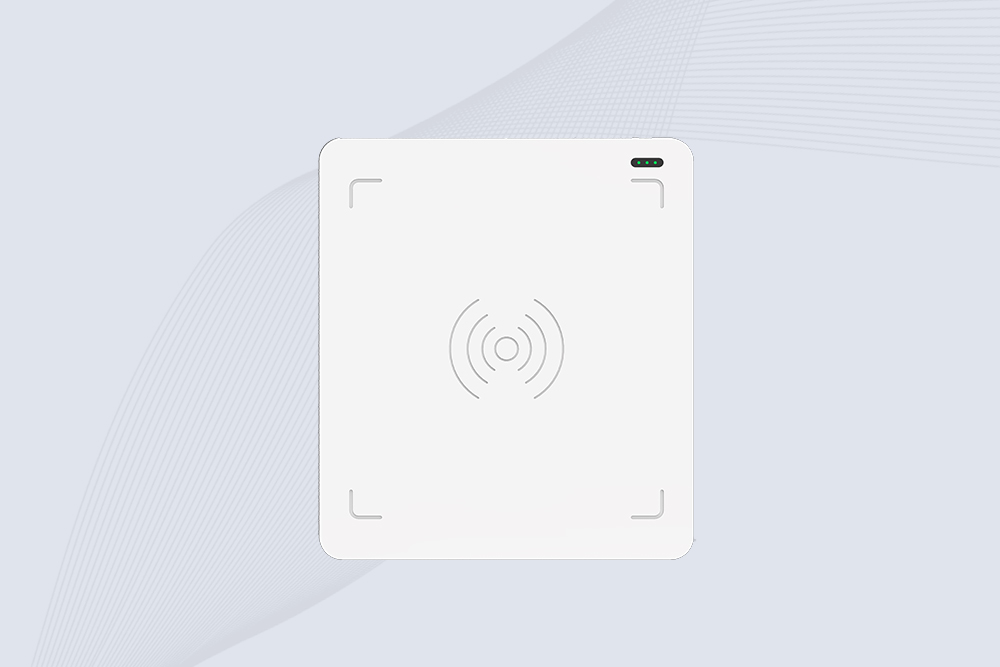
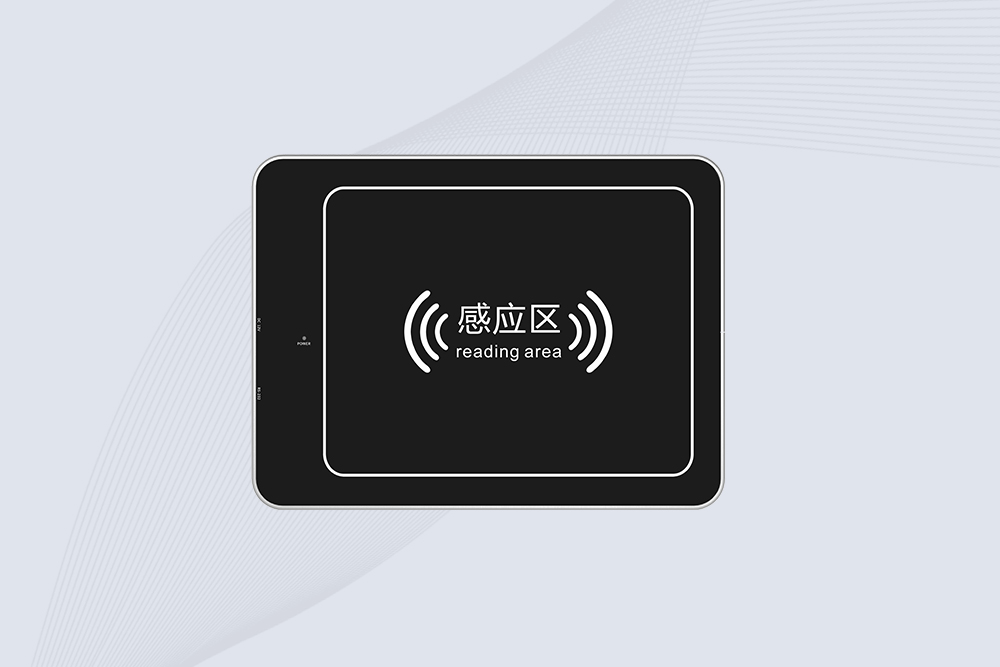
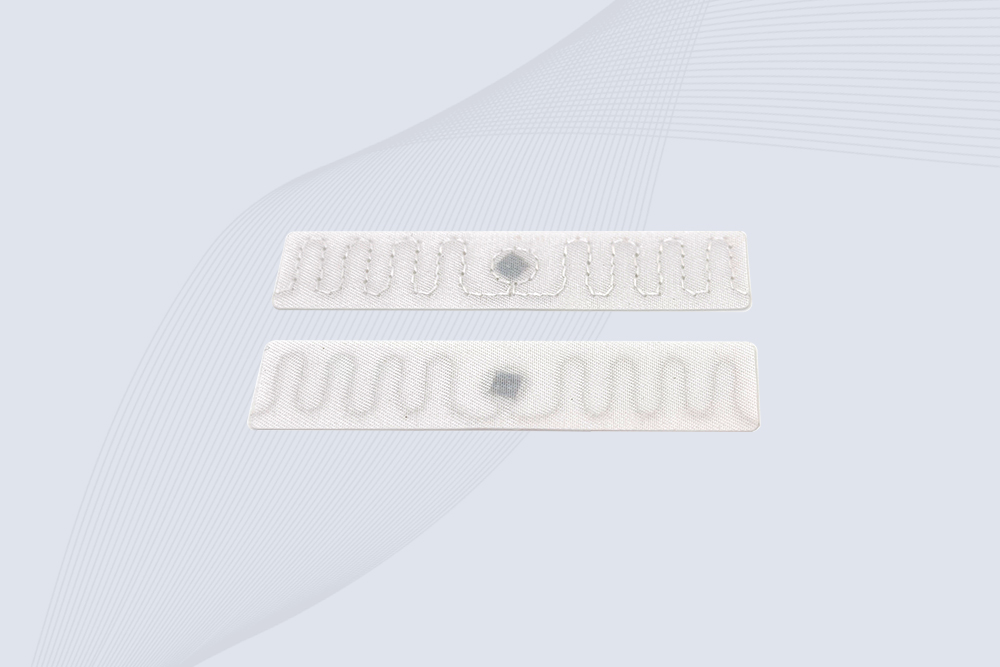
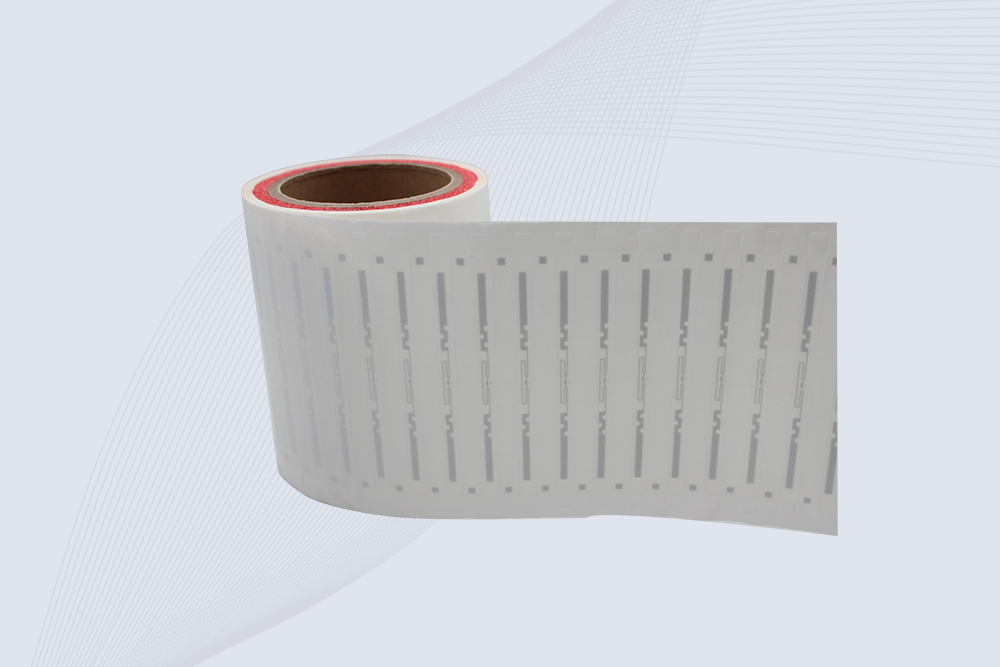
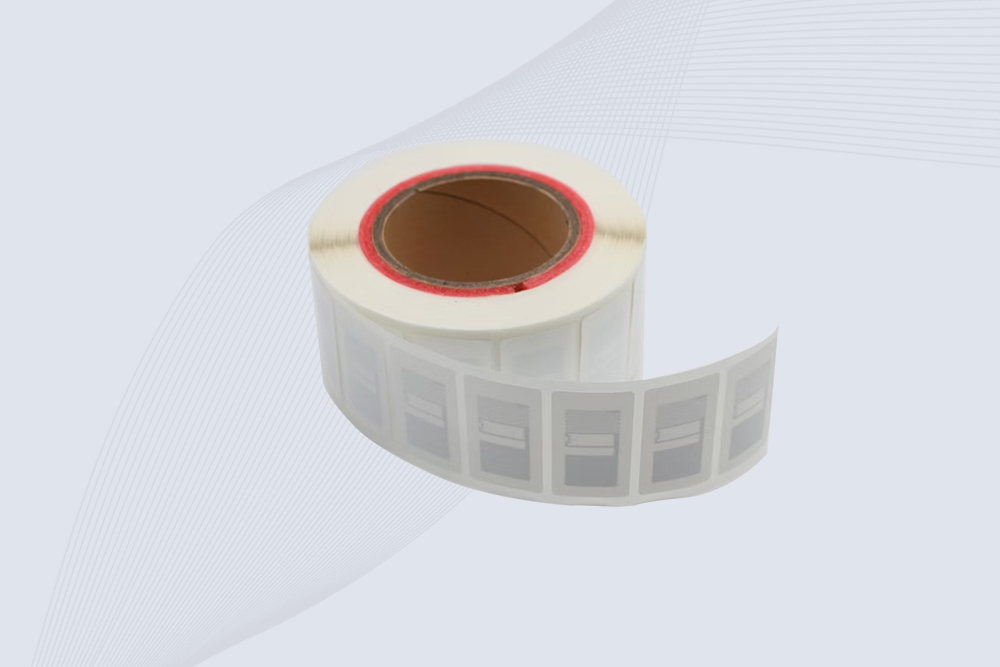
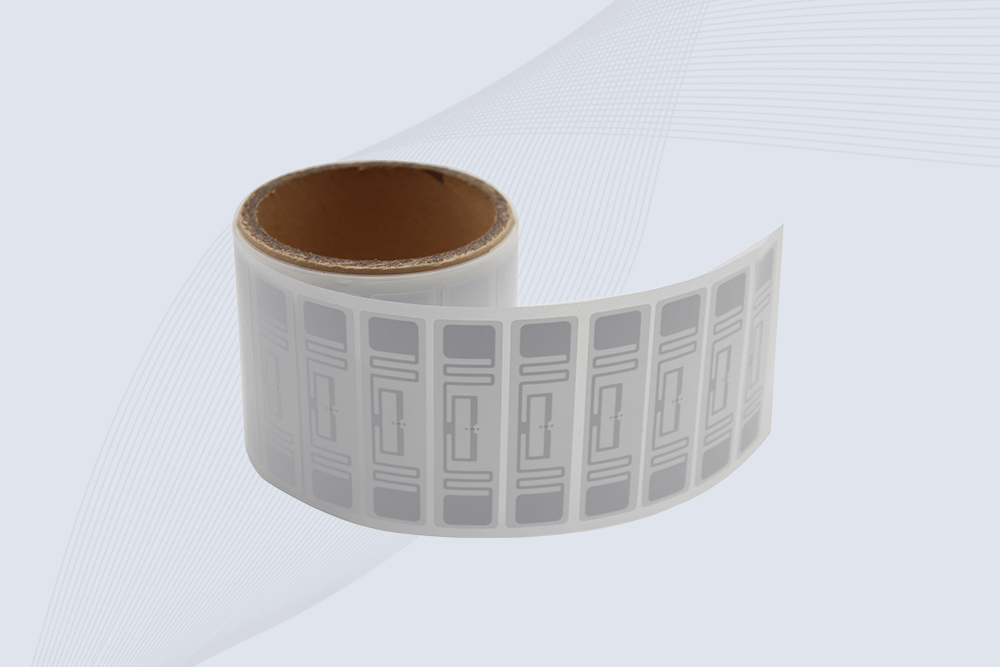
An RFID UHF reader transmits radio-frequency energy to passive tags, receives their backscattered responses, and converts those responses into digital tag data. The reader controls the inventory process, manages multiple tags, filters unwanted reads, and sends the results to connected software.
How Does an RFID UHF Reader Work in a Real Installation?
A UHF RFID reader is not simply a stronger barcode scanner.
The reader continuously manages a radio environment in which passive tags can be detected, powered, selected, interrogated, and identified without direct line-of-sight.
For the widely deployed EPC UHF Gen2 system, GS1 defines a passive-backscatter, reader-talks-first architecture operating in the 860–960 MHz range. The reader sends an RF signal to the tag; the passive tag obtains operating energy from that signal and responds by changing the reflection characteristics of its antenna. The reader detects that backscattered response and reconstructs the information.
That last part is the piece people often skip.
The tag does not generate a conventional radio transmission of its own. The reader provides the RF energy, while the tag uses backscatter to return information.
This architecture is what allows a single fixed reader to identify many inexpensive passive tags moving through a defined read zone.
What Are the Main Components of a UHF RFID Reader?
A professional UHF RFID reader combines several RF and digital functions inside one system.
Typical architecture includes:
RF transmitter — generates the carrier and supplies energy toward the tag.
RF receiver — detects the extremely weak backscattered response.
RF front end — controls signal conditioning, amplification, filtering, and switching.
Reader controller — manages commands, tag data, filtering, and application interfaces.
Antenna interface — connects one or more external antennas or an integrated antenna.
Communication interface — typically Ethernet, RS-232, USB, or another industrial interface.
Firmware and SDK/API layer — allows the reader to communicate with application software.
In a Cykeo development environment, the RF front end and digital processing cannot be treated as unrelated blocks. A reader that detects tags well in an isolated RF test can behave very differently when several antennas, nearby readers, metal structures, and hundreds of tags are active at the same time.
The difficult part is maintaining useful signal margin.
How Does a UHF RFID Reader Power a Passive Tag?
The reader first establishes an RF field through its antenna.
A passive UHF tag entering that field receives RF energy through its antenna. The tag’s chip rectifies and uses the available RF energy to operate its internal circuitry.
GS1 describes passive tags as receiving their operating energy through the reader’s continuous-wave signal. The same infrastructure is then used for communication through backscatter.
The relationship is therefore asymmetric:
Reader → supplies RF energy and commands
Tag → returns information through backscatter
This is fundamentally different from an active radio link where both sides have independent power sources and transmitters.
It also explains why UHF RFID performance depends so heavily on reader antenna configuration, tag orientation, RF power, polarization, frequency, and the surrounding physical environment.
How Does Backscatter Communication Work?
The tag does not need to produce a high-power RF signal.
Instead, after receiving the reader’s signal and being instructed to respond, the tag changes the reflection coefficient of its antenna. The resulting change in reflected RF energy carries information back toward the reader.
GS1’s EPC Gen2 specification describes this explicitly: the interrogator transmits a continuous-wave RF signal, and the tag responds by modulating its antenna reflection coefficient to backscatter information.
From the reader’s perspective, this is a demanding receiver problem.
The outgoing signal can be many orders of magnitude stronger than the desired return signal. The reader must therefore separate its own transmitted energy from the weak response coming back from the tag.
That is where RF filtering, receiver sensitivity, carrier suppression, signal processing, antenna isolation, and carefully designed firmware begin to matter.
A UHF reader’s headline transmit power tells only part of the story.
How Does an RFID UHF Reader Read Multiple Tags?
This is one of the defining strengths of UHF RFID.
A barcode scanner generally handles one visible code at a time. A UHF reader can manage an inventory round involving many tags within its RF field.
The EPC Gen2 architecture uses random-slotted collision arbitration to organize communication between the reader and multiple tags.
A simplified inventory sequence looks like this:
The reader establishes the RF operating conditions.
The reader initiates an inventory round.
Tags in the field respond according to the protocol.
The reader identifies individual tag responses.
Collision handling separates competing responses.
Selected tags can be read, written, locked, or otherwise accessed as permitted.
The reader reports tag information to the host application.
The reader is therefore doing more than “detecting radio signals.”
It is scheduling a conversation.
What Does the Reader Actually Receive From a UHF RFID Tag?
That depends on the tag and application.
A basic deployment may primarily use an EPC identifier. More advanced tags can provide additional memory and security functions.
GS1 explains that Gen2 tags can contain multiple memory banks, including EPC and TID memory, while User Memory can hold application-specific information. GS1 also notes that many ordinary tags carry relatively small amounts of data, while higher-memory UHF tags can provide substantially more storage for applications such as product or maintenance history.
This creates an important design choice.
If the application only needs to identify a pallet, carton, garment, tool, or asset, storing a compact serialized identifier is often preferable to filling the tag with operational data.
The reader can then retrieve the identifier and let the software platform handle the larger business record.
UHF RFID Frequency and Read Range
UHF RFID is generally associated with the 860–960 MHz operating range in the EPC Gen2 specification, with actual operating channels determined by regional regulations and the local RF environment.
Read distance is not one fixed number.
GS1 states that passive UHF RFID tags typically have read ranges of several meters and can reach up to 15 meters in special cases, while specialized systems can reach farther. GS1 also emphasizes that antenna directivity, gain, polarization, and tag orientation influence the actual read volume.
That is a useful correction to the common sales question:
“How many meters can your reader read?”
The more useful engineering question is:
“What does the usable read zone look like at the installation?”
A ten-meter maximum measured under controlled conditions may be less useful than a stable four-meter read zone shaped exactly around a warehouse doorway.
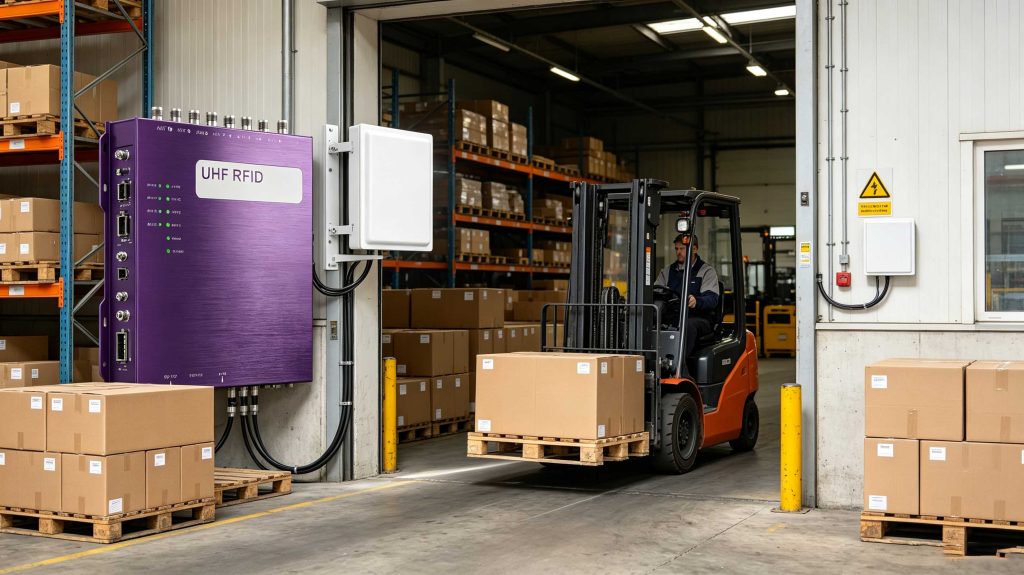
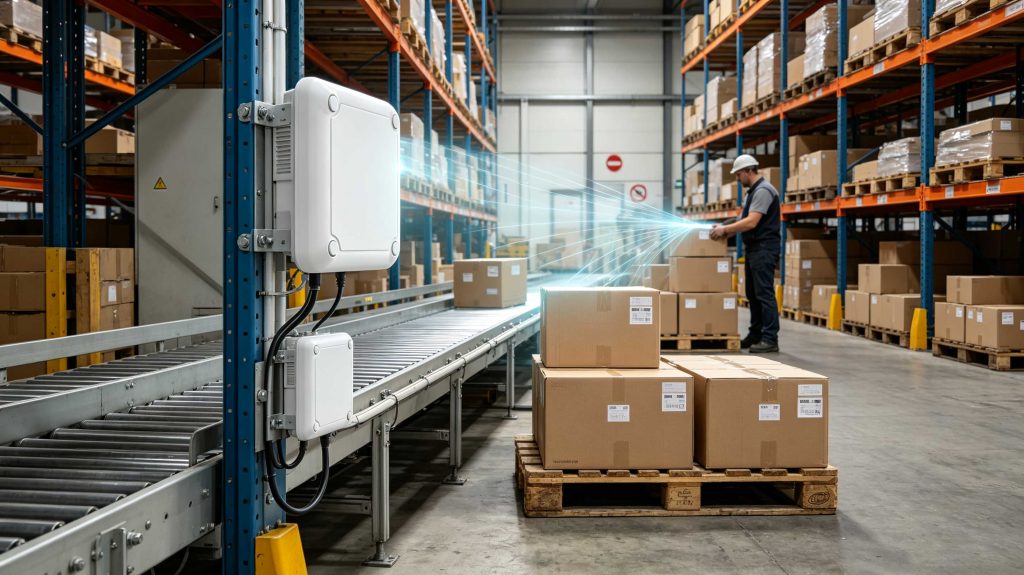
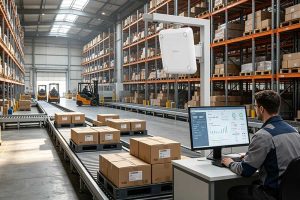
A fixed UHF RFID reader creates a controlled interrogation zone as tagged pallets move through a logistics portal.
Why Antenna Design Changes How a UHF Reader Works
The reader and rfid antenna should be considered together.
A high-power reader connected to an unsuitable antenna can produce a worse installation than a lower-power reader with a carefully designed RF zone.
Antenna selection affects:
read-zone shape;
polarization;
directionality;
gain;
tag orientation tolerance;
unwanted tag detection;
coverage around doors, conveyors, shelves, and workstations;
interference between adjacent read zones.
GS1 specifically identifies antenna directivity, gain, polarization, and tag orientation as important factors in the volume in which UHF tags can be read.
This is also where field experience becomes valuable.
In warehouse installations, I pay close attention to what sits outside the intended read zone. A reader that reliably identifies the pallet passing through a portal but also captures tags on the neighboring rack is not necessarily performing well.
The problem is not sensitivity alone.
It is selectivity.
Cykeo Engineering Perspective
At Cykeo, UHF RFID reader development focuses on the complete RF and data path: RF front-end behavior, digital signal processing, anti-collision algorithms, tag filtering, communication interfaces, and integration with the customer’s application.
For industrial reader projects, practical validation commonly looks beyond laboratory tag reads:
multiple-tag inventory;
different tag orientations;
dense tag populations;
metal and liquid-rich environments;
moving objects;
adjacent RFID readers;
antenna positioning;
regional frequency requirements;
repeated inventory cycles;
host-system communication.
A reader that performs well with one tag placed two meters away tells very little about how it will behave at a busy warehouse portal.
The real test begins when the portal is full.
How Does an RFID UHF Reader Manage an Inventory Round?
A UHF reader does not simply transmit continuously and wait for whatever answers happen to return. In a Gen2 system, the reader controls the inventory process and determines which population of tags should participate.
GS1 describes the EPC UHF system as an interrogator-talks-first, passive-backscatter architecture. The reader transmits commands and operating energy, while tags respond by modulating the reflection from their antennas.
A practical inventory cycle can look like this:
The reader activates the selected antenna.
RF energy establishes the interrogation zone.
The reader issues an inventory command.
Tags meeting the selection criteria enter the response process.
Anti-collision procedures separate competing tag responses.
Individual EPC or other tag data is captured.
The reader may access additional memory when required.
Duplicate or unwanted reads can be filtered.
The resulting data is delivered to the host application.
The important detail is that the reader controls the conversation.
That is why UHF RFID can identify many tagged objects while a conveyor is moving, rather than requiring an operator to aim a scanner at every individual item.
How Does UHF RFID Anti-Collision Work?
Multiple tags responding simultaneously would create a collision. The reader therefore needs a protocol mechanism for managing a population rather than treating every tag as an isolated device.
EPC Gen2 uses inventory and anti-collision mechanisms that allow the reader to progressively identify individual tags. The standard also defines sessions and inventoried flags, allowing readers to manage tag populations across inventory rounds.
This becomes particularly important in:
pallet identification;
carton counting;
retail inventory;
warehouse receiving;
tool tracking;
laundry management;
manufacturing WIP tracking;
vehicle and equipment identification.
A dense tag population is not automatically a problem. Poorly controlled RF conditions are.
In a production environment, I pay attention to the number of tags in the field, tag spacing, antenna coverage, reader timing, and whether adjacent readers can see the same population.
The goal is not simply to read more tags.
It is to read the correct tags.
How Do UHF RFID Reader Power and Sensitivity Affect Performance?
Reader output power determines how much RF energy is delivered toward the tag, but higher power does not automatically produce a better system.
GS1 notes that passive UHF read range depends on multiple factors, including reader power, interference, antenna characteristics, polarization, and tag orientation. Typical passive UHF tags can be read several meters away, with up to 15 meters possible in special cases; GS1 also notes that specialized phased-array readers with high sensitivity can reach up to 20 meters.
Those numbers should be read carefully.
A long maximum distance may be useful for an open yard. It can be undesirable beside a retail shelf.
If a warehouse portal is designed to capture only pallets crossing a doorway, excessive RF coverage can create false reads from tags stored several meters away. In that situation, reducing the unwanted read zone can be more valuable than extending the maximum range.
This is one of the practical distinctions between RF power and RF control.
Why UHF RFID Antenna Selection Matters
The antenna determines where the reader can effectively interrogate tags.
GS1 specifically identifies antenna directivity, gain, polarization, and tag orientation as factors that influence the volume in which passive UHF tags can be read.
For common deployments:
Deployment
Typical antenna consideration
Warehouse portal
Directional coverage through a defined passage
Conveyor
Controlled field across the product flow
Retail shelf
Narrow coverage to reduce adjacent reads
Open warehouse area
Wider coverage with controlled boundaries
Tool station
Shorter, localized read zone
Vehicle gate
Directional coverage across the vehicle path
Production line
Antenna placement matched to item movement
The physical environment changes the answer.
Metal racks, machinery, liquids, cables, doors, forklifts and neighboring RFID antennas all become part of the RF problem.
I have found that antenna placement is often the point where a good reader installation becomes a good system.
How Does a UHF RFID Reader Handle Data?
The reader’s job does not end when an EPC is decoded.
Modern RFID systems commonly need to decide:
Which antenna captured the tag?
Was the tag read once or repeatedly?
Should duplicate reads be suppressed?
Is this tag inside the intended zone?
Does the application need EPC only?
Is additional User Memory required?
Should a read event be sent immediately?
Does the host need raw reader events or processed data?
GS1 identifies the Low Level Reader Protocol (LLRP) as an interface between RFID readers and client software, providing fine-grained control over reader operations.
For application integration, this matters because a reader can expose substantially more control than a simple “tag detected” message.
The software layer can determine how the RF events become business events.
What Information Can a UHF RFID Tag Store?
Not every UHF tag needs a large memory capacity.
GS1 states that a typical RAIN RFID tag carries no more than 8 KB of data, while simple “license plate” tags may contain only a 96-bit or 128-bit identifier. Higher-memory tags can be used where additional information, such as component history, needs to be stored on the tag itself.
For many industrial projects, keeping the tag data compact is preferable.
The EPC identifies the physical object. The backend system stores the detailed business record.
For example:
EPC → Item ID → Database record → Location / status / history
GS1 describes EPC as a way to encode serialized identifiers and connect physical objects to visibility and traceability applications.
That architecture keeps the tag inexpensive and lets the software carry the heavier data burden.
UHF RFID Reader Applications
UHF RFID readers are particularly useful where objects move through a defined area or where many tagged items must be identified quickly.
Common applications include:
Warehouse receiving: identify cartons or pallets without opening every package.
Retail inventory: capture item-level inventory during receiving and stock checks.
Manufacturing: monitor work-in-process and component movement.
Tool management: identify tools entering and leaving maintenance areas.
Laundry and linen: track large quantities of tagged textiles.
Asset tracking: monitor equipment movement between locations.
Vehicle identification: detect tagged assets passing through gates.
Logistics: associate tagged shipments with receiving and dispatch events.
Rail and MRO: associate tagged components with maintenance records.
GS1 specifically identifies retail inventory and rail-sector maintenance, repair and overhaul as RFID application examples.
GS1 also reports that RAIN RFID can reduce average inventory time by approximately 95% compared with traditional manual barcode inventory processes. This is an industry-level figure published by GS1, not a guaranteed result for every installation.
Cykeo UHF RFID Reader Advantages
Cykeo’s UHF RFID reader architecture is designed for environments where RF performance and integration both matter.
Depending on the reader configuration, Cykeo technology supports features such as:
Up to 33 dBm output power, with adjustable RF power;
high-speed multi-tag recognition;
anti-collision processing;
configurable antenna operation;
tag filtering;
fixed-frequency or frequency-hopping operation where supported;
ISO 18000-6C / EPC C1G2 compatibility;
ISO 18000-6B support on applicable products;
GB/T 29768-2013 support on applicable products;
Ethernet, RS-232 or other communication interfaces depending on model;
SDK/API integration for customer applications.
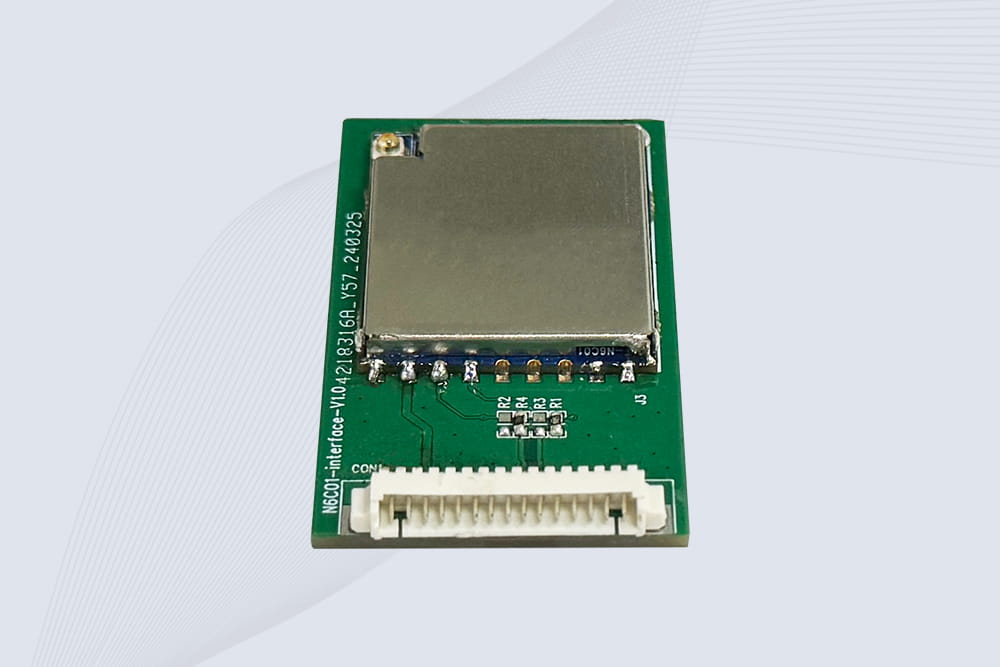
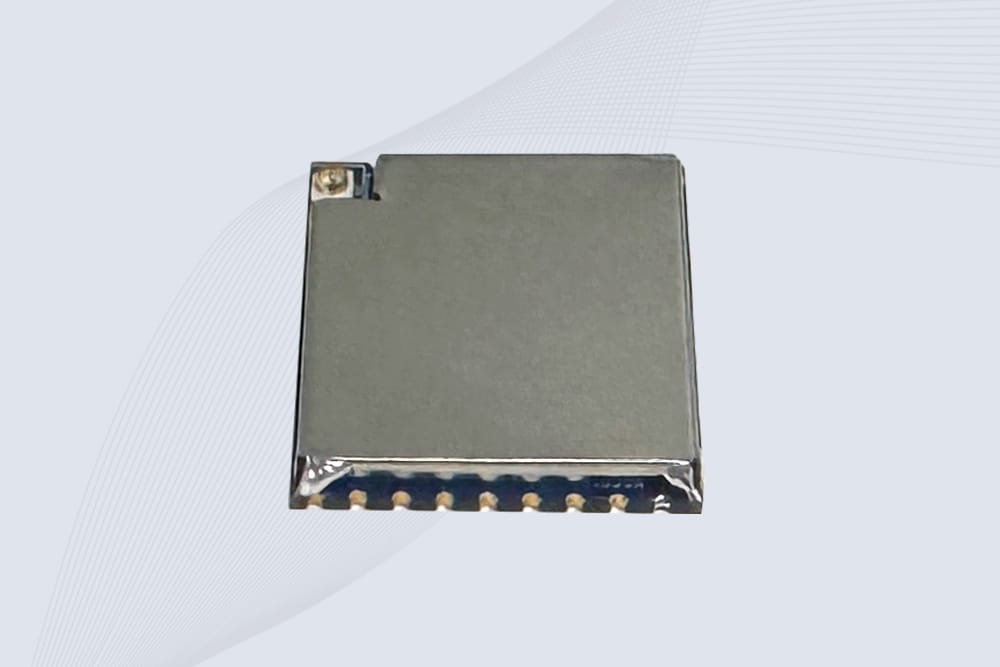
For example, the CYKEO-M4L module integrates the RF front end and baseband digital processing into a compact OEM-oriented platform, with adjustable output power and multi-tag recognition exceeding 400 tags/s under specified test conditions.
For an industrial reader such as the CYKEO-RA9L, the emphasis shifts toward integrated outdoor-ready construction, communication flexibility, RF protection and stable operation in demanding environments.
The important point is not the specification sheet by itself.
A reader needs enough RF capability to establish the required zone, enough receiver performance to recover weak backscatter, and enough software control to prevent that sensitivity from becoming a source of unwanted reads.
A UHF RFID reader supplies RF energy and receives backscattered responses from multiple passive RFID tags within its antenna field.
Frequently Asked Questions About How Does an RFID UHF Reader Work?
1. How does an RFID UHF reader work?
A UHF RFID reader transmits RF energy to passive tags, receives their backscattered responses, decodes the tag information, manages anti-collision, and sends the resulting data to a connected application.
2. How far can a UHF RFID reader read tags?
There is no universal distance. GS1 states that passive UHF tags typically read several meters, with up to 15 meters in special cases, while specialized high-sensitivity systems can reach up to 20 meters. Antenna design, polarization, tag orientation and environment are critical.
3. Can a UHF RFID reader read multiple tags simultaneously?
Yes. EPC Gen2 uses inventory and anti-collision mechanisms to identify individual tags within a population. This is one of the primary reasons UHF RFID is useful for pallet, carton, asset and inventory applications.
4. Does a passive UHF RFID tag need a battery?
No. Passive UHF tags obtain operating energy from the RF signal transmitted by the reader and return information through backscatter.
5. What is EPC in UHF RFID?
EPC stands for Electronic Product Code. It provides a serialized identification scheme for physical objects and is commonly encoded in the EPC memory of a UHF RFID tag.
6. Why can a UHF RFID reader detect unwanted tags?
An RF field does not automatically stop at the doorway or shelf boundary. Excessive coverage, antenna placement, high gain, reflections and tag orientation can extend the usable interrogation area beyond the intended zone. Antenna selection and RF tuning are therefore essential.
7. Is a higher-power UHF RFID reader always better?
No. More output power can increase usable range, but it can also enlarge the unwanted read zone. The correct design balances transmit power, receiver sensitivity, antenna characteristics, tag orientation, interference and application requirements.
Final Answer: How Does an RFID UHF Reader Work?
How does an RFID UHF reader work? It transmits RF energy, powers passive UHF tags, controls their responses through the RFID protocol, receives backscattered signals, resolves multiple-tag collisions, and converts those signals into usable identification data.
The strongest installation is not necessarily the one with the longest advertised range.
It is the one that reads the right tags, at the right place, at the right time.
For a warehouse portal, that may mean a tightly controlled four-meter read zone rather than an uncontrolled ten-meter field. For a conveyor, it may mean stable identification at speed. For asset tracking, it may mean reliable reads despite changing tag orientation.
That is the practical meaning of how does an RFID UHF reader work.
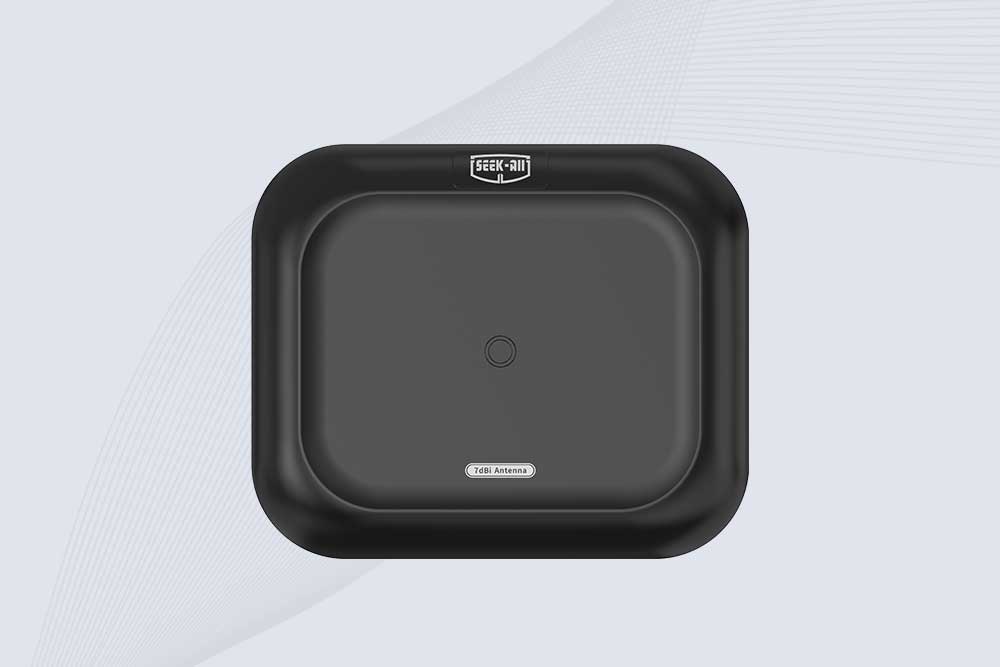
Explore the SSD-A07 UHF RFID antenna with 7 dBi gain, circular polarization, adjustable 840–960 MHz frequency, and 60°/75° beamwidth for stable RFID read/write performance.
SSD-A06 UHF RFID antenna with circular polarization, adjustable 840–960 MHz frequency, ≥4.5 dBi gain, and a compact directional design for RFID systems.
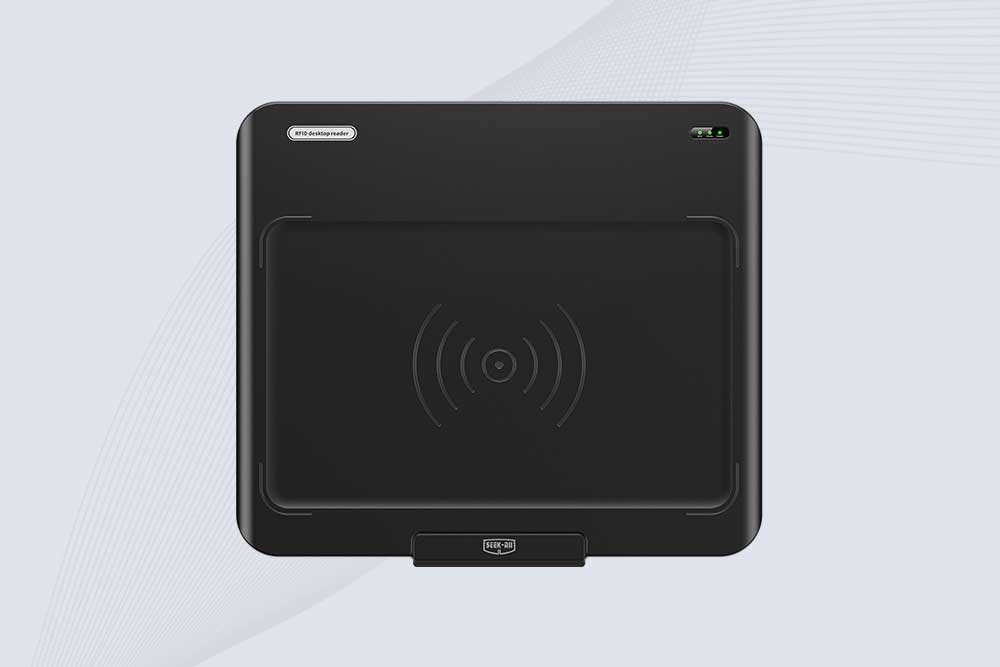
SSD-D3AL is a USB-HID UHF RFID reader with 0–30 cm reading, 0–15 cm writing, over 600 tags/s recognition, USB plug-and-play operation and OEM Logo customization.
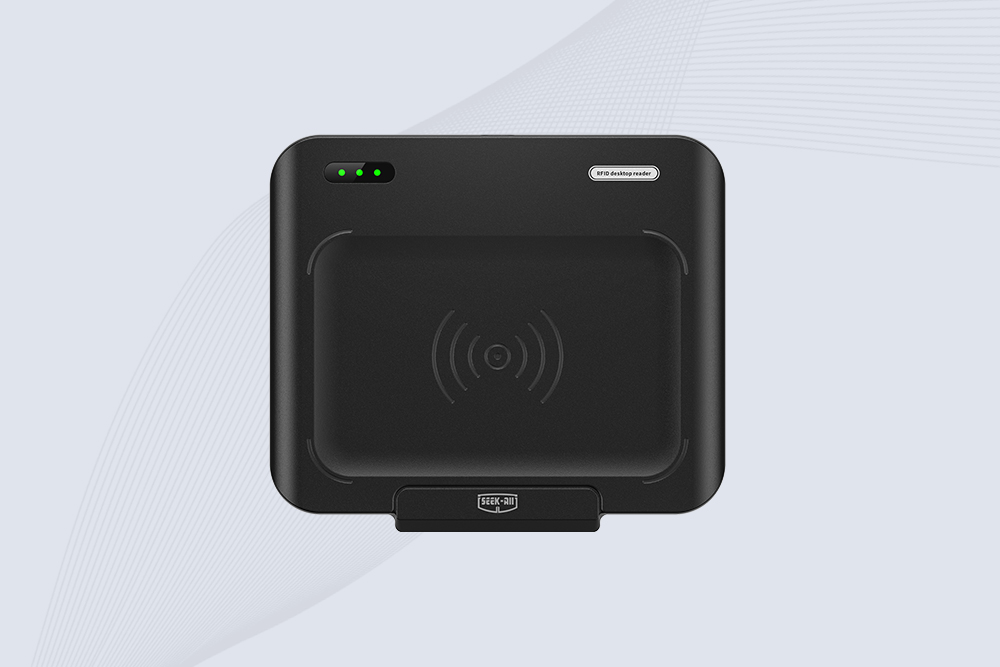
SSD-D1AL is a compact USB UHF RFID reader with Impinj E710/X3M1 chipset, USB-HID, 600+ tags/s recognition, 4/8/16 antenna support and plug-and-play USB power.
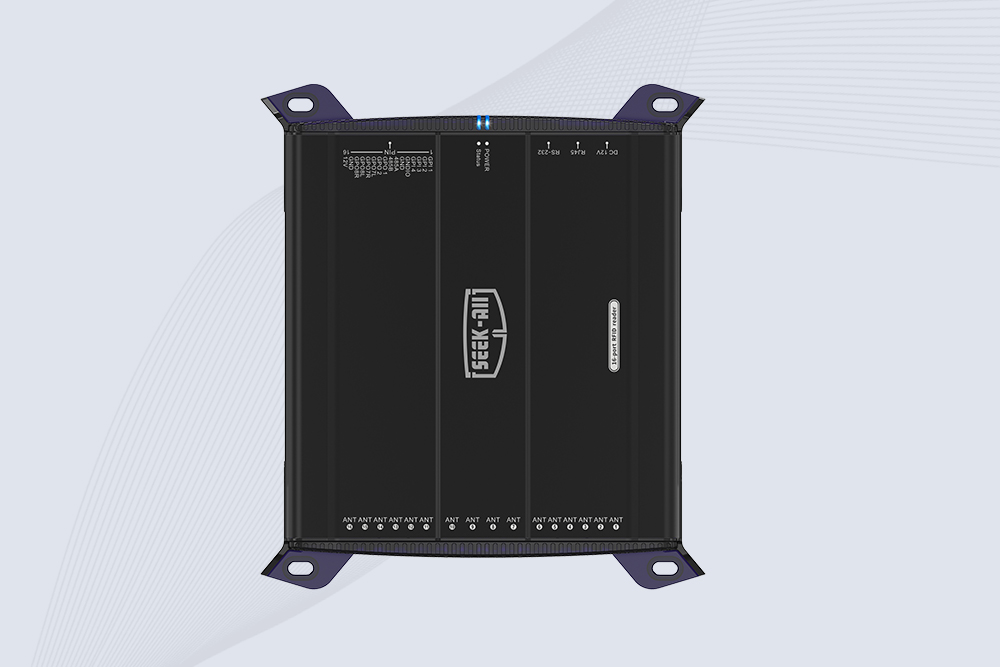
SSD-R16L Multi-Channel RFID Infrastructure for Automated Inventory Management ✔️ 16-Port High-Density RFID Reading Equipped with 16 SMA antenna ports, SSD-R16L supports multi-antenna deployment for warehouses, retail stores, logistics, production lines, and large-area RFID identification. ✔️ High-Speed & Long-Range Performance With up to 33…
SSD-R8L 8-port UHF RFID reader with 33dBm output, up to 20m reading range and 600+ tags/s recognition. Ideal for warehouse, logistics, retail and asset tracking.
CYKEO CYKEO-D1LA USB RFID Reader is a compact desktop solution with near-field control for precise tag reading and encoding. Powered by USB, supporting ISO 18000-6C, and built for stable batch writing, this usb rfid tag reader fits retail, libraries, offices, and controlled RFID encoding tasks.
CYKEO CYKEO-D1L RFID scanner USB is a compact desktop UHF RFID scanner designed for short-range tag writing and verification. This usb rfid scanner supports batch encoding, stable 0–26 dBm output, and works across Windows, Linux, and Android systems.
CYKEO CYKEO-D1C USB RFID Card Reader is a near-field UHF desktop writer designed for secure, short-range tag encoding. With USB-C connectivity and stable 26 dBm output, this rfid reader usb c is ideal for badge issuance, label encoding, and controlled desktop RFID workflows.
CYKEO CYKEO-D2L RFID Reader USB is a compact desktop encoder built on the Impinj R500 chip. With near-field control and stable USB power, this usb rfid card reader delivers precise tag writing for offices, retail counters, and small-scale logistics encoding tasks.
CYKEO CYKEO-D3L USB RFID Tag Reader delivers stable UHF tag reading and writing for daily desktop and light industrial tasks. Designed for controlled short-range operation, this USB RFID Tag Reader works reliably with rfid tag and reader systems in libraries, tool tracking, and inventory registration.
The CYKEO CYKEO-D4L UHF RFID Tag Reader is a stable Desktop RFID Reader designed for accurate tag registration, borrowing, and return workflows. Built with the Impinj R2000 chip, this UHF RFID Tag Reader delivers controlled short-range reads for libraries, asset tracking, and inventory management environments.
The CYKEO CYKEO-D5L Desktop RFID Card Reader is a stable UHF RFID Card Reader designed for controlled short-range reading and writing. Built for libraries, tool rooms, and asset desks, this UHF RFID Card Reader supports dense tag handling, secure data processing, and easy USB integration.
The CYKEO CYKEO-D6L RFID Reader Writer is a heavy-duty Desktop RFID Reader designed for short-range, high-accuracy tag programming. Built for libraries, labs, and asset desks, this RFID Reader Writer supports batch processing, stable 33dBm output, and seamless integration with existing management systems.
Cykeo CYKEO-D8A embedded RFID badge reader offers 30+ tags/sec scanning, 20cm anti-crosstalk precision, and DC 12V power for unmanned stores, warehouses, and smart inventory systems.
Cykeo’s CYKEO-D8C UHF RFID gate reader achieves 200-tag/batch scanning with adjustable power control, ideal for retail inventory and smart warehouse management.
CYKEO Passive RFID Tags are made for wet and high-humidity environments where standard labels do not last. This rfid passive tag is often used around liquids, chemicals and temperature changes, providing stable reading distance and long data life for industrial tracking.
CYKEO CYKEO-PCB1504 Metal RFID Tags is a compact anti-metal UHF RFID solution built for direct mounting on metal surfaces. With stable 8-meter read range, Ucode-8 chip, and long data retention, this rfid metal tag fits tools, containers, automotive parts, and industrial asset tracking.
CYKEO CYKEO-PCB7020 On-Metal RFID Tags are designed for reliable tracking on steel and metal surfaces. Built with an FR4 epoxy body and industrial-grade chips, these On-Metal RFID Tags deliver stable performance, long data life, and chemical resistance, making them a dependable RFID anti-metal tag for harsh environments.
The CYKEO CYKEO-60-25 Anti-Metal RFID Tag is built for metal surfaces where standard tags fail. Designed for long-range performance, harsh environments, and stable data retention, this Anti-Metal RFID Tag is ideal for industrial assets, containers, and equipment tracking using on metal RFID tags.
The CYKEO RFID Laundry Tag is designed for long-term textile identification in harsh laundry environments. Built to withstand high heat, chemicals, and repeated washing, this RFID Laundry Tag delivers stable performance for hotels, hospitals, and industrial laundry operations using laundry rfid tags at scale.
The CYKEO CYKEO-125-7 RFID Book Tag is designed for reliable book and document tracking in libraries and archives. This RFID Book Tag delivers long read range, dense placement support, and stable performance on shelves, making it a practical rfid tag on books for library automation, file management, and archival systems.
CYKEO RFID tags in hospitals are designed for sterile environments where accuracy matters. These autoclavable RFID tags support long-term tracking of surgical tools, implants, and medications, helping hospitals improve visibility, compliance, and patient safety.
CYKEO RFID Cable Tie Tag is built for reliable identification on metal surfaces. This UHF RFID Cable Tie Tag is widely used in rfid tags for inventory systems, industrial asset management and Hospital RFID Tags, offering stable read performance, long service life and global EPC Gen2 compatibility.
CYKEO RFID Asset Tag is designed for stable identification of metal assets in industrial environments. This UHF RFID Asset Tag is commonly used for rfid tag asset tracking on equipment, tools and containers, providing reliable reads, long service life and ISO/IEC 18000-6C support.
CYKEO UHF RFID Card is designed for fast identification and long-term use in industrial and commercial systems. Supporting ISO 18000-6C, this UHF RFID Card works at 860–960 MHz and is suitable for custom RFID cards used in asset tracking, access control and inventory management.
CYKEO HF RFID Cards are designed for secure and stable access control systems. These 13.56 MHz RFID key cards support ISO 14443-A, reliable rewriting and long service life, making HF RFID Cards suitable for offices, campuses, events and membership management.
CYKEO UHF RFID Tag is designed for reliable tracking of metal jewelry and high-value items. This Jewelry RFID Tag supports long-range reading up to 8 meters, anti-counterfeit protection and stable performance on metal, making it suitable for retail, inventory control and asset management.
CYKEO Embedded RFID Modules are designed for compact industrial and IoT devices that require stable UHF performance. These UHF RFID Modules support global protocols, flexible power control, and reliable multi-tag reading for smart cabinets, production lines, and asset tracking systems.
CYKEO Embedded RFID Module is built for compact IoT and industrial devices that need stable UHF performance. This UHF module supports global protocols, low power operation, and reliable multi-tag reading for smart lockers, production lines, and always-on RFID systems.
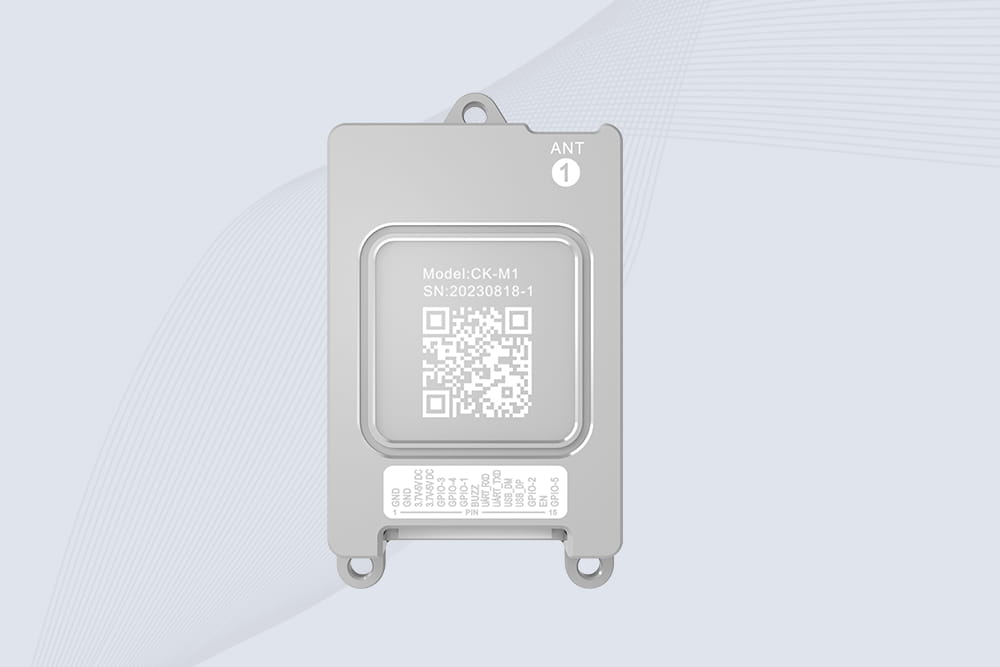
CYKEO CYKEO-M1 drone rfid module is a compact UHF RFID reader module designed for drones and UAV platforms. It supports long-range aerial scanning, fast multi-tag reading, and stable performance in wind, vibration, and outdoor environments.
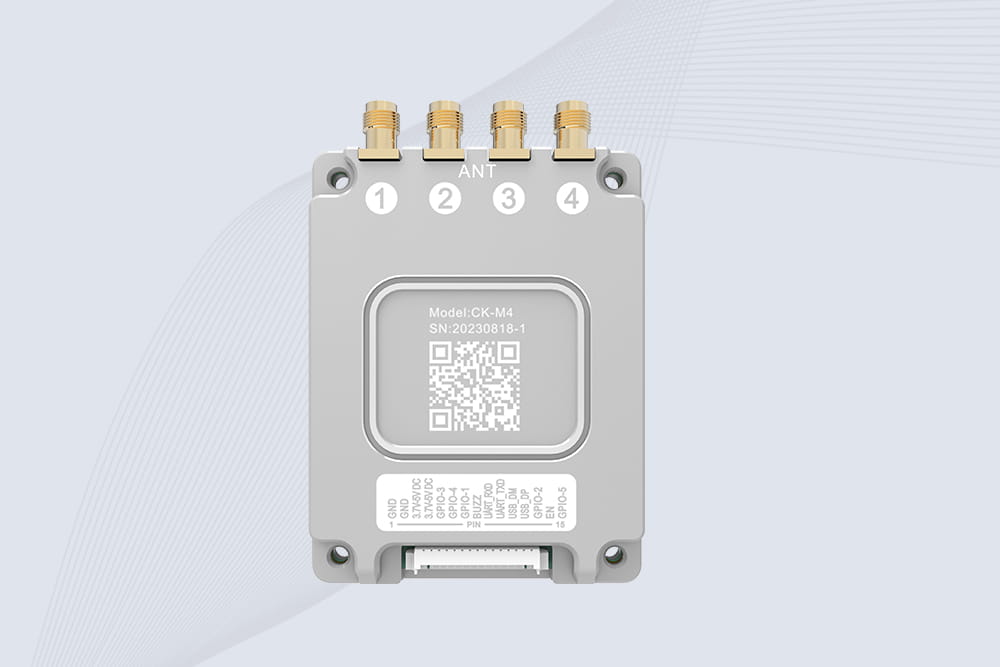
CYKEO CYKEO-M4 RC522 RFID Module is an industrial-grade UHF RFID reader with 4 ports, supporting ISO, EPC, and GB protocols. High-speed, accurate reading for IoT, automation, and warehouse applications.
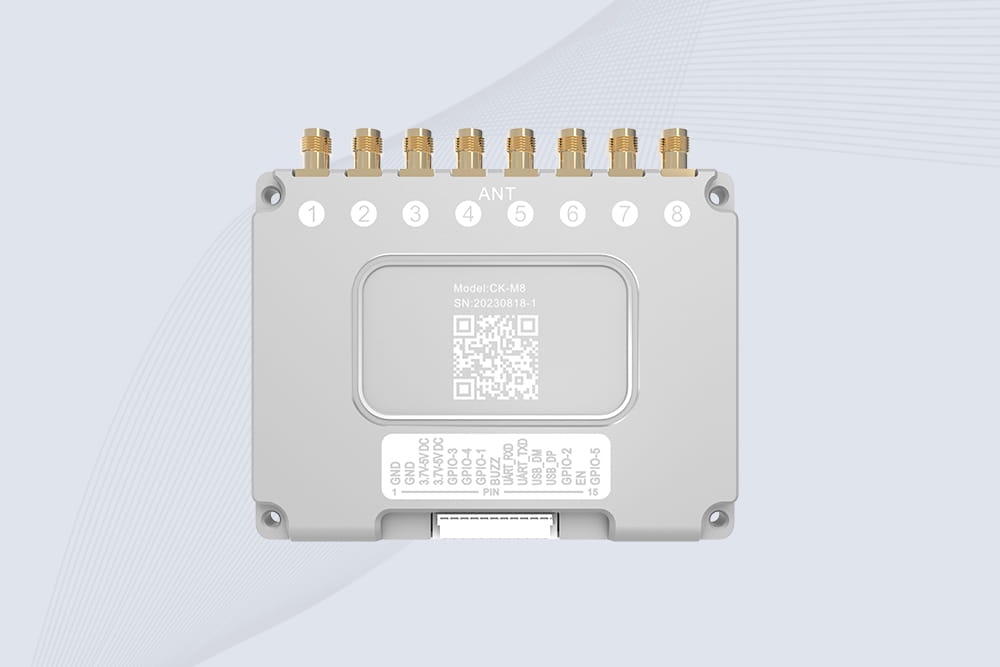
CYKEO CYKEO-M8 Module RFID is an 8-port UHF R2000 RFID Module designed for high-density, multi-tag environments. Stable 33dBm output, ISO & GB protocol support, ideal for warehouses, factories, and automated systems.
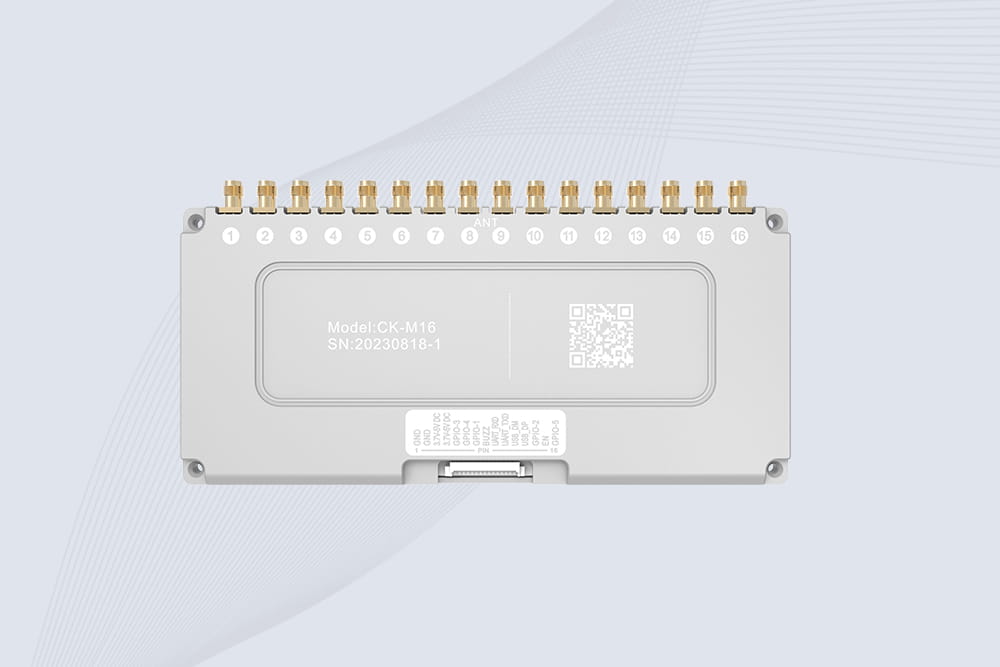
CYKEO CYKEO-M16 RFID Module is a 16-port UHF RFID reader module based on the R2000 chipset. Designed for dense tag environments, it supports ISO and GB standards and delivers stable multi-antenna control for industrial automation.
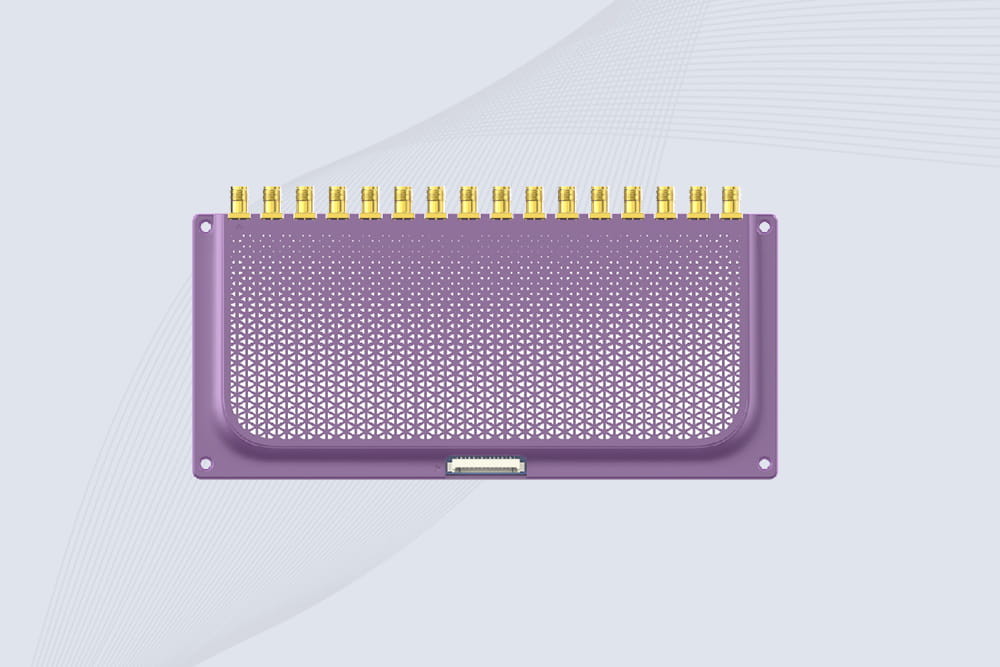
The CYKEO CYKEO-M16L RFID Reader Module is a 16-channel UHF RFID core designed for dense tag environments. With adjustable 33dBm output, multi-protocol support, and stable multi-antenna control, this RFID Tag Reader Module fits industrial automation, warehouse systems, and large-scale IoT deployments.
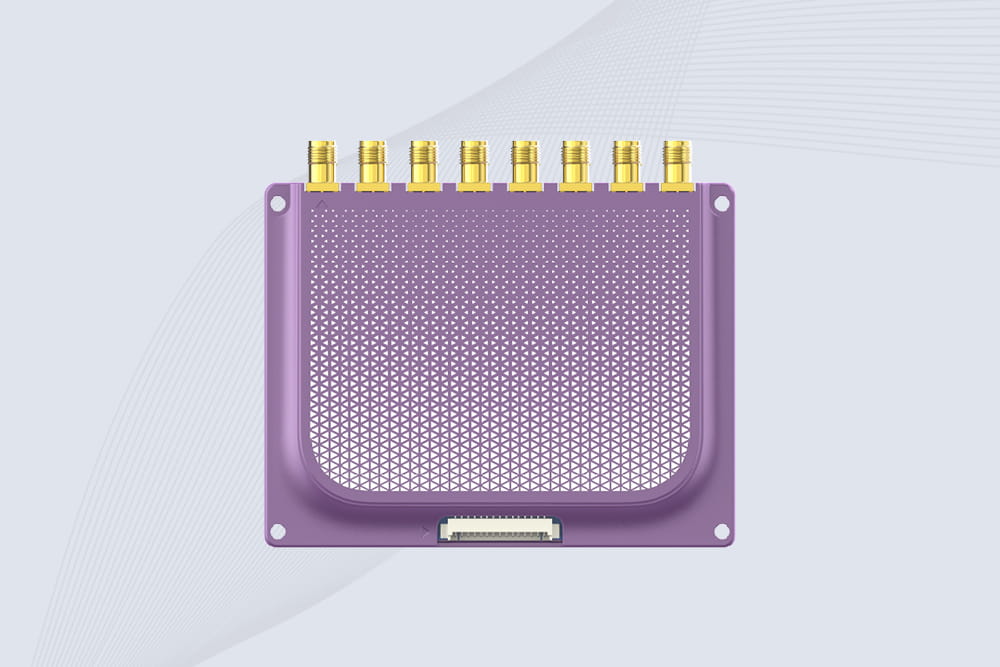
CYKEO CYKEO-M8L module RFID is a compact industrial UHF module built for dense tag and multi-antenna environments. With 8 RF ports, adjustable 33 dBm output, and ISO & GB protocol support, it is widely used in factories, warehouses, and automated tracking systems.
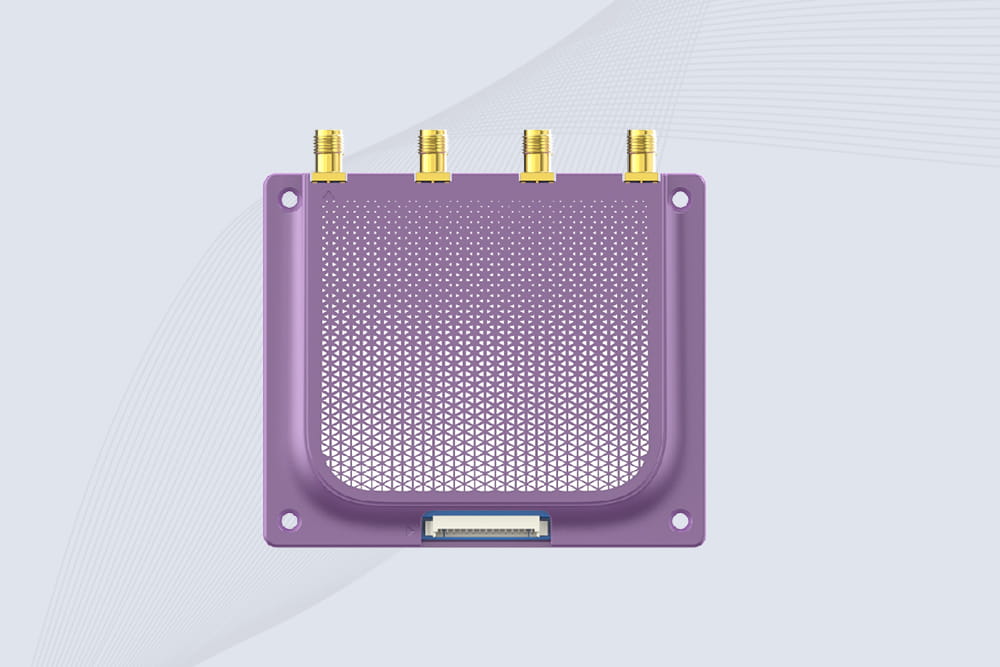
CYKEOCYKEO-M4L UHF RFID Module is a compact 4-channel RFID tag reader module designed for dense tag environments. Supporting ISO and GB protocols, it delivers stable reads up to 10 meters for industrial and IoT systems.
Cykeo CYKEO-A11 UHF RFID reader antenna delivers 11dBi gain, 840-960MHz frequency range, and IP65 ruggedness for retail, logistics, and industrial RFID systems. Features low VSWR and easy installation.
CYKEO Antenna RFID Reader delivers stable long-range UHF performance with a 10.5dBi directional design, built for warehouses, conveyor portals, and industrial RFID systems. This rfid reader antenna provides 20m+ read distance and rugged IP67 protection.
Cykeo CYKEO-A5B industrial Linear RFID Antenna delivers 5dBi gain, ≤1.5:1 VSWR, and IP65 rugged design for warehouse, production line, and logistics UHF systems.
Cykeo’s CYKEO-B12 Long Range RFID Antenna delivers 15m+ read range with 12dBi gain, IP65 rugged design, and global 840-960MHz UHF support. Ideal for warehouse/logistics asset tracking.
Cykeo CYKEO-B10 Long Distance RFID Antenna offers 10dBi gain, 840-960MHz frequency range, IP65 rating, and 20m+ coverage for logistics/warehousing/ETC systems. Low VSWR ensures stable signal transmission.
Cykeo CYKEO-A6 UHF RFID panel antenna features 6dBi gain, 840-960MHz broadband, IP65 metal-ready housing for logistics/smart retail. 18mm ultra-thin design with tool-free mounting.
Cykeo CK-A3 industrial antenna RFID UHF offers 5m+ tag detection, ≤1.3:1 VSWR, IP65 rugged design, and global UHF spectrum compatibility (840-960MHz) for warehouses, factories, and retail.
Discover how rfid tags labels improve inventory accuracy, asset visibility, and supply chain efficiency. Learn how to choose the right RFID labels with expert insights from Cykeo.
What is RFID in inventory management? Learn how RFID improves stock accuracy, real-time visibility, and warehouse efficiency with Cykeo smart inventory tracking solutions.
Discover how an rfid scanner phone works in real projects. Learn mobile scanning methods, compatibility tips, and field usage advice with CYKEO RFID solutions.
rfid stickers for inventory improve warehouse accuracy, speed, and traceability with UHF RFID technology. Discover smart inventory solutions from Cykeo.
 Cykeo RFID IoT Solution Products R&D Manufacturer