 Cykeo RFID IoT Solution Products R&D Manufacturer
Can We Build a Custom UHF or HF RFID Reader on Our Own?
1378Learn whether building a custom UHF or HF RFID reader is feasible, key challenges, and how Cykeo’s modular solutions simplify development.
MoreAll RFID Product
Transferring RFID tag data to a MySQL database involves capturing tag IDs via an RFID reader, structuring your database, and integrating middleware or scripts to automate data flow. This process is critical for asset tracking, inventory management, and real-time analytics. Here’s a detailed guide to streamline this workflow.
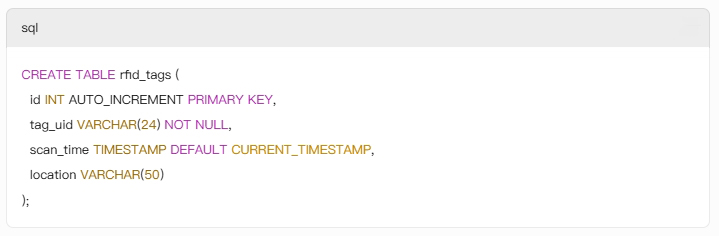
tag_uid and scan_time for faster queries.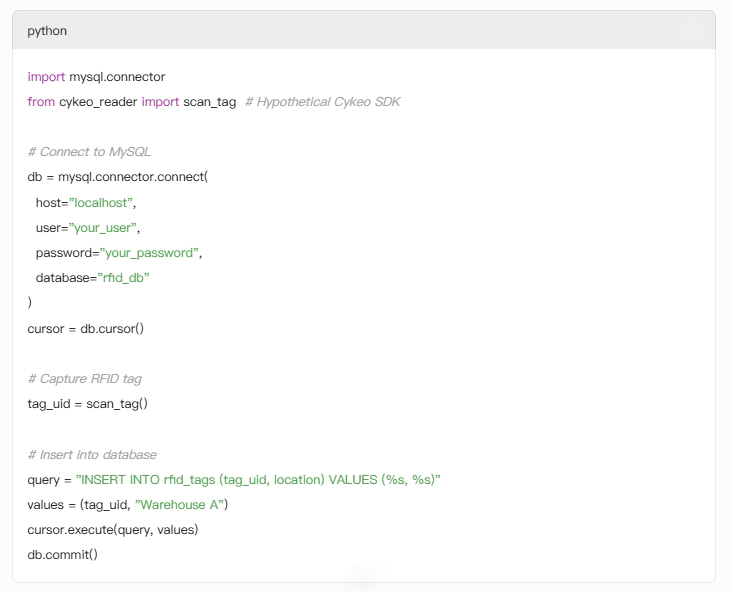
try-except blocks to log failed inserts and retry transmissions.EXPLAIN in MySQL to optimize slow queries.A manufacturing plant automated tool tracking using Cykeo’s RFID-to-MySQL pipeline, reducing audit times from 5 hours to 30 minutes with 99.9% accuracy.
Learn whether building a custom UHF or HF RFID reader is feasible, key challenges, and how Cykeo’s modular solutions simplify development.
More
Learn what is an RFID card reader, how it works for security, payments, and attendance. Discover CYKEO's reliable RFID card reader solutions.
More
Learn how to maintain and clean handheld RFID scanners to extend lifespan and ensure peak accuracy. Discover Cykeo’s durability-focused design secrets.
More
Discover budget-friendly RFID antenna strategies for small to medium businesses. Cut costs, boost accuracy, and scale your operations efficiently.
More