 Cykeo RFID IoT Solution Products R&D Manufacturer
RFID vs NFC: How to Choose the Best Wireless Technology for Your Business Needs
1176Compare RFID and NFC technologies for asset tracking, payments, and more. Discover which wireless solution fits healthcare, retail, or manufacturing.
MoreAll RFID Product
When designing an RFID system, engineers often focus on readers, tags, and software integration. But in practice, antenna polarization is one of the most overlooked factors affecting system performance. Choosing between circular and linear polarization can determine whether your RFID deployment achieves stable reads or struggles with missed tags.
For RFID solution providers, the key question isn’t simply which antenna is better—it’s which antenna fits the application environment best.
If you’re exploring antenna options, it’s useful to review the available models and specifications from professional suppliers such as this rfid antenna portfolio
Below is a practical guide to help integrators decide when to use circular polarization or linear polarization in RFID projects.
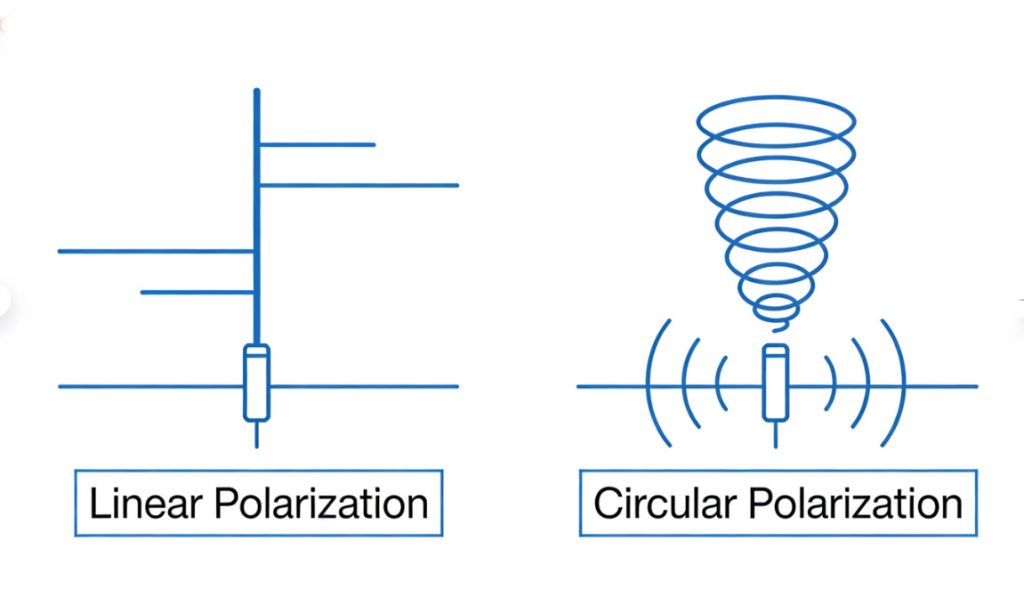
In simple terms, polarization describes the direction in which the RFID antenna emits radio waves.
There are two common types used in UHF RFID systems:
Each type creates a different electromagnetic field pattern and interacts with RFID tags differently. The impact becomes especially obvious in real-world environments such as warehouses, retail stores, or manufacturing lines.
Linear antennas transmit energy in a single plane (horizontal or vertical), while circular antennas emit RF energy in a rotating spiral pattern.
That difference may sound minor—but in RFID deployments, it directly affects read range, reliability, and installation complexity.
A linear polarized antenna radiates RF energy in one fixed plane. The RFID tag must align with that plane to achieve the strongest signal.
If the tag rotates 90 degrees relative to the antenna, the read range can drop dramatically.
This alignment requirement is both the strength and weakness of linear antennas.
Linear antennas concentrate RF energy in a single direction, resulting in higher signal strength and longer reading distance when the tag orientation matches the antenna.
Because the RF energy is focused rather than spread in multiple planes, more power reaches the tag.
Linear polarization works extremely well in scenarios where tag orientation is fixed or predictable.
Typical examples include:

If the tag orientation changes, signal mismatch occurs and reading performance declines quickly.
This is why linear antennas can struggle in environments where items are randomly positioned.
Circular polarized antennas emit RF signals in a rotating or corkscrew pattern, allowing energy to reach the tag from multiple angles.
This makes them much less sensitive to tag orientation.
Tags can be placed at almost any angle and still be read reliably.
Circular antennas often cover a wider scanning area, making them useful for portals and item-level tracking.
Installation is simpler because the antenna does not require precise alignment with tags.
This significantly reduces tuning time during system deployment.
Because RF energy is distributed across multiple planes, circular antennas generally have slightly shorter maximum read distances than linear antennas.
However, many integrators consider this a worthwhile trade-off for improved read reliability.
| Feature | Linear Polarization | Circular Polarization |
|---|---|---|
| Read Range | Longer (when aligned) | Slightly shorter |
| Tag Orientation | Must align with antenna | Works at almost any angle |
| Installation | Requires careful alignment | Easier installation |
| Read Zone | Narrow and directional | Wider coverage |
| Best Use Cases | Conveyor lines, fixed tag positions | Retail, logistics, asset tracking |
A practical rule used by many RFID engineers:
If tag orientation can be controlled, use linear polarization for maximum range.
If tag orientation varies, use circular polarization for reliability.
From a system integration perspective, the decision is usually application-driven rather than purely technical.
Examples:
Examples:
In complex environments, a multi-antenna setup often delivers the best results.
Instead of relying on a single antenna type, many deployments combine several antennas positioned at different angles to eliminate blind spots and improve read reliability.
Selecting the right antenna model—such as high-gain panel antennas, near-field antennas, or compact industrial antennas—is equally important.
You can explore different antenna types and specifications here
There is no universal “best” RFID antenna polarization.
For RFID solution providers, the best approach is to evaluate:
When these factors are considered early in the design phase, antenna selection becomes far easier—and system performance improves dramatically.
Related products
Guide Recommendations
rfid antenna installation guide
A Practical Guide to Antenna RFID Linear: What You Should Really Know
What is an RFID Antenna? (Hint: It’s the Most Important Piece You’ll Buy)
Do RFID Readers Require Antenna? Here’s What Actually Works
RFID Antenna Installation Guide
Para Que Sirve una RFID Antenna Coil: Explicación Sin Tecnicismos
What Antenna Types Maximize Performance for Long-Range RFID Readers?
What is RFID Reader Antenna? (And No, It’s Not the Same Thing)
RFID Antenna Design Unpacked: Theory · Practice · Lessons Learned
Can an RFID Reader Detect the Distance Away the RFID Tag Is?
Para qué sirve RFID antenna coil: La espiral que te abre puertas (literalmente)

Compare RFID and NFC technologies for asset tracking, payments, and more. Discover which wireless solution fits healthcare, retail, or manufacturing.
More
As technology continues to advance, Radio Frequency Identification (RFID) technology has found applications across various fields. In identity verification, RFID offers unique advantages, providing innovative solutions for safeguarding privacy and...
More
Learn what is a rfid reader, how RFID readers communicate with tags, and how Cykeo RFID technology improves tracking, automation, inventory, and asset management.
More
Learn how to make an RFID reader with Arduino that actually works. Our hands-on tutorial covers RC522 wiring, library setup, and fixing "tag not found" errors.
More