 Cykeo RFID IoT Solution Products R&D Manufacturer
how rfid tags work: A Practical Explanation from the Field
138Learn how rfid tags work using radio waves to transmit data wirelessly, enabling fast, accurate asset tracking across retail, logistics, and industry.
MoreAll RFID Product
Can aluminum foil block RFID? Yes, aluminum foil can reduce or block some RFID signals by creating electromagnetic shielding, but the effectiveness depends on RFID frequency, foil coverage, tag type, and reader power.
RFID blocking is often discussed in everyday situations, especially around contactless cards, passports, and access credentials. However, professional RFID engineers look at the problem differently.
The question is not only whether aluminum foil blocks RFID. The real question is: what type of RFID system is being blocked, under what conditions, and how much signal reduction is required?
At Cykeo, our RFID engineers test different materials, tag types, and operating environments during solution development. In industrial projects, we frequently evaluate interference caused by metal shelves, machine housings, packaging materials, and surrounding equipment.
A simple sheet of aluminum foil may affect a nearby RFID card, but industrial UHF RFID systems operating hundreds of tags at several meters distance require much more precise shielding design.
According to National Institute of Standards and Technology (NIST), electromagnetic shielding effectiveness depends on material properties, frequency, thickness, and enclosure design. This explains why different RFID systems respond differently to metal barriers.
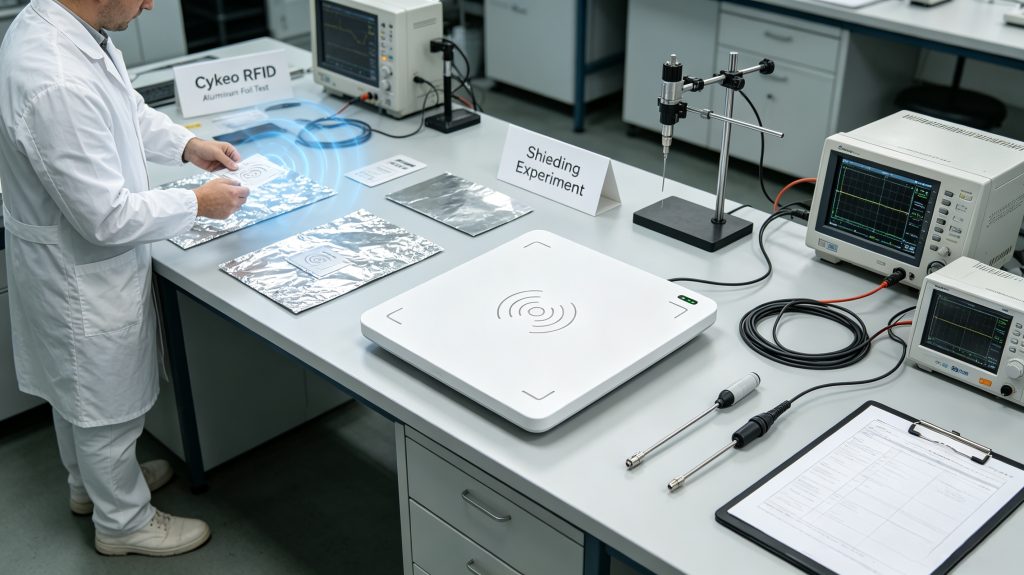
RFID communication depends on radio frequency energy traveling between a reader and a tag.
When aluminum foil is placed between them, several effects may occur:
| Effect | Result |
|---|---|
| Signal reflection | Radio waves bounce away from the material |
| Signal absorption | Energy is reduced before reaching the tag |
| Field distortion | RFID communication becomes unstable |
Aluminum is conductive, which allows it to interact with electromagnetic fields.
However, RFID frequencies are different:
| RFID Type | Frequency | Effect of Aluminum Shielding |
|---|---|---|
| LF RFID | 125–134 kHz | Usually requires specific shielding design |
| HF RFID | 13.56 MHz | Can be affected by metal barriers |
| UHF RFID | 860–960 MHz | Requires careful shielding because of longer range |
A thin aluminum foil layer may block a nearby HF RFID card in a wallet, but it does not automatically stop every RFID system.
UHF RFID systems are commonly used in:
These systems usually operate between 860 MHz and 960 MHz.
In industrial environments, RFID readers may use higher output power and specialized antennas.
For example, Cykeo UHF RFID readers can support high-performance identification scenarios where multiple tags must be recognized quickly.
In these situations, effective shielding requires:
A temporary aluminum foil barrier may reduce reading performance, but it is not equivalent to a professionally engineered RFID shielding cabinet or protected reading zone.
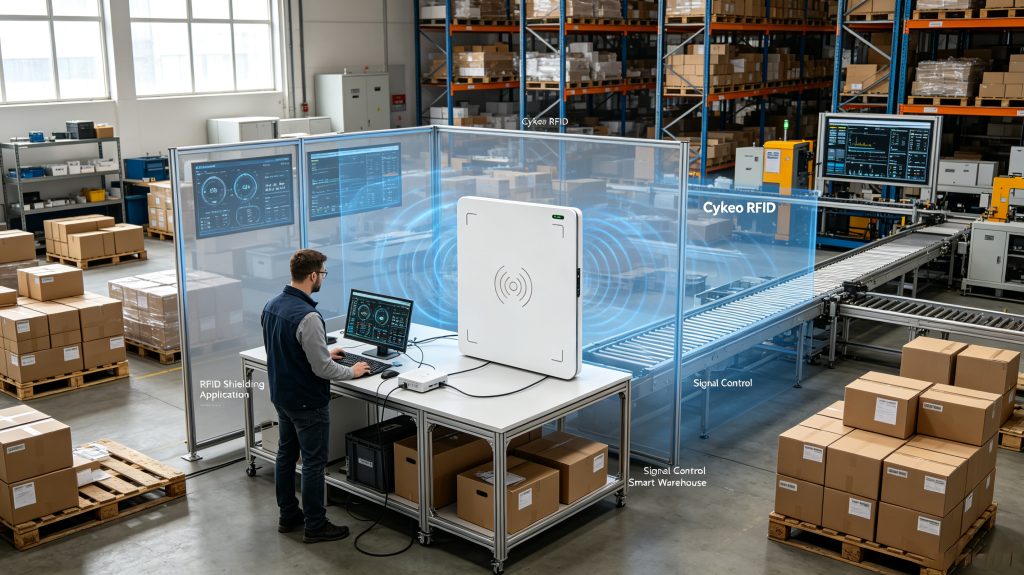
People usually use aluminum foil for simple RFID protection experiments involving:
The principle is straightforward: reducing communication between the RFID chip and external readers.
However, consumer protection and industrial RFID management have different goals.
A wallet designed for RFID protection aims to reduce unauthorized scanning.
An industrial RFID system aims to achieve reliable identification.
These two situations require completely different engineering approaches.
| Material | RFID Blocking Performance | Typical Use |
|---|---|---|
| Aluminum foil | Basic temporary shielding | Small experiments |
| Conductive fabric | Better flexible shielding | RFID wallets |
| Metal enclosure | Strong shielding | Industrial applications |
| Engineered RF shield | Controlled protection | Testing environments |
Professional RFID systems require predictable performance.
During Cykeo product testing, engineers evaluate:
The goal is not simply blocking RFID signals. The goal is controlling where RFID communication happens.
In practical RFID projects, metal is often considered a challenge rather than a solution.
A warehouse customer once asked why RFID tags near metal racks performed differently from tags placed on cardboard boxes.
The reason was not that RFID technology failed.
The surrounding material changed the electromagnetic environment.
Metal surfaces can reflect signals, create dead zones, or alter antenna performance.
This is why professional RFID deployment includes:
A good RFID system is designed around real-world physics.
No. Aluminum foil can reduce RFID communication, but complete blocking depends on frequency, thickness, coverage, and system design.
It may reduce communication with some contactless cards when fully enclosed, but dedicated RFID blocking products are designed specifically for this purpose.
It can interfere with UHF signals, but industrial UHF RFID systems usually require engineered shielding solutions.
Metal changes electromagnetic field behavior by reflecting and absorbing radio frequency energy.
Can aluminum foil block RFID? Aluminum foil can interfere with RFID signals, but its effectiveness depends on the RFID frequency, application environment, and shielding design.
From consumer RFID protection to industrial inventory systems, understanding electromagnetic behavior is more important than simply adding a metal layer.
Cykeo develops RFID solutions based on real application testing, helping companies achieve accurate identification while managing complex signal environments.
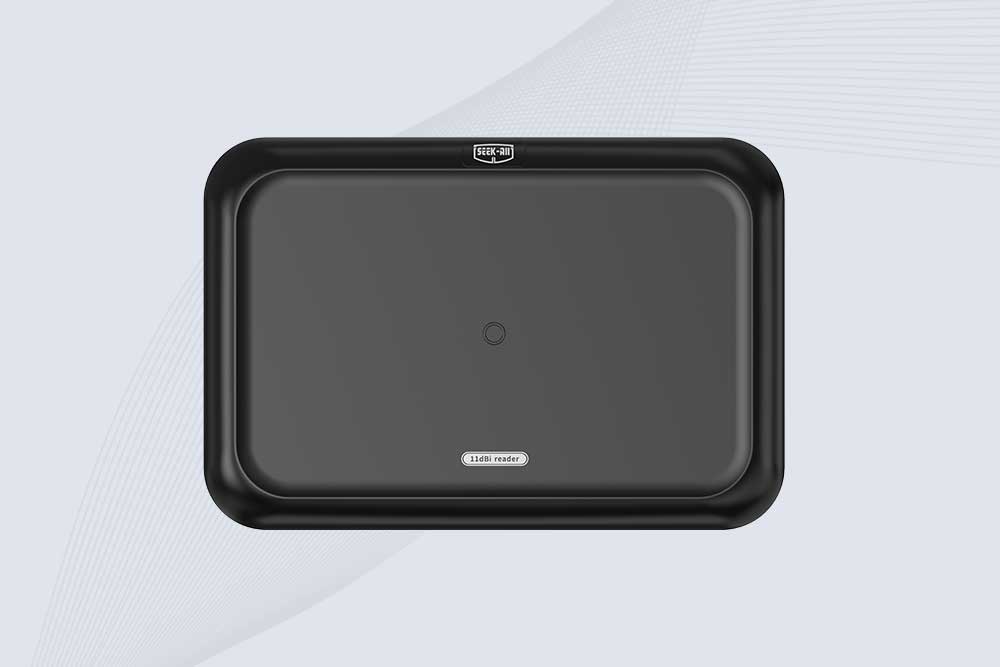
SSD-RA11L is an 11 dBi UHF RFID reader with up to 15m reading distance, 600+ tags/s speed, integrated antenna and flexible connectivity.
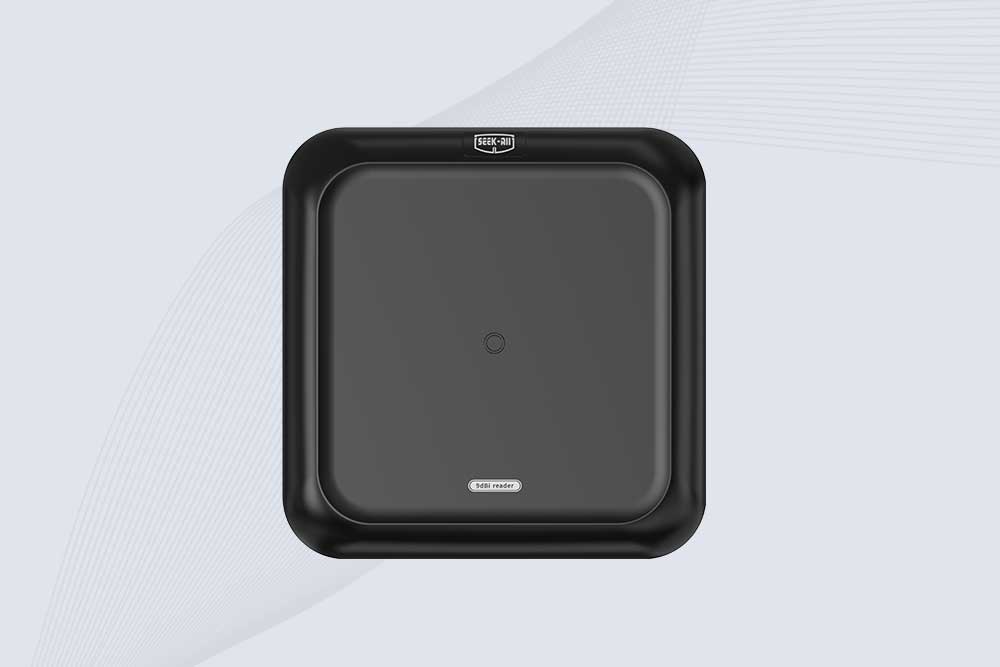
SSD-RA09L is a long range UHF RFID reader with a built-in 9 dBi antenna, 10m reading range, 600+ tags/s speed and flexible interfaces.
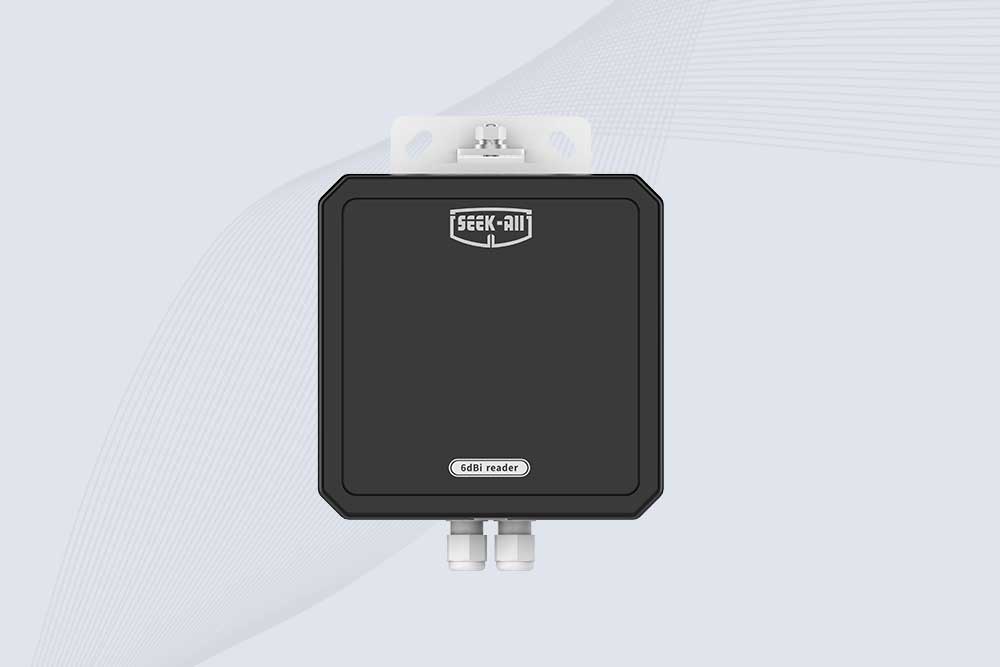
SSD-RA06L is an industrial UHF RFID reader with a built-in 6 dBi antenna, 3 m read range, 600+ tags/s, Ethernet, RS232, and optional Wi-Fi, 4G, and PoE.
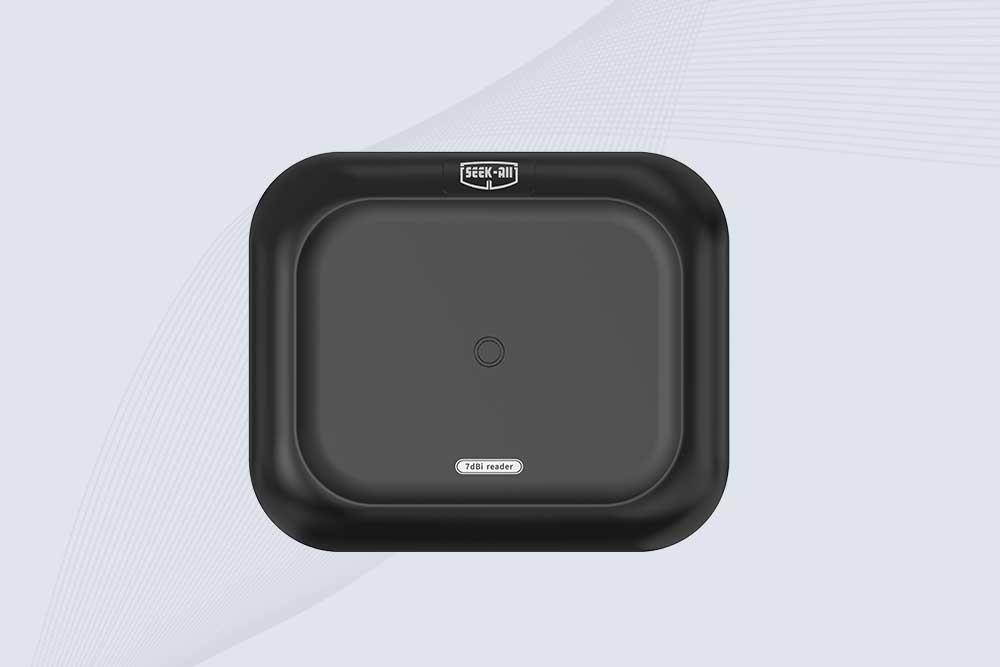
SSD-RA07L industrial UHF RFID reader with integrated 7 dBi antenna, up to 6 m reading distance, over 600 tags/s, Ethernet, RS232, and optional Wi-Fi, 4G, and PoE.
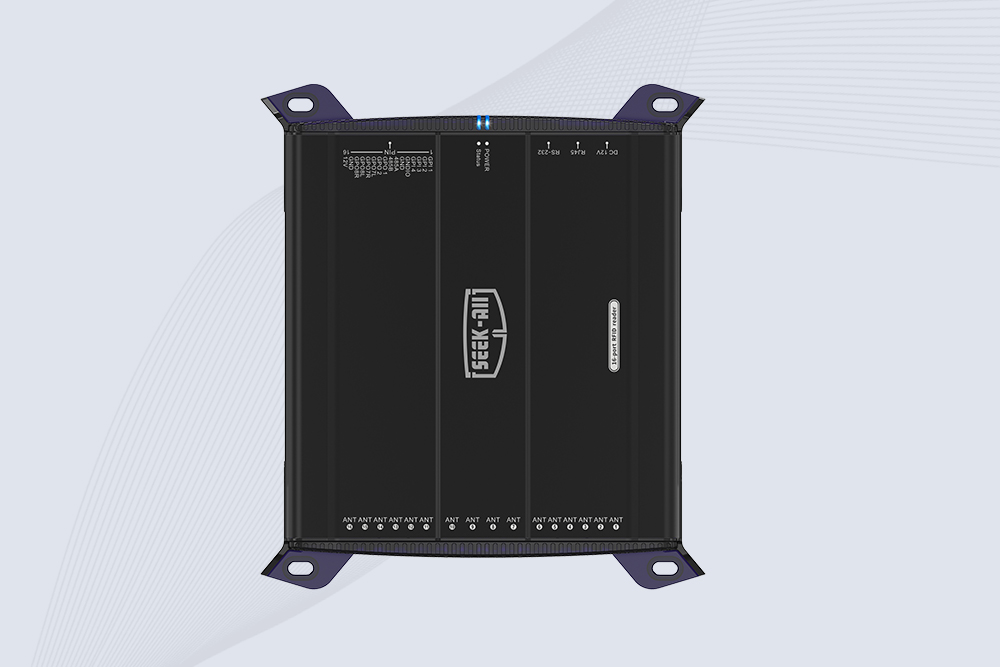
SSD-R16L Multi-Channel RFID Infrastructure for Automated Inventory Management ✔️ 16-Port High-Density RFID Reading Equipped with 16 SMA antenna ports, SSD-R16L supports multi-antenna deployment for warehouses, retail stores, logistics, production lines, and large-area RFID identification. ✔️ High-Speed & Long-Range Performance With up to 33…
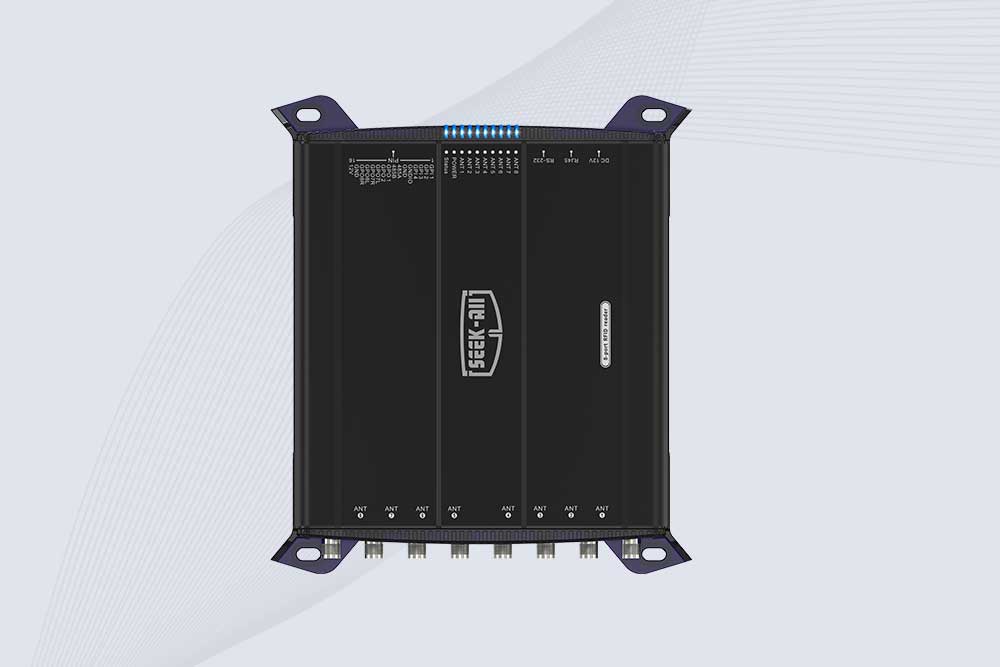
SSD-R8L 8-port UHF RFID reader with 33dBm output, up to 20m reading range and 600+ tags/s recognition. Ideal for warehouse, logistics, retail and asset tracking.
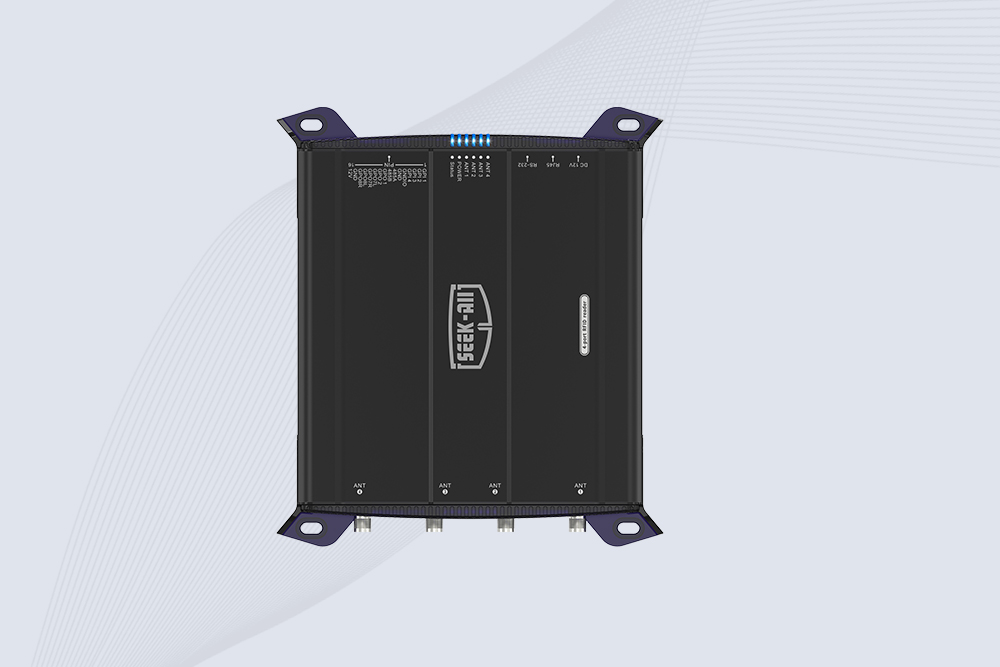
SSD-R4L is a 4-port UHF RFID fixed reader with 33dBm output power, up to 20m reading range, EPC C1G2 support and 600+ tags/s reading speed.
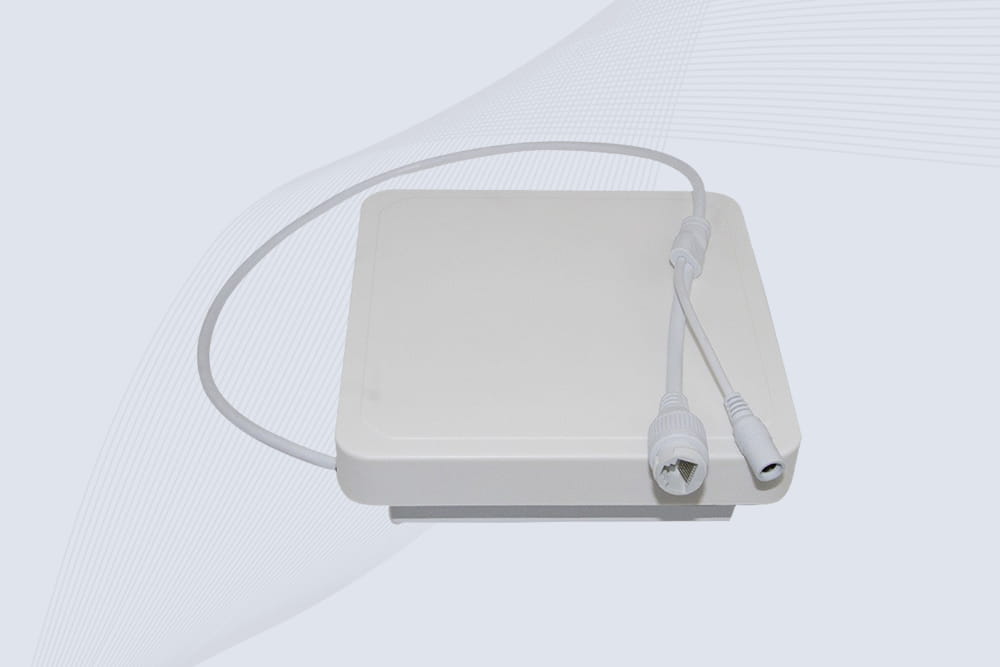
Cykeo’s industrial long range RFID reader delivers 20-meter scanning, 500+ tags/sec speed, and IP67 waterproof design for automated warehouses, logistics, and harsh environment applications.
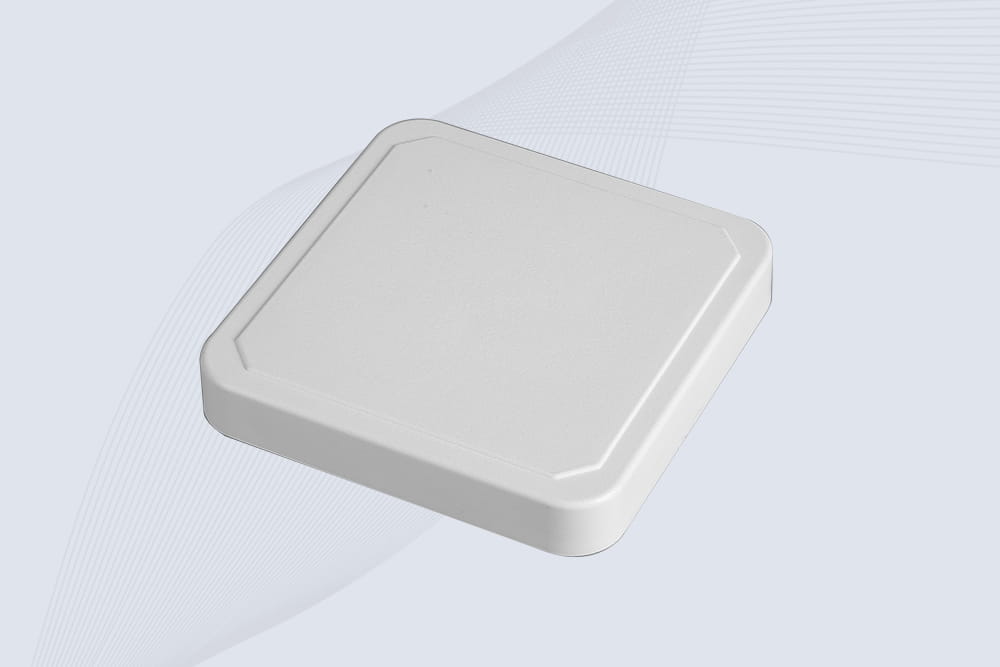
Cykeo’s CYKEO-RA6L industrial RFID long range reader features 20m read distance, 500 tags/sec speed, and IP67 protection. Ideal for warehouse automation, manufacturing WIP tracking, and smart logistics. Supports ISO 18000-6C/6B protocols.
CYKEO Long Range RFID Tag Reader built for outdoor and industrial operations. This Outdoor RFID Reader delivers 20m read distance, fast tag processing, and IP67 durability for wide-area tracking.
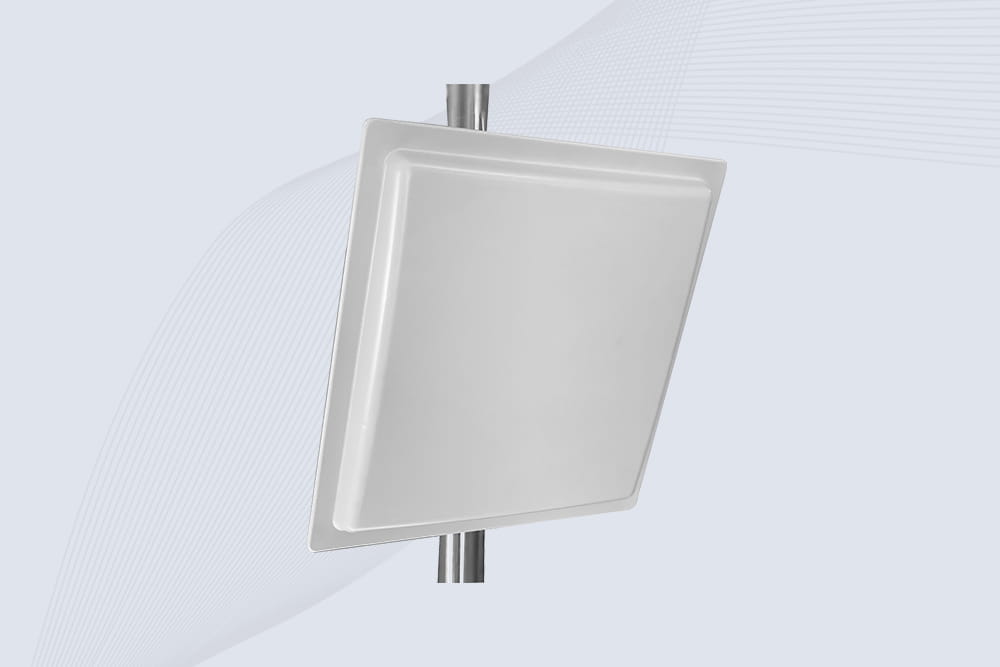
Cykeo CYKEO-RA12L industrial Long Range RFID Reader delivers 20m read range, 200+ tags/sec scanning, and IP67 protection for manufacturing/logistics applications. Supports ISO 18000-6C/GB protocols.
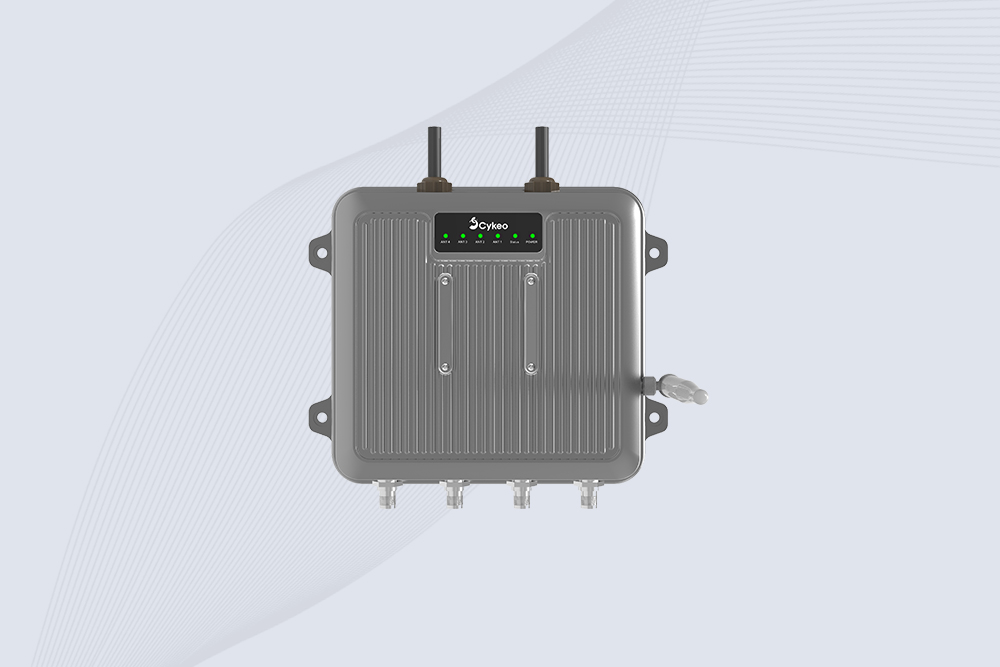
Cykeo CYKEO-C1 industrial Forklift RFID Reader features 20m read range, 600 tags/sec scanning, Impinj R2000 chipset, and IP67 rugged design. Ideal for warehouse logistics and manufacturing. Supports ISO 18000-6C/6B protocols.
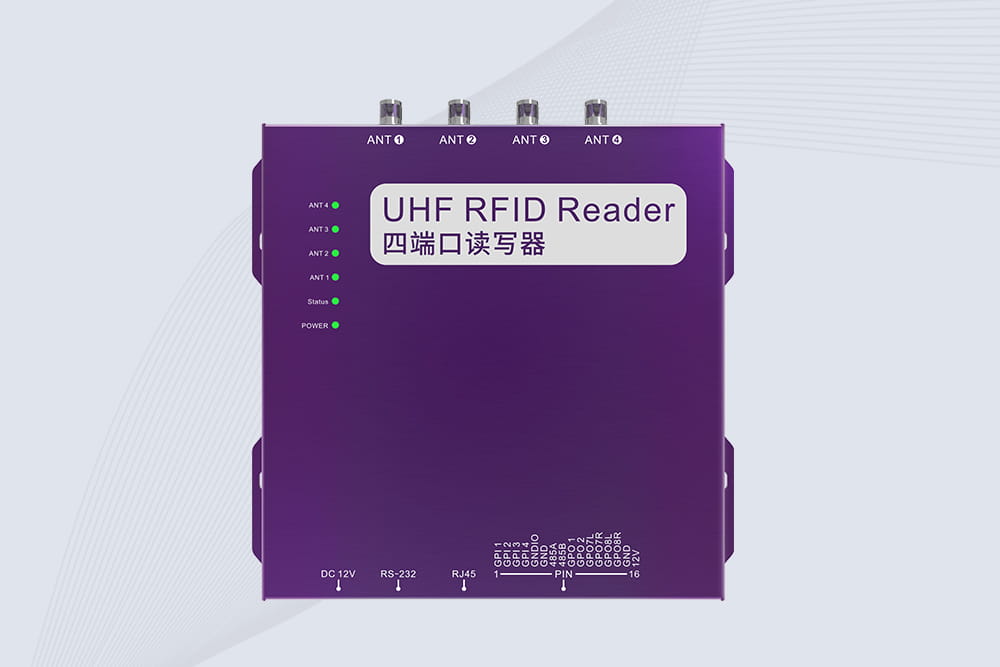
Cykeo CYKEO-R4 industrial UHF RFID Fixed Reader features 4 TNC ports, 400+ tags/sec speed, IP67 housing, and global frequency compliance for vehicle inspection, smart warehouse, and asset management systems.
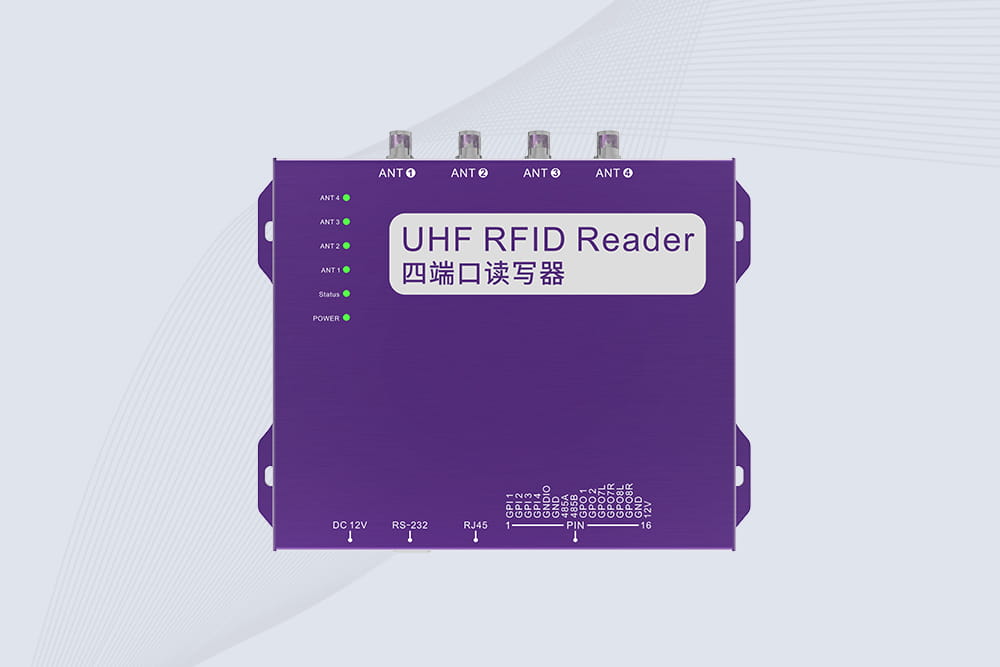
Cykeo’s CYKEO-R4L 4-port Fixed UHF RFID Reader delivers 400 tags/sec scanning, ISO 18000-6C compliance, and IP65 protection. Ideal for warehouse automation, manufacturing WIP tracking, and logistics management.
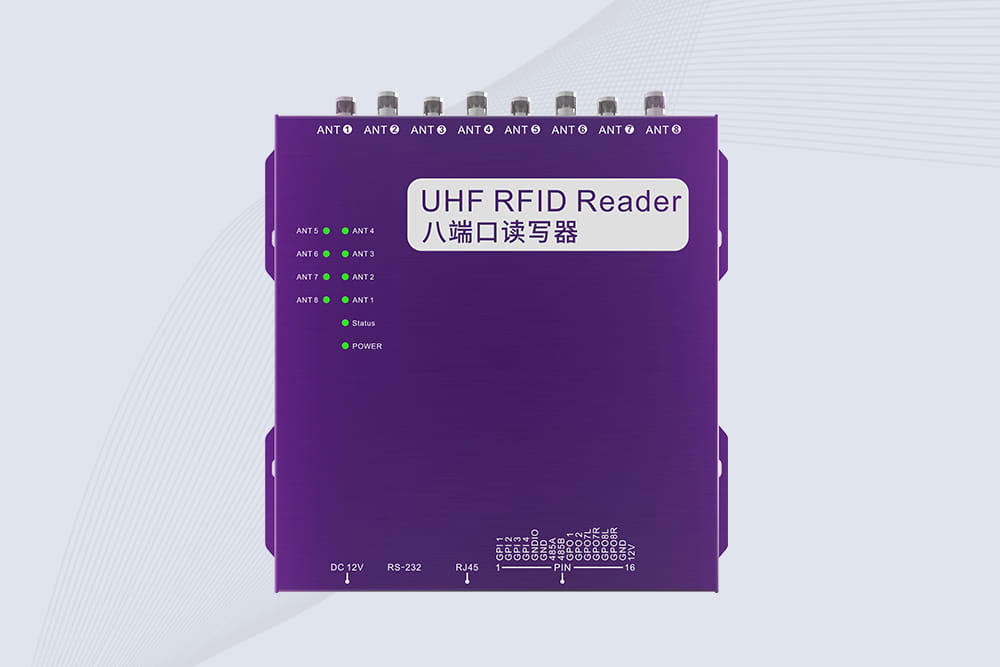
CYKEO CYKEO-R8L Fixed RFID Reader with 8-port UHF design, Impinj-based RF core and up to 20m read range. An industrial Fixed RFID Reader for vehicle inspection, warehouse portals, smart manufacturing lines and secure access checkpoints.
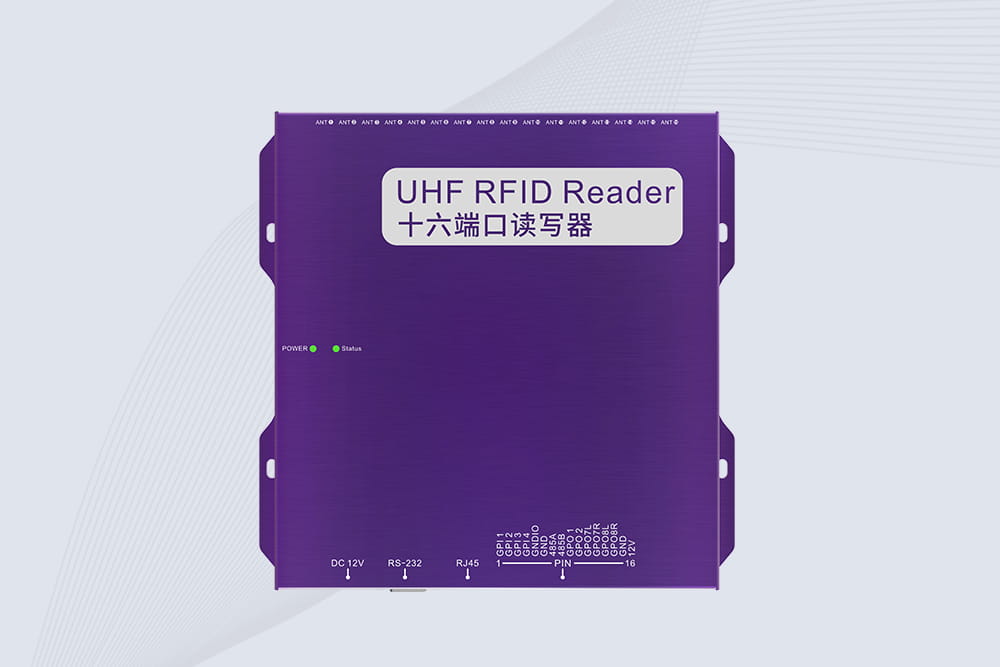
RFID Fixed Reader from CYKEO – the CYKEO-R16L 16-port UHF fixed reader for warehouses, smart cabinets, and production lines. Long-range, multi-tag reading, stable performance for 24/7 industrial use.

Learn how rfid tags work using radio waves to transmit data wirelessly, enabling fast, accurate asset tracking across retail, logistics, and industry.
More
Learn how to connect fixed RFID readers to SAP ERP for real-time inventory updates. Explore middleware, API integration, and data mapping best practices.
More
Wondering "how far away read RFID"? Discover exact read distances for LF, HF, UHF, and active tags. Factors affecting range and real-world performance with CYKEO.
More
Learn how does a rfid chip work through wireless identification technology, RFID communication principles, and Cykeo solutions for smart asset tracking.
More