When I first got into RFID antenna design, I thought it was as simple as “draw a copper trace, pick a frequency, tweak a little.” My first prototype PCB looked fine in the lab, but once deployed on-site, the read range was instantly cut in half. Only later did I realize that between textbook formulas and the real world lies a battlefield of electromagnetic interference, material tolerances, and soul-crushing tuning sessions.
2. Start with Frequency and Application Scenario
There’s no one-size-fits-all RFID antenna. You start by selecting the operating band (HF, UHF, or microwave), then reverse-engineer the antenna type based on the application. For example, a UHF system for warehouse shelving often works better with directional antennas, while access control or library inventory might require near-field antennas.
In one project, I completely overlooked reflections from metal shelving—tag detection rates plummeted. I ended up adding absorbing materials to patch the problem, but it was an expensive lesson.
3. Impedance Matching: The Life-or-Death Line
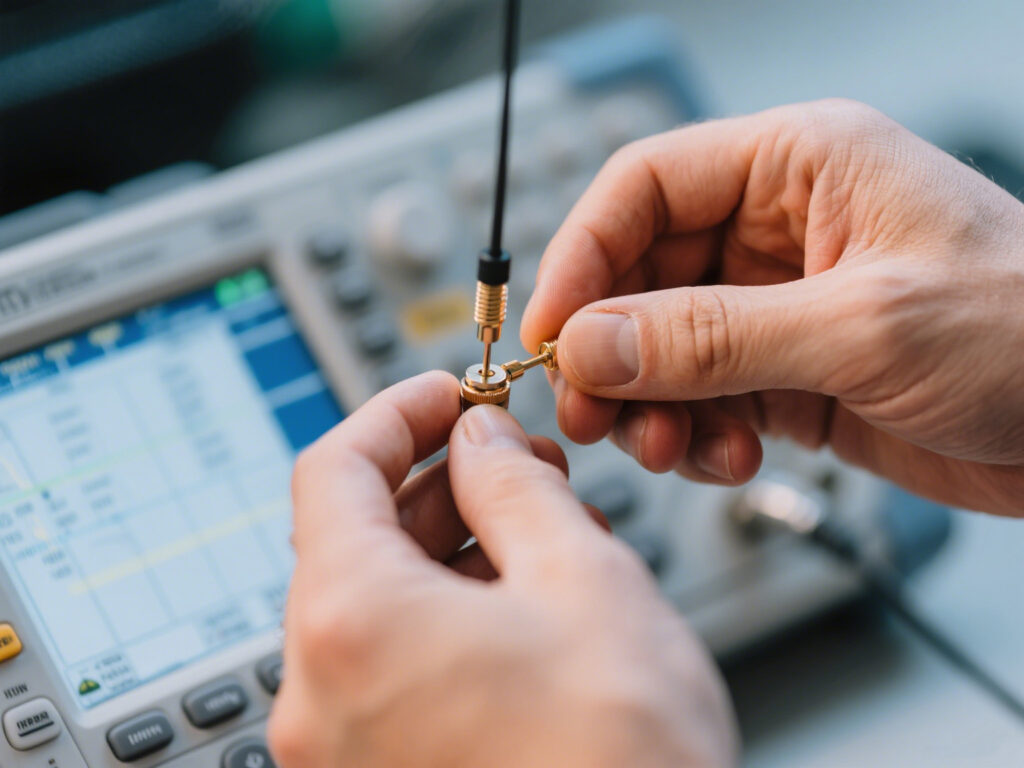
Many beginners ignore impedance matching between the antenna and chip (or reader). That magic “50 Ω” isn’t set in stone—once antenna geometry, PCB dielectric constant, or soldering quality changes, the matching point drifts. I always sweep the S11 curve with a VNA to locate the resonance point, then fine-tune with small capacitors or by trimming copper traces. It’s like peeling a potato—cut too much, and you have to start over.
4. Material Choices and Manufacturing Details
Different substrates (FR4, Rogers, etc.) greatly impact frequency stability. FR4 is cheap but has noticeable loss at UHF, making it better for cost-sensitive projects with modest range requirements. High-performance substrates are painfully expensive, but worth it in high-speed, multi-tag environments. During manufacturing, copper thickness, etching precision—even silkscreen ink thickness—can cause small but deadly deviations.
5. Field Testing Is the Ultimate Judge
Lab conditions only prove your antenna might be perfect in a vacuum. In the real world—full of metal, water, and temperature swings—performance can change instantly.
I usually bring two sets of gear to the site: a standard reader for baseline testing, and a portable VNA for quick adjustments. When fine-tuning range, I mark distances directly on the floor with a marker pen to avoid “eyeball illusions” messing with my judgment.
6. Common “Traps” in Design
Over-chasing gain: Pushing gain too high can hurt near-field performance.
Ignoring polarization: Wrong polarization can make tags seem to “vanish.”
Skipping regulatory checks: Different countries have power and frequency limits—ignore them, and you might fail certification entirely.
7. My Takeaway
RFID antenna design is a constant balancing act between formulas, hands-on experience, and real-world fieldwork. Simulation can give you gorgeous curves, but the real project success often comes down to a screwdriver on-site, a last-minute copper trim, and your willingness to squat between warehouse shelves for hours.
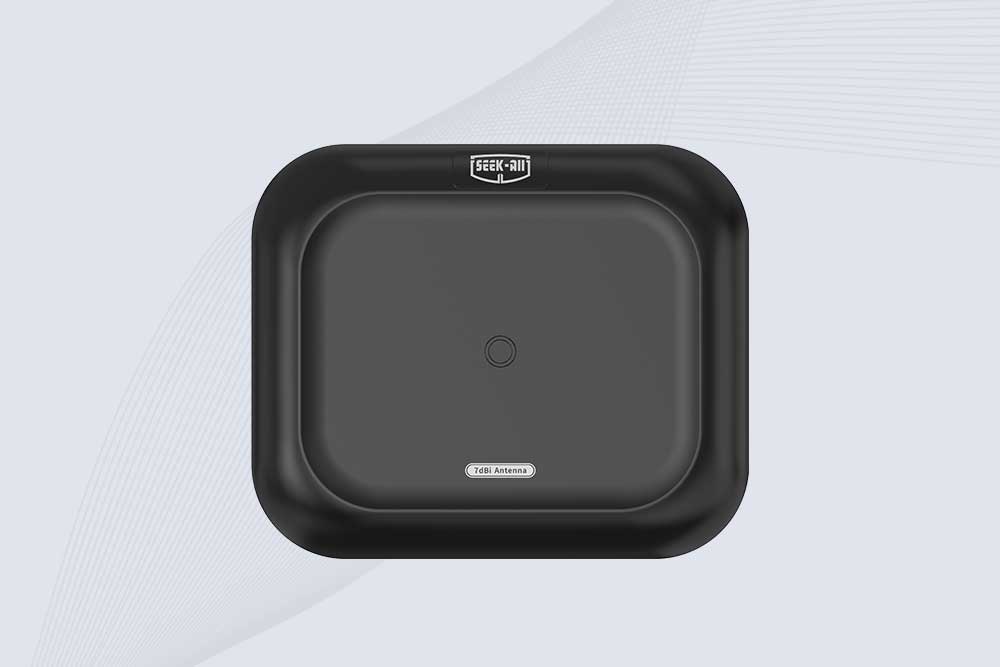
Explore the SSD-A07 UHF RFID antenna with 7 dBi gain, circular polarization, adjustable 840–960 MHz frequency, and 60°/75° beamwidth for stable RFID read/write performance.
SSD-A06 UHF RFID antenna with circular polarization, adjustable 840–960 MHz frequency, ≥4.5 dBi gain, and a compact directional design for RFID systems.
Why RFID parking systems sometimes only read 3 meters while others reach 10–12 meters? A practical breakdown for system integrators and solution providers covering reader power, antenna gain, tag quality, and real installation conditions.
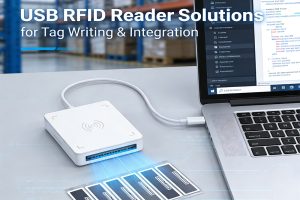
how USB RFID Readers with open SDK support streamline RFID tag writing, batch encoding, and system integration. Perfect for solution providers, developers, and warehouse automation.
RFID in supply chain management uses radio waves to identify and track products, pallets, cartons, and assets. It improves inventory visibility, shipment ver...
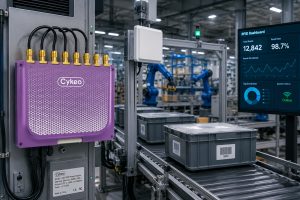
RFID reader module solutions enable seamless RFID integration for manufacturing, logistics, asset tracking, and IoT applications.Learn how Cykeo RFID reader modules improve data capture accuracy and automation efficiency.
 Cykeo RFID IoT Solution Products R&D Manufacturer