 Cykeo RFID IoT Solution Products R&D Manufacturer
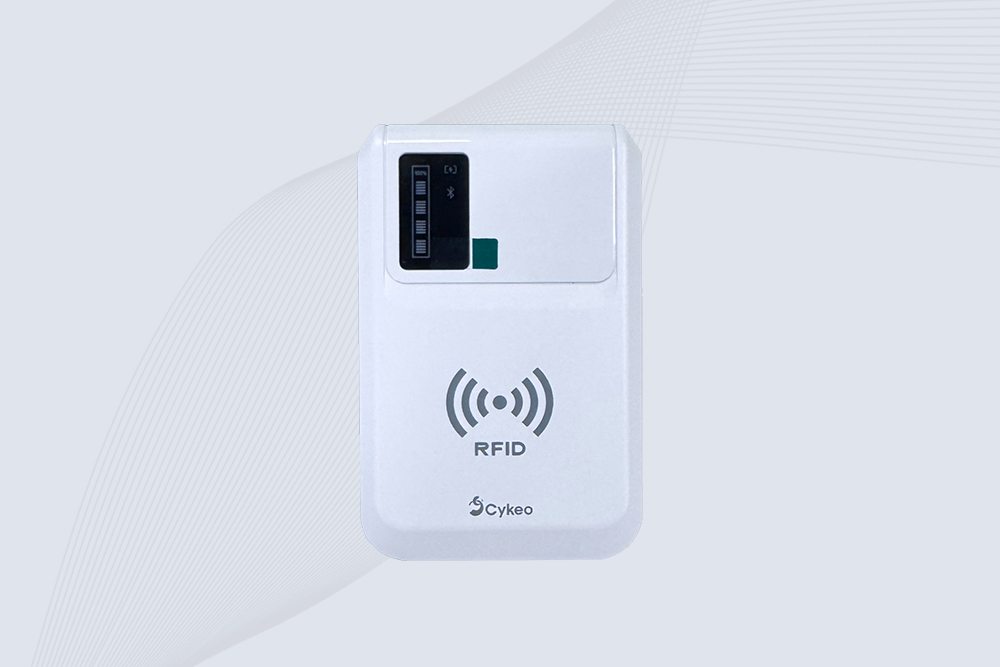
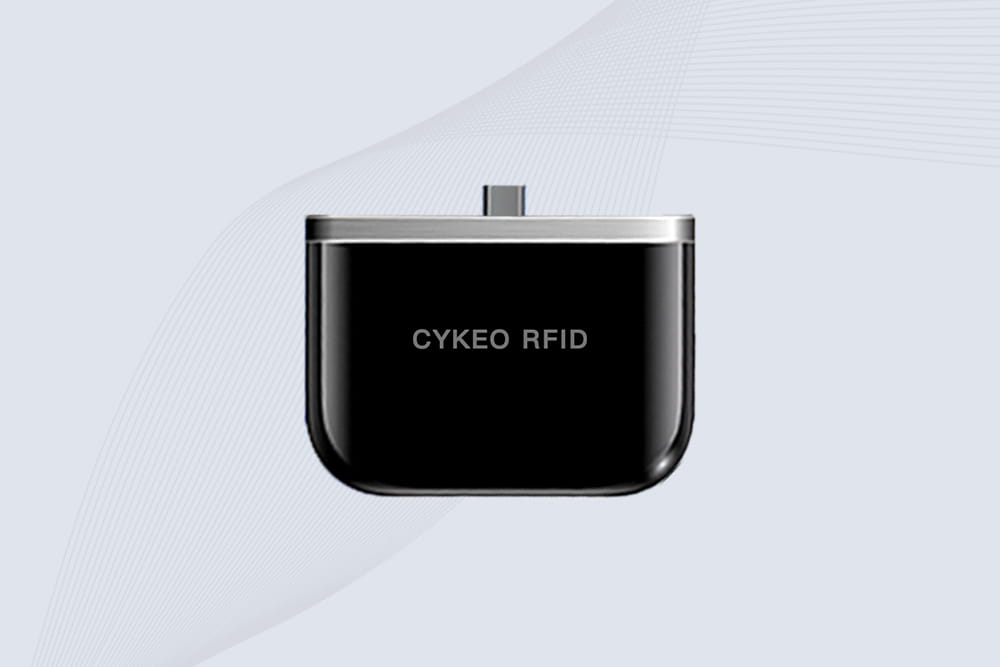
How Does RFID Asset Tracking Work?
904Learn how RFID asset tracking works, its key components, and benefits for industries like healthcare, logistics, and manufacturing. Explore Cykeo’s tailored solutions.
MoreAll RFID Product
You’re in a clean room, trying to verify a tray of surgical tools before an operation. You wave your standard RFID reader, and it beeps for everything—the tray you want, plus the three next to it. The data is useless. That daily frustration is exactly why we started working with a meander line UHF RFID reader antenna for near-field applications. It’s not about reading farther; it’s about reading smarter and more precisely when items are packed tight.
Think of a typical UHF antenna like a loudspeaker, broadcasting energy in a wide cone to reach distant tags. A meander line antenna works on a completely different principle: magnetic coupling.
Its design looks deceptively simple on a circuit board—just a conductive trace folded back on itself in a tight, repetitive zigzag pattern (the “meander”). But that’s the clever part. This dense, winding path creates a strong, concentrated magnetic field that only extends an inch or two directly above its surface, like a precise magnetic bubble.
When you bring this antenna close to a tag, that magnetic field inductively powers the tag’s chip. The tag only responds when it’s safely inside that bubble. This is the core benefit of a meander line near-field antenna: surgical precision. It ignores the tag on the neighboring shelf because that tag is outside the magnetic zone.
You don’t need this for warehouse dock doors. You need it when a stray read causes a real error. Here’s where it’s become essential:
In all these cases, solving dense tag read problems isn’t a nice-to-have; it’s the entire point of the system.
Designing UHF near-field readers around this antenna requires some practical thinking. The read zone isn’t a cone; it’s a thin, flat layer. You have to position the antenna at the exact correct height and orientation relative to your tags. A few millimeters can make a difference.
Its performance is also less about raw power and more about clean, controlled field generation. That makes it less sensitive to random environmental metal than a far-field antenna, but you still need to test in your actual setup. When selecting a meander line antenna CYKEO models, we advise clients to map the field. Use a tag and measure exactly where it reads and where it doesn’t, creating a physical “read box” for your workflow.
We deployed these for a client assembling medical test kits. Their old system failed 15% of the time, reading a kit in the row above or below. By integrating a meander line UHF RFID reader antenna for near-field applications into their bench, they created a foolproof “read tunnel.” Now, only the kit in the designated slot is scanned, achieving 100% verification accuracy.
If your challenge is reading everything in a general area, use a standard antenna. But if your problem is reading only the one right thing in a cluttered space, this is your tool.

Learn how RFID asset tracking works, its key components, and benefits for industries like healthcare, logistics, and manufacturing. Explore Cykeo’s tailored solutions.
More
Wondering "how far away read RFID"? Discover exact read distances for LF, HF, UHF, and active tags. Factors affecting range and real-world performance with CYKEO.
More
Learn how to read RFID tags with Android for real projects. We break down built-in NFC limits and show how to connect CYKEO UHF readers via SDK for inventory apps.
More
Discover in simple terms what an RFID reader does. Learn how it powers tags, captures data, and enables real-world applications like inventory tracking and access control.
More