 Cykeo RFID IoT Solution Products R&D Manufacturer
What is high temperature rfid tracking tags
83high temperature rfid tracking tags improve industrial asset visibility in harsh environments with durable Cykeo RFID solutions for manufacturing and logistics.
MoreAll RFID Product
Asset tracking beacon technology enables organizations to monitor the location, movement, and status of assets in real time by using wireless beacons that continuously transmit identification and positioning data to tracking systems.
In practical deployments, asset tracking beacons reduce search time, improve asset utilization, and provide continuous visibility across warehouses, factories, hospitals, and logistics facilities.
This article was reviewed by the Cykeo Industrial IoT Engineering Team, whose specialists have participated in RFID, BLE beacon, RTLS, and smart asset management projects across manufacturing, warehousing, healthcare, and government sectors.
Our team regularly evaluates asset visibility systems in live operating environments where equipment movement, inventory accuracy, and accountability directly affect operational efficiency.
An asset tracking beacon is a wireless device attached to equipment, tools, containers, vehicles, or other valuable assets.
The beacon periodically broadcasts a unique identifier using technologies such as:
Tracking gateways, readers, or mobile devices receive these signals and update the asset’s location in management software.
Unlike manual inventory methods, beacon systems provide continuous asset visibility without requiring employees to scan each item individually.
A common scene we encounter during site assessments is surprisingly simple.
A maintenance technician spends ten minutes looking for a calibration tool.
Another employee believes the tool was returned yesterday.
The supervisor is unsure.
The tool eventually appears on a different floor.
The issue is not theft.
It is visibility.
According to the U.S. National Institute of Standards and Technology (NIST), poor asset visibility and inventory inaccuracies can create significant operational inefficiencies throughout supply chains.
Meanwhile, research from the RFID Lab at Auburn University has repeatedly demonstrated that automated identification technologies dramatically improve inventory accuracy compared with traditional manual methods.
| Challenge | Business Impact |
|---|---|
| Missing tools | Production delays |
| Asset hoarding | Lower utilization |
| Manual audits | Higher labor costs |
| Unknown asset location | Reduced productivity |
| Compliance tracking | Audit risks |
Asset tracking beacon systems address all of these simultaneously.
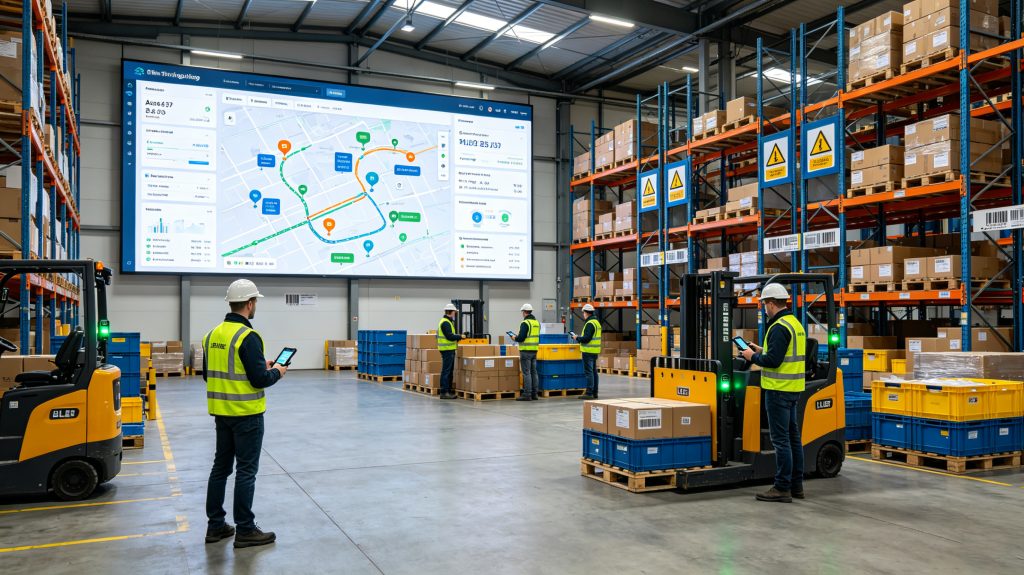
Each beacon periodically broadcasts:
Receivers installed throughout the facility capture beacon signals.
These may include:
Software estimates asset location using:
Users can instantly view:
Manufacturers track:
Hospitals use beacon tracking for:
According to studies published by the Healthcare Information and Management Systems Society (HIMSS), hospitals can spend significant staff time searching for mobile medical equipment when visibility systems are absent.
Warehouses track:
Construction firms monitor:

| Feature | Asset Tracking Beacon | RFID |
|---|---|---|
| Continuous Tracking | Yes | Limited |
| Real-Time Location | Yes | Depends on reader placement |
| Battery Required | Usually | Usually No |
| Long Distance Visibility | Yes | Limited |
| Infrastructure Cost | Moderate | Moderate |
| Inventory Accuracy | High | Very High |
In many projects, the most effective solution combines both technologies.
RFID manages identification and inventory accuracy.
Beacon systems provide location intelligence.
Together, they create a comprehensive visibility platform.
One pattern appears repeatedly.
Organizations often believe asset loss is their biggest problem.
After deployment, they discover something else.
Underutilization.
In one equipment-intensive environment we evaluated, fewer than 60% of tracked assets were actively used during a typical workweek.
The tracking system did not merely locate equipment.
It exposed purchasing inefficiencies.
That insight generated larger savings than loss prevention itself.
This is where mature asset tracking beacon projects create measurable ROI.
An asset tracking beacon is a wireless device that broadcasts identification and location information to enable real-time monitoring of assets.
Accuracy varies from several meters using BLE to sub-meter precision using advanced RTLS and UWB solutions.
Yes. Warehouses, factories, hospitals, and office buildings are common deployment environments.
Tools, equipment, containers, pallets, vehicles, medical devices, and high-value inventory can all be tracked.
Not necessarily. Many organizations combine beacon technology with RFID to achieve both inventory accuracy and real-time location visibility.
Asset tracking beacon solutions provide real-time visibility, improve operational efficiency, reduce search time, and support data-driven asset management. For organizations seeking greater control over equipment, inventory, and mobile assets, modern asset tracking beacon technology has become an essential component of digital operations.

high temperature rfid tracking tags improve industrial asset visibility in harsh environments with durable Cykeo RFID solutions for manufacturing and logistics.
More
How to track RFID: Use unique UHF RFID tags, defined reader points, and tracking software to record where and when tagged items are observed.
More
A long range RFID scanner can help railways automatically identify rail cars, containers, maintenance equipment, and other assets at yards, depots, and check...
More
Wondering how many things can you hack with an RFID reader? The real answer: door badges, passports, credit cards, and more. We break down the risks and the reality.
More