 Cykeo RFID IoT Solution Products R&D Manufacturer

Can iPhone Read RFID Card? Let’s Test What Actually Works.
547Can iPhone read RFID card? We test what actually works with access badges, hotel keys, and transit cards versus what needs professional hardware.
MoreAll RFID Product
A few years ago, I visited a warehouse that had already replaced almost every major component in their RFID system.
New rfid reader.
New rfid antennas.
New rfid tags.
Even new cables.
The funny part was that the original hardware wasn’t actually broken.
The system still missed reads near one side of the gate, and at the same time it occasionally picked up tags from outside the intended area.
After walking around for maybe twenty minutes, the issue started looking less mysterious.
One antenna was mounted slightly higher than the other.
Not dramatically.
Just enough to change how the read zone behaved.
That experience comes back to me whenever someone asks:
“What’s the best RFID antenna for a warehouse?”
Sometimes the better question is:
“Where exactly are you planning to put it?”

RFID installation guides often show clean examples.
Nice straight gates.
Perfect mounting positions.
Clear reading zones.
Real warehouses rarely look like that.
There are support beams everywhere.
Metal racks nearby.
Forklifts moving through different paths than originally planned.
Temporary storage areas appear where nobody expected them.
The antenna may be identical across two projects, yet the results can feel completely different.
That’s one reason experienced RFID integrators usually spend more time looking at the environment than reading the antenna datasheet.
The datasheet doesn’t know where the steel racks are.
One of the most common mistakes is assuming that higher placement automatically means better coverage.
Sometimes it does.
Sometimes it creates new problems.
Imagine a warehouse gate where pallets move through a three-meter-wide lane.
If antennas are mounted too high, they may start “seeing” beyond the gate itself.
Tags sitting nearby become visible.
Inventory waiting for shipment suddenly appears in read logs.
At first, operators think the software has an issue.
In reality, the antenna may simply have a wider field of view than intended.
On the other hand, mounting too low isn’t ideal either.
The lower section of a pallet may read perfectly while upper tags become inconsistent.
Finding the right height often feels less like following a formula and more like adjusting a camera until the picture looks right.
The exact number varies from project to project.
Which is probably not the answer people want to hear.
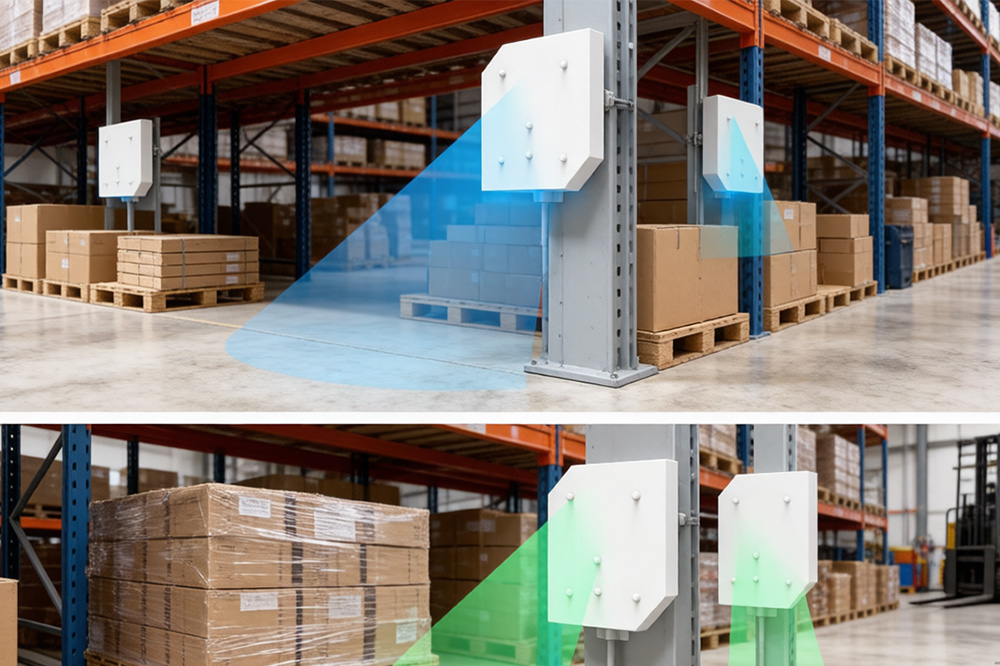
Most installation teams focus on location.
Fewer pay attention to tilt angle.
Then the system goes live.
Suddenly reads are appearing from outside the gate.
Or reads become inconsistent near the center lane.
At that point someone grabs a ladder.
I’ve seen situations where changing the antenna angle by only a few degrees produced more improvement than increasing reader power.
That sounds backwards.
But RF signals don’t always behave the way people expect.
A slight downward angle often helps concentrate energy into the intended passage area rather than pushing it farther into surrounding space.
In busy warehouses, that difference can become surprisingly important.
Many articles promise an ideal RFID antenna position.
I don’t think there is one.
There are good starting points.
There are common practices.
But every site introduces its own variables.
A gate near metal shelving behaves differently than a gate installed near open loading docks.
A pharmaceutical warehouse behaves differently than an automotive parts facility.
Even ceiling height can influence tuning decisions.
Because of that, experienced engineers usually avoid saying:
“This is the perfect position.”
Instead they say:
“This is where I would start testing.”
That’s a subtle difference, but an important one.
Metal has a way of making straightforward projects less straightforward.
You install an antenna.
You define a reading area.
Then nearby racks start reflecting signals.
Sometimes coverage expands into places nobody planned for.
Other times dead zones appear where tags should be easy to read.
I remember one distribution center where a gate worked perfectly during initial commissioning.
Two weeks later the customer reported inconsistent performance.
Nothing had changed in the RFID system.
The warehouse had simply filled several nearby rack locations with metal products.
The RF environment had changed without anyone touching the hardware.
That happens more often than people expect.
And honestly, it’s understandable.
Changing power settings is easy.
Moving hardware is not.
The challenge is that higher power doesn’t automatically improve system performance.
Sometimes increasing power expands the reading area beyond what the operation actually needs.
A warehouse gate isn’t trying to read every tag in the building.
It’s trying to read the right tags at the right moment.
There is a difference.
Many tuning sessions eventually arrive at the same conclusion:
Control is often more valuable than range.

When a warehouse RFID system starts behaving strangely, experienced technicians often look at physical factors first.
Things like:
It’s not because hardware never fails.
It does.
But installation variables create a surprising number of issues that look like hardware problems.
And they’re usually cheaper to fix.
Some people expect RFID deployment to follow exact measurements.
In reality, there is often a period of observation.
You watch traffic patterns.
You monitor read logs.
You notice where missed reads occur.
You adjust.
Then you test again.
After enough projects, you start seeing patterns.
Not formulas.
Patterns.
A gate that works beautifully on paper may still need adjustments after the first week of operation.
That’s normal.
Most reliable RFID systems didn’t become reliable the moment they were powered on.
They became reliable after someone spent time understanding how the environment was interacting with the equipment.
And that process usually starts with antenna placement long before anyone orders replacement hardware.
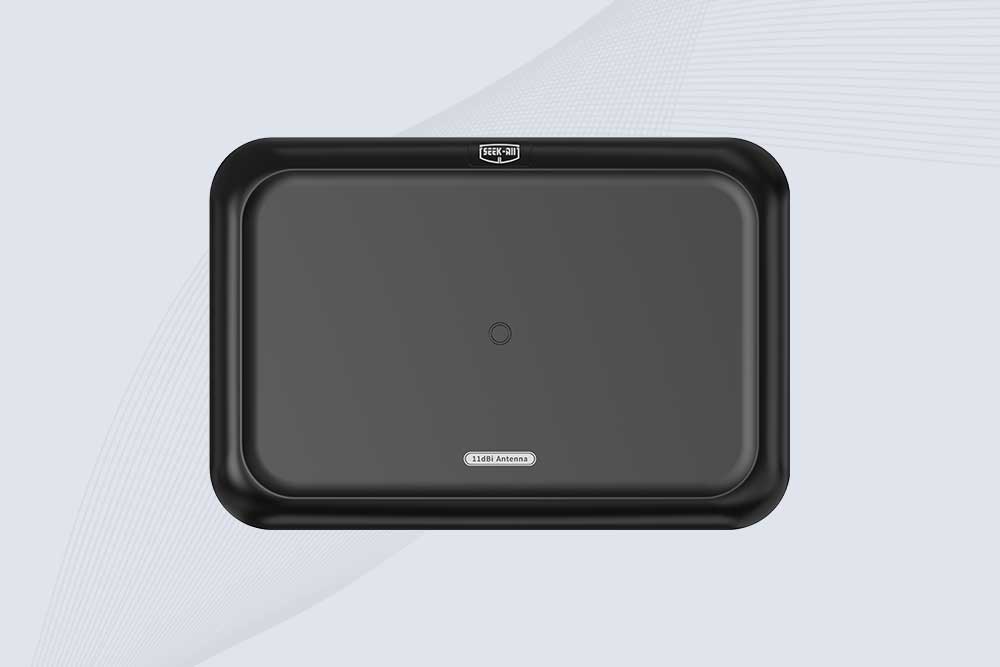
SSD-A11 UHF RFID antenna features 840–960 MHz adjustable frequency, ≥10.5 dBi gain, circular polarization and 50Ω impedance for fixed RFID systems.
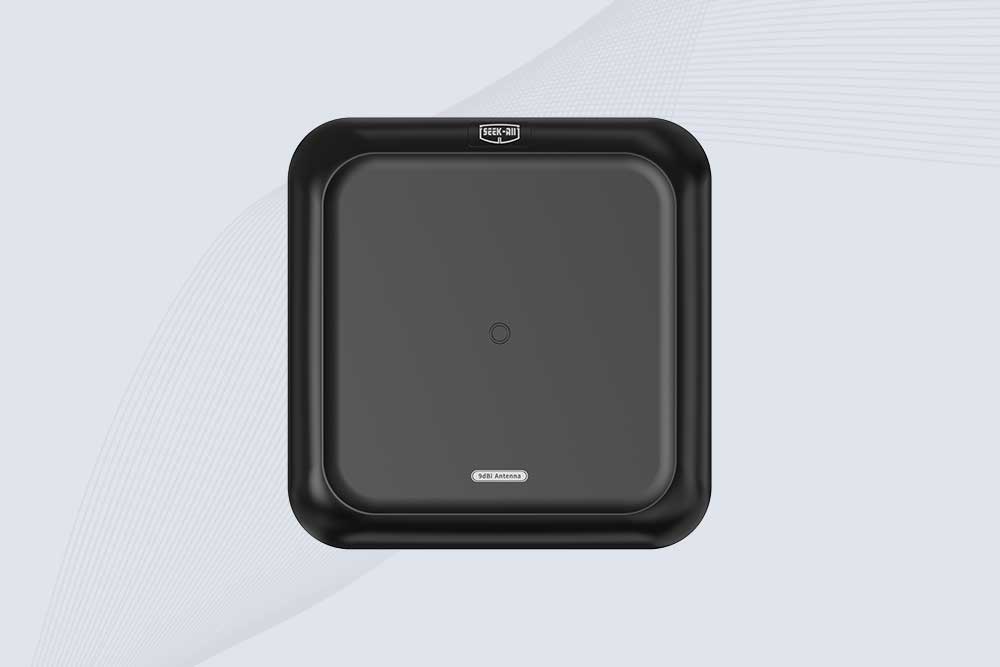
SSD-A09 is a 9 dBi UHF RFID antenna with 840–960 MHz adjustable frequency, circular polarization, 50Ω impedance and directional 60° × 60° coverage.
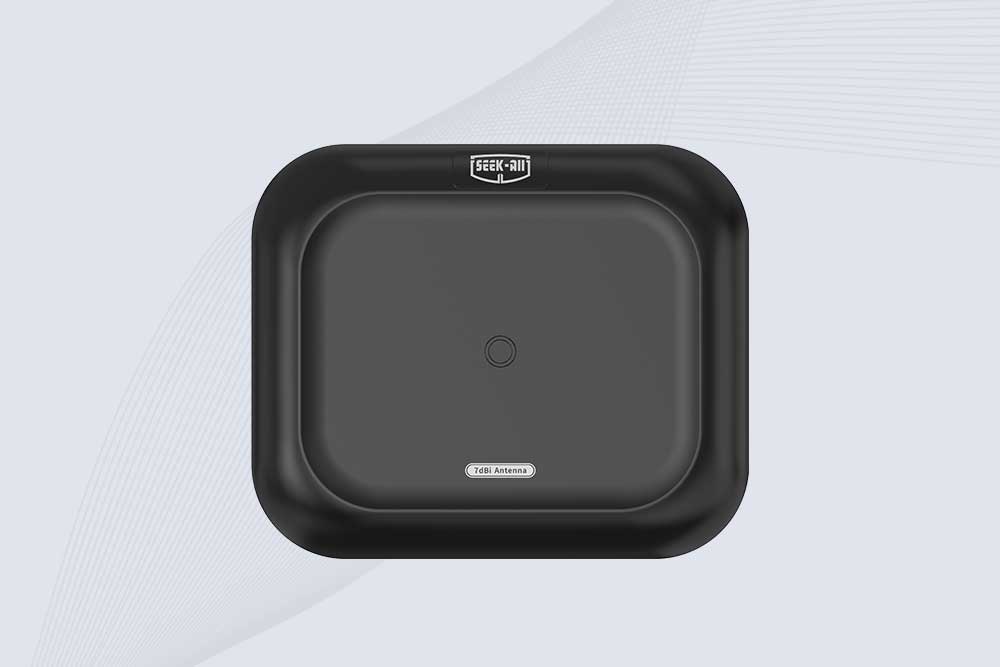
Explore the SSD-A07 UHF RFID antenna with 7 dBi gain, circular polarization, adjustable 840–960 MHz frequency, and 60°/75° beamwidth for stable RFID read/write performance.

SSD-A06 UHF RFID antenna with circular polarization, adjustable 840–960 MHz frequency, ≥4.5 dBi gain, and a compact directional design for RFID systems.
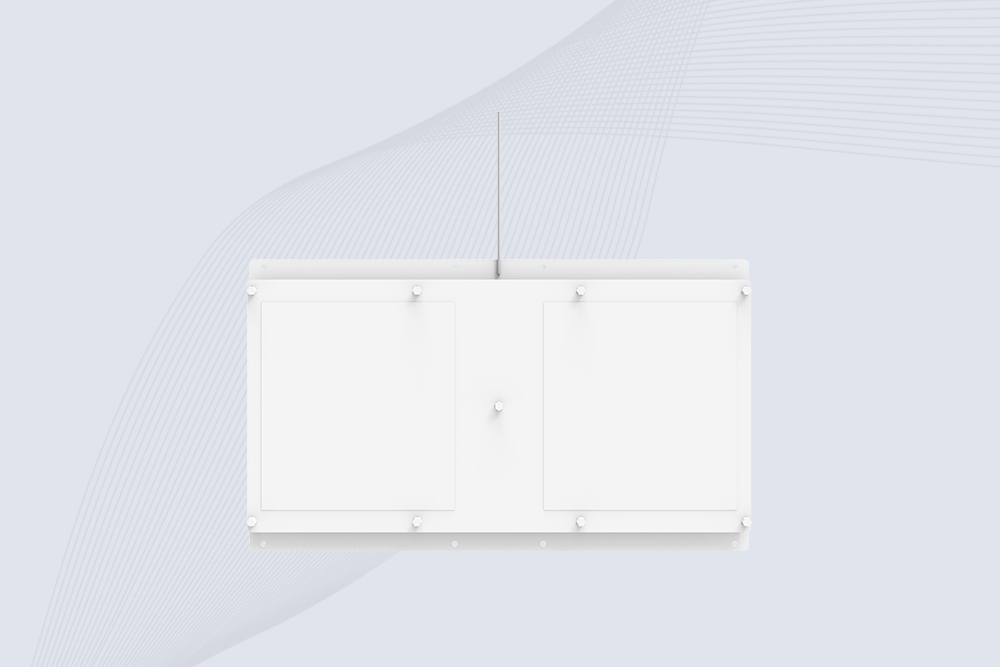
Cykeo CYKEO-A11 UHF RFID reader antenna delivers 11dBi gain, 840-960MHz frequency range, and IP65 ruggedness for retail, logistics, and industrial RFID systems. Features low VSWR and easy installation.

CYKEO Antenna RFID Reader delivers stable long-range UHF performance with a 10.5dBi directional design, built for warehouses, conveyor portals, and industrial RFID systems. This rfid reader antenna provides 20m+ read distance and rugged IP67 protection.

Cykeo CYKEO-PHF3 industrial HF RFID Antenna offers 24-point dynamic tracking, ISO 14443A/15693 protocols, metal-environment stability for archives/libraries/manufacturing.

Cykeo CYKEO-A5B industrial Linear RFID Antenna delivers 5dBi gain, ≤1.5:1 VSWR, and IP65 rugged design for warehouse, production line, and logistics UHF systems.

Cykeo’s CYKEO-B12 Long Range RFID Antenna delivers 15m+ read range with 12dBi gain, IP65 rugged design, and global 840-960MHz UHF support. Ideal for warehouse/logistics asset tracking.
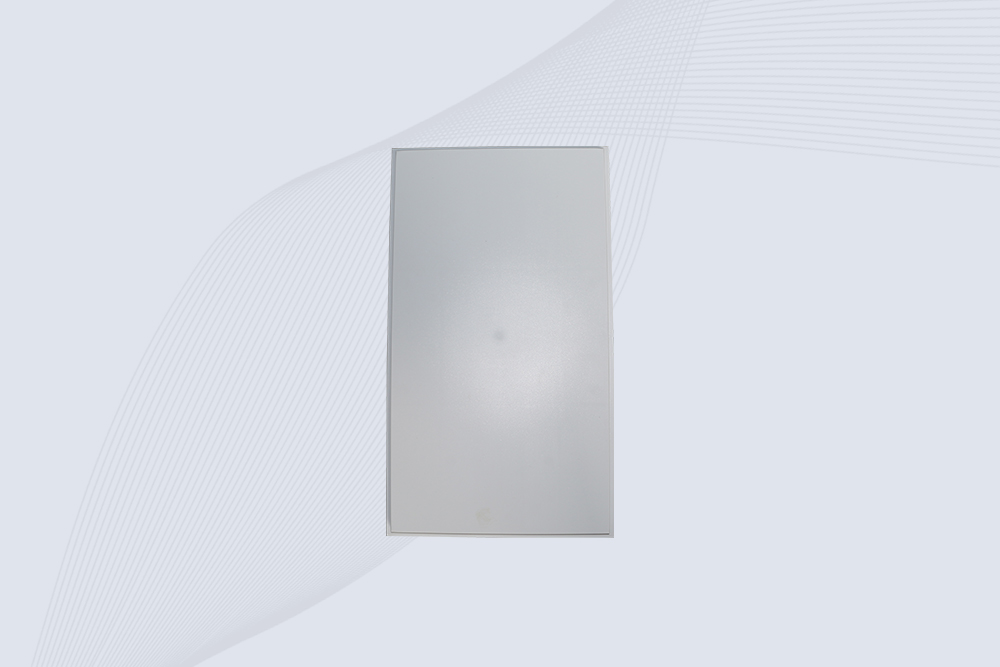
Cykeo CYKEO-B10 Long Distance RFID Antenna offers 10dBi gain, 840-960MHz frequency range, IP65 rating, and 20m+ coverage for logistics/warehousing/ETC systems. Low VSWR ensures stable signal transmission.
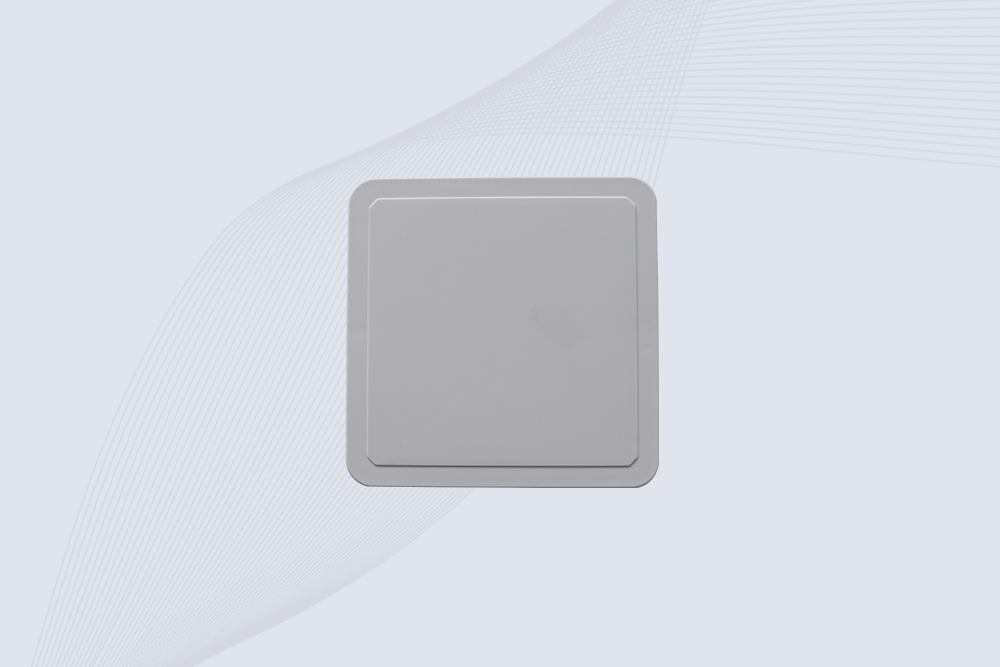
Cykeo CYKEO-A6 UHF RFID panel antenna features 6dBi gain, 840-960MHz broadband, IP65 metal-ready housing for logistics/smart retail. 18mm ultra-thin design with tool-free mounting.

Cykeo CK-A3 industrial antenna RFID UHF offers 5m+ tag detection, ≤1.3:1 VSWR, IP65 rugged design, and global UHF spectrum compatibility (840-960MHz) for warehouses, factories, and retail.
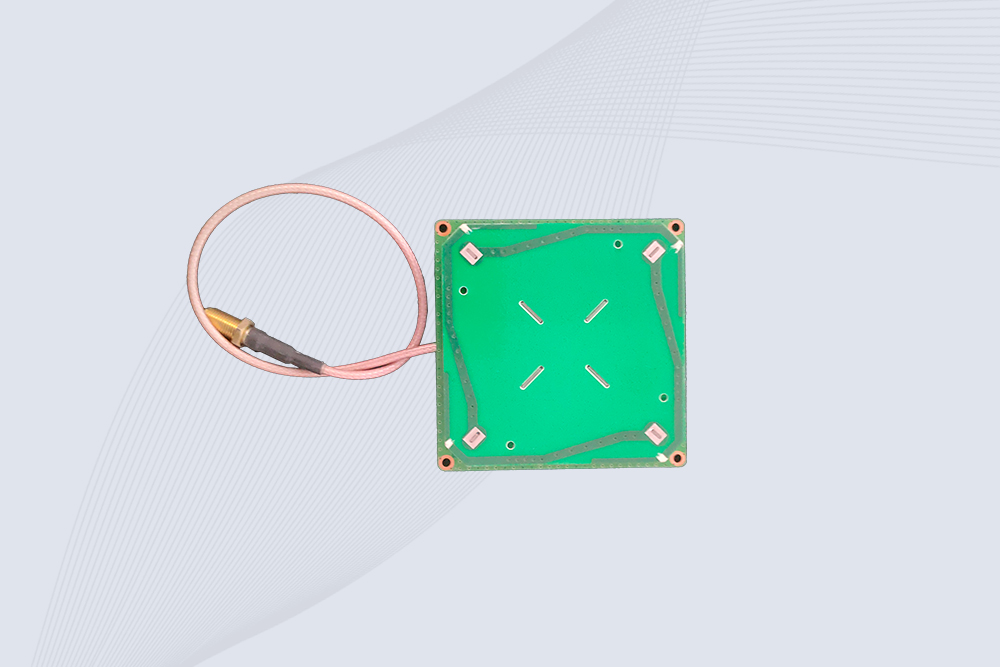
Cykeo CYKEO-B5 directional RFID antenna provides 5dBi gain with 60° narrow beamwidth for precise inventory tracking. IP65-rated, global UHF frequency support, and low VSWR.
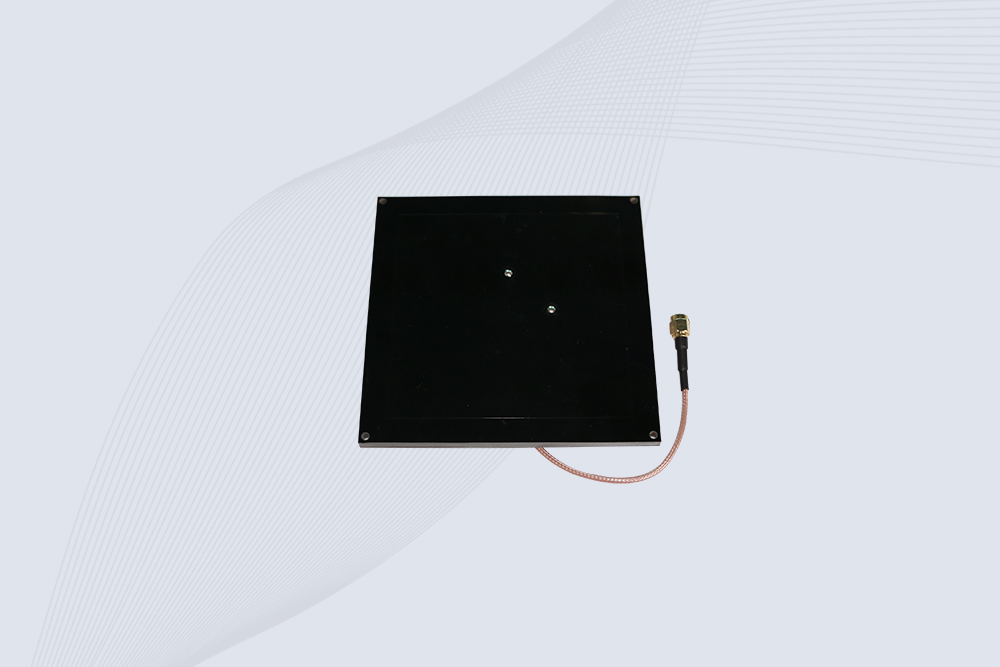
Create your own high-performance DIY RFID antenna! 5dBi gain, 840-960MHz tunable, step-by-step guides. Compatible with Arduino, Raspberry Pi, and commercial UHF readers.
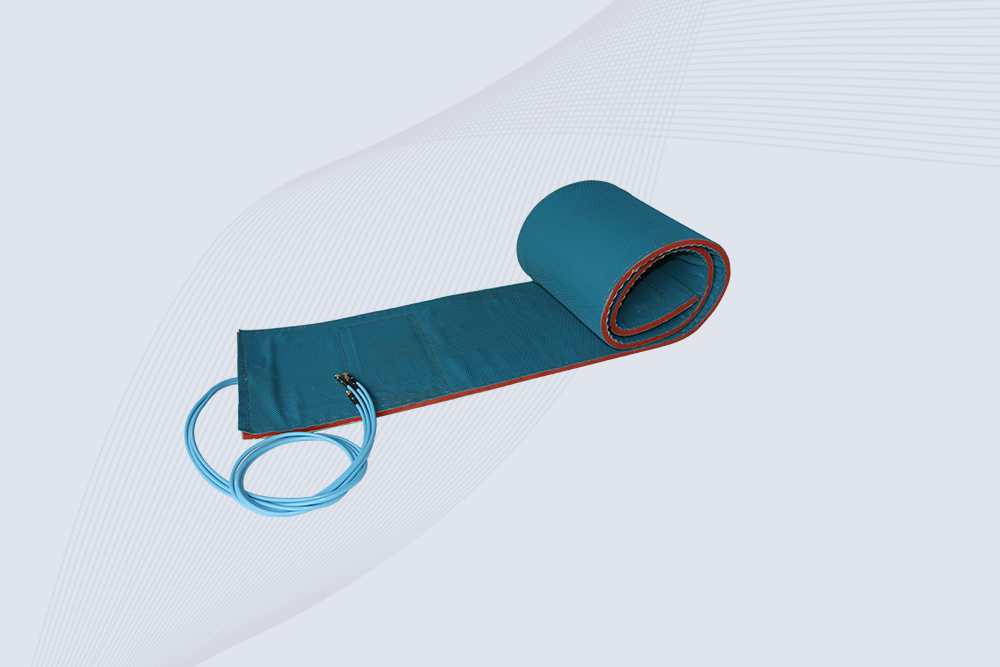
Cykeo CYKEO-A7 Flexible RFID Antenna features 840-960MHz wideband tuning, 7dBi gain, and IP68 rating for medical/retail/industrial curved surface deployments. 98% read accuracy with peel-and-stick installation.

Cykeo CYKEO-B5A industrial Passive RFID Antenna delivers 5dBi gain, 70° beamwidth, and -40°C~55°C operation for warehouses/smart cabinets. Compatible with Zebra/Impinj readers.
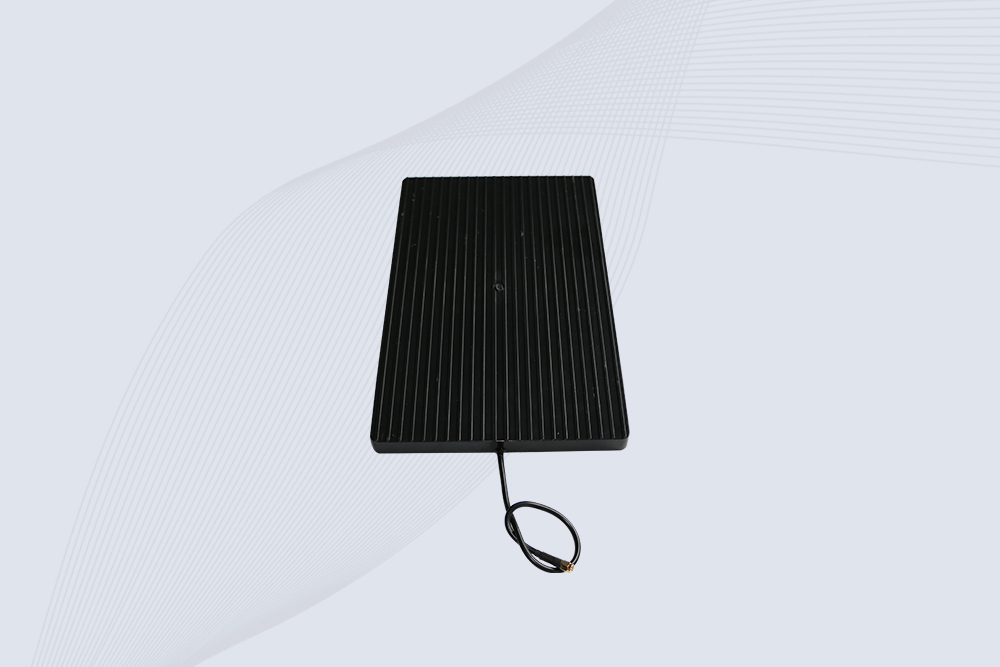
Cykeo’s CYKEO-A9B High Gain RFID Antenna delivers 15m+ read range with 9dBi amplification. Features IP54 rugged design, 840-960MHz bandwidth, and 80° beamwidth for warehouse/manufacturing RFID systems.

Cykeo’s enterprise-grade 8dbi Impinj RFID Antenna 10m+ read range with 840-960MHz tuning. Features IP65 housing, 1.4 VSWR, 35° beamwidth for retail/warehouse RFID systems.
Cykeo CYKEO-A9 industrial UHF RFID antenna delivers 9dBi gain, 840-960MHz frequency range, and IP65 protection for warehouse/logistics/retail RFID systems. Features N-type connector and ≤1.3:1 VSWR.

CYKEO UHF RFID Antenna built for long-distance and industrial applications. This antenna rfid uhf delivers strong gain, outdoor durability, and reliable tag performance in warehouses, yards, and vehicle ID systems.
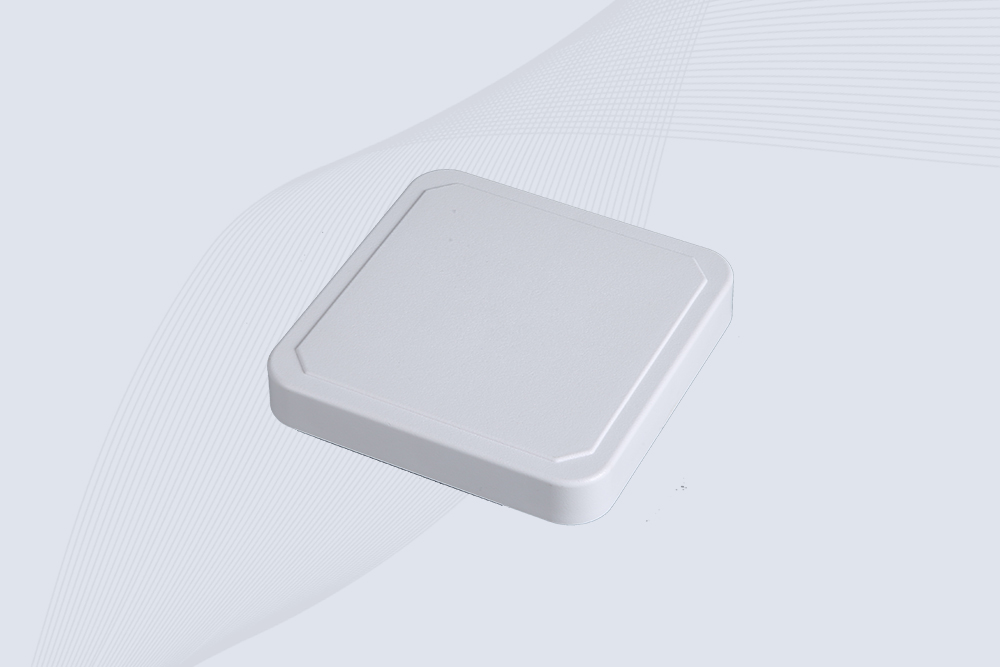
CYKEO Antenna RFID delivers reliable long-range UHF performance in warehouses, retail shelves, and cold-chain environments. This compact uhf rfid antenna provides stable reads with circular polarization and ultra-wide 840–960 MHz support, ideal for industrial tracking, smart shelves, and asset monitoring.
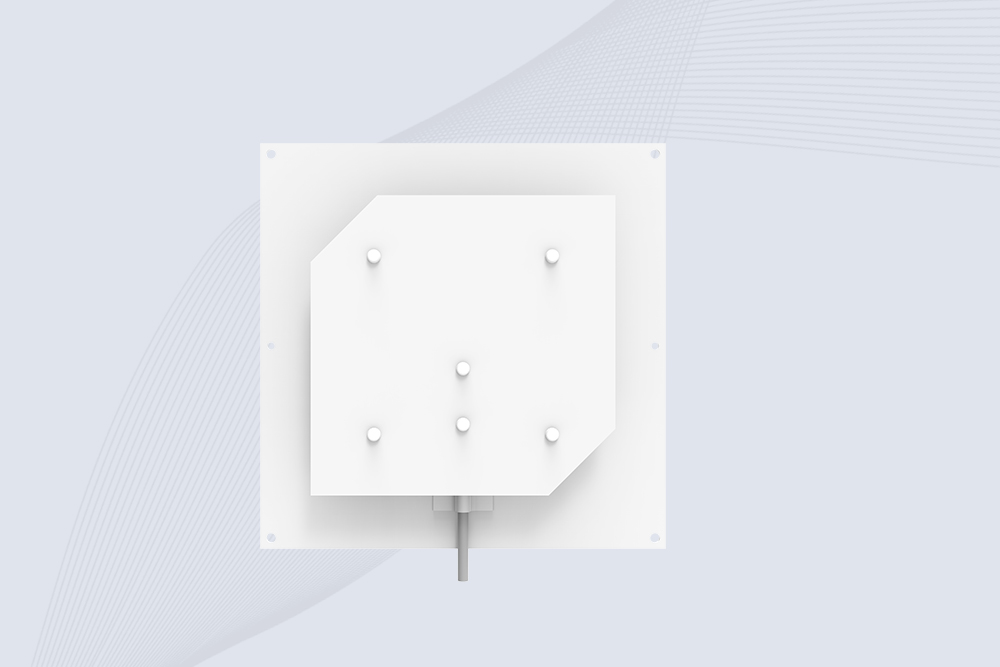
Cykeo’s CYKEO-C8 UHF RFID antennas delivers 8dBi gain, 840-960MHz full-band coverage, and IP65 ruggedness for manufacturing/warehouse RFID systems. Industrial RFID Antennas Features
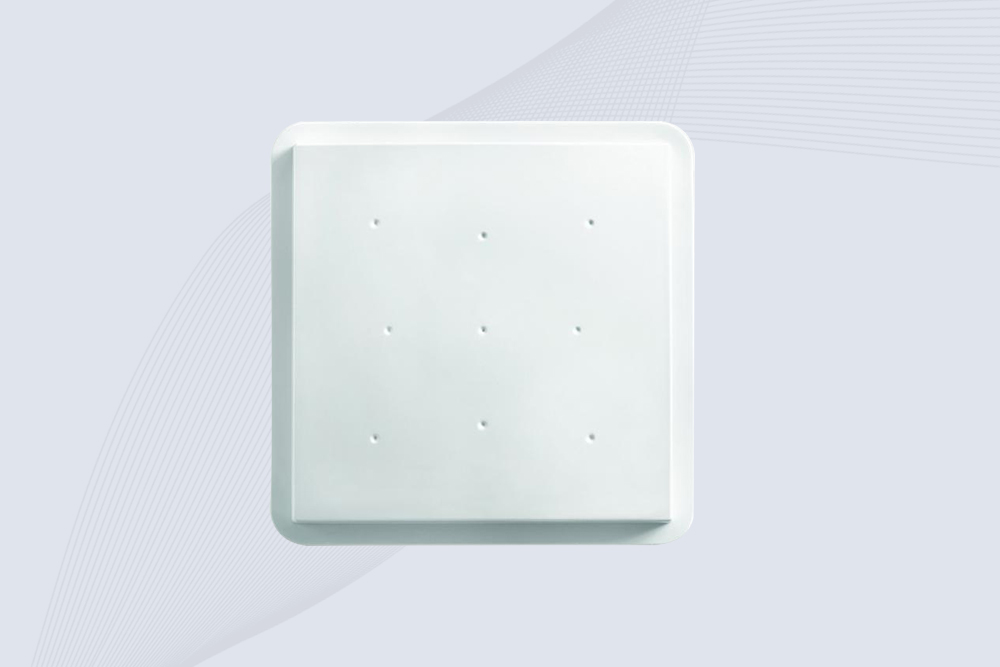
Cykeo’s 8dBi UHF RFID antenna and reader kit delivers 10m+ range, 840-960MHz broadband, and IP65 ruggedness for factories, warehouses, and logistics. ISO 18000-6C & EPC Gen2 certified.
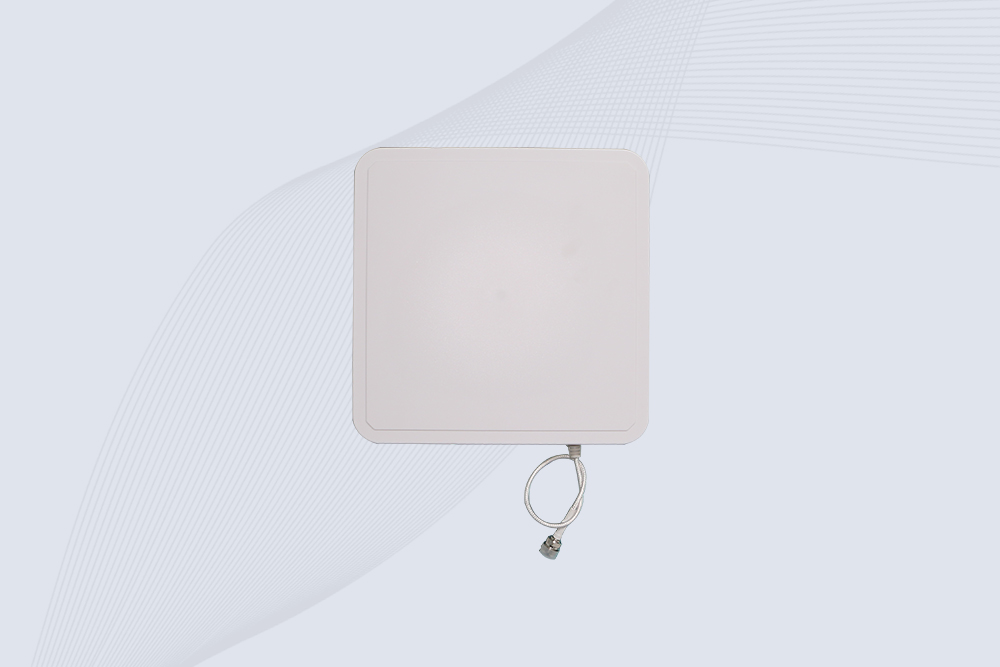
Cykeo CYKEO-A9A industrial UHF RFID reader and antenna kit delivers 10m range, 500 tags/sec, IP65 ruggedness for manufacturing/logistics. Supports EPC Gen2, ISO18000-6C.
Cykeo’s CYKEO-A12C UHF Large RFID Antenna delivers 12dBi gain, 840-960MHz global frequency, IP65 ruggedness for logistics/warehousing/automotive. 40° beamwidth ensures stable 15m+ tag reads.

CYKEO Near Field RFID Antenna provides precise 5–30 cm reading for shelves, cabinets, and workstations. This compact rfid shelf antenna delivers stable short-range performance around metal and clutter, ideal for pharmacies, libraries, and electronics sorting.
RFID Industry Writer | IoT & Asset Tracking Analyst
James writes about RFID technology, asset tracking, and the practical challenges of digital transformation across warehousing, retail, manufacturing, and logistics.
His work focuses on how RFID is applied in real-world operations—improving inventory visibility, automating workflows, and helping businesses manage assets with greater accuracy and efficiency.
He regularly covers topics including UHF RFID, smart cabinets, RFID portals, tool tracking, warehouse automation, and industrial IoT trends..

Can iPhone read RFID card? We test what actually works with access badges, hotel keys, and transit cards versus what needs professional hardware.
More
Discover the best handheld RFID readers for small business inventory management. Compare budget-friendly options, UHF performance, and software integration for retail, warehouses, and startups.
More
Discover the essential features of handheld RFID scanners for logistics and supply chain management. Compare durability, read range, software integration, and more.
More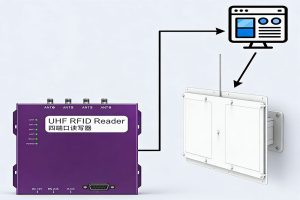
Discover how RFID doors can power your software projects. From UHF readers to CK-A11 antennas, learn integration tips, actionable data insights, and IoT-ready solutions for developers.
More