 Cykeo RFID IoT Solution Products R&D Manufacturer
Working Principle: Coupling — How RFID Really Works
176Confused about RFID coupling? This plain-English guide explains inductive and backscatter coupling, how RFID tags get power, and why systems fail in real projects.
MoreAll RFID Product
Asset tracking RFID system uses RFID tags, readers, antennas, and software to automatically identify, locate, and manage assets in real time, reducing manual inventory work, improving visibility, and increasing operational accuracy across warehouses, factories, hospitals, and equipment-intensive environments.
In practice, an effective asset tracking RFID system does far more than count items. It creates a digital identity for every tool, pallet, container, laptop, medical device, or production asset moving through an organization.
At Cykeo, our engineering team has spent years deploying RFID solutions in manufacturing plants, logistics centers, utility facilities, and equipment management projects. One lesson appears repeatedly: organizations rarely struggle because assets are unavailable. They struggle because nobody knows exactly where those assets are at a given moment.
According to the official website of the RAIN RFID Alliance, billions of RAIN RFID tags are deployed annually across retail, logistics, healthcare, aviation, and manufacturing sectors.
Meanwhile, research published by McKinsey & Company estimates that Industrial IoT technologies can create trillions of dollars in economic value globally through improved visibility and operational efficiency.
Those numbers align closely with what we observe during deployments.
A maintenance supervisor once told us:
“We didn’t lose tools. We lost time looking for them.”
That distinction matters.
Companies often discover that hidden labor costs exceed the replacement cost of missing equipment.
Every asset receives a unique RFID tag.
Examples include:
Each tag stores a unique EPC identifier.
RFID readers automatically detect tagged assets as they move through:
Unlike barcode systems, RFID does not require line-of-sight scanning.
Software converts tag reads into operational information:
| Function | Result |
|---|---|
| Asset Location | Know where assets are |
| Usage Tracking | Monitor movement history |
| Audit Automation | Reduce manual counts |
| Loss Prevention | Detect unauthorized removal |
| Maintenance Management | Track inspection cycles |
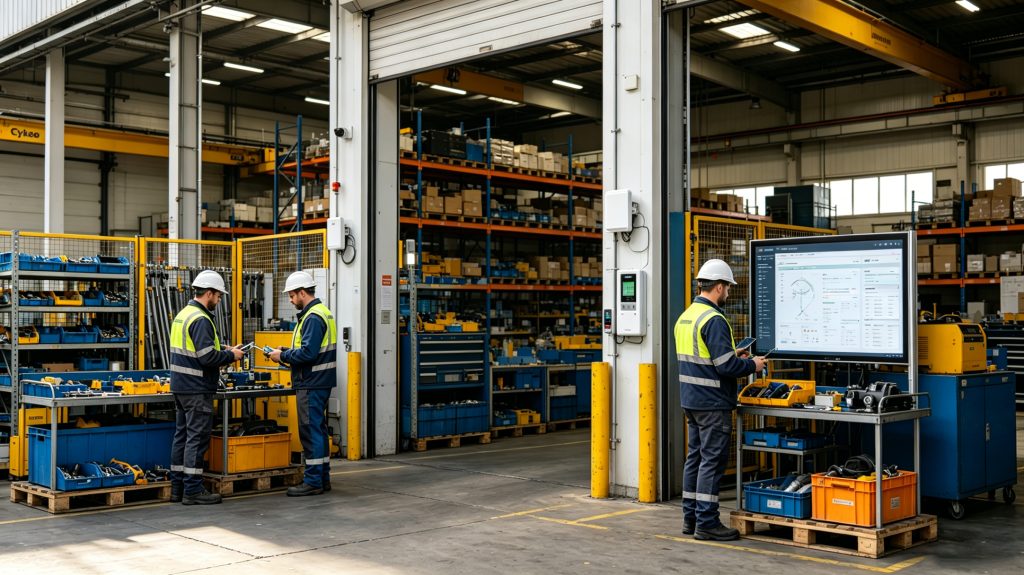
During a recent industrial deployment, employees previously spent significant time searching for shared calibration equipment.
The process looked familiar:
After RFID deployment, equipment location became visible instantly.
Interestingly, the largest improvement wasn’t inventory accuracy.
It was workflow continuity.
Technicians stopped interrupting each other.
Projects moved faster.
Downtime decreased naturally.
That operational effect rarely appears in marketing brochures, but it often becomes the most valuable outcome.
Automated identification removes many manual entry errors.
Entire rooms of tagged assets can be verified within minutes.
Every movement generates a digital record.
Unauthorized removals can trigger alerts automatically.
Organizations often discover duplicate purchases caused by poor visibility.
Track tools, fixtures, spare parts, and production assets.
Monitor medical equipment availability and utilization.
Manage returnable transport items and inventory movement.
Control high-value maintenance equipment.
Maintain accountability for safety-critical tools.
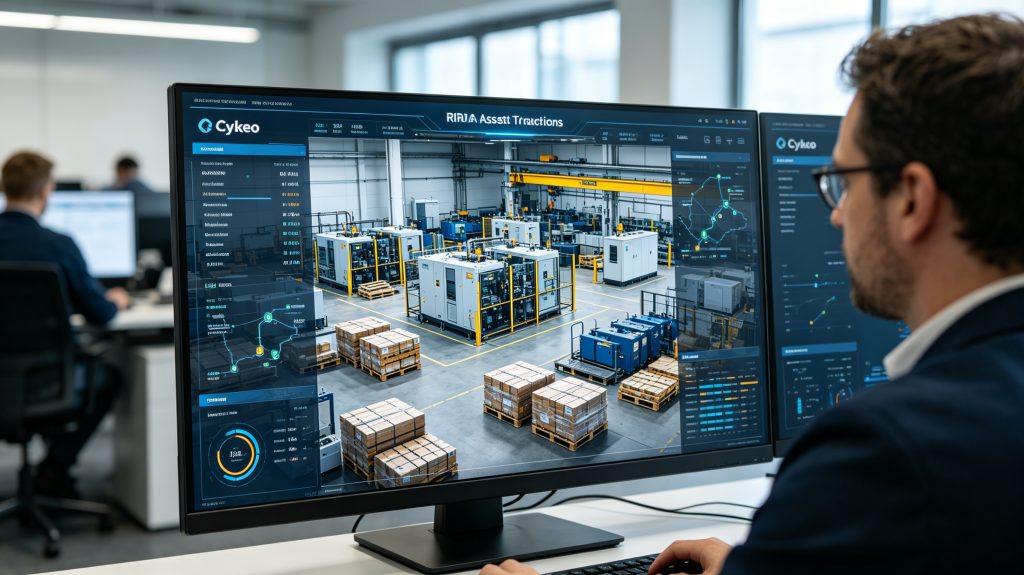
Based on deployment experience, successful projects usually include:
The hardware matters.
The data architecture matters even more.
Many failed projects collect RFID reads successfully but never transform those reads into actionable workflows.
Author: Cykeo RFID Solutions Team
The Cykeo engineering team has participated in RFID deployments across manufacturing, warehousing, utility infrastructure, equipment management, and industrial automation projects. Our experience includes RFID readers, fixed portals, smart cabinets, inventory stations, and enterprise asset management integrations designed around EPC Gen2 and ISO 18000-6C standards.
For large-scale asset management, RFID typically provides faster identification because tags can be read without direct line-of-sight and multiple assets can be detected simultaneously.
Accuracy depends on tag selection, reader placement, and environmental conditions. Properly designed systems routinely achieve very high read performance in industrial environments.
Yes. RFID portals, smart cabinets, and handheld readers can automatically identify tool movement without requiring manual scanning.
Organizations frequently track tools, equipment, pallets, IT devices, medical equipment, returnable containers, and maintenance assets.
Yes. Modern asset tracking RFID system platforms provide near real-time updates, helping organizations monitor asset movement and availability continuously.
An asset tracking RFID system provides organizations with continuous visibility into tools, equipment, and critical assets while reducing manual effort, improving accountability, and enabling smarter operational decisions. As industrial environments become increasingly connected, the role of the asset tracking RFID system will continue to expand across manufacturing, logistics, healthcare, and enterprise asset management.
Confused about RFID coupling? This plain-English guide explains inductive and backscatter coupling, how RFID tags get power, and why systems fail in real projects.
More
Looking for an alternative to Impinj RFID readers? Compare UHF RFID reader performance, cost, and compatibility to find the best solution for your RFID projects.
More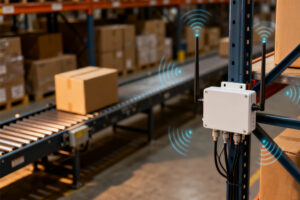
Looking to buy a UHF RFID four-port fixed reader? Learn how to choose the right model, understand key specs, and build a reliable RFID solution for logistics, automation, or access control.
More
rfid tag frequency explained from real deployments. Learn what LF, HF, and UHF actually change in range, speed, and reliability with CYKEO.
More