 Cykeo RFID IoT Solution Products R&D Manufacturer
What is a tool tagging system and how does it improve tool management?
102Improve tool control with Cykeo tool tagging system. Track, identify, and manage tools in real time with RFID technology for safer and smarter operations.
MoreAll RFID Product
HF RFID tags operate at 13.56 MHz and are widely used for document tracking, archive management, access control, library systems, and secure asset identification. They provide reliable short-range reading, high data accuracy, and efficient item-level tracking in environments where precision matters more than long-distance reading.
A surprising number of organizations still manage critical documents using spreadsheets, barcode labels, or handwritten logs. It works—until it doesn’t.
One missing file in a legal department can consume hours. A misplaced archive box in a government records center can delay an entire process. This is where HF RFID tags have quietly become one of the most practical technologies in modern records management.
At Cykeo, our engineering team has deployed RFID solutions for archives, confidential file storage, enterprise document centers, and government record management projects. The environments vary. The challenges rarely do.
Unlike UHF RFID, which focuses on longer reading distances, HF RFID tags excel in controlled environments where reading accuracy is critical.
For document management, accuracy is everything.
A file should appear only in its assigned location. A misplaced document should be detected immediately.
HF RFID technology operates at 13.56 MHz and follows international standards such as ISO 15693 and ISO 14443, making it suitable for:
According to the official website of the RFID Journal, HF RFID continues to be widely adopted in library management, authentication systems, healthcare identification, and document tracking due to its reliability and mature standards ecosystem.
Traditional archive systems typically depend on manual check-in and check-out processes.
The problem is simple:
People forget.
HF RFID tags eliminate that dependency.
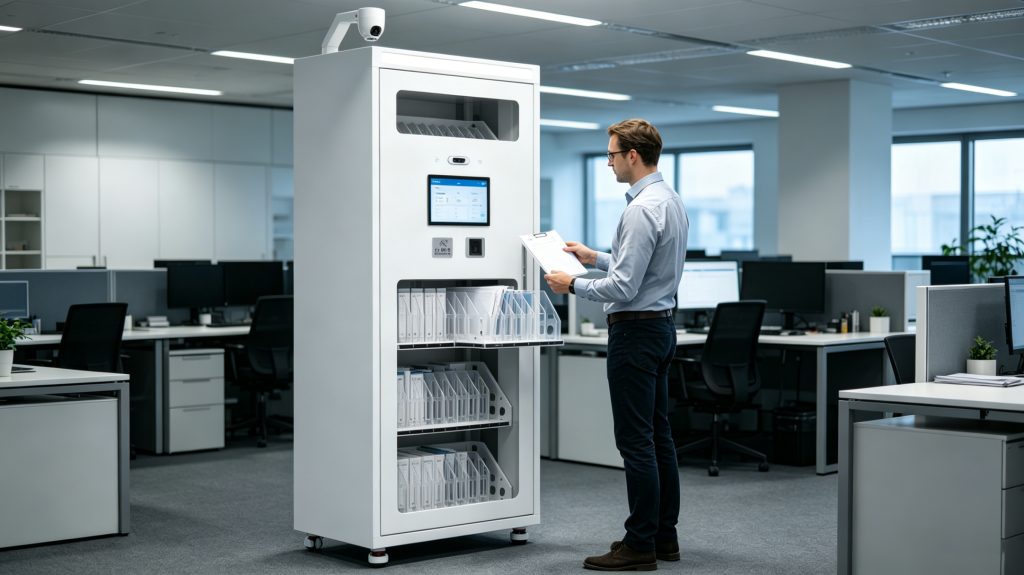
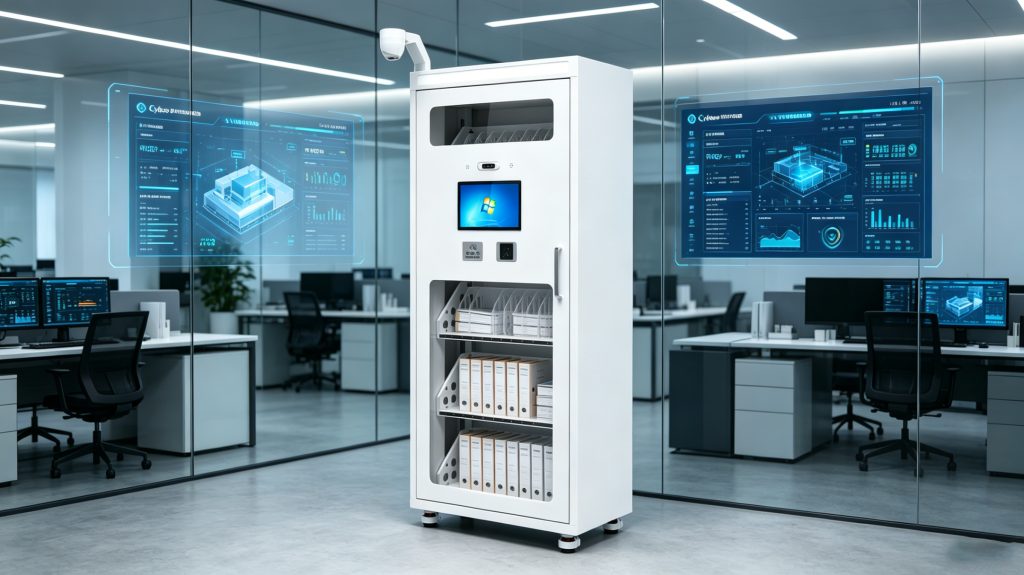
When integrated with smart archive cabinets, every file movement can be recorded automatically.
One feature our customers appreciate most is automated inventory.
Instead of physically checking every file, administrators can verify an entire cabinet within seconds.
The result?
Less time counting.
More time managing.
Confidential documents often require strict accountability.
HF RFID systems can record:
That audit trail becomes invaluable during compliance reviews.
| Feature | HF RFID Tags |
|---|---|
| Frequency | 13.56 MHz |
| Typical Reading Range | Up to 1 meter |
| Anti-Collision Support | Yes |
| Data Storage | Rewritable Memory |
| Security Features | High |
| Ideal Applications | Documents, Libraries, Access Control |
Several technical characteristics make HF RFID especially effective for archive environments:
Shorter reading distances reduce unintended reads.
This prevents neighboring shelves from interfering with inventory results.
Modern HF RFID readers can identify multiple tagged items simultaneously.
Paper-based documents generally have minimal impact on HF signal performance, producing highly consistent read rates.
One government archive project revealed something unexpected.
The customer originally requested RFID primarily for inventory efficiency.
Six months after deployment, their feedback focused on something else entirely.
Confidence.
Staff no longer wondered whether a file was missing.
They knew.
The system showed its location, status, access history, and movement records instantly.
That psychological shift often matters more than the technology itself.
Track confidential records and administrative files.
Manage contracts, legal files, and compliance documentation.
Monitor patient file storage and retrieval.
Automate borrowing, returns, and inventory audits.
Secure sensitive documentation with traceable access records.
Author: Cykeo RFID Engineering Team
The Cykeo technical team has extensive experience implementing RFID-based archive management systems, smart storage cabinets, document positioning solutions, and secure file tracking platforms. Our deployments include government archives, enterprise records centers, confidential document repositories, and intelligent cabinet systems based on 13.56 MHz HF RFID technology.
HF RFID tags are commonly used for document tracking, library management, access control, archive management, healthcare records, and secure identification applications.
HF RFID tags operate at 13.56 MHz, one of the most widely adopted RFID frequencies globally.
Yes. HF RFID tags provide highly accurate item-level identification, making them ideal for archive cabinets and document storage systems.
Yes. Many HF RFID tags include rewritable memory that can store identification and application-specific data.
For document management, shorter reading ranges often improve accuracy by reducing unintended reads from neighboring storage locations.
Organizations seeking secure, accurate, and scalable document management increasingly rely on hf rfid tags to improve visibility and accountability. Whether deployed in government archives, enterprise records centers, or confidential file repositories, hf rfid tags provide a practical foundation for intelligent document tracking and long-term information management.

Improve tool control with Cykeo tool tagging system. Track, identify, and manage tools in real time with RFID technology for safer and smarter operations.
More
UHF RFID tags offer long-range reading, high-speed identification, and batch scanning capabilities. This article introduces the fundamentals of UHF RFID, its tag types, and key applications in hospital equipment tracking, consumables management, a...
More
Wondering "how far away can an RFID chip be read"? Discover exact read ranges for LF, HF, UHF, and active tags. Factors affecting distance and real-world performance with CYKEO.
More
Learn how a UHF RFID 12dBi antenna improves read range, tag detection accuracy, and RFID system performance. Discover applications, installation tips, and industrial use cases for long-range RFID tracking.
More