RFID for logistics enables real-time cargo tracking, automated inventory counting, and faster warehouse operations with significantly fewer manual errors. In high-volume logistics environments, RFID systems can reduce inventory counting time from hours to minutes while improving shipment accuracy.
In practical warehouse deployments, the biggest difference is not “faster scanning.” It is operational rhythm. Once RFID becomes stable enough, forklifts stop waiting, receiving teams stop rescanning cartons, and supervisors stop reconciling spreadsheets at midnight.
At Cykeo, our engineers have spent years integrating RFID logistics systems into conveyor tunnels, warehouse checkpoints, and pallet tracking workflows. One project that stayed with me involved a regional apparel warehouse processing over 12,000 tagged items daily. Before RFID, staff counted incoming cartons manually using barcode guns. During peak season, missed scans became routine. After deploying an RFID tunnel system, outbound verification time dropped from roughly 8 minutes per shipment to under 10 seconds.
That shift changes labor planning immediately.
Why RFID for Logistics Is Growing So Fast
The logistics sector has moved beyond experimental RFID deployment. The technology is now heavily tied to warehouse automation and supply chain visibility.
According to GS1 Official Website, RFID adoption in logistics and retail supply chains continues to expand due to rising demand for inventory transparency and traceability.
Meanwhile, research published by McKinsey & Company noted that supply chain digitization technologies can reduce inventory errors and improve operational responsiveness significantly in modern distribution environments.
What operators care about is simpler:
Fewer shipping mistakes
Faster inbound verification
Reduced labor dependency
Real-time item visibility
Better exception handling
In one footwear warehouse we visited during system testing, two workers previously handled nightly recounting because inventory discrepancies averaged 3–5% weekly. After RFID deployment, recount work nearly disappeared except during damaged-tag investigations.
Unlike barcode systems, RFID does not require line-of-sight scanning. Hundreds of items can be identified simultaneously.
That matters in logistics environments where cartons move continuously.
Conveyor RFID Systems in Modern Warehouses
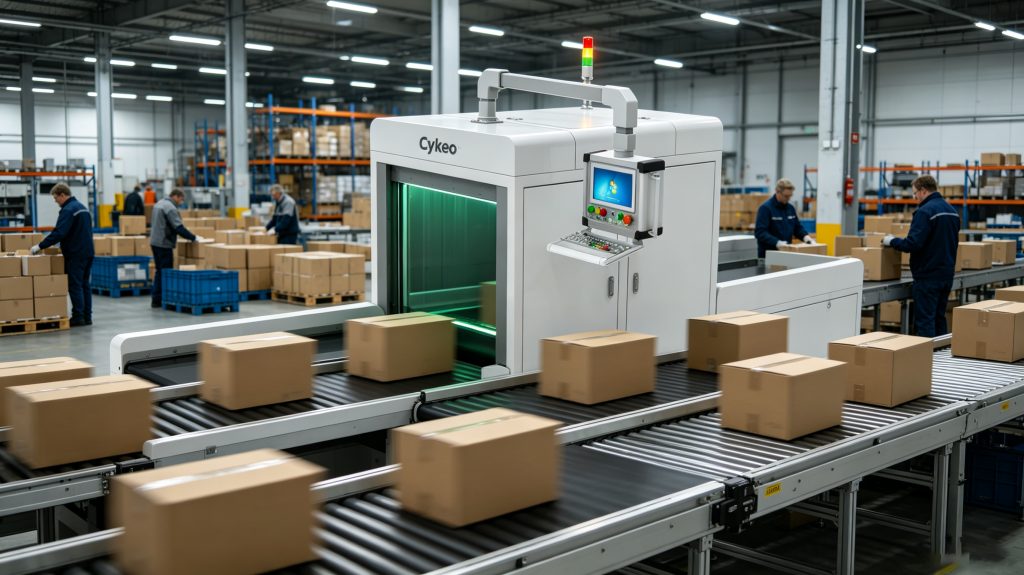
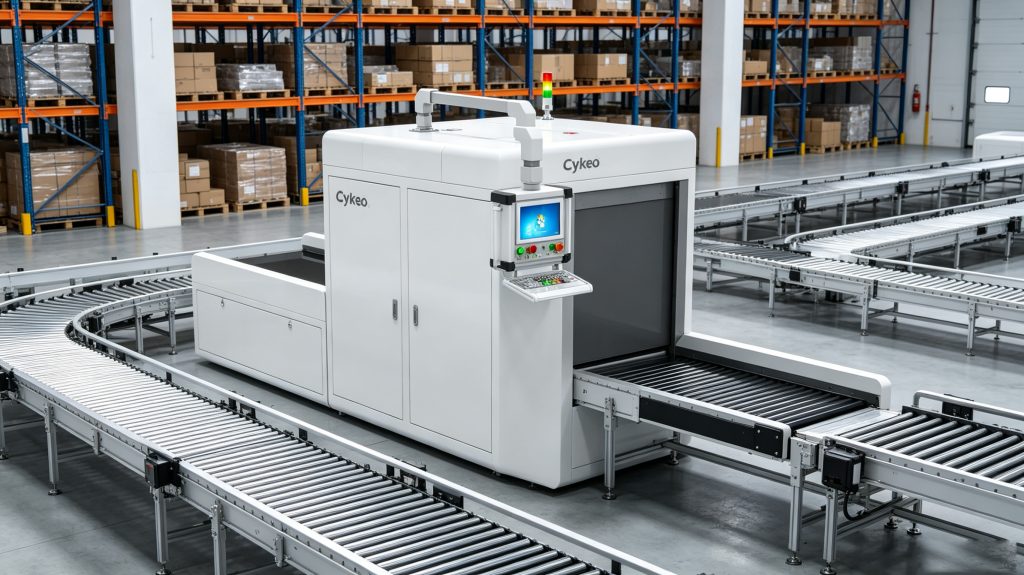
Cykeo’s CK-TP2 RFID tunnel machine was developed specifically for logistics inventory verification and warehouse automation.
In actual operation, the system identifies more than 400 tagged items within approximately 3 seconds while cartons move through the conveyor tunnel.
A detail many vendors skip mentioning: high-speed logistics environments fail when tag collision handling is weak. The reading speed alone is meaningless if missed reads occur under dense stacking conditions.
The CK-TP2 uses:
Electromagnetic shielding optimization
Motion control synchronization
Multi-sensor coordination
Conveyor deviation correction
Real-time abnormal alarm processing
During one electronics warehouse deployment, operators initially worried about RF interference caused by dense metal shelving near the outbound lane. After shielding optimization and antenna angle adjustment, read accuracy stabilized above operational requirements without slowing conveyor speed.
That took two nights of on-site tuning. RFID deployment rarely becomes perfect in hour one.
RFID for Logistics vs Barcode Systems
Why Warehouses Are Replacing Manual Scanning
Feature
RFID
Barcode
Bulk Reading
Yes
No
Line-of-Sight Required
No
Yes
Read Speed
Very Fast
Moderate
Automation Capability
High
Limited
Human Dependency
Low
High
Barcodes still work well for low-volume operations. But once shipment throughput rises, labor pressure becomes the real cost center.
In logistics hubs handling thousands of SKUs daily, manual scanning bottlenecks become obvious very quickly.
Automated RFID tunnel verification during warehouse outbound processing
Real Logistics Applications of RFID
Warehouse Inventory Counting
RFID dramatically reduces counting time during cycle counts and stock audits.
Outbound Shipment Verification
Tunnel readers automatically verify whether the shipment contents match ERP records.
Cross-Docking Operations
RFID helps identify cartons without unpacking or manual rescanning.
Return Logistics
Returned products can be identified instantly even when labels are damaged or partially hidden.
Industry Statistics That Matter
According to Auburn University RFID Lab, RFID-enabled inventory systems can achieve inventory accuracy rates above 95% in properly optimized environments.
Research from Deloitte Insights also highlights automation technologies like RFID as major drivers of warehouse efficiency improvement and labor reduction.
Those numbers sound abstract until you stand inside a warehouse during peak season and realize a 2% inventory discrepancy may represent thousands of misplaced items.
Common Problems in RFID Logistics Projects
Metal Interference
Metal racks and liquid products can distort RF signals.
Poor Tag Placement
Incorrect tag orientation remains one of the most common deployment mistakes.
Overpowered Read Zones
Too much RF power sometimes creates ghost reads from nearby lanes.
Experienced integrators spend more time tuning than installing hardware.
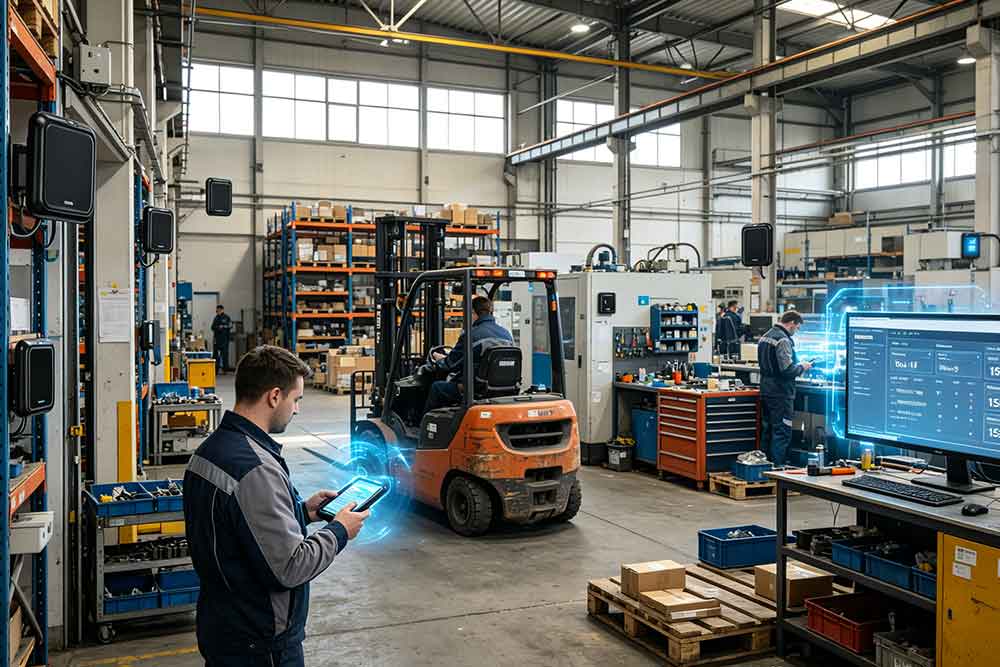
Real-time RFID inventory management improves warehouse visibility
FAQ About RFID for Logistics
Is RFID better than barcode for logistics?
Yes. RFID supports non-line-of-sight bulk reading, making it faster and more suitable for high-volume warehouse operations.
What frequency is commonly used in logistics RFID?
Most logistics systems use UHF RFID because it supports longer read distances and fast multi-tag identification.
Can RFID reduce warehouse labor costs?
In many deployments, yes. RFID reduces repetitive scanning and manual counting work significantly.
How accurate are RFID logistics systems?
Well-optimized systems commonly achieve inventory accuracy rates above 95%, depending on environment and tag quality.
Final Thoughts
RFID for logistics is no longer just a visibility tool. It has become infrastructure.
Warehouses today are under pressure from labor shortages, shorter delivery windows, and rising error costs. Manual processes cannot scale forever. The companies seeing the best results are not necessarily the ones buying the most hardware — they are the ones designing cleaner workflows around RFID automation from the start.
At Cykeo, we continue seeing the same pattern across logistics projects: once inventory verification becomes automatic, operational friction drops everywhere else too.
That is usually when managers stop asking whether RFID works — and start asking how quickly they can expand it.
RFID Industry Writer | IoT & Asset Tracking Analyst
James writes about RFID technology, asset tracking, and the practical challenges of digital transformation across warehousing, retail, manufacturing, and logistics.
His work focuses on how RFID is applied in real-world operations—improving inventory visibility, automating workflows, and helping businesses manage assets with greater accuracy and efficiency.
He regularly covers topics including UHF RFID, smart cabinets, RFID portals, tool tracking, warehouse automation, and industrial IoT trends..
How the Cykeo CK‑T9HF HF RFID security gate enhances asset protection, theft prevention, and real-time inventory tracking in libraries, archives, and industrial environments. High-density tag detection, rapid scanning, and seamless API integration.
Active RFID tags are battery-powered devices that transmit identification signals to readers, supporting longer-range asset tracking, real-time monitoring, a...
Discover how a tool tracking solution for manufacturing improves production visibility, reduces tool loss, and increases efficiency using Cykeo UHF RFID technology.
 Cykeo RFID IoT Solution Products R&D Manufacturer