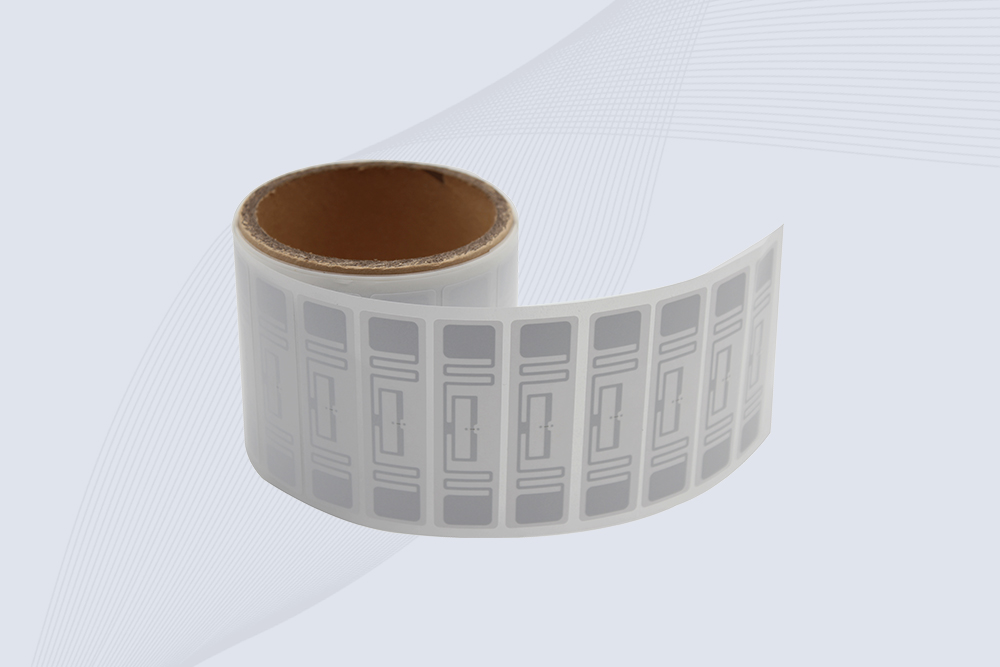
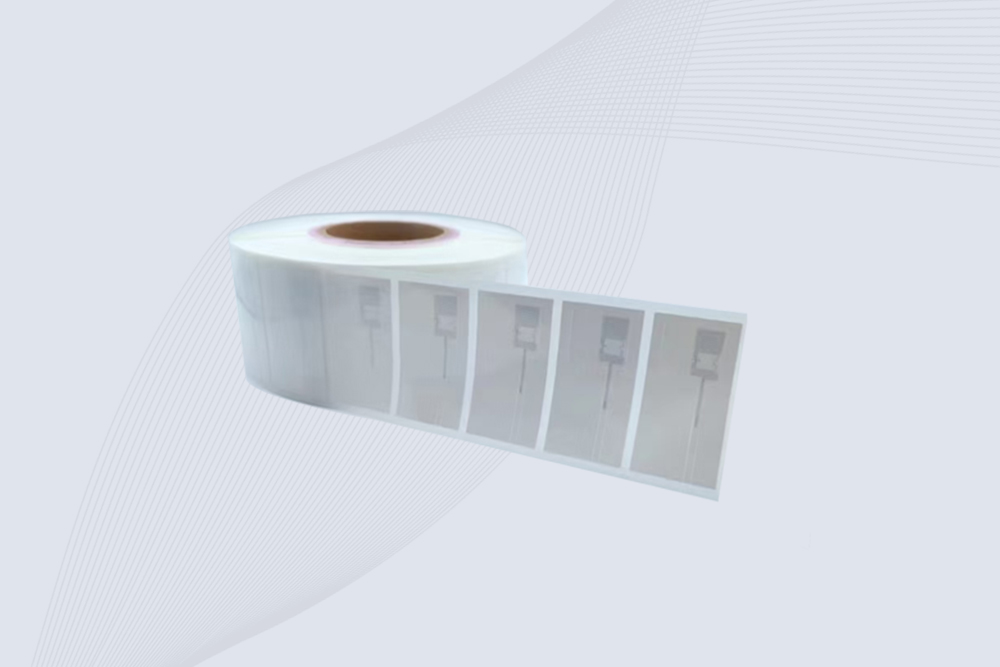
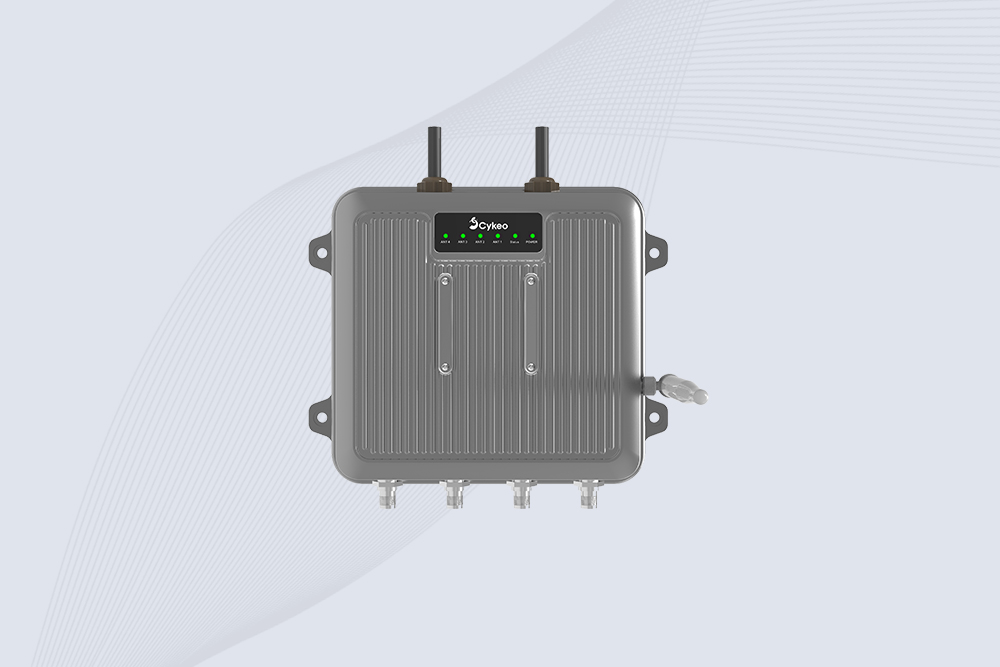
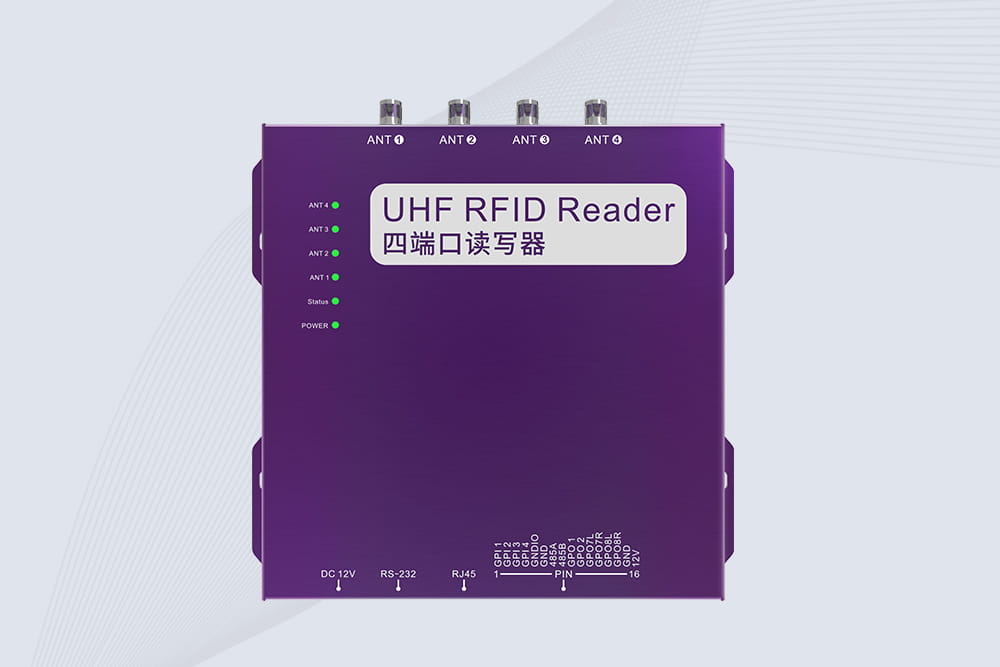
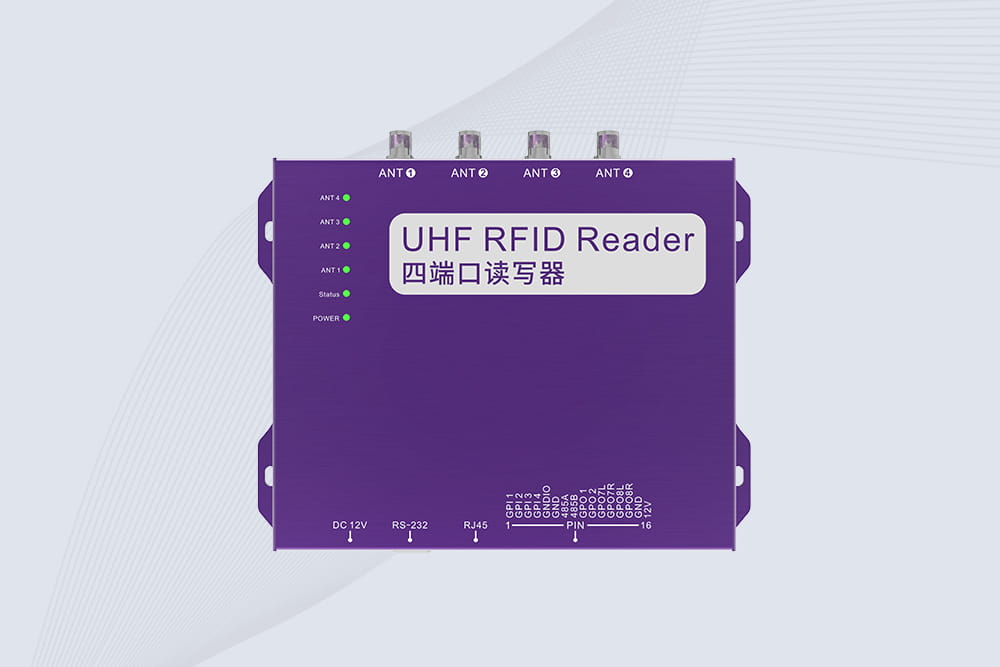
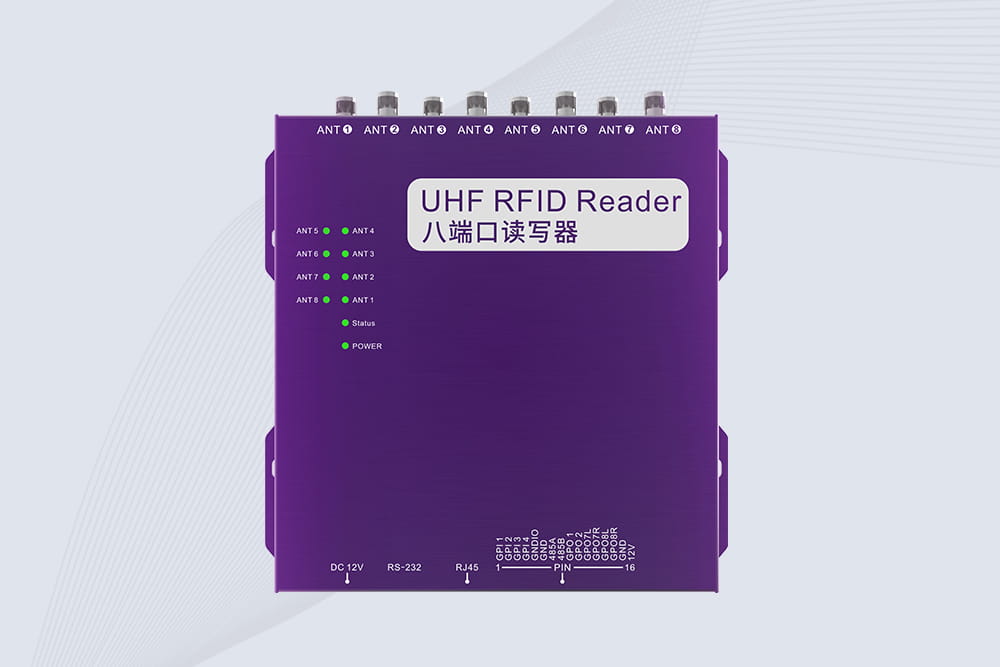
A RFID scanner is used to identify tagged items, collect their stored identification data, and update business systems without requiring direct visual contact with each label. Companies use RFID scanners for inventory counting, asset tracking, warehouse operations, production monitoring, and logistics to improve item visibility and reduce manual scanning work.
An RFID scanner is also commonly called an RFID reader or RFID interrogator. Its job is not simply to detect a tag. It creates a radio-frequency field, communicates with compatible RFID tags, receives their responses, and transfers the captured information to software for processing.
That distinction matters in a real operation. A scanner may successfully read hundreds of tags, but the business only benefits when those reads are associated with the correct products, locations, transactions, and inventory records.
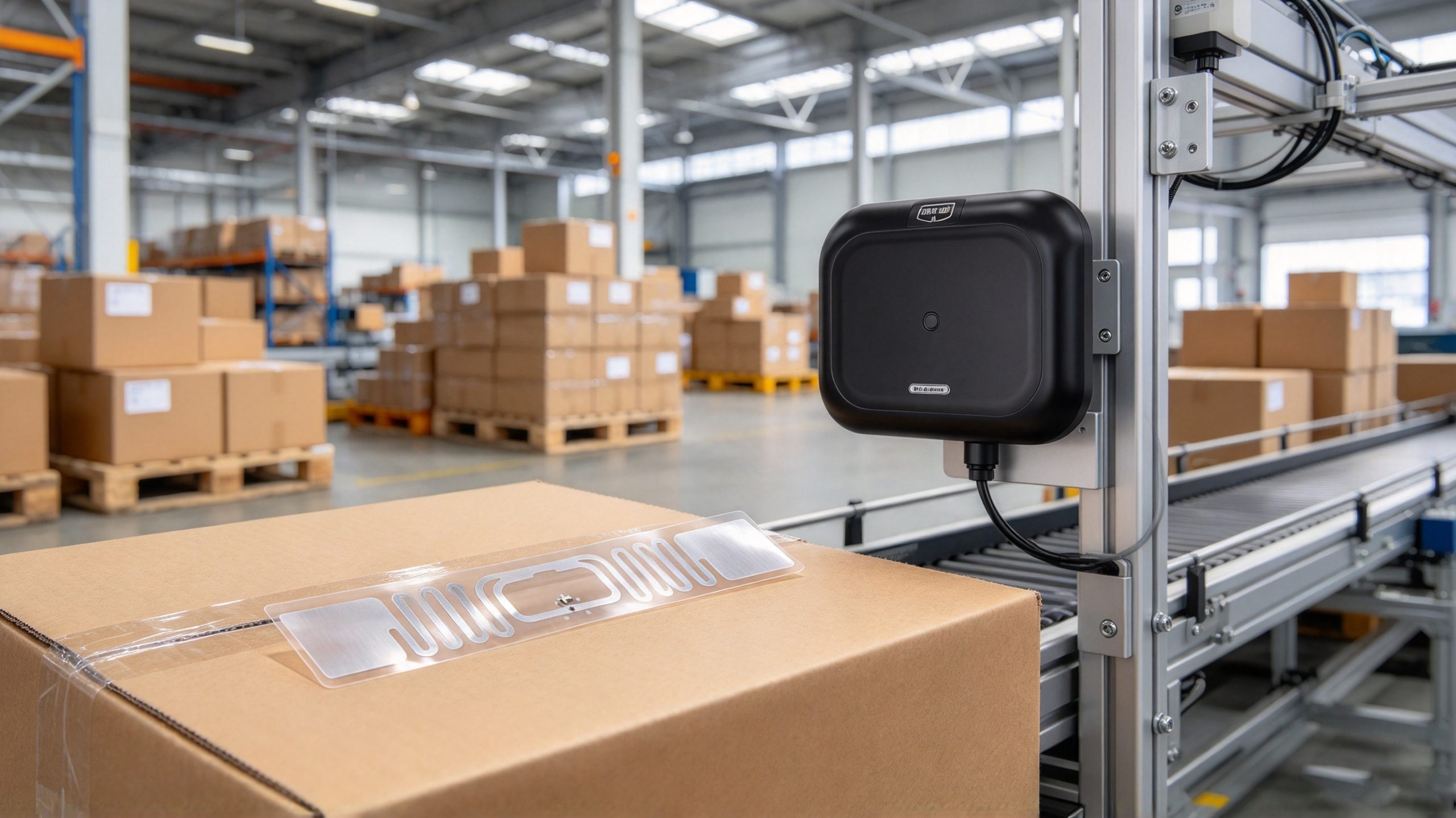
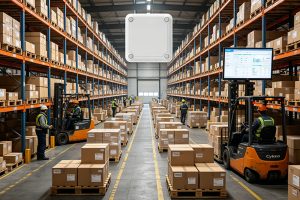
For example, consider a distribution warehouse receiving a pallet of cartons. A barcode process may require an employee to locate and scan individual labels. With a properly configured UHF RFID system, an antenna connected to a fixed reader can identify multiple tagged cartons as they pass through a defined reading zone. The warehouse management system can then use those reads to support receiving and stock updates.
The scanner is therefore part of a larger identification and data-capture process—not a standalone solution for inventory management.
What Does an RFID Scanner Actually Do?
An RFID scanner performs three central functions:
Interrogates RFID tags: It sends radio-frequency signals through an antenna to communicate with compatible tags.
Captures identification data: It receives tag responses and converts them into digital information, such as an Electronic Product Code (EPC).
Transfers read events: It sends the collected information to a computer, controller, or business application for further processing.
The exact process depends on the RFID frequency, tag type, reader design, antenna arrangement, and software configuration.
For passive UHF RFID, the reader transmits energy through its antenna. A passive tag uses energy from the reader’s field to power its chip and responds by modulating and reflecting part of the incoming signal. The reader receives this backscattered response and decodes the information. GS1 describes this reader–tag communication process in its explanation of how an RFID system works.
An important practical point: the scanner does not normally identify an item’s full business description by itself. A tag may return an identifier, while the inventory platform uses that identifier to retrieve the product name, SKU, batch, location, or other associated records.
This is why RFID projects require both a reliable reading setup and a well-maintained data system.
Main Applications: What Is a RFID Scanner Used For in Business?
RFID scanners are used wherever organizations need to identify many tagged objects, monitor their movement, or verify that items are in the expected location. The most common applications are not limited to warehouses. Retail stores, factories, hospitals, libraries, and logistics facilities use different types of RFID readers to solve different identification problems.
1. Inventory Management and Stock Counting
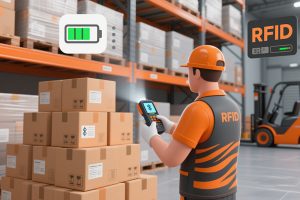
Handheld RFID scanners help warehouse teams identify multiple tagged items during inventory checks.
Inventory management is one of the most established uses of RFID scanners.
A handheld UHF RFID reader allows an employee to move through a warehouse or retail stockroom and capture information from multiple tagged products without aiming at each label individually. Fixed readers can also be installed at receiving areas, storage zones, or conveyor points to record item movement automatically.
Typical inventory tasks include:
Counting tagged products on shelves or in storage areas.
Comparing physical stock with inventory system records.
Identifying misplaced or missing items.
Supporting cycle counts between scheduled stocktakes.
Confirming that products have entered or left a defined area.
Providing more frequent inventory updates for replenishment decisions.
The value is especially clear when the number of individual items is high. A manual barcode count depends on an operator presenting each barcode to a scanner. RFID can capture several compatible tags within the reader’s effective field, provided the tags are correctly positioned and the reading environment is controlled.
Research evidence: A 2013 study by Bill C. Hardgrave, John A. Aloysius, and Sandeep Goyal, published in Production and Operations Management, examined RFID-enabled inventory visibility in two retail field experiments. In the first experiment, researchers studied 13 stores over 23 weeks and reported an approximately 26% reduction in inventory record inaccuracy associated with RFID-enabled visibility. The second experiment covered 62 stores and five product categories, with results varying by category.
This result should not be interpreted as a guaranteed 26% improvement for every RFID installation. It demonstrates that RFID-enabled visibility can improve inventory records under particular operating conditions. Tag coverage, read-zone design, process discipline, and how the software uses the read data all influence the outcome.
2. Asset Tracking and Equipment Management
Businesses also use RFID scanners to locate and account for reusable assets. These may include tools, containers, returnable transport items, IT equipment, medical devices, and production fixtures.
In this application, each asset receives an RFID tag linked to a record in the organization’s asset management system. Employees can use handheld readers to conduct periodic checks, while fixed readers can record movement at selected doors, storage points, or workstations.
For example, a manufacturing plant may assign RFID tags to tool cases and maintenance equipment. When a tagged case passes a reader-controlled checkpoint, the system can record its identifier and the corresponding event. Staff can then review whether the item has moved between departments or has been returned to the designated storage area.
RFID does not automatically provide precise GPS-style positioning. A conventional fixed reader generally confirms that a tag was detected within its effective reading zone. More advanced location systems require additional reader infrastructure, antenna planning, or specialized active RFID technology.
3. Warehouse Receiving, Shipping, and Logistics
At warehouse entry and exit points, fixed RFID scanners can capture tagged cartons, totes, or pallets as they move through a controlled area.
Common applications include:
Verifying incoming shipments against purchase or delivery records.
Recording cartons moving onto a conveyor.
Checking whether the correct goods are assigned to an outbound order.
Recording the movement of returnable containers.
Supporting traceability between receiving, storage, picking, and dispatch.
A useful deployment principle is to design the reading zone around a specific business event. For instance, a reader installed at a receiving doorway should capture goods entering the facility—not accidentally collect tags from nearby storage racks.
That requires attention to antenna direction, transmit power, tag orientation, conveyor speed, and the physical layout of the doorway. Simply choosing a reader with a higher output power does not necessarily produce more accurate results. It may also increase unwanted reads from adjacent areas.
4. Production Line Monitoring and Work-in-Process Tracking
In manufacturing, RFID scanners can help identify components, work-in-process (WIP) items, and finished products as they move through production.
A tag attached to a component carrier, product container, or workpiece can provide an identifier that links the physical item to its production record. Readers installed at selected stations can capture that identifier when the item reaches a particular stage.
A typical workflow might look like this:
A component carrier receives an RFID tag during material preparation.
A reader at the production entrance identifies the carrier.
The manufacturing execution system checks the associated work order.
A reader at a later workstation records the next process event.
The system updates the item’s production status and movement history.
This approach can reduce repeated manual identification and help prevent work orders from becoming disconnected from the physical items being processed.
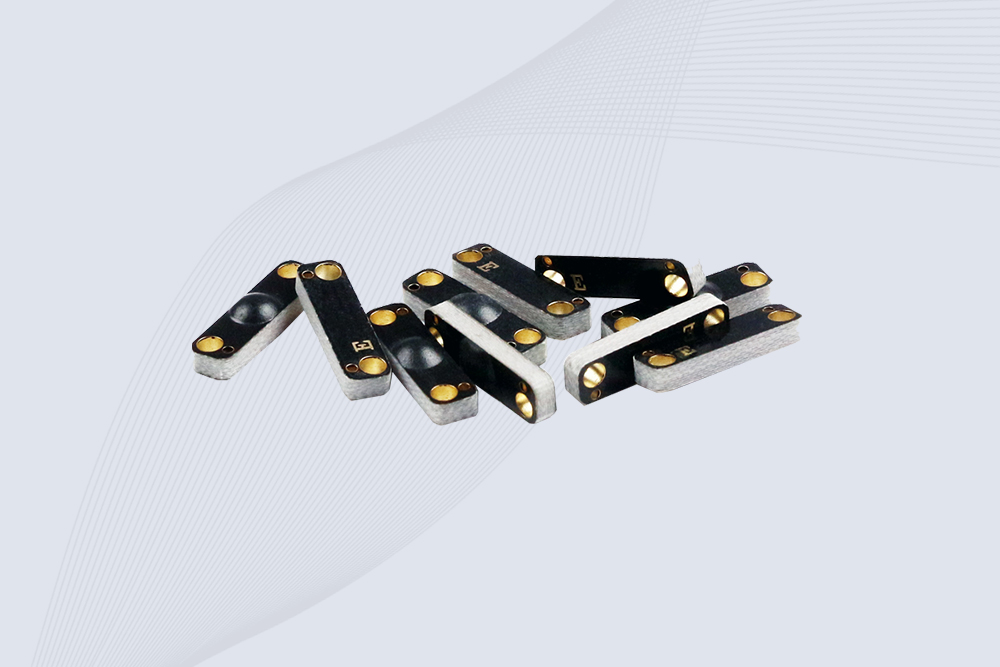
The reader’s installation must match the production environment. Metal machinery, liquid-filled products, moving equipment, and dense tag populations can affect UHF performance. In some applications, specialized on-metal tags, alternative antenna positions, or near-field RFID solutions may be more appropriate than a conventional label and far-field reader.
5. Retail Operations and Product Visibility
Retailers use RFID scanners to improve visibility at the item level. A store can use handheld readers for stock checks and fixed readers for selected operational points, such as stockroom exits or merchandise handling areas.
Typical applications include:
Checking whether a product is available in the stockroom or sales area.
Supporting replenishment from back-of-house storage.
Finding items that are recorded in the wrong location.
Verifying merchandise during transfers between stores.
Supporting item-level stocktaking and loss-prevention processes.
The important distinction is between reading a tag and knowing where the product is. A handheld scanner may detect a tag somewhere nearby, but that does not always establish its exact shelf position. Location accuracy depends on the reader type, antenna arrangement, signal behavior, and the method used to interpret read events.
Retail teams should therefore define the task before choosing the scanner. A device for periodic stocktaking has different requirements from a fixed reader intended to record product movement through a doorway.
6. Libraries, Healthcare, and Specialized Environments
RFID scanners also support applications where objects must be identified repeatedly and reliably.
Industry
Typical RFID scanner application
Operational purpose
Libraries
Reading tagged books and media
Circulation, returns, stocktaking, and shelf management
Healthcare
Identifying tagged medical equipment and supplies
Asset checks and inventory visibility
Manufacturing
Tracking tools, components, and work-in-process
Process identification and movement records
Logistics
Reading tagged cartons, pallets, and containers
Receiving, dispatch, and shipment verification
Laundry services
Identifying tagged garments and textile batches
Sorting, counting, and tracking reusable textiles
These applications do not all use the same hardware. A library self-service station, an industrial conveyor reader, and a handheld healthcare asset scanner may rely on different frequencies, antenna configurations, tag formats, and software interfaces.
The right question is not simply whether an RFID scanner can read a tag. It is whether the complete system can identify the required item consistently in the actual operating environment.
How Does an RFID Scanner Read a Tag?
Fixed RFID readers capture tagged items as cartons pass through a configured warehouse reading zone.
A passive UHF RFID scanner typically reads a tag through radio-frequency communication. The reader sends a signal through an antenna, the passive tag uses energy from that signal to activate its chip, and the tag returns information by backscatter. The reader decodes the response and passes the resulting data to connected software
The process can be understood in four stages.
Stage 1: The reader creates a radio-frequency field.
The RFID reader generates a signal at its configured operating frequency. The connected antenna transmits that signal into a defined area. The size and shape of the effective reading zone depend on the reader, antenna, output power, environment, and tag characteristics.
Stage 2: The tag responds.
When a compatible passive tag enters the field, it receives energy and responds to the reader. The tag’s microchip provides its identification data. In common UHF systems, the tag communicates by modulating the reflected signal rather than generating an independent radio transmission.
Stage 3: The reader decodes the tag information.
The reader processes the returned signal and extracts the data it can successfully read. Depending on the tag and protocol, this may include an EPC identifier and other supported information.
Stage 4: Software interprets the read event.
The reader sends the captured data to a host computer, industrial controller, or application. Software can then match the tag identifier to a product record and determine what action should follow.
For example, a reader may capture an EPC at a warehouse entrance. The warehouse management system can compare that identifier with an expected delivery list and flag a discrepancy if the item was not scheduled to arrive.
What Types of RFID Scanners Are Used?
The term RFID scanner covers several device formats. The best choice depends on whether employees need to move around and scan items manually or whether the business wants to capture tag data automatically at a fixed point.
Handheld RFID scanner: A portable reader used for stocktaking, asset checks, searching for tagged items, and mobile warehouse tasks.
Fixed RFID reader: A reader installed at a doorway, conveyor, production station, or other defined reading point. It is suitable for automated item identification.
Integrated RFID reader: A device with an antenna built into the same enclosure, often used where a compact installation is preferred.
Desktop RFID reader: A reader designed for a workstation, such as tag registration, encoding, verification, or small-scale checkout.
RFID OEM module: A reader module integrated into a larger machine, cabinet, terminal, or custom equipment design.
How to Choose an RFID Scanner for Your Business
Before comparing models, define the identification task. A scanner used to register individual tags at a desktop workstation has different requirements from one expected to read a dense group of cartons moving through a warehouse portal.
Start with five questions:
What items will be tagged? Consider carton size, product material, packaging, and whether the tag will be attached to metal, liquid containers, textiles, or plastic.
Where will reading take place? A workstation, storage aisle, doorway, conveyor, outdoor yard, or production line creates different installation requirements.
How many tags must be read? A few tags at a time and hundreds of tags in a dense population require different reader and antenna configurations.
How will the scanner connect to software? Check whether the application requires USB, serial communication, Ethernet, an SDK, an API, or an industrial protocol.
What should happen after a tag is read? The system may need to register an item, update a stock record, validate a shipment, or trigger an alarm.
A useful purchasing decision begins with the business event. If the requirement is to verify that a shipment has crossed a dispatch point, for example, the project needs a controlled read zone and a reliable way to associate tag reads with the dispatch transaction. A reader with a long advertised range cannot solve a poorly defined process.
Handheld vs. Fixed RFID Scanner: Which Is Better?
The two formats serve different operational roles. Neither is universally better.
Comparison
Handheld RFID scanner
Fixed RFID scanner
Operation
Employee moves the reader between items or locations
Reader remains installed at a defined point
Typical use
Stocktaking, asset searches, spot checks
Conveyor reading, doorway monitoring, production tracking
Mobility
High
Low
Reading process
Usually initiated or controlled by an operator
Can operate automatically through configured triggers or software
Installation
Charging, connectivity, application setup
Mounting, antenna placement, cabling, network and zone configuration
Best suited to
Flexible tasks across multiple locations
Repeated identification at known checkpoints
When a Handheld RFID Scanner Makes Sense
A handheld device is useful when employees need to inspect different shelves, rooms, storage areas, or asset locations throughout a shift.
For example, an inventory operator may walk along a warehouse aisle and scan tagged cartons stored at several levels. The reader captures compatible tag identifiers within its effective range, and the mobile application can compare the results with the expected inventory list.
Handheld equipment is particularly useful for:
Periodic inventory checks.
Finding tagged tools or equipment.
Checking stock in multiple storage locations.
Verifying products during store transfers.
Investigating inventory discrepancies.
One practical consideration is operator technique. The angle, movement speed, antenna orientation, and distance from the target can affect which tags are detected. A handheld scanner should therefore be tested with the actual tags and packaging—not just demonstrated with a sample tag on an empty desk.
When a Fixed RFID Scanner Is the Better Choice
A fixed reader is more appropriate when items repeatedly pass through a known location and the business wants to capture identification events without requiring an employee to scan them individually.
Common installation points include:
Conveyor systems.
Warehouse receiving and dispatch doors.
Production line checkpoints.
Automated sorting stations.
Storage and equipment access points.
A fixed installation usually includes a reader, one or more antennas, mounting hardware, network or serial connections, and software that interprets the read events. Some integrated readers combine the antenna and reader electronics in one enclosure, reducing installation complexity.
The critical engineering task is defining the reading zone. If the antenna captures tags on a nearby shelf when the intended event is a carton passing on the conveyor, the system may produce incorrect movement records. Antenna placement and read-power adjustment should be tested under normal operating conditions.
RFID Scanner Read Range: Why Maximum Distance Is Not the Whole Story
Read range is one of the most visible specifications in an RFID product brochure. It is also one of the easiest specifications to misunderstand.
GS1 explains that passive UHF (RAIN) RFID tags can typically be read over several metres, with distances of up to 15 metres possible in very specific cases. Specialized readers using phased-array antennas and high sensitivity may achieve greater distances. Actual performance depends on the tag, reader power, antenna characteristics, polarization, orientation, and surrounding environment.
For an industrial project, the more useful question is often:
Can the scanner read the correct tags, in the correct area, at the correct time?
A warehouse may need to read cartons on one conveyor lane while ignoring products waiting on the neighboring lane. A longer read range could make that harder if the antenna field spills into the wrong area.
Consider these factors:
Factor
Possible effect on RFID performance
Practical response
Reader output power
Changes the energy transmitted into the reading zone
Adjust power during site testing
Antenna gain and direction
Influences coverage shape and field concentration
Select and position antennas for the required zone
Tag orientation
Some tag and antenna combinations are orientation-sensitive
Test different item orientations
Metal surfaces
Can reflect radio waves and detune conventional tags
Use suitable on-metal tags and test mounting positions
Water and liquids
Can absorb UHF energy and reduce tag performance
Select appropriate tag designs and mounting positions
Nearby RFID readers
May create interference or overlapping read zones
Coordinate reader settings and timing
Item movement speed
Reduces the time available to identify passing tags
Test at actual conveyor or vehicle speeds
GS1 specifically notes that metal can reflect and diffract radio waves, while water and liquids can absorb UHF energy and reduce tag performance. Specialized on-metal tags and tag designs for liquid-containing products can help, but they still need to be tested in the intended application.
Why a Longer Reading Distance Can Create More Problems
Imagine a fixed reader mounted above a conveyor. Its purpose is to identify cartons moving through one particular section.
If its reading field extends too far, it may also detect tags on a nearby pallet or on cartons waiting for processing. The reader has captured genuine tag responses, but the software may associate them with the wrong operational event.
This is not necessarily a reader hardware failure. It is a read-zone design problem.
A better commissioning process is to:
Mark the physical area where tags are supposed to be detected.
Test tags at the center, edges, and outside the intended zone.
Check performance with the actual packaging and product load.
Adjust antenna position, orientation, and transmit power.
Repeat tests with the conveyor operating at normal speed.
Confirm that nearby storage locations are not being read unintentionally.
A successful installation should prioritize a controlled and repeatable reading area over an impressive maximum-distance figure.
Common RFID Scanner Problems and How to Troubleshoot Them
An RFID reader can power on, communicate with a computer, and still fail to deliver reliable identification data. The cause may be the tag, antenna, RF environment, software configuration, or the way items move through the reading zone.
Problem 1: The RFID Scanner Cannot Read a Tag
Start with compatibility. Confirm that the tag and reader use the same frequency and a supported air-interface protocol. A UHF reader cannot be expected to read an HF access card simply because both products are described as RFID.
Then check:
Whether the tag is damaged.
Whether the tag is attached to metal or close to liquid.
Whether the tag is positioned within the antenna’s effective field.
Whether the reader’s regional frequency configuration is correct.
Whether the antenna cable and connector are secure.
Testing a known-good tag is a useful first step. If the reader detects that tag but not the target product’s tag, investigate tag suitability and mounting before replacing the reader.
Problem 2: The Scanner Misses Some Tags in a Group
A dense population of tags can be more difficult to read than a single tag on a desk.
Possible causes include:
Tags placed too close together.
Poor tag orientation.
Product packaging that absorbs or reflects RF energy.
Insufficient time in the reading zone.
Inappropriate reader inventory settings.
Antenna coverage that does not reach all items.
Do not immediately increase transmit power. First check whether the missed tags are concentrated in a particular position or orientation. If so, the problem may be antenna coverage or tag placement rather than insufficient output power.
Problem 3: The Scanner Reads Tags Outside the Intended Area
This is common in installations with nearby storage racks, parallel conveyor lanes, or multiple workstations.
Possible corrective actions include reducing reader output power, changing antenna direction, adjusting antenna height, using shielding where appropriate, and introducing a trigger so the reader operates only during the relevant event.
Software filtering can help distinguish valid events from irrelevant reads, but it should not be used as a substitute for a badly controlled RF environment.
Problem 4: The Reader Detects Tags but the Software Does Not Update Inventory
This problem often occurs after the RF reading stage.
The reader may be returning valid tag identifiers, while the application fails to process them because of an interface, data-format, mapping, or transaction issue.
Check the communication path in sequence:
Confirm that the reader is powered and configured.
Verify that the computer or controller can communicate with it.
Use the reader’s demonstration software or diagnostic utility to confirm tag reads.
Check whether the application receives the same identifiers.
Verify that the identifiers map to valid product or asset records.
Check whether business rules accept the read event and update the relevant transaction.
This separation is important. A tag appearing in a reader diagnostic tool but not in the warehouse application points toward an integration or software issue—not necessarily an RFID antenna problem.
Connecting an RFID Scanner to Inventory or Business Software
The scanner is the data-capture component. A complete RFID system also needs a way to transfer, interpret, and store its results.
Common connection options include:
Interface
Typical application
USB
Desktop tag registration, workstation operations, and device configuration
RS-232
Serial communication with industrial controllers or computers
Ethernet
Fixed readers connected to warehouse or factory networks
SDK/API
Custom application development and integration
Industrial interfaces
Integration with automation equipment, depending on the reader model
The exact interfaces and supported protocols vary by model. Buyers should confirm the current technical documentation rather than assuming that all RFID readers provide the same connections.
For UHF systems, another relevant integration standard is LLRP (Low Level Reader Protocol), which defines communication between RFID readers and client applications. It can be useful in systems that need a standardized way to manage compatible readers, although actual support must be checked for each device.
A Practical Example: Linking a Fixed Reader to Warehouse Receiving
Suppose a warehouse wants to verify incoming cartons automatically.
The process could be structured as follows:
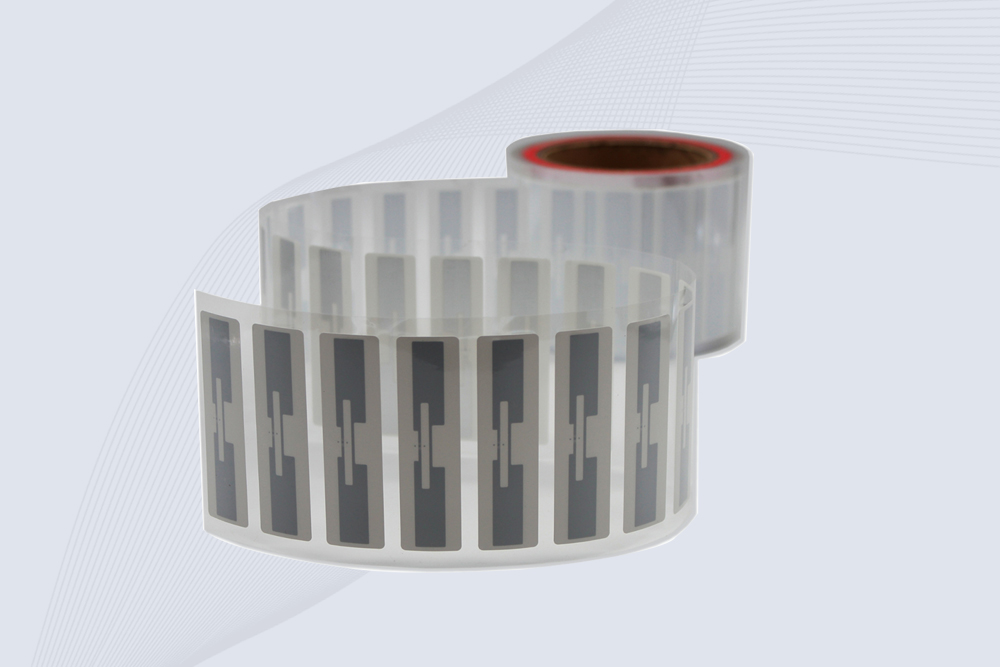
Each carton carries a compatible UHF RFID label with a unique identifier.
A fixed reader and antenna are installed at the receiving checkpoint.
The warehouse application receives the tag identifiers from the reader.
The application compares the identifiers with the expected delivery records.
Matching cartons are recorded as received.
Unexpected, duplicate, or missing identifiers can be flagged for review.
The key design decision is how the system knows that a read corresponds to a receiving event. A reader may detect the same carton more than once while it remains in the RF field. Software should therefore use suitable event logic, time windows, and transaction rules rather than treating every raw read as a new receipt.
For businesses planning an RFID installation, it is worth testing the complete process with actual products, tags, readers, and software before expanding to every warehouse zone.
Cykeo RFID Scanner Solutions for Different Applications
Cykeo provides RFID reader hardware for industrial identification, desktop tag operations, and integration into larger equipment. The appropriate model depends on the required reading area, tag population, installation environment, and host-system interface.
The following product descriptions are based on the technical specifications supplied for this article. Confirm the latest datasheet, available interface, and regional configuration before publication or purchase.
The CYKEO-RA9L / CK-D9L is designed for fixed industrial RFID applications where tags need to be identified at a defined location.
The supplied specifications describe a 9 dBi integrated UHF reader with an ABS antenna and aluminum rear shell. Available communication options include RS-232 and Ethernet, depending on configuration.
Relevant features include:
Support for ISO 18000-6C and ISO 18000-6B.
Support for GB/T 29768-2013.
Carrier cancellation and anti-collision functions.
Wideband frequency hopping.
Surge and lightning protection.
DEMO software, SDK, and API support.
Industrial design for fixed installation.
Typical applications include warehouse receiving, conveyor identification, production monitoring, and asset tracking at controlled checkpoints.
For installations requiring a different antenna configuration, a 12 dBi variant is also described in the supplied product information. Antenna gain alone should not determine the selection; the actual read-zone geometry and applicable regional RF limits must also be considered.
CYKEO-M4L: UHF RFID OEM Reader Module
The CYKEO-M4L is an OEM UHF RFID module intended for integration into custom equipment and identification systems.
Its supplied specifications include an analog RF front-end and baseband DSP, together with an API library for software development. It supports ISO 18000-6C / EPC C1G2 and ISO 18000-6B, with GB/T 29768-2013 support available as specified.
Other listed capabilities include:
Adjustable output power up to 33 dBm, in 1 dBm steps.
Fixed-frequency and frequency-hopping operation.
Tag filtering and anti-collision functions.
A dense multi-tag reading algorithm.
A stated reading performance of more than 600 tags per second under specified test conditions.
The stated read rate should be treated as a product specification, not a guaranteed result for every installation. Actual throughput depends on tag type, RF conditions, reader configuration, antenna arrangement, and the time available for each tag to respond.
This module may suit equipment manufacturers developing automated cabinets, industrial terminals, self-service equipment, or customized RFID readers.
SSD-D1AL: Desktop RFID Reader-Writer
Not every RFID application requires a long-range industrial reader. Some operations need a controlled desktop device for registering, reading, or writing tags.
The SSD-D1AL desktop RFID reader-writer is described as using an Impinj R500 platform and a near-field antenna. The supplied specifications include:
Maximum port output power of 33 dBm.
Reading distance of up to 30 cm.
Writing distance of up to 10 cm.
Automatic read/write demonstration software.
Batch-writing support.
Tag filtering functions.
C# and Java development materials.
These distances are product-specific stated limits, not universal guarantees. Actual performance depends on tag design, configuration, and operating conditions.
A desktop reader-writer may be suitable for tag registration, encoding, verification, and small-scale checkout tasks where the operator needs to work with a controlled group of tags.
What to Check Before Buying an RFID Scanner
A procurement decision should go beyond comparing product prices and maximum read distances. The following checklist can help businesses avoid selecting equipment that does not match the actual process.
Confirm that the reader and tag use compatible frequencies.
Check support for the required RFID air-interface protocol.
Identify whether handheld, fixed, integrated, or desktop equipment is needed.
Test the tag on the actual product and packaging.
Check the required antenna coverage and reading-zone boundaries.
Confirm the number of tags that must be read within the available time.
Verify USB, RS-232, Ethernet, SDK, API, or other required interfaces.
Confirm that the reader is configured for the destination country’s radio regulations.
Test the complete workflow with the target inventory or asset-management software.
Review environmental requirements such as dust, moisture, temperature, and mounting conditions.
Regional frequency compliance deserves particular attention for international deployments. GS1 Japan notes that available UHF RFID frequency allocations differ between countries and that equipment must comply with the regulations applicable to its operating region. GS1 Japan 一般財団法人流通システム開発センター+1
Frequently Asked Questions About RFID Scanners
1. What is a RFID scanner used for in inventory management?
A RFID scanner is used to identify tagged products and capture their identification data during stocktaking, receiving, storage, picking, and dispatch. Handheld scanners support mobile inventory checks, while fixed readers can record item movement at designated points. The captured identifiers can be matched with inventory records to improve stock visibility and help identify discrepancies.
2. Can an RFID scanner read multiple tags at once?
Yes. Compatible RFID readers, particularly UHF systems, can identify multiple tags within their effective reading zone. The number of tags successfully read depends on the reader’s capabilities, tag population, antenna arrangement, tag orientation, RF environment, and available reading time. Dense tag groups should be tested using the actual products and packaging.
3. How far can an RFID scanner read a tag?
There is no single maximum distance for all RFID scanners. Passive LF and HF systems generally operate over shorter distances, while passive UHF systems can typically read tags over several metres. GS1 notes that UHF passive RFID may reach up to 15 metres in very specific cases. Actual performance depends on reader power, antenna design, tag characteristics, orientation, and the surrounding environment.
4. What is the difference between an RFID scanner and a barcode scanner?
A barcode scanner reads printed optical patterns and generally needs a clear view of the barcode. An RFID scanner communicates with an electronic tag using radio-frequency signals and does not normally require direct visual contact. RFID can also identify multiple compatible tags within a reading zone, while barcode workflows commonly require individual barcode presentation.
Feature
RFID scanner
Barcode scanner
Identification method
Radio-frequency communication
Optical image or laser-based reading
Direct line of sight
Usually not required
Usually required
Multiple-item reading
Possible with compatible RFID systems
Usually one barcode at a time
Data carrier
Electronic RFID tag
Printed barcode
Typical consideration
RF environment and tag compatibility
Print quality and visibility
5. Can an RFID scanner read tags through cardboard or plastic?
In many applications, yes. Passive UHF RFID can often read compatible tags through cardboard and some plastic packaging without direct visual contact. However, materials, packaging structure, moisture, metal, and tag placement can affect performance. A tag mounted near liquid or directly on an unsuitable metal surface may require a specialized design or a different mounting position.
6. Do RFID scanners need software to work?
An RFID reader can often perform basic tag-reading operations without a complete inventory application, using its configuration utility or demonstration software. However, businesses generally need software to connect tag identifiers with product records, manage transactions, filter duplicate reads, and update inventory or asset data. The required software depends on the application and the reader’s supported interfaces.
7. Which RFID scanner is best for industrial use?
The best industrial RFID scanner depends on the operating environment and identification task. A fixed UHF reader may be appropriate for conveyors and warehouse checkpoints, while an OEM module can be integrated into custom equipment. Handheld devices are better suited to mobile stocktaking and asset checks. Before selecting a model, test the reader with the actual tags, products, antenna positions, and software workflow.
Final Perspective: What Is a RFID Scanner Used For?
What is a RFID scanner used for? In business operations, it is used to identify tagged objects, capture their data, and provide the information needed for inventory control, asset tracking, logistics, retail operations, and industrial automation.
The practical value does not come from reading the greatest possible number of tags or achieving the longest advertised distance. It comes from capturing the right identifiers at the right operational point and ensuring that the resulting data reaches the system responsible for acting on it.
For a warehouse, that might mean confirming cartons at receiving. For a factory, it may mean recording work-in-process movement. For an equipment manager, it could mean checking whether reusable tools have returned to their assigned locations.
Cykeo RFID readers and modules support different parts of these workflows, from desktop tag operations to fixed industrial identification and OEM integration. The appropriate solution should be selected around the application, tag requirements, reading environment, and software architecture.
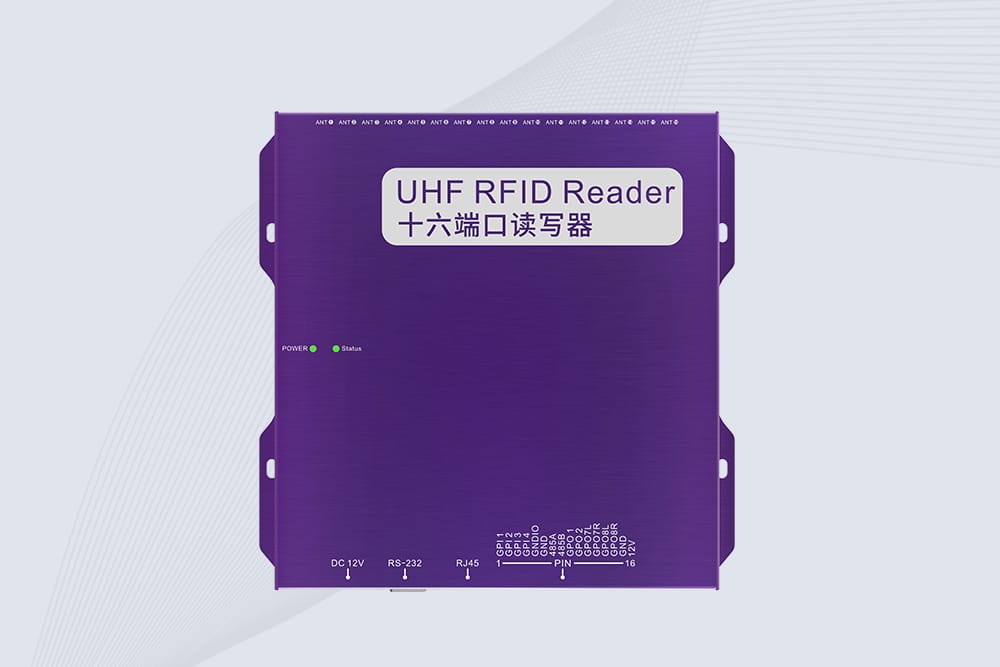
SSD-R16L Multi-Channel RFID Infrastructure for Automated Inventory Management ✔️ 16-Port High-Density RFID Reading Equipped with 16 SMA antenna ports, SSD-R16L supports multi-antenna deployment for warehouses, retail stores, logistics, production lines, and large-area RFID identification. ✔️ High-Speed & Long-Range Performance With up to 33…
SSD-R8L 8-port UHF RFID reader with 33dBm output, up to 20m reading range and 600+ tags/s recognition. Ideal for warehouse, logistics, retail and asset tracking.
CYKEO Passive RFID Tags are made for wet and high-humidity environments where standard labels do not last. This rfid passive tag is often used around liquids, chemicals and temperature changes, providing stable reading distance and long data life for industrial tracking.
CYKEO CYKEO-PCB1504 Metal RFID Tags is a compact anti-metal UHF RFID solution built for direct mounting on metal surfaces. With stable 8-meter read range, Ucode-8 chip, and long data retention, this rfid metal tag fits tools, containers, automotive parts, and industrial asset tracking.
CYKEO CYKEO-PCB7020 On-Metal RFID Tags are designed for reliable tracking on steel and metal surfaces. Built with an FR4 epoxy body and industrial-grade chips, these On-Metal RFID Tags deliver stable performance, long data life, and chemical resistance, making them a dependable RFID anti-metal tag for harsh environments.
The CYKEO CYKEO-60-25 Anti-Metal RFID Tag is built for metal surfaces where standard tags fail. Designed for long-range performance, harsh environments, and stable data retention, this Anti-Metal RFID Tag is ideal for industrial assets, containers, and equipment tracking using on metal RFID tags.
The CYKEO RFID Laundry Tag is designed for long-term textile identification in harsh laundry environments. Built to withstand high heat, chemicals, and repeated washing, this RFID Laundry Tag delivers stable performance for hotels, hospitals, and industrial laundry operations using laundry rfid tags at scale.
The CYKEO CYKEO-125-7 RFID Book Tag is designed for reliable book and document tracking in libraries and archives. This RFID Book Tag delivers long read range, dense placement support, and stable performance on shelves, making it a practical rfid tag on books for library automation, file management, and archival systems.
CYKEO RFID tags in hospitals are designed for sterile environments where accuracy matters. These autoclavable RFID tags support long-term tracking of surgical tools, implants, and medications, helping hospitals improve visibility, compliance, and patient safety.
CYKEO RFID Cable Tie Tag is built for reliable identification on metal surfaces. This UHF RFID Cable Tie Tag is widely used in rfid tags for inventory systems, industrial asset management and Hospital RFID Tags, offering stable read performance, long service life and global EPC Gen2 compatibility.
CYKEO RFID Asset Tag is designed for stable identification of metal assets in industrial environments. This UHF RFID Asset Tag is commonly used for rfid tag asset tracking on equipment, tools and containers, providing reliable reads, long service life and ISO/IEC 18000-6C support.
CYKEO UHF RFID Card is designed for fast identification and long-term use in industrial and commercial systems. Supporting ISO 18000-6C, this UHF RFID Card works at 860–960 MHz and is suitable for custom RFID cards used in asset tracking, access control and inventory management.
CYKEO HF RFID Cards are designed for secure and stable access control systems. These 13.56 MHz RFID key cards support ISO 14443-A, reliable rewriting and long service life, making HF RFID Cards suitable for offices, campuses, events and membership management.
CYKEO UHF RFID Tag is designed for reliable tracking of metal jewelry and high-value items. This Jewelry RFID Tag supports long-range reading up to 8 meters, anti-counterfeit protection and stable performance on metal, making it suitable for retail, inventory control and asset management.
Cykeo CYKEO-C1 industrial Forklift RFID Reader features 20m read range, 600 tags/sec scanning, Impinj R2000 chipset, and IP67 rugged design. Ideal for warehouse logistics and manufacturing. Supports ISO 18000-6C/6B protocols.
Cykeo CYKEO-R4 industrial UHF RFID Fixed Reader features 4 TNC ports, 400+ tags/sec speed, IP67 housing, and global frequency compliance for vehicle inspection, smart warehouse, and asset management systems.
CYKEO CYKEO-R8L Fixed RFID Reader with 8-port UHF design, Impinj-based RF core and up to 20m read range. An industrial Fixed RFID Reader for vehicle inspection, warehouse portals, smart manufacturing lines and secure access checkpoints.
RFID Fixed Reader from CYKEO – the CYKEO-R16L 16-port UHF fixed reader for warehouses, smart cabinets, and production lines. Long-range, multi-tag reading, stable performance for 24/7 industrial use.
Discover how rfid tags labels improve inventory accuracy, asset visibility, and supply chain efficiency. Learn how to choose the right RFID labels with expert insights from Cykeo.
Learn how to select the best handheld RFID reader for warehouse inventory management. Compare UHF range, durability, software integration, and budget-friendly options.
Learn how to select the right RFID antenna for warehouse inventory systems. Compare types, range, and installation tips to optimize RFID accuracy and efficiency.
Discover how to customize RFID tag modules for harsh industrial environments like high heat, metal surfaces, and chemical exposure. Expert tips and case studies included.
 Cykeo RFID IoT Solution Products R&D Manufacturer