You walk into a warehouse. Boxes everywhere. Some have black-and-white stripes. Others have tiny square labels you barely notice. Both are supposed to help track things. But they work completely differently.
Here is the thing. When people search what are barcodes and RFID tags, they usually want to know how these two technologies compare—and which one they should use. Barcodes are the familiar stripes. RFID tags are the newer technology using radio waves. Both identify items, but that is where the similarity ends.
Let me break down what each one is, how they work, and when you want one over the other.
What Are Barcodes?
A barcode is a visual pattern of black lines and white spaces that encodes information . When a scanner shines light on it, the reflected pattern tells the scanner what item it is looking at.
How barcodes work:
Printed on labels or directly on packaging
Read by laser scanners or cameras
Require line of sight—the scanner must “see” the barcode
Each scan reads one barcode at a time
Store a limited amount of data (usually just an ID number)
Two main types:
1D barcodes (UPC, Code 39): The classic vertical lines you see on retail products. They encode numbers and basic letters, typically 20-25 characters .
2D barcodes (QR codes, DataMatrix): Square grids that hold much more information—URLs, text, even small images. These require camera-based scanners .
Pros of barcodes:
Extremely low cost—pennies per label
Universal compatibility—every retail system understands them
Simple to generate and print
Works on any device with a camera and basic software
Cons of barcodes:
Must be visible to be scanned
Can only scan one at a time
Labels get damaged, dirty, or unreadable
Data is static—once printed, it cannot change
No read/write capability beyond initial printing
What Are RFID Tags?
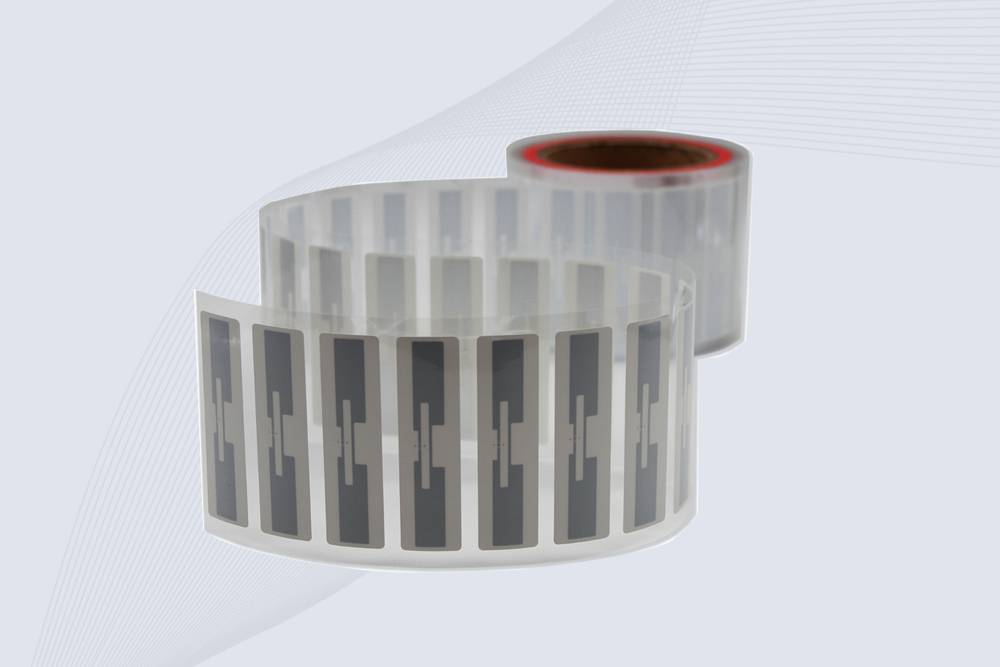
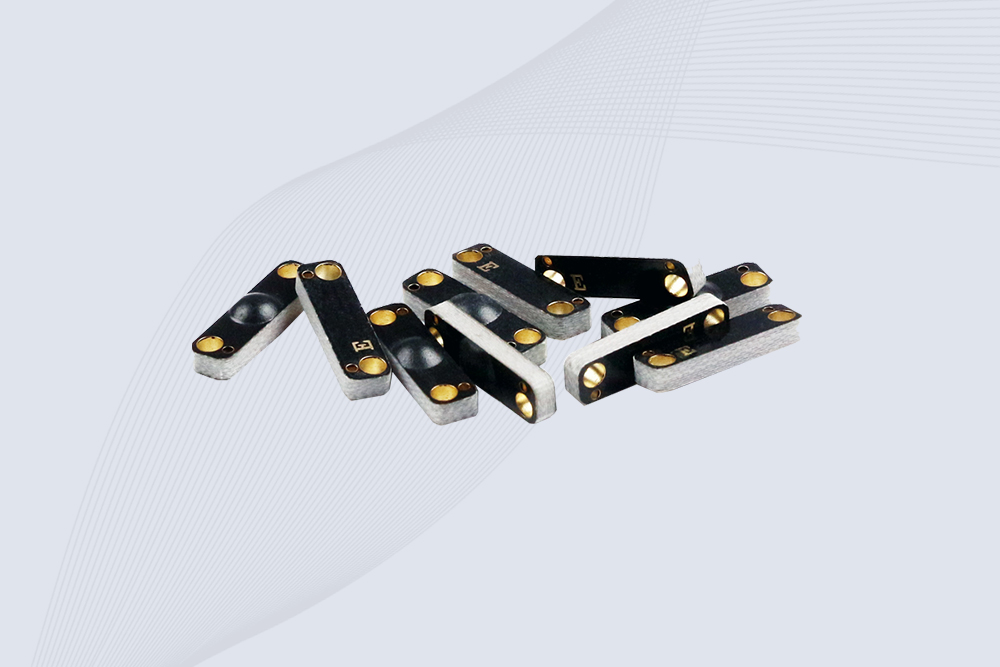
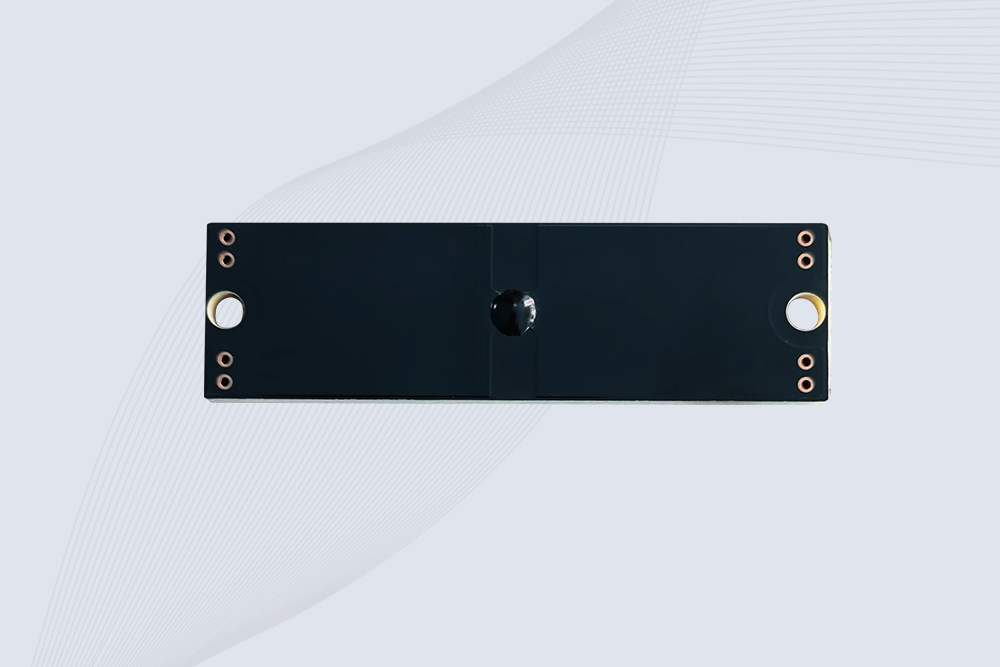
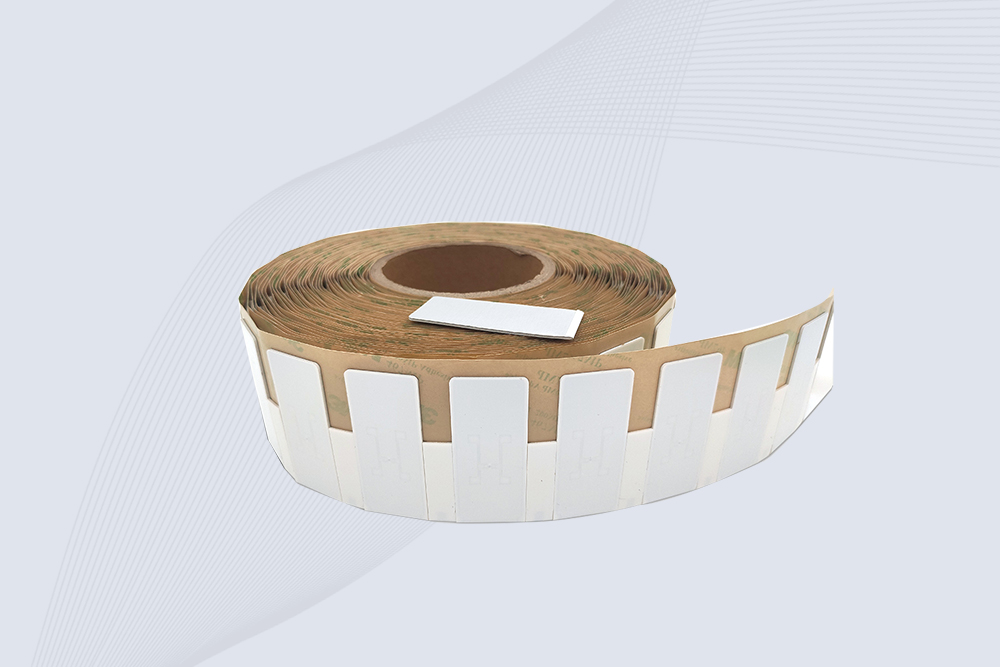
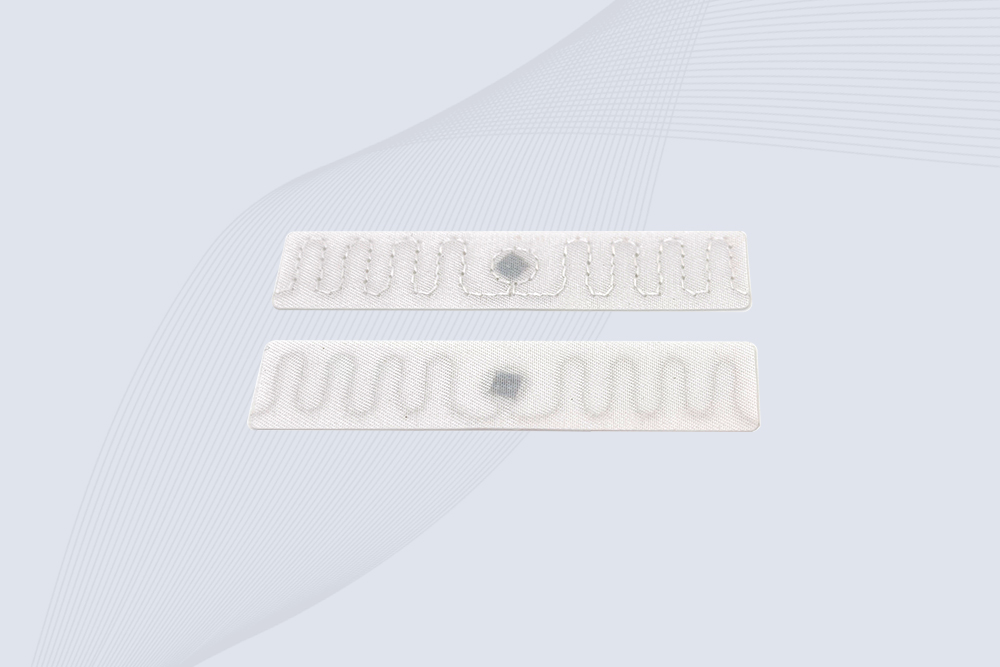
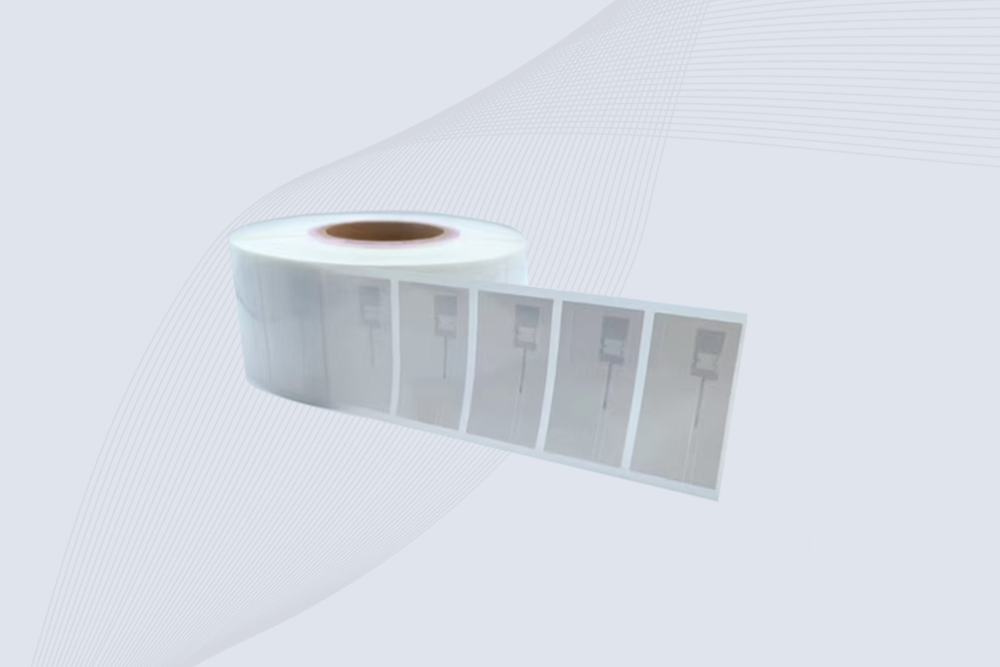
RFID stands for Radio Frequency Identification. Instead of printed lines, an RFID tag is a tiny electronic device with a microchip and an antenna . It communicates using radio waves.
How RFID works:
Tag contains a chip storing data and an antenna for communication
Reader sends out radio waves that energize the tag (for passive tags)
Tag reflects back its stored information
No line of sight needed—radio waves go through cardboard, plastic, paint
Multiple tags can be read simultaneously
Two main types of RFID tags:
Passive RFID tags: No battery. They harvest energy from the reader’s signal to power up and respond . Range varies by frequency—from centimeters to 12+ meters for UHF . Lower cost, smaller, and last forever because there is no battery to die.
Active RFID tags: Have a built-in battery. They transmit their own signal constantly or when triggered . Range up to 100 meters or more . Used for high-value assets, vehicles, real-time location tracking.
RFID frequencies matter:
Frequency
Typical Range
Common Uses
LF (125 kHz)
10-30 cm
Animal ID, access control, vehicle immobilizers
HF (13.56 MHz)
Up to 30 cm
Mifare cards, NFC payments, library books
UHF (860-960 MHz)
3-12 meters
Warehouse inventory, supply chain, retail
Pros of RFID:
No line of sight required—works through materials
Bulk scanning—read hundreds of tags per second
Data can be read/write—update information on the tag
More durable—tags can be embedded in rugged housings
Tags can be read from meters away (UHF)
Cons of RFID:
Higher cost per tag (though dropping fast)
Requires specialized readers, not just phones
Metal and water can interfere with signals
More complex to implement and integrate
Privacy concerns—tags can be read without your knowledge
Side-by-Side Comparison
Feature
Barcode
RFID Tag
Technology
Optical (needs line of sight)
Radio frequency (no line of sight)
Read range
A few inches
Inches to 30+ feet (passive UHF)
Scan speed
One at a time
Hundreds per second
Data capacity
20-2,000 characters
Up to several kilobytes
Read/write
Read only
Read and write capability
Durability
Easily damaged
Can be ruggedized
Cost per tag
Pennies
$0.10 to several dollars (passive)
Reader cost
Low (smartphone works)
Higher (specialized hardware)
Interference
Dirt, damage block reads
Metal, water can interfere
How RFID Tags Store Data
RFID tags have structured memory. For UHF RAIN tags (ISO 18000-6C), there are four memory banks :
Reserved bank: Kill password and access password
EPC bank: Electronic Product Code—the main identifier
TID bank: Tag Identifier—factory programmed, globally unique
User bank: Custom data storage (size varies by tag)
For HF Mifare tags, memory is organized into sectors and blocks. Each sector can be protected by different keys, allowing fine-grained access control.
The EPC (Electronic Product Code) is standardized by GS1 and adopted into ISO 18000-6C . This ensures different manufacturers’ tags and readers can work together.
When to Use Barcodes
Barcodes shine when:
Cost is the main concern. Tagging thousands of low-value items? Barcodes cost nearly nothing .
You need universal compatibility. Any retail partner, any carrier, any basic system reads barcodes.
Workers already have smartphones. No need to buy specialized hardware .
Items are scanned one at a time anyway. Point-of-sale, tool checkout, document tracking.
Environment is clean. Offices, retail stores, controlled warehouses where labels stay readable.
When to Use RFID
RFID makes sense when:
Speed matters. Counting a whole pallet in seconds instead of minutes .
Items are hard to reach. Behind other boxes, inside cases, buried in piles.
You need automation. Portal gates that read everything passing through, no human intervention .
Tags face harsh conditions. Embedded in concrete, attached to vehicles, exposed to weather.
Data needs updating. Write inspection dates, locations, or status directly to the tag .
You need real-time visibility. Knowing where assets are right now, not just after the next manual count.
Real-World Examples
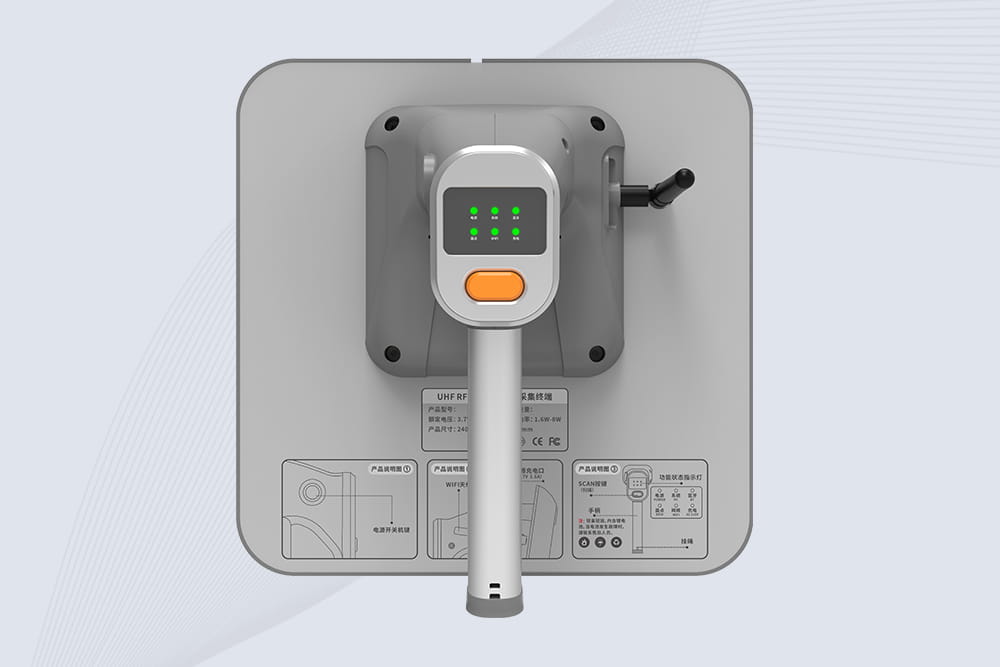
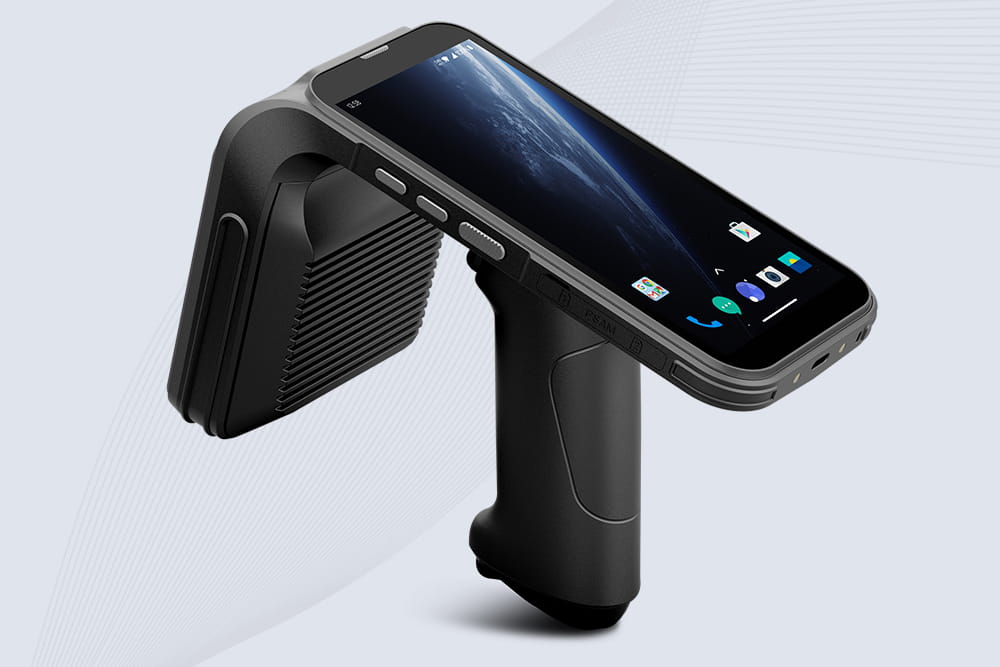
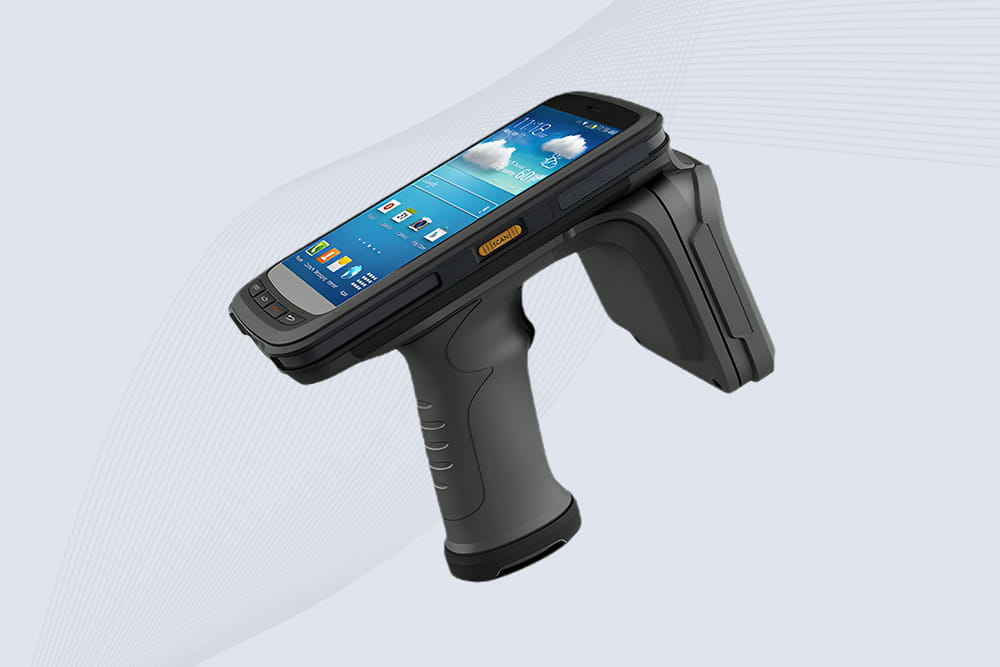
Retail store inventory: A manager needs to count shirts on shelves. With barcodes, they scan each shirt individually—hours of work. With RFID, they walk the aisle with a handheld reader like CYKEO CK-B5L and capture all tags in seconds .
Construction site tool tracking: Tools get dirty, scratched, covered in mud. Barcodes become unreadable. RFID tags embedded in tool housings survive the abuse and can be read even when covered in concrete dust.
Library books: Each book gets an RFID tag. Patrons check out by stacking books on a pad—all read at once. Inventory is done by walking a reader down aisles, scanning entire shelves in minutes.
Pharmaceutical cold chain: Temperature-sensitive medicines need monitoring. RFID tags with sensors can record temperature exposure and write that data to the tag’s memory . The receiving dock reads both the ID and the temperature history in one scan.
Can You Use Both?
Absolutely. Many organizations use both technologies together .
A common hybrid approach:
Barcodes for item-level identification where cost is critical
RFID for case-level or pallet-level tracking through the supply chain
Both attached to the same item, serving different purposes
Some RFID tags even have barcodes printed on them. You get the benefits of both—visual ID for manual processes and radio ID for automated ones.
The Bottom Line
What are barcodes and RFID tags?
Barcodes are printed optical codes read by lasers or cameras. They are cheap, simple, and everywhere. But they require line of sight and scan one at a time.
RFID tags are electronic devices with chips and antennas that communicate via radio waves. They can be read without being seen, in bulk, from meters away. They cost more but enable automation and real-time visibility.
Neither is “better” overall. The right choice depends on:
How many items you track
How fast you need to scan them
Where they are located
What environment they face
Your budget for tags and readers
CYKEO offers solutions for both worlds—USB desktop barcode scanners, RFID handhelds like CK-B5L, fixed readers with multiple antenna ports, and software that ties it all together. Whether you stick with barcodes, move to RFID, or combine them, we can help you build a system that actually works in your facility.
And when you are trying to decide, CYKEO support has helped thousands of customers make the call. Call us with your application details and we will walk you through the tradeoffs.
Need help choosing between barcodes and RFID? CYKEO offers free consultations. Tell us what you are tracking, how many items, and your workflow. We will recommend the right technology—even if it is not ours. Contact our team to get started.
CYKEO Passive RFID Tags are made for wet and high-humidity environments where standard labels do not last. This rfid passive tag is often used around liquids, chemicals and temperature changes, providing stable reading distance and long data life for industrial tracking.
CYKEO CYKEO-PCB1504 Metal RFID Tags is a compact anti-metal UHF RFID solution built for direct mounting on metal surfaces. With stable 8-meter read range, Ucode-8 chip, and long data retention, this rfid metal tag fits tools, containers, automotive parts, and industrial asset tracking.
CYKEO CYKEO-PCB7020 On-Metal RFID Tags are designed for reliable tracking on steel and metal surfaces. Built with an FR4 epoxy body and industrial-grade chips, these On-Metal RFID Tags deliver stable performance, long data life, and chemical resistance, making them a dependable RFID anti-metal tag for harsh environments.
The CYKEO CYKEO-60-25 Anti-Metal RFID Tag is built for metal surfaces where standard tags fail. Designed for long-range performance, harsh environments, and stable data retention, this Anti-Metal RFID Tag is ideal for industrial assets, containers, and equipment tracking using on metal RFID tags.
The CYKEO RFID Laundry Tag is designed for long-term textile identification in harsh laundry environments. Built to withstand high heat, chemicals, and repeated washing, this RFID Laundry Tag delivers stable performance for hotels, hospitals, and industrial laundry operations using laundry rfid tags at scale.
The CYKEO CYKEO-125-7 RFID Book Tag is designed for reliable book and document tracking in libraries and archives. This RFID Book Tag delivers long read range, dense placement support, and stable performance on shelves, making it a practical rfid tag on books for library automation, file management, and archival systems.
CYKEO RFID tags in hospitals are designed for sterile environments where accuracy matters. These autoclavable RFID tags support long-term tracking of surgical tools, implants, and medications, helping hospitals improve visibility, compliance, and patient safety.
CYKEO RFID Cable Tie Tag is built for reliable identification on metal surfaces. This UHF RFID Cable Tie Tag is widely used in rfid tags for inventory systems, industrial asset management and Hospital RFID Tags, offering stable read performance, long service life and global EPC Gen2 compatibility.
CYKEO RFID Asset Tag is designed for stable identification of metal assets in industrial environments. This UHF RFID Asset Tag is commonly used for rfid tag asset tracking on equipment, tools and containers, providing reliable reads, long service life and ISO/IEC 18000-6C support.
CYKEO UHF RFID Card is designed for fast identification and long-term use in industrial and commercial systems. Supporting ISO 18000-6C, this UHF RFID Card works at 860–960 MHz and is suitable for custom RFID cards used in asset tracking, access control and inventory management.
CYKEO HF RFID Cards are designed for secure and stable access control systems. These 13.56 MHz RFID key cards support ISO 14443-A, reliable rewriting and long service life, making HF RFID Cards suitable for offices, campuses, events and membership management.
CYKEO UHF RFID Tag is designed for reliable tracking of metal jewelry and high-value items. This Jewelry RFID Tag supports long-range reading up to 8 meters, anti-counterfeit protection and stable performance on metal, making it suitable for retail, inventory control and asset management.
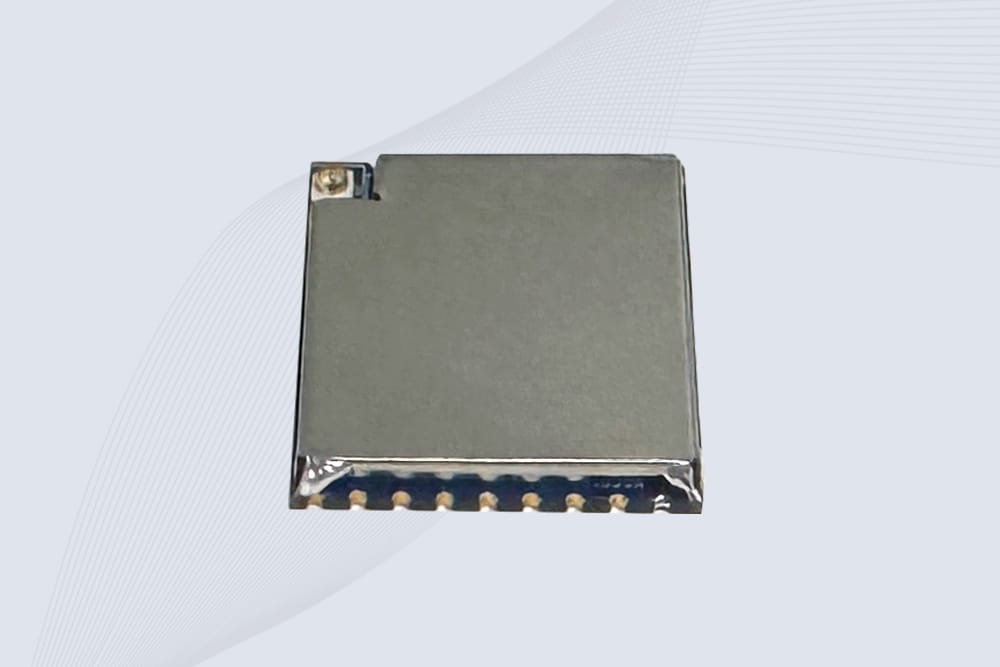
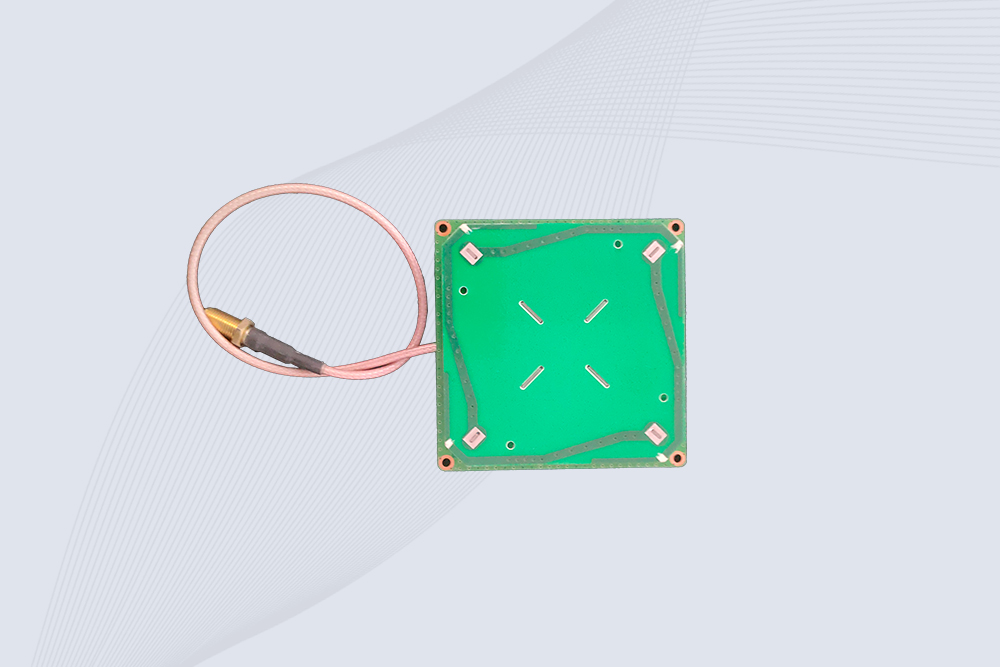
CYKEO Embedded RFID Modules are designed for compact industrial and IoT devices that require stable UHF performance. These UHF RFID Modules support global protocols, flexible power control, and reliable multi-tag reading for smart cabinets, production lines, and asset tracking systems.
CYKEO Embedded RFID Module is built for compact IoT and industrial devices that need stable UHF performance. This UHF module supports global protocols, low power operation, and reliable multi-tag reading for smart lockers, production lines, and always-on RFID systems.
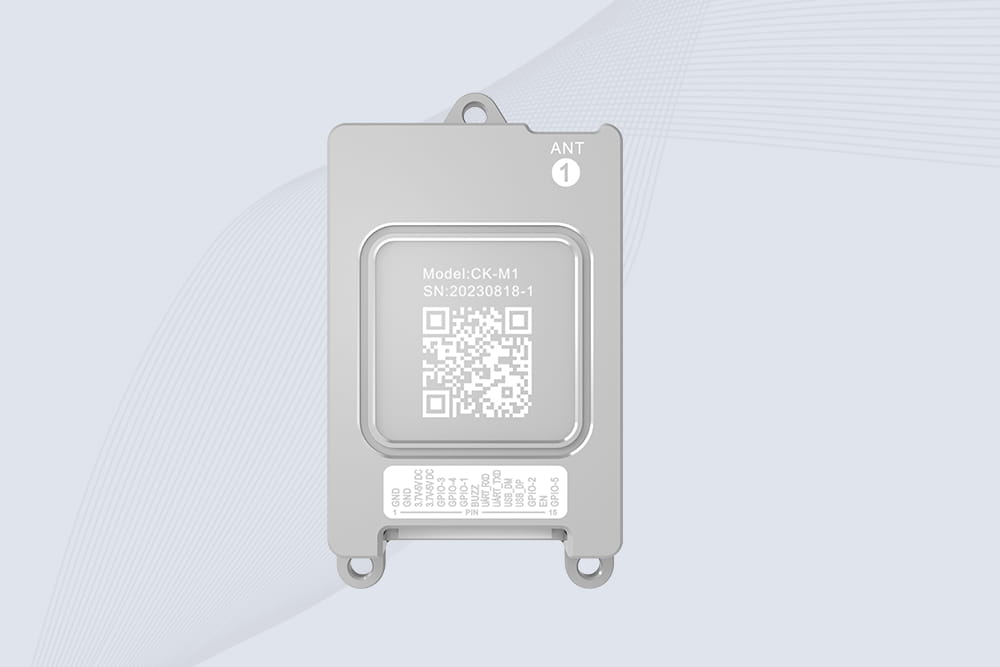
CYKEO CYKEO-M1 drone rfid module is a compact UHF RFID reader module designed for drones and UAV platforms. It supports long-range aerial scanning, fast multi-tag reading, and stable performance in wind, vibration, and outdoor environments.
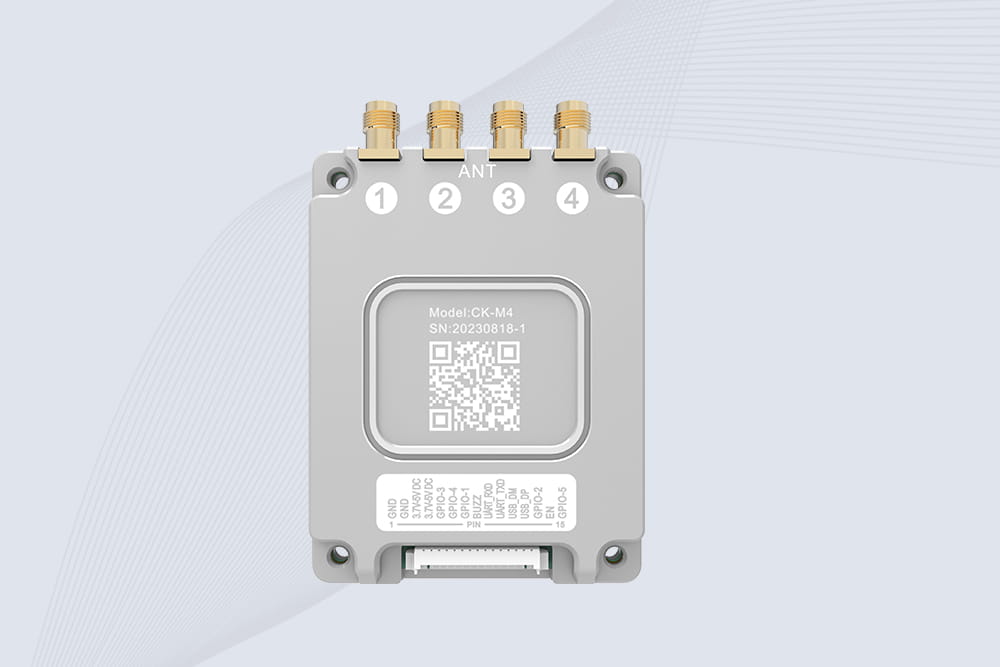
CYKEO CYKEO-M4 RC522 RFID Module is an industrial-grade UHF RFID reader with 4 ports, supporting ISO, EPC, and GB protocols. High-speed, accurate reading for IoT, automation, and warehouse applications.
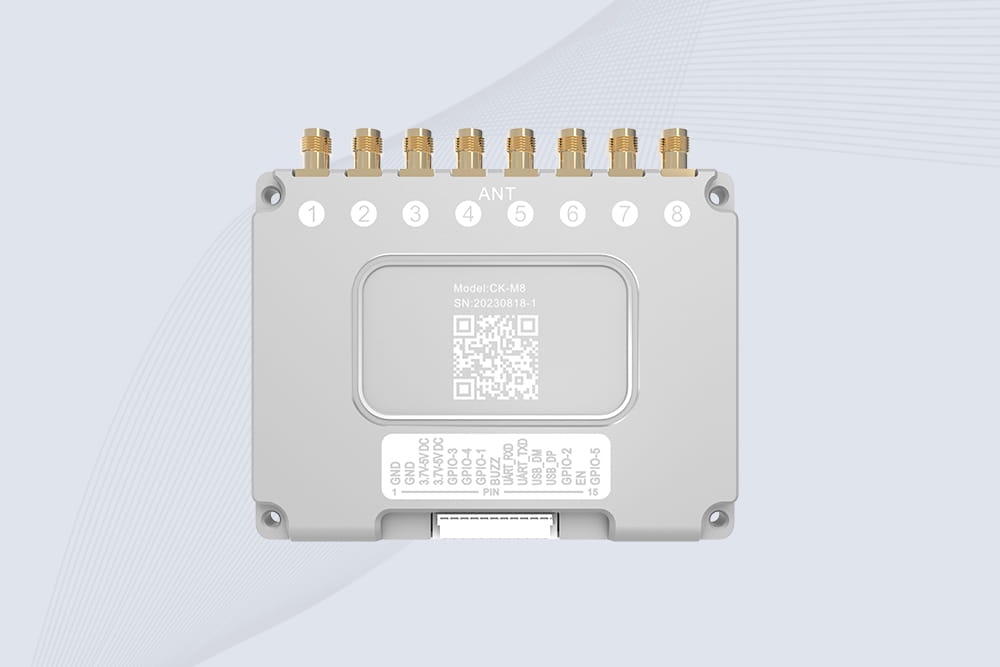
CYKEO CYKEO-M8 Module RFID is an 8-port UHF R2000 RFID Module designed for high-density, multi-tag environments. Stable 33dBm output, ISO & GB protocol support, ideal for warehouses, factories, and automated systems.
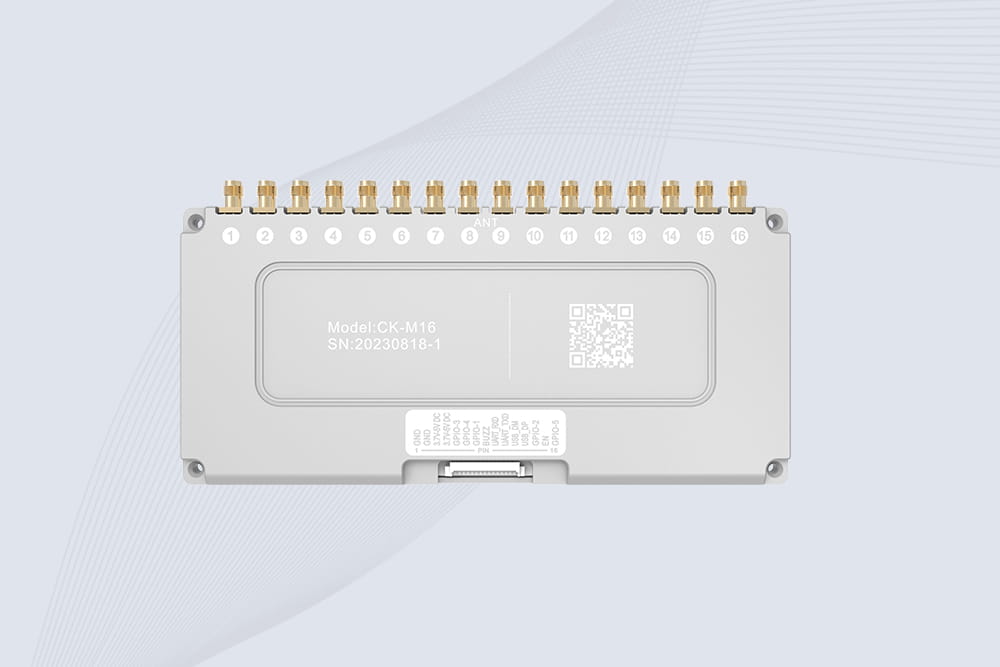
CYKEO CYKEO-M16 RFID Module is a 16-port UHF RFID reader module based on the R2000 chipset. Designed for dense tag environments, it supports ISO and GB standards and delivers stable multi-antenna control for industrial automation.
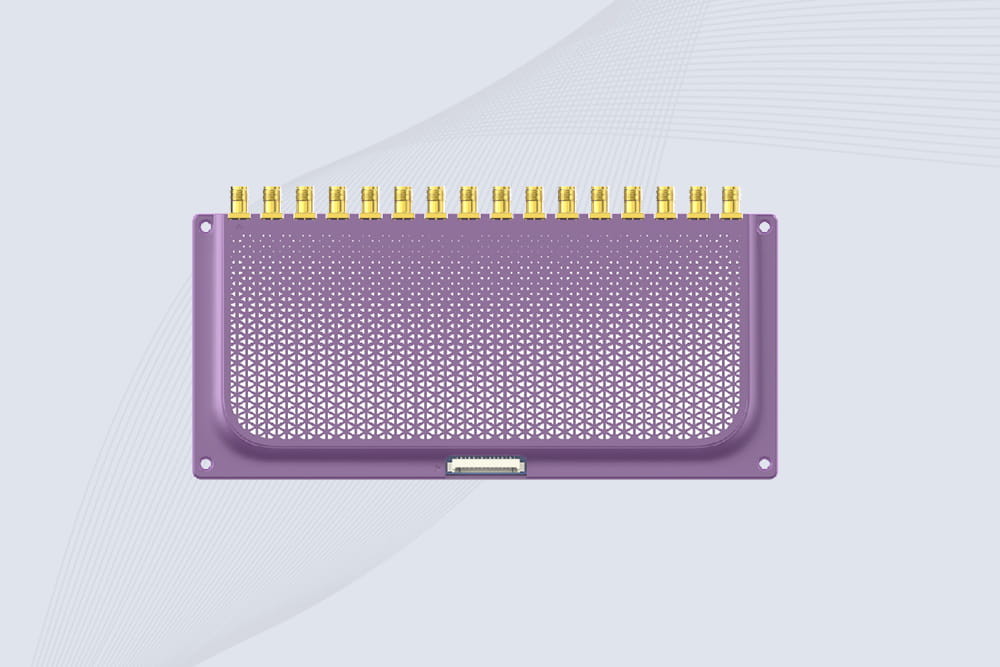
The CYKEO CYKEO-M16L RFID Reader Module is a 16-channel UHF RFID core designed for dense tag environments. With adjustable 33dBm output, multi-protocol support, and stable multi-antenna control, this RFID Tag Reader Module fits industrial automation, warehouse systems, and large-scale IoT deployments.
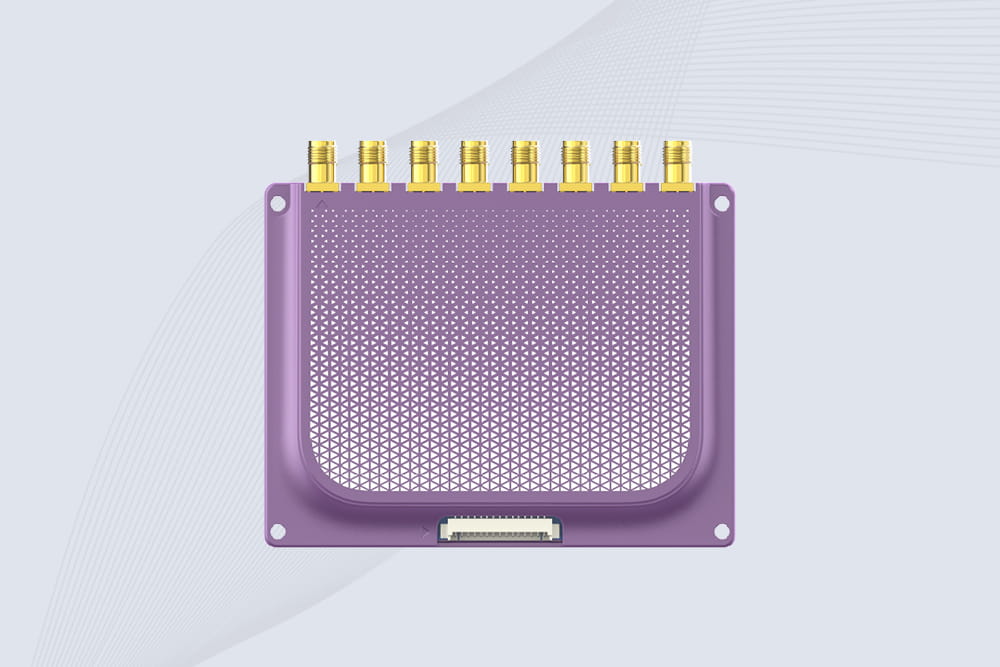
CYKEO CYKEO-M8L module RFID is a compact industrial UHF module built for dense tag and multi-antenna environments. With 8 RF ports, adjustable 33 dBm output, and ISO & GB protocol support, it is widely used in factories, warehouses, and automated tracking systems.
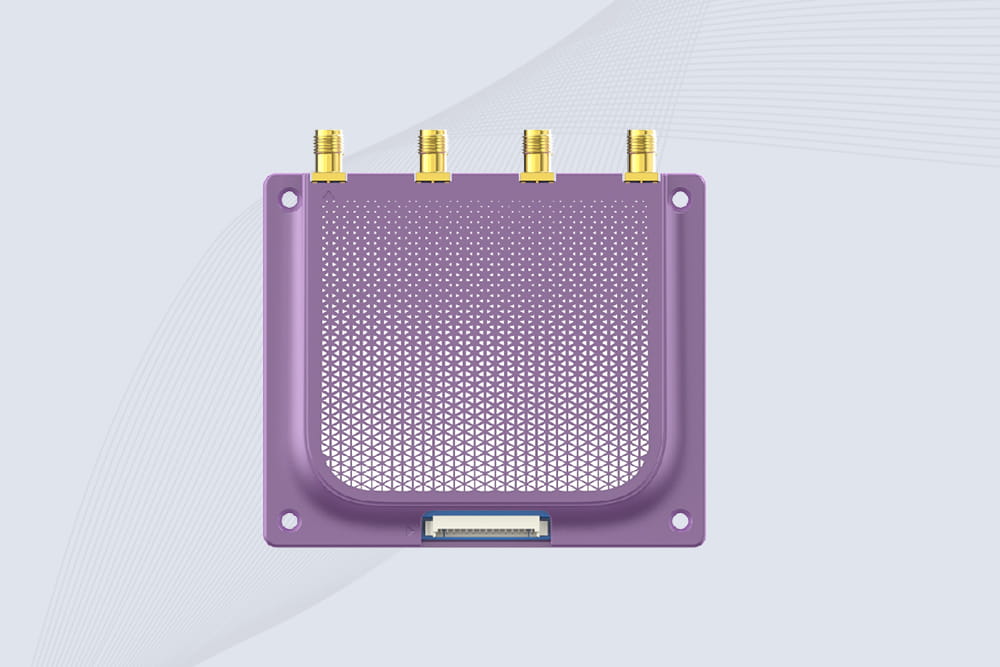
CYKEOCYKEO-M4L UHF RFID Module is a compact 4-channel RFID tag reader module designed for dense tag environments. Supporting ISO and GB protocols, it delivers stable reads up to 10 meters for industrial and IoT systems.
Cykeo CYKEO-A11 UHF RFID reader antenna delivers 11dBi gain, 840-960MHz frequency range, and IP65 ruggedness for retail, logistics, and industrial RFID systems. Features low VSWR and easy installation.
CYKEO Antenna RFID Reader delivers stable long-range UHF performance with a 10.5dBi directional design, built for warehouses, conveyor portals, and industrial RFID systems. This rfid reader antenna provides 20m+ read distance and rugged IP67 protection.
Cykeo CYKEO-A5B industrial Linear RFID Antenna delivers 5dBi gain, ≤1.5:1 VSWR, and IP65 rugged design for warehouse, production line, and logistics UHF systems.
Cykeo’s CYKEO-B12 Long Range RFID Antenna delivers 15m+ read range with 12dBi gain, IP65 rugged design, and global 840-960MHz UHF support. Ideal for warehouse/logistics asset tracking.
Cykeo CYKEO-B10 Long Distance RFID Antenna offers 10dBi gain, 840-960MHz frequency range, IP65 rating, and 20m+ coverage for logistics/warehousing/ETC systems. Low VSWR ensures stable signal transmission.
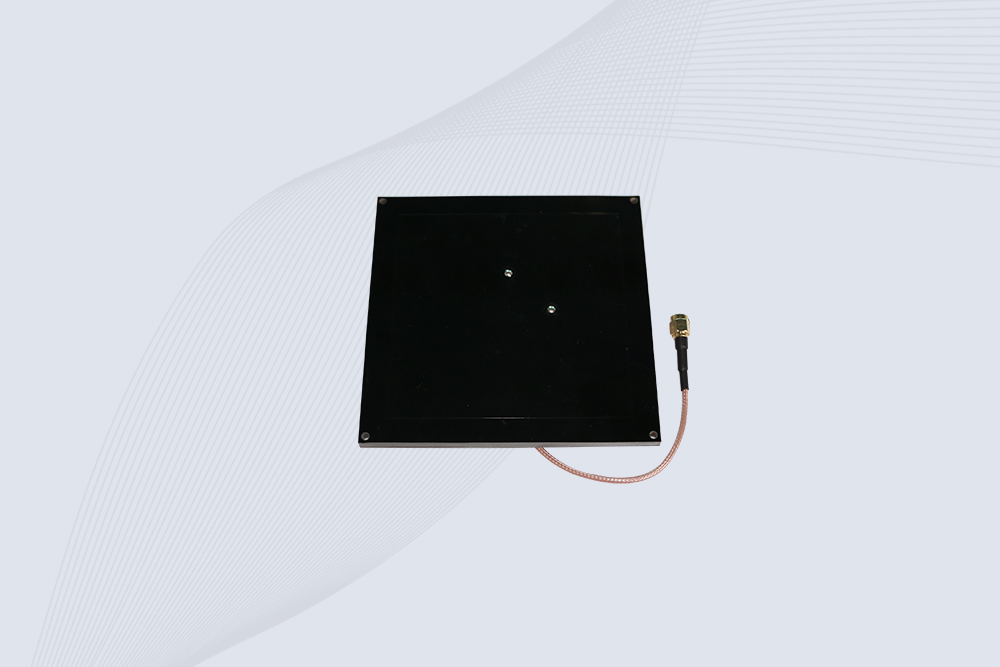
Cykeo CYKEO-A6 UHF RFID panel antenna features 6dBi gain, 840-960MHz broadband, IP65 metal-ready housing for logistics/smart retail. 18mm ultra-thin design with tool-free mounting.
Cykeo CK-A3 industrial antenna RFID UHF offers 5m+ tag detection, ≤1.3:1 VSWR, IP65 rugged design, and global UHF spectrum compatibility (840-960MHz) for warehouses, factories, and retail.
Cykeo CYKEO-B5 directional RFID antenna provides 5dBi gain with 60° narrow beamwidth for precise inventory tracking. IP65-rated, global UHF frequency support, and low VSWR.
Create your own high-performance DIY RFID antenna! 5dBi gain, 840-960MHz tunable, step-by-step guides. Compatible with Arduino, Raspberry Pi, and commercial UHF readers.
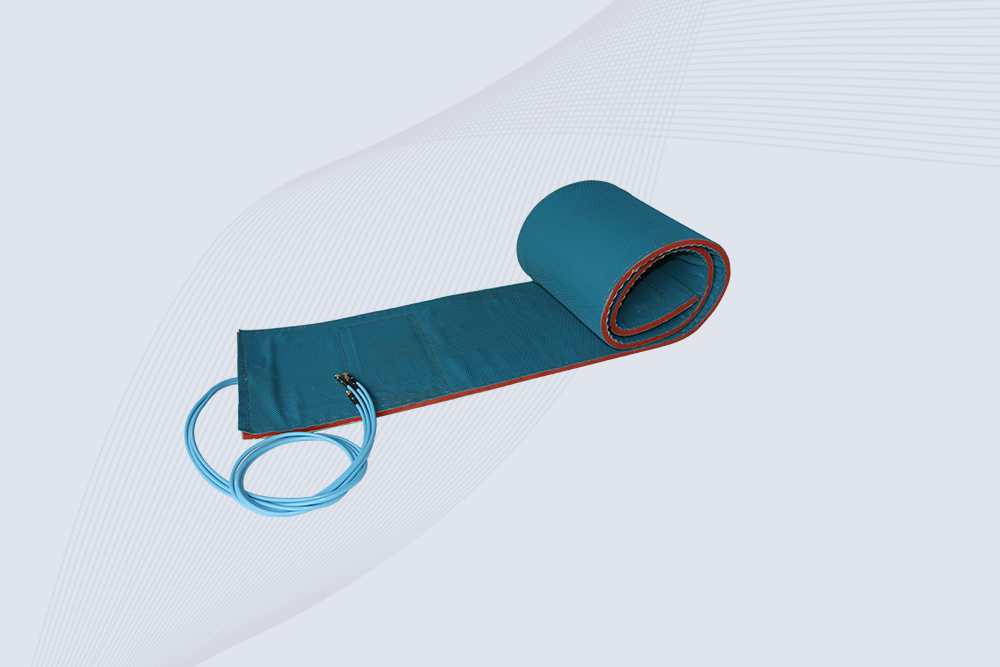
Cykeo CYKEO-A7 Flexible RFID Antenna features 840-960MHz wideband tuning, 7dBi gain, and IP68 rating for medical/retail/industrial curved surface deployments. 98% read accuracy with peel-and-stick installation.
Cykeo CYKEO-B5A industrial Passive RFID Antenna delivers 5dBi gain, 70° beamwidth, and -40°C~55°C operation for warehouses/smart cabinets. Compatible with Zebra/Impinj readers.
Cykeo’s CYKEO-A9B High Gain RFID Antenna delivers 15m+ read range with 9dBi amplification. Features IP54 rugged design, 840-960MHz bandwidth, and 80° beamwidth for warehouse/manufacturing RFID systems.
Cykeo’s enterprise-grade 8dbi Impinj RFID Antenna 10m+ read range with 840-960MHz tuning. Features IP65 housing, 1.4 VSWR, 35° beamwidth for retail/warehouse RFID systems.
Cykeo CYKEO-A9 industrial UHF RFID antenna delivers 9dBi gain, 840-960MHz frequency range, and IP65 protection for warehouse/logistics/retail RFID systems. Features N-type connector and ≤1.3:1 VSWR.
CYKEO UHF RFID Antenna built for long-distance and industrial applications. This antenna rfid uhf delivers strong gain, outdoor durability, and reliable tag performance in warehouses, yards, and vehicle ID systems.
CYKEO Antenna RFID delivers reliable long-range UHF performance in warehouses, retail shelves, and cold-chain environments. This compact uhf rfid antenna provides stable reads with circular polarization and ultra-wide 840–960 MHz support, ideal for industrial tracking, smart shelves, and asset monitoring.
Cykeo’s CYKEO-C8 UHF RFID antennas delivers 8dBi gain, 840-960MHz full-band coverage, and IP65 ruggedness for manufacturing/warehouse RFID systems. Industrial RFID Antennas Features
Cykeo’s 8dBi UHF RFID antenna and reader kit delivers 10m+ range, 840-960MHz broadband, and IP65 ruggedness for factories, warehouses, and logistics. ISO 18000-6C & EPC Gen2 certified.
Cykeo’s CYKEO-A12C UHF Large RFID Antenna delivers 12dBi gain, 840-960MHz global frequency, IP65 ruggedness for logistics/warehousing/automotive. 40° beamwidth ensures stable 15m+ tag reads.
CYKEO Near Field RFID Antenna provides precise 5–30 cm reading for shelves, cabinets, and workstations. This compact rfid shelf antenna delivers stable short-range performance around metal and clutter, ideal for pharmacies, libraries, and electronics sorting.
Cykeo’s industrial long range RFID reader delivers 20-meter scanning, 500+ tags/sec speed, and IP67 waterproof design for automated warehouses, logistics, and harsh environment applications.
Cykeo’s CYKEO-RA6L industrial RFID long range reader features 20m read distance, 500 tags/sec speed, and IP67 protection. Ideal for warehouse automation, manufacturing WIP tracking, and smart logistics. Supports ISO 18000-6C/6B protocols.
CYKEO Long Range RFID Tag Reader built for outdoor and industrial operations. This Outdoor RFID Reader delivers 20m read distance, fast tag processing, and IP67 durability for wide-area tracking.
Cykeo CYKEO-RA12L industrial Long Range RFID Reader delivers 20m read range, 200+ tags/sec scanning, and IP67 protection for manufacturing/logistics applications. Supports ISO 18000-6C/GB protocols.
Chipless RFID is emerging as next-generation identification technology. This article compares its structure, working principle, frequency, data capacity, and cost with traditional RFID, helping businesses evaluate its use cases.
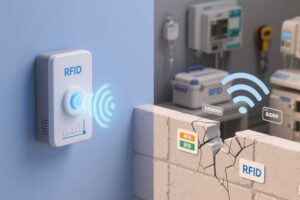
Can RFID readers work through walls? Discover the reality behind RFID signal penetration, material limitations, and how Cykeo’s readers maximize scanning range.
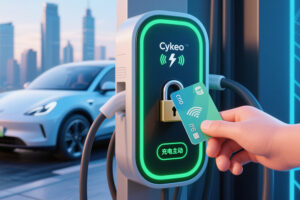
Discover how RFID cards streamline electric car charging access, authentication, and billing. Learn about their benefits, security, and Cykeo’s charging solutions.
Ensure secure, FDA-compliant controlled substance management with the FTNG‑L‑CK‑03 RFID Pharmacy Security Cabinet. Ideal for hospital pharmacies, addiction clinics, emergency departments, and research labs. Supports API integration, SDK for custom...
 Cykeo RFID IoT Solution Products R&D Manufacturer