Let’s talk RFID frequencies. Honestly, picking the right one isn’t rocket science, but it does make a huge difference. Your choice affects how far a tag can be read, how fast data zips over, and whether your system actually behaves in the real world or just “works on paper.”
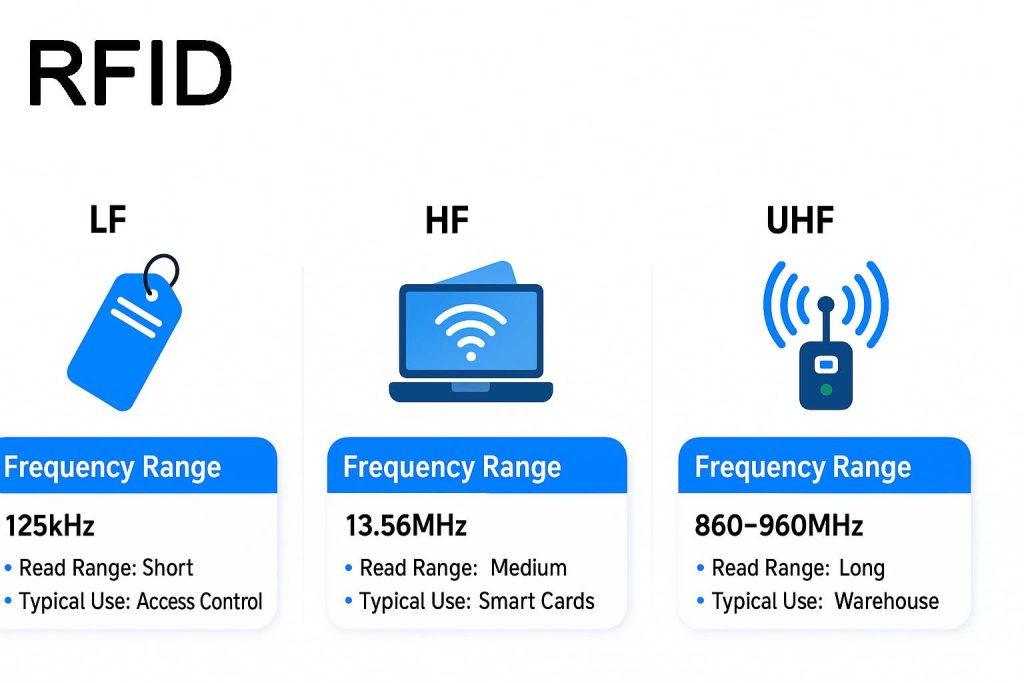
There are basically three main frequency types: Low Frequency (LF), High Frequency (HF), and Ultra-High Frequency (UHF). Each has its quirks, pros, cons, and ideal use cases. Let’s break them down.
1. Low Frequency (LF) RFID
Frequency Range: 30 kHz – 300 kHz (usually 125 kHz or 134.2 kHz) Read Range: Around 10 cm – yep, really short. Coupling Type: Inductive (near-field)
So LF tags—these guys are old-school but reliable. They use electromagnetic induction, which basically means the reader has to be close, like really close. And yes, they’re slow compared to the other types. But here’s the kicker: metal or water? Doesn’t faze them. That’s why vets, car key systems, or some medical gear still use LF.
Why it’s useful:
Works around tricky environments (metal, liquids).
Super stable, hardly any interference.
Perfect for stuff where reliability beats speed.
Watch-outs:
Short range. You need proximity.
Can’t read a bunch of tags at once.
Data storage is modest, speed is modest.
Typical Applications: Access control, animal tracking, car immobilizers, medical assets. Basically, stuff where being reliable beats being fast.
2. High Frequency (HF) RFID
Frequency Range: 3 MHz – 30 MHz (commonly 13.56 MHz) Read Range: Up to 1 meter (about 3 feet) Coupling Type: Inductive (near-field)
HF tags—this is where things get a bit more flexible. They’re faster than LF, and—bonus—they can read multiple tags at once. That’s thanks to anti-collision protocols. They’re smaller too, cheaper, and standard across the globe. So if you’re thinking library cards, event tickets, or some NFC-enabled stuff, HF is usually your friend.
My take: HF is like that all-rounder teammate—you can rely on it for medium-range stuff, works decently in most environments, but it’s not perfect if metal or water is everywhere.
13.56 MHz again, but really short-range, two-way. Phones, contactless payments, secure access—yep, NFC runs on HF.
3. Ultra-High Frequency (UHF) RFID
Frequency Range: 300 MHz – 1 GHz (860–960 MHz passive, 433 MHz active) Read Range: Up to 15–20 feet (roughly 6 m or more) Coupling Type: Backscatter (far-field)
UHF is the long-distance runner. Fast, lots of tags at once, big areas—it shines in warehouses, logistics, or when you really need speed. But, here’s the thing—metal and water can mess with it. Placement matters, tuning matters. Treat it like a high-performance car: powerful but requires care.
Expert opinion: UHF is the obvious choice for large-scale tracking, but don’t just slap tags anywhere. Think through placement and environment.
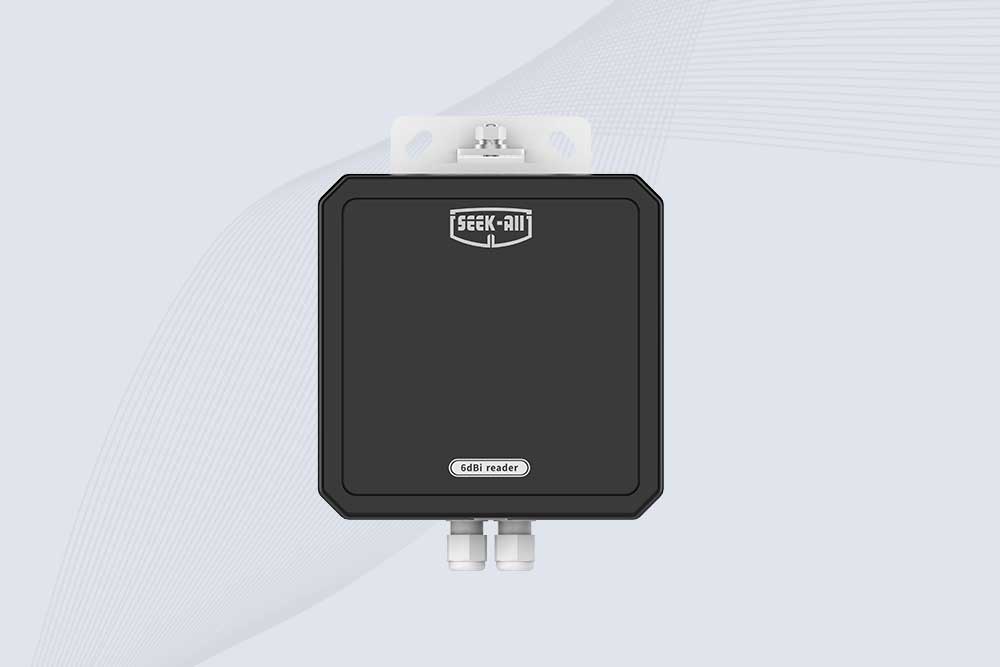
SSD-RA06L is an industrial UHF RFID reader with a built-in 6 dBi antenna, 3 m read range, 600+ tags/s, Ethernet, RS232, and optional Wi-Fi, 4G, and PoE.
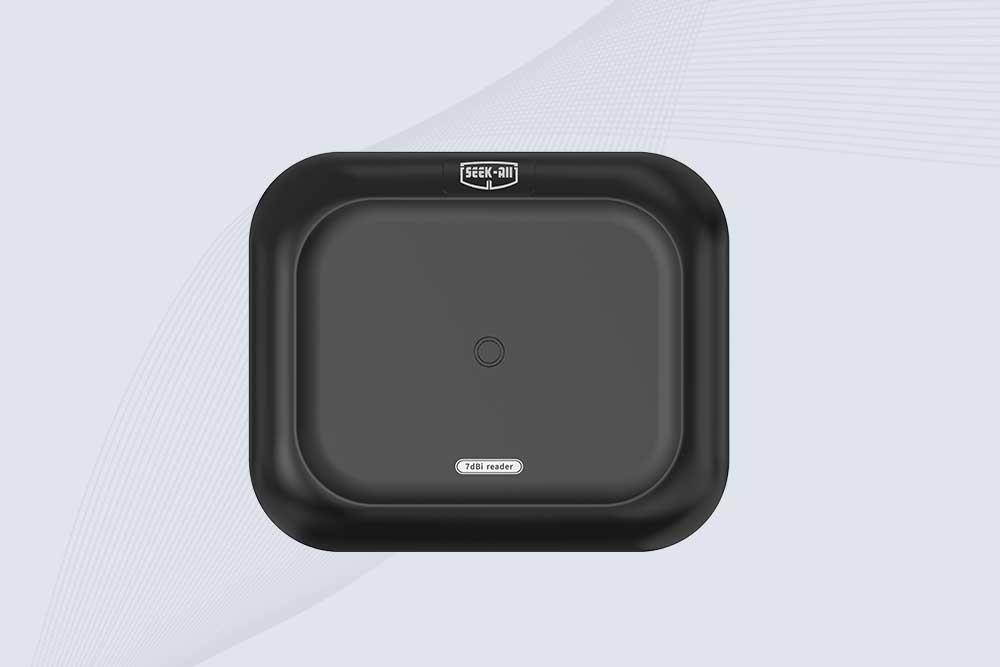
SSD-RA07L industrial UHF RFID reader with integrated 7 dBi antenna, up to 6 m reading distance, over 600 tags/s, Ethernet, RS232, and optional Wi-Fi, 4G, and PoE.
Discover small tool tracking devices from Cykeo for automated tool management, RFID tracking, secure checkout, and real-time inventory visibility in industrial environments.
RFID asset tracking manufacturing improves production visibility, reduces equipment loss, and automates inventory. Discover how Cykeo delivers reliable industrial RFID solutions for modern factories.
Discover what does an rfid chip do and how RFID technology enables automatic identification, real-time tracking, and smarter asset management with Cykeo solutions.
Discover affordable USB RFID readers under $100 perfect for small businesses. Compare features like read range, durability, and compatibility with inventory software.
 Cykeo RFID IoT Solution Products R&D Manufacturer