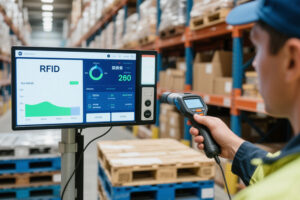
When we talk about an RFID receiver, most people immediately think of a “reader.” Not wrong, but not the full picture either. It’s not just a scanner — it’s basically the brain of the whole RFID setup. Its job is to grab signals from the tags and hand them off to the system in the back. Without it, your tags are just silent stickers.
What Exactly Is RFID Receiver?
In a simple RFID system, you’ve got three main pieces: the tag, the antenna, and the receiver (sometimes called a reader or interrogator). The receiver’s job is to blast out radio signals to “wake up” the tags, then listen for whatever they send back.
It’s kind of like yelling into the air: you shout, the tag hears you and shouts back, and the receiver writes down the answer. The difference is, all of this happens over radio waves in microseconds.
What Does It Actually Do?
Send signals: the receiver doesn’t just “receive,” it also talks first, sending RF energy out through the antenna.
Collect data: tags respond with information — usually an ID, sometimes extra details.
Decode the signal: once the wave comes back, the receiver demodulates it into usable data.
Push to software: the clean data goes to your system — inventory, asset tracking, ERP, whatever you’re running.
Sounds neat, but in practice it’s messy. Metal racks, water, or even the way a tag is angled can mess things up. I’ve seen people trust the “10 meter read range” on the spec sheet, only to find it barely works at half that distance in their warehouse.
Different Types of Receivers
Fixed receivers: installed at doors or conveyor belts, long read range, but tricky setup.
Handheld receivers: like oversized barcode guns, flexible but need human operation.
USB mini readers: plug straight into a PC, short range, good for testing or desktop use.
I once installed a fixed RFID receiver in a warehouse, and honestly, the antenna angle was everything. A 15-degree misalignment dropped the read rate to 60%. Adjusted it back, boom — 95%. So yeah, placement and polarization are not just textbook talk, they matter in real life.
Some Hands-On Tips
Don’t trust the spec sheet blindly: 10 meters in the lab may mean 5 meters in your warehouse.
Pick the right antenna: shapes and polarization make a massive difference.
Test in the real environment: just because it worked in a demo doesn’t mean it’ll work on-site.
Check standards: protocols like ISO/IEC ensure your tags and receiver actually talk properly.
Wrapping It Up
The RFID receiver is the backbone of any RFID system. It’s both a transmitter and a receiver. Without it, your tags are just decorations. The real challenge isn’t understanding the concept — it’s making it work in your specific setup.
If you’re just starting out, I’d recommend playing with a small USB receiver to get the hang of it, before messing with high-power fixed units. Otherwise, you’ll hit a lot of walls early and think RFID doesn’t work.
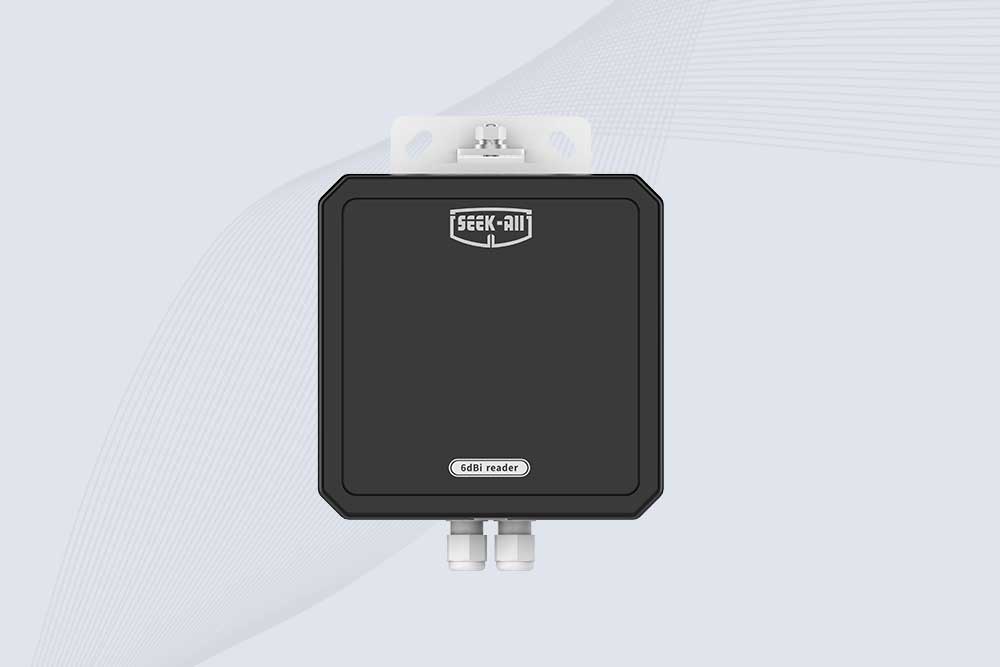
SSD-RA06L is an industrial UHF RFID reader with a built-in 6 dBi antenna, 3 m read range, 600+ tags/s, Ethernet, RS232, and optional Wi-Fi, 4G, and PoE.
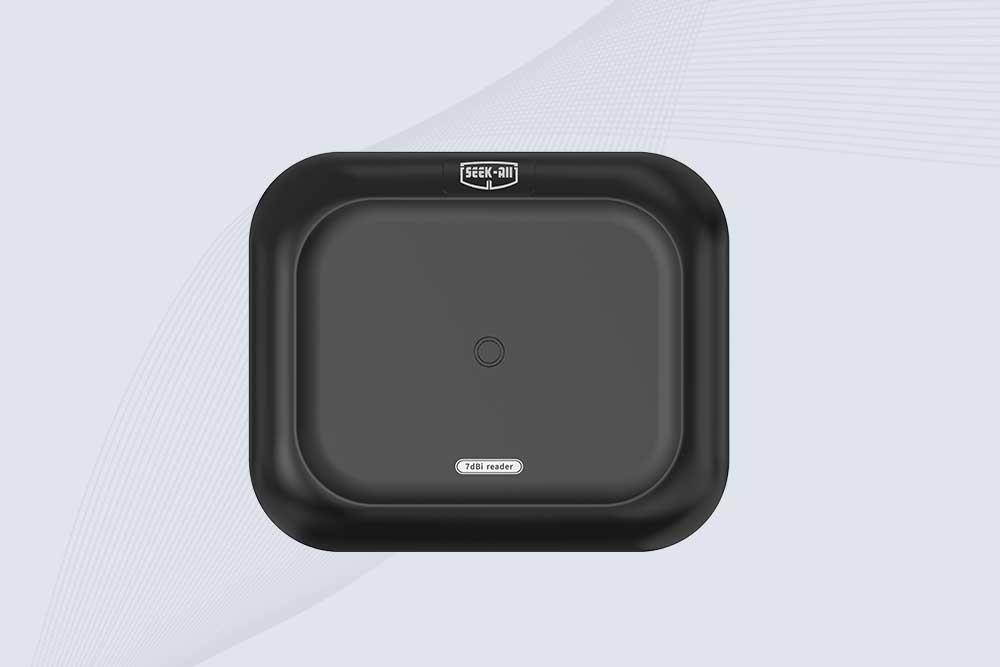
SSD-RA07L industrial UHF RFID reader with integrated 7 dBi antenna, up to 6 m reading distance, over 600 tags/s, Ethernet, RS232, and optional Wi-Fi, 4G, and PoE.
SSD-R16L Multi-Channel RFID Infrastructure for Automated Inventory Management ✔️ 16-Port High-Density RFID Reading Equipped with 16 SMA antenna ports, SSD-R16L supports multi-antenna deployment for warehouses, retail stores, logistics, production lines, and large-area RFID identification. ✔️ High-Speed & Long-Range Performance With up to 33…
SSD-R8L 8-port UHF RFID reader with 33dBm output, up to 20m reading range and 600+ tags/s recognition. Ideal for warehouse, logistics, retail and asset tracking.
How many layers of aluminum foil can block RFID signals? Learn how aluminum foil affects RFID tags, NFC cards, and UHF RFID systems, plus practical advice for RFID suppliers, distributors, and project buyers.
Learn how an RFID key system improves security, simplifies access management, and reduces operational costs. Explore applications, benefits, and buying tips for commercial and industrial RFID access solutions.
Cykeo compares RFID and barcode scanners for logistics cost savings. Discover why 63% of warehouses now prefer UHF RFID for 90% faster scans and 40% lower labor costs.
Discover how RFID warehouse automation reduces labor costs, minimizes errors, and optimizes inventory. Learn actionable strategies for supply chain savings.
 Cykeo RFID IoT Solution Products R&D Manufacturer