People new to RFID often use the terms “RFID reader” and “RFID reader module” interchangeably.
In practice, they are very different products designed for different purposes.
Understanding the difference matters because choosing the wrong one can affect development cost, integration difficulty, system flexibility, and even long-term scalability.
This guide explains how RFID modules and finished RFID readers differ in real-world projects—and which one makes more sense depending on your application.
The Simplest Explanation
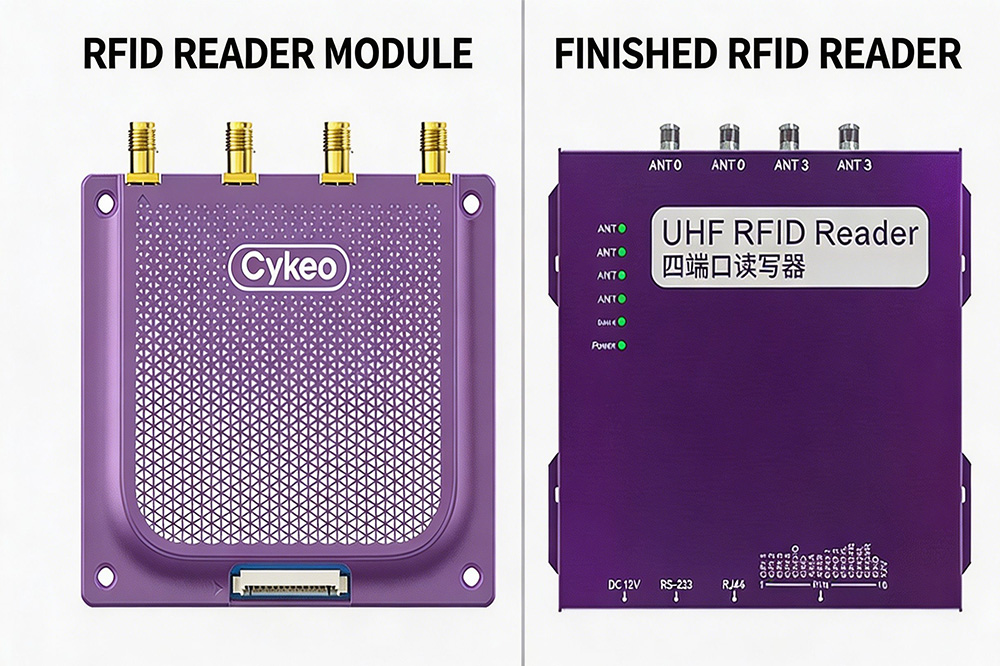
An RFID reader module is the internal RFID engine.
A finished RFID reader is the complete ready-to-use device built around that engine.
The module handles RF communication and tag processing, while the finished reader adds enclosure, interfaces, power management, and user-level functionality.
What an RFID Reader Module Includes
A typical RFID reader module usually contains:
RF transceiver circuitry
RFID processing chipset
Firmware for tag communication
Communication interfaces (UART/USB/etc.)
Antenna connection port
It does not usually include:
Outer housing
Display screen
Power adapter
Industrial enclosure
Full user interface
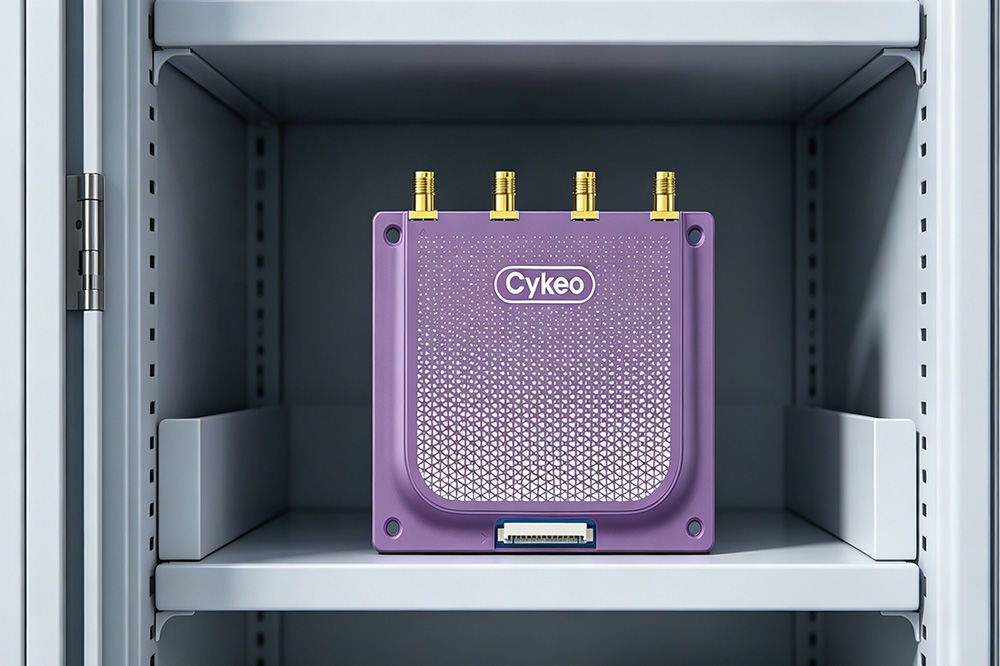
Modules are designed to be embedded into other devices.
What a Finished RFID Reader Includes
A finished RFID reader is designed for direct deployment.
It usually includes:
Industrial enclosure
Integrated or external antenna
Power supply system
Communication ports
Protection circuits
Ready-to-use firmware/software tools
Some readers also include:
Touch screens
Android operating systems
Wi-Fi/Bluetooth
Relay outputs
Edge computing features
Finished readers are often used where rapid deployment matters more than customization.
Why OEMs Prefer RFID Modules
Most OEM manufacturers and system integrators choose RFID modules instead of finished readers.
Main reasons:
1. Custom Product Design
Modules can be integrated into:
Smart cabinets
Handheld devices
Medical systems
Industrial machines
Retail kiosks
This allows companies to build products with their own industrial design and functionality.
2. Lower System Cost in Mass Production
For large-scale deployment, using modules reduces:
Hardware redundancy
Enclosure cost
Connector duplication
Unnecessary features
This becomes important in high-volume OEM production.
3. Better Integration Flexibility
Modules allow engineers to control:
Antenna configuration
Power management
Software architecture
Communication protocol
Mechanical structure
Finished readers are less flexible by comparison.
When Finished RFID Readers Make More Sense
Not every project needs embedded development.
Finished RFID readers are usually better for:
Fast proof-of-concept projects
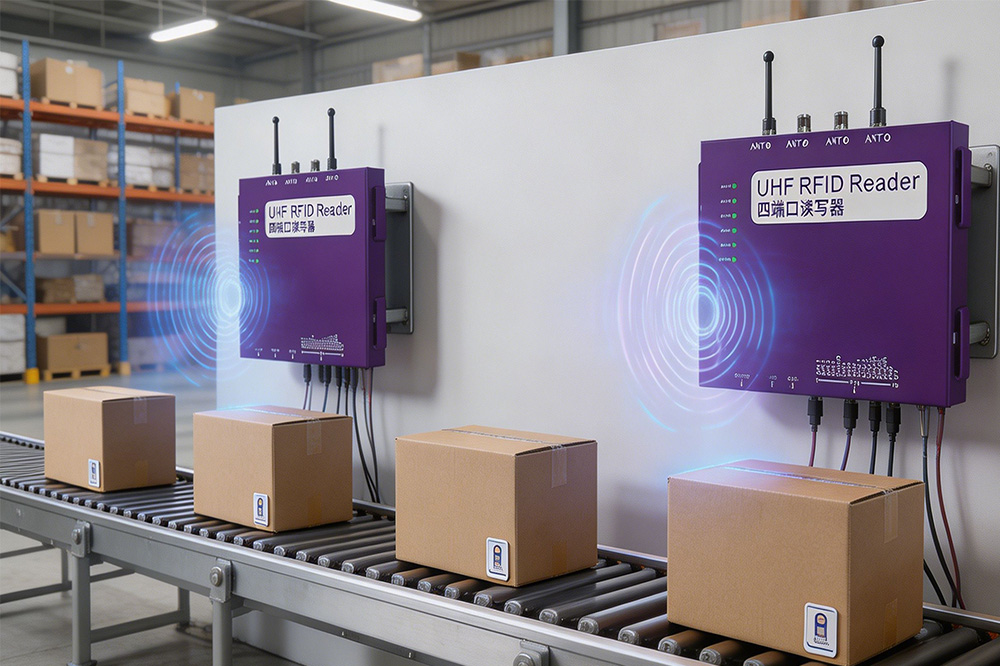
Warehouse deployments
Fixed RFID checkpoints
Standard access control systems
Projects with limited engineering resources
If customization is not important, finished readers reduce development time significantly.
Integration Complexity: Big Difference
This is one of the biggest practical differences.
RFID Reader Module:
Requires:
PCB integration
Power design
SDK development
Antenna configuration
Firmware communication setup
Finished RFID Reader:
Usually works immediately with:
Pre-configured software
Standard interfaces
Existing management tools
Modules provide flexibility, but integration workload is much higher.
Size and Mechanical Design
RFID modules are much smaller than finished readers.
This matters in applications like:
Embedded terminals
Smart locks
Compact industrial systems
Handheld devices
Medical equipment
Some OEM products simply cannot physically fit a full RFID reader.
Antenna Architecture Differences
RFID Modules:
Usually require external antenna design.
Advantages:
Flexible antenna placement
Custom RF coverage zones
Better system optimization
Finished Readers:
Often use fixed or semi-fixed antenna configurations.
Advantages:
Easier deployment
Faster installation
Reduced RF tuning complexity
Software and SDK Differences
Modules rely heavily on SDK integration.
Developers often need to work with:
Serial commands
APIs
Firmware settings
Multi-thread communication
Database integration
Finished readers often come with:
Demo software
Management platforms
Ready-made interfaces
Configuration utilities
This dramatically changes development workload.
Which One Is Better?
Neither is universally better.
It depends entirely on the project.
Choose RFID Reader Modules if:
You’re building OEM products
You need embedded integration
Mechanical customization matters
Cost optimization is important
You need full software control
Choose Finished RFID Readers if:
You need rapid deployment
Minimal development is preferred
Standardized environments are acceptable
You want ready-to-use hardware
Real-World Industry Trend
The market trend is increasingly moving toward embedded RFID systems.
Industries such as:
Smart manufacturing
Medical asset tracking
Intelligent retail
Automated warehousing
Smart cabinets
are increasingly adopting RFID modules as core embedded components rather than relying only on standalone readers.
RFID Modules for OEM and Embedded Development
For system integrators and OEM manufacturers developing custom RFID-enabled devices, embedded RFID reader modules provide greater flexibility and integration possibilities compared to finished readers.
CYKEO offers RFID reader modules designed for industrial systems, smart devices, and custom RFID integration projects.
This article systematically introduces the application value of rfid stickers for inventory in stock management, covering common tag types, functional features, and applicable scenarios to help enterprises select suitable options and improve asset...
rfid tracking devices explained from real projects. Learn how they work, where they fail, and how CYKEO engineers deploy RFID tracking in real environments.
Want to learn how to build a RFID reader? We walk through two practical approaches using Arduino/Raspberry Pi and explain when you should just buy one instead.
 Cykeo RFID IoT Solution Products R&D Manufacturer