 Cykeo RFID IoT Solution Products R&D Manufacturer
Choosing UHF RFID Tag Supplier: What You Should Check Before Ordering
128A straightforward guide to evaluating UHF RFID tag suppliers for bulk orders, covering quality, consistency, and support.
MoreAll RFID Product
Tool loss is one of those problems that almost every factory accepts as “normal”.
But it shouldn’t be.
Wrenches go missing.
Special tools don’t come back.
And nobody wants to take responsibility.
Over time, this turns into:
This is exactly where RFID for tools makes a measurable difference.

Most companies don’t lose tools because of theft.
They lose tools because of lack of control.
Common situations:
Even with barcode systems, the issue remains:
If people don’t scan, the system fails.
RFID doesn’t rely on behavior—it relies on automation.
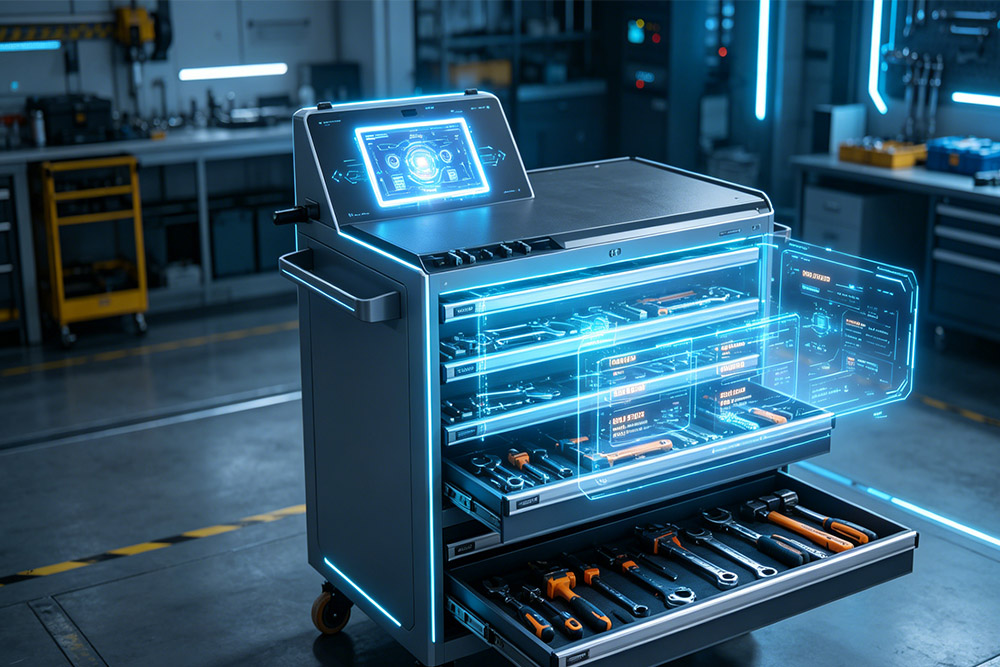
When tools are placed inside an RFID cabinet:
No scanning. No manual input.
You move from “recording usage” → to “controlling access”
Let’s break it down into real mechanisms:
Only authorized users can open the cabinet
Each action is tied to a specific person
If a tool is not returned, the system flags it immediately
No more waiting for monthly or weekly checks
In actual deployments, systems like the CK-GT1 RFID Intelligent Tool Cabinet are used to enforce this level of control.
What makes it effective is not just tracking—but workflow control:
This creates a simple but powerful effect:
People become accountable—without extra effort
Most buyers don’t care about RFID itself.
They care about:
“How much money can we save?”
Here’s where the ROI comes from:
For companies with high-value tools, the payback period is often very short.
RFID tool cabinets are especially valuable in:
Shared tools across multiple shifts
High-value tools in remote environments
Strict tool accountability requirements
Temporary teams and mobile tool usage
This is a real concern—but in practice:
RFID systems are usually faster than manual processes.
Why?
Most workers adapt within days.
Tool loss is rarely about tools.
It’s about visibility and control.
RFID tool cabinets solve both—without adding complexity to daily work.
Instead of chasing tools,
you create a system where tools don’t go missing in the first place.
RFID Tool Cabinets
CYKEO-GT1 RFID Intelligent Tool Cabinet
CYKEO-GGT1 Intelligent Weighing Cabinet
CYKEO-GT7 RFID Inventory Tool Cabinet
CYKEO-TC RFID Multi-Drawer Tool Cart
CYKEO-GTC4 INDUSTRIAL RFID TOOL CART
CYKEO-GTC7 RFID Aviation Maintenance Cart
CYKEO-GTC7A RFID Real-Time Tool Tracking Cart
CYKEO-GTC4B RFID Mobile Tool Cart
CYKEO-GTC4C RFID Workshop Tool Control Cart
CYKEO-GTC4A Multi-drawer RFID Tool Cart
CYKEO-GTC4D RFID Tool Tracking Cart
CYKEO-GT3A COMPACT RFID TOOL CABINET
CYKEO-GT1A INDOOR RFID CABINET
CYKEO-GT4A RFID Secure Tool Cabinet
CYKEO-GT2B RFID Aviation Tool Cabinet
CYKEO-GTC5 RFID tool tracking system
CYKEO-GT3B RFID Tool Inventory System Cabinet
CYKEO-GT3 UHF RFID Tool Cabinet
CYKEO-GT4 RFID Multi-Drawer Tool Cabinet
CYKEO-GT2 INDUSTRIAL RFID TOOL CABINET
CK-GT2A INDUSTRIAL RFID CABINET
CK-GT1B INDUSTRIALRFID TOOL CABINET
CK-GT3C RFID Tool Checkout System Cabinet
RFID Reader Antennas
CYKEO-A11 UHF RFID reader antenna
CYKEO-A10 UHF RFID HIGH GAIN ANTENNA
CYKEO-PHF3 SMART HIGH-FREQUENCY POSITIONING ANTENNA
CYKEO-A5B 5dBi Industrial Linear RFID Antenna
CYKEO-B12 12dBi UHF Long Range RFID Antenna
CYKEO-B10 Long Distance RFID Antenna
CYKEO-A6 UHF RFID panel antenna
CK-A3 industrial antenna RFID UHF
CYKEO-B5 directional RFID antenna
CYKEO-A5C High-Gain UHF RFID Antenna System
CYKEO-A7 Flexible RFID Antenna
CYKEO-B5A industrial Passive RFID Antenna
CYKEO-A9B High Gain RFID Antenna
CYKEO-A8A INDUSTRIAL UHF RFID ANTENNA
CYKEO-A9 9dBi UHF RFID Antenna
CYKEO-A12 12dBi RFID Circular Polarized Antenna
CYKEO-A5 5dBi UHF RFID Circular Polarized Antenna
CYKEO-A8 8dBi HIGH-GAIN UHF RFID ANTENNA
CYKEO-A9A 9dBi UHF RFID HIGH-GAIN ANTENNA

A straightforward guide to evaluating UHF RFID tag suppliers for bulk orders, covering quality, consistency, and support.
More
Discover if iPhones can read RFID tags natively. Learn how Cykeo's rfid tag reader iphone enables iPhone RFID scanning for access control, inventory & more.
More
Explore radio frequency identification products from Cykeo for smarter inventory control, asset tracking, and industrial automation. Improve visibility, accuracy, and efficiency with advanced RFID solutions.
More
Discover how to pair RFID antennas with IoT sensor networks for real-time asset tracking, automated alerts, and seamless data integration. Boost efficiency now.
More