 Cykeo RFID IoT Solution Products R&D Manufacturer
RFID Scanner Design: A Visual Guide to Form and Function
1243Curious what RFID scanners look like? Explore designs, sizes, and applications of handheld, fixed, and integrated RFID scanners across industries.
MoreAll RFID Product
If you’re planning an RFID project, this question comes up very early:
Should we use handheld readers, or install fixed readers?
Most teams start with handheld devices.
They’re flexible, easy to deploy, and don’t require infrastructure.
But as operations grow, many of those same teams switch to fixed readers.
Not because handheld doesn’t work—
but because it stops scaling.
Let’s break it down in a way that actually reflects what happens on site.
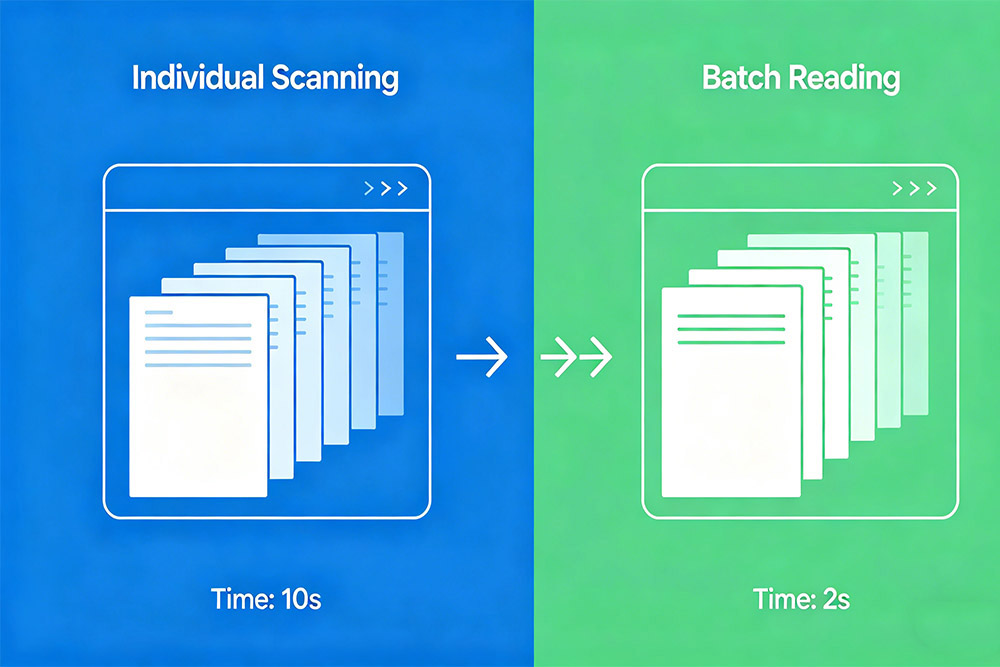
You can compare features all day, but the real difference is simple:
Everything else—speed, cost, accuracy—comes from that.
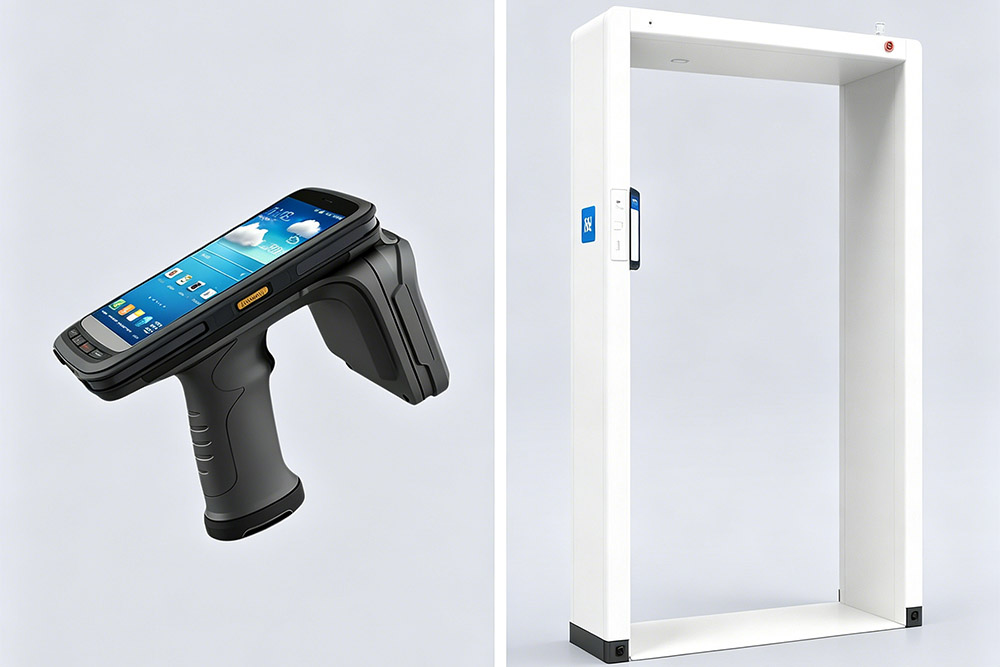
Handheld readers are basically mobile scanners.
An operator:
They’re great for flexibility—but limited by human speed.
Fixed readers remove the human from the scanning process.
Once installed:
For example:
A forklift passes through a gate, and all tagged items are recorded instantly.
No stopping. No scanning. No operator needed.
Let’s take a simple example:
Handheld:
Fixed reader:
At low volume, the difference is small.
At scale, it becomes massive.
Handheld systems rely on human behavior.
That introduces:
Fixed systems are more predictable:
For industries where accuracy matters (inventory, compliance), this is critical.
At first glance:
But that’s only part of the story.
Over time, fixed systems often reduce total cost—especially in high-volume environments.
This is where the real trade-off is.
If your workflow changes frequently, handheld makes sense.
If your workflow is stable and repetitive, fixed readers win.
Handheld is the better option if:
Fixed readers are the better choice if:
This is why they are widely used in:
A logistics company started with handheld RFID readers for inventory checks.
At first, it worked.
But as volume increased:
They added fixed readers at entry/exit points.
Result:
They didn’t replace handheld completely—
they used both, where each made sense.
In many real projects, the best setup is:
Fixed rfid readers for automation
Handheld rfid readers for exceptions
For example:
This hybrid approach is often the most practical.
Choosing between handheld and fixed RFID readers is not about which one is “better.”
It’s about:
Handheld gets you started.
Fixed readers take you to the next level.
Guide Recommendations
Fixed RFID Reader: Why It’s Becoming Must-Have
Fixed RFID Readers: What I Didn’t Expect and What I Learned
RFID Handheld Reader vs. Fixed Reader: Which Is Better for Retail?
Different Types of RFID Readers: A Simple Introduction
Best Budget USB RFID Readers Under $100 for Small Business Inventory Systems
RFID Module vs. RFID Reader: What’s the Difference?
Fixed RFID Reader Buying Guide: 5 Core Parameters You Must Know
What is an RFID Reader Used For?
How RFID Reader Works: The Simple Explanation
How to Choose the Best Long-Range RFID Reader for Warehouse Management
RFID Readers for Boom Barriers ,Where Efficiency Meets Access Control
Why Your Warehouse Needs Smarter RFID Readers in 2025
Understanding RFID Readers,Essential Devices for Efficient Tracking

Curious what RFID scanners look like? Explore designs, sizes, and applications of handheld, fixed, and integrated RFID scanners across industries.
More
iOS read RFID solutions tested: Discover which setups actually work for inventory. See iPhone compatibility, hidden costs, and how Cykeo users avoid common fails.
More
Master cold chain compliance with RFID sensor modules. Learn how real-time temperature tracking safeguards pharmaceuticals, food, and more.
More
In modern business, efficiency and accuracy are key to success. Radio Frequency Identification (RFID) technology has become a game-changer across industries, and the four-port RFID reader has emerged as a powerful tool for enhancing operational ef...
More