 Cykeo RFID IoT Solution Products R&D Manufacturer
Where Are RFID Tags Used?
205Discover where RFID tags are used across retail, healthcare, logistics, manufacturing and asset management, with practical deployment insights and real-world RFID data.
MoreAll RFID Product
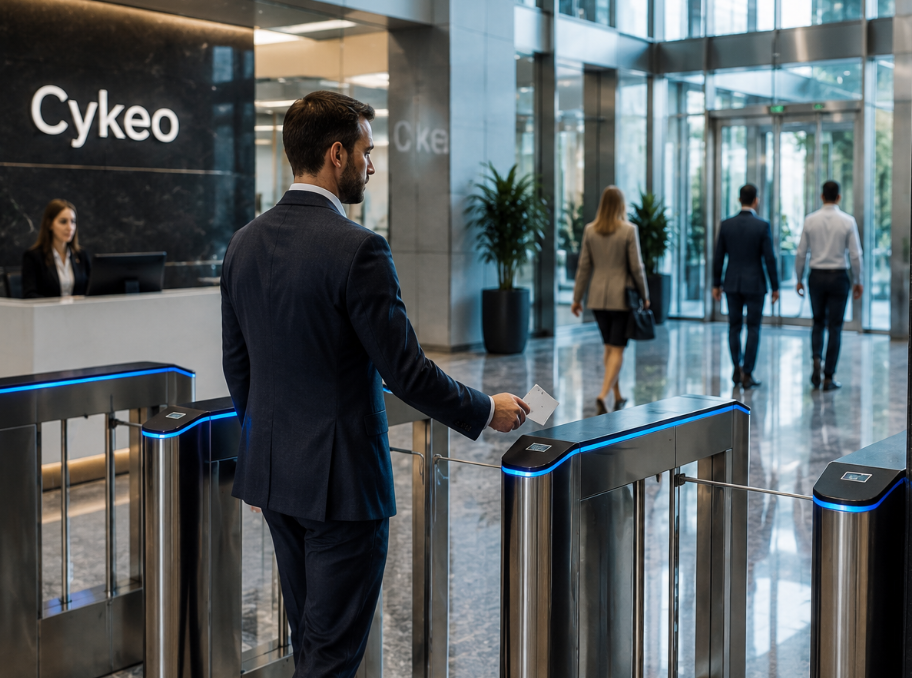
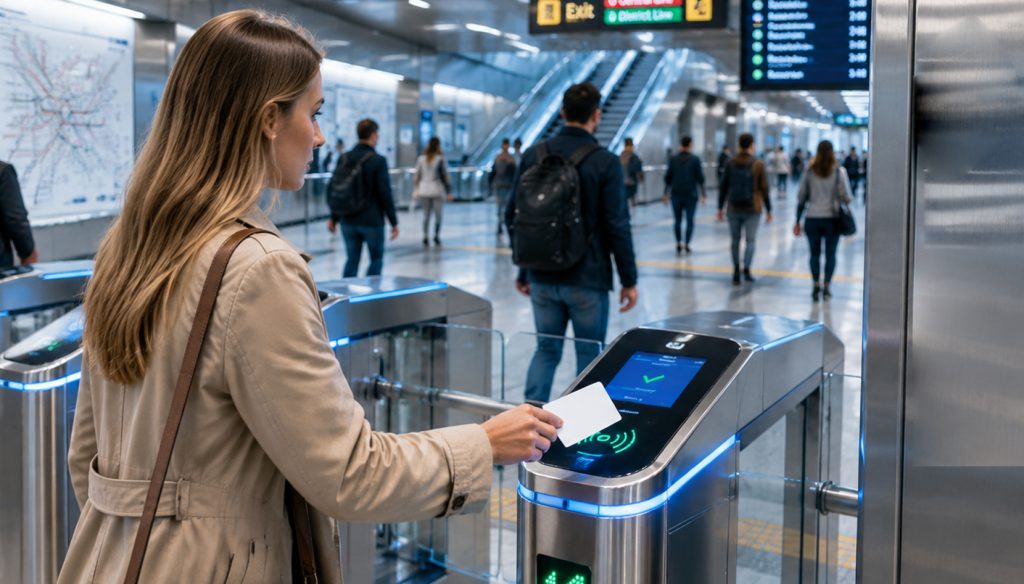
RFID card is a contactless smart identification card that stores data on a chip and communicates via radio frequency for fast, secure access control and tracking. It is widely deployed in office entry systems, transportation cards, and industrial identity management.
In Cykeo field integrations, RFID cards are not “just badges”—they become the invisible handshake between people, systems, and infrastructure.
An RFID card contains two core components: a microchip and an antenna. When placed near a reader, it responds using electromagnetic coupling (HF) or backscatter communication (UHF).
Most access control cards today operate at 13.56 MHz (HF), compliant with ISO/IEC 14443 standards used in secure ID systems.
In Cykeo deployments for corporate campuses, this frequency choice is not random. It balances security and convenience—short range, but highly stable authentication.
The shift from magnetic stripe to RFID was not cosmetic—it changed system reliability.
| Feature | RFID card | Magnetic card |
|---|---|---|
| Contact required | No | Yes |
| Wear rate | Low | High |
| Data capacity | Higher | Very limited |
| Security level | Encrypted options | Easily copied |
A report from HID Global highlights that contactless credentials significantly reduce physical wear failures in access systems, improving lifecycle durability in high-traffic environments.
In one Cykeo office access project, mechanical swipe readers failed repeatedly after heavy daily usage. After migration to RFID cards, maintenance calls dropped noticeably within months.
Office systems look simple on paper. In reality, the behavior changes depending on environment.
A few observations from Cykeo installations:
These issues rarely appear in vendor datasheets—but dominate on-site commissioning days.
Security depends on encoding and encryption layer:
ISO/IEC 14443 and 15693 standards define interoperability for proximity cards used globally in secure identity systems.
In real deployments, Cykeo engineers often observe that security failures rarely come from hacking—but from poor system configuration during initial setup.
In real engineering deployments:
One Cykeo integration in a logistics-adjacent campus environment showed a subtle pattern: users with laminated card holders had slightly faster gate pass rates due to reduced signal dampening. Small detail—but it changes throughput at scale.
Yes. With encryption-enabled systems, RFID cards are widely used in enterprise-grade access control.
Basic UID cards can be cloned, but encrypted systems significantly reduce this risk.
Frequency type, antenna design, and surrounding materials.
RFID card systems continue to evolve quietly inside infrastructure layers, and in Cykeo deployments, their real value only becomes visible when thousands of silent authentications happen without interruption—day after day.
Discover where RFID tags are used across retail, healthcare, logistics, manufacturing and asset management, with practical deployment insights and real-world RFID data.
More
What does RFID stand for in retail? Learn how Radio Frequency Identification improves inventory accuracy, smart checkout, product tracking, and retail automation.
More
Looking for a faster, more accurate way to manage your inventory? The CK-D7 Mobile RFID Cart offers real-time tracking and simple integration. Perfect for warehouses, retail, and tool rooms.
More
Learn how RFID antennas work, how they communicate with RFID tags, and why antenna selection affects reading distance, accuracy, and system performance. A practical guide for RFID distributors, integrators, and bulk buyers.
More