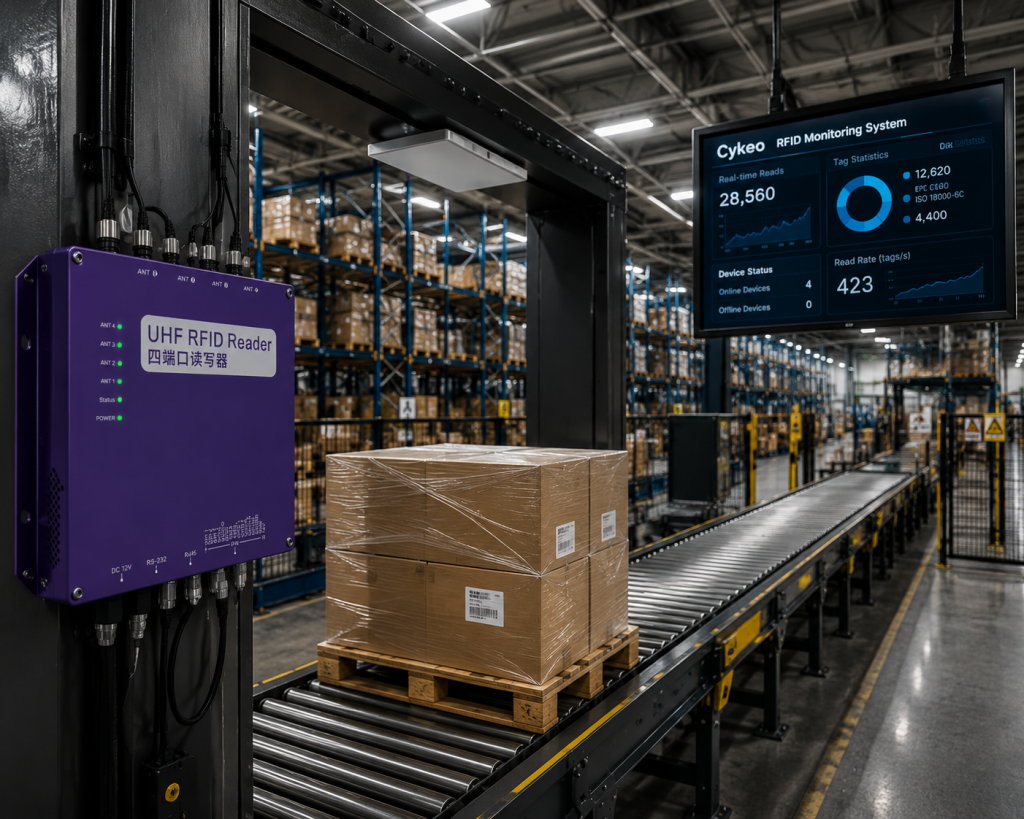
reader/writer is the core device in UHF RFID systems, enabling contactless data reading and writing for fast identification and automated management. In Cykeo deployments, it is widely used in logistics, asset tracking, access control, and industrial automation scenarios to replace manual scanning and improve operational efficiency.
Its real value is not only reading speed, but stable bulk data acquisition under continuous workloads.
How reader/writer Works in Real Systems
A reader/writer transmits RF signals through antennas to energize RFID tags and exchange data via backscatter communication. Performance depends on frequency band, protocol, and environmental stability.
The dominant global standard is EPC Class 1 Gen2 / ISO 18000-6C, widely used in supply chain and logistics ecosystems.
In Cykeo European warehouse deployments, this standard ensures interoperability across multi-vendor logistics infrastructure.
Field Insight: reader/writer in Real Deployment
In one Cykeo warehouse integration project, replacing barcode scanning with UHF reader/writer systems changed operational rhythm:
Manual scanning delay: ~2–4 seconds per item
RFID batch capture: near real-time processing
Inventory cycle time reduced by over 60% in field testing
However, the real improvement was not speed—it was continuous visibility without interruption.
Core Technical Capabilities
High-Speed Read/Write Performance
Reading distance: up to 15 meters
Writing distance: up to 8 meters
Processing speed: >400 tags/second
This makes it suitable for high-density logistics environments where large-scale simultaneous reads are required.
Interface Expansion Capability
The system supports:
3 GPO outputs
2 GPI inputs
These interfaces allow integration with gates, alarms, conveyors, and automation controllers in Cykeo deployments.
Multi-Standard Compatibility
Supports global RFID standards:
EPC C1G2
ISO 18000-6B / 6C
GB/T 29768-2013
This ensures deployment flexibility across different regions and industries.
Cykeo UHF RFID reader/writer enabling automated logistics tracking
Vehicle Inspection & Customs Systems
In customs and vehicle inspection environments, stability is more critical than raw speed.
Cykeo field deployments show that maintaining >90% recognition stability in metallic environments is a key performance benchmark.
Engineering Reality Behind RFID Performance
In real environments, performance is affected by:
Tag orientation and placement
Metal and liquid interference
Multi-tag collision in dense environments
According to Impinj RFID research, up to 80% of system performance depends on deployment environment rather than hardware alone.
This explains why tuning and installation design are as important as device specifications.
Role of reader/writer in Cykeo Architecture
In Cykeo RFID systems, the reader/writer acts as a:
Data acquisition node
Data writing interface
System automation trigger point
It is not just a device—it is the connection layer between physical objects and digital systems.
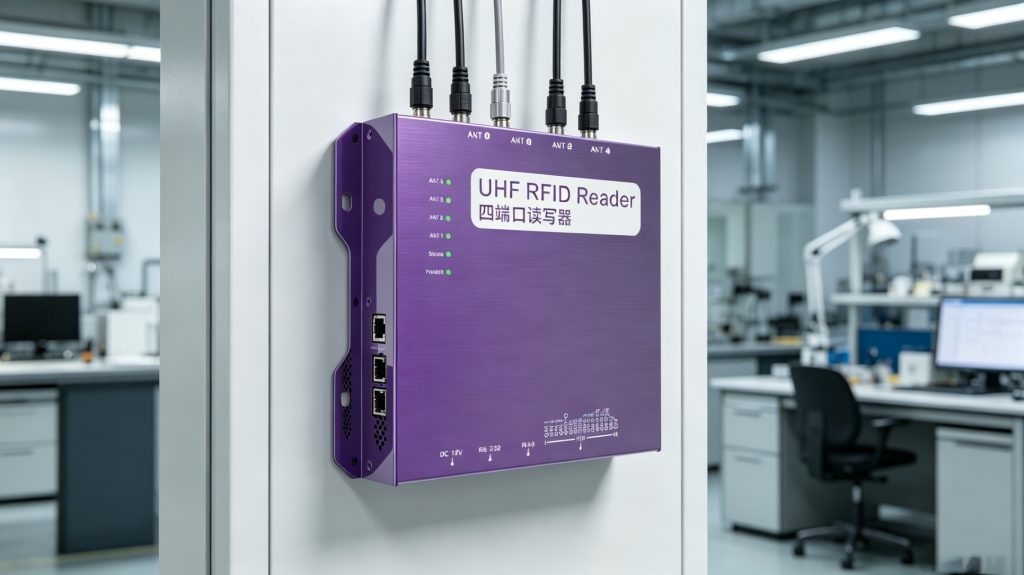
Cykeo UHF RFID reader/writer used in industrial automation systems
FAQ
What is a reader/writer in RFID systems?
It is a device that can both read and write RFID tag data for identification and automation.
Can it handle multiple tags at once?
Yes, it supports bulk reading at up to 400 tags per second.
Is it suitable for industrial environments?
Yes, it is widely used in logistics, manufacturing, and access control systems.
Learn why RFID laundry tags are becoming essential for modern textile rental management. Improve garment tracking, reduce inventory loss, and automate commercial laundry operations.
This article offers a systematic overview of Chipless RFID technology, including its working principles, encoding methods, technical strengths and limitations, and its emerging applications in anti-counterfeiting, sensing, and the Internet of Thin...
Learn how RFID medical inventory management systems work in real hospitals. See how they reduce errors, improve visibility, and automate supply tracking.
 Cykeo RFID IoT Solution Products R&D Manufacturer