 Cykeo RFID IoT Solution Products R&D Manufacturer
Can RFID Read NFC? Here’s How It Actually Works.
178Can RFID read NFC? We explain the technical relationship, which RFID readers are compatible, and why most industrial systems cannot read NFC tags.
MoreAll RFID Product
If you’re managing cables, tools, or equipment at scale, you’ve probably asked this question at some point:
Should we stick with barcodes, or move to RFID?
On paper, barcodes look cheaper.
In real operations, the answer is rarely that simple.
Let’s break it down from a practical, on-site perspective—not theory.
Barcodes require manual, one-by-one scanning.
RFID allows automatic, bulk reading without line of sight.
Everything else—cost, efficiency, accuracy—comes from that difference.
Barcodes work fine in controlled environments.
But once you move into industrial scenarios, issues start showing up:
In a small warehouse, this is manageable.
In a yard with thousands of cables?
It quickly becomes a bottleneck.
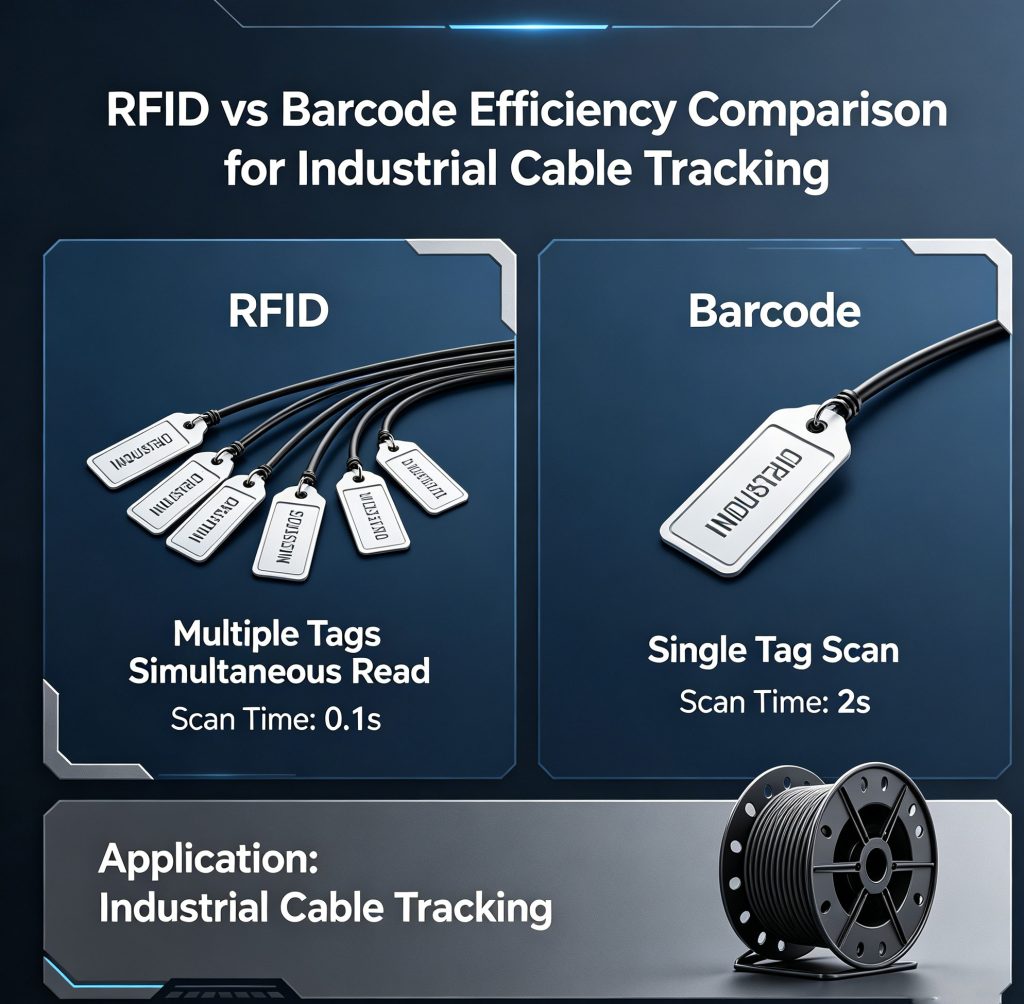
RFID cable tie tags take a completely different approach.
Instead of scanning labels visually, you’re reading data via radio frequency.
For example, a technician walking past a cable rack with a handheld reader can capture all tagged assets in seconds.
No stopping. No aiming. No re-scanning.
Let’s look at a simple scenario:
Barcode:
RFID:
Now multiply that by daily or weekly operations.
This is why companies switch—not because RFID is “cool,”
but because labor cost becomes the real expense.
Barcodes are vulnerable.
In industrial environments, they often:
Once a barcode is unreadable, it’s essentially useless.
RFID cable tags are designed differently.
Instead of sticking onto a surface, they are:
And most importantly:
Even if the surface is dirty, the tag still works.
Yes, RFID tags cost more per unit.
That’s obvious.
But focusing only on tag price misses the bigger picture.
Over time, especially in large-scale operations, RFID often becomes more cost-effective.
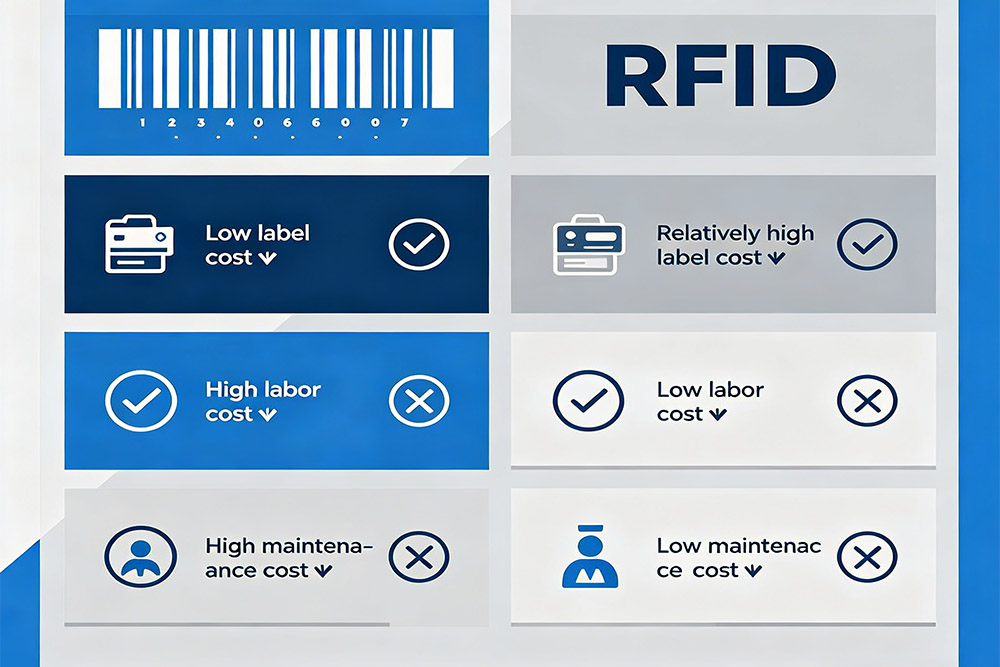
To be fair, RFID is not always the right choice.
Barcodes are still suitable when:
If you only manage a few hundred items, barcode may be enough.
RFID becomes the better option when:
This is especially true in:
Instead of asking “which is better,” ask:
If labor and inefficiency are already a problem,
RFID is not an upgrade—it’s a solution.
Barcodes are simple and cheap.
RFID is scalable and efficient.
The choice depends on where your operation is today—and where it’s going.
For small setups, barcodes still work.
But for industrial asset tracking, especially involving cables and long-term use,
RFID cable tie tags are quickly becoming the standard.
User Guide
How to Remove RFID Tags from Clothing Safely (Without Ripping Your Shirt)
The Truth About RFID Signals: Aluminum Foil, Smartphones, and Reading Range Explained
How Security Tag Readers Work: RFID vs. Magnetic Systems – Which Is More Efficient?
How to Deactivate RFID Tags Without Guesswork or Myths?
How to Test RFID Tags with Phone
How to Test RFID Tags with Your Smartphone (No Scanner Needed)
How to Use Android Phone to Emulate RFID Tag: Full Tutorial and Application Guide
Can Your RFID Tags Reader iPhone ? Here’s How It Actually Works
Can You Use an NFC Phone as an RFID Tag?
How to Choose the Right RFID Tag for Clothing? Materials, Packaging & Attachment Explained
Industrial Essentials: 2025 Guide to the Most Durable Rugged RFID Tags
Active RFID Tag Range: The Real Difference Between Active and Passive Tags
Can RFID read NFC? We explain the technical relationship, which RFID readers are compatible, and why most industrial systems cannot read NFC tags.
More
Learn how RF scanning in warehouse operations improves inventory accuracy, speeds up order fulfillment, and enables real-time stock visibility. Discover how RFID tunnel scanning automates high-volume warehouse workflows.
More
Discover how an rfid scanner phone works in real projects. Learn mobile scanning methods, compatibility tips, and field usage advice with CYKEO RFID solutions.
More
Learn proven strategies to improve RFID handheld reader battery life in field operations. Discover power-saving settings, maintenance tips, and Cykeo’s rugged solutions.
More