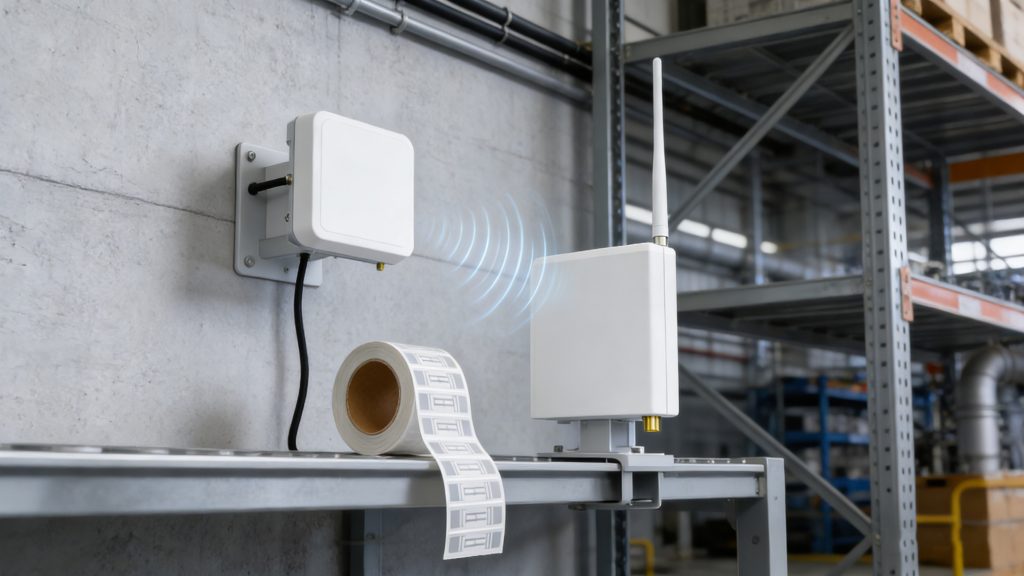
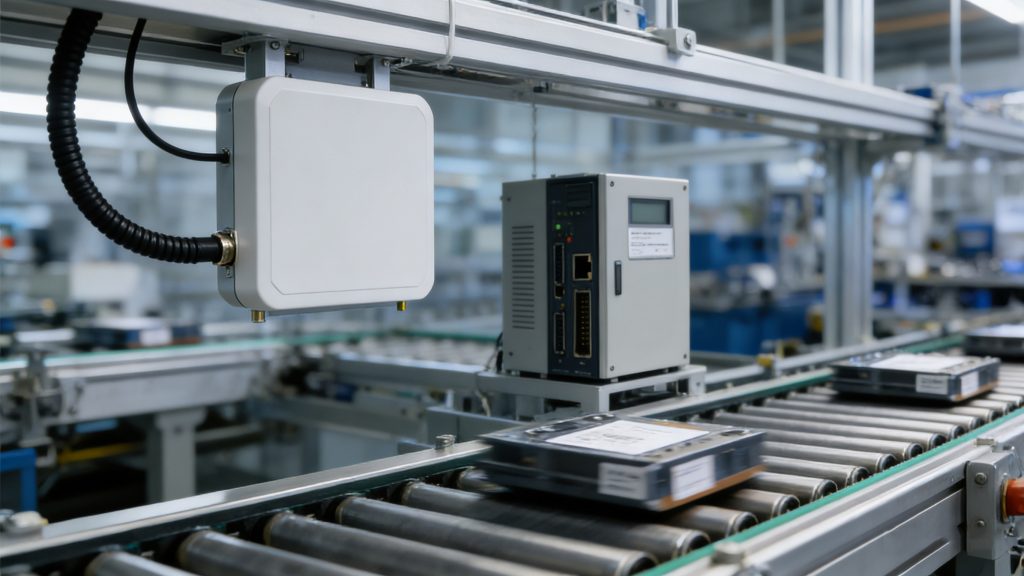
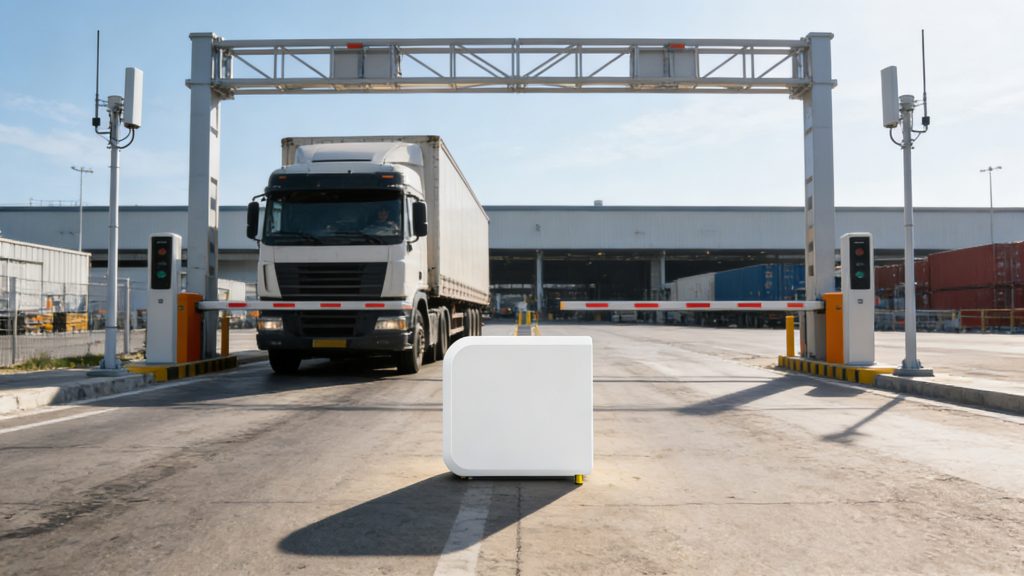
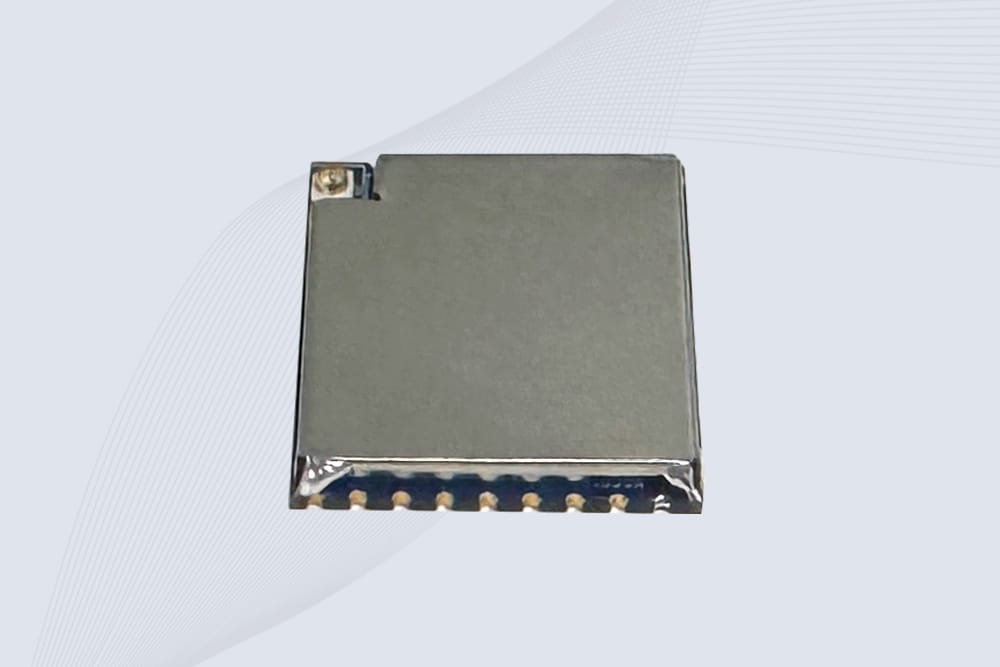
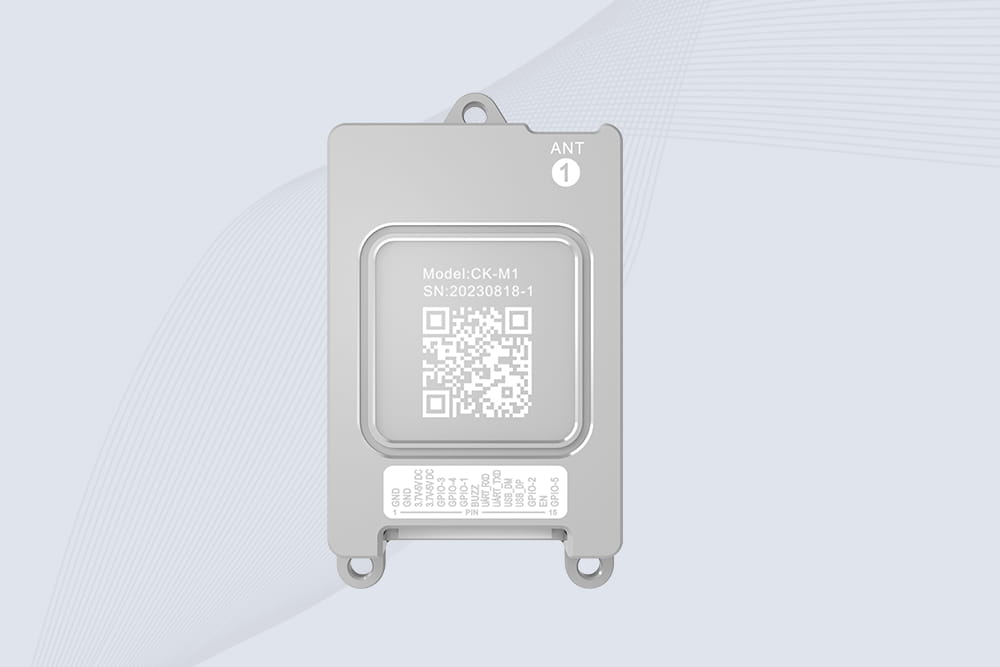
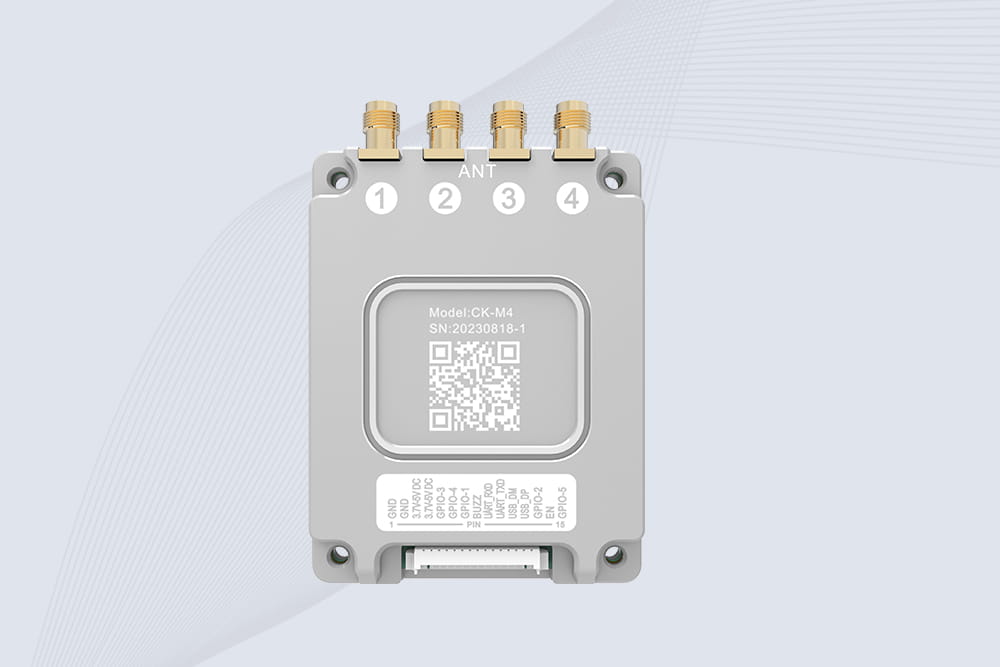
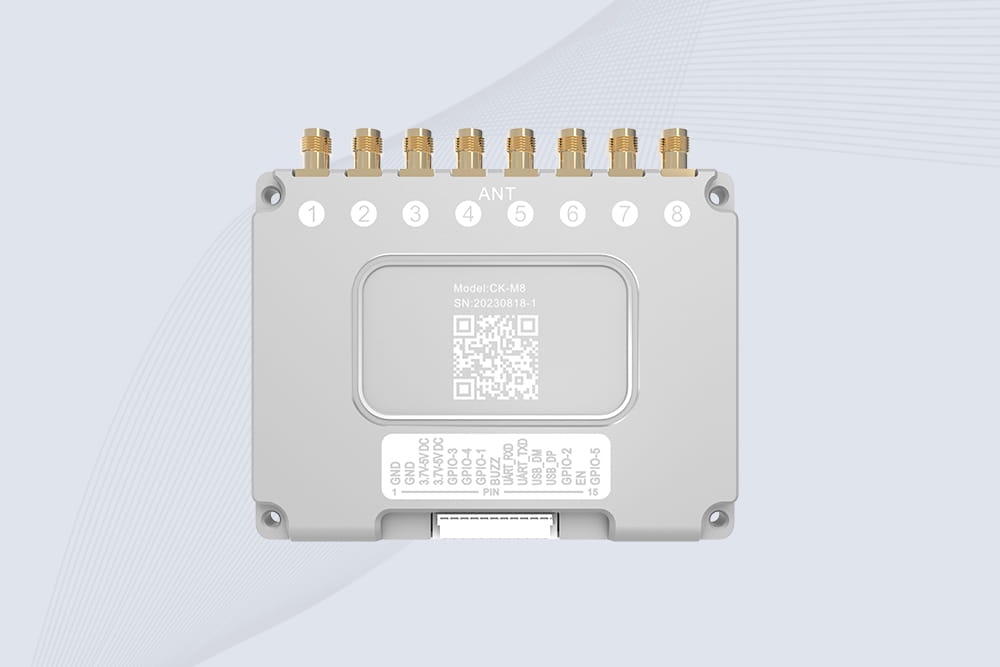
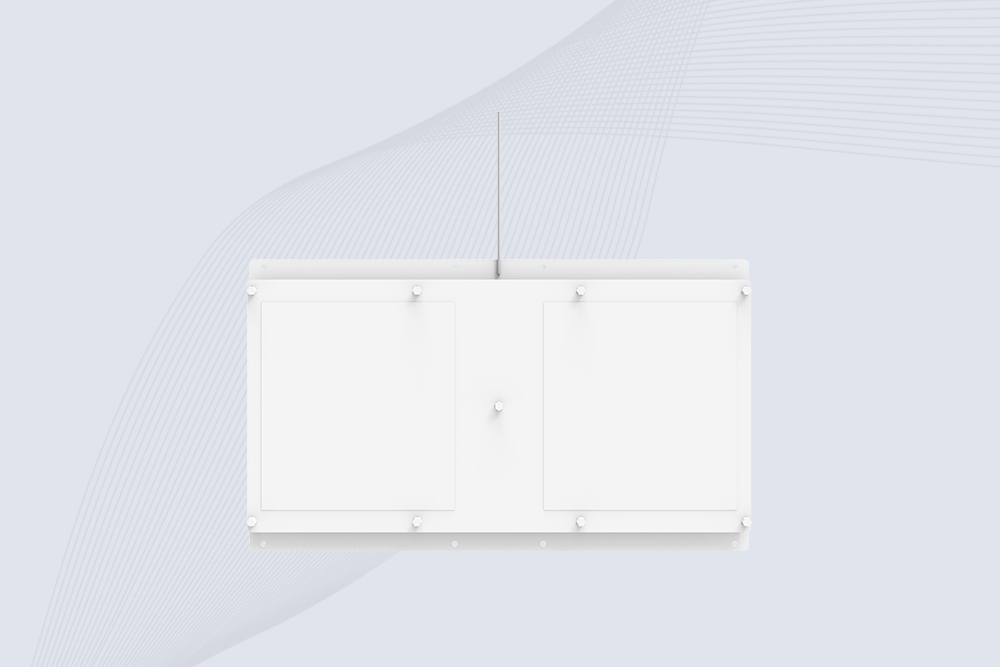
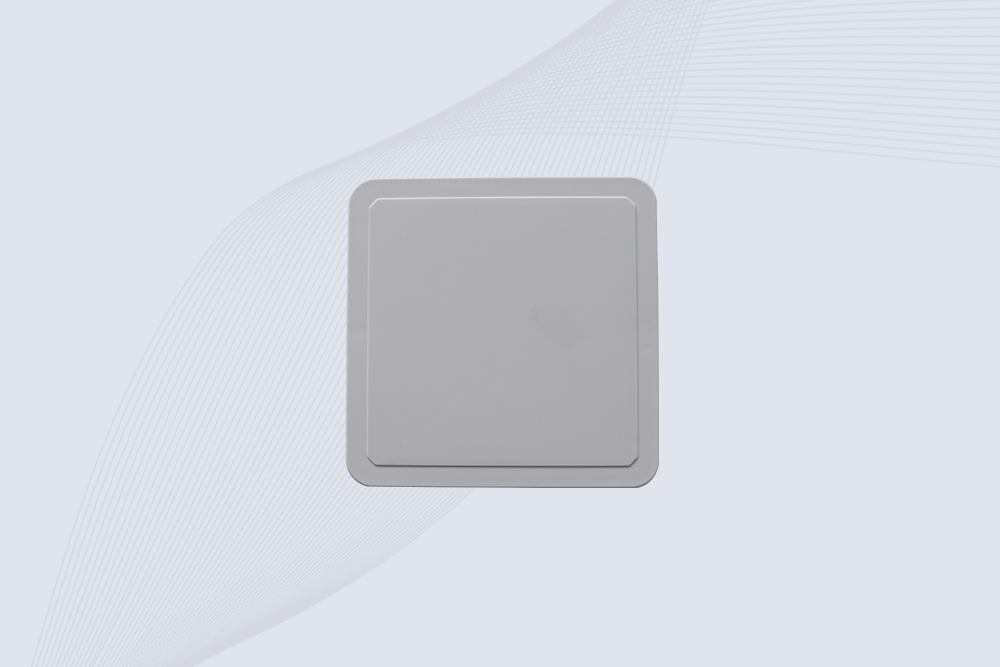
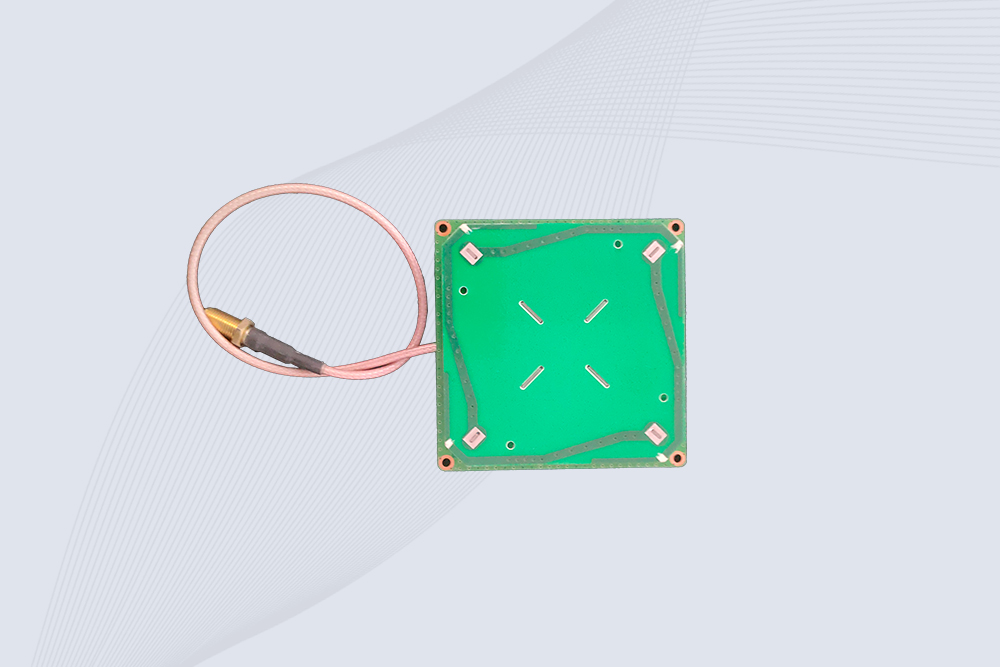
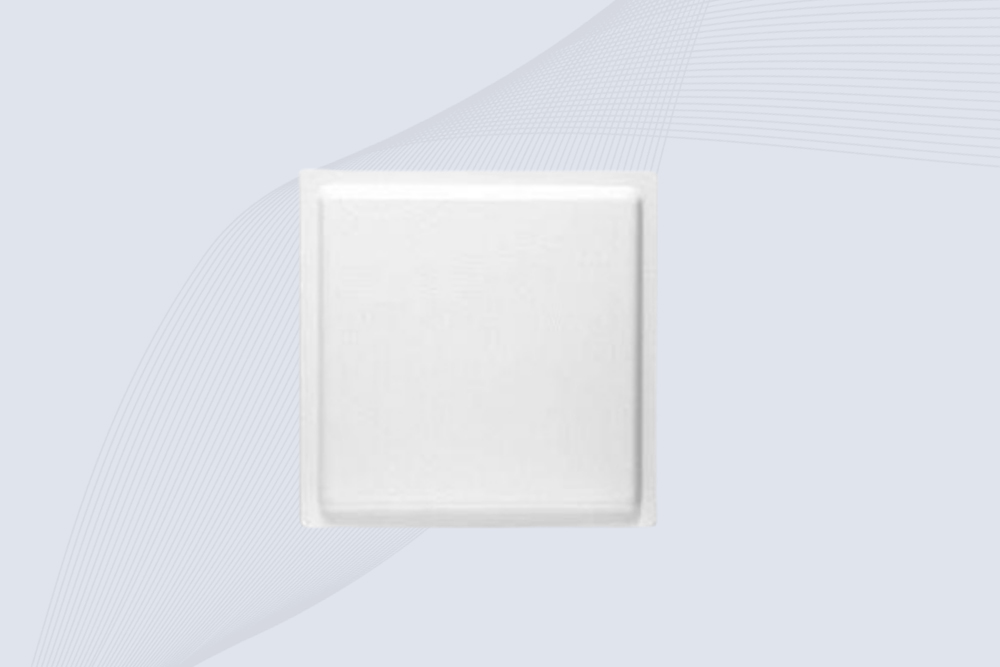
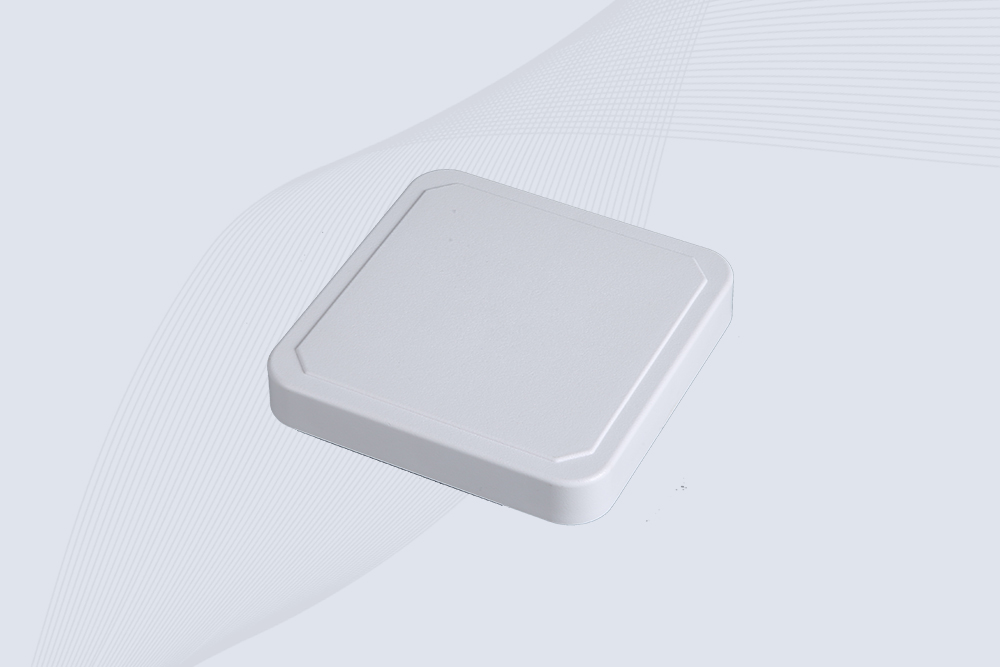
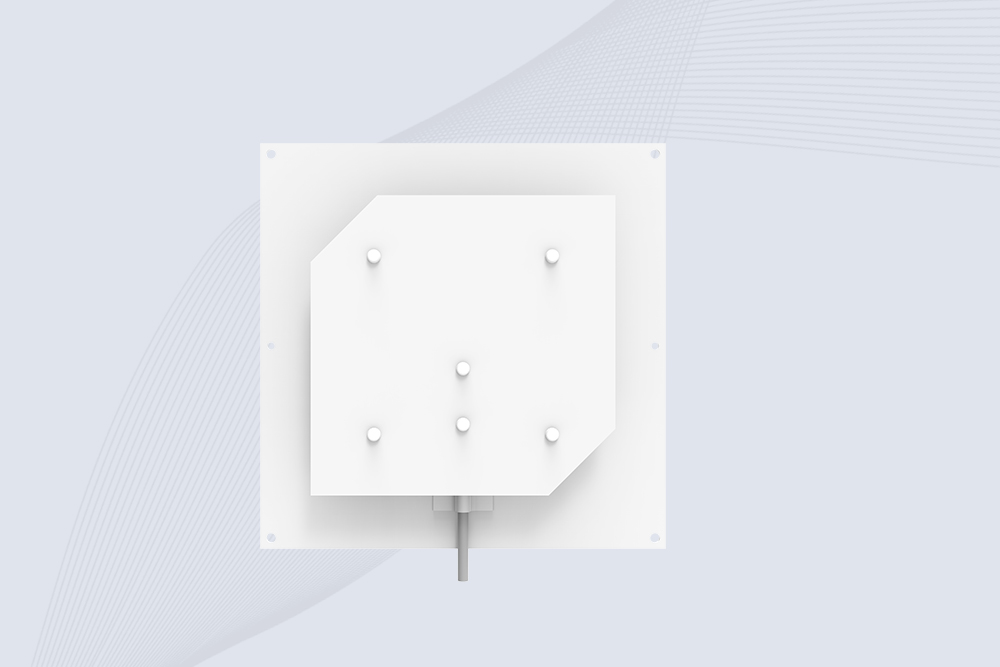
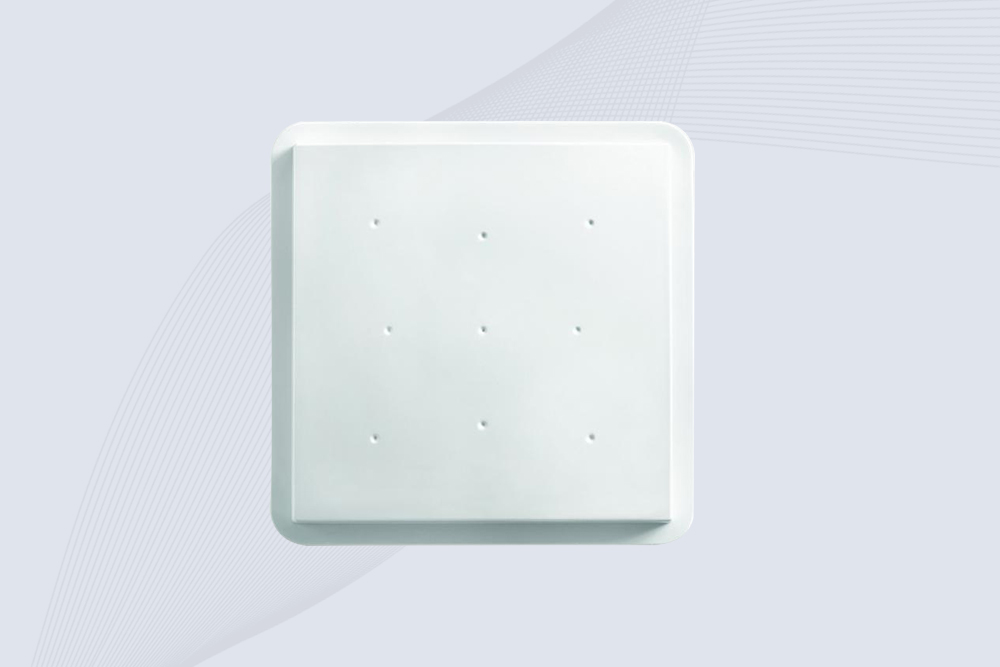
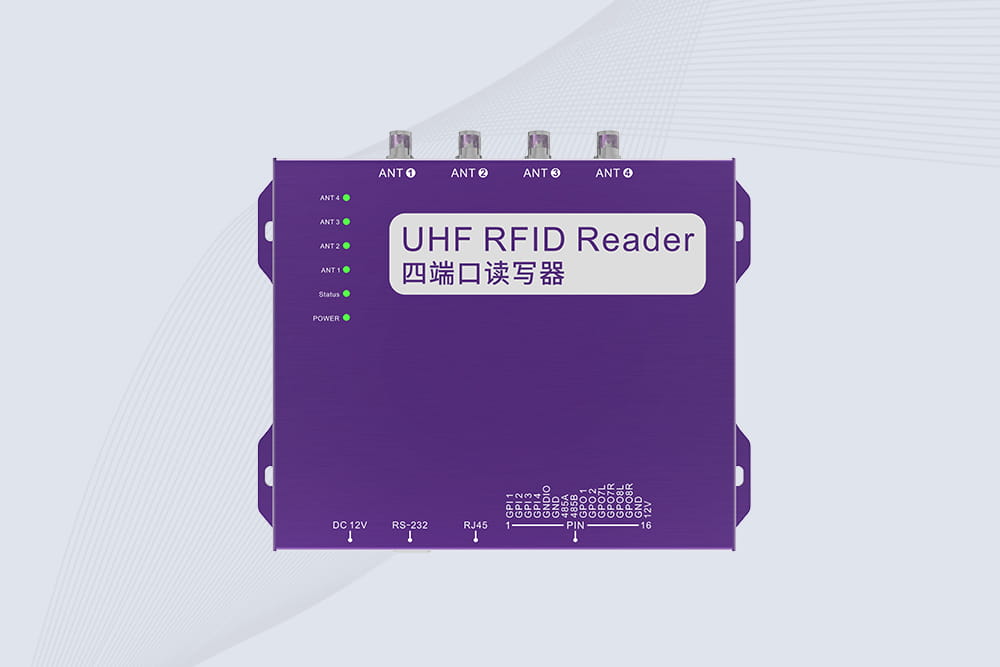
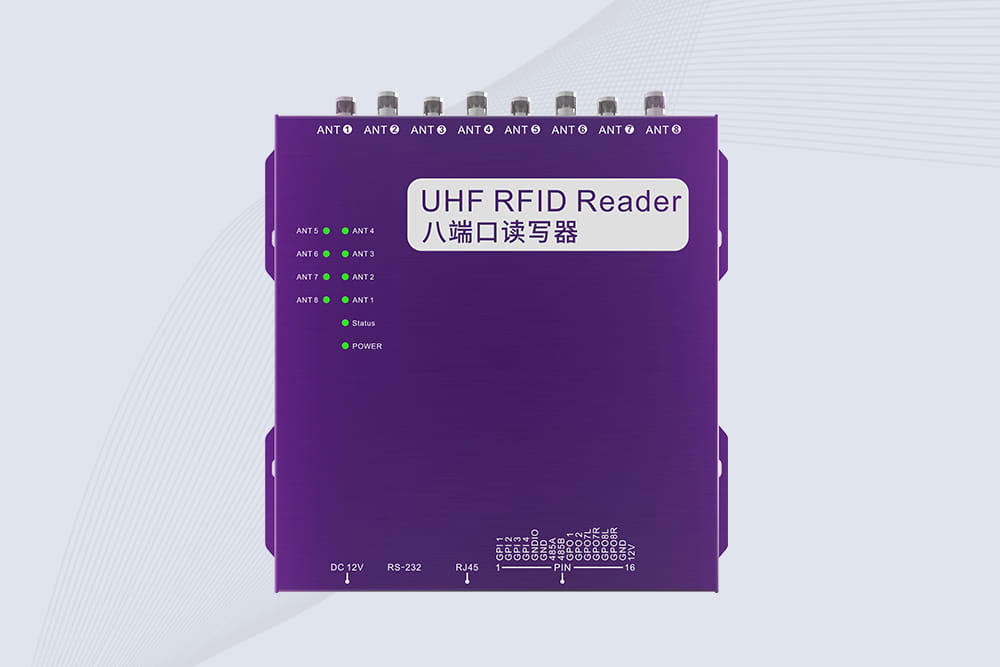
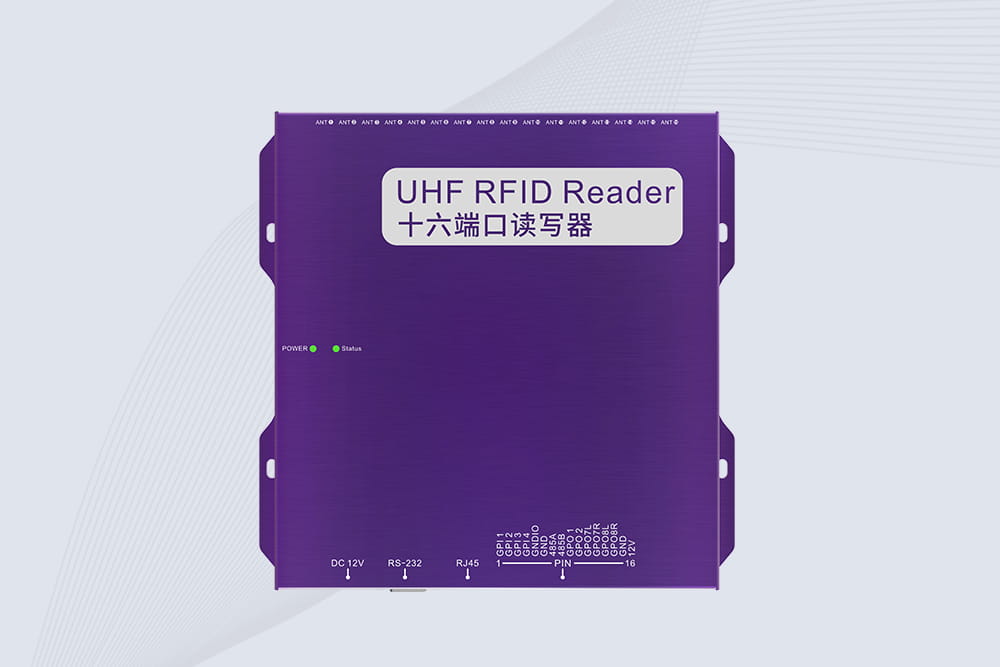
This is what most solution providers deal with every day: hundreds or thousands of assets, pallets, bins, work-in-progress parts. Sitting in warehouses, moving along production lines, constantly entering and leaving logistics nodes.
If you want continuous, hands-free, reliable identification, it’s very hard to make that happen without a long-range industrial RFID reader. In real industrial environments, short-range solutions simply don’t scale.
When I first got into RFID projects, I was confused too. Back then, RFID felt straightforward — it reads tags, end of story. Only after working on real deployments did it become clear that long-range RFID is not about extending distance on paper, but about whether the whole system actually works on site.
What Do We Really Mean by a “Long-Range Industrial RFID Reader”?
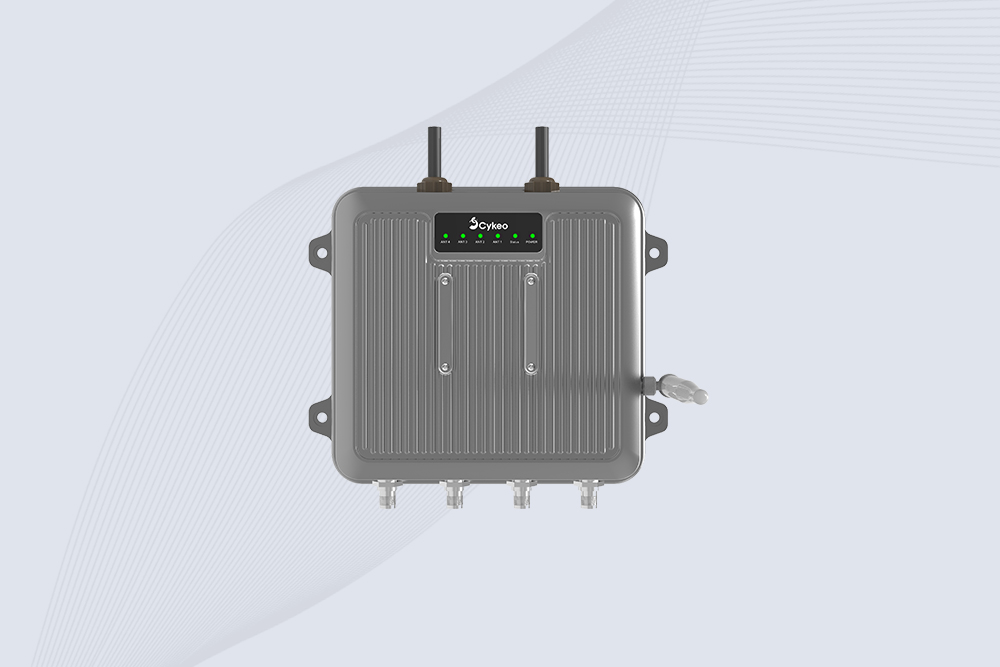
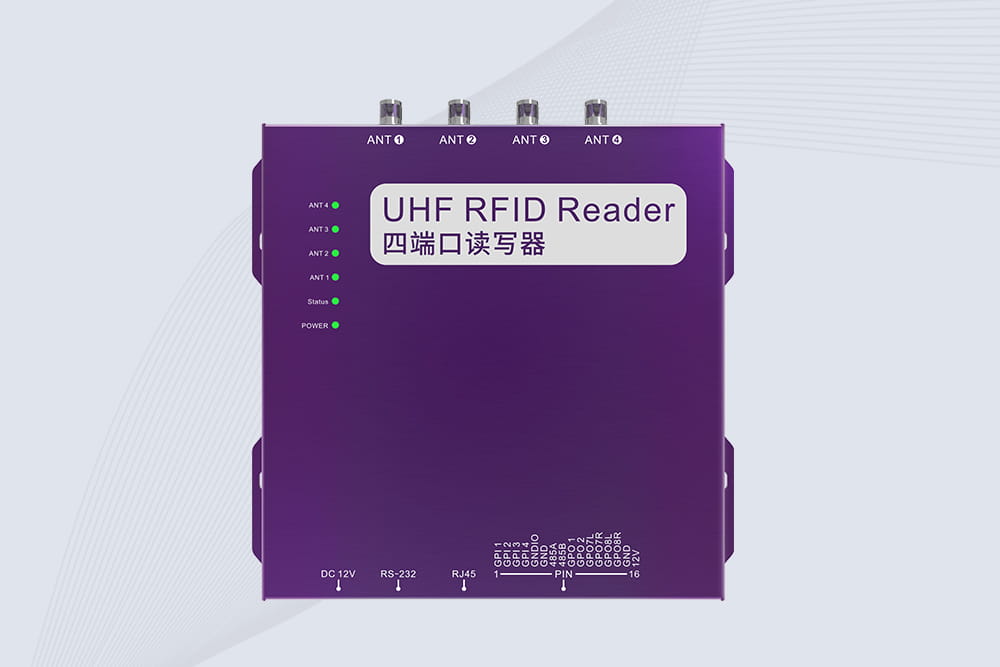
At its core, a long-range industrial RFID reader is designed to stably read UHF RFID tags from several meters to well over ten meters, depending on the environment and antenna design.
The real difference from short-range readers is not just distance. These readers are meant to:
Cover wide warehouse aisles
Monitor entire rack zones
Track multiple stations on a production line
Identify vehicles or pallets moving through gates
That’s why, when evaluating options, solution providers usually focus on long-range RFID readers for industrial asset tracking that have already proven stable in real warehouses and production environments — not just in lab tests or datasheets.
It’s Not “More Power + Bigger Antenna”
A common misunderstanding is that long-range RFID is simply about higher output power and stronger antennas. That’s part of the equation, but it’s far from the whole picture.
Once you see the reader as a system node — not a peripheral — design decisions change very quickly.
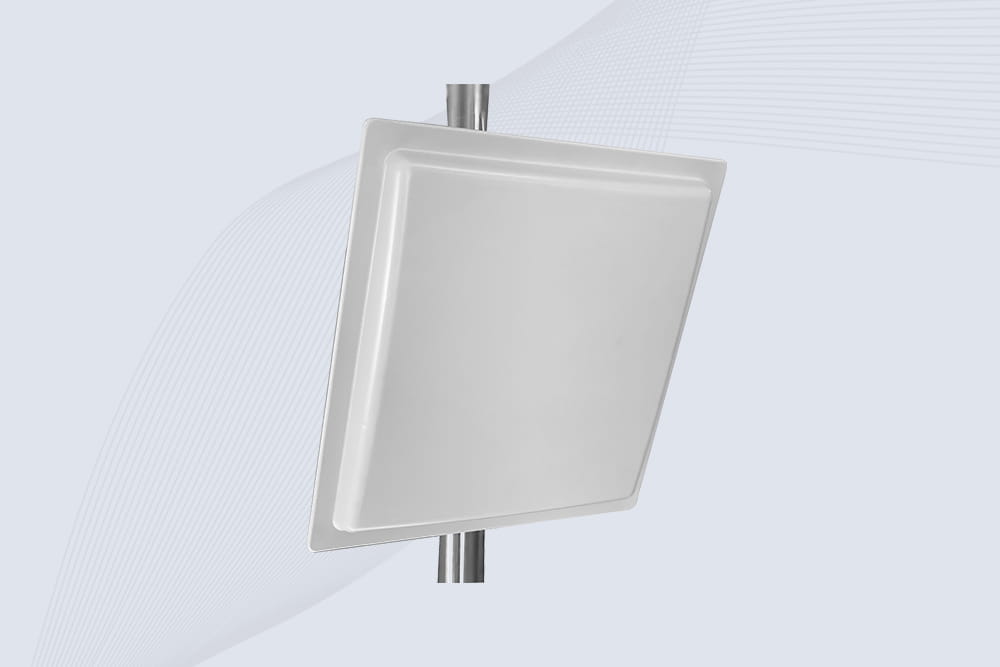
Antennas Are Not Accessories — They Are Part of the Solution
One mistake that shows up again and again: mounting a reader, attaching a random antenna, and expecting the entire area to be covered.
That rarely works.
In real long-range applications, solution providers usually work with:
High-gain directional antennas
Sector antennas to control read zones
Gate or tunnel-style layouts
Multi-antenna arrays to eliminate blind spots
From experience, the reader and antenna must be designed together, otherwise you end up fighting unstable reads, reflections, and missed tags during commissioning.
Real-World Environments Don’t Care About Your Datasheet
This is where theory meets reality.
Warehouses are full of metal racks. Production lines are surrounded by motors, drives, and electromagnetic noise. Tags are often mounted on metal or near liquids.
That’s why a “15-meter read range” on a datasheet doesn’t automatically translate to 15 meters on site.
Short answer: yes — and in many cases, it’s essential.
Warehouse Management
In large warehouses, forklifts move constantly and pallets pass through defined aisles. Manual scanning or handheld inventory checks are slow and prone to misses.
A typical long-range setup looks like this:
Industrial RFID reader installed at aisle or gate entrances
Directional antennas controlling the read zone
Automatic identification as pallets pass through
Inbound, outbound, and relocation events are captured automatically, and WMS updates happen in real time — without manual scanning.
Production Line Automation
On production lines, the real questions are usually:
Is this the correct material?
Did the part reach the right station?
Can multiple tags be read without stopping the line?
With long-range readers and antenna arrays at key stations:
Parts are identified as they move
Multiple tags are read simultaneously
Data connects directly to PLC or SCADA systems
Errors trigger alarms or automatic sorting
In many factories, this approach proves more stable and easier to maintain than vision-based systems.
Logistics Yards and Vehicle Gates
In logistics parks, cold-chain facilities, or distribution centers, throughput matters.
This is one of those scenarios where long-range RFID delivers very visible ROI.
How Solution Providers Actually Choose an Industrial RFID Reader
In practice, we care much less about headline numbers and much more about:
Whether performance is repeatable in real environments
How flexibly antenna power and sensitivity can be adjusted
Whether read zones can be tightly controlled
How easily the reader integrates with WMS, ERP, or PLC systems
These factors usually determine whether a system runs quietly for years — or becomes a constant support burden.
A Final, Practical Thought
At some point, every RFID project reaches the same turning point: the hardware works, but the question becomes how reliably it works once the site gets busy.
That’s usually where solution providers start looking beyond “spec-compliant” devices and focus on readers that are easier to tune, easier to integrate, and easier to support over the long term. Not because they want more features — but because fewer surprises mean fewer service calls.
Long-range RFID isn’t about buying a stronger reader. It’s about choosing equipment that fits the real operating conditions of warehouses, production lines, and logistics yards.
Get that part right, and everything downstream becomes simpler.
Looking at Long-Range Industrial RFID Readers from a Solution Provider’s Perspective
Let’s be real. This is what most solution providers deal with every day: hundreds or thousands of assets, pallets, bins, work-in-progress parts. Sitting in warehouses, moving along production lines, constantly entering and leaving logistics nodes.
If you want continuous, hands-free, reliable identification, it’s very hard to make that happen without a long-range industrial RFID reader. In real industrial environments, short-range solutions simply don’t scale.
When I first got into RFID projects, I was confused too. Back then, RFID felt straightforward — it reads tags, end of story. Only after working on real deployments did it become clear that long-range RFID Reader is not about extending distance on paper, but about whether the whole system actually works on site.
What Do We Really Mean by a “Long-Range Industrial RFID Reader”?
At its core, a long-range industrial RFID reader is designed to stably read UHF RFID tags from several meters to well over ten meters, depending on the environment and antenna design.
The real difference from short-range readers is not just distance. These readers are meant to:
Cover wide warehouse aisles
Monitor entire rack zones
Track multiple stations on a production line
Identify vehicles or pallets moving through gates
That’s why, when evaluating options, solution providers usually focus on long-range RFID readers for industrial asset tracking that have already proven stable in real warehouses and production environments — not just in lab tests or datasheets.
It’s Not “More Power + Bigger Antenna”
A common misunderstanding is that long-range RFID is simply about higher output power and stronger antennas. That’s part of the equation, but it’s far from the whole picture.
Once you see the reader as a system node — not a peripheral — design decisions change very quickly.
Antennas Are Not Accessories — They Are Part of the Solution
One mistake that shows up again and again: mounting a reader, attaching a random antenna, and expecting the entire area to be covered.
That rarely works.
In real long-range applications, solution providers usually work with:
High-gain directional antennas
Sector antennas to control read zones
Gate or tunnel-style layouts
Multi-antenna arrays to eliminate blind spots
From experience, the reader and antenna must be designed together, otherwise you end up fighting unstable reads, reflections, and missed tags during commissioning.
Real-World Environments Don’t Care About Your Datasheet
This is where theory meets reality.
Warehouses are full of metal racks. Production lines are surrounded by motors, drives, and electromagnetic noise. Tags are often mounted on metal or near liquids.
That’s why a “15-meter read range” on a datasheet doesn’t automatically translate to 15 meters on site.
Short answer: yes — and in many cases, it’s essential.
Warehouse Management
In large warehouses, forklifts move constantly and pallets pass through defined aisles. Manual scanning or handheld inventory checks are slow and prone to misses.
A typical long-range setup looks like this:
Industrial RFID reader installed at aisle or gate entrances
Directional antennas controlling the read zone
Automatic identification as pallets pass through
Inbound, outbound, and relocation events are captured automatically, and WMS updates happen in real time — without manual scanning.
Production Line Automation
On production lines, the real questions are usually:
Is this the correct material?
Did the part reach the right station?
Can multiple tags be read without stopping the line?
With long-range readers and antenna arrays at key stations:
Parts are identified as they move
Multiple tags are read simultaneously
Data connects directly to PLC or SCADA systems
Errors trigger alarms or automatic sorting
In many factories, this approach proves more stable and easier to maintain than vision-based systems.
Logistics Yards and Vehicle Gates
In logistics parks, cold-chain facilities, or distribution centers, throughput matters.
This is one of those scenarios where long-range RFID delivers very visible ROI.
How Solution Providers Actually Choose an Industrial RFID Reader
In practice, we care much less about headline numbers and much more about:
Whether performance is repeatable in real environments
How flexibly antenna power and sensitivity can be adjusted
Whether read zones can be tightly controlled
How easily the reader integrates with WMS, ERP, or PLC systems
These factors usually determine whether a system runs quietly for years — or becomes a constant support burden.
A Final, Practical Thought
At some point, every RFID project reaches the same turning point: the hardware works, but the question becomes how reliably it works once the site gets busy.
That’s usually where solution providers start looking beyond “spec-compliant” devices and focus on readers that are easier to tune, easier to integrate, and easier to support over the long term. Not because they want more features — but because fewer surprises mean fewer service calls.
Long-range RFID isn’t about buying a stronger reader. It’s about choosing equipment that fits the real operating conditions of warehouses, production lines, and logistics yards.
Get that part right, and everything downstream becomes simpler.
CYKEO Embedded RFID Modules are designed for compact industrial and IoT devices that require stable UHF performance. These UHF RFID Modules support global protocols, flexible power control, and reliable multi-tag reading for smart cabinets, production lines, and asset tracking systems.
CYKEO Embedded RFID Module is built for compact IoT and industrial devices that need stable UHF performance. This UHF module supports global protocols, low power operation, and reliable multi-tag reading for smart lockers, production lines, and always-on RFID systems.
CYKEO CYKEO-M1 drone rfid module is a compact UHF RFID reader module designed for drones and UAV platforms. It supports long-range aerial scanning, fast multi-tag reading, and stable performance in wind, vibration, and outdoor environments.
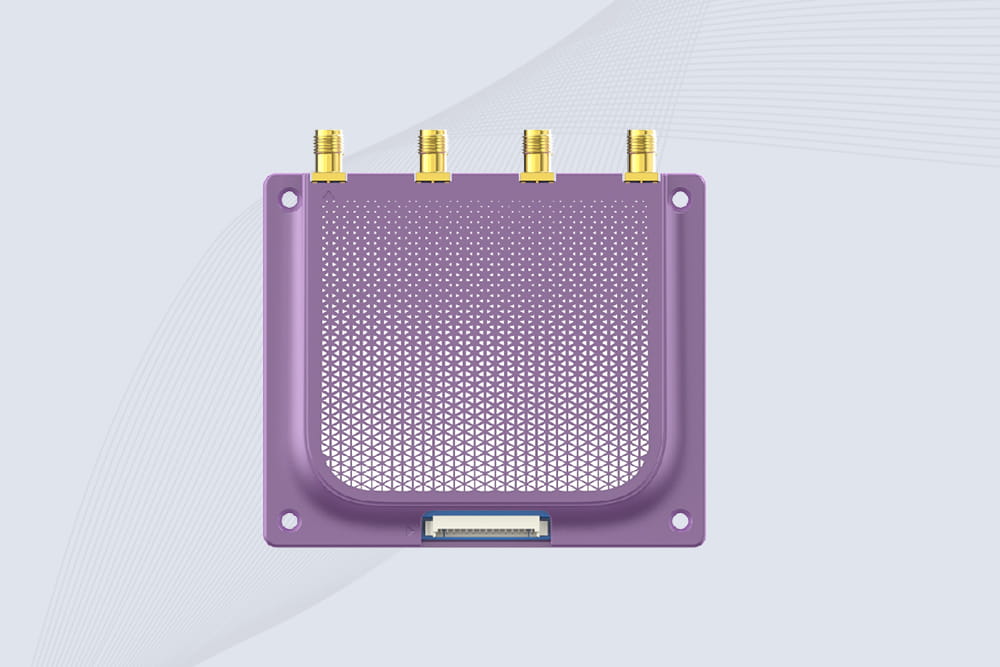
CYKEO CYKEO-M4 RC522 RFID Module is an industrial-grade UHF RFID reader with 4 ports, supporting ISO, EPC, and GB protocols. High-speed, accurate reading for IoT, automation, and warehouse applications.
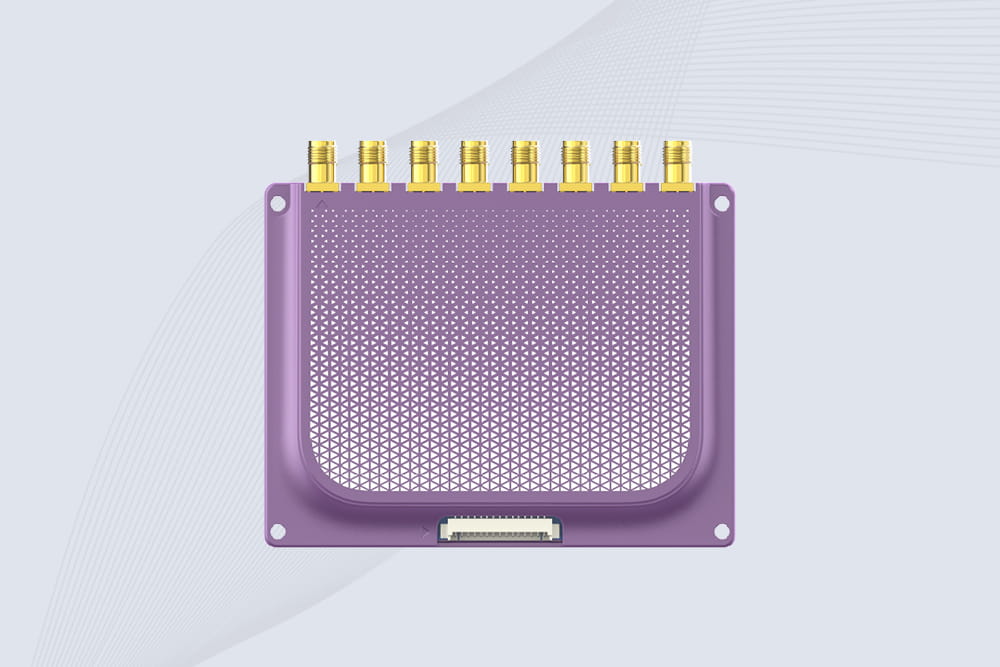
CYKEO CYKEO-M8 Module RFID is an 8-port UHF R2000 RFID Module designed for high-density, multi-tag environments. Stable 33dBm output, ISO & GB protocol support, ideal for warehouses, factories, and automated systems.
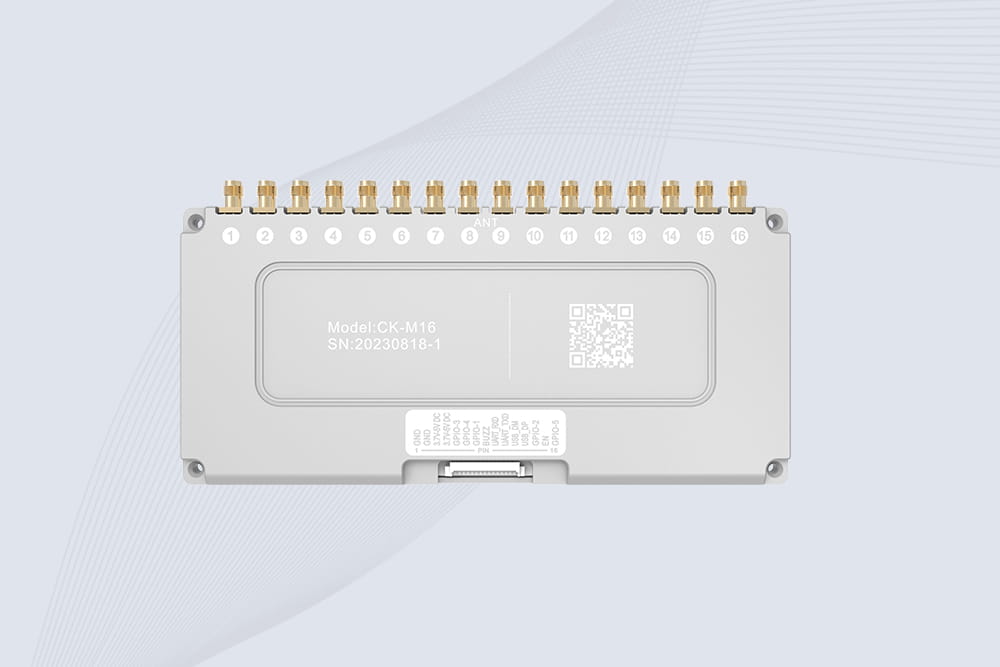
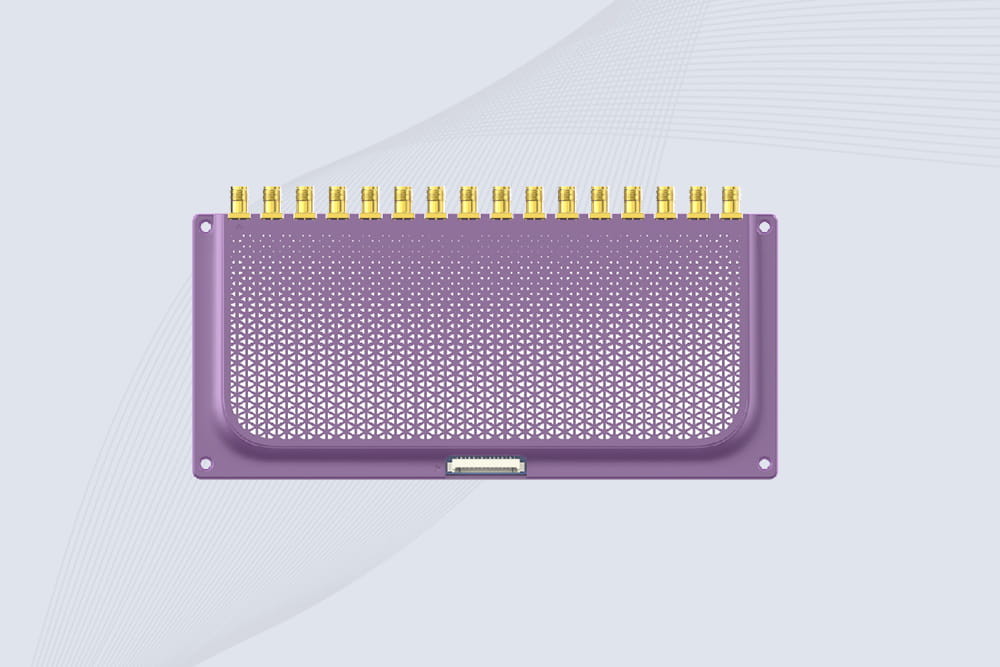
CYKEO CYKEO-M16 RFID Module is a 16-port UHF RFID reader module based on the R2000 chipset. Designed for dense tag environments, it supports ISO and GB standards and delivers stable multi-antenna control for industrial automation.
The CYKEO CYKEO-M16L RFID Reader Module is a 16-channel UHF RFID core designed for dense tag environments. With adjustable 33dBm output, multi-protocol support, and stable multi-antenna control, this RFID Tag Reader Module fits industrial automation, warehouse systems, and large-scale IoT deployments.
CYKEO CYKEO-M8L module RFID is a compact industrial UHF module built for dense tag and multi-antenna environments. With 8 RF ports, adjustable 33 dBm output, and ISO & GB protocol support, it is widely used in factories, warehouses, and automated tracking systems.
CYKEOCYKEO-M4L UHF RFID Module is a compact 4-channel RFID tag reader module designed for dense tag environments. Supporting ISO and GB protocols, it delivers stable reads up to 10 meters for industrial and IoT systems.
Cykeo CYKEO-A11 UHF RFID reader antenna delivers 11dBi gain, 840-960MHz frequency range, and IP65 ruggedness for retail, logistics, and industrial RFID systems. Features low VSWR and easy installation.
CYKEO Antenna RFID Reader delivers stable long-range UHF performance with a 10.5dBi directional design, built for warehouses, conveyor portals, and industrial RFID systems. This rfid reader antenna provides 20m+ read distance and rugged IP67 protection.
Cykeo CYKEO-A5B industrial Linear RFID Antenna delivers 5dBi gain, ≤1.5:1 VSWR, and IP65 rugged design for warehouse, production line, and logistics UHF systems.
Cykeo’s CYKEO-B12 Long Range RFID Antenna delivers 15m+ read range with 12dBi gain, IP65 rugged design, and global 840-960MHz UHF support. Ideal for warehouse/logistics asset tracking.
Cykeo CYKEO-B10 Long Distance RFID Antenna offers 10dBi gain, 840-960MHz frequency range, IP65 rating, and 20m+ coverage for logistics/warehousing/ETC systems. Low VSWR ensures stable signal transmission.
Cykeo CYKEO-A6 UHF RFID panel antenna features 6dBi gain, 840-960MHz broadband, IP65 metal-ready housing for logistics/smart retail. 18mm ultra-thin design with tool-free mounting.
Cykeo CK-A3 industrial antenna RFID UHF offers 5m+ tag detection, ≤1.3:1 VSWR, IP65 rugged design, and global UHF spectrum compatibility (840-960MHz) for warehouses, factories, and retail.
Cykeo CYKEO-B5 directional RFID antenna provides 5dBi gain with 60° narrow beamwidth for precise inventory tracking. IP65-rated, global UHF frequency support, and low VSWR.
Create your own high-performance DIY RFID antenna! 5dBi gain, 840-960MHz tunable, step-by-step guides. Compatible with Arduino, Raspberry Pi, and commercial UHF readers.
Cykeo CYKEO-A7 Flexible RFID Antenna features 840-960MHz wideband tuning, 7dBi gain, and IP68 rating for medical/retail/industrial curved surface deployments. 98% read accuracy with peel-and-stick installation.
Cykeo CYKEO-B5A industrial Passive RFID Antenna delivers 5dBi gain, 70° beamwidth, and -40°C~55°C operation for warehouses/smart cabinets. Compatible with Zebra/Impinj readers.
Cykeo’s CYKEO-A9B High Gain RFID Antenna delivers 15m+ read range with 9dBi amplification. Features IP54 rugged design, 840-960MHz bandwidth, and 80° beamwidth for warehouse/manufacturing RFID systems.
Cykeo’s enterprise-grade 8dbi Impinj RFID Antenna 10m+ read range with 840-960MHz tuning. Features IP65 housing, 1.4 VSWR, 35° beamwidth for retail/warehouse RFID systems.
Cykeo CYKEO-A9 industrial UHF RFID antenna delivers 9dBi gain, 840-960MHz frequency range, and IP65 protection for warehouse/logistics/retail RFID systems. Features N-type connector and ≤1.3:1 VSWR.
CYKEO UHF RFID Antenna built for long-distance and industrial applications. This antenna rfid uhf delivers strong gain, outdoor durability, and reliable tag performance in warehouses, yards, and vehicle ID systems.
CYKEO Antenna RFID delivers reliable long-range UHF performance in warehouses, retail shelves, and cold-chain environments. This compact uhf rfid antenna provides stable reads with circular polarization and ultra-wide 840–960 MHz support, ideal for industrial tracking, smart shelves, and asset monitoring.
Cykeo’s CYKEO-C8 UHF RFID antennas delivers 8dBi gain, 840-960MHz full-band coverage, and IP65 ruggedness for manufacturing/warehouse RFID systems. Industrial RFID Antennas Features
Cykeo’s 8dBi UHF RFID antenna and reader kit delivers 10m+ range, 840-960MHz broadband, and IP65 ruggedness for factories, warehouses, and logistics. ISO 18000-6C & EPC Gen2 certified.
Cykeo’s CYKEO-A12C UHF Large RFID Antenna delivers 12dBi gain, 840-960MHz global frequency, IP65 ruggedness for logistics/warehousing/automotive. 40° beamwidth ensures stable 15m+ tag reads.
CYKEO Near Field RFID Antenna provides precise 5–30 cm reading for shelves, cabinets, and workstations. This compact rfid shelf antenna delivers stable short-range performance around metal and clutter, ideal for pharmacies, libraries, and electronics sorting.
Cykeo’s industrial long range RFID reader delivers 20-meter scanning, 500+ tags/sec speed, and IP67 waterproof design for automated warehouses, logistics, and harsh environment applications.
Cykeo’s CYKEO-RA6L industrial RFID long range reader features 20m read distance, 500 tags/sec speed, and IP67 protection. Ideal for warehouse automation, manufacturing WIP tracking, and smart logistics. Supports ISO 18000-6C/6B protocols.
CYKEO Long Range RFID Tag Reader built for outdoor and industrial operations. This Outdoor RFID Reader delivers 20m read distance, fast tag processing, and IP67 durability for wide-area tracking.
Cykeo CYKEO-RA12L industrial Long Range RFID Reader delivers 20m read range, 200+ tags/sec scanning, and IP67 protection for manufacturing/logistics applications. Supports ISO 18000-6C/GB protocols.
Cykeo CYKEO-C1 industrial Forklift RFID Reader features 20m read range, 600 tags/sec scanning, Impinj R2000 chipset, and IP67 rugged design. Ideal for warehouse logistics and manufacturing. Supports ISO 18000-6C/6B protocols.
Cykeo CYKEO-R4 industrial UHF RFID Fixed Reader features 4 TNC ports, 400+ tags/sec speed, IP67 housing, and global frequency compliance for vehicle inspection, smart warehouse, and asset management systems.
CYKEO CYKEO-R8L Fixed RFID Reader with 8-port UHF design, Impinj-based RF core and up to 20m read range. An industrial Fixed RFID Reader for vehicle inspection, warehouse portals, smart manufacturing lines and secure access checkpoints.
RFID Fixed Reader from CYKEO – the CYKEO-R16L 16-port UHF fixed reader for warehouses, smart cabinets, and production lines. Long-range, multi-tag reading, stable performance for 24/7 industrial use.
A hands-on guide to RFID antenna design covering frequency selection, impedance matching, substrate choice, and tuning. Includes real-world pitfalls, on-site testing tips, and lessons from field deployment.
Tired of missed RFID scans near metal shelves or Wi-Fi routers? Learn how to extend UHF reader range in interference-heavy warehouses—no engineering degree needed.
Learn proven strategies to minimize RFID tag read errors in fixed reader systems. Discover Cykeo’s best practices for antenna placement, signal optimization, and environmental adjustments.
 Cykeo RFID IoT Solution Products R&D Manufacturer