To use an RFID card, bring it within the operating range of a compatible RFID reader. The reader sends a radio signal, communicates with the card, and retrieves its identification data or authorized information. The connected system then uses that data to grant access, record a transaction, or identify an item.
RFID cards are used in places people interact with every day: office entrances, hotels, libraries, transport systems, staff attendance terminals, and equipment-management workstations. The action often looks simple. A person presents a card, the reader responds, and a door opens or a transaction is recorded.
Behind that short interaction are several technical decisions. The card and reader must use compatible radio technology. The reader must be configured for the correct card type. The software must know what the card identifier represents and whether the person or item associated with it has permission to perform the requested action.
That distinction matters when an organization is choosing cards or setting up a new RFID application. A card that can be detected by a reader is not automatically authorized to open a door, borrow a book, or update an asset record.
This guide explains how to use an RFID card, how to present it to different readers, what happens during a card transaction, and how desktop RFID equipment can support card registration and data management.
What Is an RFID Card and How Does It Work?
An RFID card is a card-shaped device that uses radio-frequency communication to exchange information with a compatible reader. Many common contactless cards are passive: they do not need their own battery because they receive energy from the reader’s electromagnetic field.
A typical RFID card system has three main components:
RFID card: Contains a chip and antenna. Depending on the card type, it may provide an identifier and may also support storage of additional data.
RFID reader: Generates the radio-frequency field and communicates with the card.
Software or management system: Interprets the card data and decides what action to take.
When a card is presented to the reader, the reader establishes communication with the card. The card responds with information supported by its chip and protocol. The reader passes the received data to the connected system, which checks the relevant record or permission.
For example, an employee may present an access card at an office entrance. The reader obtains the card’s identifier, and the access-control software checks whether that credential is valid for that door and time. The reader does not independently know whether the employee is allowed inside; that decision belongs to the access-control system.
The same principle applies to library cards, membership cards, and RFID-based asset workflows. The radio communication identifies or exchanges data with the card. The application determines what that information means.
RFID card, NFC card, and contactless smart card: are they the same?
These terms overlap, but they are not interchangeable in every application.
Term
Meaning
Typical consideration
RFID card
A card that communicates using radio-frequency identification
May operate at different frequencies and protocols
NFC card
A card or device supporting Near Field Communication
Commonly used for short-range contactless interactions
Contactless smart card
A card with an embedded chip that communicates without physical contact
May support identification, authentication, or secure applications
UHF RFID card or tag
A card or tag designed for ultra-high-frequency RFID systems
Often used where longer read ranges or bulk identification are needed
Many everyday access and payment cards use high-frequency contactless technology, while UHF RFID is common in inventory, logistics, and item-management applications. A UHF desktop reader should not be assumed to read every HF or NFC card.
The practical rule is simple: check the card’s frequency and communication protocol before choosing a reader. The word “RFID” on a product description is not enough to establish compatibility.
How to Use an RFID Card with a Reader
For most everyday applications, using an RFID card requires only a few actions. The exact position and distance depend on the reader’s antenna design and the card technology.
Check that the card is compatible
Before presenting the card, confirm that it belongs to the system you intend to use. A card issued for one access-control system may not work with another, even if both cards look similar.
Check:
The card’s frequency, such as 13.56 MHz HF or a UHF frequency.
The supported protocol or card technology.
Whether the reader supports the card’s chip type.
Whether the card has been registered in the management system.
Whether the card is active and authorized for the intended operation.
For an existing installation, the reader or system administrator can usually confirm the supported card types. Avoid buying replacement cards based only on their physical appearance.
2: Locate the reader’s scanning area
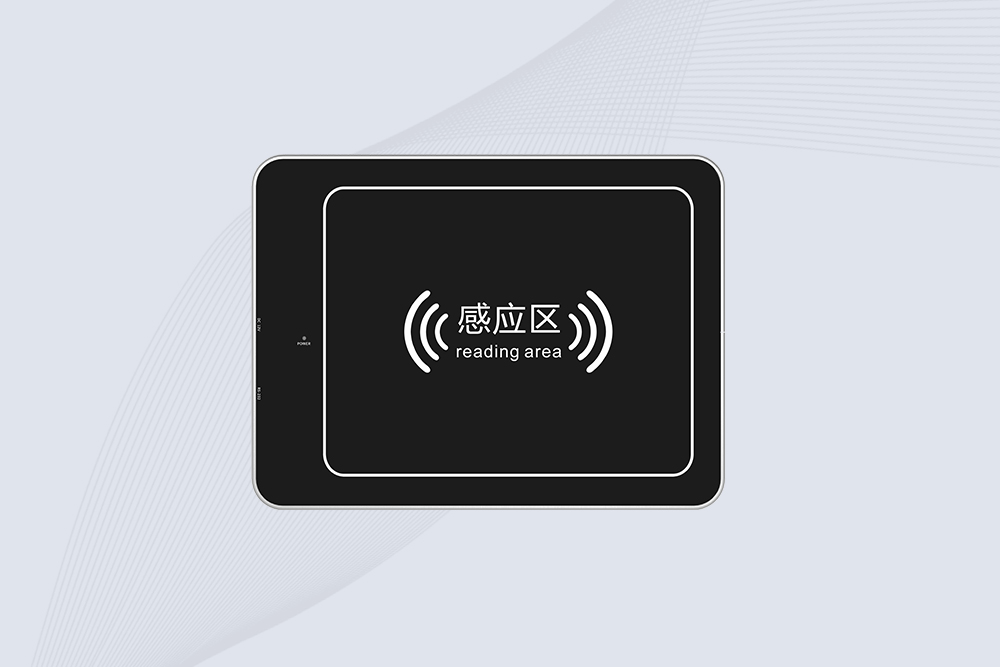
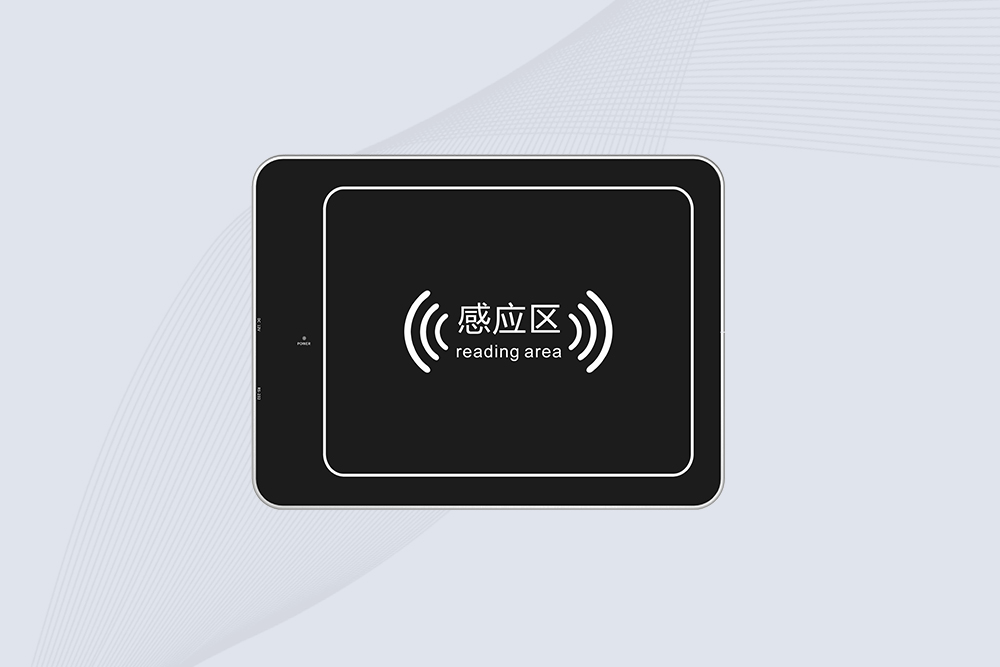
Most RFID readers have a marked area, symbol, or flat surface that indicates where to present the card. Hold the card close to that area.
For a typical access-control reader, place the card flat against or just in front of the reader’s sensing area, following the manufacturer’s instructions. Some readers require a brief presentation; others detect the card as it approaches.
Do not assume that every reader works at the same distance. A compact HF reader is designed for close-range communication, while a UHF system may be configured to identify tags from farther away.
3: Present the card steadily
Hold the card in the recommended position until the reader responds. Depending on the device, confirmation may come from:
A green or red indicator light.
A beep or other audible signal.
A message on a display.
A door unlocking.
A transaction appearing in the connected application.
If the reader does not respond, move the card slightly and try again. Avoid repeatedly tapping the card rapidly. A stable presentation gives the reader time to complete the communication process.
4: Check the system response
A successful card read and a successful transaction are two different things.
A reader may detect the card but the system may reject it because the credential is expired, unregistered, blocked, or not authorized for that location. If the reader responds but the requested action does not occur, contact the system administrator rather than assuming that the card is defective.
How Far Away Should You Hold an RFID Card?
There is no single reading distance for every RFID card. The effective range depends on the card’s frequency, antenna design, reader power, and surrounding materials.
For common contactless smart cards using ISO/IEC 14443, communication is designed for close-range use. The Secure Technology Alliance describes these cards as operating at 13.56 MHz, with a communication distance of less than 10 cm.
Other HF cards using ISO/IEC 15693 are designed for vicinity applications and may support a greater distance, depending on the card and reader. UHF RFID systems use a different radio interface and are commonly applied to inventory and asset identification rather than ordinary close-range card presentation.
Card or technology
Typical use
Practical handling
LF RFID card
Some legacy access and identification systems
Present close to the reader’s designated area
HF contactless card
Access, ticketing, identification, and contactless applications
Hold close to the reader, often within a few centimetres
NFC card or device
Short-range contactless communication
Bring close to the NFC reader or phone
UHF RFID card
Specialized identification and asset-management systems
Follow the reader and card manufacturer’s specified range
Why does the card sometimes need to touch the reader?
A card may need to be held almost against the reader because the system uses near-field inductive coupling. The reader’s antenna generates a magnetic field, and the card’s antenna couples with that field to power the chip and exchange information.
The NXP MF1S5009 contactless smart-card IC datasheet, for example, specifies 13.56 MHz operation under ISO/IEC 14443 Type A and an operating distance of up to 100 mm, depending on antenna geometry and reader configuration. It also specifies a 106 kbit/s data rate and a typical ticketing transaction time below 100 ms, including backup management. These are specifications for that particular IC, not universal performance figures for all RFID cards.
In practice, a card may read at a shorter distance because it is held at an awkward angle, the reader antenna is small, or the card is damaged. Follow the reader’s marked presentation area instead of trying to maximize the distance.
How to Use an RFID Card for Different Applications
The basic presentation method is similar across many applications, but the software response differs. The card may identify a person, represent a membership account, or connect a physical item to a database record.
1. Using an RFID card for door access
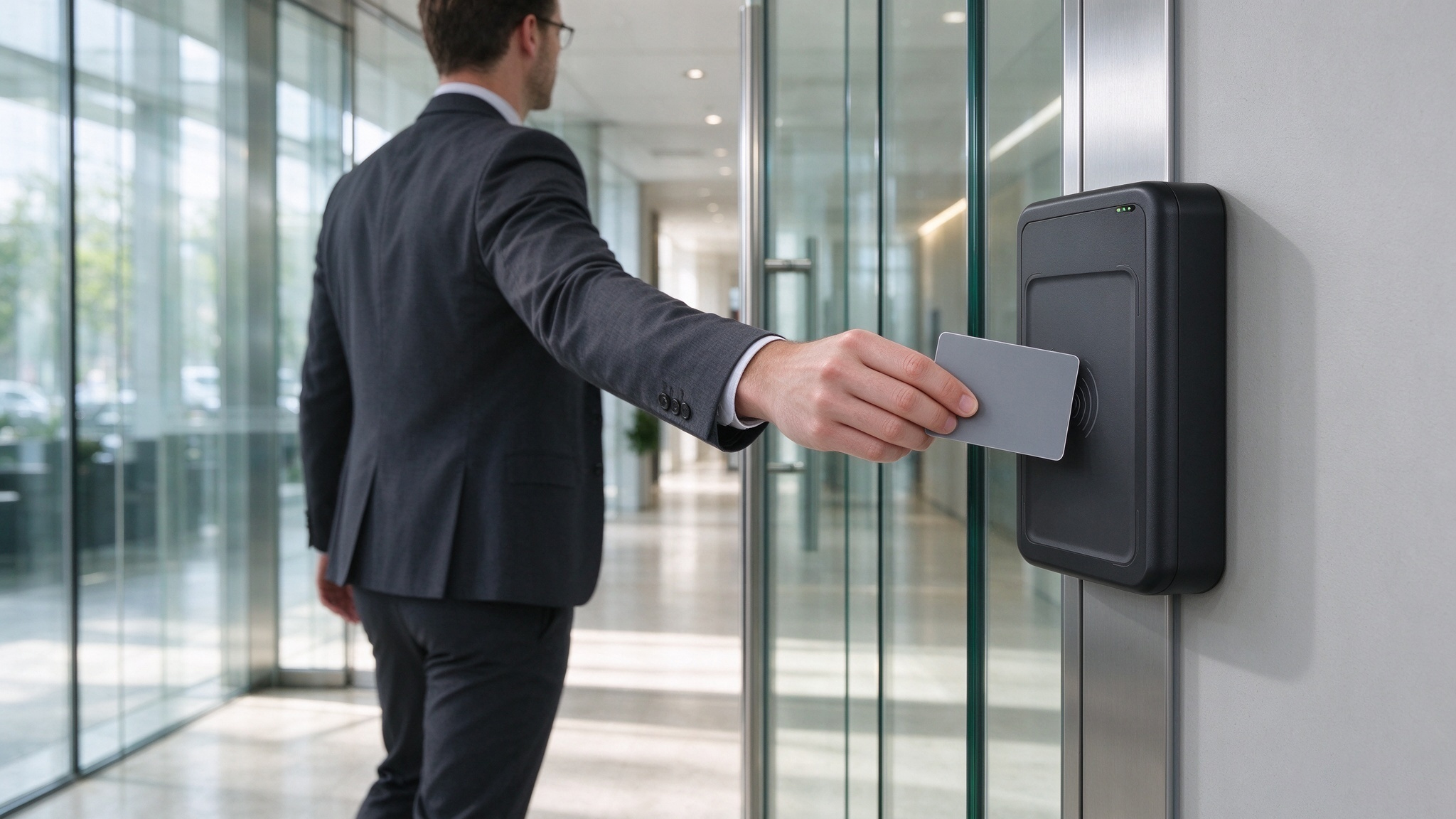
An authorized RFID card allows an access-control system to verify a user’s credential at an office entrance.
At an office entrance, the user presents an authorized card to the access reader. The reader obtains the card’s credential information, and the access-control system checks whether the credential has permission to unlock that particular door.
A typical interaction looks like this:
Hold the card near the reader’s marked area.
Wait for the indicator light, sound, or display response.
If access is granted, pass through the door.
If access is denied, check with the administrator rather than repeatedly presenting the card.
A red indicator does not necessarily mean the card is physically damaged. It may indicate an expired credential, an access schedule restriction, or an authorization issue.
2. Using an RFID card for library services
In a library, an RFID card may be used to identify a registered member or borrower. The member presents the card at a circulation terminal, and the library system retrieves the associated account.
The card itself does not necessarily contain the member’s full borrowing history. In many deployments, the card provides an identifier that the library application uses to locate the account in its database.
A common process is:
Present the member card to the reader.
Allow the software to identify the account.
Confirm the member’s status.
Scan or read the book’s RFID tag as a separate operation.
Complete the borrowing or return transaction in the library system.
This distinction between a member card and an item tag is important. The member card identifies the borrower; the book tag identifies the item. The circulation application connects the two records and stores the transaction.
3. Using an RFID card for attendance or staff identification
For attendance management, an employee presents a registered card at a terminal. The system records the card identifier with the time of the event and associates it with the employee’s profile.
If a card is detected but no attendance record appears, the problem may be in the application, employee registration, or network connection. Check the terminal’s response and the account configuration before replacing the card.
4. Using an RFID card with a desktop reader
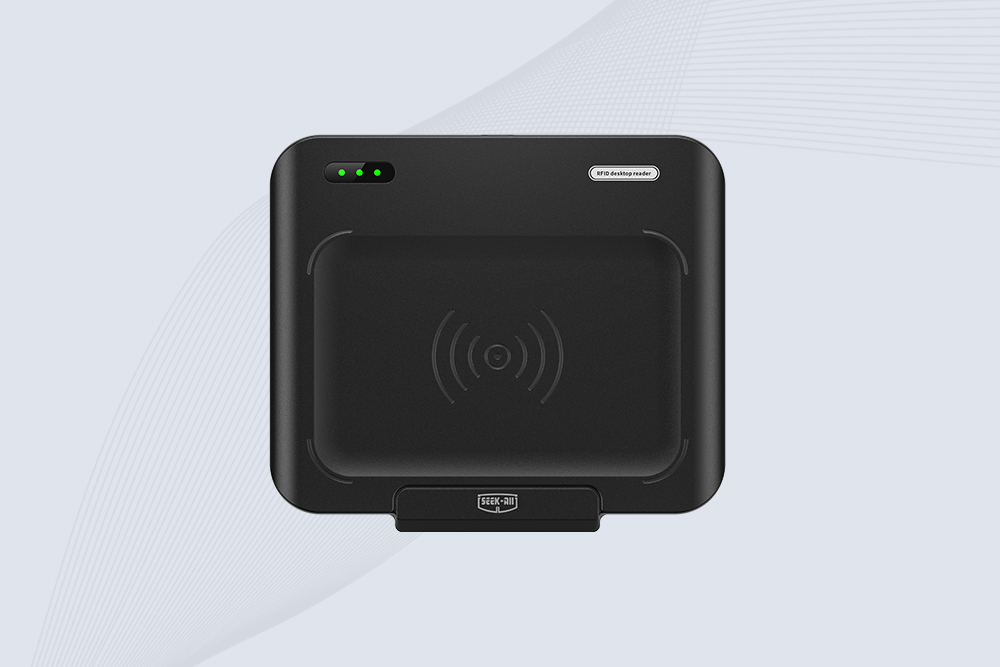
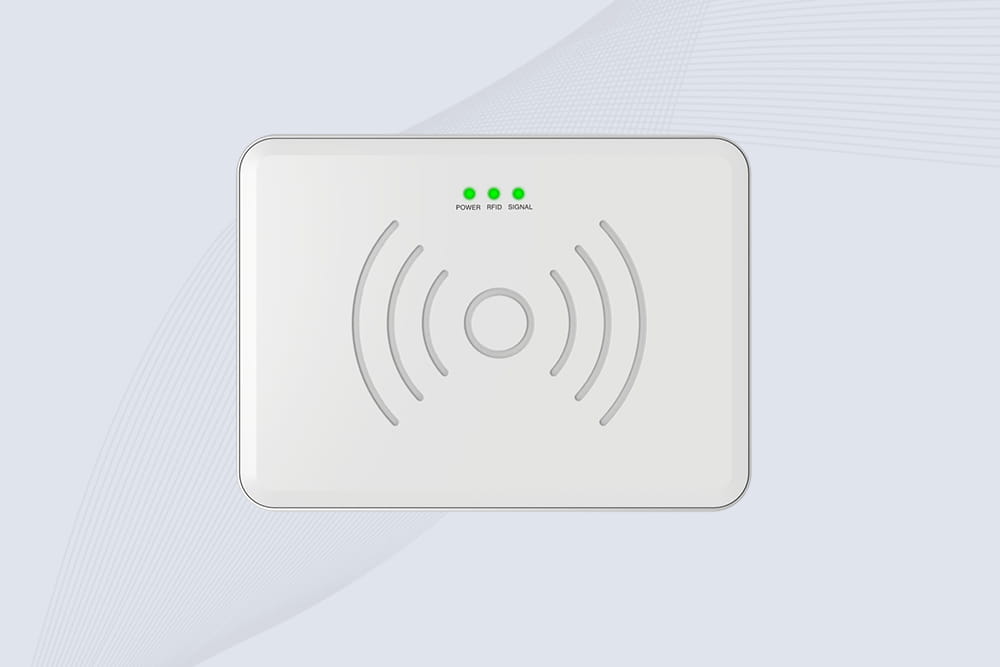
A desktop RFID reader is useful when an administrator needs to register cards, identify their data, or connect card operations to a management application. The user places the card near the reader’s antenna, and the software displays the information supported by the card and reader combination.
However, compatibility is essential. A desktop UHF RFID platform is not automatically suitable for reading ordinary 13.56 MHz HF or NFC cards. The reader must support the card’s actual frequency and protocol.
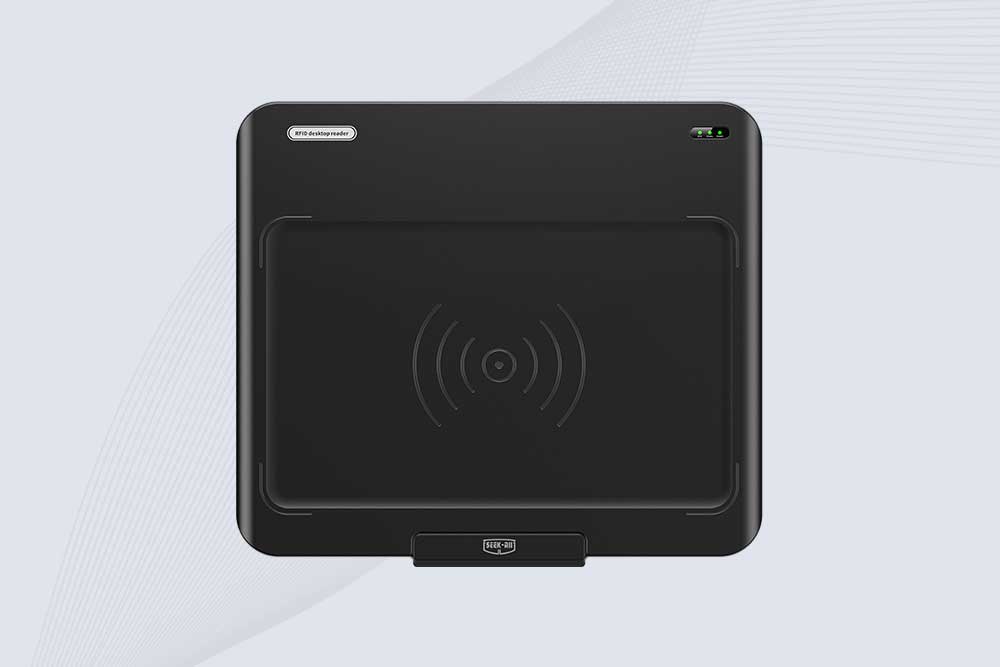
A desktop RFID reader writer supports controlled card identification, registration, and compatible tag-data operations.
Using a UHF desktop reader for card and tag administration
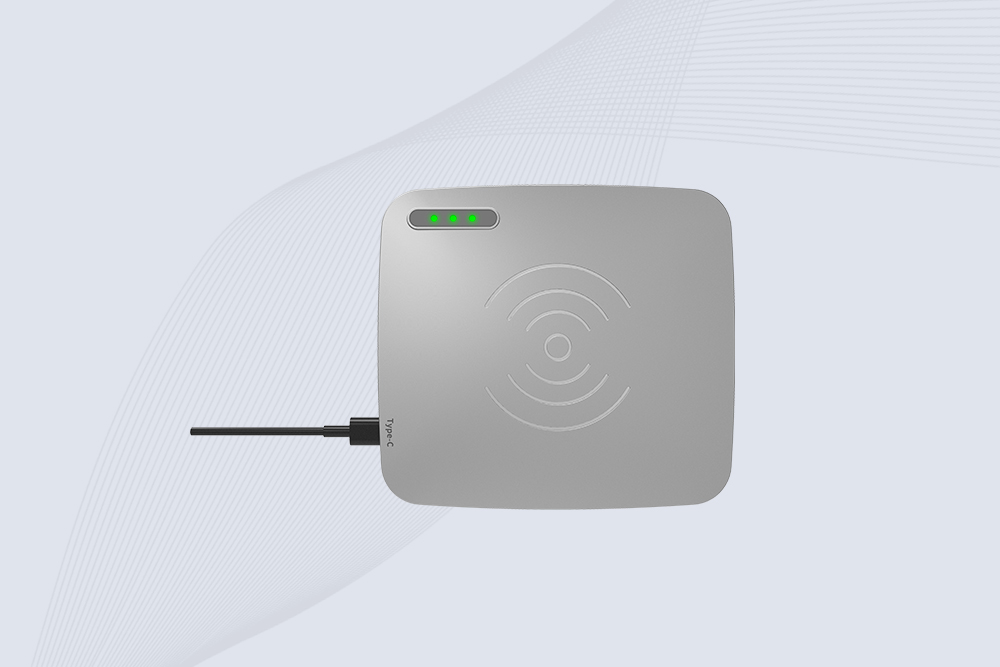
The Cykeo desktop RFID reading platform described for this application is designed for administrators who regularly handle RFID tag registration, rewriting, and conversion. It uses a USB connection and a near-field antenna to support controlled desktop operations.
Its stated operating specifications include:
Feature
Cykeo desktop platform
Connection
USB
Maximum port output
33 dBm
Effective reading range
Within approximately 30 cm
Effective writing range
Within approximately 10 cm
Antenna
Near-field
Tag processing
Multi-tag identification and collision handling
Data functions
Tag filtering and RSSI support
Development resources
C# and Java materials
The platform is intended for workflows such as library registration, tool entry, and textile management. Its associated application can support item borrowing and return, tag registration, identity or document registration, shelf-label registration, item lookup, circulation statistics, transaction queries, registration statistics, log queries, and tag conversion.
These are management functions built around the reader and its software integration. They should not be interpreted as features available automatically in every generic RFID card reader.
An important compatibility point: the platform’s stated specifications relate to the supplied UHF desktop product information. Many access, payment, and membership cards use 13.56 MHz HF technology. Those cards require a compatible HF reader. A UHF reader cannot be assumed to read them simply because both products are described as RFID devices.
What Information Does an RFID Card Contain?
The information stored on an RFID card depends on its chip, memory structure, and application. Some cards primarily provide a unique identifier. Others support additional memory, authentication, or application-specific data.
For example, a contactless smart card may contain:
A card identifier or UID.
Application data.
User-specific records, depending on the card and system.
Security keys or authentication-related information.
Access conditions that control which data can be read or changed.
Not every card exposes all its stored information to an ordinary reader. Secure cards may require authentication before certain memory areas or commands become available.
Can you read all the data on an RFID card?
No. Detecting a card does not mean that the reader can access every memory area.
Some cards expose an identifier during normal communication but protect application data with authentication. Some data is reserved for the card’s internal operation or security functions. A reader may therefore identify a card successfully while being unable to read or modify its protected contents.
The Secure Technology Alliance describes ISO/IEC 14443 contactless smart cards as operating at 13.56 MHz and incorporating a chip, memory, and antenna. The standard includes the radio interface and communication procedures used by compatible contactless cards and readers.
For NFC applications, the NFC Forum maintains technical specifications covering communication protocols, reader/writer operation, and supported tag technologies. Compatibility depends on the card or tag type and the reader’s implemented specifications.
Can you change the information stored on an RFID card?
Sometimes. Whether a card can be programmed depends on its chip, memory configuration, security settings, and the permissions available to the person or application performing the operation.
Before attempting to write data, confirm:
The reader supports the card’s frequency and protocol.
The card supports the intended write operation.
The correct application or memory area has been selected.
Required authentication credentials are available.
The organization has permission to change the card data.
Never assume that a card can be reprogrammed just because a reader can detect it. Some card identifiers are fixed or manufacturer-programmed, while application data may be writable only after authentication.
How to Read an RFID Card with a Computer
Using an RFID card with a computer requires a compatible reader and software that can interpret the card’s response. The reader handles radio communication; the application displays the information and determines what the user can do with it.
For an administrator registering cards or managing item records, a desktop reader is often more practical than a door-access terminal. It provides a workstation where cards or tags can be presented, identified, and processed under controlled conditions.
Step 1: Choose a reader that supports your card
Start with the card’s technical specification. Check its frequency, protocol, and chip type before connecting a reader.
Common examples include:
13.56 MHz HF cards: Often used for contactless identification, access, and NFC-related applications.
125 kHz LF cards: Found in some legacy access-control and identification systems.
UHF RFID cards: Used in specialized inventory, asset-management, and identification applications.
A reader designed for UHF EPC Gen2 tags will not automatically read a 13.56 MHz contactless access card. The frequency and protocol must match.
Step 2: Connect the reader and open its software
For a USB desktop reader, connect the device to the computer and launch its compatible software or SDK-based application.
Check that:
The computer recognizes the reader.
The correct reader interface or driver is available.
The software supports the card technology.
The reader is configured for the intended operation.
A known-compatible test card can be detected.
If the reader is being integrated into an organization’s own system, the software team should follow the manufacturer’s API or SDK documentation. The Cykeo desktop platform described in Part 1 provides C# and Java development materials for application integration.
Step 3: Present the card and read its available information
Place the card in the reader’s designated area. Wait for the software to detect it and display the information available through that reader and card combination.
Depending on the technology, the software may display an identifier, card type, memory information, or application data. A successful read does not necessarily mean that all card memory is accessible.
Step 4: Associate the card with the correct record
In an administration application, the next step is usually to link the card identifier to a person, item, or account.
For example, a library administrator may register a member card against a borrower record. A tool-management application may assign a compatible RFID tag to an asset. The reader obtains the identifier, while the application maintains the relationship between that identifier and the relevant database entry.
Step 5: Test the complete workflow
Do not stop after confirming that the reader detects the card. Test the action the card is supposed to perform.
For a membership card, confirm that the correct member record appears. For an access card, use the authorized access-control test procedure. For an asset-management tag, check that the correct item record is retrieved.
This final test catches a common integration mistake: the card is readable, but its identifier has not been registered correctly in the application.
How to Program or Rewrite an RFID Card
Some RFID cards and tags support writing, but programming is not available in the same way on every card. The chip may have writable memory, authentication requirements, permanent lock settings, or manufacturer-defined data areas.
Before writing, establish exactly what information the application needs and whether the card supports changing it.
A safe card-writing workflow
Identify the card technology. Confirm frequency, protocol, and chip type.
Read the existing card. Record the identifier and any application data that the system is authorized to access.
Check write permissions. Confirm that the target memory area is writable and that required credentials are available.
Prepare the data. Validate the format and length before sending a write command.
Write the intended data. Use compatible software and the correct memory or application area.
Read the card again. Compare the returned data with the intended values.
Update the management system. Confirm that the card identifier and application record are correctly associated.
For UHF systems based on EPC Gen2, the memory structure commonly includes Reserved, EPC, TID, and User banks. Their functions differ. EPC memory is used for the electronic product code, TID contains tag-identification information, User memory can hold additional application data when supported, and Reserved memory includes access and kill password areas. GS1’s Gen2 standard defines the relevant memory and access operations.
Do not try to overwrite TID as if it were ordinary user data. Nor should you change password or lock settings without understanding how the target system uses them. A poorly planned write can make a card or tag unusable in the existing application.
How to Use an RFID Card with a Phone
A phone can read some RFID cards, but it cannot read every card technology. Most modern phones with NFC support can communicate with compatible 13.56 MHz NFC tags and certain contactless cards. This does not mean that a phone can read every HF smart card, every secure access credential, or 125 kHz and UHF RFID cards.
Using an Android phone
The exact menus differ by phone model and operating-system version, but the general process is:
Check whether the phone supports NFC.
Enable NFC in the phone’s settings if it is disabled.
Open an application designed for the card or tag technology.
Hold the card near the phone’s NFC antenna area.
Wait for the application to report whether the card is supported.
The NFC antenna position varies between phones. If the phone does not detect a compatible tag immediately, move the card slowly around the upper or central rear area, depending on the model.
Using an iPhone
Compatible iPhone models support NFC functions through Apple’s operating system and supported applications. Some NFC tags can be read by supported system features or third-party apps. However, access credentials and secure smart-card applications may require an authorized app, provisioning process, or dedicated reader.
A phone should not be treated as a universal RFID reader. If the card is used for workplace access, payments, transport, or another protected service, use the official application or reader recommended by the service provider.
Why a phone may not read an RFID card
Possible reason
What to check
Phone does not support the card’s frequency
Confirm the card technology and phone NFC support
NFC is disabled
Enable NFC where the device supports it
Card is not NFC-compatible
Check the card’s chip and protocol
Card uses protected access
Use an authorized application or reader
Card is damaged
Test with a known-compatible reader
Antenna position is incorrect
Move the card around the phone’s NFC antenna area
Phones are convenient for basic NFC tag interaction. For routine card registration, batch processing, controlled writing, or application integration, a dedicated reader is usually a better choice.
Common RFID Card Reading Problems and How to Fix Them
When a card does not work, replacing it immediately is not always the right response. First establish whether the failure occurs at the radio interface, the card itself, or the connected application.
The reader does not detect the card
Possible causes include an incompatible frequency, unsupported protocol, damaged card antenna, incorrect reader configuration, or poor card positioning.
Troubleshooting:
Confirm that the card and reader use compatible technologies.
Present the card at the reader’s marked location.
Test a second card known to work with that reader.
Check the reader’s power and connection.
If available, test the card with another compatible reader.
If several known-good cards fail on one reader, investigate the reader configuration or hardware before replacing individual cards.
The reader detects the card but access is denied
This usually points to an authorization or application issue rather than a failure to read the card.
Check whether the credential is active, whether it has permission for the requested door or service, and whether the access schedule allows the transaction. For an organization-managed card, the administrator should check the card’s status in the relevant system.
The card works only when held at a particular angle
The card’s antenna must couple effectively with the reader’s field. Position, distance, and nearby metal can influence communication. Try presenting the card flat and close to the marked reading area.
If the card has been bent, cracked, or exposed to physical damage, test it with another compatible reader. An intermittent response can be a sign of damage.
The reader detects the wrong card or several cards
This is more likely in environments where multiple RFID tags are close together. For desktop registration, keep unrelated cards away from the antenna area and process the intended card individually unless the software explicitly supports multi-tag selection.
The Cykeo desktop platform includes tag collision handling, multi-tag identification, filtering, and RSSI support. These functions can help administrators manage tag detection, but the application should still validate which identifier is being registered or written.
The card reads correctly but the software shows no record
The reader may be working normally while the application cannot find a matching database entry.
Check that the card identifier has been registered, that it has not been entered incorrectly, and that the application is searching the correct database. Also verify that the record is active and that the user has permission to access it.
RFID Card Security: What Users Should and Should Not Do
An RFID card is a credential, not just a piece of plastic. In access-control, payment, and identity applications, the data exchanged between the card and reader may be subject to authentication and security controls.
The level of protection depends on the card technology and how the system is implemented. A basic identification tag and a secure contactless smart card should not be treated as equivalent.
Protect the card and its associated account
For everyday users:
Do not lend an access or identity card to another person.
Report a lost card promptly so the administrator can deactivate it.
Avoid bending, cutting, or punching through the card’s antenna area.
Do not use unknown software to modify a card used for access or payment.
Keep card credentials and associated passwords confidential.
Follow the organization’s procedure when a card needs replacement.
For system administrators, use appropriate authentication, access permissions, and audit logs. A reader’s ability to communicate with a card does not mean that every operation should be available to every user.
Why card UID alone is not always enough
A card identifier can be useful for looking up a user or item, but an identifier by itself should not automatically be treated as proof of identity or authorization.
In a secure system, authentication and application-level checks determine whether a credential should be trusted. The reader obtains information from the card; the application evaluates that information according to the system’s security design.
This is particularly important when an RFID card is used for door access, employee identification, or another operation where unauthorized use could have consequences.
Frequently Asked Questions About How to Use a RFID Card
1. How do I use an RFID card for the first time?
First, make sure the card has been issued and registered by the organization or service provider. Locate the reader’s marked area, hold the card close to it, and wait for the confirmation signal. If the reader detects the card but rejects the transaction, ask the administrator to check its registration and permissions.
2. Do I need to touch the reader with an RFID card?
Not always. Many contactless cards work when held close to the reader without physical contact. However, the practical distance depends on the card technology and antenna design. For common NFC applications, the NFC Forum describes a typical operating range of up to approximately 2 cm. Follow the reader’s instructions rather than assuming that every RFID card works at a longer distance.
3. Can I use my phone instead of an RFID card?
Sometimes. A phone with NFC can communicate with compatible NFC readers and supported card technologies. However, it cannot automatically replace every RFID card. Some systems require an officially provisioned mobile credential, while LF and UHF cards generally require different reader technology.
4. Can I read an RFID card with a laptop?
Yes, if you connect a compatible external reader and use suitable software. The laptop alone does not normally provide general-purpose RFID reading capability. The reader must support the card’s frequency and protocol, and the application must be able to interpret the returned information.
5. Can I write information to an RFID card?
Some cards support writing, while others have fixed identifiers or protected memory. Before programming a card, check its chip specification, writable memory areas, authentication requirements, and the permissions provided by the application. Always read the card again after writing to verify the result.
6. Why does my RFID card work at one reader but not another?
The readers may support different frequencies, protocols, or card technologies. One reader may also be configured for a particular application or credential format. Check the card and reader specifications before concluding that the card is defective.
7. Can a UHF desktop RFID reader read an ordinary access card?
Not necessarily. Many ordinary access cards operate at 13.56 MHz HF, while UHF desktop platforms are designed for UHF tags and cards. The Cykeo desktop platform described in this article is intended for UHF tag administration, including registration, rewriting, and conversion workflows. Use an HF reader for cards that require HF communication.
Choosing the Right RFID Reader for Card Use
The right reader depends on what the card is expected to do. A door-access reader, a phone NFC interface, and a desktop UHF tag writer serve different purposes.
Requirement
Suitable reader type
What to verify
Office door access
Compatible access-control reader
Card technology, credential format, access-control integration
NFC tag interaction
NFC reader or NFC-enabled phone
NFC Forum tag type and supported application
Contactless smart-card processing
Compatible HF smart-card reader
ISO/IEC 14443 support and required security functions
UHF item identification
UHF RFID reader
UHF frequency region and supported air-interface protocol
Desktop tag registration and writing
Desktop RFID reader writer
Memory access, writing capability, software and SDK support
Library or tool-management registration
Reader integrated with management software
Item registration, data association, transaction logs
Where the Cykeo desktop RFID platform fits
The Cykeo desktop RFID reading platform is designed for the administrative side of UHF RFID applications. It is intended to help tag administrators handle item borrowing and return, tag registration, identity and document registration, shelf-label registration, item queries, transaction statistics, log queries, and tag conversion through the associated software.
Its supplied product specifications include:
USB connectivity for convenient desktop use.
A near-field antenna.
An effective reading range controlled within approximately 30 cm.
An effective writing range controlled within approximately 10 cm.
Maximum port output of 33 dBm.
Tag collision-handling algorithms.
Dense tag reading and multi-tag identification.
Tag data filtering and RSSI support.
C# and Java development materials.
These features are relevant when an organization needs a workstation for controlled tag administration rather than a reader for general door access. For example, a library may use the platform to register UHF book tags, while a tool-management department may use it to enter equipment records or rewrite compatible tags.
One distinction must remain clear: this UHF desktop platform should not be presented as a universal reader for all RFID cards. If the intended card is an HF access card or NFC card, select a reader that explicitly supports that technology.
Conclusion: How to Use a RFID Card Correctly
Understanding how to use a rfid card starts with matching the card to the reader. Present it within the reader’s effective range, wait for the response, and let the connected application verify the card’s identity and permissions. For registration or programming tasks, check the card’s memory and security features before making changes.
For everyday access and identification, use the reader provided by the organization. For more involved UHF tag administration, a dedicated desktop RFID reader writer can support registration, data rewriting, and conversion workflows. Choosing the correct frequency, protocol, and software integration is what makes the process reliable.
SSD-D3AL is a USB-HID UHF RFID reader with 0–30 cm reading, 0–15 cm writing, over 600 tags/s recognition, USB plug-and-play operation and OEM Logo customization.
SSD-D1AL is a compact USB UHF RFID reader with Impinj E710/X3M1 chipset, USB-HID, 600+ tags/s recognition, 4/8/16 antenna support and plug-and-play USB power.
CYKEO CYKEO-D1LA USB RFID Reader is a compact desktop solution with near-field control for precise tag reading and encoding. Powered by USB, supporting ISO 18000-6C, and built for stable batch writing, this usb rfid tag reader fits retail, libraries, offices, and controlled RFID encoding tasks.
CYKEO CYKEO-D1L RFID scanner USB is a compact desktop UHF RFID scanner designed for short-range tag writing and verification. This usb rfid scanner supports batch encoding, stable 0–26 dBm output, and works across Windows, Linux, and Android systems.
CYKEO CYKEO-D1C USB RFID Card Reader is a near-field UHF desktop writer designed for secure, short-range tag encoding. With USB-C connectivity and stable 26 dBm output, this rfid reader usb c is ideal for badge issuance, label encoding, and controlled desktop RFID workflows.
CYKEO CYKEO-D2L RFID Reader USB is a compact desktop encoder built on the Impinj R500 chip. With near-field control and stable USB power, this usb rfid card reader delivers precise tag writing for offices, retail counters, and small-scale logistics encoding tasks.
CYKEO CYKEO-D3L USB RFID Tag Reader delivers stable UHF tag reading and writing for daily desktop and light industrial tasks. Designed for controlled short-range operation, this USB RFID Tag Reader works reliably with rfid tag and reader systems in libraries, tool tracking, and inventory registration.
The CYKEO CYKEO-D4L UHF RFID Tag Reader is a stable Desktop RFID Reader designed for accurate tag registration, borrowing, and return workflows. Built with the Impinj R2000 chip, this UHF RFID Tag Reader delivers controlled short-range reads for libraries, asset tracking, and inventory management environments.
The CYKEO CYKEO-D5L Desktop RFID Card Reader is a stable UHF RFID Card Reader designed for controlled short-range reading and writing. Built for libraries, tool rooms, and asset desks, this UHF RFID Card Reader supports dense tag handling, secure data processing, and easy USB integration.
The CYKEO CYKEO-D6L RFID Reader Writer is a heavy-duty Desktop RFID Reader designed for short-range, high-accuracy tag programming. Built for libraries, labs, and asset desks, this RFID Reader Writer supports batch processing, stable 33dBm output, and seamless integration with existing management systems.
Cykeo CYKEO-D8A embedded RFID badge reader offers 30+ tags/sec scanning, 20cm anti-crosstalk precision, and DC 12V power for unmanned stores, warehouses, and smart inventory systems.
Cykeo’s CYKEO-D8C UHF RFID gate reader achieves 200-tag/batch scanning with adjustable power control, ideal for retail inventory and smart warehouse management.
CYKEO Passive RFID Tags are made for wet and high-humidity environments where standard labels do not last. This rfid passive tag is often used around liquids, chemicals and temperature changes, providing stable reading distance and long data life for industrial tracking.
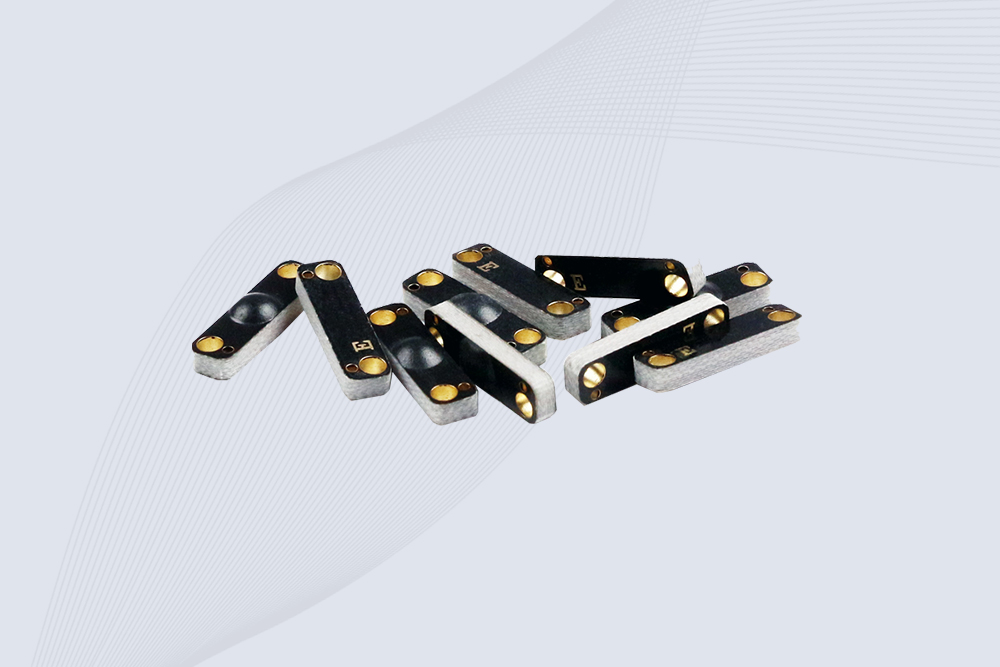
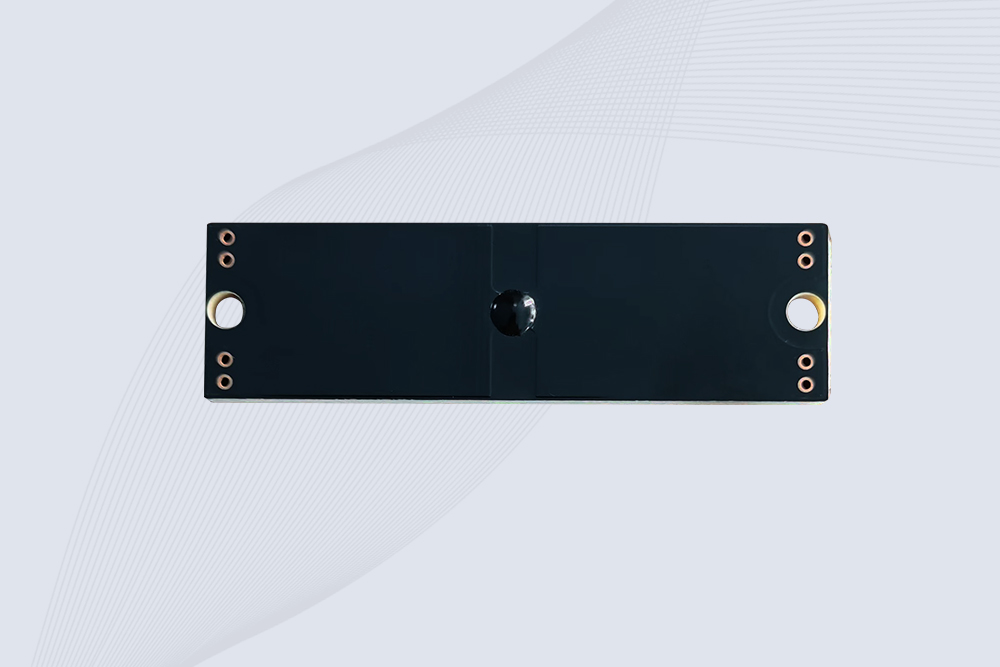
CYKEO CYKEO-PCB1504 Metal RFID Tags is a compact anti-metal UHF RFID solution built for direct mounting on metal surfaces. With stable 8-meter read range, Ucode-8 chip, and long data retention, this rfid metal tag fits tools, containers, automotive parts, and industrial asset tracking.
CYKEO CYKEO-PCB7020 On-Metal RFID Tags are designed for reliable tracking on steel and metal surfaces. Built with an FR4 epoxy body and industrial-grade chips, these On-Metal RFID Tags deliver stable performance, long data life, and chemical resistance, making them a dependable RFID anti-metal tag for harsh environments.
The CYKEO CYKEO-60-25 Anti-Metal RFID Tag is built for metal surfaces where standard tags fail. Designed for long-range performance, harsh environments, and stable data retention, this Anti-Metal RFID Tag is ideal for industrial assets, containers, and equipment tracking using on metal RFID tags.
The CYKEO RFID Laundry Tag is designed for long-term textile identification in harsh laundry environments. Built to withstand high heat, chemicals, and repeated washing, this RFID Laundry Tag delivers stable performance for hotels, hospitals, and industrial laundry operations using laundry rfid tags at scale.
The CYKEO CYKEO-125-7 RFID Book Tag is designed for reliable book and document tracking in libraries and archives. This RFID Book Tag delivers long read range, dense placement support, and stable performance on shelves, making it a practical rfid tag on books for library automation, file management, and archival systems.
CYKEO RFID tags in hospitals are designed for sterile environments where accuracy matters. These autoclavable RFID tags support long-term tracking of surgical tools, implants, and medications, helping hospitals improve visibility, compliance, and patient safety.
CYKEO RFID Cable Tie Tag is built for reliable identification on metal surfaces. This UHF RFID Cable Tie Tag is widely used in rfid tags for inventory systems, industrial asset management and Hospital RFID Tags, offering stable read performance, long service life and global EPC Gen2 compatibility.
CYKEO RFID Asset Tag is designed for stable identification of metal assets in industrial environments. This UHF RFID Asset Tag is commonly used for rfid tag asset tracking on equipment, tools and containers, providing reliable reads, long service life and ISO/IEC 18000-6C support.
CYKEO UHF RFID Card is designed for fast identification and long-term use in industrial and commercial systems. Supporting ISO 18000-6C, this UHF RFID Card works at 860–960 MHz and is suitable for custom RFID cards used in asset tracking, access control and inventory management.
CYKEO HF RFID Cards are designed for secure and stable access control systems. These 13.56 MHz RFID key cards support ISO 14443-A, reliable rewriting and long service life, making HF RFID Cards suitable for offices, campuses, events and membership management.
CYKEO UHF RFID Tag is designed for reliable tracking of metal jewelry and high-value items. This Jewelry RFID Tag supports long-range reading up to 8 meters, anti-counterfeit protection and stable performance on metal, making it suitable for retail, inventory control and asset management.
Looking for asset tracking tags? CYKEO explains the difference between active and passive tags, how to pick the right one for metal or outdoor use, and what actually works.
Explore how armoire RFID smart cabinets work in real environments. Learn about RFID reader design, cabinet structure, antenna layout, and why RFID cabinets deliver stable asset tracking in industrial, medical, and secure storage scenarios.
Learn how RFID medical inventory management systems work in real hospitals. See how they reduce errors, improve visibility, and automate supply tracking.
How RFID work explained with real technology insights. Learn how RFID tags, readers, and systems communicate for tracking, automation, and industrial applications.
 Cykeo RFID IoT Solution Products R&D Manufacturer