 Cykeo RFID IoT Solution Products R&D Manufacturer


Boost Construction Efficiency: How Handheld RFID Scanners Transform Asset Tracking
1117Discover how handheld RFID scanners streamline construction asset management, reduce loss, and save time. Learn key features for rugged environments.
MoreAll RFID Product
Eight quotations land in your inbox. All eight say Impinj inside, 33 dBm output, IP67 housing. The price spread between the cheapest and the dearest is 40%. You take the middle quote, install four units, and three weeks later the dock door starts missing tags whenever a forklift parks in front of the antenna.
That failure is almost never the reader’s fault. It is a specification conversation that never happened.
What follows is written for the person who signs the purchase order — procurement engineers, systems integrators, operations managers sourcing fixed-mount UHF readers for dock doors, conveyor tunnels, production lines and toll lanes. Seven checkpoints, in the order that actually decides whether your project survives contact with a real site.
Ask which module sits on the board, in writing. An Impinj E710, an E910, an R2000 and an Indy R500 behave very differently once the tag population gets dense. The difference shows up at the edges of your read zone, not in the middle of it.
A reader built on the R2000 is a competent workhorse for a 200-tag dock door. Put the same reader over a conveyor carrying 1,500 tags a minute and you will meet buffer overflow before the shift ends. The chipset also decides whether you get tag population estimation, autopilot RF profiles and Gen2X — features that matter more to portal accuracy than another 2 dBm of output.
“600 tags per second” tells you the tag IC was fast and the firmware was counting duplicates. Ask for the test protocol: tag model, distance, antenna gain, dwell time, and how many of the 600 were unique reads.
A manufacturer who can answer that has characterised the product. One who only repeats the peak figure is reading a chipset datasheet back to you.
For planning purposes: expect 150–250 unique reads per second per antenna on a mixed population with a 2-second dwell. On a conveyor tunnel, ask for a 30-second continuous read log with duplicate rate included.
Port count is a cost decision dressed up as a specification. A 4-port fixed reader is the right buy when your antennas sit within five metres of the unit. An 8-port reader earns its extra cost when you are covering a 40-metre aisle and want the electronics in a cabinet rather than on the ceiling. A 16-port unit makes sense when one control point has to serve a whole zone.
Then do the arithmetic nobody puts in the brochure. At 915 MHz, RG58 loses roughly 0.6 dB per metre, LMR-195 about 0.35 dB, LMR-400 about 0.22 dB. Run 15 metres of RG58 up to a 9 dBi antenna and you have thrown away 9 dB before the signal leaves the building — a factor of eight in radiated power, gone in copper. If the layout forces long runs, budget for LMR-400 and higher-gain UHF RFID antennas, or step up to more ports and shorten the runs.
Now check the legal ceiling. Under ETSI EN 302 208 the EU allows 2 W ERP, which is 33 dBm EIRP including antenna gain. A 33 dBm reader driving a 9 dBi antenna is over the limit in that market unless firmware turns the power down. Confirm you are buying a region-locked build, not a global one with a compliance note.
LLRP 1.0.1 support is the single best proxy for whether a reader will integrate cleanly. If the answer is “we have our own protocol and an SDK”, you are buying a six-week integration project instead of a two-day one. Also ask for Gigabit Ethernet with static IP and DHCP, RS-232 and RS-485, Wiegand for legacy access control, opto-isolated GPIO, and PoE+ so no electrician is needed at each read point.
Request the SDK before you discuss price. Check which stacks it covers — C/C++, C#, Java, Python, Android — and whether the documentation ships working sample code or just header files. Then ask two questions: how often is firmware released, and can we see the changelog?
A fixed-mount reader manufacturer that ships firmware twice a year with documented fixes is a partner. One whose newest firmware is dated 2019 is a reseller with a warehouse.
IP65 survives washdown splash from any direction. IP67 survives 30 minutes at one metre of water. Neither rating means the reader belongs in a freezer or next to a shot-blast cabinet.
Check the operating range and whether the unit is fanless. Fans pull metal dust through the housing and are the first component to fail in a foundry. A fanless die-cast body rated for −20 °C to +55 °C will outlive a fan-cooled unit with prettier numbers on paper. Read points that travel — a truck-mounted position, for instance — need a different class of hardware altogether; a unit like this industrial forklift RFID reader is built for vibration and 48 V truck power, which a cabinet-mounted reader is not.
Power budget catches people too. PoE+ (802.3at, 30 W at the source) will run most 4-port and 8-port units, but at reduced output. If you need full power on every port at once, plan for 24 V DC with a dedicated supply and check inrush current: three readers drawing 1.5 A each will trip a shared breaker when they power up together.

FCC Part 15.247 means nothing in Europe. ETSI EN 302 208 is not accepted in Japan, where you need MIC under ARIB T108. Brazil wants ANATEL, China wants SRRC, India wants WPC. Low-cost readers usually carry CE and FCC only, which is fine until your first container to São Paulo gets held at customs.
Ask for certificate numbers and test reports, not a logo on the datasheet. Then confirm the filing covers the exact model you ordered. Eight-port and 16-port units sometimes share a certificate and sometimes do not.
Country of final assembly tells you where the box was screwed together. It says nothing about who laid out the RF board.
Ask directly: is the RF module designed in-house or sourced, and which SMT lines run the boards? Then get commercial terms in writing — MOQ and price breaks at 10, 50 and 200 units; sample lead time against production lead time; warranty length and RMA turnaround in days, with a named contact; whether loaner units are available for a pilot; and the end-of-life notice period, which should be twelve months minimum if the reader is embedded in a product you resell.
For OEM and ODM work, add three questions. Who owns the firmware? Can the unit be locked to your own tag filters? And will the vendor sell the same hardware to your competitor under a different label? Get the last answer in writing, because verbal assurances do not survive a product manager change.
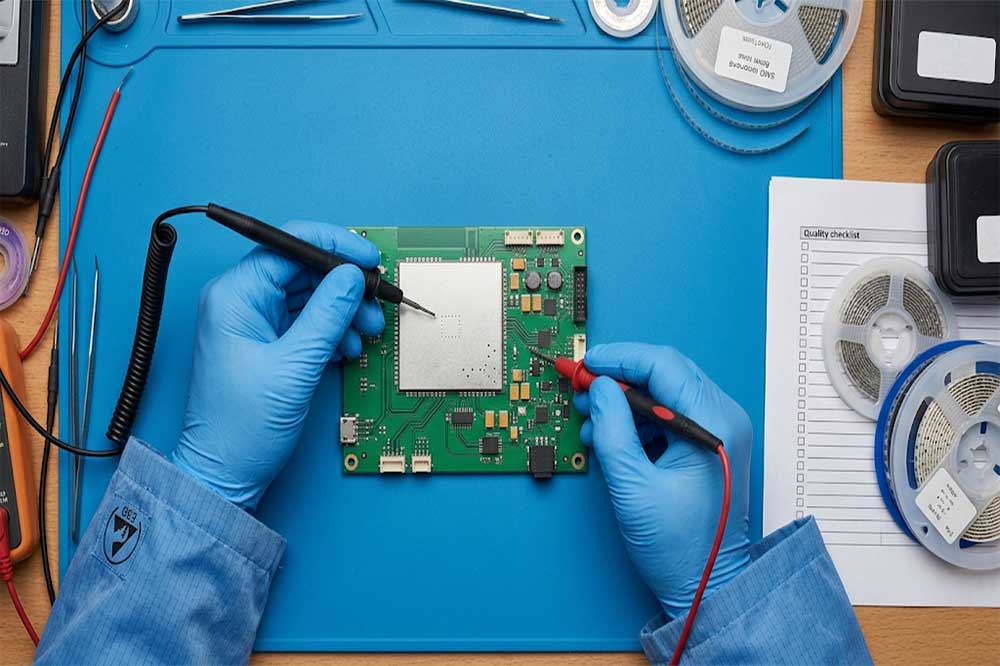
Two weeks on a bench proves nothing except that the unit powers on. Insist on a 30-day pilot at the real site, with your own tags and your own middleware, and agree the acceptance criteria before the units ship: read accuracy at each portal, duplicate rate, uptime, and integration hours consumed.
Pay for the pilot. Free pilots get free attention, and you want the vendor’s application engineer on site when the forklift parks in front of antenna three.
A fixed-mount reader manufacturer earns the order when it answers three things without hedging: which RF engine is on the board and how it behaves under load, what cable and power budgets do to your layout, and who fixes the firmware in year three. Price is the fourth question. Buyers who ask it first usually pay for it later.
Q1. Should I buy a fixed-mount reader or a reader module for my own enclosure? A module is cheaper per unit and gives you control over housing, connectors and branding. A finished reader saves four to six months of RF layout, shielding and certification work. If you plan to ship more than 1,000 units a year and have in-house RF capability, look at RFID reader modules; otherwise start with a finished unit and read the module-versus-reader comparison first.
Q2. How many antenna ports does a warehouse dock door need? Two to four directional antennas per door, so a 4-port reader covers one or two doors. Add ports when the run from cabinet to antenna exceeds 10 metres and you would rather pay for ports than for LMR-400 cable.
Q3. Is 33 dBm output the same as 33 dBm EIRP? No. Output power is measured at the reader’s connector. EIRP adds antenna gain and subtracts cable loss. A 33 dBm reader with a 9 dBi antenna and 3 dB of cable loss radiates about 39 dBm EIRP, which exceeds EU limits and needs firmware power reduction.
Q4. Can a fixed reader be installed outdoors? An IP67 housing can, if it is shaded and the connectors are weatherproofed. The limiting factors are usually cable glands and UV degradation of the antenna radome, not the reader body.
Q5. What MOQ and lead time should I expect from a fixed-mount reader manufacturer? Samples in one to two weeks, production of 200 units in 30–45 days. MOQ below 10 units usually signals a trading company rather than a factory, unless the model is a stock item.

SSD-R16L Multi-Channel RFID Infrastructure for Automated Inventory Management ✔️ 16-Port High-Density RFID Reading Equipped with 16 SMA antenna ports, SSD-R16L supports multi-antenna deployment for warehouses, retail stores, logistics, production lines, and large-area RFID identification. ✔️ High-Speed & Long-Range Performance With up to 33…

SSD-R8L 8-port UHF RFID reader with 33dBm output, up to 20m reading range and 600+ tags/s recognition. Ideal for warehouse, logistics, retail and asset tracking.

SSD-R4L is a 4-port UHF RFID fixed reader with 33dBm output power, up to 20m reading range, EPC C1G2 support and 600+ tags/s reading speed.
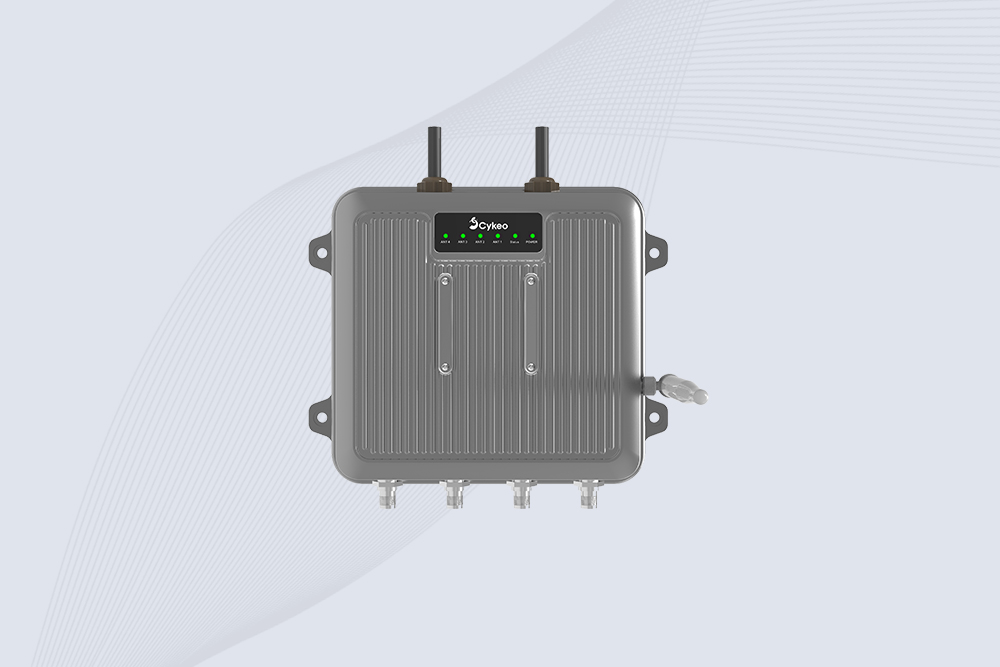
Cykeo CYKEO-C1 industrial Forklift RFID Reader features 20m read range, 600 tags/sec scanning, Impinj R2000 chipset, and IP67 rugged design. Ideal for warehouse logistics and manufacturing. Supports ISO 18000-6C/6B protocols.
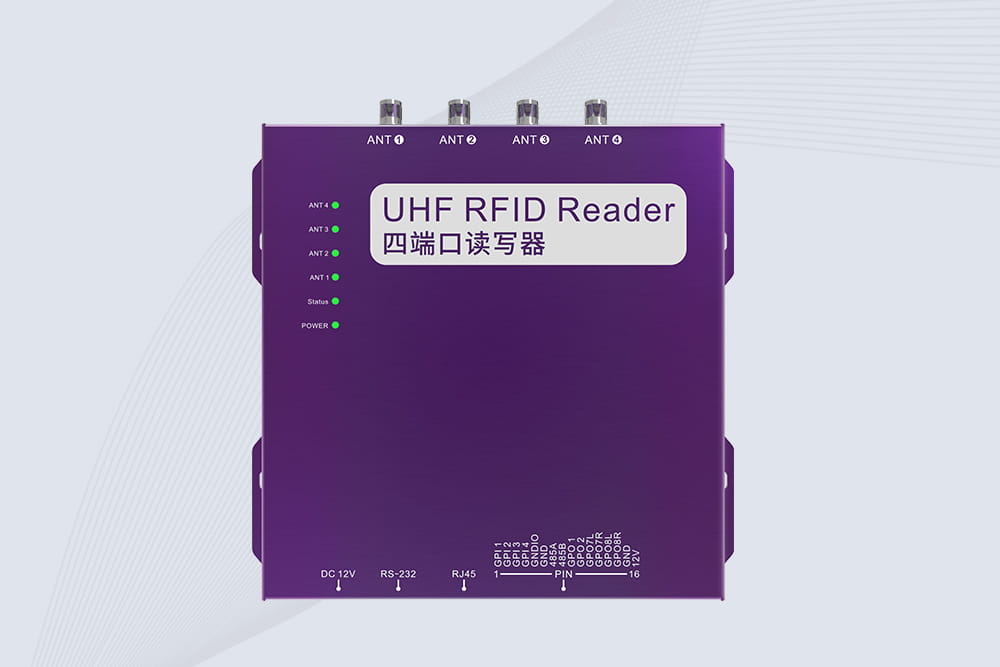
Cykeo CYKEO-R4 industrial UHF RFID Fixed Reader features 4 TNC ports, 400+ tags/sec speed, IP67 housing, and global frequency compliance for vehicle inspection, smart warehouse, and asset management systems.
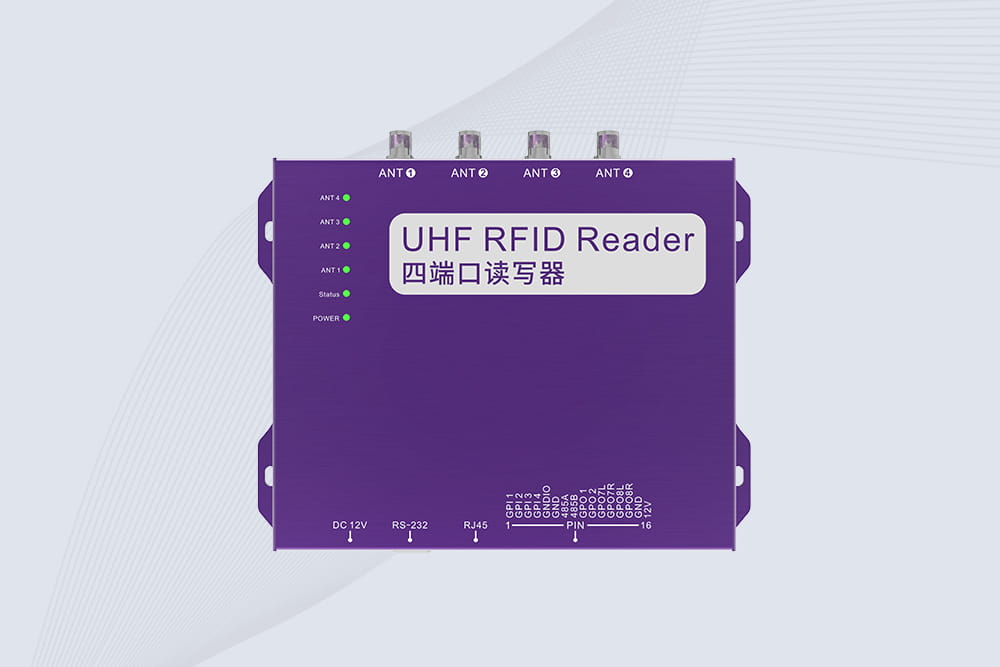
Cykeo’s CYKEO-R4L 4-port Fixed UHF RFID Reader delivers 400 tags/sec scanning, ISO 18000-6C compliance, and IP65 protection. Ideal for warehouse automation, manufacturing WIP tracking, and logistics management.
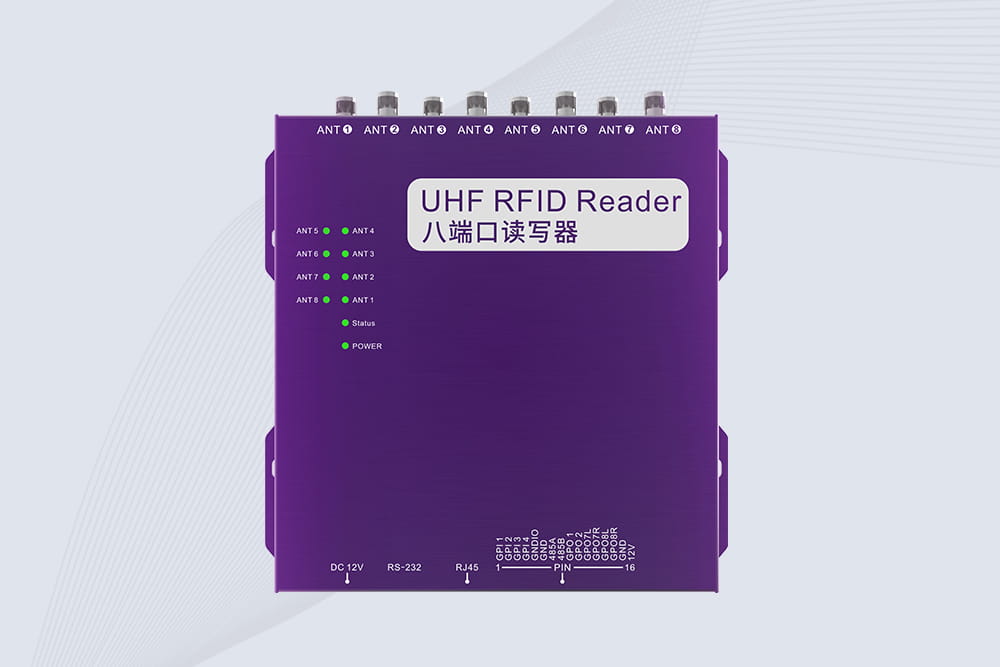
CYKEO CYKEO-R8L Fixed RFID Reader with 8-port UHF design, Impinj-based RF core and up to 20m read range. An industrial Fixed RFID Reader for vehicle inspection, warehouse portals, smart manufacturing lines and secure access checkpoints.
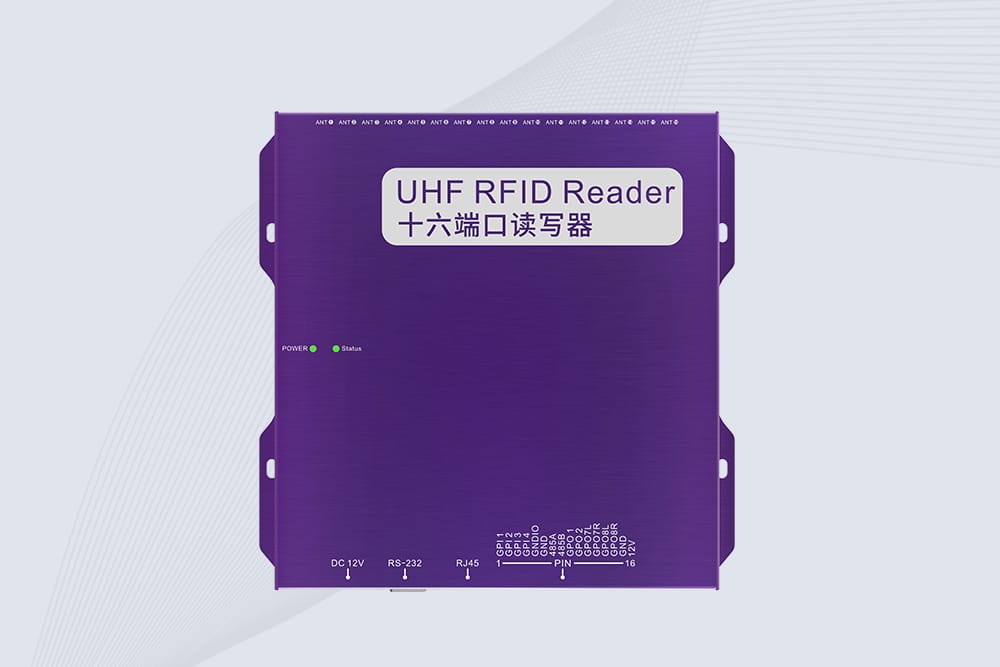
RFID Fixed Reader from CYKEO – the CYKEO-R16L 16-port UHF fixed reader for warehouses, smart cabinets, and production lines. Long-range, multi-tag reading, stable performance for 24/7 industrial use.
RFID Industry Writer | IoT & Asset Tracking Analyst
James writes about RFID technology, asset tracking, and the practical challenges of digital transformation across warehousing, retail, manufacturing, and logistics.
His work focuses on how RFID is applied in real-world operations—improving inventory visibility, automating workflows, and helping businesses manage assets with greater accuracy and efficiency.
He regularly covers topics including UHF RFID, smart cabinets, RFID portals, tool tracking, warehouse automation, and industrial IoT trends..

Discover how handheld RFID scanners streamline construction asset management, reduce loss, and save time. Learn key features for rugged environments.
More
Streamline tool management in factories and warehouses with the CK-GTC4A Multi-Drawer RFID Tool Cart. Real-time inventory, RESTful & native APIs, Java/C# SDK for custom apps, EPC C1G2 and ISO 18000-6C support. Perfect for developers and storage sy...
More
Protect your business from RFID data breaches in 2025. Cykeo reveals top risks, encryption strategies, and compliant solutions for secure RFID tagging.
More
RFID UHF reader delivers fast multi-tag capture and long-range identification for logistics and industry. Learn real deployment insights, standards, and Cykeo use cases today.
More