 Cykeo RFID IoT Solution Products R&D Manufacturer
What is Antenna in RFID? (It’s Not What You Think)
464Stop getting lost in theory. Learn what is antenna in RFID systems practically, why its placement matters more than specs, and how it impacts your project's success.
MoreAll RFID Product
How does rfid tags work? RFID tags use radio waves to receive energy from a reader and transmit stored data wirelessly, enabling automatic identification without line-of-sight.</strong
That’s the short answer.
But on-site, it doesn’t feel like “data transmission.” It feels like objects quietly reporting themselves—no scanning rituals, no alignment, just presence.
Author: Cykeo RFID Deployment & Integration Team
In one European warehouse deployment (~30,000 items):
None of that came from theory—it came after adjusting reader angles, tag positions, and even walking paths.
An RFID system includes:
The reader emits radio waves. Tags within range absorb that energy and respond with their stored data.
According to RAIN RFID Alliance, UHF RFID systems can read hundreds of tags per second, making them ideal for bulk identification.
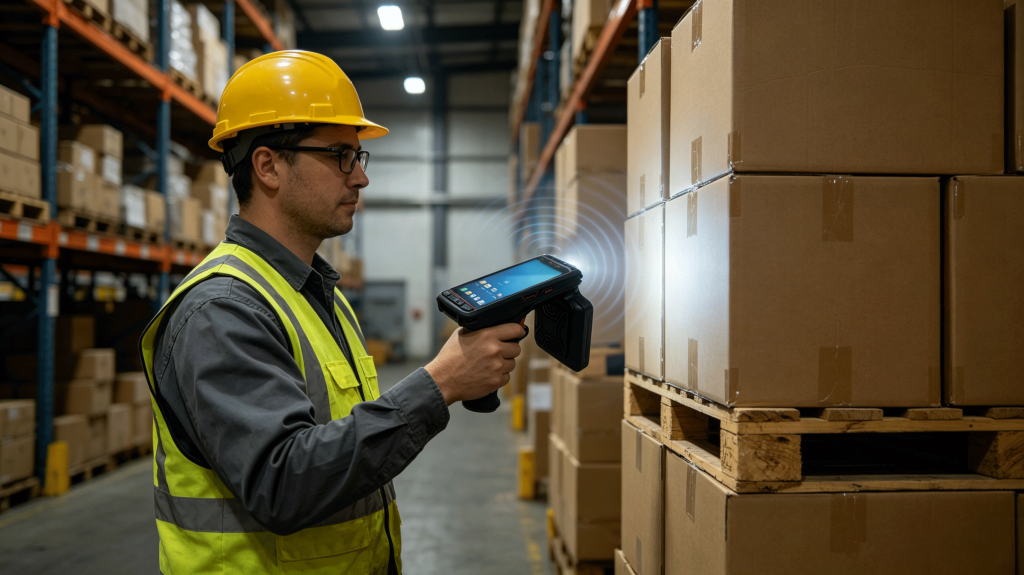
In most real deployments—retail, warehouse, tool tracking—passive UHF tags dominate. Cost per tag matters when you scale to thousands.
This “backscatter” mechanism is what makes passive RFID efficient.
RFID can deliver inventory accuracy above 95%, significantly improving supply chain reliability.

There’s a shift you notice quickly.
With barcodes:
With RFID:
But it’s not perfect out of the box.
Field notes:
In one tool room, simply moving tags from flat to angled placement improved read rates by over 30%.
| Feature | RFID Tags | Barcode Labels |
|---|---|---|
| Line-of-sight | Not required | Required |
| Bulk reading | Yes | No |
| Speed | Very high | Moderate |
| Automation | High | Manual |
| Accuracy | 95%+ | Lower (human-dependent) |
Retail adoption has grown rapidly because cycle counting can happen during store hours—without disrupting customers.
No. RFID works without line-of-sight.
Hundreds per second, depending on system configuration.
Yes, especially in asset tracking and logistics systems.
Understanding how does rfid tags work is useful.
Seeing 150 items register while you simply walk past a shelf—that’s when it becomes real.
No scanning rhythm. No interruptions.
Just continuous, quiet data capture.
User Guide
How to Remove RFID Tags from Clothing Safely (Without Ripping Your Shirt)
The Truth About RFID Signals: Aluminum Foil, Smartphones, and Reading Range Explained
How Security Tag Readers Work: RFID vs. Magnetic Systems – Which Is More Efficient?
How to Deactivate RFID Tags Without Guesswork or Myths?
How to Test RFID Tags with Phone
How to Test RFID Tags with Your Smartphone (No Scanner Needed)
How to Use Android Phone to Emulate RFID Tag: Full Tutorial and Application Guide
Can Your RFID Tags Reader iPhone ? Here’s How It Actually Works
Can You Use an NFC Phone as an RFID Tag?
How to Choose the Right RFID Tag for Clothing? Materials, Packaging & Attachment Explained
Industrial Essentials: 2025 Guide to the Most Durable Rugged RFID Tags
Active RFID Tag Range: The Real Difference Between Active and Passive Tags

Stop getting lost in theory. Learn what is antenna in RFID systems practically, why its placement matters more than specs, and how it impacts your project's success.
More
In the era of information explosion, industries across the globe face the challenges of managing and storing vast amounts of data. For government agencies, enterprises, and organizations that require significant file storage, efficient file manage...
More
Discover the 10 essential RFID reader features for warehouses in 2025. Learn how UHF technology, IoT integration, and AI-powered analytics boost efficiency. Get expert insights now.
More
Compare RFID laundry tags and barcode systems for textile management. Learn which solution works better for commercial laundries, hotels, hospitals, and uniform tracking operations.
More