An RFID lab sample tracking system automates laboratory inventory control, tracks hazardous samples in real time, and improves compliance accuracy while reducing manual registration errors.
In modern laboratories, missing samples are rarely “lost.” More often, they were moved, temporarily removed, relabeled, or logged late. That small gap between physical movement and digital records is where most lab inventory failures begin.
Cykeo’s RFID-based laboratory tracking deployments were designed around that exact problem. Instead of relying on handwritten logs or delayed barcode scans, the system continuously records sample movement automatically through ultra-high-frequency RFID identification.
The result is not just faster inventory. It is accountability with timestamps.
Why laboratories are moving toward RFID sample tracking
Traditional sample management systems struggle under high-frequency access environments.
A biotech lab may open and close reagent cabinets dozens of times per hour. During shift changes, emergency testing, or overnight experiments, manual registration often becomes inconsistent.
RFID changes the workflow because identification happens passively.
According to a study published by the U.S. National Library of Medicine, automated RFID-based healthcare and laboratory systems significantly reduce identification errors and improve traceability in regulated environments.
That matters more than speed alone.
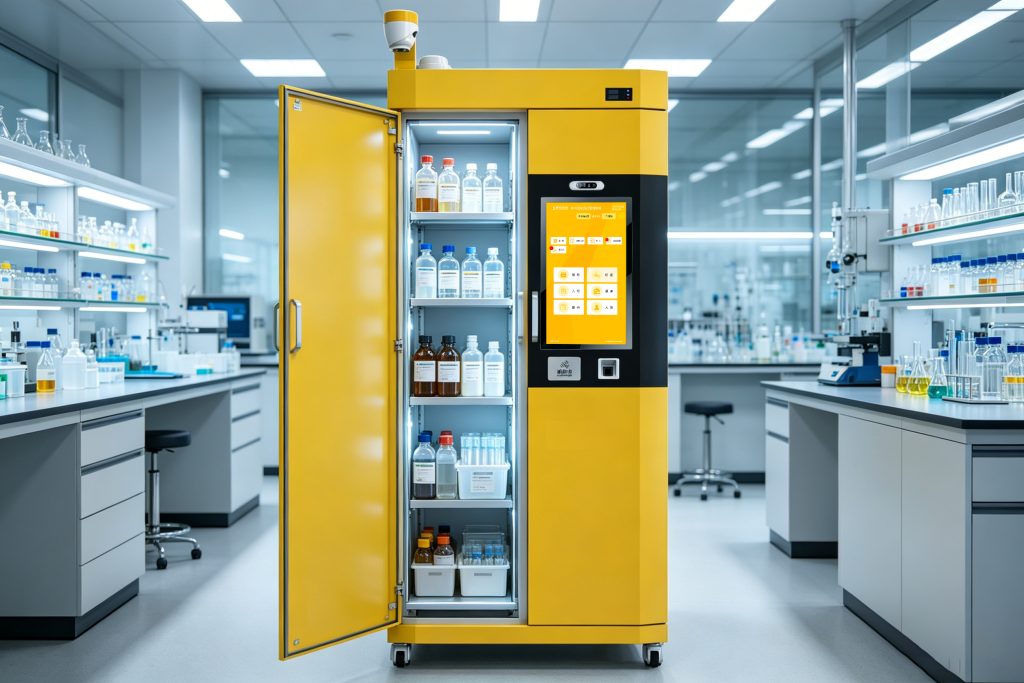
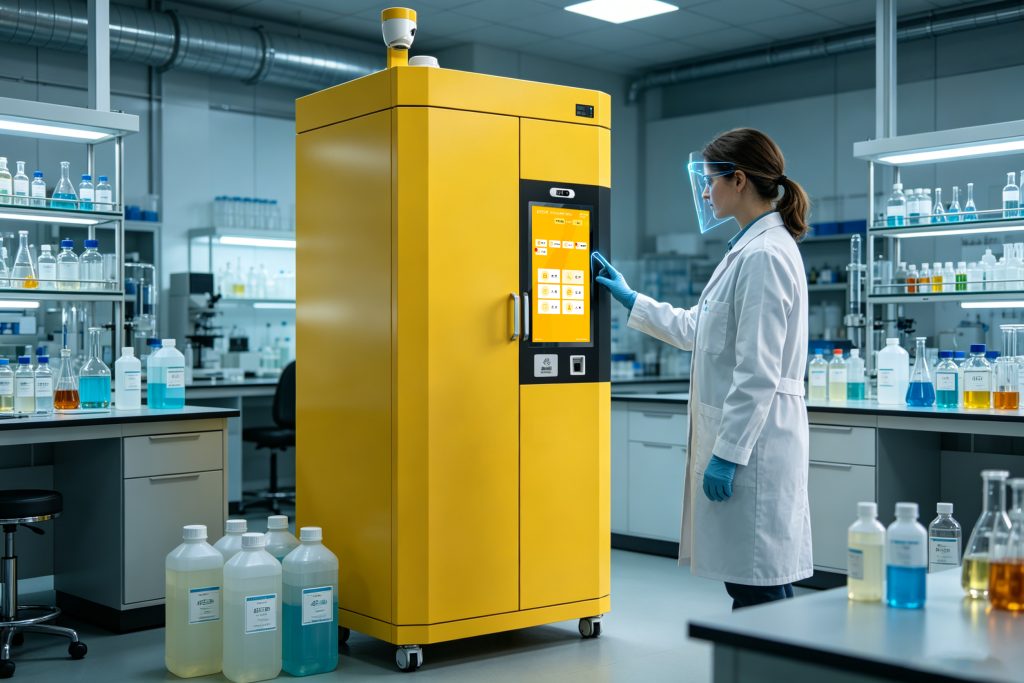
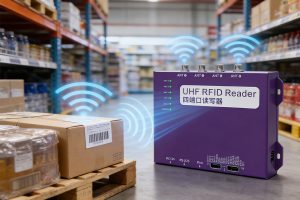
UHF RFID system performing automatic laboratory inventory after cabinet closure
How the Cykeo RFID lab sample tracking system works
The Cykeo intelligent hazardous material cabinet combines:
UHF RFID identification
Face recognition access
Dual-lock authorization
Real-time inventory upload
VOC toxic gas monitoring
Automated cabinet-level inventory scanning
The system complies with ISO18000-6C (EPC C1G2) protocol standards and supports dense multi-tag identification environments.
When the cabinet door closes, the system performs a full RFID inventory automatically at approximately 400 tags per second.
That detail sounds technical until you watch it happen in a real laboratory.
There’s no clipboard. No delayed spreadsheet updates. No “I’ll register it later.”
The cabinet already knows what changed.
Observed improvements in laboratory workflows
In practical deployments, RFID sample tracking affects three operational layers simultaneously:
Operational Area
Before RFID
After RFID
Sample registration
Manual entry
Automatic logging
Reagent audits
Periodic checking
Real-time visibility
Accountability
Difficult tracing
User-level traceability
One pharmaceutical storage room we observed previously relied on handwritten logs for controlled reagent withdrawals. After RFID deployment, retrieval verification time dropped from several minutes to a few seconds.
The larger improvement was compliance confidence during inspections.
Security functions matter more than most labs expect
Laboratory sample tracking is increasingly tied to regulatory responsibility.
Cykeo’s RFID cabinet supports:
Face recognition access
Dual-person authorization
Emergency unlock design
Leak containment structure
Anti-corrosion internal cabinet protection
Ventilation-assisted gas discharge
These are operational details, not marketing extras.
In hazardous chemical management, access logging is often as important as inventory itself.
Ultra-high-frequency RFID advantages inside laboratories
UHF RFID enables:
Fast batch reading
Non-contact inventory
Simultaneous multi-sample identification
Reduced manual interaction
Better scalability across large labs
According to RFID Journal, UHF RFID systems can achieve read rates exceeding 99% in optimized indoor environments with proper antenna configuration.
For laboratory storage systems handling hundreds of tagged samples daily, this becomes operationally significant.
Learn what is a rfid tracker, how RFID tracking works, the difference between passive and active trackers, and where RFID tracking delivers practical value.
What is a rfid reader used for? Explore RFID reader applications in inventory, logistics, asset management, libraries, textiles, and industrial operations.
Learn what is a rfid label, how RFID labels work, where they are used, and how to choose the right label for inventory, logistics, retail, and asset tracking.
Looking to buy RFID tags? Learn about customizable, high-temp, on-metal, printable, sample packs, cards, and wristbands. Discover UHF, HF, LF, and active RFID tags, their costs, and how they’re used in warehouses, hospitals, retail, and cold chain...
reader/writer RFID UHF system enables fast bulk reading, secure writing, and automation for logistics, access control, and asset tracking with Cykeo performance.
Wondering what RFID readers actually do? Check out our simple guide to RFID readers and how they help businesses keep track of inventory and assets in real-time.
Discover why long-range UHF RFID outperforms traditional barcodes and handheld scanning in warehouses, construction sites, logistics, manufacturing, and asset tracking. Improve inventory visibility and operational efficiency.
 Cykeo RFID IoT Solution Products R&D Manufacturer