Can RFID be transferred? Yes, RFID data can often be transferred to another compatible tag or system, but the process depends on what needs to be transferred. Writable RFID memory may be reprogrammed, and asset records can be migrated between databases. However, a tag’s permanent chip identity, access permissions, and tracking history cannot always be copied or moved in the same way.
For businesses managing inventory, warehouse equipment, tools, or industrial assets, this distinction matters. Replacing a damaged RFID label is not the same as copying a tag, and transferring information to a new tag does not automatically update the records maintained by an inventory management system.
The correct method depends on the RFID frequency, tag memory, security configuration, reader compatibility, and the software responsible for interpreting the data.
What Does Transferring RFID Actually Mean?
The phrase “RFID transfer” describes several different operations. Before selecting a reader, writing software, or replacing a label, identify which operation is required.
Type of transfer
What changes?
Is it possible?
RFID tag data transfer
Data is read from one tag and written to another
Often, if the memory and permissions allow it
RFID tag replacement
A new tag is assigned to an existing asset
Yes, with appropriate system updates
RFID identity transfer
An identifier is reassigned or duplicated
Depends on the identifier, tag capabilities, and application rules
RFID database migration
Asset records move between software systems
Yes, with compatible data structures and migration procedures
RFID reader transfer
A reader is moved to another workstation or network
Usually, subject to interface and configuration compatibility
These operations should not be treated as interchangeable.
For example, suppose a warehouse uses RFID tags to identify reusable plastic containers. A damaged tag may be replaced by encoding a new tag with an approved identifier and updating the asset database. The container remains the same physical asset, even though its RFID hardware has changed.
By contrast, copying the identifier from one active container onto another can create duplicate identities. A reader may detect both tags, but the inventory application may interpret them as the same object. The resulting problem is not necessarily a radio-frequency failure; it may be an identification and data-management failure.
GS1’s EPC Tag Data Standard defines how Electronic Product Codes and other information are represented in compatible RFID tag memory. Its specifications provide a useful foundation for understanding what can be encoded, rather than assuming every part of a tag can be duplicated.
Can RFID Tag Data Be Transferred to Another Tag?
In many cases, yes. A compatible RFID reader-writer can read accessible data from a source tag and write permitted data to a destination tag.
The important limitation is that not all RFID tags have the same memory structure or support the same operations.
1. Understand the RFID tag’s memory
Many passive UHF RFID tags compliant with the EPC Gen2 family of standards organize their memory into four logical banks:
Reserved memory: May contain access and kill passwords.
EPC memory: Holds the Electronic Product Code and associated control information.
TID memory: Contains tag identification information, including manufacturer or chip details; some tags include a unique serial number.
User memory: Provides additional storage when supported by the tag.
The exact capabilities depend on the chip and its implementation.
GS1 explains that TID memory describes tag features and generally is not intended to be rewritten after manufacture. Some TID fields can identify the chip model, and some tags contain a manufacturer-programmed serial number. These values should not be assumed transferable simply because EPC memory is writable. See the GS1 EPC Encoder FAQs.
This creates a practical distinction:
An EPC identifier may be writable under the tag’s access conditions.
Additional user data may be writable if the tag supports it.
A factory-programmed chip identity generally cannot be copied to another chip.
Protected memory may require authorized credentials or specific access procedures.
Changing one memory field does not necessarily change the others.
2. Check whether the source and destination tags are compatible
Before attempting a transfer, confirm the following:
Frequency: The reader and destination tag must operate in compatible frequency bands.
Air-interface protocol: The reader must support the tag’s protocol and commands.
Memory capacity: The destination tag must have enough writable memory for the intended data.
Access permissions: Passwords, locks, and application restrictions must permit the required operation.
Encoding format: The data must retain the correct structure and interpretation.
A tag may respond successfully to a reader yet still be unsuitable for the intended transfer. For example, a destination chip may have less user memory than the source chip, or the application may expect an EPC format that the new tag cannot accommodate.
For standardized UHF applications, the GS1 EPC UHF Gen2 Air Interface Protocol defines the communication framework for tag inventory, memory access, and related operations.
3. Read, write, and verify instead of assuming success
A reliable transfer should be treated as a controlled data operation.
The basic process is:
Read the source tag using an authorized reader.
Record the fields that the application actually needs.
Check the destination tag’s memory layout and write permissions.
Write the approved data to the destination tag.
Read the destination tag again.
Compare the stored values with the intended values.
Update the relevant asset record and retain an audit trail.
The verification step is easy to underestimate. A successful write command does not, by itself, prove that the destination tag contains the correct application data or that the business system recognizes the new identity.
For high-volume deployments, verification should also account for multiple tags in the reader’s field. An industrial reader may detect several tags at once, so the software needs to select the intended tag rather than accidentally writing to another nearby item.
Can RFID Be Transferred Without Replacing the Physical Tag?
Yes, if the goal is to change writable data on an existing tag rather than move information to another physical tag.
A writable RFID tag can sometimes be re-encoded with a new EPC or updated user data. Whether this is appropriate depends on the business process and the rules governing the identifier.
Consider a reusable asset that has been reassigned from one department to another. The company might choose to keep the existing tag and change its associated record in the database. Alternatively, it might re-encode a permitted field if the identification scheme and application require that change.
These approaches are not equivalent.
Changing a database association often preserves a stable physical identity, while rewriting the EPC changes the identifier the application reads. If the EPC is used as a primary key in several systems, changing it without updating the related records can break links to maintenance logs, shipment events, or previous inventory transactions.
A safer approach is to decide which identifier should remain stable before changing tag memory. For serialized assets, a unique identifier linked to the physical item generally provides a stronger foundation for traceability than repeatedly reusing the same code.
When rewriting a tag is appropriate
Rewriting may be suitable when:
A tag is being commissioned for the first time.
An authorized application needs to correct a writable data field.
A reusable tag is being reassigned under a defined asset-management policy.
A controlled production process requires encoding before an item enters service.
It may be inappropriate when the identifier is intended to remain permanent, when the tag is locked, or when the change would undermine audit requirements.
For products that use GS1 identification keys, encoding should follow the applicable data structure and allocation rules. A technically writable EPC is not automatically an identifier that a business is entitled to reuse.
RFID data transfer requires compatible tags, authorized memory access, and verification of the encoded information.
Can RFID Tags Be Copied or Cloned?
RFID tags can sometimes be copied at the data level, but copying readable information is not the same as reproducing the original chip’s complete identity or security features.
The word cloning is often used loosely. In an industrial inventory system, it may describe copying an EPC to a replacement tag, duplicating application data, or attempting to reproduce a tag used for access control. Each operation has different technical and security implications.
For standard UHF RFID tags, writable memory may permit an authorized user to encode the same EPC into another compatible tag. However, the original tag’s factory-programmed TID, unique chip serial number, locked memory, and cryptographic features may not be reproducible.
NXP Semiconductors, for example, documents UHF RFID chips with a factory-locked TID containing a unique serial number. Its UCODE 8 product information describes a 96-bit TID that includes a 48-bit factory-encoded unique serial number. This is a chip-specific example, not a specification that applies identically to every RFID tag.
That distinction has direct consequences for asset tracking.
If two tags carry the same EPC, a basic inventory reader may report the same identifier from both physical objects. An application that relies only on that EPC may not be able to distinguish them. Systems that also check the TID, authenticate the tag, or validate records against a central database may detect the discrepancy.
Why duplicate RFID identities cause problems
Consider a maintenance department with 200 tagged tools. Each tool has a database record containing its assigned employee, inspection status, and maintenance history.
If a replacement tag is encoded with the same identifier as an existing tool, the system could associate two physical tools with one record. Depending on the software, this may result in:
Incorrect stock counts.
Ambiguous checkout and return records.
Conflicting location updates.
Maintenance records being associated with the wrong item.
Difficulty investigating missing equipment.
A duplicate EPC is not always an error. Some workflows deliberately use temporary or shared identifiers, and a replacement tag may legitimately inherit an asset’s established identifier under controlled procedures. The problem arises when duplication conflicts with the application’s identity rules.
For serialized assets, a safer policy is to maintain a unique identifier for each physical item and preserve the relationship between the old tag, the replacement tag, and the asset record.
How to Transfer RFID Data in an Industrial RFID System
In warehouse and manufacturing environments, successful transfer depends on more than the reader’s ability to detect a tag. The encoding workflow, tag selection, application logic, and database updates must work together.
Identify the data that must move
Start by listing the required fields. A replacement operation may need only an EPC, while another application may also need user memory containing a product code, batch reference, or other application-specific information.
Do not assume that every field should be copied.
For example, a factory-programmed TID identifies characteristics of the tag chip itself. When replacing a damaged tag, the new tag will normally have its own TID. That difference should be recorded rather than overwritten or treated as a failed transfer.
Select a compatible reader and tag
The reader must support the destination tag’s air-interface protocol and the intended memory operations.
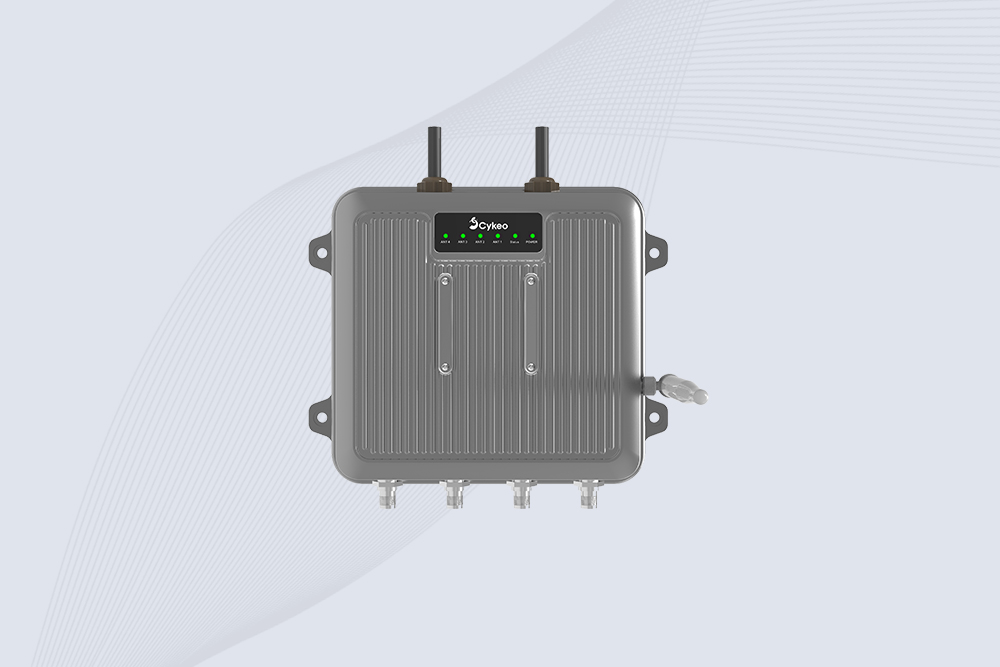
Cykeo’s CK-D9L is an industrial, integrated UHF RFID reader with a built-in 9 dBi antenna. Its documented capabilities include compatibility with ISO 18000-6C, ISO 18000-6B, and GB/T 29768-2013, depending on the applicable configuration and protocol requirements.
The device can be configured with communication interfaces such as RS-232 or Ethernet. These interfaces allow the reader to communicate with a host computer or an industrial application, subject to the selected configuration.
The CK-D9L also incorporates carrier cancellation, an anti-collision algorithm, wideband frequency hopping, and circuit protection against lightning and surges. Its industrial enclosure is designed for dust- and water-resistant outdoor use.
These features are relevant when RFID transfer is part of a fixed workstation, warehouse entrance, or industrial identification process. They do not remove the need to check tag memory, access permissions, or application-level validation.
Control which tag is being written
In a busy warehouse, multiple tags may respond to a single reader. This is useful for bulk identification but introduces a specific challenge during encoding: the software must ensure that the intended tag receives the write command.
A practical workstation should provide a controlled encoding area, a clear item-selection method, and a verification step after writing. Depending on the application, the software may select tags using an existing identifier, a defined selection mask, or another supported identification mechanism.
If a reader is positioned near a conveyor or storage area, its read zone should be tested with actual tagged items. A nominal antenna gain does not establish a guaranteed read boundary; tag orientation, mounting materials, reader power, nearby objects, and the surrounding RF environment all affect performance.
Write the approved data and read it back
Once the correct tag has been selected, the software can issue the appropriate write operation if the tag permits it.
The system should then read back the intended memory fields and compare them against the approved values. Where the application uses passwords or locked memory, the workflow must follow the relevant authorization and access procedures.
For repeated operations, record the result for each item. A useful log includes the asset identifier, original tag identifier, replacement tag TID where available, operation status, timestamp, and responsible workstation or operator.
Update the asset database
The physical tag and the business record must agree.
When a damaged label is replaced, update the database so that the new tag is associated with the correct asset. Preserve historical events rather than simply deleting the previous tag reference. This is particularly important for tools, returnable transport items, production equipment, and other assets with long service histories.
GS1’s EPC Tag Data Standard explains how EPC values and related tag information are represented. For businesses using GS1 identification schemes, the encoding process should also follow the relevant identifier-allocation and data-format rules.
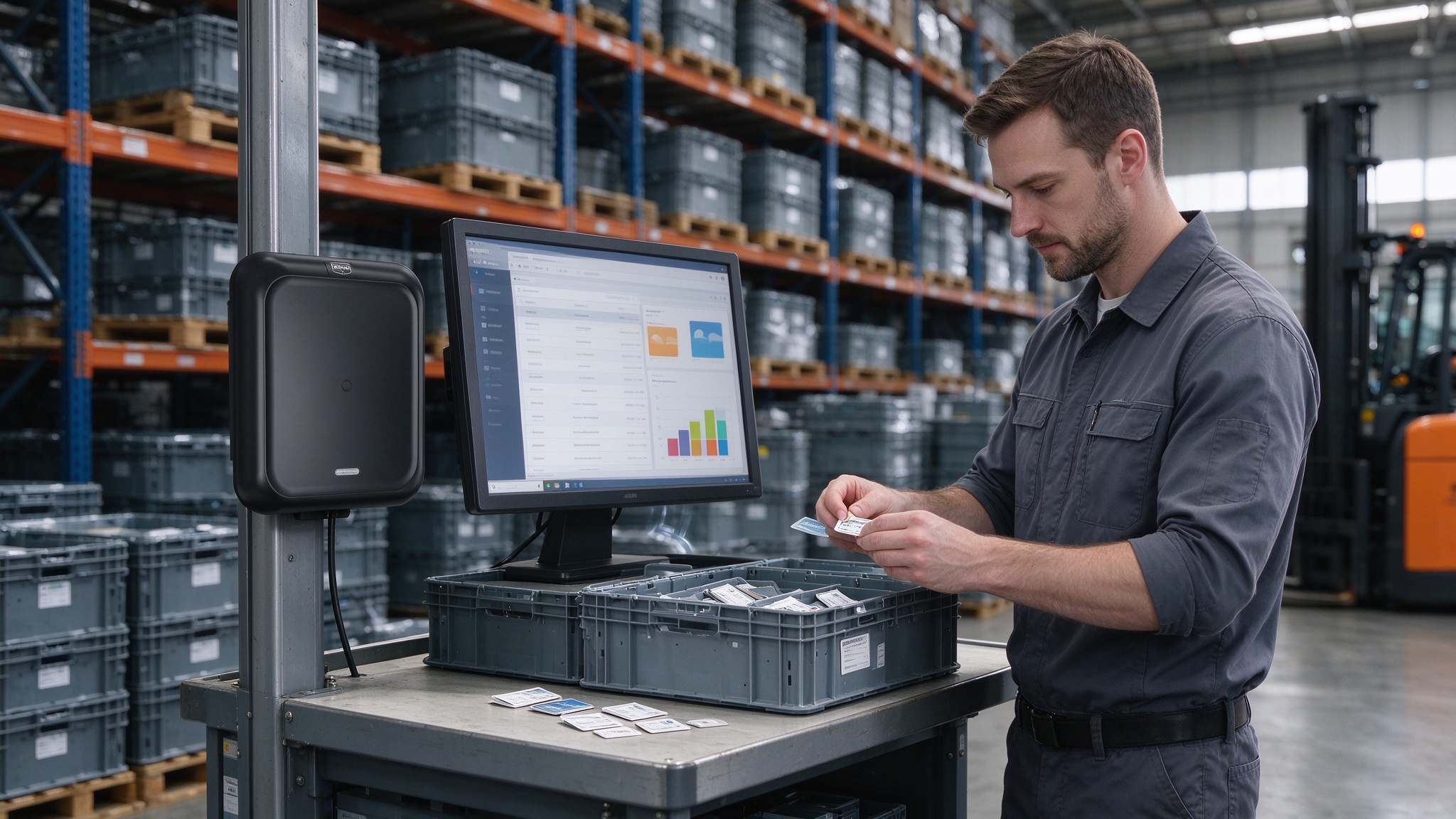
A controlled RFID replacement workflow connects the new tag, the physical asset, and its existing database record.
What Should Businesses Check Before Transferring RFID?
Before deploying a transfer or replacement process, review these operational requirements.
Checkpoint
What to verify
Why it matters
Tag compatibility
Frequency, protocol, memory size
Prevents unsupported read and write operations
Identifier policy
Whether EPC values must remain unique
Avoids ambiguous asset identities
Memory protection
Passwords, lock states, access permissions
Determines which fields can be changed
Read environment
Antenna position, orientation, nearby materials
Reduces missed reads and unintended tag selection
Software integration
Reader commands, data format, API or SDK support
Connects physical tag operations with business records
Verification
Read-back comparison and error handling
Confirms the intended information was written
Audit history
Old and new identifiers, operation results
Preserves traceability after replacement
A common implementation mistake is to focus on reader performance while leaving identifier management undefined. A high-performance reader can identify tags rapidly, but it cannot decide by itself whether a duplicated identifier is valid for a company’s inventory rules.
That decision belongs in the application design.
How Cykeo CK-D9L Supports Industrial RFID Applications
For a fixed industrial RFID installation, the CK-D9L provides a reader platform for applications that need to identify tagged items and transmit captured data to a host system.
Its principal features include:
Integrated 9 dBi UHF antenna: Supports fixed-reader deployments where antenna integration is desirable.
Protocol compatibility: Supports ISO 18000-6C/6B and GB/T 29768-2013 as documented for the device.
Communication options: RS-232 and Ethernet configurations are available according to requirements.
Anti-interference design: Carrier cancellation and wideband frequency hopping support operation in challenging RF environments.
Industrial enclosure: The ABS antenna housing and aluminum rear enclosure provide a compact design intended for industrial and outdoor applications.
Development resources: DEMO software, SDKs, and APIs are provided to support application integration.
Possible applications include fixed inventory stations, warehouse entry and exit monitoring, production identification, and automatic item-record collection. The suitability of any particular installation depends on the site’s RF conditions, tag selection, software architecture, and environmental requirements.
The reader should be integrated with software that manages tag selection, validates encoded values, handles write failures, and updates asset records. The device’s documented read/write capabilities should not be interpreted as a guarantee that every RFID tag can be copied or that every memory field is writable.
For an industrial deployment, test the complete workflow using the actual tag type, intended mounting position, communication interface, and host application before scaling up.
Frequently Asked Questions About RFID Transfer
1. Can RFID be transferred from one tag to another?
Yes. Data stored in writable RFID memory can often be read and written to another compatible tag when access permissions allow it. However, factory-programmed chip identifiers and protected memory may not be transferable. The destination tag must also support the required data format.
2. Can you transfer an RFID tag to a new card?
Sometimes. If the card contains compatible RFID technology and the relevant application data is accessible and writable, selected information may be transferred. Secure credentials, cryptographic keys, and chip-specific identifiers may not be transferable. Card compatibility depends on the frequency, protocol, security design, and intended application.
3. Can RFID tags be copied exactly?
Not necessarily. Some writable data can be duplicated, but the physical tag’s TID, factory-encoded serial number, lock configuration, and security features may differ. A copied EPC does not make two RFID chips identical.
4. Can I rewrite an RFID tag without replacing it?
Yes, if the tag supports the required write operation and the relevant memory is not permanently locked. You may need authorized access credentials. Always verify the result and confirm that changing the identifier will not break existing asset records.
5. Does transferring RFID data also transfer the tracking history?
No, not automatically. Historical events are usually maintained in the inventory or asset-management software. To preserve continuity, the application must associate the replacement tag with the correct asset and retain the relevant historical records.
6. Can an industrial UHF RFID reader transfer tag data?
An industrial UHF reader can support reading and writing operations when the hardware, protocol, tag memory, and software permit them. The Cykeo CK-D9L supports documented UHF RFID protocols and host communication options. A complete transfer workflow still requires appropriate software and compatible tags.
7. How can I avoid duplicate RFID identities during tag replacement?
Use a controlled replacement procedure. Record the old tag identifier, assign or encode the approved identifier according to the asset policy, verify the new tag, update the database, and retain the replacement history. Where unique chip identity or authentication is important, include those checks in the application.
SSD-D3AL is a USB-HID UHF RFID reader with 0–30 cm reading, 0–15 cm writing, over 600 tags/s recognition, USB plug-and-play operation and OEM Logo customization.
SSD-D1AL is a compact USB UHF RFID reader with Impinj E710/X3M1 chipset, USB-HID, 600+ tags/s recognition, 4/8/16 antenna support and plug-and-play USB power.
SSD-R16L Multi-Channel RFID Infrastructure for Automated Inventory Management ✔️ 16-Port High-Density RFID Reading Equipped with 16 SMA antenna ports, SSD-R16L supports multi-antenna deployment for warehouses, retail stores, logistics, production lines, and large-area RFID identification. ✔️ High-Speed & Long-Range Performance With up to 33…
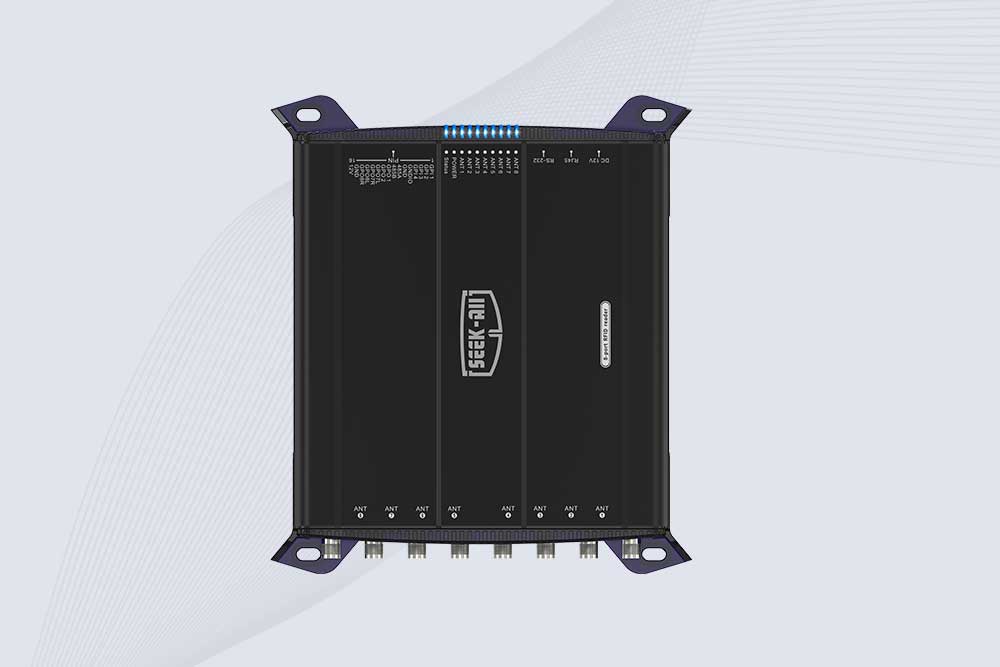
SSD-R8L 8-port UHF RFID reader with 33dBm output, up to 20m reading range and 600+ tags/s recognition. Ideal for warehouse, logistics, retail and asset tracking.
CYKEO CYKEO-D1LA USB RFID Reader is a compact desktop solution with near-field control for precise tag reading and encoding. Powered by USB, supporting ISO 18000-6C, and built for stable batch writing, this usb rfid tag reader fits retail, libraries, offices, and controlled RFID encoding tasks.
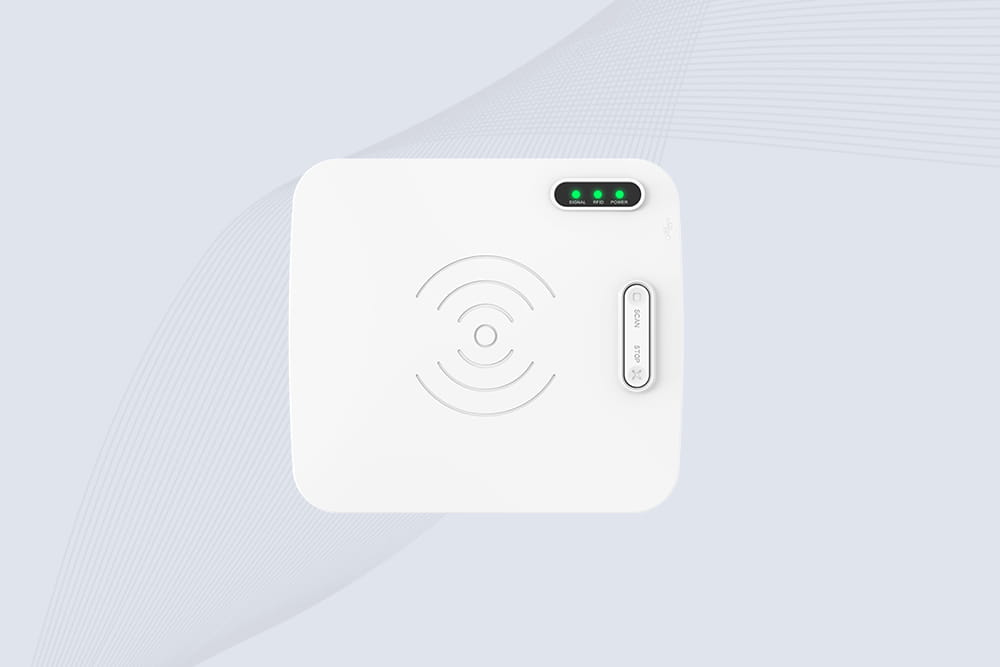
CYKEO CYKEO-D1L RFID scanner USB is a compact desktop UHF RFID scanner designed for short-range tag writing and verification. This usb rfid scanner supports batch encoding, stable 0–26 dBm output, and works across Windows, Linux, and Android systems.
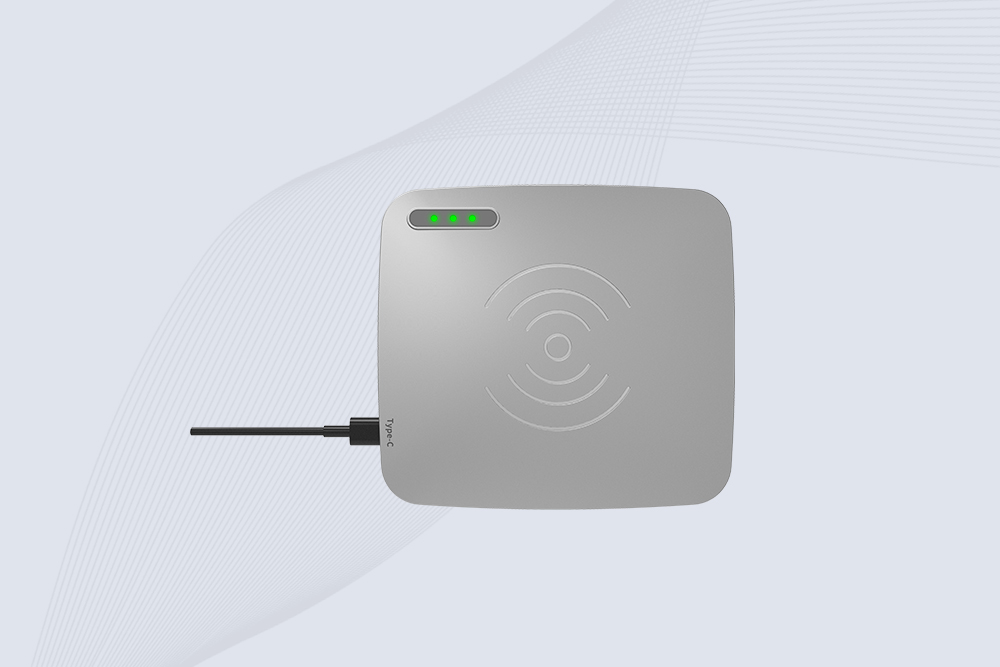
CYKEO CYKEO-D1C USB RFID Card Reader is a near-field UHF desktop writer designed for secure, short-range tag encoding. With USB-C connectivity and stable 26 dBm output, this rfid reader usb c is ideal for badge issuance, label encoding, and controlled desktop RFID workflows.
CYKEO CYKEO-D2L RFID Reader USB is a compact desktop encoder built on the Impinj R500 chip. With near-field control and stable USB power, this usb rfid card reader delivers precise tag writing for offices, retail counters, and small-scale logistics encoding tasks.
CYKEO CYKEO-D3L USB RFID Tag Reader delivers stable UHF tag reading and writing for daily desktop and light industrial tasks. Designed for controlled short-range operation, this USB RFID Tag Reader works reliably with rfid tag and reader systems in libraries, tool tracking, and inventory registration.
The CYKEO CYKEO-D4L UHF RFID Tag Reader is a stable Desktop RFID Reader designed for accurate tag registration, borrowing, and return workflows. Built with the Impinj R2000 chip, this UHF RFID Tag Reader delivers controlled short-range reads for libraries, asset tracking, and inventory management environments.
The CYKEO CYKEO-D5L Desktop RFID Card Reader is a stable UHF RFID Card Reader designed for controlled short-range reading and writing. Built for libraries, tool rooms, and asset desks, this UHF RFID Card Reader supports dense tag handling, secure data processing, and easy USB integration.
The CYKEO CYKEO-D6L RFID Reader Writer is a heavy-duty Desktop RFID Reader designed for short-range, high-accuracy tag programming. Built for libraries, labs, and asset desks, this RFID Reader Writer supports batch processing, stable 33dBm output, and seamless integration with existing management systems.
Cykeo CYKEO-D8A embedded RFID badge reader offers 30+ tags/sec scanning, 20cm anti-crosstalk precision, and DC 12V power for unmanned stores, warehouses, and smart inventory systems.
Cykeo’s CYKEO-D8C UHF RFID gate reader achieves 200-tag/batch scanning with adjustable power control, ideal for retail inventory and smart warehouse management.
CYKEO Passive RFID Tags are made for wet and high-humidity environments where standard labels do not last. This rfid passive tag is often used around liquids, chemicals and temperature changes, providing stable reading distance and long data life for industrial tracking.
CYKEO CYKEO-PCB1504 Metal RFID Tags is a compact anti-metal UHF RFID solution built for direct mounting on metal surfaces. With stable 8-meter read range, Ucode-8 chip, and long data retention, this rfid metal tag fits tools, containers, automotive parts, and industrial asset tracking.
CYKEO CYKEO-PCB7020 On-Metal RFID Tags are designed for reliable tracking on steel and metal surfaces. Built with an FR4 epoxy body and industrial-grade chips, these On-Metal RFID Tags deliver stable performance, long data life, and chemical resistance, making them a dependable RFID anti-metal tag for harsh environments.
The CYKEO CYKEO-60-25 Anti-Metal RFID Tag is built for metal surfaces where standard tags fail. Designed for long-range performance, harsh environments, and stable data retention, this Anti-Metal RFID Tag is ideal for industrial assets, containers, and equipment tracking using on metal RFID tags.
The CYKEO RFID Laundry Tag is designed for long-term textile identification in harsh laundry environments. Built to withstand high heat, chemicals, and repeated washing, this RFID Laundry Tag delivers stable performance for hotels, hospitals, and industrial laundry operations using laundry rfid tags at scale.
The CYKEO CYKEO-125-7 RFID Book Tag is designed for reliable book and document tracking in libraries and archives. This RFID Book Tag delivers long read range, dense placement support, and stable performance on shelves, making it a practical rfid tag on books for library automation, file management, and archival systems.
CYKEO RFID tags in hospitals are designed for sterile environments where accuracy matters. These autoclavable RFID tags support long-term tracking of surgical tools, implants, and medications, helping hospitals improve visibility, compliance, and patient safety.
CYKEO RFID Cable Tie Tag is built for reliable identification on metal surfaces. This UHF RFID Cable Tie Tag is widely used in rfid tags for inventory systems, industrial asset management and Hospital RFID Tags, offering stable read performance, long service life and global EPC Gen2 compatibility.
CYKEO RFID Asset Tag is designed for stable identification of metal assets in industrial environments. This UHF RFID Asset Tag is commonly used for rfid tag asset tracking on equipment, tools and containers, providing reliable reads, long service life and ISO/IEC 18000-6C support.
CYKEO UHF RFID Card is designed for fast identification and long-term use in industrial and commercial systems. Supporting ISO 18000-6C, this UHF RFID Card works at 860–960 MHz and is suitable for custom RFID cards used in asset tracking, access control and inventory management.
CYKEO HF RFID Cards are designed for secure and stable access control systems. These 13.56 MHz RFID key cards support ISO 14443-A, reliable rewriting and long service life, making HF RFID Cards suitable for offices, campuses, events and membership management.
CYKEO UHF RFID Tag is designed for reliable tracking of metal jewelry and high-value items. This Jewelry RFID Tag supports long-range reading up to 8 meters, anti-counterfeit protection and stable performance on metal, making it suitable for retail, inventory control and asset management.
CYKEO Embedded RFID Modules are designed for compact industrial and IoT devices that require stable UHF performance. These UHF RFID Modules support global protocols, flexible power control, and reliable multi-tag reading for smart cabinets, production lines, and asset tracking systems.
CYKEO Embedded RFID Module is built for compact IoT and industrial devices that need stable UHF performance. This UHF module supports global protocols, low power operation, and reliable multi-tag reading for smart lockers, production lines, and always-on RFID systems.
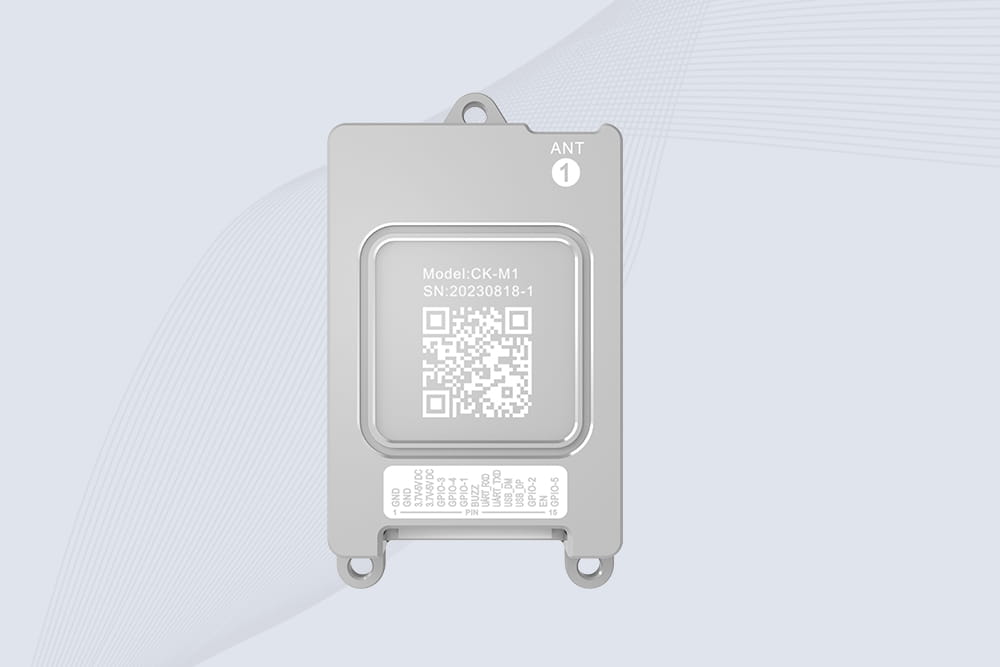
CYKEO CYKEO-M1 drone rfid module is a compact UHF RFID reader module designed for drones and UAV platforms. It supports long-range aerial scanning, fast multi-tag reading, and stable performance in wind, vibration, and outdoor environments.
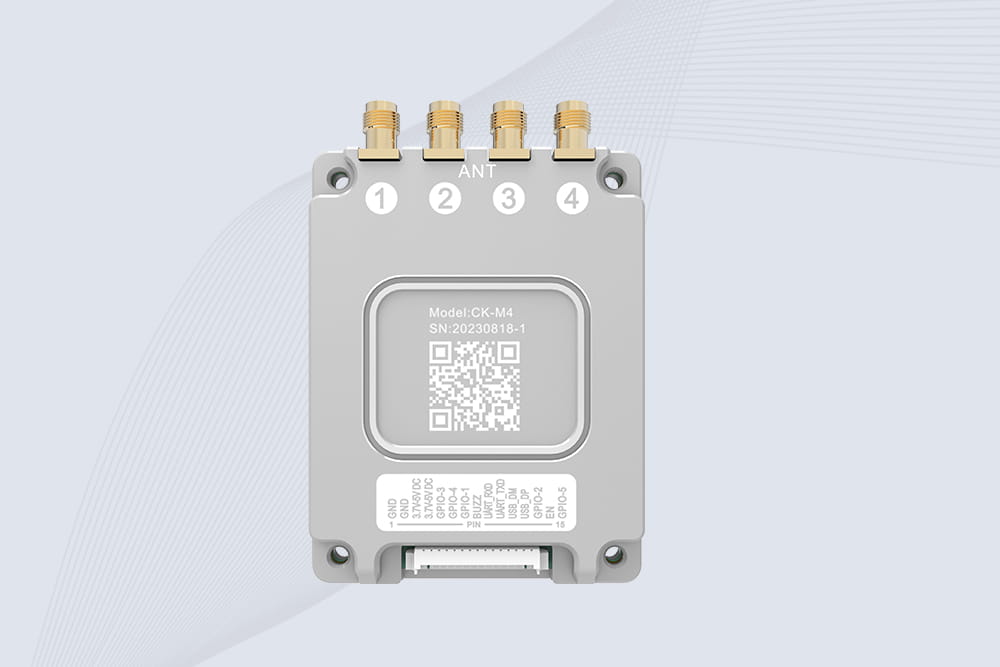
CYKEO CYKEO-M4 RC522 RFID Module is an industrial-grade UHF RFID reader with 4 ports, supporting ISO, EPC, and GB protocols. High-speed, accurate reading for IoT, automation, and warehouse applications.
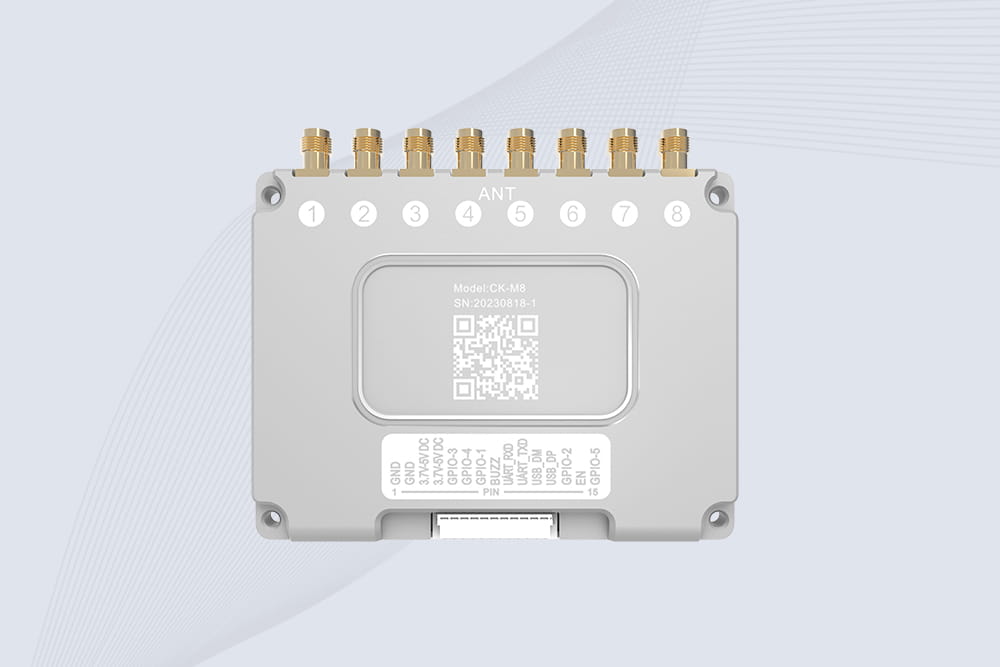
CYKEO CYKEO-M8 Module RFID is an 8-port UHF R2000 RFID Module designed for high-density, multi-tag environments. Stable 33dBm output, ISO & GB protocol support, ideal for warehouses, factories, and automated systems.
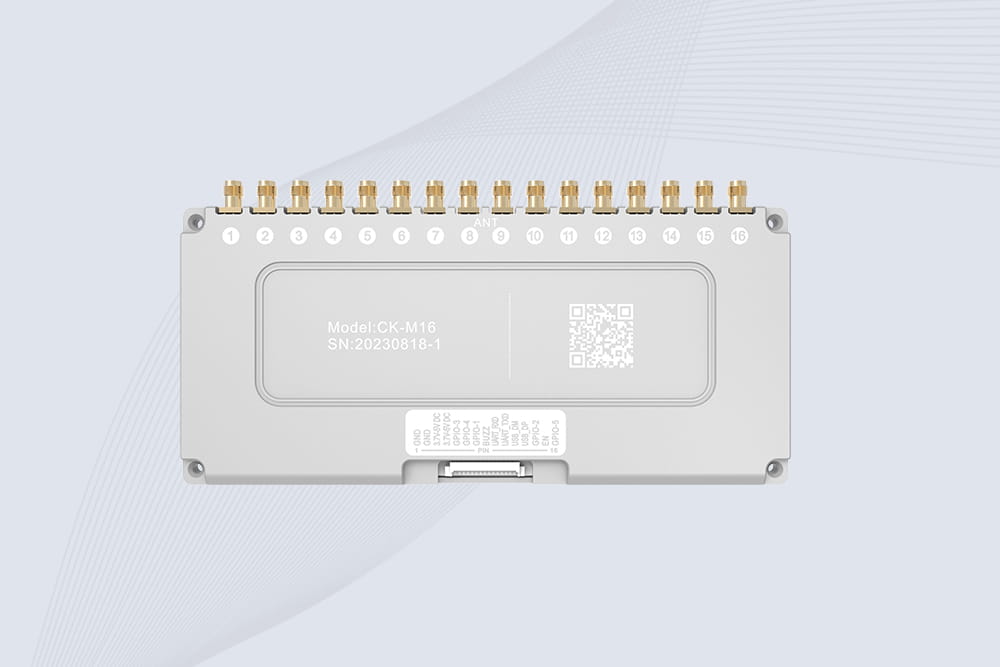
CYKEO CYKEO-M16 RFID Module is a 16-port UHF RFID reader module based on the R2000 chipset. Designed for dense tag environments, it supports ISO and GB standards and delivers stable multi-antenna control for industrial automation.
The CYKEO CYKEO-M16L RFID Reader Module is a 16-channel UHF RFID core designed for dense tag environments. With adjustable 33dBm output, multi-protocol support, and stable multi-antenna control, this RFID Tag Reader Module fits industrial automation, warehouse systems, and large-scale IoT deployments.
CYKEO CYKEO-M8L module RFID is a compact industrial UHF module built for dense tag and multi-antenna environments. With 8 RF ports, adjustable 33 dBm output, and ISO & GB protocol support, it is widely used in factories, warehouses, and automated tracking systems.
CYKEOCYKEO-M4L UHF RFID Module is a compact 4-channel RFID tag reader module designed for dense tag environments. Supporting ISO and GB protocols, it delivers stable reads up to 10 meters for industrial and IoT systems.
Cykeo CYKEO-C1 industrial Forklift RFID Reader features 20m read range, 600 tags/sec scanning, Impinj R2000 chipset, and IP67 rugged design. Ideal for warehouse logistics and manufacturing. Supports ISO 18000-6C/6B protocols.
Cykeo CYKEO-R4 industrial UHF RFID Fixed Reader features 4 TNC ports, 400+ tags/sec speed, IP67 housing, and global frequency compliance for vehicle inspection, smart warehouse, and asset management systems.
CYKEO CYKEO-R8L Fixed RFID Reader with 8-port UHF design, Impinj-based RF core and up to 20m read range. An industrial Fixed RFID Reader for vehicle inspection, warehouse portals, smart manufacturing lines and secure access checkpoints.
RFID Fixed Reader from CYKEO – the CYKEO-R16L 16-port UHF fixed reader for warehouses, smart cabinets, and production lines. Long-range, multi-tag reading, stable performance for 24/7 industrial use.
Wondering "can RFID sensors read through aluminum"? Discover how aluminum blocks RFID signals, why metal causes interference, and solutions for tracking assets in metal-rich environments with CYKEO.
The Cykeo CK‑D1C USB RFID card reader makes reading and writing cards fast and hassle-free. Perfect for offices, warehouses, libraries, and access control systems. Plug-and-play, batch encoding, and secure short-range reading.
Learn how long range RFID scanners improve warehouse inventory tracking, pallet management, and logistics automation. A practical guide for RFID integrators, distributors, and bulk buyers.
Learn how how does rfid enable faster dock-to-stock processes with item-level identification, faster receiving, fewer manual scans, and cleaner WMS inventory updates.
 Cykeo RFID IoT Solution Products R&D Manufacturer