 Cykeo RFID IoT Solution Products R&D Manufacturer


what is rfid reader used for
150RFID readers identify, read, and sometimes write RFID tag data to connect physical objects with digital systems for inventory, tracking, and automation.
MoreAll RFID Product
If you just need to read and write RFID tags at a desk, you don’t need a $2,000 fixed reader, four external antennas, and an afternoon of network configuration. You need a device that plugs into a USB port, behaves predictably, and doesn’t fall apart after a month of daily use. That’s exactly the market for an affordable USB RFID reader, and it’s a bigger market than most people expect: badge issuance desks, library circulation counters, tool cribs, retail encoding stations, and every developer who has ever prototyped an RFID app on a laptop.
This guide breaks down what to look for, where a PC-connected reader makes sense, and which Cykeo desktop models fit which jobs — with real specs instead of marketing fluff.
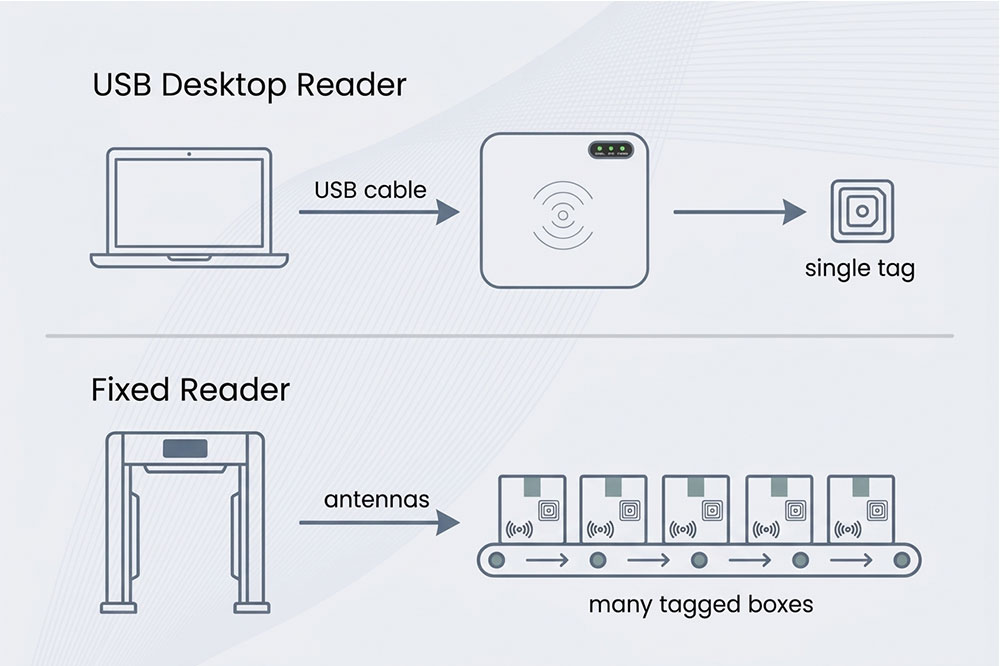
Fixed UHF readers exist to solve a different problem: reading hundreds of tags per second across 15 meters, unattended, 24/7. If that’s your job, Cykeo’s fixed industrial RFID readers are the right tool, and the price reflects it.
But desk work has different physics. When you’re encoding one tag at a time, a 15-meter read range is a liability — the reader picks up every tagged box on the shelf behind you. A desktop USB reader with a controlled 10–30 cm range gives you deliberate reads. You place the tag, it reads, you move on. No anti-collision headaches, no stray reads corrupting your data.
The cost math is just as clear:
| USB desktop reader | Fixed RFID reader | |
| Power | From the PC’s USB port | External 12V industrial supply |
| Mounting | Sits on the desk | Wall/portal installation |
| Read range | 10–30 cm, controlled | Up to 15–20 m |
| Integration | Desktop utility or local app | ERP / WMS / MES / PLC systems |
| Typical job | Encoding, verification, issuance | Bulk scanning, portals, conveyor lines |
If your workflow starts at a keyboard, start with USB. You can always add fixed readers later when the process graduates to automation.
A low sticker price means nothing if the reader can’t talk to your software. The real cost of a cheap RFID reader is integration time, so judge affordability by three things:
Cykeo’s SSD series USB HID readers cover the first case; the CYKEO-D1 series covers the second with full SDK access.
Ask for the SDK before you buy, not after. Cykeo ships C# and Java SDKs, demo utilities, and REST API access with every reader — the difference between a two-day integration and a two-week one. Their guide to finding a reliable cheap RFID reader manufacturer makes the same point: support documents matter more than the spec sheet.
Impinj-based readers (E710, R500, R2000) handle dense tag environments and fast batch writes without stuttering. Off-brand chips choke on more than a handful of tags. It’s the single biggest hidden quality gap in the budget segment — the real differences between cheap and expensive RFID readers usually trace back to this.
These are the jobs desktop USB readers do all day, every day, across Cykeo’s customer base:
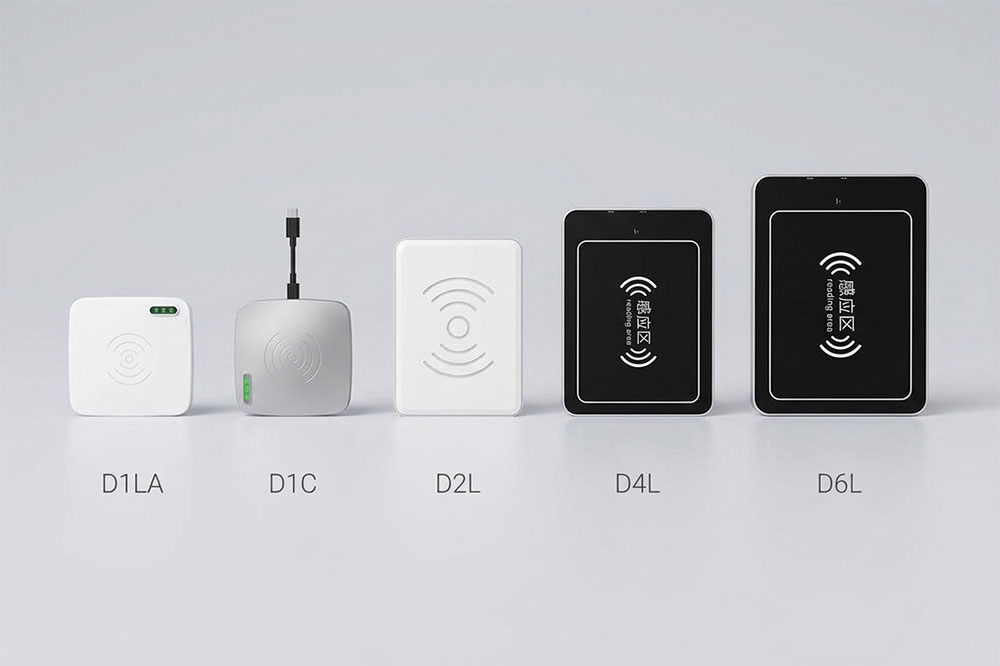
| Model | Best for | Chip | Standout spec |
| CYKEO-D1LA | Single-tag reads and encoding at a desk | — | ISO 18000-6C, USB powered, stable batch writes |
| CYKEO-D1C | Badge and card issuance | — | USB-C, 26 dBm, short-range secure encoding |
| CYKEO-D2L | Office and counter encoding | Impinj R500 | Precise near-field writes |
| CYKEO-D4L | Library and asset desks | Impinj R2000 | Controlled short-range reads for dense stacks |
| CYKEO-D6L | Heavy-duty batch encoding | — | 33 dBm output, high-volume programming |
| SSD-D1AL | Plug-and-play HID integration | Impinj E710 | 600+ tags/sec, keyboard-emulation mode |
Two honest notes from the field: the whole USB RFID reader category page includes a selection guide — use it before ordering, because “bigger is better” doesn’t apply here. And if your eventual plan is warehouse-scale scanning, don’t try to stretch a desktop reader into that role; Cykeo’s long-range RFID reader category starts where the desktop units stop. For mobile spot-checks around a facility, the handheld RFID reader category is the complementary piece.
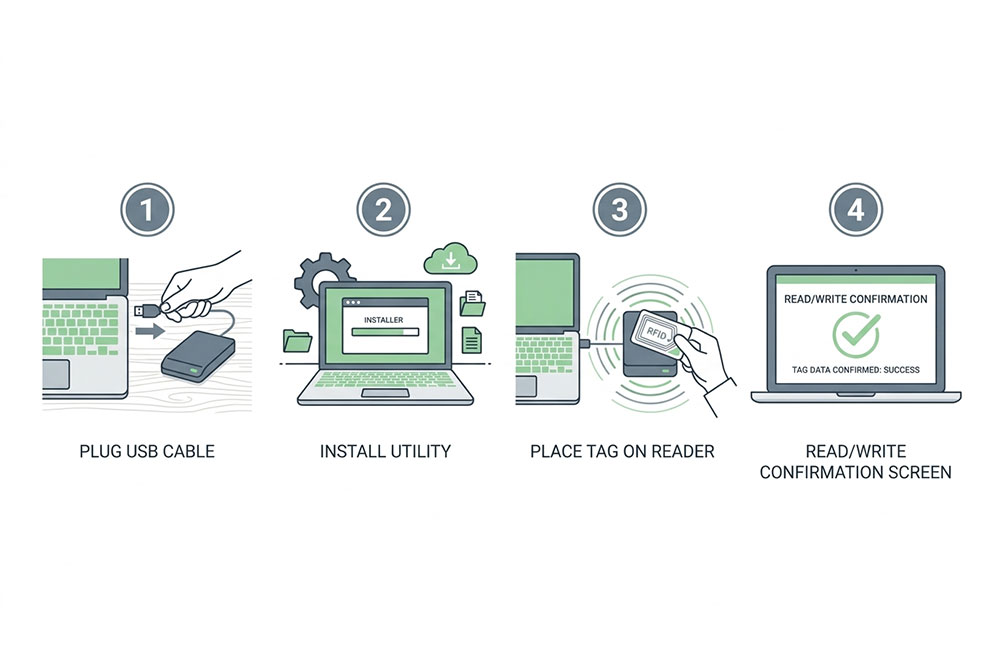
If you’re on Windows and hit a driver snag, the Windows 10/11 installation and configuration guide walks through the whole thing, including the Device Manager fixes that solve most “reader not detected” complaints.
Both. Every Cykeo desktop model listed here reads and writes ISO 18000-6C UHF tags — EPC, TID, and user memory banks — through the SDK or demo utility. Writing is actually the more common desk job; reading is just the first step of verification.
Roughly 10–30 cm, depending on model and tag size. That’s intentional. Near-field operation prevents accidental reads of other tagged items nearby, which matters when you’re encoding or issuing one specific tag at a time.
HID models (the SSD series) need nothing — the PC sees them as a keyboard. CDC/serial models install a virtual COM port driver, available from Cykeo with the SDK package. On Windows 11, the linked install guide above covers the edge cases.
One desk reader can anchor a small system — tool crib, badge office, single-department asset log. For multi-room coverage, conveyor lines, or portals, add fixed readers or gate readers; the USB unit stays useful as your encoding and exception-handling station.
Windows and Linux across the CYKEO-D1 series, with Android supported on several models (the D1L scanner lists all three). Check the specific product page for your OS, and grab the matching SDK — C#, Java, and REST API variants are all provided.
An affordable USB RFID reader is the cheapest way to find out whether RFID fixes your process — and for a lot of desk-based workflows, it’s not a stepping stone, it’s the answer. Pick by interface type and chip platform first, sticker price second. Match the model to the job: D1C for badges, D4L for libraries, D6L for batch volume, SSD series for instant HID integration. Browse the full USB RFID reader product category, request the SDK package before you commit, and you’ll know within one afternoon whether it works for you.

Discover SSD-D4AL, a USB-HID UHF RFID reader with 4/8/16 antenna options, Impinj E710/X3M1 chipset, plug-and-play USB power, and OEM customization.
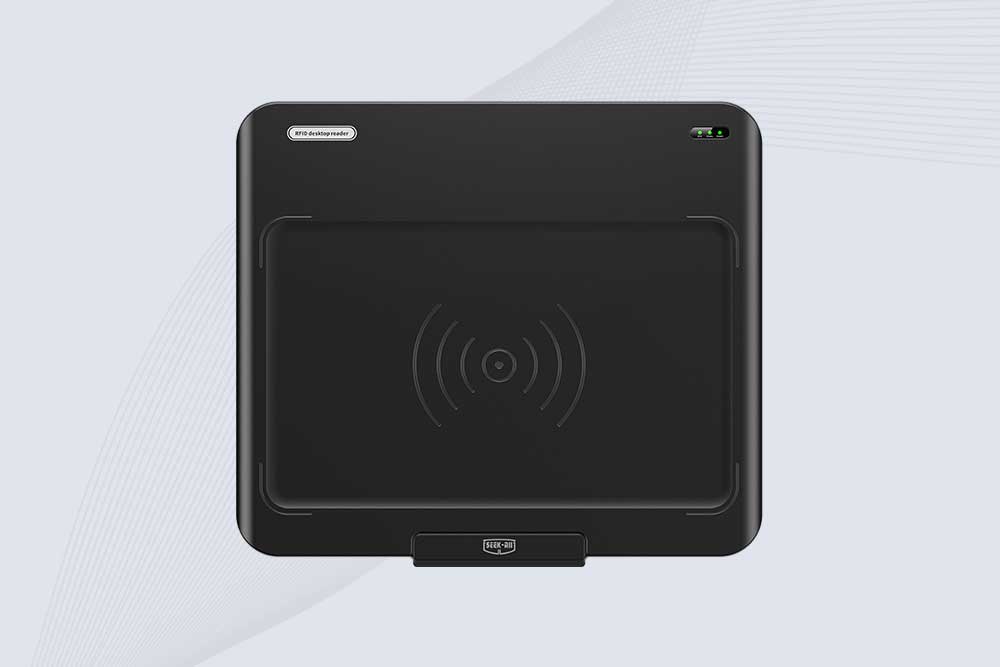
SSD-D3AL is a USB-HID UHF RFID reader with 0–30 cm reading, 0–15 cm writing, over 600 tags/s recognition, USB plug-and-play operation and OEM Logo customization.
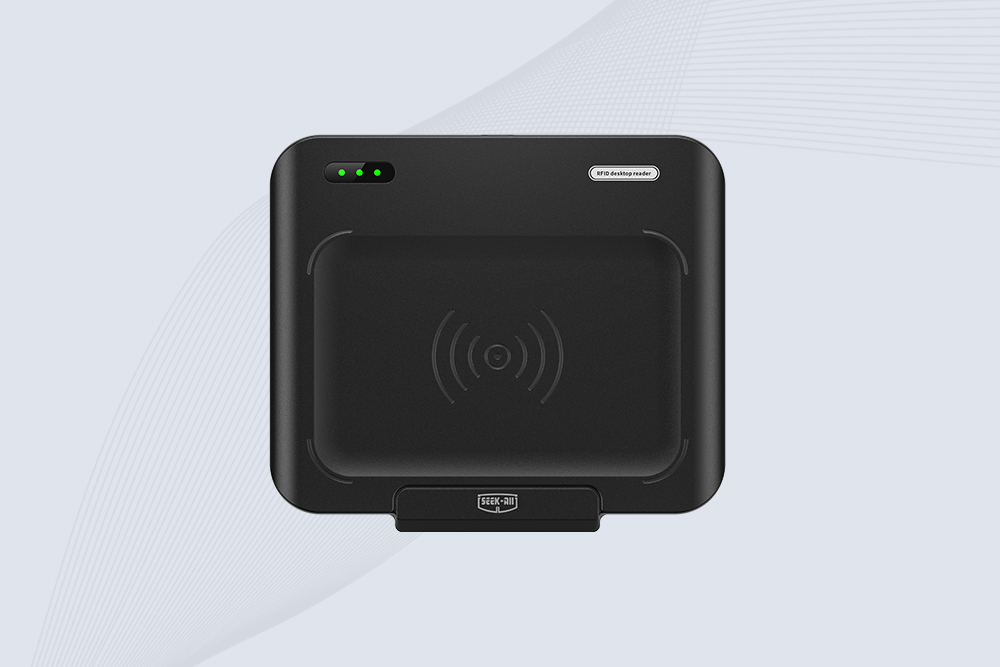
SSD-D1AL is a compact USB UHF RFID reader with Impinj E710/X3M1 chipset, USB-HID, 600+ tags/s recognition, 4/8/16 antenna support and plug-and-play USB power.

CYKEO CYKEO-D1LA USB RFID Reader is a compact desktop solution with near-field control for precise tag reading and encoding. Powered by USB, supporting ISO 18000-6C, and built for stable batch writing, this usb rfid tag reader fits retail, libraries, offices, and controlled RFID encoding tasks.
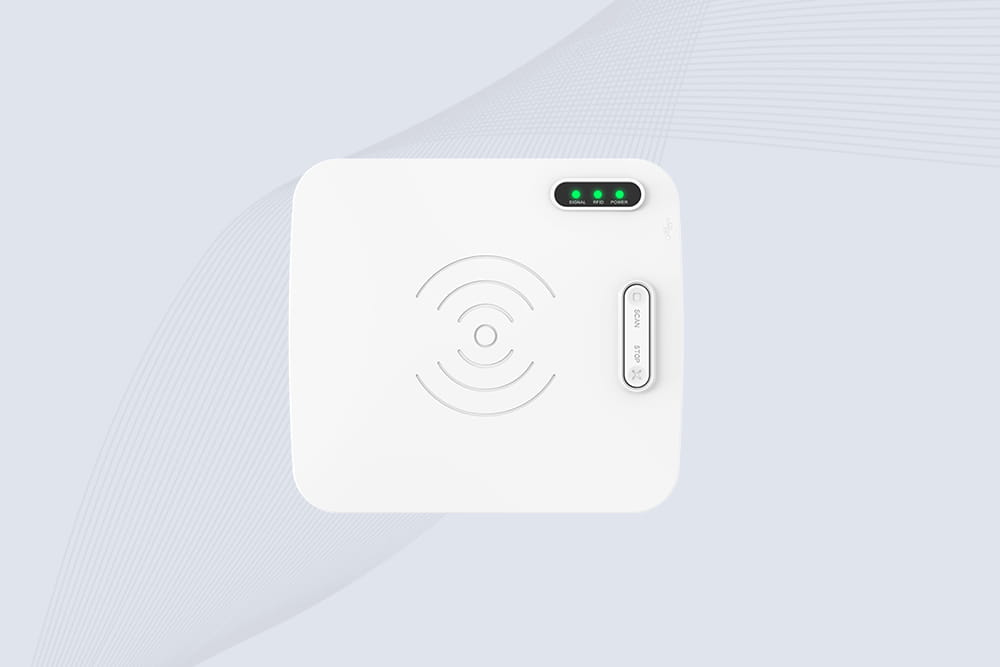
CYKEO CYKEO-D1L RFID scanner USB is a compact desktop UHF RFID scanner designed for short-range tag writing and verification. This usb rfid scanner supports batch encoding, stable 0–26 dBm output, and works across Windows, Linux, and Android systems.
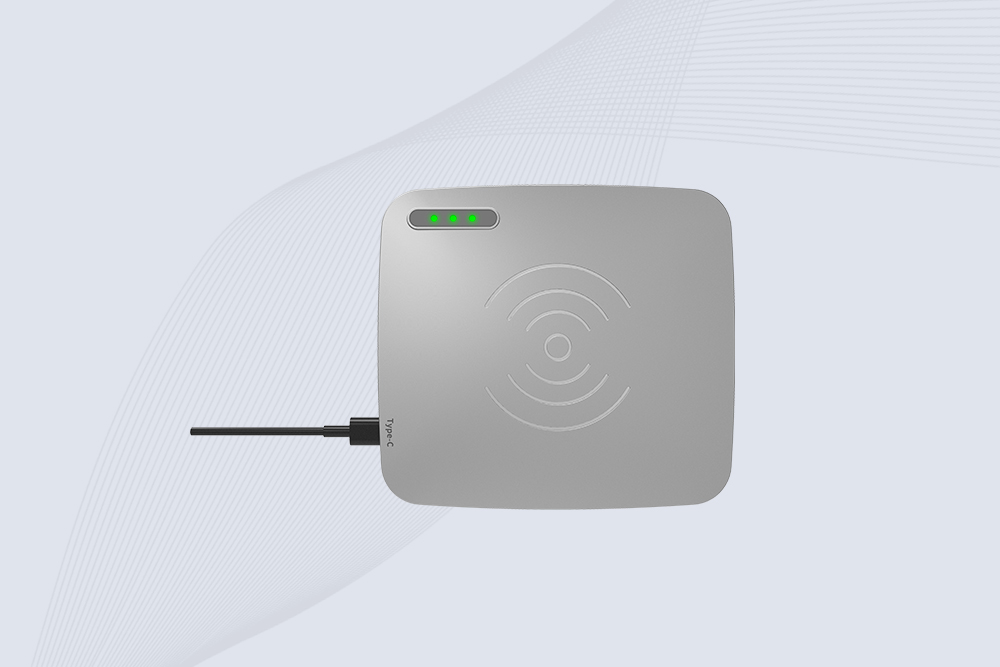
CYKEO CYKEO-D1C USB RFID Card Reader is a near-field UHF desktop writer designed for secure, short-range tag encoding. With USB-C connectivity and stable 26 dBm output, this rfid reader usb c is ideal for badge issuance, label encoding, and controlled desktop RFID workflows.
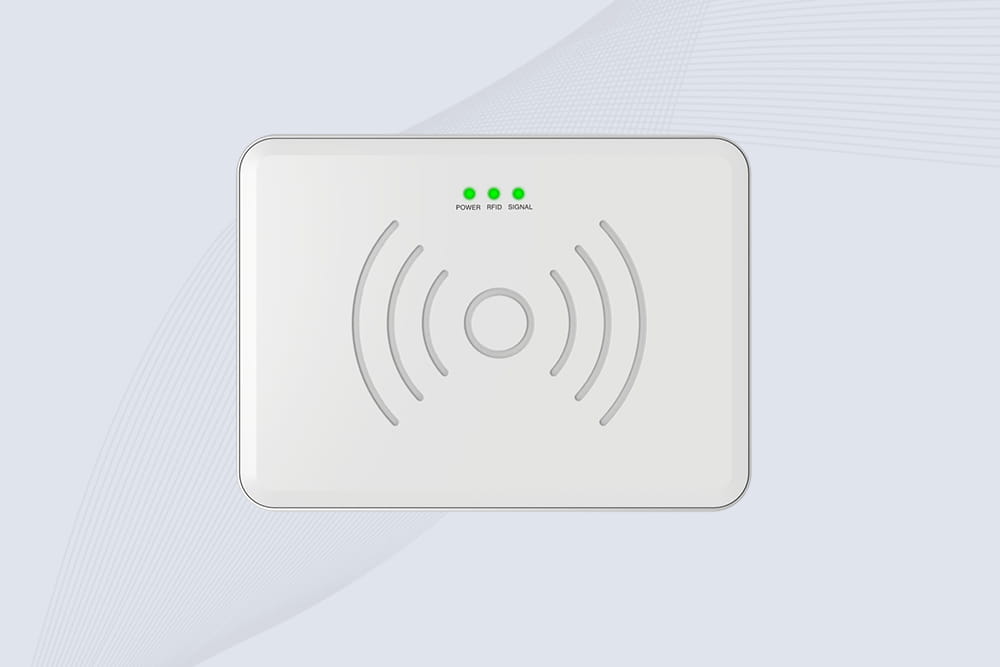
CYKEO CYKEO-D2L RFID Reader USB is a compact desktop encoder built on the Impinj R500 chip. With near-field control and stable USB power, this usb rfid card reader delivers precise tag writing for offices, retail counters, and small-scale logistics encoding tasks.
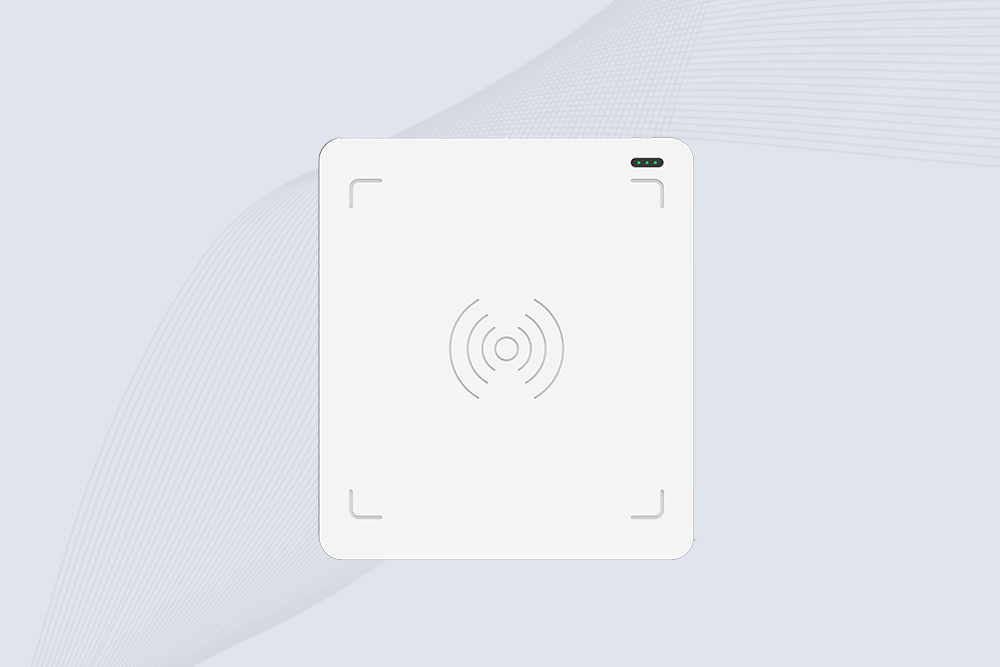
CYKEO CYKEO-D3L USB RFID Tag Reader delivers stable UHF tag reading and writing for daily desktop and light industrial tasks. Designed for controlled short-range operation, this USB RFID Tag Reader works reliably with rfid tag and reader systems in libraries, tool tracking, and inventory registration.
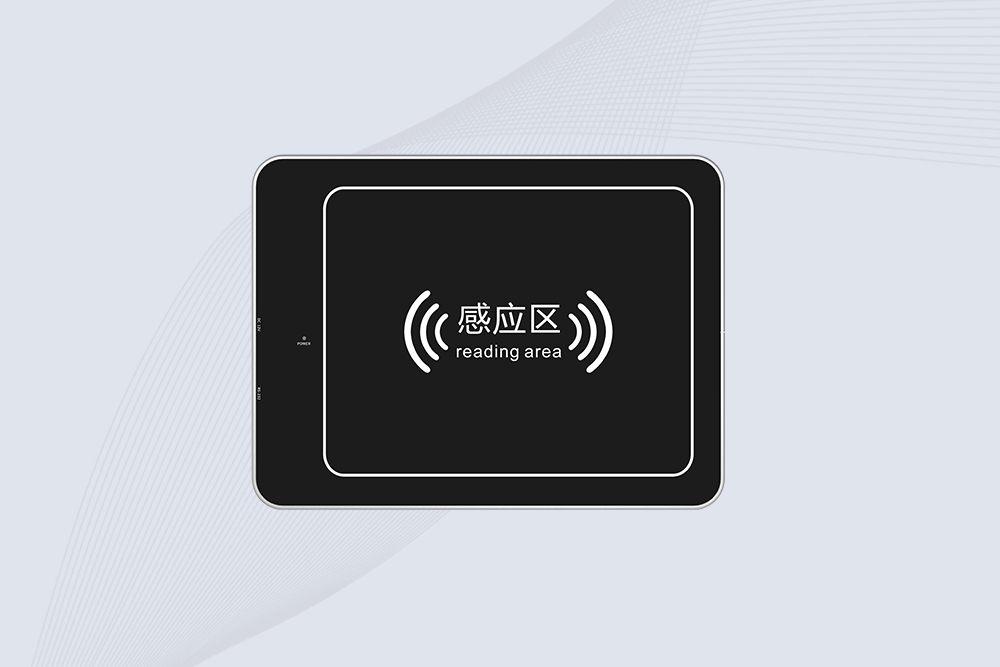
The CYKEO CYKEO-D4L UHF RFID Tag Reader is a stable Desktop RFID Reader designed for accurate tag registration, borrowing, and return workflows. Built with the Impinj R2000 chip, this UHF RFID Tag Reader delivers controlled short-range reads for libraries, asset tracking, and inventory management environments.
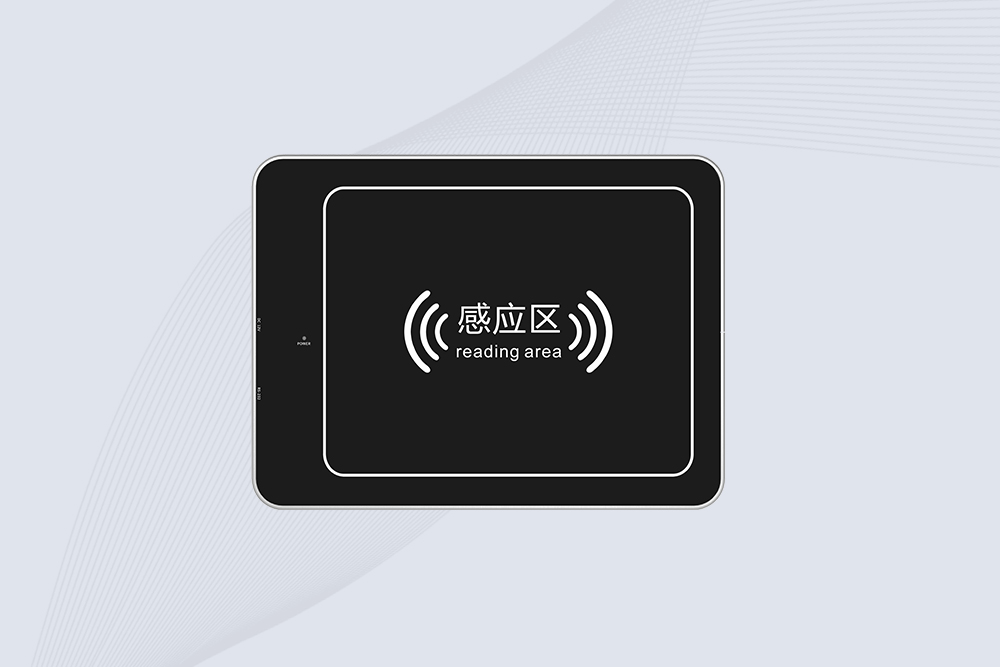
The CYKEO CYKEO-D5L Desktop RFID Card Reader is a stable UHF RFID Card Reader designed for controlled short-range reading and writing. Built for libraries, tool rooms, and asset desks, this UHF RFID Card Reader supports dense tag handling, secure data processing, and easy USB integration.
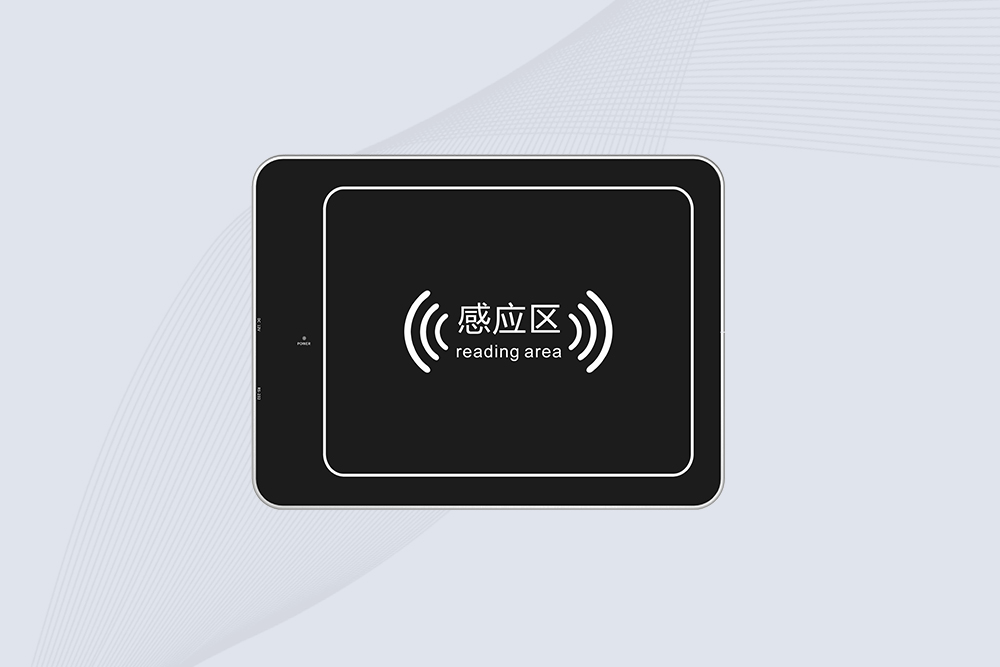
The CYKEO CYKEO-D6L RFID Reader Writer is a heavy-duty Desktop RFID Reader designed for short-range, high-accuracy tag programming. Built for libraries, labs, and asset desks, this RFID Reader Writer supports batch processing, stable 33dBm output, and seamless integration with existing management systems.
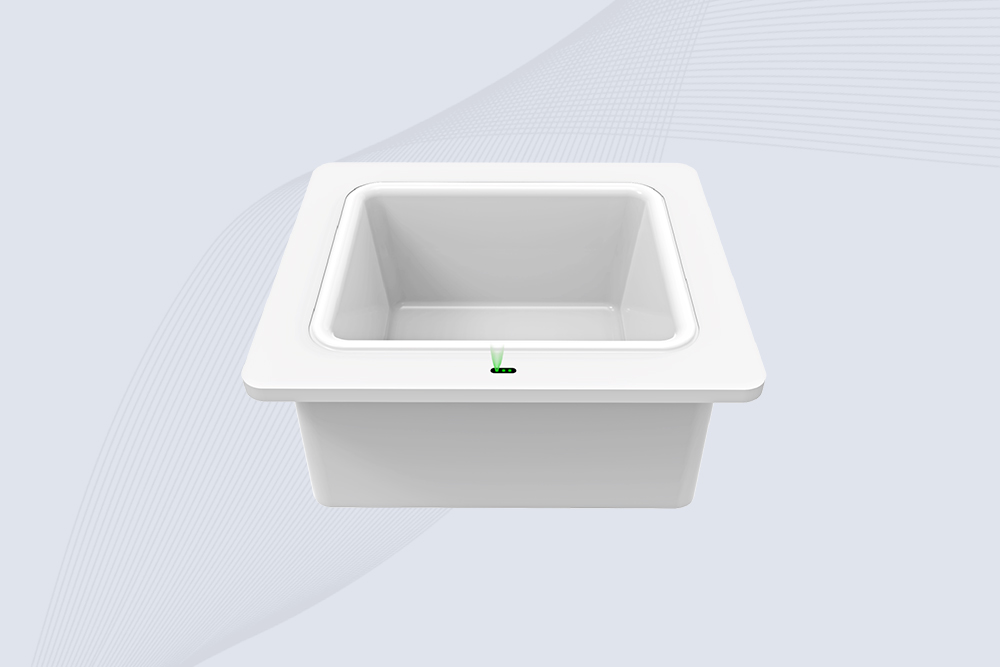
Cykeo CYKEO-D8B UHF RFID tunnel and RFID Desktop Reader features 30+ items batch reading,
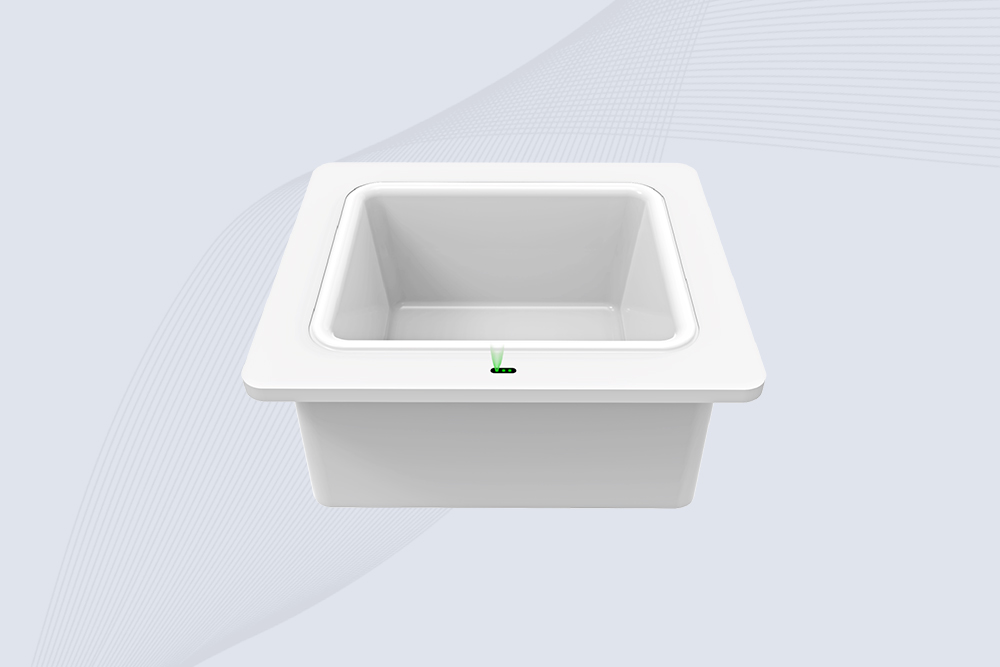
Cykeo CYKEO-D8A embedded RFID badge reader offers 30+ tags/sec scanning, 20cm anti-crosstalk precision, and DC 12V power for unmanned stores, warehouses, and smart inventory systems.
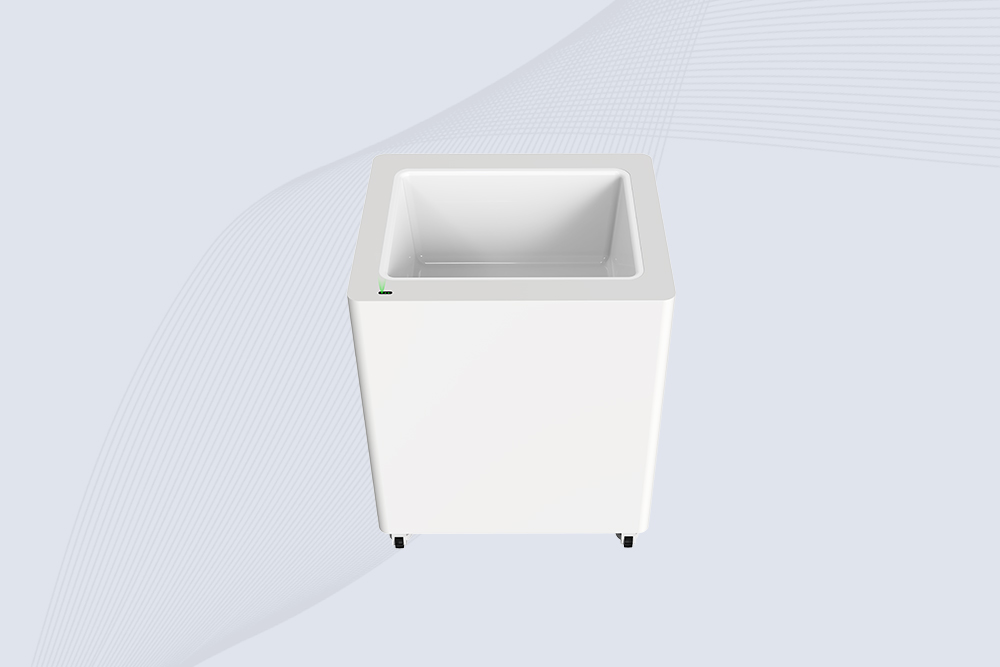
Cykeo’s CYKEO-D8C UHF RFID gate reader achieves 200-tag/batch scanning with adjustable power control, ideal for retail inventory and smart warehouse management.
RFID Industry Writer | IoT & Asset Tracking Analyst
James writes about RFID technology, asset tracking, and the practical challenges of digital transformation across warehousing, retail, manufacturing, and logistics.
His work focuses on how RFID is applied in real-world operations—improving inventory visibility, automating workflows, and helping businesses manage assets with greater accuracy and efficiency.
He regularly covers topics including UHF RFID, smart cabinets, RFID portals, tool tracking, warehouse automation, and industrial IoT trends..
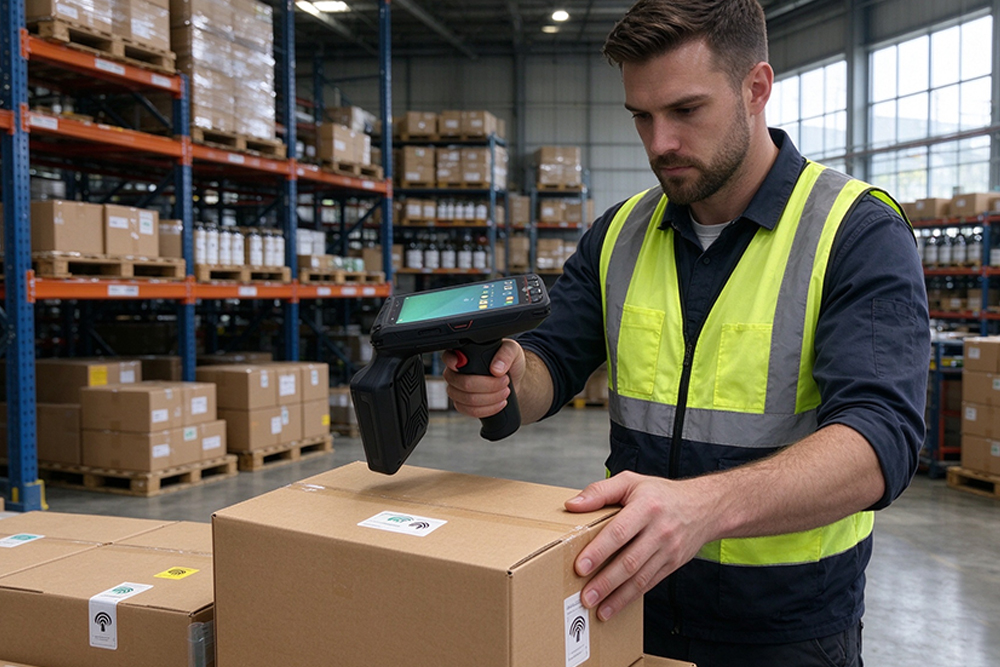
RFID readers identify, read, and sometimes write RFID tag data to connect physical objects with digital systems for inventory, tracking, and automation.
More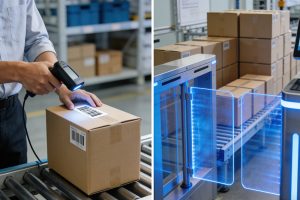
RFID readers and barcode scanners both help track inventory and assets, but they work in very different ways. Learn the key differences, costs, advantages, and how to choose the right technology for your business.
More
As urbanization accelerates and living standards rise, waste management has become a growing concern. One of the key challenges is efficient waste sorting and recycling. RFID (Radio Frequency Identification) technology, as an advanced information ...
More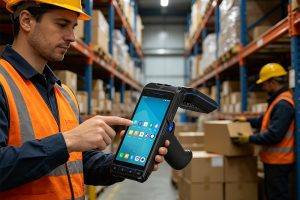
A few years ago, choosing an RFID handheld reader was mostly about hardware. Range, speed, durability. Now, that’s only part of the decision. What really matters in most projects today is: How easily the device works with your system. That’s one o...
More