 Cykeo RFID IoT Solution Products R&D Manufacturer

RFID in Healthcare: Is It Really Solving Hospital Problems or Just Adding Tech?
232RFID in healthcare improves asset tracking, patient safety, and workflow accuracy. See where RFID really works in hospitals—and where it doesn’t.
MoreAll RFID Product
The range of RFID tags depends on their frequency, power source, antenna design, reader configuration, and operating environment. Low-frequency and high-frequency tags generally work at short distances, while passive UHF tags can often be read several metres away. Active RFID tags can cover much longer distances because they have their own power source.
There is no single reading distance for every RFID tag. A contactless card designed for a controlled transaction behaves very differently from a UHF label attached to a carton moving through a warehouse.
For businesses choosing RFID equipment, the distinction between a tag’s theoretical maximum range and its reliable working range is especially important. A reader might detect a tag at a considerable distance during an open-area test, yet miss the same tag when it is mounted against metal, positioned behind liquid-filled products, or turned away from the antenna.
The following ranges are useful starting points for planning an RFID installation. They are indicative rather than guaranteed specifications.
| RFID tag type | Indicative reading distance | Typical applications |
|---|---|---|
| LF passive RFID | A few centimetres to around 10 cm in many applications | Animal identification, industrial access |
| HF passive RFID | A few centimetres to tens of centimetres, depending on the system | Contactless cards, library systems, item identification |
| Passive UHF RFID | Several metres under suitable conditions; longer distances are possible in specialised setups | Warehouse inventory, retail, logistics, asset tracking |
| Active RFID | Tens of metres to 100 metres or more in some systems | Asset location, industrial monitoring, selected tracking applications |
These categories overlap. Reader power, antenna size, tag sensitivity, frequency regulations, and installation conditions can change the results substantially.
GS1’s RFID guidance identifies passive UHF systems as suitable for longer-range identification and explains that active tags can support longer distances because they contain a power source. The exact range still depends on the equipment and environment.
LF, HF, and UHF tags use different frequency bands and communication characteristics. Frequency influences the system’s behaviour, but it does not independently determine the maximum distance.
Passive UHF tags are widely used when multiple items must be identified without bringing each tag close to a reader. Their antenna design, chip sensitivity, and tag construction affect how much energy the tag receives and how reliably it responds.
A passive tag relies on energy transmitted by the reader. An active tag uses an internal battery to power its circuitry and, depending on the system, transmit a signal over a longer distance.
This difference affects more than range. Passive tags are often appropriate for high-volume item identification, while active systems may suit applications requiring longer-distance detection or specialised tracking. Battery maintenance, tag cost, and system architecture should be considered alongside distance.
A tag that reads reliably in one position may become difficult to detect when rotated or mounted differently. This is particularly noticeable with UHF tags, where antenna orientation and polarisation can affect the available reading distance.
Metal shelving, machinery, and liquid-filled containers also deserve attention. Metal can detune a conventional tag antenna, while water-rich materials can absorb or alter radio-frequency energy. For metal tools or equipment, a purpose-built on-metal tag may perform better than a standard paper label.
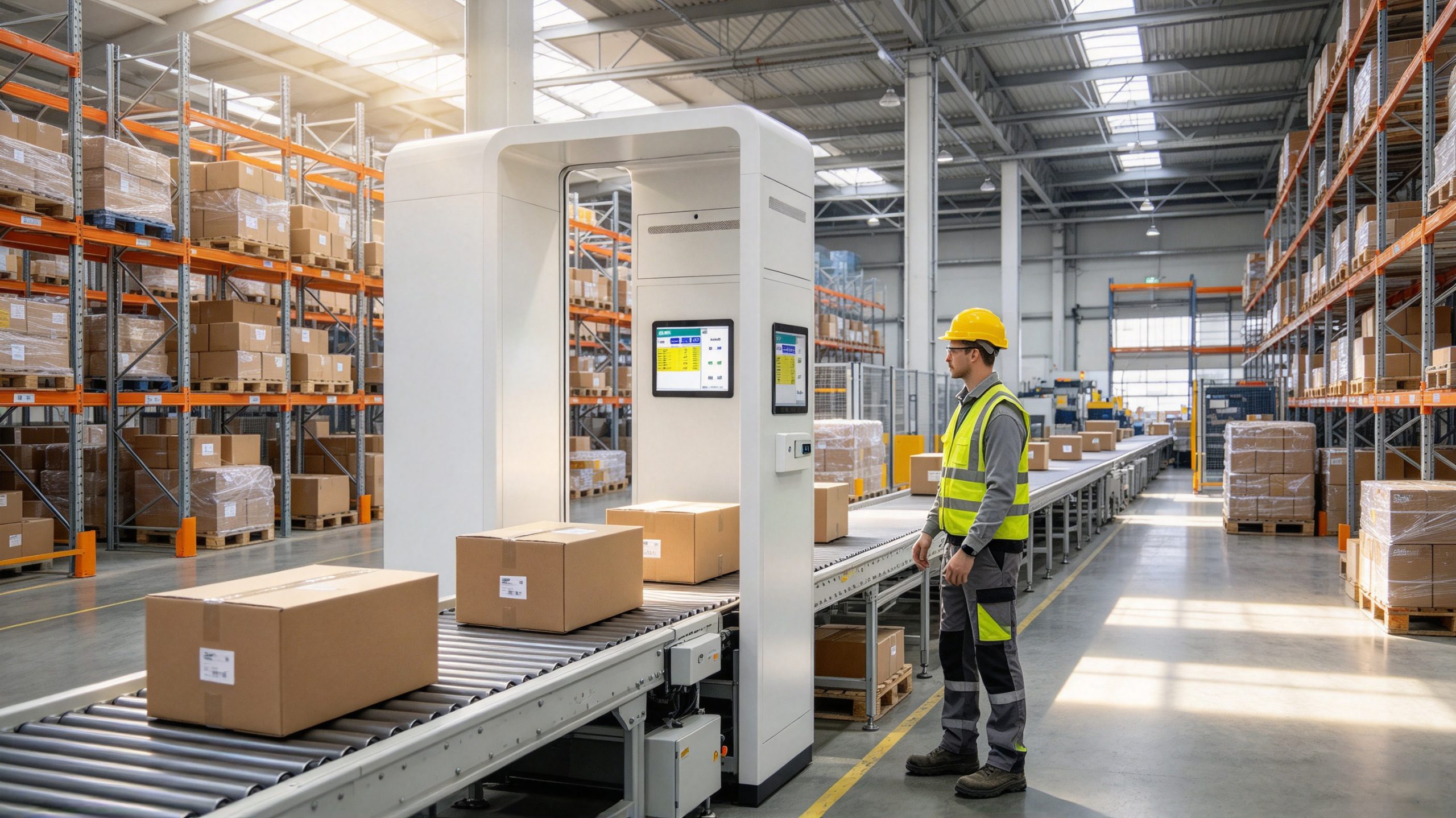
The correct tag depends on where it will be installed and what the reader must accomplish.
A useful test uses the actual tag, reader, antenna, packaging, and mounting position. Move tagged items through the intended reading area and repeat the test at realistic angles and speeds.
For example, a warehouse may need to capture cartons passing through a portal without reading inventory on neighbouring shelves. The goal is not to achieve the greatest possible distance. It is to create a reading zone that captures the intended items consistently while limiting unwanted reads.
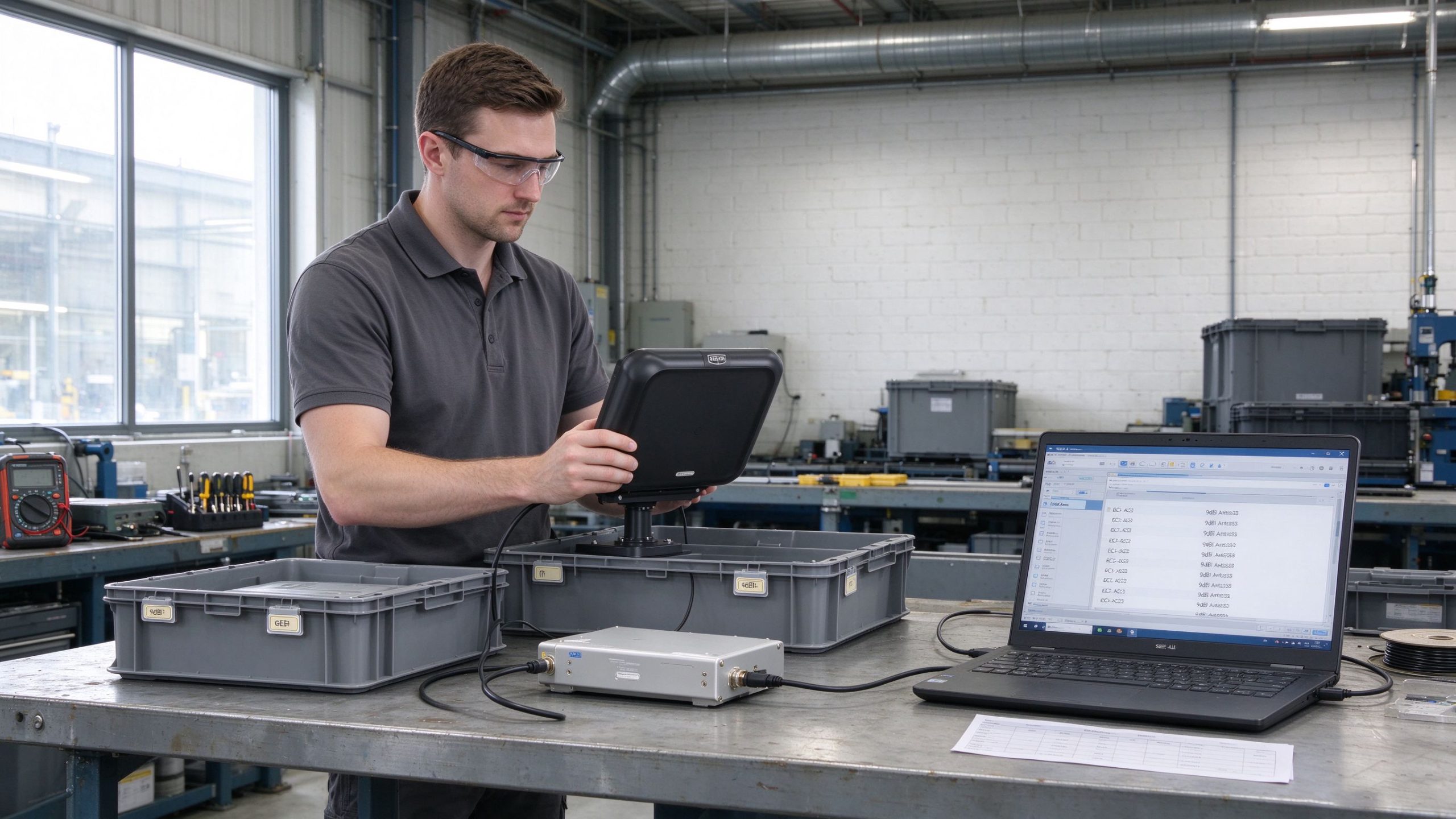
When RFID tags are not being read at the expected distance, start with the tag and installation rather than immediately replacing the reader. GS1 identifies the tag, antenna, operating frequency, reader power, and surrounding environment as important factors affecting read performance.
| Problem observed | What to check first | Practical response |
|---|---|---|
| Read distance is shorter than expected | Tag type, antenna connection, reader power | Verify specifications and test a known-good tag |
| Some tags are consistently missed | Tag orientation and mounting surface | Rotate tags and test alternative placements |
| Tags on metal assets fail | Tag antenna compatibility | Evaluate a purpose-built on-metal tag |
| Liquid-filled products are difficult to read | Liquid absorption and tag placement | Test suitable tag designs and mounting positions |
| Unwanted tags are detected | Antenna direction and reading-zone size | Adjust antenna placement and reduce power where appropriate |
| Moving items are missed | Product speed and time inside the reading zone | Reposition antennas and repeat tests at operating speed |
Suppose a UHF tag is detected once at 8 metres but is missed repeatedly at that distance. That result does not establish 8 metres as a reliable operating range. A more useful specification records the distance at which the tag continues to be read consistently under representative conditions.
For a warehouse installation, test real cartons on the actual conveyor or pallet route. Record the tag model, reader settings, antenna position, orientation, and observed missed reads. These details help engineers distinguish a coverage problem from an application or configuration issue.
There is no universal maximum. According to GS1, passive UHF RFID tags typically have a read range of several metres, reaching up to 15 metres in very special cases. Some specialised systems can achieve greater distances, while active RFID tags may communicate over 100 metres or more. Actual performance depends on the equipment and operating environment.
Passive RFID tags generally communicate over shorter distances in LF and HF systems and several metres in suitable UHF systems. Because passive tags draw energy from the reader’s signal, their read distance depends on reader power, tag sensitivity, antenna design, orientation, and nearby materials.
No. RFID uses radio-frequency communication, so direct visual contact is generally unnecessary. However, materials between the tag and reader can affect performance. Metal and water-rich materials can significantly reduce UHF readability, and the result depends on the tag construction and installation.
A conventional RFID tag may perform poorly when mounted directly on metal because the surface affects its antenna. Specialised on-metal tags are designed for these conditions. Their performance should still be tested on the actual asset and with the intended reader.
Not necessarily, although antenna dimensions and design can influence performance. Chip sensitivity, antenna matching, operating frequency, and the reader’s capabilities also matter. Compare tag specifications and test the complete setup rather than choosing a tag based on physical size alone.
Check reader power, antenna alignment, tag orientation, and compatibility with the mounting surface. A suitable antenna or a tag designed for the application may improve results. Keep within regional radio-frequency regulations and test the system at the required distance under actual operating conditions.
Passive UHF RFID tags are commonly used for warehouse inventory because they can be read over several metres and support automated identification of multiple tagged items. The appropriate label or hard tag depends on the products, packaging, storage layout, and reader configuration.
The right RFID tag is not necessarily the one with the longest advertised read distance. It is the one that performs reliably at the required distance, on the intended product, and within the actual reading zone.
For Cykeo’s industrial RFID applications, consider the tag, reader, antenna, mounting method, and software as parts of one system. Test the complete setup before deployment, particularly when reading metal assets, liquid-containing products, or moving cartons.
Understanding what is the range of RFID tags starts with a simple distinction: maximum distance describes what may be possible, while reliable read distance describes what your application can consistently achieve.
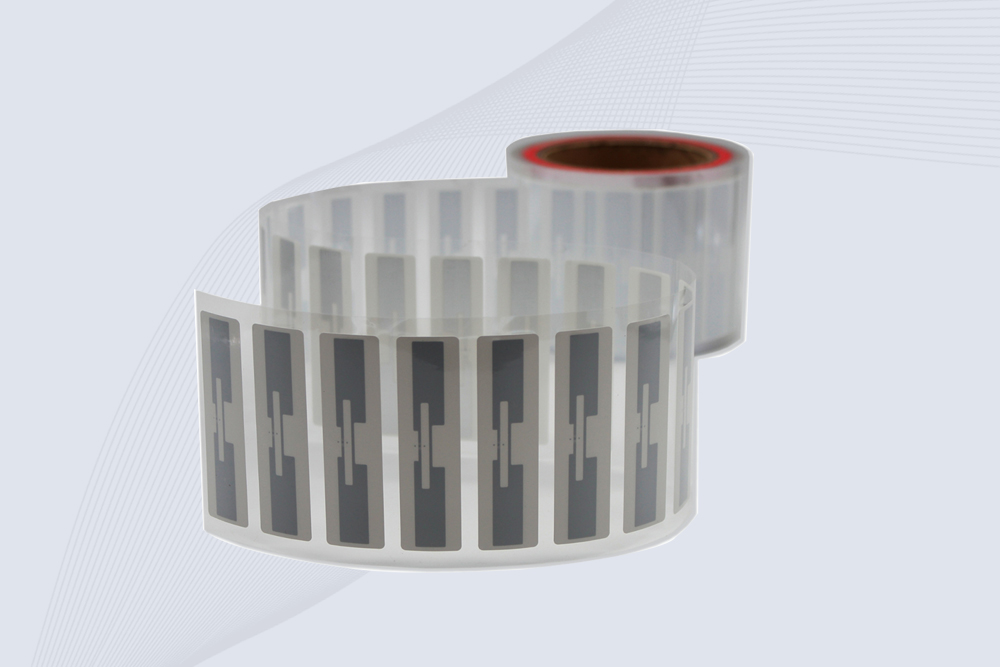
CYKEO Passive RFID Tags are made for wet and high-humidity environments where standard labels do not last. This rfid passive tag is often used around liquids, chemicals and temperature changes, providing stable reading distance and long data life for industrial tracking.
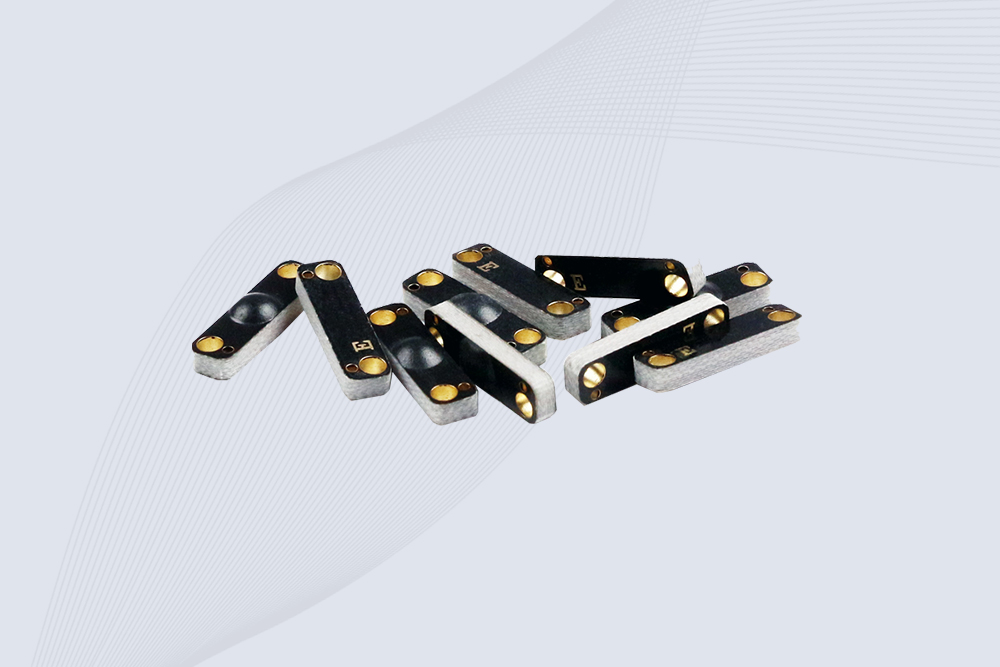
CYKEO CYKEO-PCB1504 Metal RFID Tags is a compact anti-metal UHF RFID solution built for direct mounting on metal surfaces. With stable 8-meter read range, Ucode-8 chip, and long data retention, this rfid metal tag fits tools, containers, automotive parts, and industrial asset tracking.
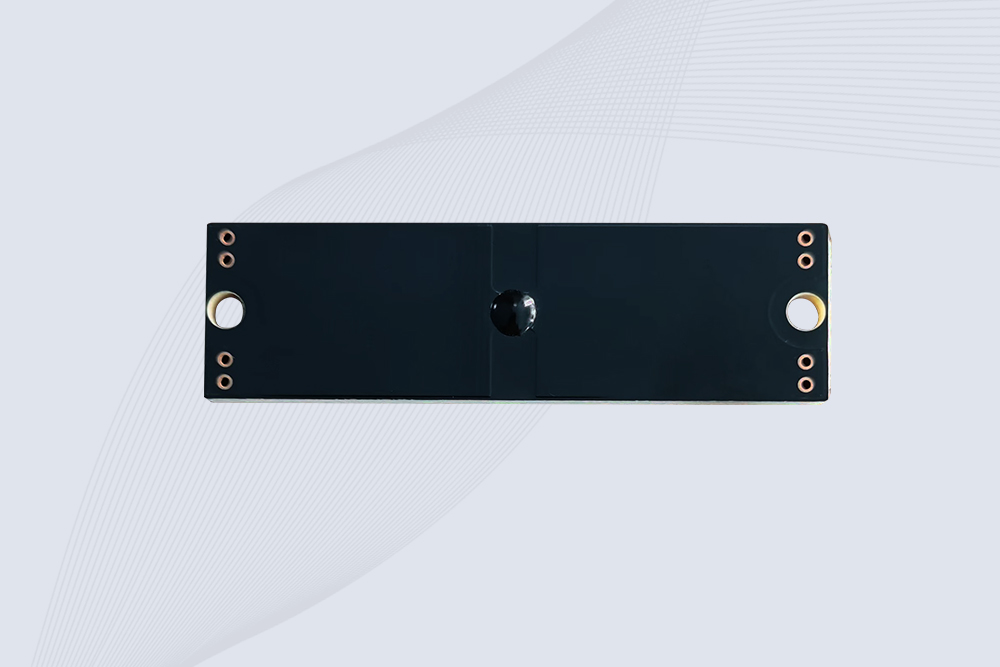
CYKEO CYKEO-PCB7020 On-Metal RFID Tags are designed for reliable tracking on steel and metal surfaces. Built with an FR4 epoxy body and industrial-grade chips, these On-Metal RFID Tags deliver stable performance, long data life, and chemical resistance, making them a dependable RFID anti-metal tag for harsh environments.
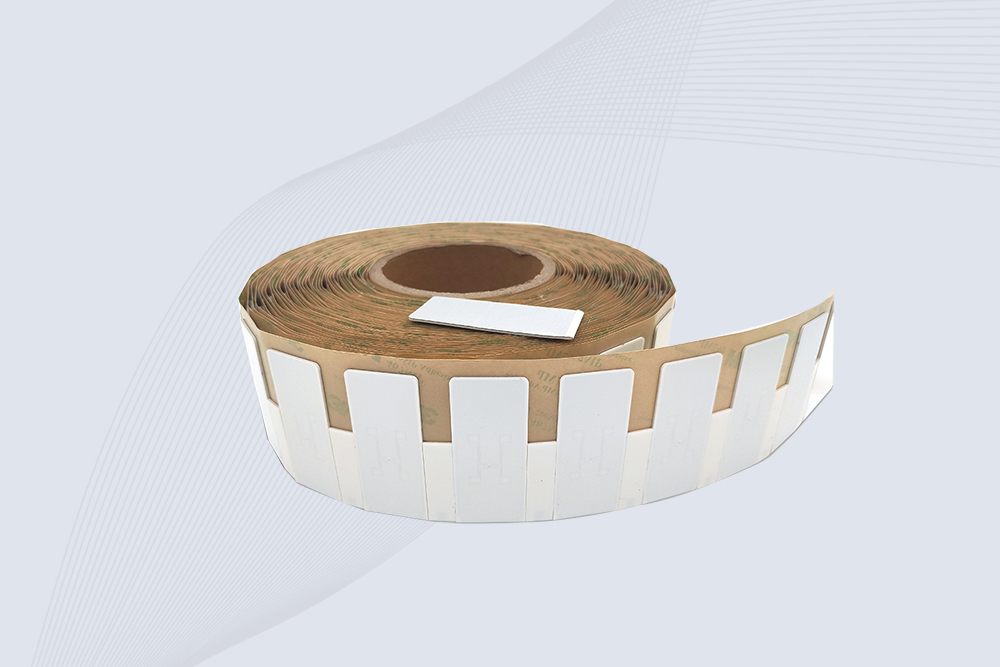
The CYKEO CYKEO-60-25 Anti-Metal RFID Tag is built for metal surfaces where standard tags fail. Designed for long-range performance, harsh environments, and stable data retention, this Anti-Metal RFID Tag is ideal for industrial assets, containers, and equipment tracking using on metal RFID tags.
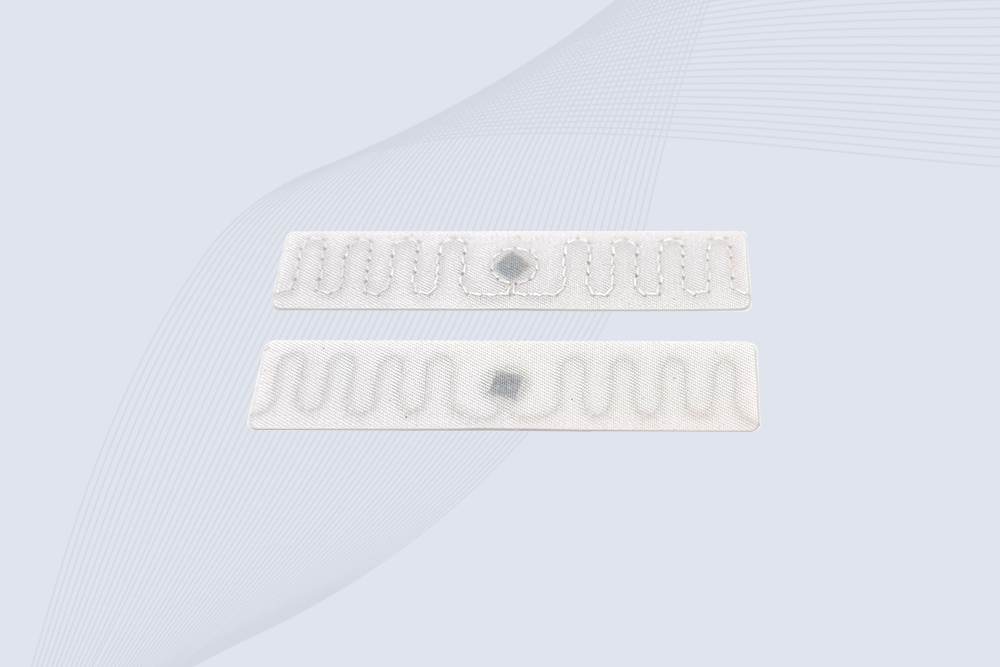
The CYKEO RFID Laundry Tag is designed for long-term textile identification in harsh laundry environments. Built to withstand high heat, chemicals, and repeated washing, this RFID Laundry Tag delivers stable performance for hotels, hospitals, and industrial laundry operations using laundry rfid tags at scale.
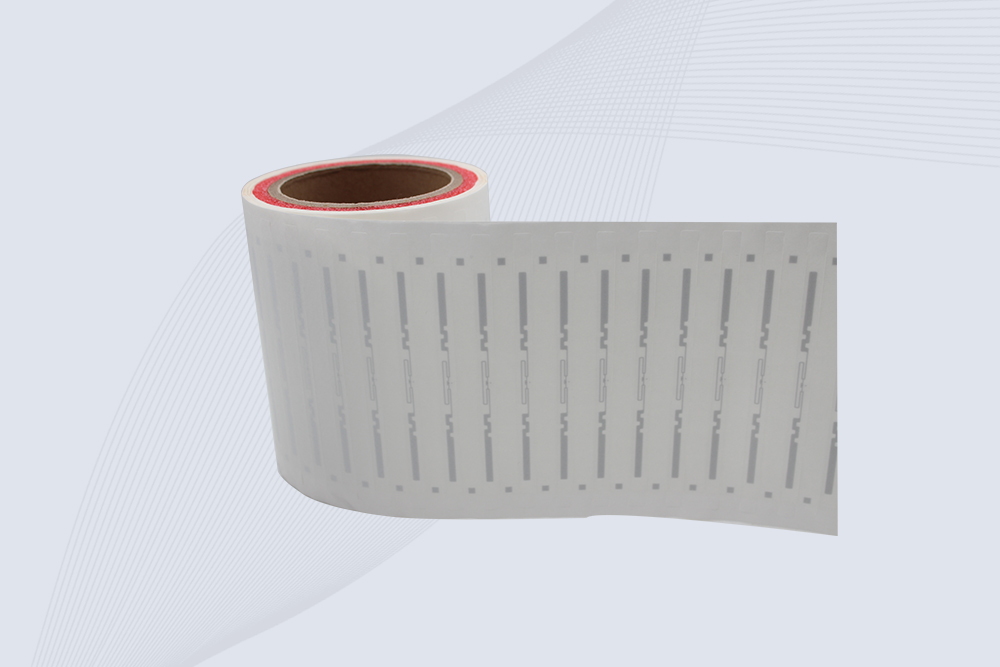
The CYKEO CYKEO-125-7 RFID Book Tag is designed for reliable book and document tracking in libraries and archives. This RFID Book Tag delivers long read range, dense placement support, and stable performance on shelves, making it a practical rfid tag on books for library automation, file management, and archival systems.
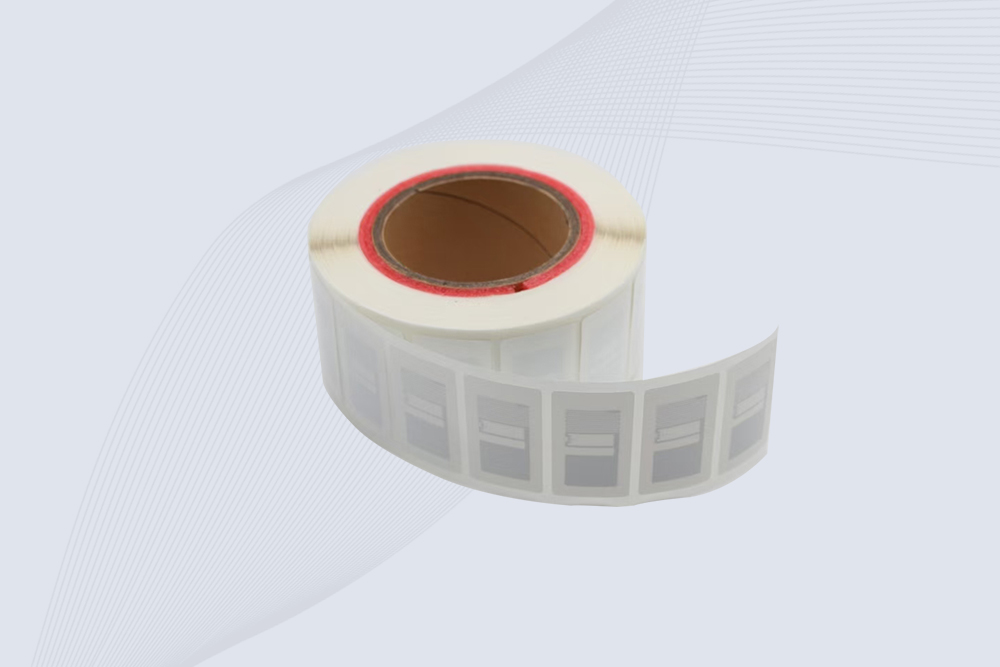
CYKEO RFID tags in hospitals are designed for sterile environments where accuracy matters. These autoclavable RFID tags support long-term tracking of surgical tools, implants, and medications, helping hospitals improve visibility, compliance, and patient safety.

CYKEO RFID Cable Tie Tag is built for reliable identification on metal surfaces. This UHF RFID Cable Tie Tag is widely used in rfid tags for inventory systems, industrial asset management and Hospital RFID Tags, offering stable read performance, long service life and global EPC Gen2 compatibility.
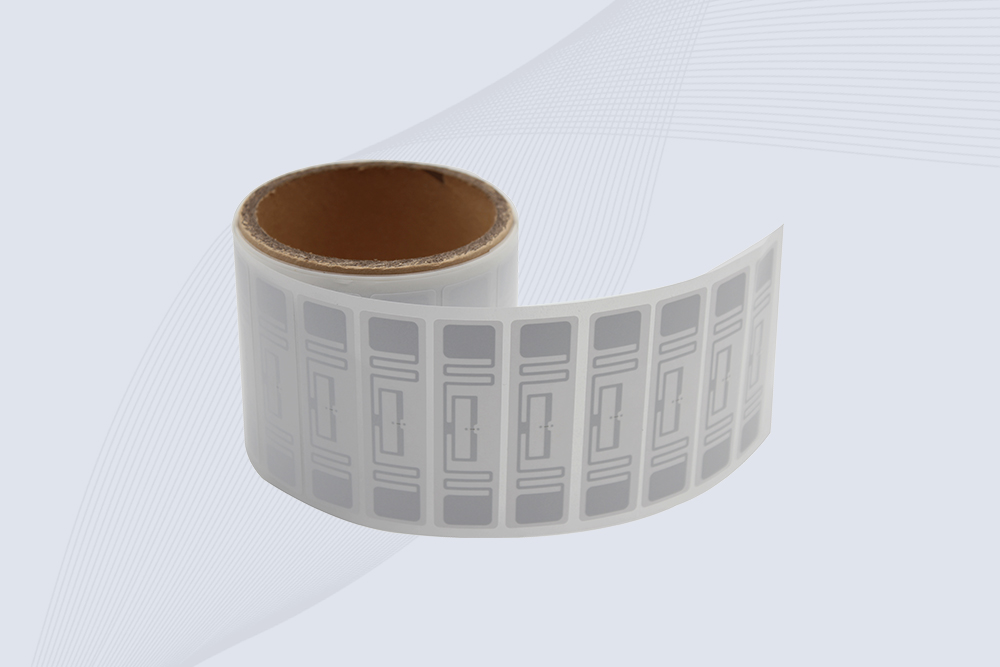
CYKEO RFID Asset Tag is designed for stable identification of metal assets in industrial environments. This UHF RFID Asset Tag is commonly used for rfid tag asset tracking on equipment, tools and containers, providing reliable reads, long service life and ISO/IEC 18000-6C support.

CYKEO UHF RFID Card is designed for fast identification and long-term use in industrial and commercial systems. Supporting ISO 18000-6C, this UHF RFID Card works at 860–960 MHz and is suitable for custom RFID cards used in asset tracking, access control and inventory management.
CYKEO HF RFID Cards are designed for secure and stable access control systems. These 13.56 MHz RFID key cards support ISO 14443-A, reliable rewriting and long service life, making HF RFID Cards suitable for offices, campuses, events and membership management.
CYKEO UHF RFID Tag is designed for reliable tracking of metal jewelry and high-value items. This Jewelry RFID Tag supports long-range reading up to 8 meters, anti-counterfeit protection and stable performance on metal, making it suitable for retail, inventory control and asset management.

RFID in healthcare improves asset tracking, patient safety, and workflow accuracy. See where RFID really works in hospitals—and where it doesn’t.
More
Optimize operations with job RFID solutions from Cykeo. Improve workforce tracking, tool management, job assignment, and asset visibility using industrial RFID technology.
More
A practical guide for choosing RFID long range readers for warehouse systems. Learn how to design read zones, select antennas, and ensure stable integration.
More
Need high temperature passive RFID tags? Learn what temperatures they really survive, where passive tags fail, and how CYKEO applies them in heat-heavy sites.
More